Quaternium-73 vs Salicylic Acid: Which Is Better for Acne-Prone Skin Formulations?
2026-08-28 13:40:20
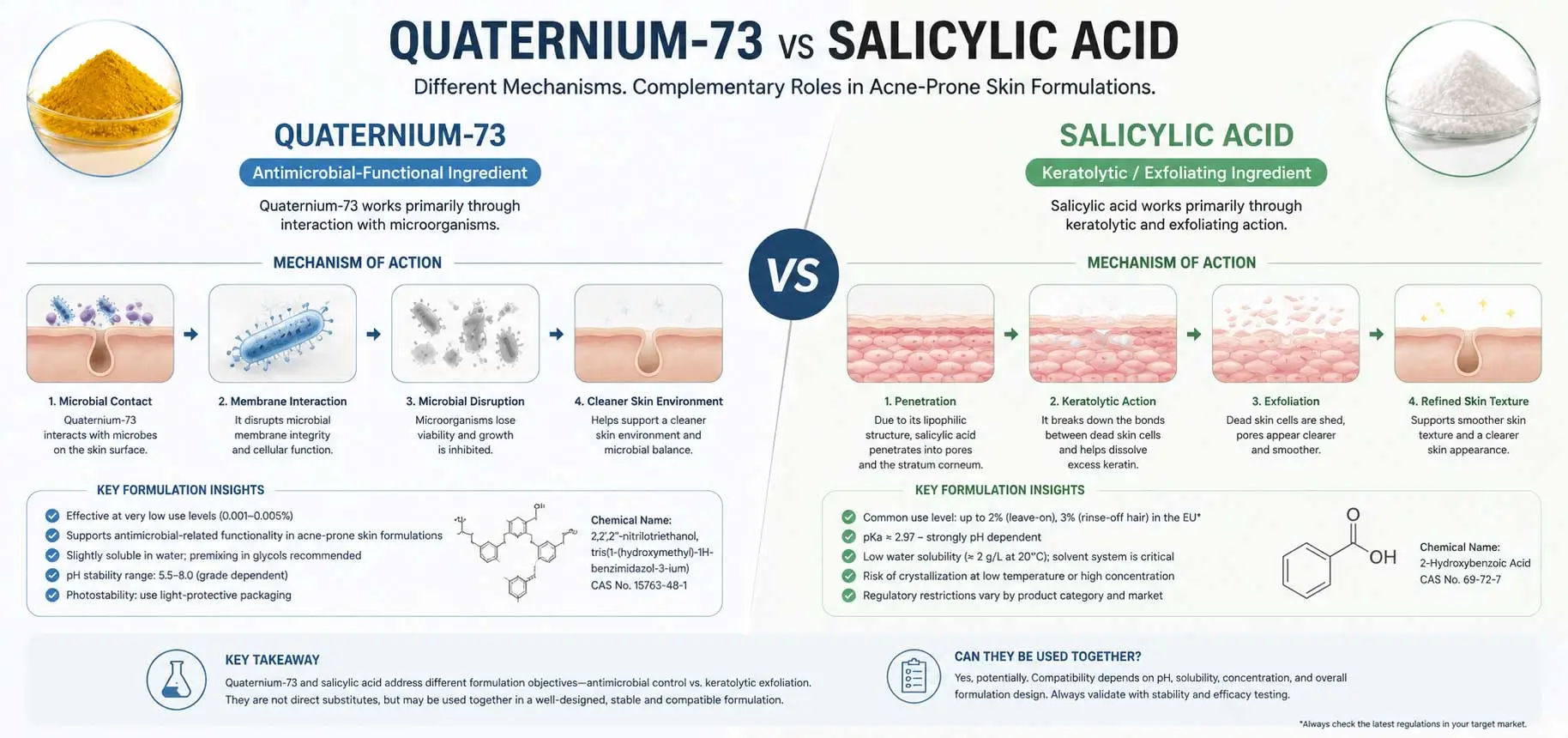
Quaternium-73 vs salicylic acid is not a comparison between two interchangeable acne-prone skincare ingredients. They address different formulation objectives. Quaternium-73 (CAS 15763-48-1) is a very-low-use-level cosmetic ingredient associated with antimicrobial functionality, while salicylic acid (CAS 69-72-7) is primarily used for keratolytic and exfoliating purposes in cosmetic formulations. Commercial technical guidance for Quaternium-73 recommends approximately 0.001–0.005% for the referenced grade, whereas current EU rules allow salicylic acid for non-preservative purposes at up to 2% in many cosmetic categories and up to 3% in rinse-off hair products, subject to product-specific restrictions.
For formulators, therefore, the useful question is not simply which ingredient is “stronger.” Salicylic acid is generally the more logical starting point when exfoliation and management of accumulated surface cells define the product concept. Quaternium-73 becomes relevant when antimicrobial-related functionality is part of the design. Using both is scientifically conceivable—recent research has even investigated PIONIN and salicylic acid in the same experimental delivery system—but conventional cosmetic co-formulation raises an important pH and solubility problem that should be resolved before commercial scale-up.
For ingredient buyers, understanding that distinction prevents a common sourcing mistake: comparing price, purity or dosage before determining what technical function the raw material must perform.
Quaternium-73 vs Salicylic Acid at a Glance: Key Formulation Differences
The central difference between Quaternium-73 and salicylic acid is their formulation role. The following comparison provides a practical starting point for R&D and procurement teams.
|
Factor |
Quaternium-73 |
Salicylic Acid |
|
INCI |
Quaternium-73 |
Salicylic Acid |
|
CAS No. |
15763-48-1 |
69-72-7 |
|
Main formulation role |
Antimicrobial-functional ingredient |
Keratolytic/exfoliating ingredient |
|
Typical commercial guidance |
0.001–0.005% for referenced grade |
Product/market dependent |
|
EU non-preservative maximum |
Market-specific assessment required |
Up to 2% in many cosmetics; 3% rinse-off hair products; restrictions apply |
|
Water solubility |
Slight |
Low |
|
Common formulation issue |
Premixing and very-low-dose distribution |
Solubilization/crystallization and pH |
|
Referenced Quaternium-73 pH window |
5.5–8.0 |
Acid ionization depends strongly on pH |
|
Direct substitutes? |
No |
No |
|
Possible complementary strategy? |
Potentially, but validate |
Potentially, but validate |
The numbers in this table should not be treated as equivalent regulatory limits. The 0.001–0.005% Quaternium-73 dosage is supplier technical guidance for a commercial raw material. EU salicylic-acid concentrations are regulatory limits for specified cosmetic uses.
That distinction matters whenever a purchasing specification is built around concentration.
What Is Quaternium-73 and Why Is It Used in Acne-Prone Skin Formulations?
Quaternium-73 for acne-prone skin is primarily interesting because it combines antimicrobial-related functionality with an unusually low recommended use level.
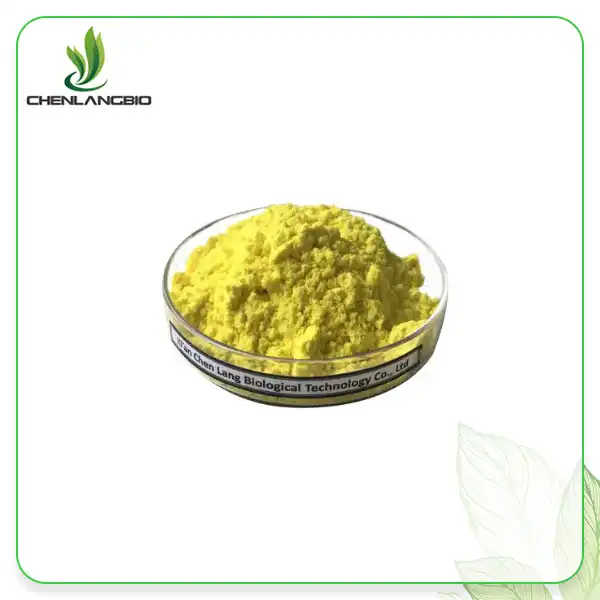
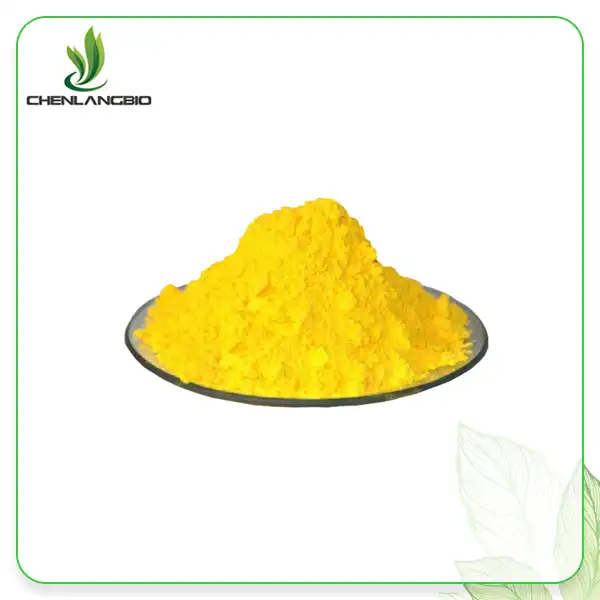
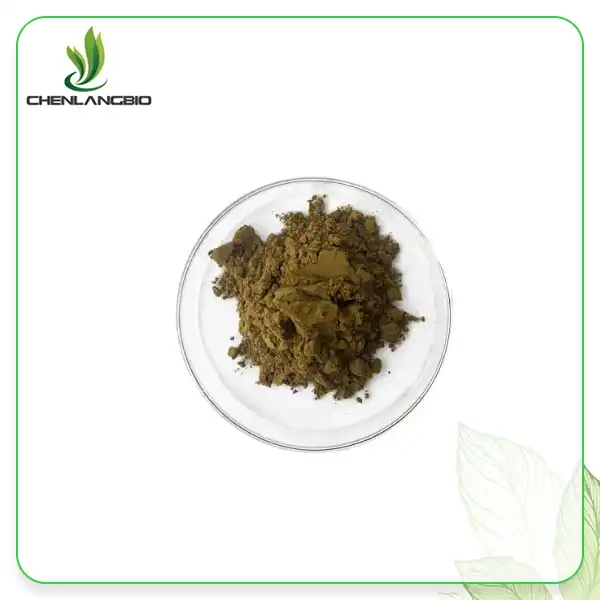
Quaternium-73, CAS 15763-48-1, is typically supplied as a yellow crystalline material. The commercial PDS reviewed for this article recommends 0.001–0.005%, reports a stable formulation range of pH 5.5–8.0, and describes the material as soluble in butylene glycol, propylene glycol, ethanol and 1,2-pentanediol but only slightly soluble in water. It recommends preparing a glycol premix before incorporation.
This technical profile explains why Quaternium-73 antimicrobial activity has attracted interest for facial cleansers, oily-skin formulations and other products designed for blemish-prone skin. Commercial documentation also positions the material in scalp and cleansing applications.
However, an important distinction should be maintained in cosmetic communication: antimicrobial activity against microorganisms associated with blemish-prone skin does not, by itself, justify claiming that a cosmetic raw material treats acne as a medical condition.
For formulators, the useful question is narrower: can the ingredient provide the intended antimicrobial functionality while remaining stable, homogeneous and compatible with the rest of the formula?
What Does Salicylic Acid Do in Acne-Prone Skin Formulations?
Salicylic acid for acne-prone skin formulations approaches the problem from a different direction.
Salicylic acid is 2-hydroxybenzoic acid, CAS 69-72-7. In skincare it is commonly discussed as a beta-hydroxy acid (BHA) and selected for keratolytic/exfoliating formulation strategies. Rather than making microbial control its principal cosmetic role, a salicylic-acid formula is typically designed around surface-cell shedding, exfoliation and pore-oriented skin conditioning.
Its concentration is also far higher than that normally associated with Quaternium-73. Under current EU cosmetic restrictions, salicylic acid used for purposes other than preservation is permitted up to 3.0% in rinse-off hair products and 2.0% in many other cosmetic products, while specific categories have lower limits and other restrictions. It is not permitted in preparations for children under three, and inhalable applications are restricted.
The SCCS concluded in its 2023 opinion that salicylic acid was safe under the assessed conditions, including up to 2% for the relevant “other product” categories and 3% for rinse-off hair products, with category-specific limitations.
This regulatory context is particularly important for international buyers: a target concentration that works technically is not automatically appropriate for every product category or destination market.
Quaternium-73 vs Salicylic Acid Mechanism: Antimicrobial Control vs Keratolytic Action
The most important distinction in the Quaternium-73 vs salicylic acid mechanism is that the two materials are intended to influence different parts of the formulation concept.
For Quaternium-73, commercial technical literature emphasizes antimicrobial activity. The intended pathway can be summarized as:
microbial interaction → antimicrobial-related activity → microbial-control-oriented skincare strategy
Salicylic acid instead contributes a keratolytic/exfoliating pathway:
stratum corneum → reduced cohesion of accumulated surface cells → exfoliation → pore-oriented skin-conditioning strategy
This is why simply asking which ingredient is “better for acne” produces an incomplete answer.
A formula designed around exfoliation, skin texture and pore-related concerns has a different technical brief from one designed around antimicrobial functionality. The ingredients therefore do not represent two competing versions of the same active.
There is also scientific evidence that the concepts need not always be mutually exclusive. A 2025 study in Microsystems & Nanoengineering developed dissolving bubble microneedle patches in which hydrophobic PIONIN and salicylic acid were incorporated into different structural regions of the delivery system, alongside dipotassium glycyrrhizinate. The work demonstrates that the two actives can be incorporated within a deliberately engineered multi-active system, although this specialized delivery technology should not be interpreted as evidence that they are universally compatible in ordinary toners, gels or emulsions.
For conventional cosmetics, compatibility still has to be demonstrated in the actual formula.
Quaternium-73 vs Salicylic Acid Use Level: How Much Is Typically Used?
The Quaternium-73 vs salicylic acid use level difference is substantial enough to affect formulation development, manufacturing and purchasing.
For the Quaternium-73 commercial grade referenced above, the recommended concentration is 0.001–0.005%.
In a 100 kg production batch, that corresponds to:
|
Quaternium-73 concentration |
Material required |
|
0.001% |
1 g |
|
0.003% |
3 g |
|
0.005% |
5 g |
By comparison, a hypothetical cosmetic containing 1% salicylic acid requires 1 kg per 100 kg batch, while 2% requires 2 kg.
These figures do not mean that Quaternium-73 is hundreds of times more effective. The ingredients perform different functions, so comparing concentrations as a potency ratio would be scientifically misleading.
The numbers instead reveal a manufacturing issue that buyers sometimes overlook. At a Quaternium-73 dosage of 0.003%, a 500 kg batch contains only 15 g of raw material. Balance accuracy, premix preparation, quantitative vessel transfer and homogeneous distribution therefore become relevant to commercial reproducibility.
Salicylic acid presents a different scale-up challenge: dissolving a much larger quantity without crystallization or destabilizing the intended formula.
Quaternium-73 vs Salicylic Acid Solubility: Why the Solvent System Matters
Neither ingredient should simply be assumed to disappear into the water phase.
Commercial Quaternium-73 solubility data describe the raw material as only slightly water-soluble—one PDS reports an estimated water solubility of 0.6068 mg/L at 25°C—and recommend pre-dissolution in butylene glycol, propylene glycol or 1,2-pentanediol. Ethanol is also listed as a solvent.
For a 0.003% formula, preparing a controlled premix also helps distribute a few grams of material throughout a large batch.
Salicylic acid solubility in cosmetic formulations creates another well-known challenge. Formulation literature reports water solubility around 2 g/L at 20°C and a pKa of approximately 2.97. Its low aqueous solubility means that solvent selection and the relationship between pH, ionization and crystallization have to be considered during development.
A serum may look clear immediately after production but still fail later if salicylic acid crystallizes during storage or low-temperature testing.
Consequently, a formulation containing both ingredients cannot be designed merely by combining their individual percentages. The solvent system has to support Quaternium-73 incorporation while maintaining salicylic acid in an acceptable physical state throughout the product's shelf-life testing.
The Critical Issue: Can Quaternium-73 and Salicylic Acid Work at the Same pH?
This is probably the most important technical question in Quaternium-73 salicylic acid compatibility.
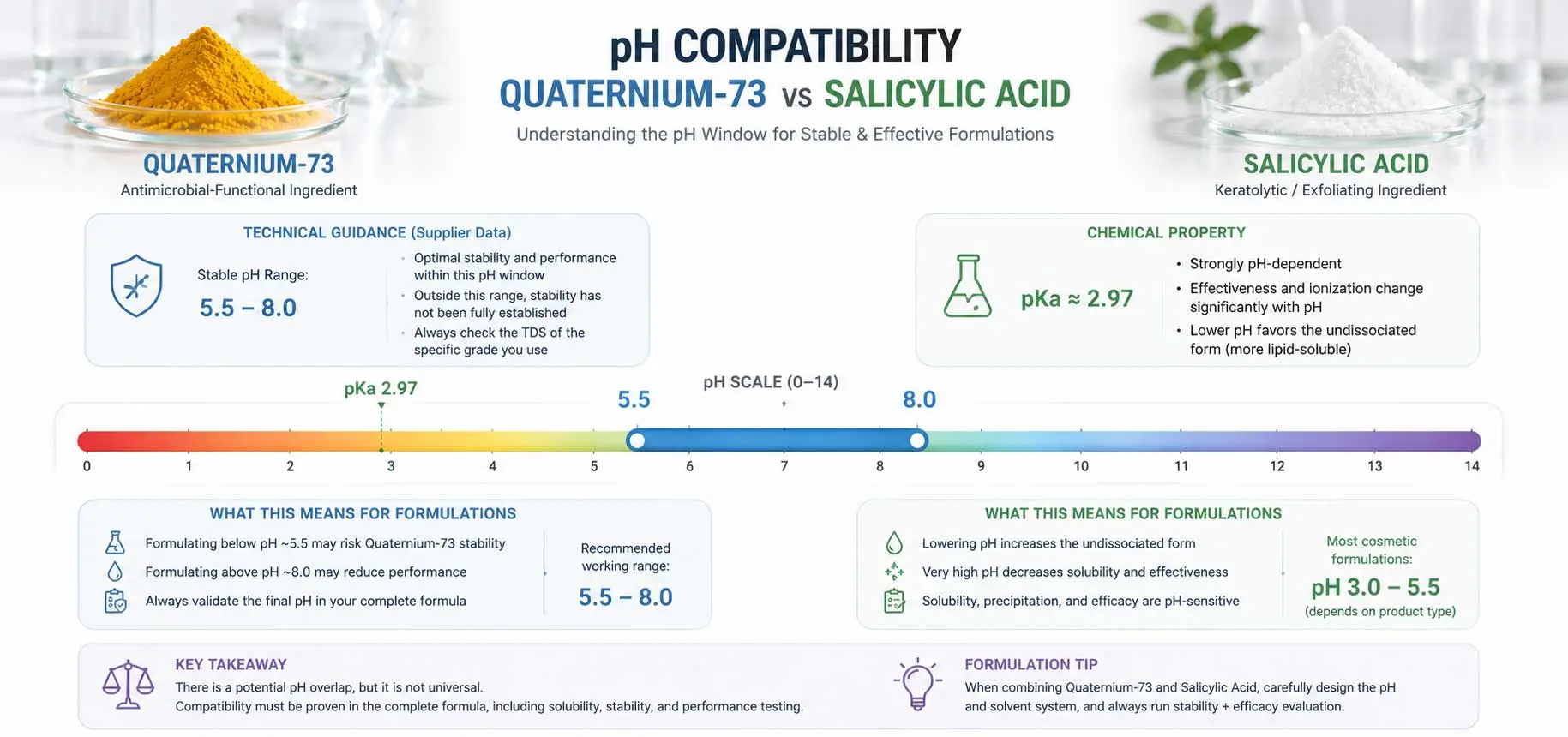
The Quaternium-73 PDS reviewed for this article specifies a stable pH range of approximately 5.5–8.0 for that grade.
Salicylic acid has a pKa of about 2.97, meaning its ionization state changes substantially as formulation pH rises. Formulation references consequently pay close attention to acidic pH when designing free-salicylic-acid systems.
This creates an apparent formulation-window conflict.
It would nevertheless be too strong to conclude that the ingredients are categorically incompatible. Supplier stability guidance is not the same thing as proof of instantaneous degradation outside a specified range, and salicylic acid does not suddenly cease to exist above its pKa. What changes is its degree of ionization and, consequently, properties relevant to formulation and delivery.
The correct R&D question is therefore:
Can the specific Quaternium-73 grade maintain acceptable chemical and physical stability at the pH required for the intended salicylic-acid system?
The publicly available technical information reviewed here does not establish a broad compatibility window for conventional low-pH Quaternium-73/salicylic-acid cosmetics. A formulator should therefore avoid assuming compatibility from ingredient lists alone.
This is exactly the type of issue that should be addressed during bench development before purchasing commercial volumes.
Quaternium-73 vs Salicylic Acid for Different Acne-Prone Skin Formulation Goals
For a cosmetic R&D team deciding between Quaternium-73 or salicylic acid for acne-prone skin, the product brief should come before the ingredient.
|
Development objective |
More relevant starting point |
|
Exfoliation-focused skincare |
Salicylic acid |
|
Pore-oriented skin conditioning |
Salicylic acid |
|
Keratolytic formulation strategy |
Salicylic acid |
|
Antimicrobial-functional skincare concept |
Evaluate Quaternium-73 |
|
Very-low-dose antimicrobial strategy |
Evaluate Quaternium-73 |
|
Multi-mechanism concept |
Evaluate both, subject to compatibility |
|
Low-pH salicylic-acid formula |
Confirm Quaternium-73 grade stability before co-use |
This decision framework also prevents cosmetic claims from drifting into drug claims. A cosmetic supplier should discuss formulation function, concentration, stability and ingredient characteristics rather than promise that a raw material will cure or treat a dermatological condition.
For procurement departments, the same table helps determine what documentation should be requested. A buyer considering Quaternium-73 needs particularly good information about recommended use level, solvent system, pH stability and photostability. A salicylic-acid buyer needs to consider the intended product category, destination-market concentration limits and the grade's quality specification.
Can Quaternium-73 Replace Salicylic Acid in Acne-Prone Skin Products?
Can Quaternium-73 replace salicylic acid? Not when the goal is to reproduce salicylic acid's keratolytic/exfoliating role.
Removing salicylic acid removes an ingredient selected for a specific surface-cell and exfoliation strategy. Adding Quaternium-73 introduces a different antimicrobial-related function.
Therefore, describing Quaternium-73 broadly as an alternative to salicylic acid would create the wrong expectation for formulators and buyers.
A manufacturer may certainly develop a salicylic-acid-free blemish-prone skincare product using a different technical concept. That is product reformulation, however, not ingredient substitution.
This distinction matters commercially. Procurement should not approve an alternative raw material merely because both supplier brochures mention acne-prone skin. The appropriate comparison is between the functions required by the product brief, not the marketing categories in which the ingredients appear.
Can Quaternium-73 and Salicylic Acid Be Used Together?
Can Quaternium-73 be used with salicylic acid? There is evidence that the two compounds can coexist in specially engineered systems, but that does not establish universal compatibility in conventional cosmetics.
The 2025 microneedle research is particularly informative because PIONIN and salicylic acid were intentionally incorporated into separate regions of a structured delivery platform. The researchers placed hydrophobic PIONIN in bubble structures and salicylic acid in the base layer.
That architecture actually reinforces the formulation lesson: difficult ingredients can sometimes be combined by controlling where and how they are delivered.
For an ordinary serum, toner, cream or cleanser, the more difficult questions remain:
•Is the final pH acceptable for the selected Quaternium-73 grade?
•Does salicylic acid remain solubilized during storage?
•Does Quaternium-73 remain uniformly distributed?
•Does either material precipitate after temperature cycling?
•Does the formula change color?
•Does viscosity remain within specification?
•Is light-protective packaging required?
Commercial Quaternium-73 guidance also identifies photostability as a concern and recommends opaque finished-product packaging.
Until these points have been tested, Quaternium-73 and salicylic acid compatibility should be treated as formulation-specific rather than universal.
Which Ingredient Should a Formulator Choose: Quaternium-73 or Salicylic Acid?
The answer to Quaternium-73 vs salicylic acid—which is better? depends on what “better” means in the development brief.
Choose salicylic acid as the more logical starting point when the desired cosmetic functionality centers on exfoliation, keratolytic action and pore-oriented skin conditioning. Its regulatory conditions are well defined in major markets such as the EU, although the applicable concentration must be checked against product category and intended use.
Evaluate Quaternium-73 when antimicrobial-related functionality is the relevant technical objective and a very-low-use-level ingredient fits the formulation concept.
Consider a combined strategy only when there is a genuine reason to pursue both mechanisms. The formula then has to solve the pH, solubility and stability requirements of both ingredients rather than simply putting two acne-prone skincare actives on the label.
In other words, the better ingredient is the one that matches the formulation objective. They are not competing grades of the same active.
What Should Formulators Test Before Combining Quaternium-73 and Salicylic Acid?
A sensible Quaternium-73 salicylic acid formulation testing program begins with the raw materials, not with a full production batch.
First, review the specification and TDS of the exact Quaternium-73 grade. Confirm recommended concentration, solvent guidance, pH window, thermal stability and light sensitivity. Do the same for the salicylic-acid grade and confirm destination-market restrictions.
Then develop the formula in stages:
raw-material review → solvent selection → individual premixes → pH screening → complete prototype → crystallization/precipitation assessment → accelerated stability → packaging compatibility → microbiological assessment where relevant → pilot batch
For a combined system, it would be useful to prepare several small prototypes across a rational pH range rather than forcing the first prototype to a predetermined value. Assay testing during stability can then determine whether apparent physical stability corresponds to chemical stability.
Temperature cycling is particularly useful for identifying delayed salicylic-acid crystallization, while light-exposure comparisons can help evaluate Quaternium-73 photostability and packaging requirements.
A successful day-one prototype is therefore only the beginning of compatibility qualification.
What Should Buyers Check When Sourcing Quaternium-73 or Salicylic Acid?
Selecting a Quaternium-73 supplier should involve more than comparing assay and quotation.
For cosmetic grade Quaternium-73, procurement and R&D should review identity, CAS number, HPLC assay, appearance, batch COA, TDS, SDS, recommended use level, solvent guidance, storage conditions and light sensitivity. A representative sample is especially useful because the development team can verify the supplier's material in the intended formula before commercial ordering.
Salicylic acid requires the same disciplined qualification, but the purchasing questions differ because concentration and product-category regulations play a larger role in determining how it can be used.
|
Procurement item |
Why it matters |
|
Specification |
Establishes contractual quality limits |
|
Batch COA |
Shows actual lot results |
|
Analytical method |
Gives context to assay/purity |
|
TDS |
Supports formulation and processing |
|
SDS |
Supports handling and transport |
|
Storage requirements |
Protects raw-material quality |
|
Shelf life |
Supports inventory planning |
|
Sample |
Allows formula qualification |
|
Batch consistency |
Important after scale-up |
|
Regulatory information |
Supports destination-market assessment |
At CHEN LANG BIO TECH, we supply Quaternium-73 for cosmetic formulation projects and can provide technical documentation and samples for qualification. The objective is to allow the customer's laboratory to evaluate the actual raw material rather than making a sourcing decision from a purity number alone.
Quaternium-73 vs Salicylic Acid Cost-in-Use: Why Price per Kg Is Misleading
Quaternium-73 price per kg is not directly comparable with salicylic acid price because the quantities consumed in a finished formula can differ by orders of magnitude.
For example, a 100 kg batch containing 0.003% Quaternium-73 uses only 3 g. A 100 kg formula containing 1% salicylic acid uses 1 kg.
The useful procurement calculation is therefore:
raw-material cost per batch = purchase price per kg × kilograms actually used
Even this does not capture the whole formulation cost. Solvents, premix preparation, packaging requirements, stability work and unsuccessful prototypes all affect cost-in-use.
For buyers requesting a Quaternium-73 sample or quotation, it therefore makes sense to provide the intended product format and approximate batch size. A technically suitable material at a higher kilogram price can still make a very small contribution to finished-product cost when the formulation concentration is measured in thousandths of a percent.
Quaternium-73 vs Salicylic Acid FAQ
Is Quaternium-73 the same as salicylic acid?
No. The difference between Quaternium-73 and salicylic acid begins with chemistry and extends to formulation function. Quaternium-73 is used at very low levels for antimicrobial-related functionality, while salicylic acid is commonly selected for keratolytic/exfoliating purposes in skincare. They should not be treated as interchangeable raw materials.
Which is better for acne-prone skin formulations, Quaternium-73 or salicylic acid?
For an exfoliation- or pore-oriented formulation, salicylic acid is generally the more relevant starting point. For an antimicrobial-functional concept, Quaternium-73 may be evaluated. Quaternium-73 vs salicylic acid for acne-prone skin is therefore a formulation-objective decision rather than a simple efficacy ranking.
Can Quaternium-73 replace salicylic acid?
Not if equivalent keratolytic functionality is required. Quaternium-73 does not become a functional substitute simply because both ingredients appear in products positioned for blemish-prone skin.
Can Quaternium-73 and salicylic acid be formulated together?
Potential co-use is scientifically plausible, and a recent experimental microneedle system incorporated both PIONIN and salicylic acid. Conventional cosmetic Quaternium-73 salicylic acid compatibility, however, must still be established for the specific pH, solvent system and product format.
Which ingredient is used at a lower concentration?
Commercial guidance for Quaternium-73 commonly recommends 0.001–0.005%, substantially below typical salicylic-acid cosmetic concentrations. The difference must not be interpreted as a direct measure of relative potency because their formulation functions differ.
Does pH make Quaternium-73 difficult to formulate with salicylic acid?
Potentially. The Quaternium-73 grade reviewed here specifies pH 5.5–8.0, while salicylic acid has a pKa around 2.97 and its ionization behavior is strongly pH-dependent. This potential mismatch should be resolved experimentally rather than assuming either universal compatibility or incompatibility.
Quaternium-73 and Salicylic Acid Solve Different Formulation Problems
Quaternium-73 vs salicylic acid should ultimately be decided by the formulation brief. Salicylic acid is the more relevant choice when keratolytic and exfoliating functionality defines the product concept; Quaternium-73 addresses a different antimicrobial-related objective at much lower use levels. A multi-mechanism approach may be worth investigating, but the available technical data identify pH, solubility and stability as genuine development questions rather than details that can be assumed away.
For R&D teams evaluating Quaternium-73, CHEN LANG BIO TECH can provide the current specification, batch COA, TDS and representative sample for laboratory formulation assessment. Email: admin@chenlangbio.com
References
1. European Chemicals Agency (ECHA). Cosmetic Products Regulation, Annex III — Salicylic Acid (CAS 69-72-7), current EU restrictions. The current database identifies category-specific limits including 2% for many cosmetics and 3% for rinse-off hair products, together with applicable restrictions.
2. European Commission, Scientific Committee on Consumer Safety. Opinion on Salicylic Acid (CAS No. 69-72-7, EC No. 200-712-3), SCCS/1646/22. Final version adopted 6–7 June 2023. The SCCS assessed salicylic acid at 0.5% as a preservative and category-dependent concentrations up to 2–3% for other cosmetic purposes, subject to stated restrictions.
3. Commission Regulation (EU) 2019/1966 of 27 November 2019 amending Annexes II, III and V to Regulation (EC) No 1223/2009. Provides the regulatory framework for salicylic acid concentrations and conditions of cosmetic use.
4. M.C. BIOTEC Inc. Quaternium-73 Product Data Sheet. Commercial technical documentation reporting 0.001–0.005% recommended use, pH 5.5–8.0, thermal stability up to 90°C, slight water solubility, solubility in selected glycols/ethanol, recommended pre-dissolution and light-protection requirements. Supplier technical information rather than independent clinical evidence.
5. Dissolved bubble microneedle patches for co-delivery of hydrophobic and hydrophilic drugs to improve acne vulgaris therapy. Microsystems & Nanoengineering, 2025. The experimental delivery system incorporated hydrophobic PIONIN and salicylic acid into separate structural regions, providing evidence of deliberate co-use in a specialized delivery platform rather than universal conventional-formula compatibility.
6. Handbook of Formulating Dermal Applications. Formulation discussion of salicylic acid reports approximately 2 g/L water solubility at 20°C and a pKa of 2.97 and discusses the resulting formulation challenges.
7. M.C. Biotec Quaternium-73 technical listing, Knowde. Reports the referenced commercial formulation guidance, including 0.001–0.005% use, pH 5.5–8.0, glycol/ethanol solubility, premixing and opaque-packaging recommendations.

Send Inquiry
Related Industry Knowledge
- What to Check Before Buying Methoxsalen in Bulk: A Procurement Guide for Pharmaceutical Buyers
- Kaempferol's Role in Taming Allergic Responses
- What is Tranexamic Acid Powder Used for?
- What Nutrients are Found in Cactus Extract Powder?
- What are the Potential Health Benefits of Spermidine Supplementation?
- How is Kopyrrol Powder Used in Hair Care Products
- Top Water Soluble Coenzyme Q10 Products in 2024
- How Do Hops Flavonoids Work in the Body
- Can Dihydroavenanthramides Be Used In Hair Care Products
- What is Isobutylamido Thiazolyl Resorcinol