
How Does Quaternium-73 Work? Antimicrobial Activity Explained
2026-08-24 21:55:41
Quaternium-73 is a specialty cosmetic ingredient studied and commercially used for its antimicrobial activity. Available technical data describe its action as involving disruption of bacterial cell membranes, which interferes with normal cellular integrity and contributes to inhibition of microbial growth. This activity is particularly relevant to Cutibacterium acnes—the organism formerly known as Propionibacterium acnes—and helps explain why Quaternium-73 is evaluated in formulations developed for oily and acne-prone skin.
However, understanding how Quaternium-73 works requires an important distinction. Antimicrobial activity measured against an isolated microorganism under laboratory conditions is not the same as demonstrated efficacy in a finished cosmetic product. The actual behavior of the ingredient depends on concentration, dissolution, pH, formulation composition, processing conditions and the type of product in which it is incorporated.
Quaternium-73 is also encountered under the name Pionin and is identified by CAS 15763-48-1. For formulators and raw-material buyers, the useful question is therefore not simply whether the ingredient is antimicrobial, but what the available microbiological evidence means and how it should be translated into formulation and purchasing decisions.
What Is the Antimicrobial Mechanism of Quaternium-73?
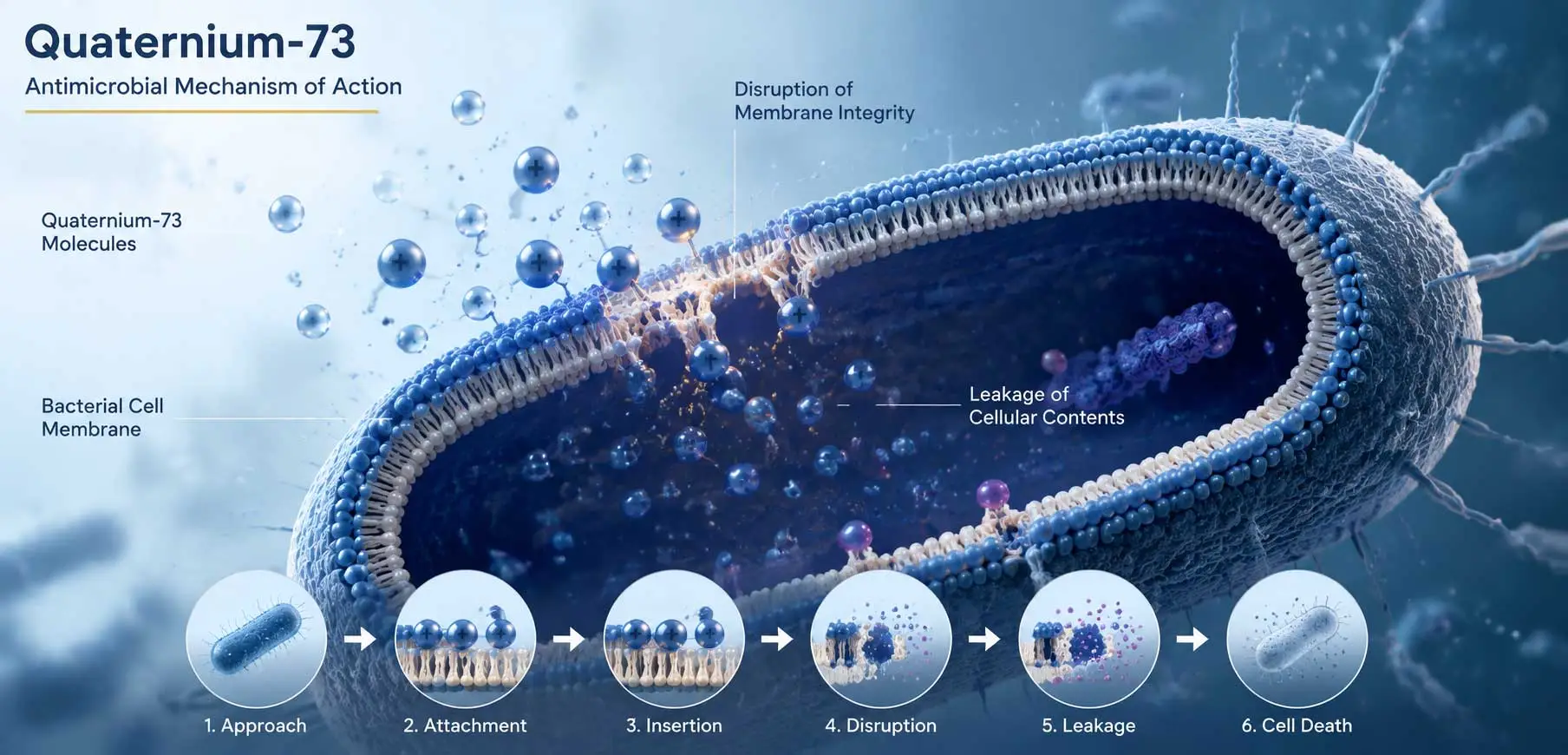
The reported Quaternium-73 antimicrobial mechanism centers on its interaction with microbial cell membranes. Commercial technical literature describes Quaternium-73 as disrupting bacterial membrane integrity, followed by degradation of bacterial cells. Electron microscopy has also been used in commercial technical documentation to illustrate structural changes associated with exposure to the ingredient.
This matters because the cell envelope is fundamental to microbial survival. It separates the cell from its external environment and participates in controlling transport and maintaining the conditions required for normal cellular processes. When membrane integrity is sufficiently disturbed, the organism can no longer maintain those functions normally.
It is tempting to simplify the Quaternium-73 mechanism of action into a single statement such as “it destroys bacteria,” but that description is not particularly useful to a formulator. Antimicrobial performance is concentration-dependent and organism-dependent, and susceptibility can vary substantially between microbial species and strains. The conditions used to demonstrate an effect therefore matter just as much as the headline conclusion.
How Does Quaternium-73 Interact With Microbial Cell Membranes?
Available product-specific technical evidence supports membrane disruption as an important part of Quaternium-73 antimicrobial action. The proposed sequence can be understood as interaction with the bacterial cell surface, disturbance of membrane integrity and subsequent loss of normal cellular function.
For cosmetic R&D teams, the important implication is not that every microorganism will respond identically. Rather, membrane-related antimicrobial activity provides a mechanistic basis for evaluating the material against organisms relevant to the intended formulation.
This is also why data should be reviewed organism by organism instead of treating the term “antimicrobial” as proof of universal activity.
Is Quaternium-73 Antibacterial or Antimicrobial?
Both terms appear in commercial literature, but antibacterial and antimicrobial are not interchangeable in a strict technical sense.
Antibacterial activity specifically concerns bacteria. Antimicrobial is a broader description that may encompass bacteria, yeasts, fungi or other microorganisms, depending on what has actually been tested. Several commercial sources report Quaternium-73 antibacterial activity, while broader supplier literature also reports activity against multiple bacterial and fungal organisms.
For technical writing and formulation documentation, claims should follow the available evidence. If a test demonstrates inhibition against C. acnes, it supports discussion of activity against that organism under the stated experimental conditions. It does not automatically establish equivalent activity against every microorganism encountered in a cosmetic product.
This distinction becomes especially important when buyers compare technical sheets from different Quaternium-73 suppliers. “Antimicrobial,” “antibacterial” and “preservative” can sometimes appear together in marketing material even though they describe different technical and regulatory questions.

How Does Quaternium-73 Act Against Cutibacterium acnes?
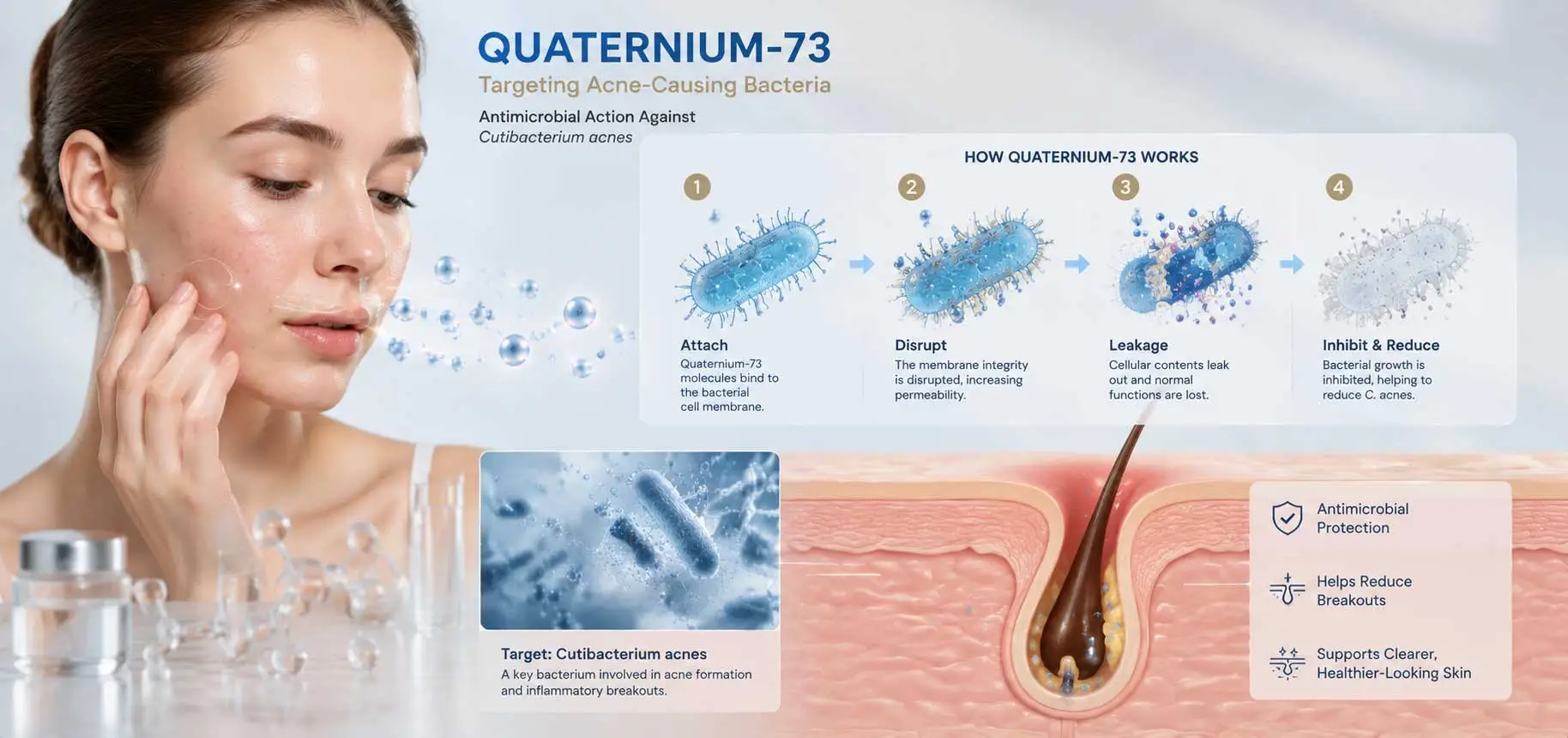
The relationship between Quaternium-73 and Cutibacterium acnes is one of the most relevant aspects of the ingredient's cosmetic use.
Older research and supplier documentation frequently refer to the organism as Propionibacterium acnes or P. acnes. Buyers researching Quaternium-73 Propionibacterium acnes data should therefore recognize that older and newer literature may use different taxonomic names for the organism.
Technical information for Pionin reports inhibition of P. acnes and attributes the activity primarily to disruption of bacterial cell membranes. A published Japanese clinical paper from 2002 also describes Pionin as an antibacterial ingredient against P. acnes in a skincare series evaluated in people with acne vulgaris, although that study assessed finished products containing multiple ingredients rather than isolated Quaternium-73 alone. That distinction is important when interpreting the evidence.
Why Is C. acnes Relevant to Quaternium-73 Research?
C. acnes is a Gram-positive commensal bacterium associated with the skin microbiome and acne pathophysiology. Contemporary dermatological literature continues to identify Quaternium-73 among quaternary ammonium compounds used in anti-acne skincare formulations targeting C. acnes.
This explains why Quaternium-73 for acne-prone skin appears so frequently in cosmetic ingredient literature. Its relevance is primarily connected with antimicrobial activity against an organism associated with acne rather than with exfoliation, physical oil absorption or other mechanisms used by different cosmetic ingredients.
Does Activity Against C. acnes Mean Quaternium-73 Treats Acne?
No. Quaternium-73 antimicrobial activity against C. acnes does not, by itself, establish that the raw material treats acne as a medical condition.
An in-vitro microbiological test asks whether microbial growth is inhibited under specified laboratory conditions. A therapeutic claim requires a different level and type of evidence and is also subject to the regulatory framework of the market where the finished product is sold.
For cosmetic manufacturers, the defensible approach is to distinguish raw-material evidence from finished-product claims. Supplier antimicrobial data can support ingredient selection during R&D, but the manufacturer remains responsible for finished-product testing, safety assessment and compliant claims.
What Does MIC Tell Us About Quaternium-73 Antimicrobial Activity?
MIC means minimum inhibitory concentration. It is the lowest tested concentration at which visible growth of a particular microorganism is inhibited under defined experimental conditions.
Historical Pionin technical data reproduced online report MIC values of approximately 0.0004–0.0008% against several P. acnes strains, with the testing described as using two-fold serial dilution and a standard method of the Japanese Society of Chemotherapy. These values are useful evidence of in-vitro activity, but because the accessible source is a reproduced commercial TDS rather than the original peer-reviewed experimental report, they should be interpreted as technical supplier data rather than universal reference values.
That qualification matters. A Quaternium-73 MIC belongs to the specific strain, culture medium, incubation conditions and test procedure used to generate it.
|
Information |
What it tells the formulator |
|
Test organism/strain |
What microorganism was actually evaluated |
|
MIC |
Lowest tested concentration inhibiting visible growth |
|
Test method |
Conditions under which the result was obtained |
|
Finished-formula testing |
How the complete formulation behaves |
|
Recommended use level |
Supplier formulation guidance, not a direct conversion from MIC |
Can Quaternium-73 MIC Be Used as a Cosmetic Dosage?
Not directly.
A Quaternium-73 minimum inhibitory concentration is not a recommended finished-product use level. A broth used for microbiological testing is fundamentally different from an emulsion, serum, toner or surfactant system containing multiple ingredients.
The useful principle for formulators is:
MIC value ≠ recommended cosmetic use level.
MIC helps characterize antimicrobial activity under controlled conditions. The concentration selected for a finished cosmetic must additionally consider the supplied grade, formulation environment, safety assessment, supplier guidance and applicable destination-market requirements.
Does Quaternium-73 Work the Same Way in a Finished Cosmetic Formula?
Not necessarily. Quaternium-73 formulation performance cannot be predicted solely from antimicrobial testing performed on the isolated raw material.
A finished cosmetic is a complex chemical environment. Surfactants, emulsifiers, solvents, salts, polymers, fragrances and other active ingredients can alter solubility, distribution and interactions within the formulation. pH and manufacturing conditions add further variables.
Product format matters as well. A facial cleanser is normally a rinse-off surfactant system with relatively short skin contact. A serum or cream is a leave-on system with a very different vehicle and exposure pattern. It would therefore be scientifically weak to assume that identical Quaternium-73 antimicrobial efficacy will occur in every product simply because the same concentration has been added.
For R&D teams, raw-material antimicrobial data should be treated as evidence supporting ingredient selection. Finished-product performance should be established in the actual formulation.
What Factors Can Affect Quaternium-73 Antimicrobial Performance?
Several formulation variables deserve attention when incorporating Quaternium-73 in cosmetic formulations, particularly because the ingredient is typically used at low levels.
Solubility and Uniform Distribution
Commercial formulation information describes Quaternium-73 as slightly soluble in water and more readily incorporated using solvents such as butylene glycol, propylene glycol, certain other glycols or ethanol. One supplier recommends preparing a polyol solution before incorporation.
This makes Quaternium-73 solubility more than a convenience issue. An ingredient cannot perform consistently if a very small amount is poorly distributed throughout the batch.
A controlled premix can therefore be more appropriate than adding a minute amount of dry powder directly to a large manufacturing vessel. The actual procedure should be established experimentally for the manufacturer's formula.
pH and Ingredient Compatibility
Commercial technical guidance places one Quaternium-73 grade within approximately pH 5.5–8.0 and reports thermal stability at elevated processing temperatures. Those values are useful starting points, but they should not be interpreted as universal guarantees for every supplier grade or finished formula.
Quaternium-73 compatibility should be evaluated with the complete ingredient system. R&D teams should observe precipitation, clarity, color, pH, viscosity and other product-specific stability indicators throughout their established testing program.
Light exposure is another consideration: commercial technical guidance describes the material as light-sensitive and recommends protection from light.
Rinse-Off vs Leave-On Formulations
A Quaternium-73 cosmetic formulation should also be evaluated according to product type.
Cleansers and shampoos contain substantial surfactant systems and are rinsed away. Serums, gels and creams remain on the skin and present different solvent, contact-time and stability conditions. The same ingredient can therefore require different formulation work even when the target addition level is similar.
This is why formulation-specific testing is more informative than simply copying a use level from another product.
What Is the Typical Quaternium-73 Use Level in Cosmetics?
Several commercial technical sources recommend a Quaternium-73 use level of approximately 0.001–0.005%. CellMark Japan lists the same recommended range for cosmetic formulation, and Taiwan's amended cosmetic ingredient restrictions list Quaternium-73 at 0.005% in the relevant entry, effective October 1, 2027. Regulations vary by market and change over time, so destination-market requirements must be checked independently.
Published supplier recommendations should not be confused with a universal regulatory limit or a guaranteed effective Quaternium-73 dosage.
The difference becomes clearer when percentages are converted to actual manufacturing quantities:
•0.001% = 10 mg per kg of finished product
•0.005% = 50 mg per kg of finished product
At those levels, weighing accuracy and homogeneous incorporation are important practical considerations. A 1,000 kg production batch at 0.001%, for example, contains only 10 g of Quaternium-73.
The appropriate Quaternium-73 concentration should therefore be established using grade-specific technical information, formulation testing, safety assessment and the applicable regulatory requirements for the target market rather than simply selecting a number because it appears frequently online.
Does Quaternium-73 Replace a Cosmetic Preservative?
The fact that an ingredient demonstrates antimicrobial activity does not automatically mean that it can replace the preservation system of a finished cosmetic.
This distinction is particularly important for searches such as is Quaternium-73 a preservative. Commercial literature sometimes describes Quaternium-73 preservative activity, but preservation is a finished-product question.
A water-containing cosmetic must remain adequately protected against relevant microbial contamination throughout its intended shelf life and consumer use. Formula composition, water activity, pH, manufacturing hygiene, packaging and potential contamination during use all influence that requirement.
Why Challenge Testing Still Matters
A Quaternium-73 challenge test conducted on the finished product is conceptually different from an MIC test performed on the isolated ingredient.
Preservative efficacy testing evaluates whether the complete preservation strategy performs adequately in the finished formulation under the applicable test protocol. A raw-material MIC cannot substitute for that evaluation.
Formulators should therefore treat Quaternium-73's antimicrobial characteristics and the finished product's preservation strategy as related but separate technical questions.
Why Raw Material Purity Matters When Studying Quaternium-73 Performance
When a laboratory compares formulation results, the Quaternium-73 raw material itself needs to be sufficiently characterized. Otherwise, a change in performance may reflect a change in material rather than a change in formulation.
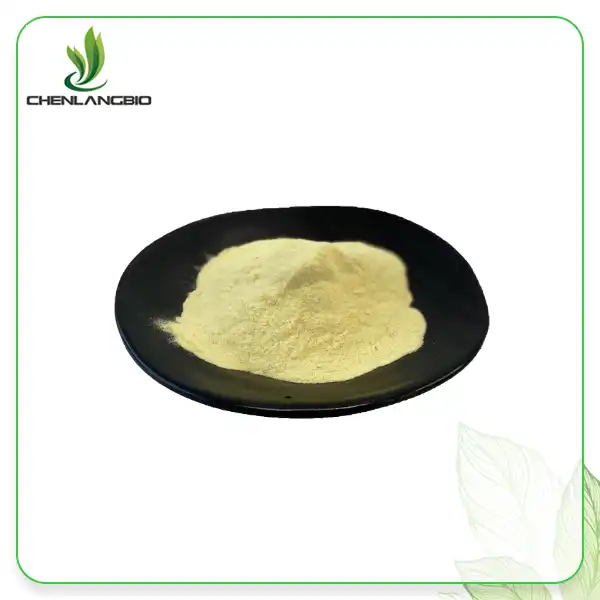
Commercial specifications commonly describe Quaternium-73 as a yellow or yellowish crystalline powder, and ≥98% HPLC purity is available commercially.
However, Quaternium-73 purity should not be evaluated as an isolated marketing number. A 98% result has meaning only in relation to the analytical method, specification and batch represented by the result.
For repeat production, consistency against an approved specification is usually more useful than repeatedly switching sources in pursuit of a marginally higher advertised purity.
How Should Buyers Verify Quaternium-73 Antimicrobial Raw Material Quality?
A purchasing team evaluating Quaternium-73 quality control should first confirm identity. The quotation, specification and analytical documentation should consistently identify Quaternium-73 and CAS 15763-48-1.
Next, compare the specification with the Quaternium-73 COA. These documents perform different functions: the specification defines acceptance criteria, while a batch-specific certificate of analysis reports how an actual lot performed against those criteria.
If purity is reported by Quaternium-73 HPLC analysis, buyers should understand what the result represents rather than treating the acronym itself as a quality guarantee. Analytical method, acceptance limit and batch result together provide more useful information than a percentage copied onto a sales page.
A representative sample should then be tested in the intended formulation. Record the sample lot and corresponding COA so the R&D-approved material can later be compared with the first commercial shipment.
This sequence—identity, specification, batch data and formulation evaluation—gives buyers a much stronger technical basis for supplier approval than price comparison alone.
Choosing a Quaternium-73 Supplier for Cosmetic Formulation Projects
A professional Quaternium-73 supplier should be able to support both the technical and commercial sides of qualification.
For a new project, request the current specification, representative or batch-specific COA, sample availability, packaging information and storage guidance. Once R&D approves the material, purchasing can assess MOQ, lead time and repeat supply.
The same process applies whether a company searches for a Pionin supplier, CAS 15763-48-1 supplier, Quaternium-73 manufacturer or broader cosmetic raw material supplier. Supplier terminology matters less than the ability to provide traceable material of consistent quality.
For long-term projects, batch consistency becomes particularly important. The objective is not simply to obtain a good laboratory sample; it is to obtain the same approved grade when commercial production begins.
Buying Quaternium-73 for Cosmetic Manufacturing
Companies preparing to buy Quaternium-73 should complete technical qualification before comparing the final Quaternium-73 price per kg.
For a new source, an efficient purchasing sequence is specification review → COA review → Quaternium-73 sample → formulation trial → commercial quotation → trial order → repeat supply assessment.
CHEN LANG BIO TECH supplies ≥98% Quaternium-73, with 1 kg aluminum-foil bags and 25 kg fiber drums among the available packaging formats. Our current product information states that routinely available orders can generally be dispatched within 2–3 working days, while larger quantities should be scheduled according to stock and production availability.
Cosmetic manufacturers and distributors evaluating bulk Quaternium-73 should confirm the current specification, stock, MOQ, packaging and quotation at the time of purchase rather than relying on historical commercial information.
Quaternium-73 Antimicrobial Activity FAQ
How does Quaternium-73 work?
Available technical evidence describes how Quaternium-73 works primarily in terms of disruption of bacterial cell membranes, followed by loss of normal cellular integrity and inhibition of microbial growth. The actual effect depends on the microorganism, concentration and test conditions.
Is Quaternium-73 antibacterial?
Yes. Published and commercial literature documents Quaternium-73 antibacterial activity, including activity against C. acnes. “Antimicrobial” is a broader term and should be used according to the organisms actually demonstrated in the supporting data.
Does Quaternium-73 work against Cutibacterium acnes?
Technical data report activity against C. acnes, historically called Propionibacterium acnes. This supports its relevance to acne-prone cosmetic formulation, but antimicrobial activity against the organism should not be interpreted by itself as proof that the raw ingredient treats acne.
What does Quaternium-73 MIC mean?
Quaternium-73 MIC is the minimum tested concentration that inhibits visible growth of a specified microorganism under defined laboratory conditions. MIC values should always be interpreted with the strain and test method; they are not equivalent to finished-cosmetic dosage recommendations.
What concentration of Quaternium-73 is used in cosmetics?
Multiple commercial technical sources recommend approximately 0.001–0.005% as a formulation range. The actual Quaternium-73 use level should be determined according to the specific raw-material grade, formulation, safety assessment and current regulations in the destination market.
Is Quaternium-73 a cosmetic preservative?
Quaternium-73 has documented antimicrobial activity, and some commercial sources discuss preservative-related applications. This does not establish that it can replace a validated preservation system in every cosmetic formula. Finished-product preservative efficacy should be evaluated separately.
Final Considerations: From Antimicrobial Evidence to Cosmetic Formulation
Understanding how Quaternium-73 works requires separating three questions that are often combined in ingredient marketing: what antimicrobial activity the raw material demonstrates under defined laboratory conditions, how the ingredient behaves once incorporated into a particular cosmetic formula, and what performance can actually be substantiated for the finished product.
For formulators, that distinction leads to better experiments. For buyers, it leads to better supplier qualification. Identity, specification, analytical data and a representative formulation sample should be established before a bulk Quaternium-73 purchasing decision is based on price.
Cosmetic manufacturers, R&D laboratories and ingredient distributors evaluating Quaternium-73 can contact CHEN LANG BIO TECH for current specifications, COA information, samples, packaging details and commercial quotations.
Email: admin@chenlangbio.com
References
1. Sano S, et al. Safety Evaluation of Skin Care Products (NOV AC Series) in Patients with Acne Vulgaris. Skin Research, 2002. The study describes Pionin-containing skincare products and their use in relation to P. acnes.
2. Feng et al. Truncal Acne: Pathophysiology, Clinical Features, and Management Strategies. Journal of Cosmetic Dermatology, 2026. Discusses C. acnes and Quaternium-73 among antimicrobial approaches used in anti-acne skincare.
3. Winkey Technology. WActive Pionin Technical/Product Information. Provides commercial technical information concerning membrane disruption, P. acnes and recommended formulation level.
4. CellMark Japan. Quaternium-73 Product Information. Reports yellow powder form and recommended 0.001–0.005% formulation range.
5. Taiwan Food and Drug Administration. List of Ingredients Restricted in Cosmetic Products, amended list effective October 1, 2027. Includes Quaternium-73 in the relevant restricted-ingredient entry.
6. CHEN LANG BIO TECH. Quaternium-73 Product Information. Commercial specification, packaging and supply information.

Send Inquiry
Related Industry Knowledge
- Spirulina vs Phycocyanin: Composition, Applications, and Market Value
- What Is Pyrroloquinoline Quinone (PQQ) Powder?
- Capsaicin in Cosmetics: Mechanism, Benefits, Formulation Strategies and Safety Insights
- 7 Applications for Lycopene Powder in Formulations
- Top 5 Uses of Hydrolyzed Keratin in Beauty Products
- What are the Health Benefits of Mung Bean Peptide Powder?
- What Are the Potential Health Benefits of NMN Supplementation?
- Can Dimethylmethoxy Chromanol Reduce Signs of Aging
- Unlocking the Benefits Understanding the Uses of TUDCA
- What are the Benefits of Magnolol