Mangiferin 90% vs 95%: Purity, HPLC & Buyer's Guide
November 24, 2026
Choosing between Mangiferin 90% vs 95% involves more than comparing two purity percentages. Although the 95% grade provides a higher declared concentration of mangiferin, it does not necessarily offer better solubility, formulation stability, or overall purchasing value. The appropriate grade depends on the manufacturer's ingredient specifications, analytical requirements, processing conditions, and cost per unit of active compound.
For nutraceutical manufacturers, botanical extract distributors, and formulation laboratories, Mangiferin Powder Purity is only one part of raw material qualification. HPLC assay methods, batch consistency, residual impurities, and supporting documentation can be equally important when comparing suppliers.
This guide examines the technical differences between the two Mangiferin Extract Grades, explains how to interpret HPLC and Certificate of Analysis (COA) results, and provides practical criteria for evaluating quality, formulation suitability, and bulk purchasing costs.
What Is the Difference Between Mangiferin 90% and 95% Powder?
Mangiferin is a naturally occurring C-glucosyl xanthone found in several botanical species, including Mangifera indica L., the mango tree. Its molecular formula is C19H18O11, its molecular weight is approximately 422.34 g/mol, and its CAS number is 4773-96-0.
Commercial mangiferin extracts are commonly identified by their declared assay, which represents the measured concentration of mangiferin under a specified analytical method. However, the declared percentage should always be interpreted alongside the test procedure and reporting basis.
The principal difference in a Mangiferin 90% vs 95% Difference comparison is the amount of mangiferin present per unit of raw material.
|
Evaluation Criteria |
Mangiferin 90% |
Mangiferin 95% |
|
Declared mangiferin assay |
90% |
95% |
|
Theoretical mangiferin per 1 kg |
900 g |
950 g |
|
Non-mangiferin fraction |
Approximately 10% |
Approximately 5% |
|
Analytical method |
HPLC |
HPLC |
|
Main purchasing consideration |
Assay requirement and cost efficiency |
Higher active concentration |
|
Water solubility |
Requires formulation testing |
Requires formulation testing |
|
Quality documentation |
Batch-specific COA |
Batch-specific COA |
The non-mangiferin fraction should not automatically be classified as impurities or contaminants. Depending on the extraction and purification process, it may include other botanical constituents, moisture, and related substances. Its composition requires separate characterization.
♦Mangiferin 90% Powder: Assay and Grade Characteristics
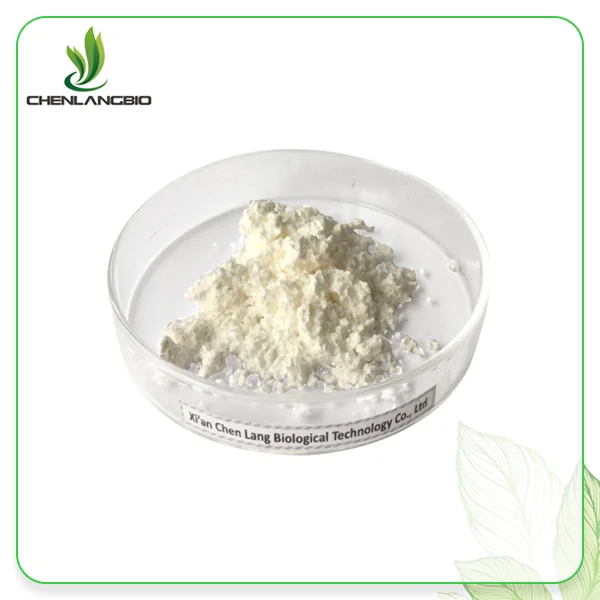
Mangiferin 90% Powder provides a standardized concentration suitable for evaluation in botanical ingredient development and other applications where the required specification permits this grade.
For manufacturers purchasing standardized plant extracts, the principal advantage is the ability to calculate ingredient input using a defined assay rather than relying on an unspecified botanical concentration.
Nevertheless, a 90% assay alone does not establish suitability for a particular finished product. Buyers should verify botanical identity, batch consistency, relevant contaminant limits, and compatibility with their manufacturing process.
♦Mangiferin 95% Powder: Higher Assay and Formulation Considerations
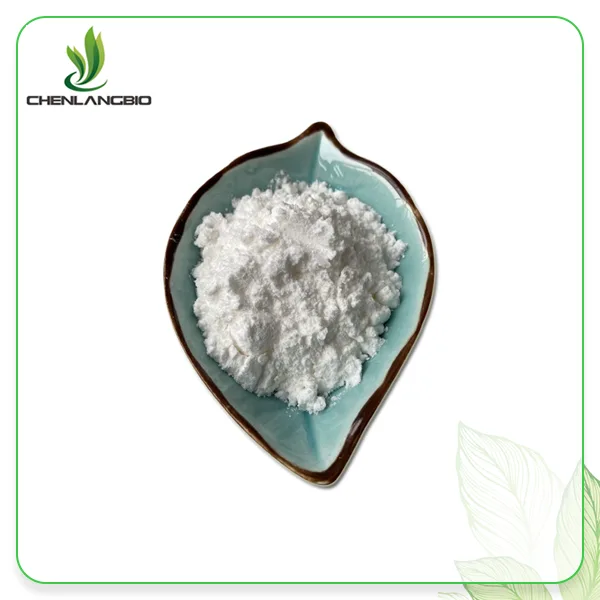
Mangiferin 95% Powder contains approximately 5.6% more mangiferin per kilogram than the 90% grade, assuming both assays are expressed on the same mass basis.
This difference may be useful when formulators need to reduce the total raw material input while maintaining a specified mangiferin quantity.
However, High Purity Mangiferin Extract should not automatically be considered superior in every application. Particle characteristics, dissolution behavior, and stability can vary independently of assay. A higher percentage is commercially valuable only when it meets the buyer's technical requirements at an acceptable overall cost.
How Is Mangiferin Purity Measured by HPLC?
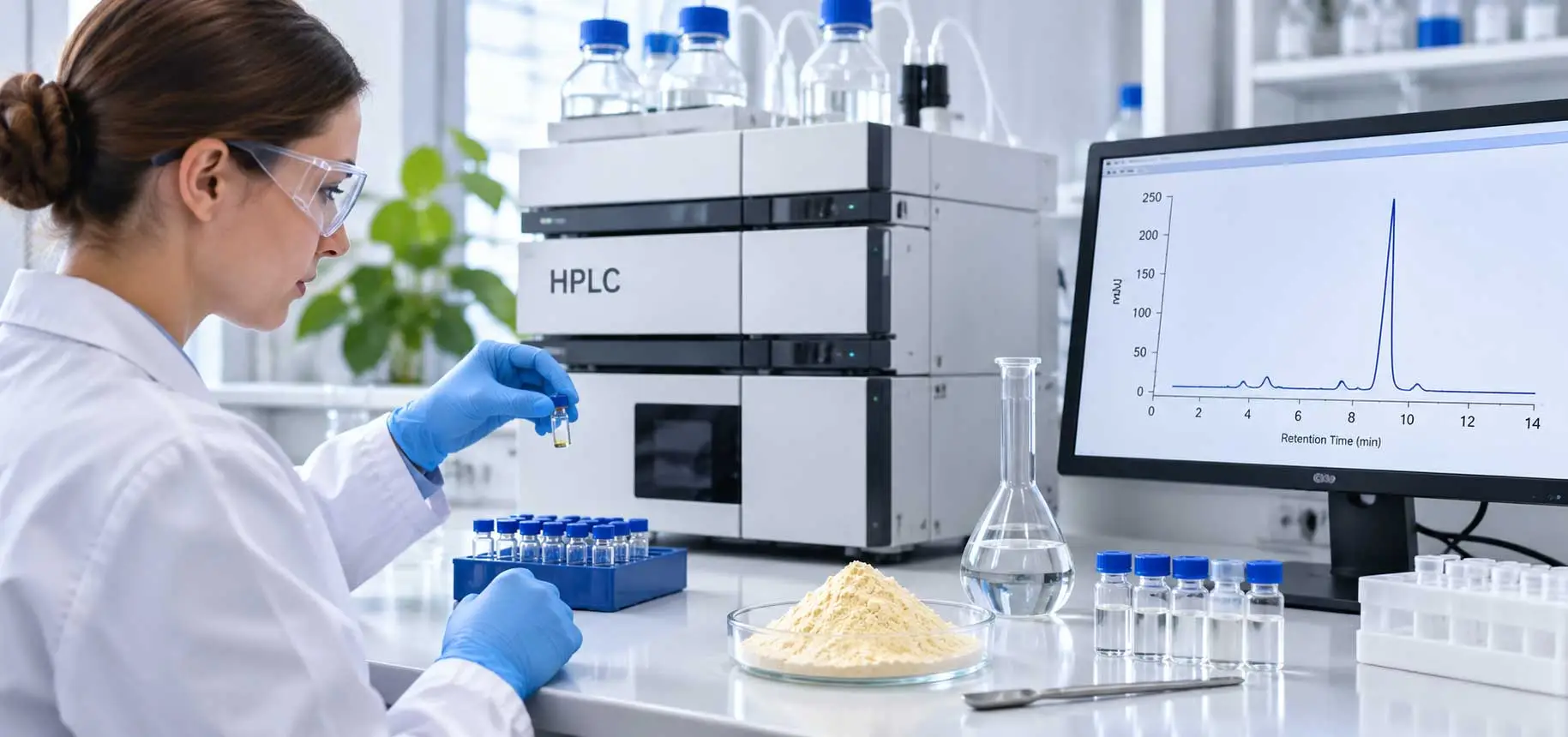
High-performance liquid chromatography is widely used to identify and quantify botanical compounds. In Mangiferin HPLC Analysis, a prepared sample is separated chromatographically, and the mangiferin signal is evaluated against an appropriate analytical reference.
For procurement teams, the critical issue is not simply whether a supplier uses HPLC, but how the reported purity was calculated.
Mangiferin HPLC Assay vs Chromatographic Peak Area
A quantitative Mangiferin HPLC Assay generally involves comparing the sample response with a calibrated reference standard. The resulting concentration is then used to calculate mangiferin content in the original material, accounting for sample weight, dilution, reference standard purity, and other relevant factors.
Peak-area normalization is different. It expresses the area of a chromatographic peak relative to the total integrated peak area under the selected analytical conditions.
For example, a chromatogram showing 95% relative peak area does not necessarily establish that the powder contains 95% mangiferin by weight. Different compounds may have different detector responses, and some constituents may not be detected under the selected conditions.
Consequently, buyers comparing Mangiferin Purity Testing results should request clarification on whether the reported value represents a calibrated quantitative assay or a relative chromatographic measurement.
Why HPLC Methods Matter When Comparing Mangiferin Suppliers
Reliable Mangiferin Powder Quality Testing requires an analytical procedure suitable for the intended purpose. Important method characteristics include specificity, precision, accuracy, linearity, and an appropriate working range.
A purchasing team reviewing results from different laboratories should consider the reference standard, sample preparation procedure, chromatographic separation, detection wavelength, calibration method, and assay calculation.
The reporting basis also matters. A result expressed on a dried basis may differ from one reported on an as-received basis because of the material's moisture content.
When two suppliers report identical purity values using different methods, those results should not automatically be treated as directly comparable.
For higher-value orders, requesting the analytical method summary and representative chromatographic data can provide greater confidence than relying on the declared percentage alone.
How to Read a Mangiferin Powder COA Before Buying
A Mangiferin Powder COA is one of the most important documents in raw material qualification. It connects a specific production batch with its tested characteristics and provides the evidence needed to determine whether the material meets an agreed purchasing specification.
However, a COA should not be evaluated solely by checking whether the mangiferin assay exceeds 90% or 95%. Buyers should also review the testing scope, analytical methods, batch identification, and acceptance criteria.
Key Mangiferin COA Specifications Buyers Should Verify
A useful Mangiferin Certificate of Analysis should clearly distinguish specification limits from actual test results. For example, an assay requirement of not less than 95% is an acceptance criterion, whereas 95.6% would represent an actual analytical result.
The following checklist provides a practical starting point for supplier qualification.
|
Quality Parameter |
What Buyers Should Verify |
|
Product identification |
Mangiferin, CAS 4773-96-0 |
|
Botanical identity |
Scientific name and plant part |
|
Batch number |
Traceability to the supplied material |
|
Mangiferin assay |
Actual result, specification and HPLC method |
|
Moisture or loss on drying |
Defined limit and analytical result |
|
Heavy metals |
Relevant elemental limits and testing method |
|
Microbiological quality |
Limits appropriate to the intended application |
|
Pesticide residues |
Applicable testing requirements |
|
Residual solvents |
Solvents used and relevant residual limits |
|
Testing information |
Test date, report authorization and laboratory details |
Not every parameter is necessarily included in a standard COA. Testing requirements should reflect the manufacturing process, intended application, customer specification, and destination market.
Batch Consistency and Third-Party Mangiferin Testing
A single acceptable batch does not establish long-term supply consistency. For recurring orders, buyers should compare multiple batches and review variations in assay, moisture, appearance, and other critical attributes.
Independent laboratory analysis can provide additional assurance when qualifying a new Mangiferin Extract Supplier, particularly when different suppliers report substantially different purity values or when the material will be used in a tightly controlled manufacturing process.
Third-party results should be evaluated against the same agreed methods and specifications wherever possible. Differences between laboratories may reflect analytical procedures rather than genuine differences in raw material quality.
At CHEN LANG BIO TECH, we support ingredient qualification through HPLC-based assay testing and available batch documentation. Customers requiring additional testing can discuss their acceptance criteria before confirming an order.
Does Higher Mangiferin Purity Improve Solubility and Formulation Performance?
One common misconception is that increasing mangiferin purity from 90% to 95% automatically improves its behavior in finished formulations. In practice, Mangiferin Powder Solubility and processing performance depend on several properties beyond assay.
Mangiferin has limited aqueous solubility, which can present challenges when developing liquid formulations. A higher-purity grade does not eliminate this limitation because the compound's molecular structure remains unchanged.
Mangiferin Water Solubility and Processing Limitations
Mangiferin Water Solubility can be influenced by temperature, pH, solvent composition, and the concentration of other ingredients. These factors should be investigated experimentally rather than inferred from the declared purity.
For aqueous formulations, manufacturers should determine whether mangiferin remains dissolved or forms a suspension under the intended processing and storage conditions.
A formulation that initially appears uniform may subsequently develop sedimentation or crystallization. Therefore, physical stability should be evaluated over an appropriate storage period.
Where solubilization approaches are considered, formulators should assess their compatibility with the intended product and applicable regulatory requirements.
Choosing Mangiferin Powder for Capsules, Tablets and Formulation Research
For Mangiferin Powder for Supplements, the most important processing considerations may differ from those of liquid systems.
Capsule manufacturers should assess particle size distribution, bulk density, powder flow, and blend uniformity. Tablet manufacturers may additionally need to investigate compressibility, excipient interactions, and processing behavior.
Mangiferin Formulation Stability should also be evaluated under relevant temperature, humidity, light exposure, and packaging conditions.
Neither 90% nor 95% purity guarantees satisfactory performance in these applications. The preferred grade is the one that meets the formulation's assay requirements while delivering reproducible manufacturing behavior.
Mangiferin 90% vs 95% Price: Which Grade Offers Better Value?
The most economical mangiferin grade is not necessarily the one with the lowest price per kilogram. For commercial manufacturers, Mangiferin Powder Price should be evaluated against the quantity of mangiferin delivered, quality requirements, processing costs, and overall supply reliability.
A higher-purity grade may justify a higher purchase price if it reduces ingredient input or meets a technical specification that the lower grade cannot satisfy.
How to Calculate Cost per Gram of Mangiferin
A practical comparison starts with the cost of the declared active compound.
Consider the following hypothetical quotation. These figures are illustrative and do not represent current CHEN LANG BIO TECH pricing.
|
Cost Comparison |
Mangiferin 90% |
Mangiferin 95% |
|
Example powder price |
$180/kg |
$195/kg |
|
Declared assay |
90% |
95% |
|
Mangiferin per kilogram |
900 g |
950 g |
|
Cost per gram mangiferin |
$0.200 |
$0.205 |
|
Cost per kg mangiferin |
$200.00 |
$205.26 |
In this example, the 90% grade provides a slightly lower cost per gram of mangiferin, even though the 95% grade contains more active compound.
However, the comparison changes if the 95% grade is offered at a lower premium. At a 90% powder price of $180/kg, a 95% grade priced at $190/kg would provide approximately the same cost per gram of mangiferin.
This calculation gives buyers a more meaningful basis for comparing quotations than the nominal kilogram price alone.
Bulk Mangiferin Powder Pricing, MOQ and Order Quantity
For Bulk Mangiferin Powder, commercial quotations may vary according to purity, order quantity, raw material availability, packaging, testing requirements, and shipping destination.
A buyer requesting Mangiferin Powder Wholesale Price information should specify whether the quotation is for 90% or 95% material and confirm the applicable analytical specification.
Additional costs may arise from independent testing, special packaging, customs documentation, or delivery arrangements.
Our standard Mangiferin Powder MOQ is 1 kg, allowing customers to evaluate the material before committing to larger purchases. For recurring orders, discussing expected annual volume and delivery schedules can help establish more practical supply arrangements.
How to Choose a Reliable Mangiferin Powder Manufacturer and Supplier
Selecting a Mangiferin Powder Manufacturer requires more than comparing assay percentages and quotations. Procurement teams should determine whether the supplier can provide consistent material, transparent technical documentation, and dependable order fulfillment.
For buyers sourcing internationally, communication and documentation are particularly important because resolving a quality discrepancy after shipment can be expensive and time-consuming.
Supplier Qualification: Botanical Source, Traceability and Quality Control
A qualified Mangiferin Powder Supplier should be able to identify the botanical source, plant part used, extraction or purification approach, and applicable product specifications.
For mango-derived mangiferin, the scientific name Mangifera indica L. should be distinguished from the broader commercial term mango extract. Buyers should also verify whether the supplied material originates from mango peel, bark, leaves, or another declared source.
Traceability should connect the finished ingredient batch to relevant production and quality records.
When evaluating a Mangiferin Powder Supplier China or any overseas supplier, buyers should request representative documentation before approving commercial quantities.
CHEN LANG BIO TECH operates botanical ingredient production and quality control facilities supported by HPLC, GC, and other analytical capabilities. Our team can assist with specification review, available COA documentation, and sample evaluation.
Mangiferin Bulk Supply, Packaging and International Shipping
Buyers planning to Buy Mangiferin Powder in Bulk should confirm packaging, dispatch schedules, and shipping responsibilities before issuing a purchase order.
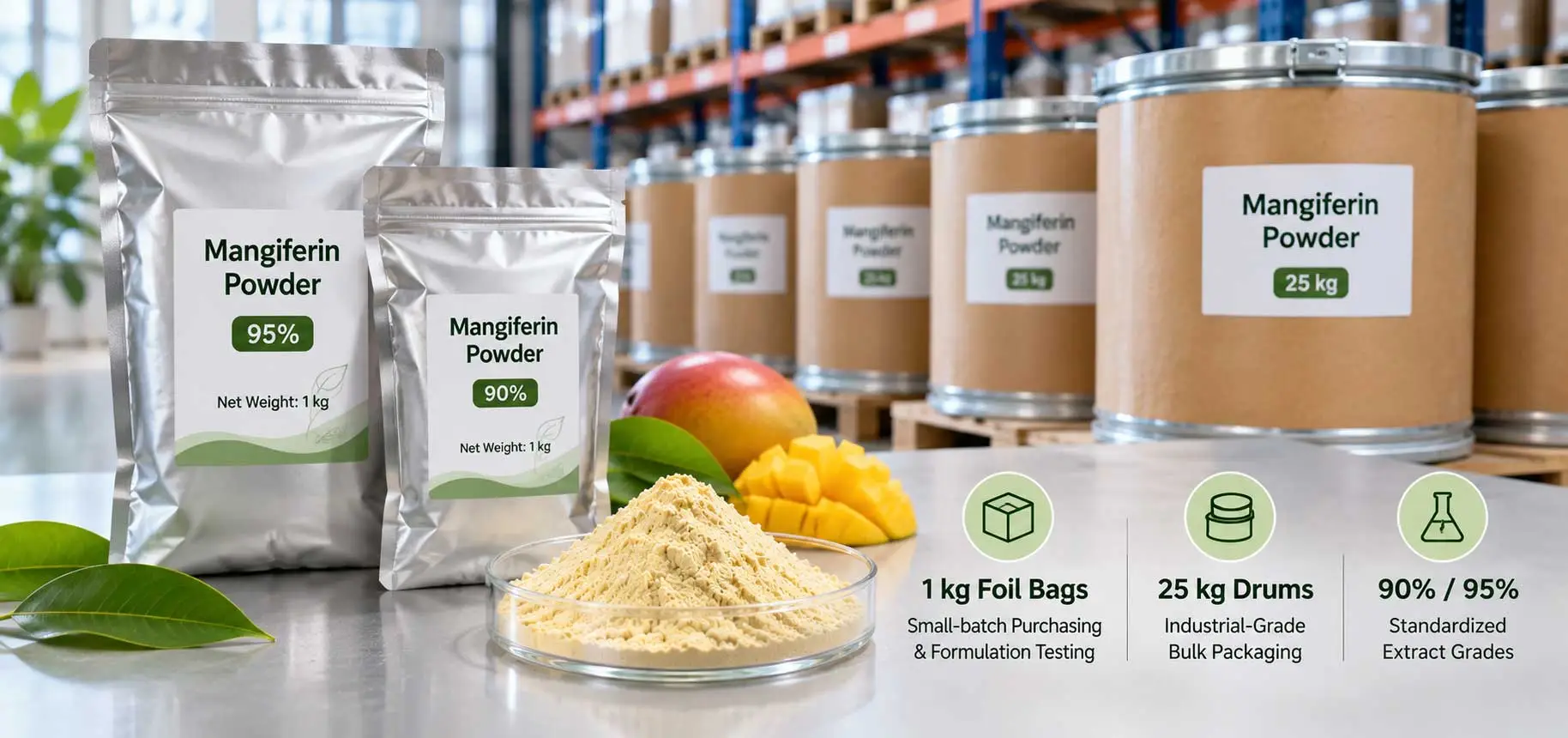
We supply Mangiferin 90% and 95% in 1 kg aluminum foil bags and 25 kg paper drums. Standard in-stock orders are generally dispatched within 2–3 working days after payment and order confirmation, subject to stock availability.
For customers purchasing Mangiferin Powder 1kg quantities, express shipping may be suitable for initial evaluations. Larger Mangiferin Powder 25kg orders can be arranged through appropriate international freight services.
Shipping terms, customs documentation, and destination requirements should be agreed before dispatch, particularly when ordering botanical ingredients for regulated applications.
Mangiferin 90% vs 95%: Frequently Asked Questions
Is Mangiferin 95% Always Better Than 90%?
Not necessarily. Mangiferin 95% provides a higher concentration of the declared compound, but the preferred grade depends on the intended formulation, quality requirements, and purchasing cost. Manufacturers should compare assay methods, batch consistency, and processing performance before selecting a grade.
Can Buyers Request a Mangiferin HPLC COA Before Ordering?
Yes. Buyers can request an available Mangiferin Powder COA to review the assay and relevant quality specifications before purchasing. Additional analytical documentation or testing requirements should be discussed during supplier qualification.
What Is the Minimum Order Quantity for Mangiferin Powder?
CHEN LANG BIO TECH offers a minimum order quantity of 1 kg. Customers can request a Mangiferin Powder Sample for preliminary evaluation, subject to availability and shipping arrangements. Larger orders can be quoted according to purity, quantity, and destination.
Is Mangiferin Powder Suitable for Water-Based Formulations?
Mangiferin has limited water solubility. Manufacturers developing aqueous formulations should investigate dissolution, dispersion, physical stability, and ingredient compatibility under their intended processing conditions. Higher purity alone does not guarantee improved water solubility.
Request Mangiferin 90% or 95% Powder Samples and Bulk Pricing
The decision between Mangiferin 90% and 95% should be based on verified assay results, formulation requirements, and the total cost of obtaining the specified mangiferin content.
CHEN LANG BIO TECH supplies both grades with HPLC-based testing, batch documentation, and international shipping support.
Whether you need to Buy Mangiferin 95% Powder for formulation research or arrange a recurring Mangiferin Powder Bulk Order, our team can help you evaluate available specifications, packaging, and purchasing options.
Contact us Email: admin@chenlangbio.com to request a COA, discuss samples, or obtain a quotation.
References
1. National Center for Biotechnology Information. PubChem Compound Summary: Mangiferin, CAS 4773-96-0. https://pubchem.ncbi.nlm.nih.gov/
2. International Council for Harmonisation (ICH). Q2(R2): Validation of Analytical Procedures. https://www.ich.org/
3. International Council for Harmonisation (ICH). Q3C(R9): Impurities — Guideline for Residual Solvents. https://www.ich.org/
4. International Council for Harmonisation (ICH). Q3D(R2): Guideline for Elemental Impurities. https://www.ich.org/

Send Inquiry

Related Industry Knowledge
- 3-O-Ethyl Ascorbic Acid vs L-Ascorbic Acid: Stability and Formulation
- Resveratrol vs Pterostilbene: Which Antioxidant Is More Effective for Modern Formulations?
- Sodium Polyglutamate: Superior Hydration in Skincare
- How Does Serrapeptase Powder Enhance Protein Hydrolysis Efficiency?
- What is the Difference between Alpha-Ketoglutarate and Calcium Alpha-Ketoglutarate Monohydrate?
- Can Chondroitin Sulfate Powder Improve Skin Health?
- What is the Chemical Structure and Formula of Sodium Methylesculetin Acetate?
- How Much EGCG In Lipton Green Tea?
- How Does Kava Kavalactone Powder Affect the Brain
- Is Glutathione GSH Powder Good for Skin Whitening