
3-O-Ethyl Ascorbic Acid vs L-Ascorbic Acid: Stability and Formulation
2026-10-15 15:44:12
Choosing between 3-O-ethyl ascorbic acid vs L-ascorbic acid involves more than comparing two forms of vitamin C. For cosmetic manufacturers, the decision affects formulation pH, oxidation control, processing conditions, product appearance, and long-term stability.
L-ascorbic acid is the unmodified form of vitamin C, valued for its well-established antioxidant chemistry but sensitive to oxidation in aqueous formulations. 3-O-ethyl ascorbic acid is a chemically modified derivative designed to improve certain stability characteristics while retaining a vitamin C-related functional structure.
Neither ingredient is universally superior. The appropriate choice depends on the formulation system, intended product positioning, available stability data, and manufacturing requirements.
For skincare brands evaluating vitamin C ingredients for cosmetics, understanding these differences can reduce unnecessary reformulation work and support more consistent commercial production.
What Is the Difference Between 3-O-Ethyl Ascorbic Acid and L-Ascorbic Acid?
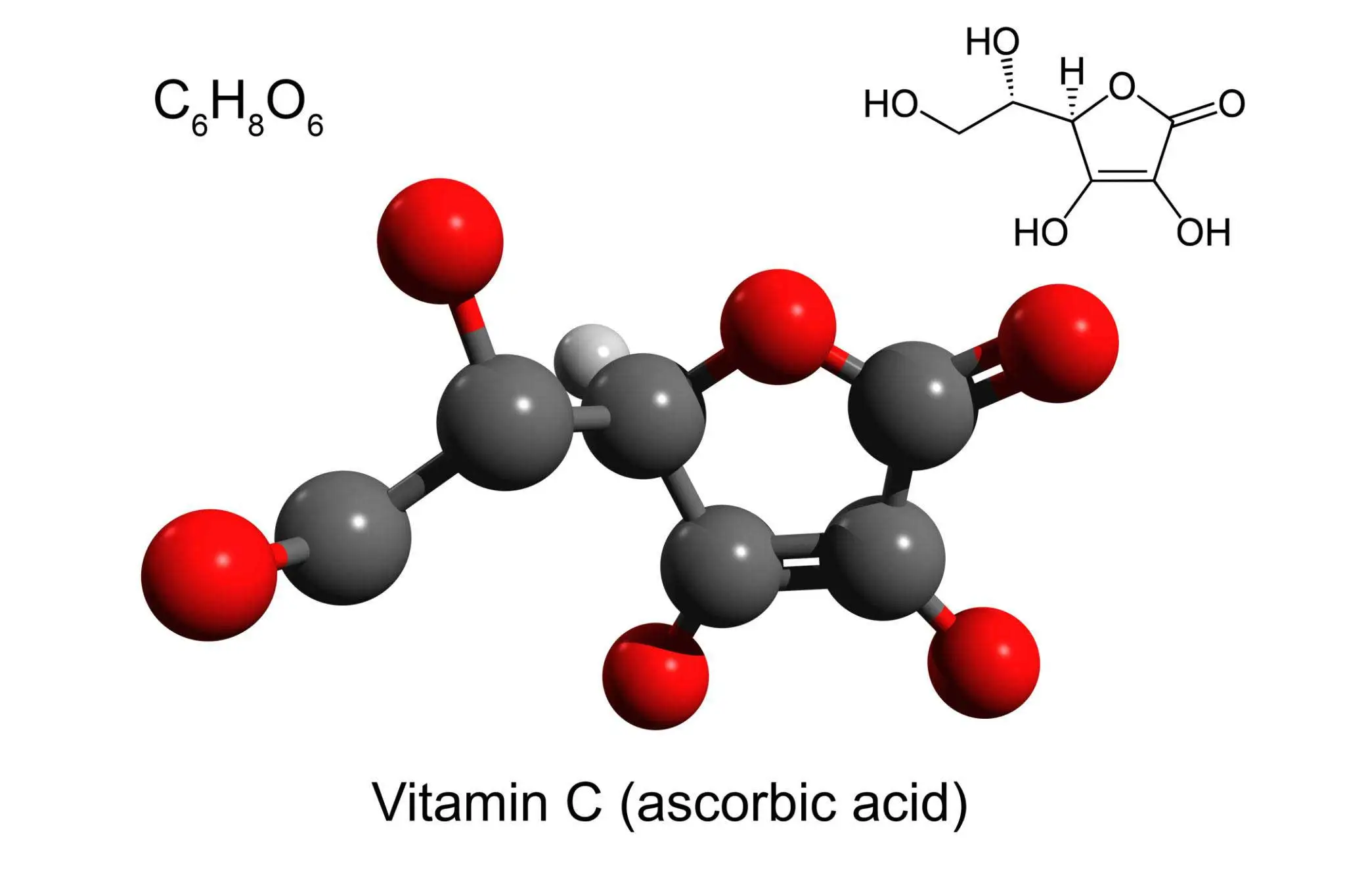
The fundamental difference lies in their molecular structures. L-ascorbic acid contains an unmodified enediol system responsible for its characteristic reducing activity. In 3-O-ethyl ascorbic acid, the hydroxyl group at the third carbon position is modified through etherification.
This structural change influences the compound's chemical behavior, particularly its susceptibility to certain oxidation pathways.
3-O-Ethyl Ascorbic Acid: A Modified Vitamin C Derivative
The 3-O-ethyl ascorbic acid structure contains an ethyl ether substitution at the C3 hydroxyl group. This modification reduces the availability of a reactive site associated with the oxidation chemistry of unmodified ascorbic acid.
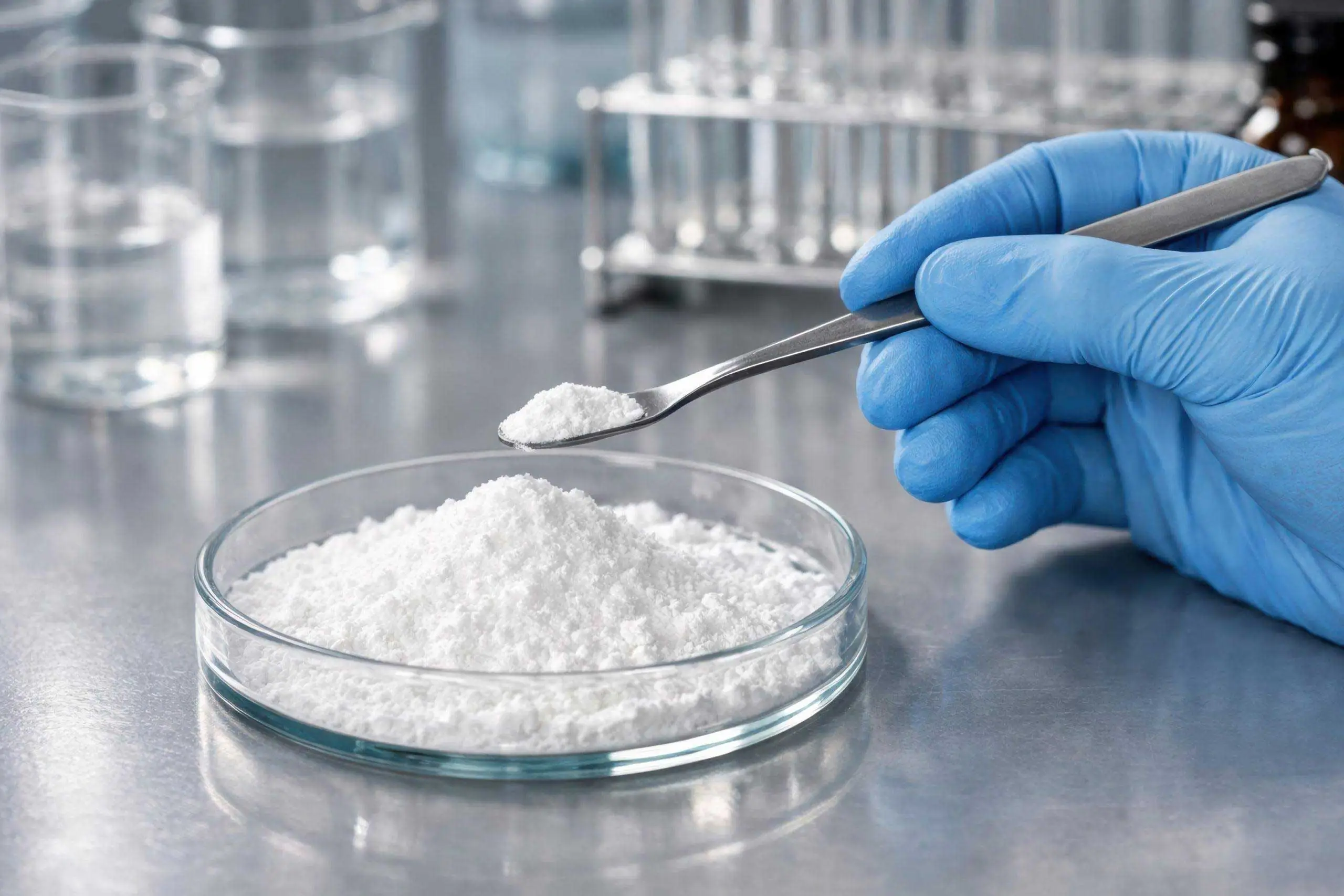
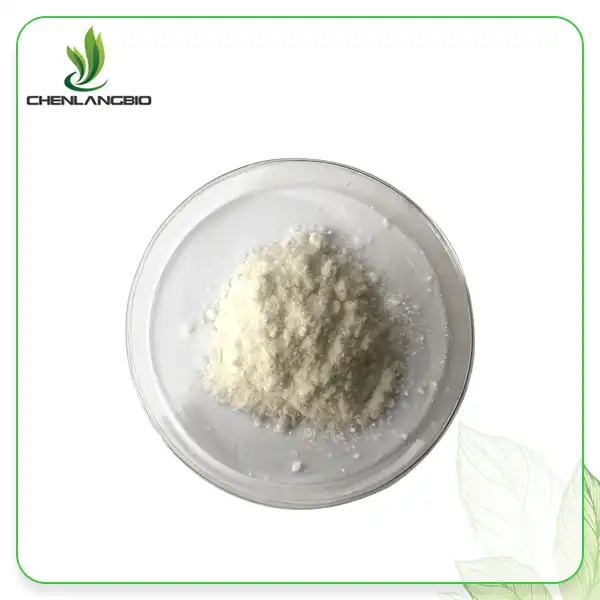
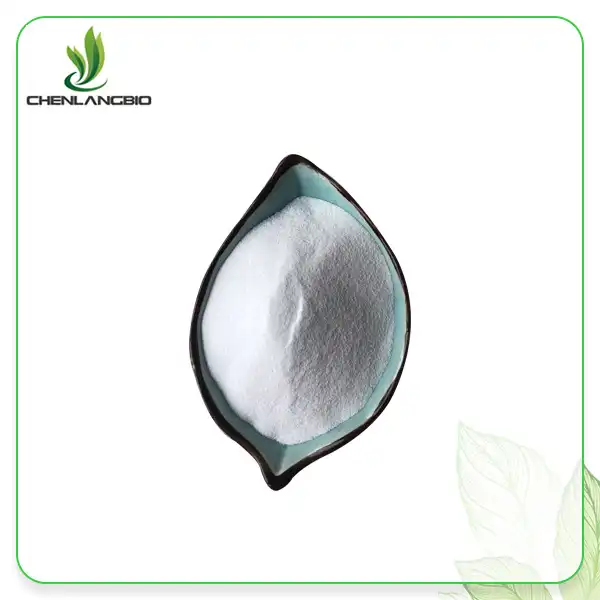
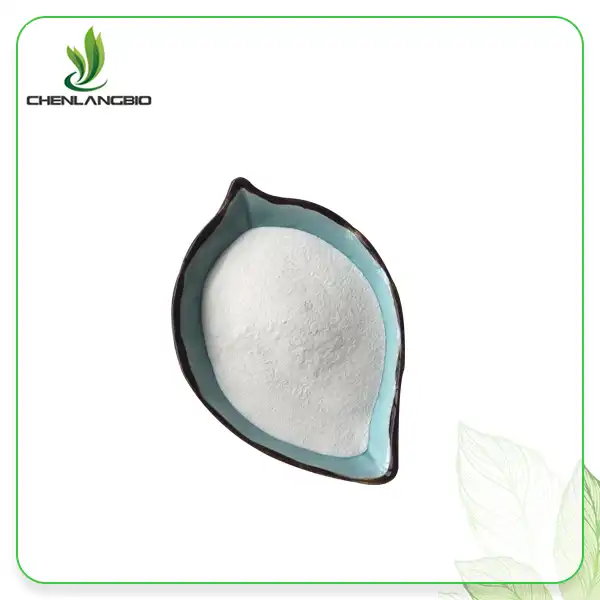
The ingredient is commonly supplied as a white to off-white crystalline powder for cosmetic manufacturing.
Our commercial specification is 99% assay, subject to the analytical method and acceptance criteria stated in the applicable batch documentation.
L-Ascorbic Acid: The Original Form of Vitamin C
L-ascorbic acid is chemically identical to vitamin C. Its reducing properties are closely associated with the enediol group, which can undergo oxidation to form dehydroascorbic acid.
Although this chemistry contributes to its antioxidant activity, it also creates formulation challenges, particularly in water-containing products exposed to oxygen, elevated temperatures, or unfavorable pH conditions.
Chemical and Formulation Comparison
|
Property |
3-O-Ethyl Ascorbic Acid |
L-Ascorbic Acid |
|
CAS number |
86404-04-8 |
50-81-7 |
|
Molecular formula |
C₈H₁₂O₆ |
C₆H₈O₆ |
|
Molecular weight |
204.18 g/mol |
176.12 g/mol |
|
Chemical classification |
Ethylated vitamin C derivative |
Unmodified vitamin C |
|
Oxidation behavior |
Modified oxidation susceptibility |
Readily oxidized under unfavorable conditions |
|
Water solubility |
Water-soluble; concentration-dependent |
Highly water-soluble |
|
Formulation pH |
Depends on supplier data and finished formula |
Acidic conditions often preferred |
|
Manufacturing priority |
Verify stability and compatibility |
Control oxidation and pH |
This vitamin C derivative comparison illustrates why ingredient selection should begin with the intended formulation rather than the ingredient name alone.
3-O-Ethyl Ascorbic Acid vs L-Ascorbic Acid Stability: What Changes in a Formula?
For commercial skincare development, ethyl ascorbic acid stability is one of the most important technical considerations.
A stable raw material does not automatically produce a stable finished cosmetic. Once incorporated into a formula, its behavior depends on the surrounding ingredients, solvent system, pH, packaging, and manufacturing conditions.
•Why Is L-Ascorbic Acid Prone to Oxidation?
The oxidation of L-ascorbic acid involves electron transfer from its enediol structure. In aqueous systems, the reaction can be accelerated by dissolved oxygen, transition metal ions, temperature, and pH-dependent chemical conditions.
Copper and iron contamination are particularly relevant because trace metals can catalyze oxidation reactions.
Ascorbic acid oxidation initially produces dehydroascorbic acid, which may undergo further degradation. These reactions can contribute to changes in potency and the appearance of a finished product.
Consequently, L-ascorbic acid oxidation must be considered when selecting water quality, processing equipment, packaging materials, and antioxidant protection systems.
•How Stable Is 3-O-Ethyl Ascorbic Acid?
Etherification at the C3 position changes the oxidation chemistry of the molecule. This provides a chemical rationale for the improved stability commonly associated with 3-O-ethyl ascorbic acid.
However, stable vitamin C derivative should not be interpreted as resistance to every degradation mechanism.
The ingredient can still be affected by unsuitable formulation conditions, and its stability must be demonstrated in the finished product.
It is also important to distinguish chemical stability from biological performance. Greater stability does not, by itself, establish superior skin penetration, conversion to free vitamin C, or clinical efficacy.
•How Should Cosmetic Manufacturers Test Vitamin C Stability?
A practical vitamin C stability in cosmetics program should include more than visual observation.
|
Test parameter |
What it helps establish |
|
HPLC assay over time |
Retention of the target ingredient |
|
pH monitoring |
Changes in the formulation environment |
|
Color measurement |
Appearance changes during storage |
|
Accelerated stability testing |
Potential temperature-related instability |
|
Packaging compatibility |
Interaction with the container and closure |
|
Real-time stability testing |
Performance under intended storage conditions |
For accelerated screening, laboratories commonly investigate elevated temperatures such as 40°C, although the exact conditions and duration should follow an appropriate stability protocol.
Testing at 40°C is not equivalent to proving a specific shelf life at room temperature.
Manufacturers should compare accelerated results with real-time observations before making commercial stability claims.
Ethyl Ascorbic Acid vs L-Ascorbic Acid pH Requirements
The ethyl ascorbic acid pH question is especially relevant when developing products containing multiple active ingredients.
Formulation pH influences chemical stability, ingredient ionization, compatibility, and the overall properties of a finished cosmetic.
•Why Does pH Matter for L-Ascorbic Acid Formulations?
L-ascorbic acid has a first acid dissociation constant around pKa 4.1 at approximately 25°C.
Below this pH, a greater proportion remains in the protonated form. As pH increases, the ionization balance changes, which can affect its oxidation behavior.
This is one reason conventional aqueous L-ascorbic acid products are often formulated under acidic conditions.
However, low pH alone cannot guarantee stability. Oxygen exposure, metal contamination, solvent composition, and packaging remain important.
The appropriate L-ascorbic acid pH stability range must therefore be assessed within the complete formulation.
•What pH Range Works for 3-O-Ethyl Ascorbic Acid?
The recommended pH for an ethyl ascorbic acid formulation depends on the supplier's technical data, ingredient concentration, and the complete formulation system.
Unlike unmodified ascorbic acid, its C3 ether modification changes the chemical environment around the reactive group. Nevertheless, this does not justify assigning a universal optimum pH without supporting data.
For our ingredient, formulation guidance includes consideration of a sodium citrate-containing system, with a suggested sodium citrate addition of approximately 0.2% where appropriate.
This recommendation should be treated as a formulation starting point rather than a universally validated requirement.
Manufacturers should evaluate pH drift, ingredient retention, color stability, and compatibility with other formulation components.
3-O-Ethyl Ascorbic Acid Solubility vs L-Ascorbic Acid
Understanding ethyl ascorbic acid solubility is essential when selecting solvents and designing clear or emulsified skincare products.
Both ingredients can be incorporated into aqueous cosmetic systems, but their dissolution behavior should not be assumed identical.
♦Water Solubility and Solvent Selection
L-ascorbic acid is highly soluble in water, with reported solubility commonly around 330 g/L at approximately 20°C, depending on the reference and test conditions.
For 3-O-ethyl ascorbic acid, water solubility is also an important formulation advantage, although practical solubility limits depend on temperature, concentration, solvent composition, and the grade supplied.
Descriptions of the derivative as having both hydrophilic and lipophilic characteristics should not be interpreted as proof of unrestricted solubility in oils.
Before production, formulators should verify dissolution in the actual solvent system and confirm that the ingredient remains dissolved during storage.
♦What Does Solubility Mean for Serum and Cream Development?
In transparent serums, incomplete dissolution can cause haze, sedimentation, or crystallization.
For emulsions, the formulation team must consider the ingredient's distribution between phases, the temperature of incorporation, and possible interactions with emulsifiers or electrolytes.
A practical vitamin C serum solubility assessment should therefore include visual clarity, precipitation checks, and stability testing at the intended use concentration.
Formulating with 3-O-Ethyl Ascorbic Acid vs L-Ascorbic Acid
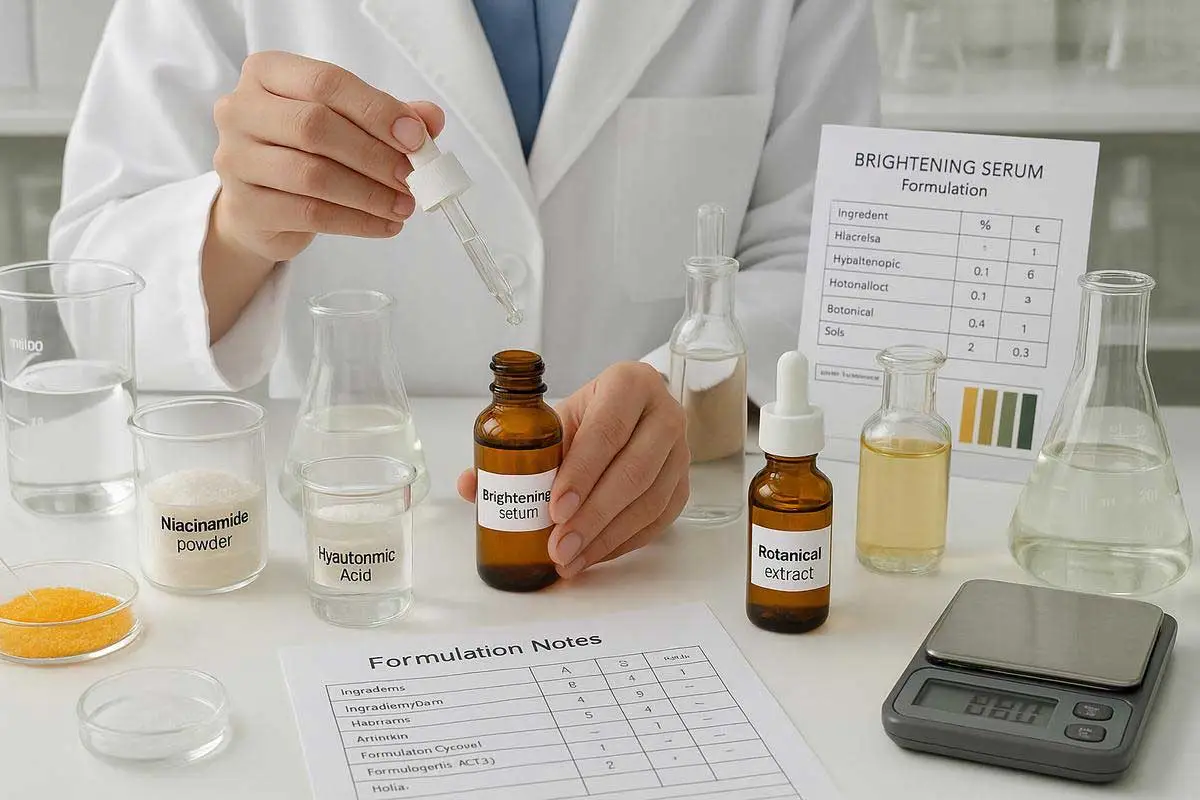
When developing a commercial vitamin C product, formulators must consider ingredient concentration, manufacturing temperature, compatibility with other actives, and the stability of the finished formula.
These considerations are especially important when moving from laboratory batches to industrial production, where mixing efficiency, processing time, and temperature distribution may differ substantially.
♦Recommended Use Levels in Cosmetic Formulations
For our 3-O-ethyl ascorbic acid 99% powder, the recommended starting concentration is 0.5%–2%, depending on the intended product and formulation conditions.
This range can be evaluated in daily-use facial serums, lotions, and brightening creams. However, it should not be interpreted as a universally optimal concentration or a regulatory maximum.
L-ascorbic acid is frequently used at higher concentrations in conventional acidic vitamin C serums, with 10%–20% appearing in commercial formulations. These concentrations are not directly interchangeable with ethyl ascorbic acid because the molecules differ in molecular weight, chemical behavior, and available efficacy evidence.
A suitable ethyl ascorbic acid concentration should be selected through formulation testing, stability evaluation, safety assessment, and the intended cosmetic claims.
♦Processing Temperature and Ingredient Addition
Temperature control is another important consideration in ethyl ascorbic acid formulation.
Our technical recommendation is to incorporate the ingredient below 40°C, preferably during a controlled cooling stage after complete dissolution in a suitable phase.
This recommendation provides a practical manufacturing starting point, but it does not establish that brief exposure above 40°C will necessarily cause degradation.
For L-ascorbic acid, minimizing unnecessary thermal exposure is particularly important because temperature can accelerate oxidation and degradation reactions.
Manufacturers should verify ingredient retention after processing, especially when production involves prolonged mixing, heated emulsification, or extended holding periods.
♦Formulation Compatibility and Product Types
Both ingredients can be used in different cosmetic product formats, although their formulation requirements may differ.
|
Product type |
Key formulation consideration |
|
Water-based brightening serum |
Dissolution, pH control, oxygen exposure |
|
Facial cream |
Emulsion stability and active distribution |
|
Lightweight lotion |
Compatibility with emulsifiers and other actives |
|
Multi-active skincare |
Shared pH requirements and ingredient interactions |
|
High-concentration vitamin C serum |
Assay retention, skin tolerance, and packaging |
For brands developing a vitamin C serum formulation, the decision should also account for packaging, preservative compatibility, and the intended consumer experience.
A formulation that performs well immediately after production may still require modification if ingredient concentration, color, or pH changes during storage.
Which Vitamin C Ingredient Is Better for Cosmetic Manufacturing?
The answer depends on the formulation objective.
For manufacturers comparing ethyl ascorbic acid vs vitamin c, the most useful approach is to evaluate the ingredients against defined technical and commercial requirements.
When Should Formulators Consider L-Ascorbic Acid?
L-ascorbic acid may be appropriate when a brand specifically wants to formulate with unmodified vitamin C and has the technical capability to manage its stability requirements.
It can be particularly relevant for established low-pH serum systems supported by suitable antioxidant strategies, oxygen control, and protective packaging.
Importantly, L-ascorbic acid should not automatically be rejected because of its oxidation sensitivity. Research has shown that suitable emulsion systems can improve its stability compared with simple aqueous solutions.
When Does 3-O-Ethyl Ascorbic Acid Make More Sense?
3-O-ethyl ascorbic acid deserves consideration when formulators require a vitamin C derivative with modified oxidation behavior and flexibility for different cosmetic systems.
It may be useful for brands developing products where a conventional low-pH L-ascorbic acid approach creates compatibility or manufacturing challenges.
However, ingredient selection should still be supported by experimental evidence rather than assumptions about superior performance.
Vitamin C Ingredient Selection Matrix
|
Selection factor |
L-Ascorbic Acid |
3-O-Ethyl Ascorbic Acid |
|
Unmodified vitamin C required |
Preferred |
Not applicable |
|
Oxidation management |
Critical |
Still necessary |
|
Moderately acidic formulations |
Requires careful optimization |
Worth evaluating |
|
Multi-active formulations |
Compatibility testing essential |
Compatibility testing essential |
|
Commercial scale-up |
Requires validated process controls |
Requires validated process controls |
|
Finished-product stability |
Must be demonstrated |
Must be demonstrated |
For cosmetic manufacturers, the best vitamin c derivative for skincare is ultimately the ingredient that meets the product's technical, safety, performance, and cost requirements.
3-O-Ethyl Ascorbic Acid 99%: Quality Specifications for Raw Material Buyers
Ingredient quality becomes particularly important when manufacturers move from laboratory evaluation to repeated commercial production.
A cosmetic formula can only achieve consistent performance when its raw materials meet defined identity, purity, and quality requirements.
•What Should Buyers Check in a 3-O-Ethyl Ascorbic Acid COA?
A reliable ethyl ascorbic acid coa should provide batch-specific information that allows purchasing and quality-control teams to evaluate the material against agreed specifications.
|
Quality parameter |
What buyers should verify |
|
Identification |
Confirmation of the correct chemical substance |
|
Assay |
Compliance with the agreed purity specification |
|
Analytical method |
Suitability and validation of the method |
|
Appearance |
Consistency with the product specification |
|
Moisture |
Compliance with the specified acceptance limit |
|
Related impurities |
Appropriate impurity control |
|
Batch information |
Traceability and manufacturing identification |
For cosmetic grade ethyl ascorbic acid, a declared 99% assay should be supported by an appropriate analytical method.
Buyers should distinguish between assay calculated against a reference standard and chromatographic area percentage. These measurements are not necessarily equivalent.
•Why Do Manufacturing Consistency and Documentation Matter?
A supplier's ability to provide consistent batches is as important as the nominal purity stated on a product page.
When evaluating ethyl ascorbic acid purity, buyers should consider whether the analytical procedure can distinguish the target ingredient from relevant impurities and degradation products.
HPLC is commonly used for this purpose, but the method must be suitable for the intended analysis.
A 2026 investigation of 41 commercial cosmetics containing ascorbic acid or its hydrophilic derivatives found discrepancies between declared and measured vitamin C ingredient contents. The study also highlighted the importance of temperature-dependent stability and appropriate analytical quality control.
For commercial procurement, this reinforces the value of reviewing actual test results rather than relying exclusively on marketing claims.
A complete qualification process should also address documentation, storage, packaging, batch traceability, and agreed acceptance criteria.
Sourcing 3-O-Ethyl Ascorbic Acid for Commercial Skincare Production
For skincare brands and contract manufacturers, raw material sourcing affects production continuity, regulatory documentation, and finished-product consistency.
Selecting a suitable 3-o-ethyl ascorbic acid manufacturer therefore requires more than comparing the lowest available quotation.
What Should Buyers Expect from a Raw Material Manufacturer?
A purchasing team should evaluate the supplier's ability to meet defined technical requirements and support repeated orders.
Important questions include whether the supplier can provide current specifications, batch-specific analytical documentation, consistent packaging, realistic delivery schedules, and technical clarification when formulation problems arise.
When comparing bulk 3-o-ethyl ascorbic acid offers, buyers should also examine the relationship between price, quality requirements, order volume, and logistics.
The ethyl ascorbic acid price per kg may vary according to purchasing quantity, assay specification, packaging, destination, and commercial terms. A low quotation has limited value if the material fails incoming quality inspection or creates avoidable manufacturing losses.
CHEN LANG BIO TECH: Cosmetic-Grade Vitamin C Derivative Supply
CHEN LANG BIO TECH supplies 3-O-Ethyl Ascorbic Acid 99% for cosmetic ingredient applications.
Our product is supplied as a white to off-white crystalline powder, with a recommended formulation use level of 0.5%–2%. The material should be stored in tightly closed packaging, protected from light, under the conditions stated in the applicable technical documentation. The stated shelf life is 24 months under recommended storage conditions.
We support ingredient evaluation by discussing product specifications, quality documentation, sample requirements, and commercial supply arrangements.
For purchasing teams looking to buy ethyl ascorbic acid powder, we recommend confirming the required assay, annual volume, packaging format, destination, and technical documentation before requesting a final quotation.
This helps establish a clear purchasing specification and reduces unnecessary delays during supplier qualification.
Frequently Asked Questions About Ethyl Ascorbic Acid vs L-Ascorbic Acid
Is 3-O-Ethyl Ascorbic Acid More Stable Than L-Ascorbic Acid?
Its C3 ether modification can improve resistance to certain oxidation pathways. However, finished-product stability depends on the complete formulation, packaging, and storage conditions. Comparative testing is necessary before making product-specific claims.
Does 3-O-Ethyl Ascorbic Acid Need a Low pH?
Not necessarily the same strongly acidic conditions commonly associated with conventional L-ascorbic acid serums. The appropriate ethyl ascorbic acid pH requirements should be established using supplier data and finished-product stability testing.
Is Ethyl Ascorbic Acid Water-Soluble?
Yes. However, practical solubility depends on temperature, concentration, and solvent composition. Formulators should verify dissolution and precipitation behavior under the intended processing and storage conditions.
What Is the Recommended Concentration of Ethyl Ascorbic Acid?
Our recommended starting range is 0.5%–2%. Higher concentrations require additional evaluation of stability, compatibility, skin tolerance, and the intended product claims.
Can Ethyl Ascorbic Acid Replace L-Ascorbic Acid in a Formula?
It may serve as an ethyl ascorbic acid alternative to L-ascorbic acid in selected cosmetic applications, but direct substitution without reformulation is not recommended. The two ingredients differ chemically and should be evaluated independently.
What Documents Should Buyers Request Before Ordering?
Buyers should request an up-to-date specification, batch-specific COA, TDS, SDS, and any additional documentation relevant to their market and application. Sampling and incoming quality verification are recommended before commercial approval.
Conclusion: Choosing the Right Vitamin C Ingredient
The choice between 3-O-ethyl ascorbic acid and L-ascorbic acid should be based on chemical stability, pH requirements, solubility, processing conditions, and verified finished-product performance.
L-ascorbic acid remains an important cosmetic ingredient, while 3-O-ethyl ascorbic acid offers a chemically modified alternative worth considering when formulation stability and manufacturing flexibility are priorities.
For brands evaluating ethyl ascorbic acid raw material for commercial production, CHEN LANG BIO TECH can assist with product specifications, technical documentation, sample inquiries, and purchasing quotations.
Contact: admin@chenlangbio.com
References
1. Temova Rakuša, Ž., & Roškar, R. (2026). Ascorbic Acid and Its Hydrophilic Derivatives in Commercial Cosmetics: A Cross-Sectional Study of Their Quality Control and Stability. Cosmetics, 13(4), 195. https://doi.org/10.3390/cosmetics13040195
2. 3-O-Ethyl-L-Ascorbic Acid: Characterisation and Investigation of Single Solvent Systems for Delivery to the Skin. International Journal of Pharmaceutics: X, 1 (2019), 100025. https://doi.org/10.1016/j.ijpx.2019.100025
3. Antioxidant Ability and Stability Studies of 3-O-Ethyl Ascorbic Acid, a Cosmetic Tyrosinase Inhibitor. PubMed PMID: 30311899. https://pubmed.ncbi.nlm.nih.gov/30311899/
4. Gallarate, M., Carlotti, M. E., Trotta, M., & Bovo, S. (1999). On the Stability of Ascorbic Acid in Emulsified Systems for Topical and Cosmetic Use. International Journal of Pharmaceutics, 188(2), 233–241. https://doi.org/10.1016/S0378-5173(99)00228-8

Send Inquiry
Related Industry Knowledge
- Piroctone Olamine Solubility: How to Dissolve Piroctone Olamine Powder?
- Bulk Tadalafil Powder vs Viagra The Raw Ingredient Behind the Popular Medication
- Trans-Resveratrol Benefits: Why This Active Form Is Preferred in Premium Anti-Aging Supplements
- Does P5P Help With Anxiety?
- Is Ascorbyl Tetraisopalmitate Safe During Pregnancy?
- Is Camellia Oleifera Seed Extract Safe for All Skin Types
- How Much EGCG in Green Tea Extract
- Is Aloe Vera Gel Freeze-Dried Powder Good for Skin
- Are Tribulus Terrestris Extract Powder Good for You
- Is Kava Kavalactone Powder Safe