
Trans-Resveratrol Benefits: Why This Active Form Is Preferred in Premium Anti-Aging Supplements
2025-12-10 15:08:34
As the global market for healthy aging and longevity continues to mature, supplement developers are becoming increasingly selective about the ingredients they use to support cellular function and long-term wellness. Among the wide range of botanical actives available today, trans-resveratrol benefits have attracted significant attention from premium anti-aging brands—especially those focused on evidence-based formulations and clean-label ingredient strategies.
While resveratrol in general is well known for its antioxidant value, the trans-resveratrol form represents the bioactive isomer most closely associated with cellular protection, SIRT1 activation, and mitochondrial support. This distinction is more than a technical detail. It directly affects how a product performs in the real world and how confidently a brand can position its formula in the highly competitive anti-aging category.
In this article, we’ll take a closer look at the specific advantages that make trans-resveratrol the preferred choice for premium anti-aging supplements, how its biological activity differs from other resveratrol forms, and what buyers should consider when selecting a supplier. The goal is straightforward: provide a professional, practical overview that helps brands and formulation teams make decisions with confidence.
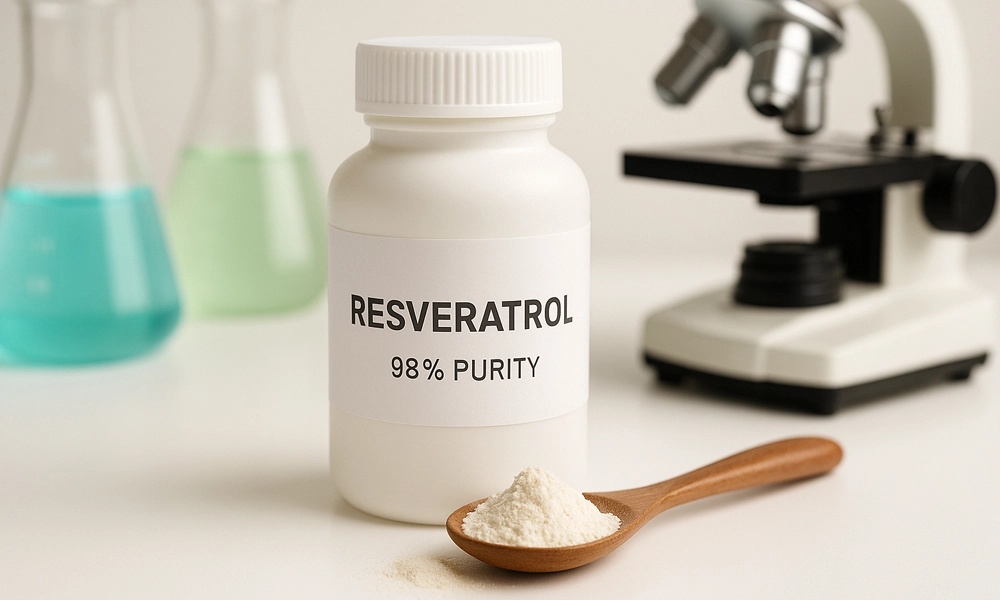
Why Trans-Resveratrol Is on the Radar of Modern Anti-Aging Supplement Brands
In recent years, the global longevity market has shifted toward ingredients with more clearly defined mechanisms, stronger analytical profiles, and predictable performance in finished formulations. Against this backdrop, it’s easy to understand why trans-resveratrol benefits have become increasingly important to brands developing high-end anti-aging products. Consumers are no longer satisfied with generic antioxidants; they expect actives with measurable biological influence, credible research, and clean manufacturing origins.
This is where trans-resveratrol naturally stands out. Unlike broad-spectrum botanical extracts, the trans-isomer provides a level of specificity that aligns well with advanced formulations targeting premium anti-aging supplements. Its association with oxidative stress reduction, mitochondrial resilience, and SIRT1 activation gives product developers a solid scientific platform on which to build differentiated formulas.
Another reason many companies prioritize trans-resveratrol is the competitive nature of the longevity space. Brands marketing NAD+ boosters, senolytic blends, or cellular-energy products often require ingredients with strong technical traceability and clear purity markers. A well-produced resveratrol powder—particularly a high-purity trans-resveratrol grade—fits naturally into this environment. It provides consistency, stability, and regulatory clarity, all of which matter when a product is positioned at a premium price point or intended for international distribution.
From our perspective as a supplier, this trend reflects a broader shift in how supplement companies design formulations:
♦fewer “catch-all” botanical blends,
♦more mechanism-driven actives,
♦a greater emphasis on reproducible results and transparent testing.
Trans-resveratrol aligns with these expectations better than any broad-spectrum polyphenol extract. For R&D teams, it offers a level of precision that simplifies formulation decisions. For procurement teams, it provides clear criteria—purity, trans-isomer percentage, impurity profile—against which suppliers can be evaluated. And for end consumers, it supports a cleaner, more credible product story.
What Is Trans-Resveratrol? A Clear Definition for Formulators and Buyers
As more brands move toward targeted anti-aging formulations, it becomes increasingly important to understand not just what resveratrol is, but which form delivers the biological outcomes formulators expect. Many teams we work with are already familiar with resveratrol as a polyphenol, yet fewer fully understand why the trans-resveratrol isomer is considered the “active” form in most research and why this matters when selecting a raw material.
At its core, resveratrol exists in two configurations: trans and cis. The two share the same molecular formula, but the spatial arrangement of their atoms—and therefore their biological behavior—is quite different. The trans-resveratrol structure is more stable, more bioactive, and far better supported in scientific literature focusing on oxidative stress, cellular protection, and trans-resveratrol SIRT1 activation pathways. The cis-form, by contrast, tends to appear when resveratrol is exposed to light or poor storage conditions, and it does not carry the same functional benefits.
From a sourcing perspective, this distinction is not theoretical. It determines which raw materials are appropriate for high-end product development. Brands looking for consistency, potency, and clear analytical traceability overwhelmingly prefer high-purity resveratrol powder standardized specifically to the trans-isomer. This is why formulations positioned for longevity, mitochondrial support, or anti-aging often specify “trans-resveratrol” rather than simply “resveratrol” on the ingredient list.
For buyers evaluating different specifications, it also helps to understand how the active form is produced. While the botanical origin—typically Polygonum cuspidatum—remains the same, achieving a reliable trans-isomer profile requires a controlled extraction and purification process. Steps such as solvent selection, temperature management, crystallization, and protection from UV exposure all play a role in ensuring that the final ingredient retains the intended biological form. When handled correctly, the resulting powder is bright, stable, and highly consistent—qualities that directly influence downstream manufacturing performance.
What this means for your team is straightforward: when your goal is to build a premium anti-aging supplement, or any formulation where scientific credibility and stability matter, the conversation should begin with the trans-form. It gives formulators predictable behavior, provides procurement teams with a clear set of purchasing criteria, and ensures brands can maintain a clean, strong product story in competitive international markets.
Trans-Resveratrol vs Resveratrol: Why the Isomer Matters in Real-World Formulations
As supplement brands refine their formulations and consumers become more knowledgeable, the distinction between trans-resveratrol vs resveratrol is no longer just a technical detail buried in a COA. It directly affects how a product performs, how stable it remains throughout its shelf life, and how confidently a company can position its formula within the premium anti-aging segment.
When we work with R&D teams or procurement managers evaluating different specifications, one point becomes clear very quickly: not all resveratrol behaves the same. The isomer composition—particularly the percentage of the trans form—has a meaningful influence on both biological activity and manufacturing consistency.
Differences in Bioactivity, Stability, and Absorption
The key advantage of the trans-form lies in its biological relevance. Studies consistently associate trans-resveratrol benefits with antioxidant activity, inflammatory modulation, mitochondrial support, and pathways related to healthy aging. The cis-form does not share this level of activity, which means formulas relying on generic resveratrol without defined isomer content often deliver less predictable results.
Stability also plays a significant role. Trans-resveratrol maintains its structure more effectively under controlled conditions, whereas cis-resveratrol tends to form when the ingredient is exposed to UV light or improper handling. For manufacturers producing high-volume batches or exporting to regions with strict documentation requirements, this stability difference is crucial. It helps maintain consistent assay values, cleaner chromatograms, and stronger batch-to-batch reproducibility.
Absorption considerations further separate the two. Although resveratrol in general has moderate bioavailability, the trans-form demonstrates superior biological uptake potential and is far more represented in academic research. This matters because anti-aging consumers increasingly look for ingredients with measurable and scientifically supported outcomes.
What This Means for Anti-Aging Supplement Positioning
For brands competing in the premium wellness and longevity categories, differentiation is essential. Formulas built with high-purity trans-resveratrol powder allow companies to position their products around clinical-style mechanisms—SIRT pathway support, mitochondrial resilience, or oxidative balance—without stretching claims or relying on vague marketing language.
From a product-development standpoint, using the trans-form also provides formulation teams with greater control. It offers:
♦more consistent color and particle morphology
♦predictable performance in capsules and tablets
♦smoother blending with NAD+ precursors and other antioxidants
♦clearer label specifications for international markets
These advantages become especially important when a product is sold at a higher price point or expected to meet clean-label expectations in Europe, North America, or APAC.
In short, choosing trans-resveratrol over a mixed-isomer resveratrol extract is not merely about chasing novelty—it is about ensuring consistency, transparency, and scientific alignment. And for brands building credibility in the anti-aging or longevity category, those qualities matter as much as the ingredient itself.
Evidence-Based Trans-Resveratrol Benefits for Cellular Aging and Longevity
The growing interest in longevity formulas has put a spotlight on trans-resveratrol benefits, largely because this active isomer interacts with pathways tied to cellular resilience, mitochondrial function, and healthy aging. Unlike broad-spectrum botanical antioxidants, trans-resveratrol offers a level of specificity and reproducibility that appeals to R&D teams designing high-end anti-aging supplements. Below is a practical, research-aligned overview of the mechanisms that make trans-resveratrol especially valuable for modern formulations.
Antioxidant Protection and Support Against Oxidative Stress
Oxidative stress remains one of the primary drivers of cellular aging. Free radicals generated by metabolism, environmental exposure, and lifestyle factors can damage DNA, lipids, and proteins over time.
Trans-resveratrol benefits include a well-characterized antioxidant effect that helps neutralize these reactive molecules.
Because the trans-form is more stable and biologically active than the cis-form, it provides:
♦stronger free-radical scavenging activity,
♦better protection for high-turnover tissues,
♦more predictable results in supplement formulas.
For longevity brands, this offers a dependable foundation for antioxidant claims without relying on overextended marketing language.
SIRT1 Activation and Support for Cellular Longevity Pathways
One of the characteristics that elevates trans-resveratrol above generic polyphenols is its connection to trans-resveratrol SIRT1 activation, a mechanism often highlighted in the longevity category.
Sirtuins are proteins associated with:
♦DNA repair,
♦metabolic balance,
♦inflammation modulation,
♦and overall cellular maintenance.
Their activity depends partly on NAD+ levels, which is why trans-resveratrol often appears in formulations alongside NAD+ precursors such as NMN or NR. The synergy allows brands to create mechanism-driven formulas with legitimate scientific grounding.
For formulators, the trans-isomer’s stronger affinity for SIRT1-related activity gives it a clear functional advantage over cis-resveratrol and over less standardized plant extracts.
Mitochondrial Function and Cellular Energy Support
Healthy mitochondria are essential for sustained energy production and efficient cellular function. As we age, mitochondrial performance declines, affecting everything from metabolic efficiency to cognitive clarity.
Several studies highlight trans-resveratrol benefits in supporting:
♦mitochondrial biogenesis,
♦ATP efficiency,
♦and resilience under oxidative stress.
These properties make trans-resveratrol especially suitable for formulas positioned around energy metabolism, performance aging, and long-term cellular vitality.
For supplement brands, this also opens additional positioning opportunities—beyond antioxidant claims—to more advanced “cellular energy” narratives supported by scientific literature.
Cardiometabolic and Inflammation-Modulating Effects
Inflammation and metabolic imbalance often accelerate biological aging, even in individuals who maintain healthy lifestyle habits.
Trans-resveratrol has demonstrated benefits related to:
♦endothelial function,
♦lipid homeostasis,
♦micro-inflammatory balance.
This is not about offering a cure or a pharmaceutical-level intervention. Instead, it creates a supportive environment for healthy cardiovascular and metabolic function—an important value proposition in premium anti-aging supplements.
The trans-isomer’s stability and consistency make it easier for formulators to rely on these effects without variation in potency or sensory characteristics across batches.
Trans-Resveratrol Benefits for Skin: From Photoaging to Brightening
Although most buyers associate trans-resveratrol with nutraceutical applications, the ingredient’s role in skin health continues to expand. Its combination of antioxidant and anti-inflammatory activity helps counter:
♦UV-triggered oxidative damage,
♦loss of firmness,
♦uneven tone and photoaging,
♦surface-level inflammation and redness.
In cosmetic formulations, the trans-isomer is favored because it maintains clearer color stability and better supports long-term oxidative protection. This makes it suitable for:
♦brightening serums,
♦anti-aging creams,
♦“beauty from within” supplements paired with collagen or hyaluronic acid,
♦multifunctional formulas targeting both internal and external aging markers.
For global beauty brands, the active transparency and consistent assay profile of resveratrol powder (trans-form) also simplify regulatory review.
Why Trans-Resveratrol Benefits Translate Better Into Real-World Formulations
When anti-aging products fail, it is often not the science but the ingredient quality that becomes the bottleneck.
Formulators choosing trans-resveratrol consistently report:
♦more stable formulation behavior,
♦cleaner analytical documentation,
♦superior batch reproducibility,
♦and easier global regulatory pathways.
These practical advantages explain why trans-resveratrol dominates premium formulations, while mixed-isomer extracts remain confined to mass-market antioxidant blends.
In short, trans-resveratrol benefits align directly with the technical requirements and strategic goals of modern longevity brands—making it an ingredient with both biological relevance and real commercial value.
Why Premium Anti-Aging Supplements Prefer High-Purity Trans-Resveratrol Powder
For brands competing in the upper tier of the anti-aging and longevity market, ingredient selection is not just about meeting label claims—it’s about ensuring technical reliability, regulatory clarity, and a consistent consumer experience. This is one of the reasons why so many R&D teams prefer high-purity trans-resveratrol powder over generalized botanical extracts. When your product sits on a crowded shelf at a premium price point, every detail—color uniformity, impurity profile, stability, flow behavior—contributes to how the final formula performs and how it is perceived.
From our perspective as a long-term supplier to international supplement manufacturers, the decision to use high-purity trans-resveratrol usually comes down to three things:
predictability, precision, and positioning. Below, we break down how each of these translates into real advantages for brands designing next-generation anti-aging formulas.
Purity, Dose Accuracy, and Label Claim Integrity
When developing premium anti-aging supplements, accuracy is essential. A 98% or higher trans-resveratrol grade allows formulators to standardize dosing with confidence. The active load is consistent, impurities are tightly controlled, and the ingredient behaves as expected during encapsulation or tableting.
This level of precision is especially valuable for:
♦NAD+ booster products
♦cellular longevity blends
♦SIRT-pathway formulations
♦clinical-style supplement lines
By contrast, lower-purity extracts often carry variability from batch to batch, making it more challenging for brands to maintain consistent outcomes or defend label accuracy across international markets.
Using a refined, crystalline ingredient also simplifies regulatory submissions. Authorities in the U.S., EU, Canada, and APAC increasingly expect clear assay data and impurity transparency—criteria high-purity trans-resveratrol meets more naturally than broad-spectrum extracts.
Clean Sensory Profile and Superior Manufacturing Performance
One of the underrated advantages of high-purity trans-resveratrol is how well it performs on the production floor. Manufacturers frequently highlight the ingredient’s clean appearance, stable color, and predictable flow characteristics—details that matter more than many brands realize.
A high-grade resveratrol powder offers:
♦smoother capsule filling and fewer machine adjustments
♦better compressibility in tablets
♦less dusting compared to raw botanical extracts
♦greater consistency in large-scale production runs
These properties become essential when producing hundreds of thousands of units or when working across multiple international facilities. A raw material that behaves reliably during manufacturing saves time, reduces deviation rates, and supports cleaner documentation for audits.
Synergy With NAD+, NMN, NR, and Other Longevity Actives
One of the strongest reasons premium brands choose high-purity trans-resveratrol is its excellent compatibility with other longevity ingredients. Formulators frequently build combination products with NAD+ precursors, quercetin, CoQ10, grape seed extract, alpha-lipoic acid, or mitochondrial-support ingredients.
The synergy is especially clear in NAD+ and trans-resveratrol formulas, where resveratrol’s influence on SIRT pathways complements NAD+’s role in cellular energy and repair.
High-purity trans-resveratrol integrates smoothly into these blends because:
♦its particle size distribution is consistent
♦the stability profile supports multi-active systems
♦its sensory neutrality avoids impacting flavor or appearance
This makes the ingredient a natural fit for premium longevity capsules, dual-action antioxidant formulas, and high-performance wellness products aimed at informed consumers.
A Better Fit for International “Clean-Label” Expectations
Premium anti-aging consumers—especially in North America and Europe—expect ingredients with:
♦traceable sourcing
♦transparent analytical data
♦low residual solvents
♦well-defined impurity limits
♦clean sensory attributes
High-purity trans-resveratrol aligns directly with these expectations. It allows brands to position their formula with confidence and ensures the ingredient remains acceptable across different regulatory environments.
In contrast, lower-purity extracts often contain anthraquinones (such as emodin), plant pigments, or insoluble residues that complicate compliance in certain markets. For exporters or brands with global distribution plans, this can quickly become a bottleneck.
Formulation Guide: How to Use Trans-Resveratrol Powder in Capsules, Tablets, and Liquids
As more brands incorporate trans-resveratrol into their anti-aging and longevity-focused formulas, formulation teams often ask how to use it effectively across different dosage forms. High-purity trans-resveratrol powder offers excellent flexibility, but its stability characteristics, particle behavior, and sensitivity to environmental factors require thoughtful handling. A well-designed formulation not only preserves the ingredient’s potency but also reduces manufacturing challenges and ensures a consistent consumer experience.
Below is a practical, formulation-oriented overview based on what we frequently discuss with OEM facilities, R&D teams, and international supplement manufacturers.
Recommended Dosage Ranges for Different Product Concepts
Determining the right dosage depends largely on the product’s positioning and the role trans-resveratrol plays in the overall formula.
For daily-use antioxidant blends, typical inclusion levels range from:
50–150 mg per serving: For more advanced longevity formulas—especially those built around mitochondrial function or trans-resveratrol benefits—dosages often fall between:
150–300 mg per serving: Clinical-style formulations, or those paired with NAD+ precursors like NMN or NR, may use:
250–500 mg per day, depending on market strategy and regulatory pathway
These ranges allow brands to maintain both potency and flexibility while keeping cost-to-value ratios balanced.
Combining Trans-Resveratrol With Other Antioxidants and Polyphenols
Because of its complementary mechanism, trans-resveratrol pairs well with several high-value actives.
Common combinations include:
♦NAD+ precursors (NMN, NR)
♦Quercetin
♦CoQ10
♦Alpha-lipoic acid
♦Grape seed extract
♦Curcumin
♦Vitamin C derivatives
These combinations are popular for a reason. Trans-resveratrol supports oxidative balance and SIRT pathways, while other ingredients address mitochondrial energy, vascular health, or metabolic function. Formulators can therefore build more comprehensive anti-aging profiles using fewer excipients and cleaner label designs.
When working with OEM factories, we often remind teams to consider interaction points such as pH, particle size distribution, and hygroscopicity. These details help maintain stability in multi-active blends.
Stability Tips — Light, Oxygen, pH, and Packaging Decisions
One of the most important aspects of formulating with trans-resveratrol is managing its exposure to environmental stress. To preserve potency and maintain color stability, R&D teams should prioritize the following considerations:
1. Light Sensitivity
Exposure to UV and strong visible light can gradually shift the active isomer toward the cis-form. Recommended solutions:
♦Use opaque or amber bottles
♦Apply protective coatings in tablets
♦Minimize exposure during blending and filling
2. Oxygen Control
Oxidation can lead to discoloration or potency loss over time. Strategies include:
♦Nitrogen flushing during encapsulation
♦Choosing low-oxygen-permeability packaging films
♦Avoiding unnecessary headspace in bottles
3. pH Stability
Trans-resveratrol remains more stable in slightly acidic to neutral conditions. For liquid formulas such as shots or syrups, maintaining pH between 4.0–6.5 generally produces better results.
4. Temperature During Processing
Sustained exposure to high temperatures should be minimized. We advise formulators to keep blending temperatures controlled and avoid extended dwell times in high-heat environments.
5. Delivery Format Considerations
Capsules remain the simplest and most stable format
Tablets require excipient support for compressibility
Powders benefit from micronized grades for dispersibility
Liquids require careful solvent choices and antioxidant pairing
When these principles are applied correctly, the ingredient maintains a stable chromatic profile and a clean analytical signature throughout its shelf life.
Practical Notes for OEM Facilities and Large-Scale Manufacturing
Manufacturers frequently highlight certain operational advantages when using high-purity resveratrol powder compared to general extracts:
♦Consistent flowability reduces machine stoppages
♦Uniform particle size improves mixing times
♦Lower residue in equipment shortens cleaning cycles
♦Bright, uniform appearance ensures visually consistent batches
These improvements not only enhance production efficiency but also support better QA documentation for international markets.
Why Many Overseas Brands Partner With CHEN LANG BIO TECH for Trans-Resveratrol and Resveratrol Powder
As global demand for longevity and anti-aging ingredients increases, more buyers are looking for suppliers who can deliver more than acceptable purity—they want consistency, technical reliability, and a collaborative approach to long-term product development. Over the years, we’ve seen a clear pattern in why overseas clients choose to work with us and continue doing so: they need a supplier who understands both the science behind trans-resveratrol benefits and the practical realities of large-scale manufacturing.
For companies that design mechanism-driven formulas, especially those combining NAD+ and trans-resveratrol, the stability, transparency, and reproducibility of the raw material matter just as much as the biological benefits themselves. Below, we outline the strengths clients consistently highlight when working with CHENLANG BIO TECH as their trusted source of resveratrol powder.
Controlled Purification, Crystallization, and Analytical Transparency
High-performance anti-aging supplements require ingredients that behave predictably—not only in laboratory testing but throughout the entire manufacturing process. Our production approach prioritizes controlled purification and optimized crystallization, resulting in a stable trans-isomer profile, clean chromatograms, and excellent physical characteristics.
Each batch is supported by comprehensive analytical documentation including:
♦validated HPLC assay results,
♦trans-isomer percentage,
♦emodin and anthraquinone levels,
♦microbial and heavy-metal panels,
♦and batch-to-batch consistency reports.
For brands exporting to North America, Europe, or Japan, this level of transparency reduces regulatory friction and strengthens quality assurance throughout the supply chain.
Technical Support for NAD+, Longevity, and Beauty-from-Within Projects
Formulating with trans-resveratrol requires more than just providing a COA. OEM factories and R&D teams often need guidance on:
♦pH ranges for maximum stability,
♦how to incorporate high-purity trans-resveratrol in capsules and tablets,
♦managing light and oxygen exposure,
♦combining trans-resveratrol benefits with mitochondrial or NAD+ pathway ingredients,
♦and optimizing physical properties for smooth production flow.
Because we work closely with manufacturers across multiple product categories, we bring practical insight—not generalized advice. This helps your team anticipate challenges early, shorten development timelines, and avoid costly reformulations.
A Practical, Long-Term Partnership Approach for Procurement Teams
Procurement teams often tell us the same thing: reliability and communication matter just as much as technical specifications. A supplier may have acceptable purity, but if lead times fluctuate, documentation arrives incomplete, or batches shift in color or flowability, the downstream impact can be significant.
Our partnership model is built around long-term operational stability:
♦consistent availability of 98% trans-resveratrol,
♦predictable delivery schedules,
♦transparent communication on production cycles,
♦regulatory-ready documentation for global markets,
♦and proactive updates during shipping or customs processes.
This straightforward working style allows your purchasing team to plan with confidence and reduces the everyday management burden that often comes with botanical-derived ingredients.

FAQ: Common Questions From Formulators and Buyers About Trans-Resveratrol
Is Trans-Resveratrol Better Than Resveratrol?
The question “is trans-resveratrol better than resveratrol” comes up often, and for good reason. Yes—the trans-form is widely considered the “active” isomer. It is the structure most commonly referenced in scientific literature, delivers stronger antioxidant performance, shows more consistent SIRT1 activation, and maintains better stability under proper storage conditions.
For brands positioned in the premium anti-aging or longevity category, the trans-isomer is effectively the only form that aligns with scientific expectations and consumer perception of efficacy.
What Is the Difference Between Trans-Resveratrol and Regular Resveratrol?
The “difference between trans-resveratrol and resveratrol” primarily relates to structure, stability, and functional relevance. Regular resveratrol (if unspecified) often contains a mixture of trans- and cis-isomers, along with broader plant compounds. The trans-form provides a cleaner, more defined active profile; the cis-form is less stable and not associated with the primary anti-aging mechanisms that formulators rely on. This difference also influences assay accuracy, regulatory acceptance, and batch-to-batch consistency.
How Much Trans-Resveratrol Per Day Is Common in Supplements?
The long-tail query “how much trans-resveratrol per day” has no single universal answer, but typical usage patterns look like this:
50–150 mg/day: general antioxidant or daily wellness blends
150–300 mg/day: anti-aging or cellular-health formulas
250–500 mg/day: advanced longevity, NAD+, or mitochondrial support products
Actual dosage decisions depend on product positioning, market regulations, and synergy with other ingredients (such as NMN, NR, quercetin, CoQ10, or grape seed extract).
How to Use Trans-Resveratrol Powder in Supplement Formulations?
Many developers search for “how to use trans-resveratrol powder” when working with this ingredient for the first time. In practice, trans-resveratrol is straightforward to formulate with—capsules and tablets are the most common delivery formats because they protect the isomer from light and oxidation.
For powders and beverages, a micronized grade improves dispersibility. For tablets, blending with flow aids such as MCC or silicon dioxide enhances compressibility. And for multi-active longevity formulas, pairing with NAD+ precursors is a well-established strategy.
Does Trans-Resveratrol Have Synergy With NAD+ Ingredients?
Formulators frequently explore “trans-resveratrol NAD+ synergy”, especially in longevity-focused blends. YES—synergy exists.
Trans-resveratrol influences SIRT1-related pathways, while NAD+ precursors support cellular energy and repair mechanisms. Together, they provide a complementary mechanism-of-action narrative that appeals to advanced wellness consumers and is increasingly favored in next-generation anti-aging supplements.
Is Trans-Resveratrol Safe for Daily Use?
High-purity trans-resveratrol is generally well tolerated at standard supplement doses. Occasional mild digestive discomfort may occur if taken in high amounts or on an empty stomach, but such cases are uncommon. As with most actives, pregnant or nursing individuals should seek professional guidance.
Where Can I Find a Reliable Bulk Trans-Resveratrol Supplier?
A dependable supplier should offer:
controlled purification and crystallization processes
validated HPLC and impurity data
consistent trans-isomer percentage
stable long-term supply
regulatory-ready documentation for US/EU/APAC markets
This is where CHEN LANG BIO TECH is chosen repeatedly by international buyers who require consistent quality and strong technical support. Contact us now!
Final Thoughts — Building Better Anti-Aging Formulas With the Right Trans-Resveratrol Partner
As the global longevity category continues to evolve, one trend remains consistent: brands that prioritize ingredient quality and mechanism-driven formulations are the ones establishing long-term credibility. Trans-resveratrol benefits play a central role in this shift. Its defined isomer profile, clean analytical behavior, and compatibility with advanced actives such as NAD+ precursors make it an essential component of premium anti-aging products.
Whether your team is developing a clinical-style cellular health formula, a next-generation antioxidant blend, or a longevity-focused capsule line, the choice of raw material directly influences performance, safety, and regulatory confidence. High-purity resveratrol powder—especially in the trans form—offers the stability and transparency required by international brands operating in highly competitive markets.
At CHEN LANG BIO TECH, our goal is simple: provide materials you can build on. With consistent production, controlled purification, and technical support tailored to NAD+, longevity, and beauty-from-within applications, we help formulation teams focus on creating better products while we take care of the raw material reliability behind them. If your project requires samples, specification comparisons, or guidance on the best grade for your formula, our team is ready to assist. Get in touch with us to discuss your formulation needs or request your next batch of high-purity trans-resveratrol.
Our Email: admin@chenlangbio.com
Whatsapp: +86-17782478823

Send Inquiry

Related Industry Knowledge
- What Are the Key Applications of Acetylcysteine Powder in Modern Health Supplements?
- What are the Health Benefits of Calcium Alpha-Ketoglutarate Monohydrate?
- What Not to Mix with Centella Asiatica?
- Is Spermidine Trihydrochloride Toxic?
- Health Benefits of Pelargonium Sidoides Extract
- Isobutylamido Thiazolyl Resorcinol: A Powerful Brightening Agent
- Latest Discovery: Hydrogel Dressings Containing NMN May Accelerate the Healing of Diabetic Ulcers
- How Tranexamic Acid Inhibits Melanin
- Is It Safe to Take Ashwagandha Extract Withanolides Powder Daily?
- Is Natural Cranberry Extract Powder Good For You