Resveratrol vs Pterostilbene: Which Antioxidant Is More Effective for Modern Formulations?
2025-12-08 15:03:28
When buyers compare resveratrol vs pterostilbene, the discussion usually starts with a simple question: “Which ingredient is better for my formulation?” Both are well-known antioxidant polyphenols, and both have strong appeal in the nutraceutical and skincare markets. But for teams making decisions on raw materials—formulators, brand owners, and purchasing managers—the real concern is not just which ingredient looks better on paper. It’s about understanding the practical differences between the two: bioavailability, stability, dosage efficiency, cost levels, and how each behaves in a finished product.
From our experience supporting global brands, these questions come up often:
♦What is the true difference between resveratrol and pterostilbene?
♦Is pterostilbene genuinely more effective, or simply positioned as a premium option?
♦When does resveratrol remain the more suitable choice for large-scale, cost-sensitive projects?
As a supplier working closely with R&D teams and procurement departments worldwide, we see firsthand how these ingredients perform in capsules, tablets, beverages, and topical formulations. Resveratrol—especially trans-resveratrol 98% produced via fermentation—remains one of the most stable, cost-effective antioxidants for mass-market products. Pterostilbene, on the other hand, offers higher lipophilicity and better absorption, making it attractive for brands that want to elevate their positioning or reduce serving size.
What Are Resveratrol and Pterostilbene?
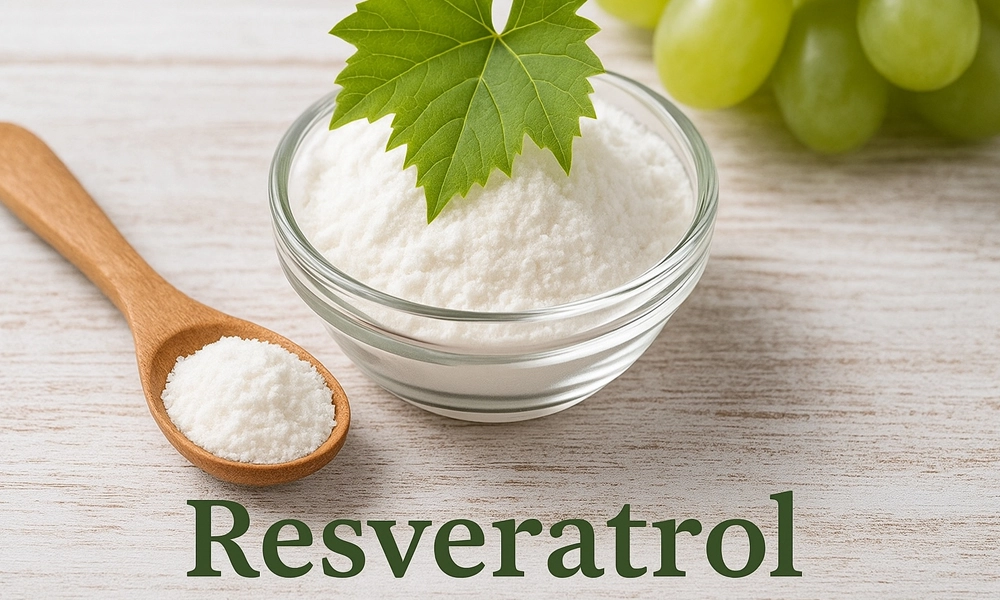
Before comparing performance and formulation behavior, it’s helpful to establish a clear understanding of what resveratrol and pterostilbene actually are. Both belong to the stilbenoid family of polyphenols, and both are used as active ingredients in supplements and cosmetic products. However, their sourcing, purity specifications, and functional characteristics differ in ways that matter for R&D and procurement decisions.
What Is Resveratrol? Key Characteristics and Common Sources
Resveratrol is a naturally occurring polyphenol found in grape skin, peanuts, and Polygonum cuspidatum (Japanese knotweed). In commercial production, most high-purity material—especially trans-resveratrol 98%—is derived either from Polygonum extraction or increasingly from controlled fermentation routes. Fermentation offers advantages in consistency and impurity control, which is why many overseas brands prefer it for large-scale supplement production.
From a functional standpoint, resveratrol is valued for its broad antioxidant activity, support for healthy aging pathways, and long history of clinical research. These factors make it a familiar and accessible choice for formulators who want a well-studied, cost-effective ingredient with predictable behavior in capsules, tablets, functional powders, and topical serums.
What Is Pterostilbene? The Methylated Analog of Resveratrol
Pterostilbene is structurally similar to resveratrol but contains two methoxy groups, which significantly increase its lipophilicity. This small structural modification gives pterostilbene better membrane permeability and generally stronger absorption in the body—an important reason why it is often positioned as a more “premium” alternative.
Although pterostilbene occurs naturally in blueberries and Pterocarpus marsupium, commercial supply is typically produced through synthetic or semi-synthetic processes to achieve high purity and consistent quality. The resulting material is commonly used in advanced anti-aging formulas, metabolic health products, and premium supplement lines that emphasize higher bioavailability or smaller daily dosages.
Structural & Mechanistic Differences Between Resveratrol and Pterostilbene
Although resveratrol and pterostilbene are often grouped together as antioxidant stilbenoids, their chemical structure and mechanisms of action are not identical. These differences directly influence how each ingredient behaves in the body and in finished formulations—one reason why many formulators compare resveratrol vs pterostilbene structure, mechanism of action, and practical performance before making a sourcing decision.
At the molecular level, both compounds share the same stilbene backbone. The key distinction is that pterostilbene contains two methoxy groups where resveratrol contains hydroxyl groups. This small structural shift increases lipophilicity, enhances membrane permeability, and reduces susceptibility to rapid metabolism. As a result, pterostilbene often shows stronger absorption and better stability in biological environments. Meanwhile, resveratrol, despite being more widely studied, can be quickly metabolized and has a shorter half-life.
From a functional perspective, both ingredients activate well-known biological pathways—including SIRT1 and AMPK—that support antioxidant defense, healthy aging, and overall cellular resilience. Where they diverge is in the efficiency with which these pathways are engaged at typical supplemental dosages.
To illustrate the differences clearly, the following table summarizes the main structural and mechanistic distinctions between the two ingredients.
|
Parameter |
Resveratrol |
Pterostilbene |
|
Core Structure |
Stilbenoid with three hydroxyl groups |
Methylated analog of resveratrol with two methoxy groups |
|
Lipophilicity |
Moderate |
High, enabling better membrane permeability |
|
Metabolism |
Rapid first-pass metabolism |
Slower metabolism, longer half-life |
|
Bioactivity Pathways |
SIRT1, AMPK, antioxidant response |
SIRT1, AMPK, improved cellular uptake enhances activity |
|
Stability |
More sensitive to oxidation and light |
More stable due to methoxy substitutions |
|
Scientific Data Volume |
Broad, long-term published studies |
Emerging but promising evidence |
Bioavailability, Absorption, and Stability — Why Formulators Care
For most formulation teams, one of the deciding factors in choosing between two active ingredients is how efficiently the body can absorb and utilize them. This is especially true when comparing resveratrol vs pterostilbene bioavailability, because the structural differences discussed earlier translate into meaningful performance differences in real-world applications.
Resveratrol has been widely researched, but its rapid first-pass metabolism limits the amount that reaches systemic circulation. Even with higher dosages, absorption can remain modest, and its shorter half-life means levels drop quickly. These limitations are well recognized among R&D teams developing supplements or beverages, particularly when they aim for consistent, measurable biological activity.
Pterostilbene, in contrast, benefits from much higher lipophilicity. Its methoxy groups protect the molecule from rapid breakdown, resulting in stronger absorption, a longer half-life, and more stable plasma concentrations. These characteristics allow formulators to work with lower dosage levels while still supporting comparable bioactive effects—one of the reasons pterostilbene is often positioned as a more potent alternative.
Stability is another factor that directly affects formulation success. Resveratrol is sensitive to light, heat, and oxidation, which can complicate its use in beverages and certain cosmetic formats. Pterostilbene generally offers better stability and maintains potency more reliably across a range of conditions. This distinction becomes especially important when scaling up production or designing products intended for extended shelf life.
Comparing the Scientific Evidence — How Do Their Benefits Differ?
Although resveratrol and pterostilbene are often discussed together, the scientific evidence behind each ingredient varies in maturity, depth, and consistency. Resveratrol is one of the most extensively studied polyphenols in the world, supported by decades of published research in areas related to healthy aging, cardiometabolic support, cellular protection, and antioxidant defense. This strong foundation is one of the reasons it remains a reliable choice for large-scale supplement lines.
Pterostilbene, while newer in the commercial market, has shown promising results in early human and preclinical studies—particularly in lipid and glucose metabolism, antioxidant activity, and cognitive support. Thanks to its higher absorption efficiency, lower dosages can often achieve meaningful biological effects, which appeals to brands looking to reduce serving sizes or develop premium SKUs with a more “next-generation” positioning.
In terms of mechanisms, both compounds activate SIRT1 and AMPK pathways, supporting mitochondrial function, oxidative balance, and cellular resilience. However, because pterostilbene maintains more stable plasma levels, its effects can appear stronger at equivalent or lower doses. This practical difference is often what leads formulators to compare resveratrol vs pterostilbene benefits, especially for targeted applications such as healthy aging, metabolic health, and cognitive wellness.
To make the research comparison clearer, the table below summarizes the benefits most commonly supported by published studies for each ingredient.
|
Benefit Category |
Resveratrol |
Pterostilbene |
|
Healthy Aging & Longevity |
Extensive clinical and preclinical research; strong antioxidant profile |
Promising results, often enhanced by higher bioavailability |
|
Cardiometabolic Health |
Supports healthy lipid and glucose metabolism |
Notable improvements in lipid profiles in early studies |
|
Antioxidant Activity |
Strong scavenging capacity; widely validated |
Higher cellular uptake may amplify antioxidant effects |
|
Cognitive Support |
Emerging data; studied mainly in older adults |
Stronger absorption may support more pronounced effects |
|
Inflammatory Pathways |
Helps modulate inflammatory response |
Similar impact, potentially more efficient at lower doses |
|
Evidence Volume |
Broad, long-term human studies |
Growing but more limited |
While both ingredients offer valuable biological effects, the difference lies in how consistently these effects can be delivered within a finished product—whether that’s a capsule, tablet, serum, or beverage. This is why many development teams evaluate not just the scientific findings, but also what these findings mean for dosage planning, consumer positioning, and product differentiation.
Practical Use in Nutraceutical and Cosmetic Formulations
Once the scientific differences are clear, formulation teams usually shift their attention to how each ingredient performs across different product categories. Both resveratrol and pterostilbene are versatile, but their absorption characteristics, stability, and cost structure often determine where they fit best. These factors are especially important for teams working on resveratrol in supplements, pterostilbene in supplements, or advanced anti-aging skincare formulations.
Nutraceutical Applications
In dietary supplements, resveratrol continues to be widely used due to its strong research background, well-established safety profile, and competitive pricing. Typical serving sizes range from 100–500 mg per day, depending on positioning and target benefits. It works well in capsules, tablets, and powder blends, and is often paired with supportive antioxidants such as quercetin, vitamin C, grape seed extract, or CoQ10.
Pterostilbene, with its higher absorption efficiency, is typically dosed at 50–150 mg per day, making it ideal for brands that want smaller capsule sizes or premium SKUs marketed around absorption and potency. It also pairs well with metabolic ingredients such as berberine or alpha-lipoic acid, especially in blood sugar or lipid management formulas. For buyers comparing resveratrol dosage per day with pterostilbene dosage, this difference is often a deciding factor.
Cosmetic & Topical Applications
Resveratrol has long been used in anti-aging skincare due to its strong antioxidant properties and consumer familiarity. It performs well in serums, lotions, emulsions, and masks—especially when stabilized with suitable carriers or encapsulation systems. Many formulators evaluating resveratrol in skincare formulations choose it for its broad marketing appeal and strong antioxidant narrative.
Pterostilbene is increasingly appearing in higher-end cosmetic products. Its enhanced stability and lipophilicity give it good potential for topical delivery, and its “next-generation” positioning fits naturally into premium anti-aging lines. Brands exploring pterostilbene in skincare often use it to differentiate themselves in a crowded antioxidant market.
Functional Beverages & Powders
Here, stability becomes the deciding factor. Resveratrol’s tendency to oxidize can make it challenging in ready-to-drink formats unless encapsulated or protected with stabilizers. It works better in powdered sticks or sachets where moisture exposure is minimal.
Pterostilbene, being more stable, is often easier to incorporate into beverages or fortified drinks. Teams evaluating resveratrol solubility issues or looking for improved stability often find pterostilbene more suitable for liquid delivery systems.
Quality, Specifications & Supplier Considerations
As teams move from formulation planning to actual procurement, attention naturally shifts toward specifications, analytical consistency, regulatory documentation, and supplier capability. Whether a company chooses resveratrol or pterostilbene, the sourcing decision hinges on reliable quality, transparent testing data, and stable long-term supply. These considerations often matter just as much as the ingredient’s biological performance.
For resveratrol, buyers typically review purity levels—most commonly trans-resveratrol 98%—along with the production route. Fermentation-derived material has become especially popular among overseas customers due to its clean profile and predictable batch-to-batch performance. Routine checks such as HPLC chromatograms, residual solvent results, microbial limits, and impurity analysis help ensure the material meets the requirements for dietary supplements, cosmetics, or functional foods. Many procurement teams searching for a bulk resveratrol supplier China or a resveratrol manufacturer China prioritize partners who can consistently meet these specifications at scale.
Pterostilbene follows a similar evaluation process. Buyers look for high-purity material—commonly 99%—along with clear regulatory documentation and stability data. Since pterostilbene is often used in premium or science-forward SKUs, teams pay close attention to consistency, traceability, and the supplier’s ability to support technical questions during formulation. This is especially important for brands seeking a bulk pterostilbene supplier that can handle recurring production without disruptions.
From our side, we supply both high-purity resveratrol and pterostilbene to international customers and work closely with R&D teams to support their formulation and quality requirements. Our resveratrol is available in various specifications, including fermentation-based 98% trans-resveratrol, with complete COA, MSDS, and technical documentation. Pterostilbene is offered at premium purity levels with full analytical support, ensuring clean profiles suitable for advanced supplement and cosmetic applications. Because many of our clients develop multi-tier product portfolios, we frequently assist teams that use resveratrol for mainstream lines and pterostilbene for higher-end formulations.
In addition to analytical quality, procurement teams often value stability in supply. Both resveratrol and pterostilbene benefit from established production processes and mature upstream sourcing. Our role is to provide steady availability, competitive lead times, and responsive technical support—factors that help brands move from pilot batches to commercial scale with confidence.
Side-by-Side Comparison Table — A Clear Overview for Formulators and Buyers
For R&D and procurement teams, having a direct, side-by-side comparison helps simplify the decision-making process. While both ingredients belong to the same stilbenoid family, their performance, cost structure, and formulation behavior differ in ways that impact product design, budget planning, and consumer positioning. The table below highlights the distinctions that most development teams consider when evaluating resveratrol vs pterostilbene for supplements, skincare, or functional beverages.
📊 Comprehensive Comparison — Resveratrol vs Pterostilbene
|
Category |
Resveratrol |
Pterostilbene |
|
Chemical Structure |
Stilbenoid with three hydroxyl groups |
Methylated analog with two methoxy groups |
|
Purity (Common Specs) |
98% trans-resveratrol (fermentation or plant extraction) |
99% pterostilbene |
|
Bioavailability |
Low–moderate; rapidly metabolized |
High, protected from rapid breakdown |
|
Half-Life |
Short |
Longer, maintains levels more effectively |
|
Dosage in Supplements |
100–500 mg/day |
50–150 mg/day |
|
Stability (Heat/Light/Oxidation) |
More sensitive; requires formulation protection |
More stable, suitable for broader applications |
|
Functional Benefits |
Strong antioxidant activity; extensive research in healthy aging & cardiovascular support |
Enhanced absorption may produce stronger effects at lower doses; promising metabolic & cognitive support data |
|
Skincare Applications |
Well-known antioxidant; familiar to consumers |
Premium positioning, strong compatibility with high-end anti-aging lines |
|
Suitability for Beverages |
Challenging due to oxidation |
Better suited for RTD and liquid formats |
|
Cost Level |
More cost-effective |
Higher cost, fits premium SKUs |
|
Market Positioning |
Mainstream, research-backed, scalable |
Premium, modern, absorption-focused |
|
Supply Chain Availability |
Mature, stable worldwide |
Available but more specialized |
|
Best Use Cases |
Large-volume supplements, foundational antioxidant formulas, cost-sensitive markets |
High-end supplements, metabolic formulas, premium anti-aging products |
FAQs — Resveratrol vs Pterostilbene
1: Is pterostilbene really better than resveratrol?
Pterostilbene isn’t “better” in every situation, but it does offer higher bioavailability, a longer half-life, and greater stability—advantages that can make it more efficient at lower doses. Resveratrol, however, has far more published human research and remains the more cost-effective choice for large-scale supplement lines. The decision depends on positioning and dosage strategy rather than one ingredient being universally superior.
2.Can I combine resveratrol and pterostilbene in the same formulation?
Yes. Many brands successfully combine both ingredients to leverage the strong research foundation of resveratrol alongside the enhanced absorption of pterostilbene. This pairing is common in healthy aging, antioxidant, and metabolic formulations. The two compounds complement each other well and do not compete mechanistically.
3: What is the typical dosage for supplements?
Resveratrol is generally dosed between 100–500 mg per day, depending on the product’s purpose and claims. Pterostilbene, due to its superior absorption, is typically used at 50–150 mg per day. Brands aiming for smaller capsule sizes or premium positioning often lean toward pterostilbene.
4: Which ingredient is better for anti-aging skincare?
Resveratrol remains more common in skincare due to its strong antioxidant profile, consumer recognition, and marketing familiarity. Pterostilbene is increasingly used in premium anti-aging lines thanks to its stability and lipophilic nature, which may support deeper penetration. The choice depends on whether a brand prioritizes recognition or innovation.
5.Is pterostilbene safer for long-term use?
Both ingredients have strong safety profiles when used within standard dosage ranges. Resveratrol has more long-term human data, while pterostilbene’s safety evidence is growing and positive. For most brands, safety concerns are low as long as formulations follow established guidelines.
6: How do I choose a reliable bulk supplier for these ingredients?
Look for suppliers who provide:
♦Full HPLC chromatograms and impurity profiles
♦Clear documentation (COA, MSDS, TDS, allergen/GMO statements)
♦Stable long-term supply and transparent production routes
♦Support for formulation questions
♦Purity levels aligned with your market (e.g., 98% trans-resveratrol or 99% pterostilbene)
As a bulk resveratrol supplier China, CHEN LANG BIO TECH can supply both ingredients, many overseas customers rely on us for side-by-side specifications, formulation guidance, and consistent availability.
Conclusion — Choosing the Right Ingredient for Your Formulation
Both resveratrol and pterostilbene offer meaningful advantages, but they serve different purposes depending on dosage strategy, product positioning, and formulation requirements. Resveratrol delivers strong research support and cost-effective scalability, making it ideal for mainstream supplements and large-volume projects. Pterostilbene offers enhanced absorption and a premium profile, fitting well into advanced formulations or high-value SKUs where performance and differentiation matter.
For many brands, the best approach is not choosing one ingredient over the other—but selecting the material that aligns with the intended product tier, target market, and overall brand story.
From our side, we supply quality control resveratrol and pterostilbene with consistent quality, full analytical documentation, and stable production capacity. Our technical support team works directly with R&D departments and purchasing managers to ensure smooth integration into formulations, providing HPLC data, stability insights, and specification guidance whenever needed. Overseas clients rely on us not only for competitive pricing, but also for dependable communication, transparent production practices, and long-term supply assurance.
If you’re evaluating these ingredients for a new project or optimizing an existing formula, we’re here to support you with samples, specifications, and practical recommendations based on real manufacturing experience. Our team will be glad to assist you and help ensure your product launches smoothly and confidently.
Please send email to admin@chenlangbio.com to request COA, MSDS, or full technical specifications for resveratrol or pterostilbene, ask for bulk pricing and sample availability.

Send Inquiry
Related Industry Knowledge
- What Are the Health Benefits of Natural Daidzein Powder?
- Can Tranexamic Acid Powder be Used for Skin?
- Durian Fruit Powder vs. Fresh Durian
- Why Red Wine Extract Powder is the New Superfood
- Is Nitenpyram Safe for Pets
- How to Mix Monobenzone Powder
- Hydrolyzed Keratin for Hair
- Fisetin Powder Manufacturing Process
- Is Elderberry Extract Powder Good for Skin
- What is Pure Lycopene Powder? Eat Foods Rich in Lycopene to Reap 9 Benefits