
L-Theanine vs Caffeine: How They Are Used in Functional Formulas (Ingredient Supplier Guide for Beverage & Supplement
2026-07-06 09:20:49
Global Demand for L-Theanine and Caffeine in Functional Ingredient Markets
L-Theanine powder vs Caffeine has become one of the most important formulation topics in the global functional ingredient industry. As beverage brands and supplement manufacturers increasingly focus on cognitive performance, energy balance, and modern lifestyle positioning, this ingredient combination is now widely discussed in product development and procurement strategies.
Within this space, the demand for L-Theanine vs Caffeine functional ingredient systems (2026 market trends) continues to grow among formulators, especially in the functional beverage and nootropic supplement sectors. Procurement teams are no longer evaluating these ingredients in isolation, but as part of integrated formulation architectures designed for scalable manufacturing and consistent product positioning.
From a sourcing perspective, the combination of L-Theanine powder and caffeine is no longer treated as a niche formulation approach. Instead, it has become a standard structure in multiple product categories, including functional beverages, nootropic supplements, and ready-to-drink energy systems. This shift has directly increased demand for functional ingredient suppliers capable of providing stable, high-purity raw materials at industrial scale.
In particular, international buyers are paying closer attention to bulk L-Theanine ingredient supply chains, especially those connected to China-based production systems. This is largely driven by the scalability and cost efficiency of fermentation-based amino acid manufacturing, which supports consistent output for nutraceutical raw material suppliers serving global brands.
At the same time, caffeine remains a core stimulant ingredient in the global beverage and supplement industry. However, modern formulation strategies increasingly avoid single-compound stimulation systems. Instead, brands are building hybrid systems where L-Theanine and caffeine formulation trends are used to create more balanced product positioning in functional beverages and cognitive supplements.
This evolution has led to a more sophisticated procurement environment, where buyers evaluate not only bulk ingredient supplier China capabilities, but also documentation support, regulatory compliance, and long-term supply stability. As a result, sourcing decisions are now closely tied to supplier reliability rather than purely price-driven selection.
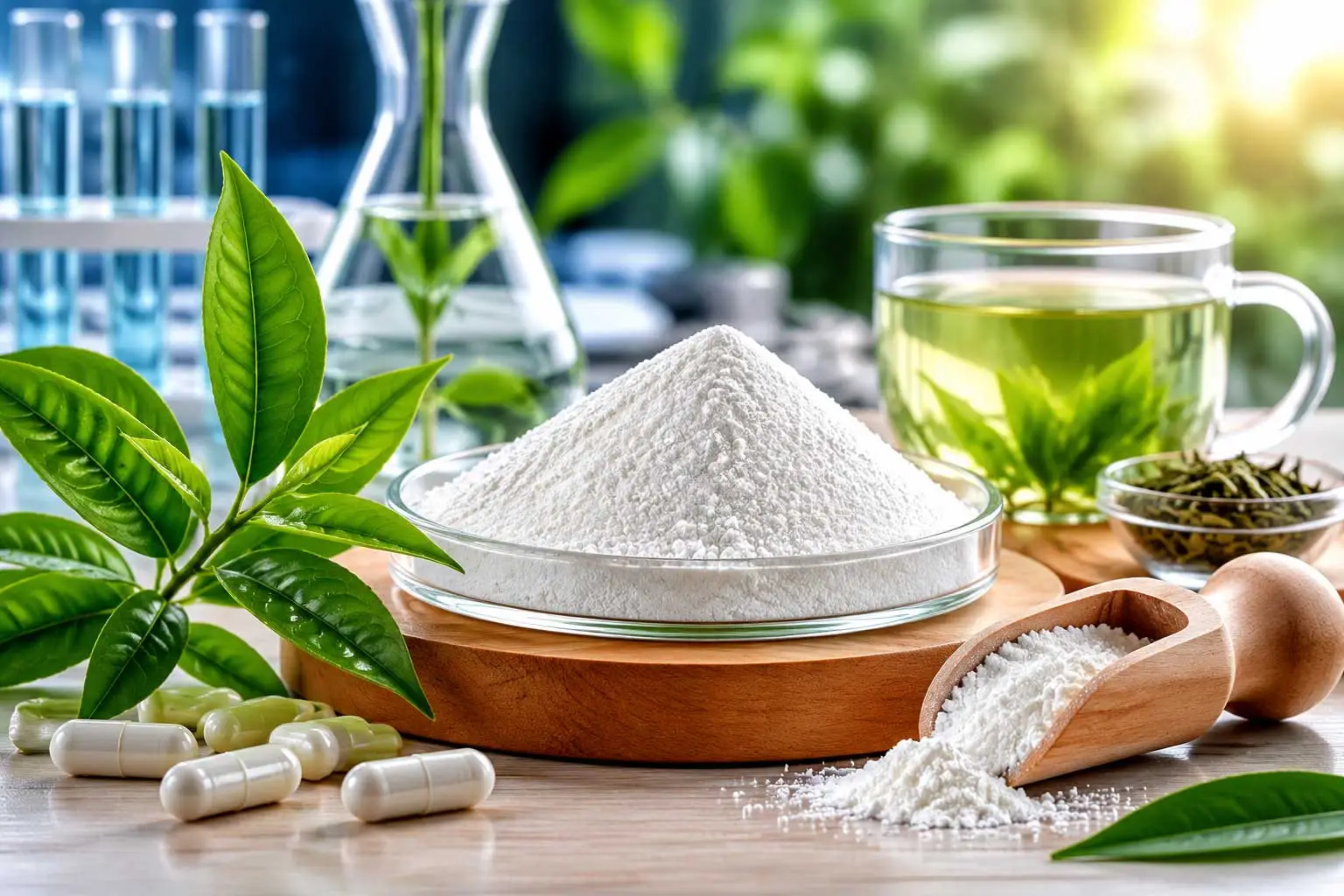
What Is L-Theanine and Why It Is Combined with Caffeine in Functional Formulations
From a formulation science perspective, L-Theanine supplement ingredient is widely recognized as a non-protein amino acid commonly used in functional nutrition systems. It is typically sourced through fermentation-based production or tea-derived extraction and is valued for its neutral taste profile and excellent water solubility.
In modern industrial applications, L-Theanine powder is rarely used in isolation. Instead, it is frequently combined with caffeine in what is widely known in the industry as L-Theanine caffeine synergy formulation systems. This pairing has become a standard structure in both beverage and supplement development pipelines.
The rationale behind this formulation approach is rooted in product positioning rather than medical claims. Beverage manufacturers and supplement brands use caffeine and L-Theanine functional drink formulation systems to create differentiated product experiences in highly competitive markets such as energy drinks, focus beverages, and cognitive performance supplements.
In functional beverage applications, caffeine is typically used as a primary stimulation ingredient, while L-Theanine is incorporated as a balancing component within the formulation architecture. This structure is particularly common in nootropic ingredient combination systems, where brands aim to design products positioned around “focus,” “clarity,” or “mental performance” without relying on single-ingredient formats.
From a supply chain perspective, demand for L-Theanine bulk supplier China partnerships has increased significantly due to the need for consistent amino acid quality in large-scale beverage production. Similarly, caffeine ingredient sourcing requires stable industrial-grade supply capable of supporting continuous manufacturing cycles.
As a result, procurement teams are increasingly evaluating suppliers based on their ability to provide complete formulation support, including functional beverage ingredient supplier capabilities and documentation systems such as COA and MSDS for international compliance.
L-Theanine vs Caffeine: Functional Roles in Beverage & Supplement Formulation Design
In functional product development, L-Theanine vs caffeine formulation comparison is not based on competitive substitution, but rather on complementary functional roles within a system-based formulation approach. This distinction is critical for manufacturers developing scalable beverage and supplement products.
Caffeine is widely used as a primary functional ingredient in energy-based systems due to its strong stimulation profile and fast-acting performance characteristics. In contrast, L-Theanine bulk ingredient is typically used as a balancing component in formulation architecture, supporting smoother product positioning in complex multi-ingredient systems.
In beverage manufacturing, especially within the functional beverage formulation ingredient supplier ecosystem, product developers often design systems where caffeine provides the core functional identity, while L-Theanine contributes to overall formulation balance. This structure is particularly common in RTD beverages and powdered drink formats.
In supplement formulation, L-Theanine supplement ingredient applications are frequently integrated into nootropic stacks and cognitive performance systems. These formulations are widely used in capsule and tablet formats targeting productivity-focused consumer segments.
From a manufacturing perspective, the decision to use L-Theanine or caffeine is not binary. Instead, it is based on formulation objectives, sensory requirements, and product positioning strategy. This is why many OEM manufacturers rely on nutraceutical ingredient supplier partnerships to ensure ingredient compatibility across multiple product lines.
The increasing demand for structured formulation systems has also led to greater reliance on OEM ingredient supplier China networks, where both caffeine and L-Theanine can be sourced under consistent quality control systems for scalable production.
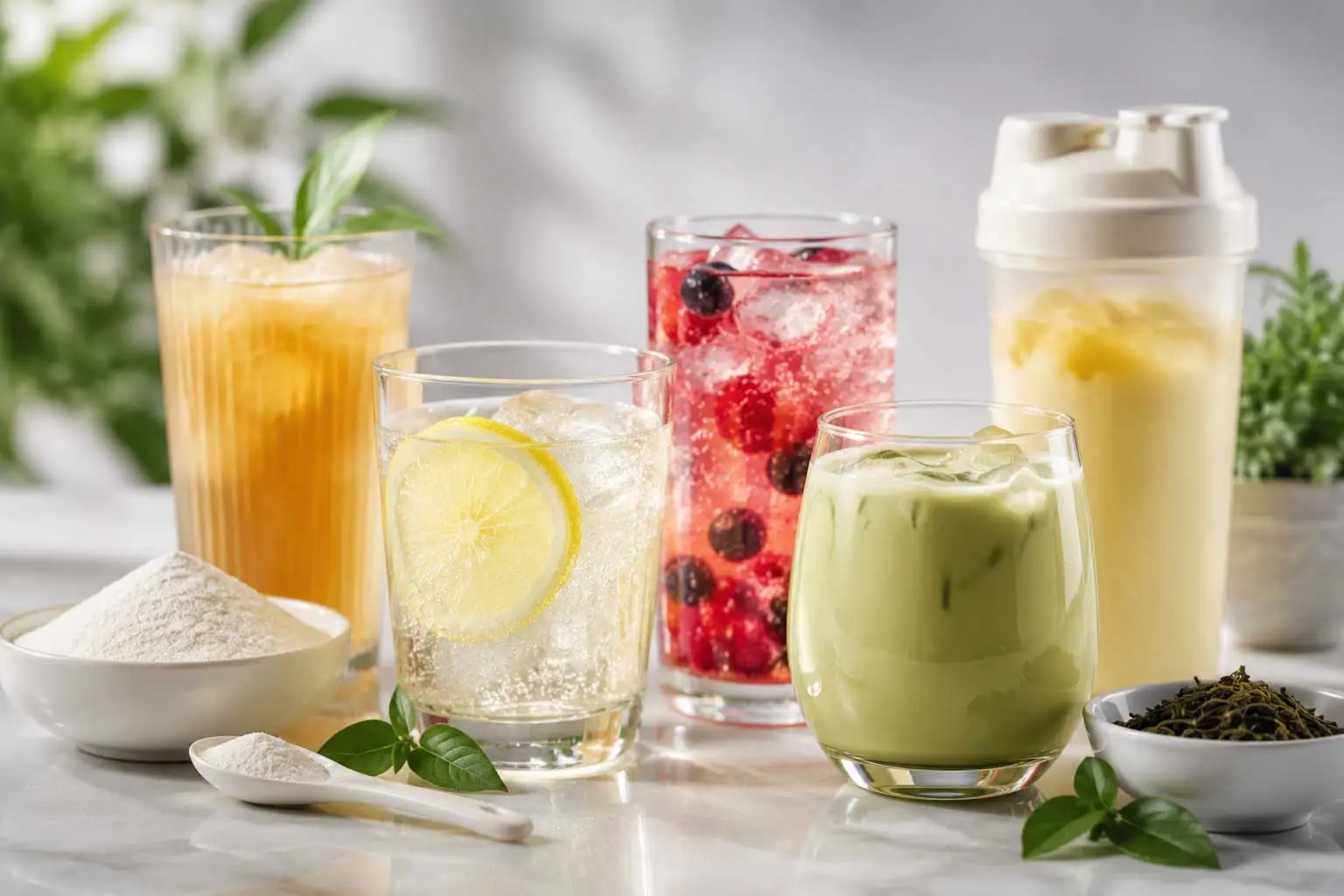
Functional Beverage Applications: L-Theanine and Caffeine in RTD Drinks and Energy Formulas
The functional beverage sector represents one of the fastest-growing application areas for L-Theanine functional beverage ingredient systems, particularly in ready-to-drink (RTD) products and energy-based formulations. In this segment, formulation strategies are heavily influenced by consumer demand for balanced energy products rather than traditional stimulant-only beverages.
In modern RTD development, L-Theanine powder is widely used in combination with caffeine to create beverage systems positioned around focus-oriented consumption experiences. These products are commonly labeled as “focus drinks,” “calm energy beverages,” or “performance hydration systems” in global markets.
From a formulation standpoint, water soluble amino acid ingredient supplier solutions are critical for beverage manufacturers, as solubility and stability directly impact production efficiency and shelf-life performance. L-Theanine is particularly suitable for these systems due to its high solubility and neutral taste profile.
In energy drink formulations, caffeine remains the primary active component. However, the inclusion of L-Theanine caffeine beverage ingredient systems allows brands to differentiate their products in a saturated market. This combination is widely used in premium energy drinks targeting cognitive performance positioning.
Additionally, the growth of functional tea and wellness beverage categories has further expanded demand for functional beverage ingredient supplier China networks, particularly those capable of providing consistent bulk supply for large-scale production.
As beverage brands continue to innovate in the RTD segment, procurement teams are increasingly prioritizing suppliers that can provide both technical documentation and scalable production capacity for bulk L-Theanine ingredient supply chains.
Supplement Applications: Nootropic, Capsule and Tablet Formulation Use Cases
In the dietary supplement industry, L-Theanine powder vs Caffeine formulation systems are widely used in nootropic product development and cognitive performance supplements. Rather than being positioned as standalone actives, both ingredients are typically integrated into structured formulation systems designed for multi-functional supplement categories.
In capsule and tablet manufacturing, L-Theanine supplement ingredient is commonly used in combination with caffeine and other functional compounds such as vitamins, amino acids, or botanical extracts. This type of formulation is widely adopted in “focus,” “energy balance,” and “daily performance” supplement lines across global markets.
From an OEM manufacturing perspective, L-Theanine bulk ingredient is valued for its stable compressibility, neutral sensory profile, and compatibility with a wide range of excipients. These characteristics make it suitable for high-speed tableting and capsule filling operations in industrial production environments.
In nootropic supplement systems, caffeine typically serves as the primary stimulation component, while L-Theanine is integrated into the formulation architecture to support balanced product positioning. This combination is frequently used in cognitive performance supplement ingredient systems, particularly in products targeting professional, academic, and productivity-focused consumer segments.
As demand continues to grow, procurement teams increasingly prioritize suppliers capable of supporting bulk L-Theanine powder supply for supplement manufacturers, particularly those requiring consistent batch quality and scalable production capacity.
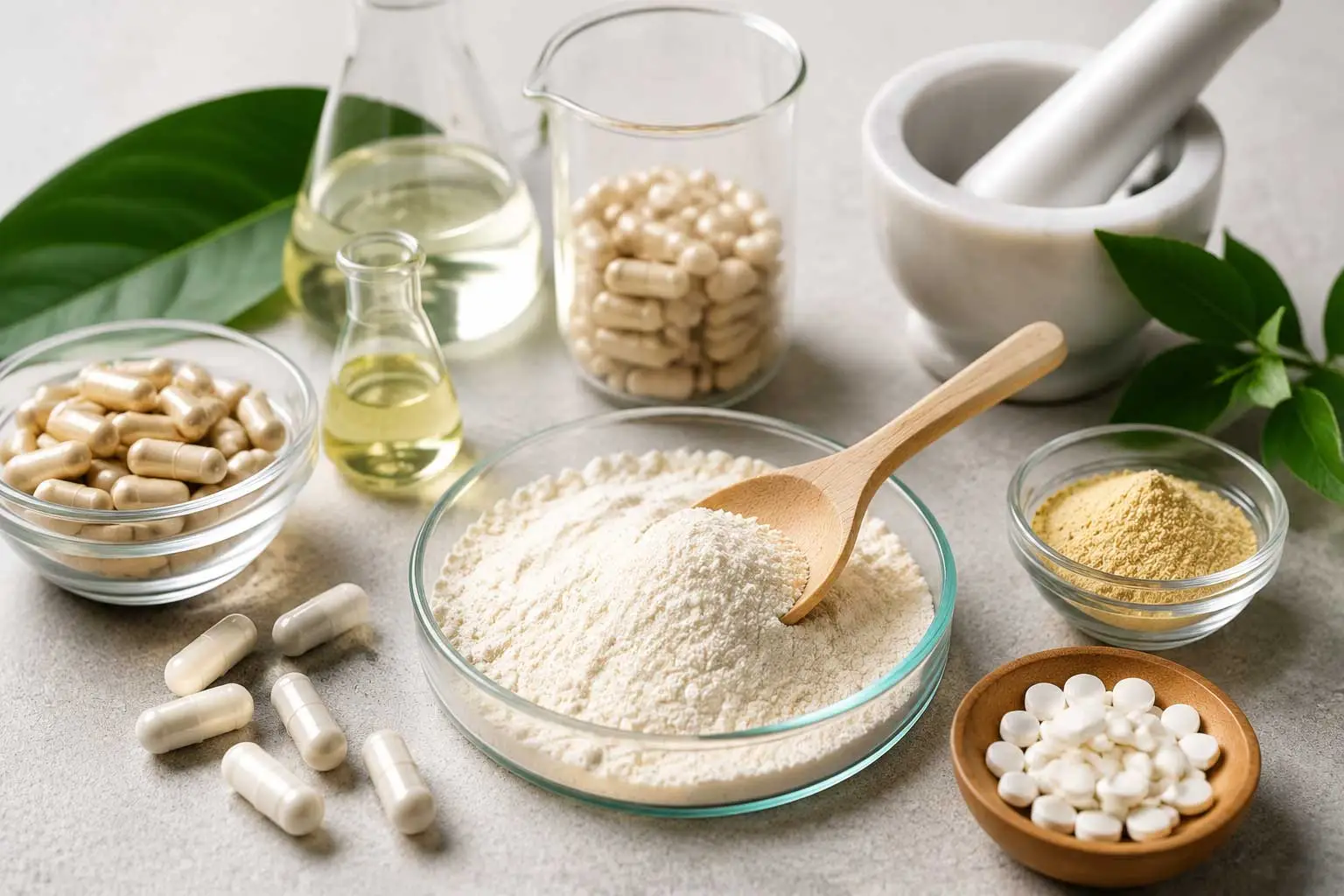
Manufacturing & Quality Control: GMP Production and HPLC Testing Standards
The reliability of any L-Theanine manufacturer China is fundamentally determined by its production process and quality control systems. In modern industrial supply chains, fermentation-based manufacturing has become the dominant production method for L-Theanine powder, ensuring consistency, scalability, and controlled impurity profiles.
A qualified GMP L-Theanine factory supplier must implement standardized production protocols that include microbial fermentation control, purification processes, crystallization systems, and final drying procedures. These steps ensure that each batch of bulk L-Theanine powder meets strict quality requirements for global nutraceutical applications.
Quality verification is typically conducted using HPLC testing methods, ensuring accurate purity analysis and consistency across production batches. As a result, L-Theanine HPLC tested ingredient supplier systems have become a standard requirement for international buyers in regulated markets such as the United States, Europe, Japan, and South Korea.
In addition to analytical testing, full documentation systems are essential. These include COA (Certificate of Analysis), MSDS (Material Safety Data Sheet), and technical specifications. These documents are critical for regulatory approval and are a key requirement for any nutraceutical ingredient supplier China working with global OEM brands.
Overall, manufacturing capability is no longer evaluated solely on production volume, but on the ability to deliver consistent quality, regulatory compliance, and long-term supply stability.
L-Theanine vs Caffeine Ratio in Functional Formulations (Industry Practice Guidelines)
In commercial product development, the L-Theanine powder vs Caffeine formulation ratio is not fixed by regulation, but instead follows widely adopted industry formulation practices based on product category, delivery format, and intended positioning.
Across the global functional beverage and supplement industry, formulation teams typically follow a balanced ratio model where caffeine serves as the primary functional driver and L-Theanine bulk ingredient is used as a complementary balancing component.
📊 1. Functional Beverage (RTD & Energy Drinks) Typical Ratios
In ready-to-drink (RTD) beverages and energy drink systems, the most commonly used formulation range is:
•L-Theanine : Caffeine = 1:1 to 2:1 (L-Theanine dominant systems)
•Example industry usage:
o 100 mg caffeine + 100–200 mg L-Theanine
o 80 mg caffeine + 80–160 mg L-Theanine
This ratio is widely used in functional beverage ingredient supplier China formulations, particularly in products positioned as “focus drinks” or “calm energy beverages.”
The higher L-Theanine ratio is typically selected in beverage systems where brands aim to create smoother sensory positioning and differentiated functional claims in competitive RTD categories.
💊2. Dietary Supplements (Capsules & Tablets) Standard Ratios
In nutraceutical supplement formulations, particularly nootropic stacks and cognitive performance products, the ratio is generally more flexible depending on product positioning:
•L-Theanine : Caffeine = 1:1 (balanced stack model)
•or
•L-Theanine : Caffeine = 2:1 (calm-focus positioning model)
Typical industrial examples include:
•200 mg L-Theanine + 100 mg caffeine
•100 mg L-Theanine + 100 mg caffeine (balanced formulation)
This formulation structure is widely used in nootropic ingredient supplier systems, especially for capsule-based products targeting productivity and cognitive performance positioning.
🧠 3. Premium Nootropic & Performance Formulations
In higher-end cognitive performance systems, manufacturers often increase the proportion of L-Theanine to caffeine in order to refine product positioning:
•L-Theanine : Caffeine = 2:1 to 3:1 (premium focus systems)
This structure is commonly found in:
•Premium nootropic supplements
•Study performance formulations
•Advanced functional blends in OEM product lines
From a sourcing perspective, these systems typically require high purity L-Theanine powder supplier China networks capable of maintaining batch consistency across large-scale production.
📦4. Industrial Formulation Considerations for Manufacturers
While ratio ranges are widely used in industry practice, actual formulation design depends on several commercial and technical factors:
•Product category (beverage vs supplement)
•Regulatory classification in target market
•Ingredient cost optimization
•Sensory performance requirements
•Stability in liquid or solid systems
For OEM manufacturers and brand owners, sourcing from a reliable L-Theanine supplier China is critical to ensure consistent performance across batches, especially when scaling from pilot production to full commercial manufacturing.
MOQ, Packaging and Global Supply Chain Capabilities
For international buyers, sourcing L-Theanine bulk powder is not limited to product specification alone. Packaging formats, minimum order quantity (MOQ), and logistics capabilities are equally important in evaluating a reliable L-Theanine supplier China.
Standard packaging formats typically include 1 kg aluminum foil bags for sampling and pilot production, as well as 25 kg fiber drums for industrial-scale manufacturing. These packaging systems are designed to ensure stability, moisture resistance, and safe international transportation.
In terms of MOQ, flexible supply structures are increasingly required by OEM manufacturers and contract supplement producers. A qualified bulk ingredient supplier should be able to support both small-scale development orders and large-scale commercial supply programs.
From a logistics perspective, global distribution capability is a key evaluation factor. Buyers increasingly expect suppliers to provide fast shipping, customs documentation support, and stable export processes. As a result, L-Theanine wholesale supplier networks with established international logistics systems are preferred in long-term procurement strategies.
Overall, supply chain reliability is now considered a core component of ingredient sourcing, alongside pricing and product quality.
Regulatory Compliance & Documentation for Global Buyers
In the global nutraceutical industry, regulatory compliance is a critical requirement for any L-Theanine powder supplier working with international markets. Buyers typically require full documentation packages before approving raw material integration into commercial formulations.
Standard documentation includes COA, MSDS, and technical data sheets. These documents ensure transparency in product specifications, safety profiles, and batch-level traceability. For regulated markets such as the EU and US, these documents are essential for product registration and compliance review.
A professional GMP certified L-Theanine manufacturer must also maintain audit-ready production systems, ensuring that manufacturing processes can be verified by third-party inspectors or customer audits when required.
In addition, compliance with food-grade and nutraceutical-grade standards is essential for bulk L-Theanine ingredient supply chains, particularly in applications involving dietary supplements and functional beverages.
As regulatory expectations continue to increase globally, documentation capability has become a key differentiator among nutraceutical ingredient suppliers China, directly influencing supplier selection decisions.
Why Choose Us as Your L-Theanine & Caffeine Ingredient Supplier Partner
In the current global sourcing environment, selecting a reliable L-Theanine supplier China is a strategic decision that directly impacts product consistency, regulatory compliance, and long-term supply chain stability.
As a vertically integrated bulk ingredient manufacturer, we focus on providing consistent production quality, scalable manufacturing capacity, and reliable global distribution for both L-Theanine and caffeine-based ingredient systems.
Our production system is designed to support industrial-scale supply requirements, ensuring that L-Theanine bulk powder is available with stable ≥99% purity and full batch traceability. Each shipment is supported with complete regulatory documentation, including COA and MSDS.
From a commercial perspective, we offer flexible L-Theanine wholesale pricing structures based on order volume and long-term cooperation models. This allows OEM manufacturers and supplement brands to optimize cost efficiency while maintaining supply chain stability.
In addition to manufacturing capability, we also provide OEM and private label support for functional beverage and supplement brands, including technical assistance for formulation development and ingredient integration.
Our goal is to serve not just as a supplier, but as a long-term functional ingredient supply partner, supporting global manufacturers in developing scalable and competitive product lines.
Contact for Bulk L-Theanine & Caffeine Ingredient Supply
For procurement teams, beverage manufacturers, and supplement brands seeking a reliable L-Theanine powder supplier China, we provide full support for sampling, technical documentation, and bulk quotation requests.
Whether you are developing functional beverages, nootropic supplements, or cognitive performance formulations, our team can assist with specification matching, pricing evaluation, and global logistics coordination.
📩 Contact Information:
•Email: admin@chenlangbio.com
•WhatsApp:+86-17782478823
•Company: Xi’an Chen Lang Bio Tech Co., Ltd.
We respond quickly to all bulk ingredient supplier inquiries and support global customers across North America, Europe, Japan, South Korea, and Southeast Asia.
For OEM, wholesale, or long-term supply agreements, our technical and commercial teams are available to provide samples, COA documentation, and customized sourcing solutions.
References
1. Global Food and Beverage Ingredient Market Reports (2024–2026). Functional beverage and nootropic ingredient trends, industry overview publications.
2. International Council for Functional Ingredients (ICFI). Technical guidelines for amino acid applications in dietary supplements and functional beverages.
3. Amino Acid Manufacturers Association (AAMA). Fermentation-based amino acid production and quality control standards in bulk ingredient manufacturing.
4. Supplier Technical Data Sheets (TDS) and Safety Documentation (MSDS) from global L-Theanine bulk manufacturer China and caffeine ingredient suppliers.
5. OEM/ODM Nutraceutical Formulation Guidelines. Common industry practice for L-Theanine powder vs Caffeine formulation ratios in functional beverages and supplement systems.
6. Functional Beverage Development Handbook (Industry Edition). Application of amino acids and caffeine in RTD drinks and energy formulations.
7. Nutraceutical Raw Material Supply Chain Reports (Asia–Europe–North America). Bulk ingredient sourcing practices and supplier qualification standards.

Send Inquiry
Related Industry Knowledge
- How to Evaluate Olive Leaf Extract Powder Quality: Specifications, COA, and Stability
- Tranexamic Acid for Skin: Benefits, Mechanism, and Cosmetic Ingredient Applications
- How Pyrroloquinoline Quinone Powder Is Used in Dietary Supplements: Applications and Industry Reference Levels
- PQQ Disodium Salt vs PQQ Acid: What’s the Difference
- Avenanthramides in Oat Extract: What Cosmetic Manufacturers Should Know About This High-Value Active?
- Diosmin Powder vs Hesperidin: Which Flavonoid Is Better for Supplement Formulations?
- How Does 3,3, DIIDOLYLMETHANE Support Estrogen Metabolism?
- What Are Soy Isoflavones Benefits Discover Their Power
- Is Nitenpyram Effective Against Fleas
- What are the Benefits of Magnolol