
How to Evaluate Olive Leaf Extract Powder Quality: Specifications, COA, and Stability
2026-02-06 12:32:57
The Importance of Quality Evaluation for Olive Leaf Extract Powder
As the demand for natural, plant-based ingredients continues to grow globally, olive leaf extract powder has gained significant attention in industries ranging from dietary supplements to functional foods and cosmetics. This powerful botanical extract, known for its high content of polyphenols like oleuropein and hydroxytyrosol, offers a wide array of health benefits, such as antioxidant protection, immune support, and anti-inflammatory effects. However, as with any raw material, sourcing olive leaf extract powder requires careful evaluation of its quality to ensure it meets the standards necessary for consistent product performance.
At CHEN LANG BIO TECH, we understand that the quality of the final product is determined by the quality of the raw materials used. As a direct supplier and manufacturer of olive leaf extract powder, we are committed to providing our clients with ingredients that are not only effective but also safe and reliable. Quality control is paramount at every step of the production process, from raw material sourcing to finished product testing.
For businesses looking to incorporate olive leaf extract powder into their formulations, understanding how to assess the product’s specifications, certificate of analysis (COA), and stability is essential. These elements help guarantee that the extract will perform as expected in finished products, whether it’s in a supplement capsule, a skincare cream, or a health drink. In this article, we will break down these key factors—specifications, COA, and stability testing—and explain how each plays a vital role in ensuring the quality of olive leaf extract powder for professional use.
Specifications: Defining the Quality Parameters of Olive Leaf Extract Powder
Key Specifications for Olive Leaf Extract Powder
When sourcing olive leaf extract powder, it is essential to define the quality parameters that determine the extract's potency, purity, and overall suitability for different applications. These specifications serve as the cornerstone for evaluating the raw material’s performance in finished products, whether for dietary supplements, functional foods, or cosmetics.
One of the most important specifications for olive leaf extract powder is the oleuropein content. Oleuropein, a polyphenolic compound found abundantly in olive leaves, is considered the primary marker for standardizing the extract. It is widely recognized for its antioxidant properties, its ability to support heart health, and its role in enhancing immune function. Standardizing olive leaf extract powder to a specific oleuropein percentage ensures that the extract delivers consistent bioactivity and potency across batches, providing formulators with reliable performance.
In addition to oleuropein content, other key specifications include:
•Total polyphenols: The polyphenolic content of olive leaf extract contributes to its antioxidant capacity, supporting cellular protection and enhancing the stability of the final product. A high polyphenol content is often indicative of an extract’s potency and overall efficacy.
•Solubility: This specification refers to how well the extract dissolves in different solvents. It is crucial for applications where easy incorporation into formulations is needed, such as in capsules, tablets, or beverages.
•Particle size: The particle size distribution influences the bioavailability of the active compounds, affecting their absorption and effectiveness in the body. For olive leaf extract powder, the ideal particle size should ensure that the extract can be easily incorporated into various formulations while maintaining its bioavailability.
•Appearance and color: This visual specification offers a first indication of the extract's quality. A consistent color and appearance help to identify any potential issues with the raw material or the extraction process.
•Microbiological testing: To ensure the extract is safe for consumption, microbial testing is conducted to confirm that the extract is free from harmful microorganisms. This ensures the product meets industry safety standards for human use.
COA (Certificate of Analysis): Verifying the Quality of Olive Leaf Extract Powder
Understanding the COA for Olive Leaf Extract Powder
For professional buyers, the Certificate of Analysis (COA) is the most direct and reliable document for evaluating the quality of olive leaf extract powder. A COA is not simply a formality; it is a batch-specific analytical record that confirms whether the ingredient meets its declared specifications and safety requirements.
In practical sourcing decisions, the COA serves three essential functions:
it verifies active compound content, demonstrates regulatory compliance, and provides traceability across the supply chain. Without a complete and well-documented COA, it is difficult to assess whether olive leaf extract powder will perform consistently in formulation or remain compliant in downstream applications.
Key Parameters Commonly Listed on a COA
A standard COA for olive leaf extract powder should clearly report the following analytical results:
•Oleuropein content
This value confirms whether the extract meets the declared standardization level. Because oleuropein is used as a primary marker compound, its quantified percentage provides direct insight into extract potency and batch consistency.
•Moisture content
Moisture levels affect both stability and shelf life. Excess moisture may lead to clumping, microbial growth, or gradual degradation of polyphenols during storage.
•Residual solvents
If solvents are used during extraction, residual solvent testing ensures that levels remain within acceptable regulatory limits and that the extract is suitable for food, supplement, or cosmetic use.
•Heavy metals
Analysis typically includes lead, arsenic, cadmium, and mercury. This testing is critical for safety evaluation, particularly when olive leaf extract powder is intended for long-term consumption.
•Pesticide residues
Because olive leaves are an agricultural raw material, pesticide screening provides assurance that the extract complies with international safety standards.
•Microbiological limits
Tests for total plate count, yeast, mold, and specific pathogens confirm that the extract meets hygiene and safety requirements for human use.
Each of these parameters contributes to a comprehensive picture of olive leaf extract powder quality, extending well beyond a single potency value.
We mainly supply oleuropein powder 50%, attach is our COA:
|
ITEM STANDARD TEST RESULT TEST METHOD |
||
|
Oleuropein ≥50.0% 50.86% HPLC |
||
|
Physical & Chemical |
||
|
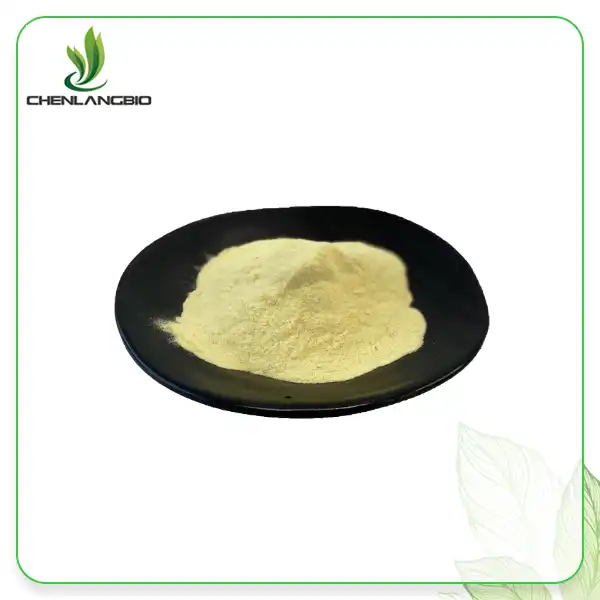
Appearance Yellow Green Powder Complies Visual |
||
|
Odor & Taste Characteristic Characteristic Organoleptic |
||
|
Particle Size 98% through 80mesh Complies USP<786> |
||
|
Extraction Solvent Ethanol & Water Complies ------ |
||
|
Solubility Water Soluble Complies ------ |
||
|
Loss on Drying ≤5.0% 3.62% USP<731> |
||
|
Ash ≤5.0% 2.54% USP<281> |
||
|
Solvent Residual ≤0.05% Complies USP<467> |
||
|
Heavy Metal |
||
|
As ≤ 1.0ppm Complies ICP-MS |
||
|
Pb ≤ 1.0ppm Complies ICP-MS |
||
|
Cd ≤0.5ppm Complies ICP-MS |
||
|
Hg ≤0.5ppm Complies ICP-MS |
||
|
Microbiological Test |
||
|
Total Plate Count ≤ 1,000cfu/g <200cfu/g AOAC |
||
|
Mold and Yeast ≤ 100cfu/g <50cfu/g AOAC |
||
|
E.Coli Negative Complies AOAC |
||
|
Salmonella Negative Complies AOAC |
||
|
Conclusion |
Conform with specification, Non-GMO, Non-irradiation,Allergen Free, BSE/BSE Free. |
|
|
Storage Store in cool and dry places. Keep away from strong light and heat. |
||
|
Packing |
By 25kgs/Drum,inner by plastic bag |
|
|
Shelf Life |
24 months under the above condition,and |
|
Interpreting COA Results in a Sourcing Context
When reviewing a COA, buyers should consider not only whether values fall within limits, but also how consistently those values are maintained across batches. Consistent analytical results indicate controlled manufacturing conditions and reliable raw material sourcing.
At CHEN LANG BIO TECH, every batch of olive leaf extract powder is supported by a detailed COA generated through in-house analytical testing. Equipped with advanced instrumentation such as high-performance liquid chromatography (HPLC), UV spectrophotometry, and dedicated systems for moisture and ash determination, our laboratory ensures accurate quantification of active compounds as well as routine monitoring of safety parameters, including residual solvents, pesticide residues, heavy metals, and microbiological indicators.
A well-prepared COA should be viewed as more than a compliance document. It is a practical tool that allows formulators, quality teams, and procurement professionals to evaluate whether an ingredient supplier can deliver consistent, traceable, and application-ready olive leaf extract powder over the long term.
Stability: Ensuring Long-Term Quality and Performance of Olive Leaf Extract Powder
What Affects the Stability of Olive Leaf Extract Powder?
The stability of olive leaf extract powder is a critical quality factor that directly influences its shelf life, functional performance, and suitability for long-term supply. Unlike single-molecule synthetic ingredients, botanical extracts contain complex polyphenol systems that can be sensitive to environmental conditions if not properly controlled.
Several key factors affect the stability of olive leaf extract powder:
•Moisture exposure
Polyphenols such as oleuropein are hygroscopic to varying degrees. Excess moisture can accelerate chemical degradation, promote clumping, and increase the risk of microbial growth. Maintaining a controlled moisture level is therefore essential for preserving extract integrity.
•Temperature
Elevated temperatures may gradually reduce active compound levels, particularly during prolonged storage or transportation. Thermal stress can alter the polyphenol profile, leading to changes in potency over time.
•Light and oxygen
Extended exposure to light or oxygen may contribute to oxidative degradation of phenolic compounds, affecting both appearance and functional performance.
Because of these sensitivities, stability should not be evaluated solely at the time of production, but across the entire intended shelf life of the ingredient.
•Stability Testing and Shelf-Life Evaluation
To ensure reliable performance, professional suppliers conduct structured stability testing for olive leaf extract powder. This typically includes both accelerated stability studies and long-term storage evaluations.
•Accelerated stability testing
Samples are stored under elevated temperature and humidity conditions to simulate aging. These studies help predict how active compounds such as oleuropein may behave over time and identify potential degradation pathways.
•Long-term stability studies
Products are stored under recommended conditions and tested at defined intervals to confirm that key specifications—such as active content and moisture—remain within acceptable ranges throughout the shelf life.
Stability data generated from these studies provides practical guidance for determining shelf life, storage recommendations, and packaging requirements.
Packaging and Storage Considerations
Packaging plays an essential role in maintaining olive leaf extract powder stability. Protective packaging materials help minimize exposure to moisture, oxygen, and light during storage and transport. Proper sealing and controlled storage conditions are particularly important for bulk shipments intended for international markets.
At CHEN LANG BIO TECH, stability considerations are integrated into both manufacturing and post-production handling. Stability data is reviewed alongside COA results to ensure that each batch of olive leaf extract powder maintains its defined quality parameters from release through end use.
Quality Control During Manufacturing: From Raw Material to Final Product
Quality Assurance Across the Olive Leaf Extract Powder Production Process
Ensuring consistent quality in olive leaf extract powder requires control across the entire manufacturing chain, not just at the final testing stage. From a supplier’s perspective, true quality assurance is achieved when raw material sourcing, extraction, processing, and analytical verification are integrated into a single, controlled system.
At CHEN LANG BIO TECH, quality control begins upstream, well before extraction takes place. Olive leaves are sourced from our own cultivation base covering more than 5,000 acres, allowing direct oversight of planting conditions, harvest timing, and raw material handling. This level of source control significantly reduces variability in leaf composition and provides a stable foundation for standardized extract production.
Controlled Extraction and Processing
Once harvested, olive leaves undergo standardized pre-treatment, including cleaning, drying, and size reduction, to prepare the material for extraction. These steps are designed to minimize microbial load and stabilize moisture levels, both of which are critical for maintaining downstream extract quality.
During extraction, process parameters such as solvent system, temperature, and extraction time are carefully managed to preserve the natural polyphenol profile while achieving the targeted oleuropein content. Controlled concentration and drying steps follow, converting the extract into a stable powder form without excessive thermal stress. This approach supports both batch-to-batch consistency and long-term stability of olive leaf extract powder.
In-House Analytical Control and Batch Verification
Quality control is reinforced through comprehensive in-house testing. Our analytical laboratory is equipped with advanced instrumentation, including high-performance liquid chromatography (HPLC), UV–visible spectrophotometers, analytical balances, and dedicated equipment for moisture and ash determination. These tools enable accurate monitoring of active compound levels as well as routine evaluation of key physicochemical parameters.
In addition to potency testing, each batch of olive leaf extract powder is evaluated for residual solvents, pesticide residues, heavy metals, and microbiological indicators. This multi-layered testing framework ensures that products meet applicable safety and quality expectations for use in dietary supplements, functional foods, and cosmetic formulations.
Traceability and Documentation
All production and testing data are linked through batch traceability systems, allowing each finished product to be traced back to its raw material origin and processing history. This level of traceability supports internal quality management, third-party audits, and regulatory review, while also providing buyers with confidence in long-term supply reliability.
By maintaining control from cultivation through final analysis, CHEN LANG BIO TECH delivers olive leaf extract powder that is not only standardized on paper, but demonstrably consistent in real-world manufacturing environments.
Conclusion: Making Informed Sourcing Decisions for Olive Leaf Extract Powder
Evaluating the quality of olive leaf extract powder requires more than a surface-level comparison of specifications or price points. True quality assessment is built on a comprehensive understanding of standardization parameters, COA transparency, and stability performance over time. Each of these elements plays a distinct role in determining whether an ingredient can support consistent formulation outcomes and long-term production reliability.
Clear specifications—particularly standardized oleuropein content—provide a technical foundation for comparing different extracts. A well-documented Certificate of Analysis (COA) verifies that these specifications are supported by validated analytical data and that safety-related parameters such as pesticide residues, heavy metals, and microbiological limits are properly controlled. Stability data, in turn, confirms whether the extract can maintain its defined quality throughout storage, transport, and use.
From a manufacturing perspective, these quality indicators are only meaningful when they are supported by controlled sourcing, reproducible processing, and robust analytical capability. As a dedicated olive leaf extract powder manufacturer and bulk supplier, CHEN LANG BIO TECH focuses on integrating raw material control, standardized extraction, and in-house testing into a unified quality management system. This approach allows us to deliver ingredients that are not only compliant on paper, but dependable in real-world production environments.
For formulation teams, quality managers, or procurement professionals seeking detailed specifications, batch documentation, or technical clarification related to olive leaf extract powder, our technical team is available to provide additional information and supporting data.
Contact CHEN LANG BIO TECH
If you would like to discuss specifications, quality documentation, or sourcing requirements for olive leaf extract powder, please feel free to reach out to us for further technical support.
📧 Email: admin@chenlangbiotech.com
🌍 Website: www.chenlangbiotech.com
FAQ: Common Questions About Olive Leaf Extract Powder Quality
What is the typical oleuropein content in olive leaf extract powder?
The oleuropein content in olive leaf extract powder is commonly standardized at levels such as 10%, 20%, or higher, depending on the intended application and formulation requirements. Oleuropein is used as a primary marker compound because it is naturally abundant in olive leaves and can be accurately quantified using validated analytical methods such as HPLC. The appropriate oleuropein level should be selected based on dosage design, formulation constraints, and regulatory considerations.
How can buyers verify the quality of olive leaf extract powder?
Quality verification relies on a combination of clearly defined specifications, a complete Certificate of Analysis (COA), and supporting stability data. Buyers should review active compound content, safety parameters (including pesticide residues and heavy metals), and batch traceability information. Working with a direct manufacturer who provides transparent documentation is essential for consistent sourcing.
What tests should appear on a COA for olive leaf extract powder?
A comprehensive COA for olive leaf extract powder should include:
•Assay of oleuropein content
•Moisture and ash values
•Residual solvents
•Pesticide residues
•Heavy metals
•Microbiological limits
These results confirm both potency and safety, and they should be reported on a batch-specific basis.
Why is stability testing important for olive leaf extract powder?
Stability testing determines whether olive leaf extract powder can maintain its defined specifications throughout its shelf life. Because botanical extracts contain complex polyphenol systems, factors such as moisture, temperature, and oxygen exposure can affect long-term performance. Stability data helps establish shelf life, storage conditions, and packaging requirements, reducing the risk of degradation during storage and transport.
How should olive leaf extract powder be stored to maintain quality?
To preserve quality, olive leaf extract powder should be stored in tightly sealed containers, protected from moisture, excessive heat, and direct light. Controlled storage conditions help maintain oleuropein stability and prevent gradual loss of active compounds. Proper packaging is especially important for bulk shipments intended for long-term use.
Can hydroxytyrosol be tested and specified in olive leaf extract powder?
Yes, hydroxytyrosol can be quantified using analytical methods such as HPLC, although it is typically present at lower levels than oleuropein in standard olive leaf extracts. While some applications may specify hydroxytyrosol content, it is generally considered a secondary parameter rather than a primary standardization marker.
What is the difference between olive leaf extract powder and olive leaf powder?
Olive leaf extract powder is produced through a controlled extraction process that concentrates specific active compounds, while olive leaf powder is made by simply drying and milling whole leaves. Extract powders offer higher potency, improved consistency, and better suitability for standardized formulations.
Why is traceability important when sourcing bulk olive leaf extract powder?
Traceability links each batch of olive leaf extract powder to its raw material origin, processing conditions, and analytical results. This transparency supports regulatory compliance, quality audits, and long-term supply reliability. For buyers, traceability reduces sourcing risk and enhances confidence in ingredient consistency.
What should buyers look for in an olive leaf extract powder supplier?
Buyers should evaluate whether the supplier is a direct olive leaf extract powder manufacturer, whether they control raw material sourcing, and whether they provide complete documentation, including COAs and stability data. Manufacturing transparency and analytical capability are strong indicators of long-term supply reliability.

Send Inquiry
Related Industry Knowledge
- PQQ in Cognitive Research and Supplement Formulation: An Ingredient Perspective
- Kaempferol, A Potential Neuroprotective Agent in Neurodegenerative Diseases: From Chemistry to Medicine
- Top 6 Applications for Oleuropein Powder in 2025
- Natural Cleaning with Soapnut Extract Powder
- Unlocking the Skin Benefits of Paeoniflorin 80%
- How Long Does 4-Butylresorcinol Take to Work
- How Long Does Sildenafil Powder Last? Effects and Duration
- What is Quaternium 73 Used For In Cosmetics
- Are Ecdysterone and Turkesterone the Same
- Is It Safe to Take Ashwagandha Extract Withanolides Powder Daily?