Pine Bark Extract and Collagen Formulations: Benefits, Applications, and Supplier Considerations
2026-06-04 15:58:38
Introduction: The Growing Trend of Combining Pine Bark Extract and Collagen
The demand for premium ingredients that support both beauty and healthy aging continues to grow across global nutraceutical and wellness markets. Among the most popular formulation trends is the combination of pine bark extract and collagen, particularly in products positioned around skin health, beauty-from-within, and active aging.
This growing interest is not surprising. As consumers become more educated about ingredient quality, they increasingly seek formulations that combine scientifically studied botanical extracts with established nutritional ingredients. For brands developing beauty supplements and wellness products, the combination offers an opportunity to create differentiated products while maintaining a clean-label and premium positioning.
Much of the interest surrounding pine bark extract comes from its naturally occurring polyphenolic compounds. As discussed in our article on What Are Procyanidins in Pine Bark Extract and Why Do They Matter in Formulations, procyanidins and OPCs are among the key marker compounds used to standardize high-quality pine bark extracts and ensure consistent product specifications.
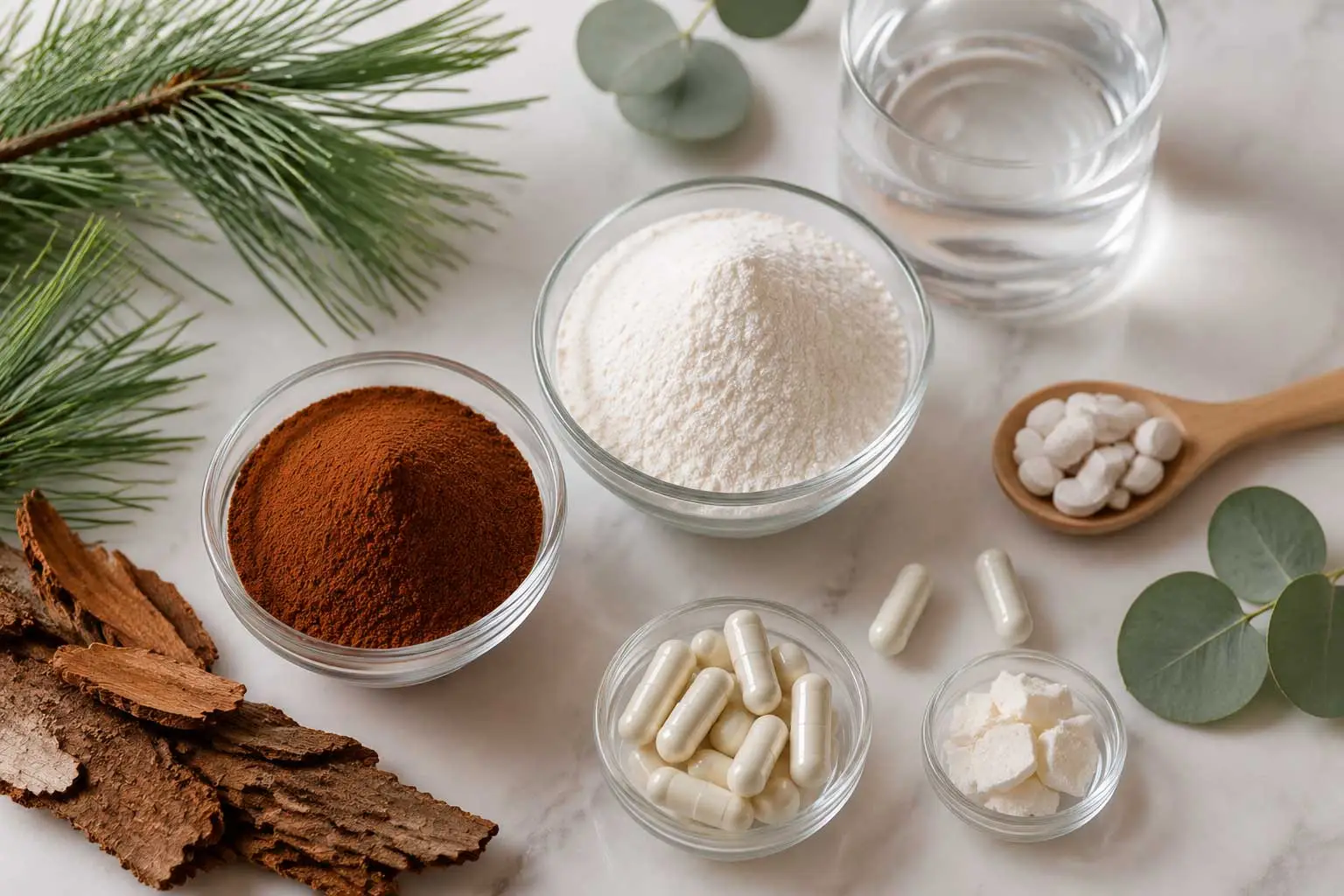
At the same time, collagen remains one of the most recognized ingredients in the global beauty supplement category. When these ingredients are combined within a single formulation, manufacturers gain additional flexibility across dietary supplements, beauty beverages, and nutricosmetic applications.
For procurement teams, however, successful formulation development requires more than selecting popular ingredients. It also requires evaluating standardization levels, documentation support, manufacturing capabilities, and long-term supplier reliability.
Understanding the Synergy: Benefits of Pine Bark Extract Combined with Collagen
The value of combining pine bark extract and collagen lies in their complementary roles within premium formulation development. Collagen is widely used in products designed for skin, beauty, and healthy aging markets. Pine bark extract, particularly highly standardized grades such as Pine Bark Extract Powder 95% OPC, is commonly selected for its concentrated polyphenol content and formulation consistency.
As we explored in Pine Bark Extract Powder 95% OPC: Specifications, Applications, and Buying Considerations, higher-standardized extracts provide formulators with greater control over active compound levels, helping ensure product consistency across commercial production batches.
This combination has become increasingly common in:
•Beauty-from-within supplements
•Premium collagen powders
•Healthy aging formulations
•Nutricosmetic products
•Daily wellness supplements
Manufacturers are particularly interested in ingredients that can support multiple product concepts while simplifying formulation management. Standardized botanical extracts paired with high-quality collagen ingredients offer exactly that type of flexibility.
Another reason this ingredient combination continues to gain attention is its suitability across multiple delivery systems. Whether the final product is a capsule, tablet, sachet, powder blend, or liquid formulation, both ingredients can be incorporated into a variety of product formats.
For brands developing premium nutritional products, ingredient quality often becomes a key differentiator. This is why many procurement teams now place greater emphasis on sourcing from experienced manufacturers capable of delivering consistent specifications, complete documentation, and scalable production capacity.
Applications Across Nutraceuticals, Functional Beverages, and Beauty Supplements
One of the biggest advantages of combining pine bark extract and collagen is its versatility across multiple product categories. Within the dietary supplement industry, this combination is increasingly found in capsules, tablets, stick packs, and powdered nutritional products. Brands targeting healthy aging and beauty-from-within consumers often view these ingredients as complementary components within premium formulations.
Manufacturers developing supplement products may also benefit from understanding How Pine Bark Extract Is Used in Nutraceutical Formulations, where specification selection, ingredient compatibility, and supplier qualification play an important role in successful product development.
Beyond supplements, functional beverages represent another rapidly growing application area.
As discussed in Pine Bark Extract in Functional Beverages: Applications, Specifications & Supplier Insights, beverage manufacturers increasingly seek ingredients that combine premium positioning with formulation flexibility. This has created demand for standardized pine bark extracts suitable for:
•Beauty beverages
•Functional wellness drinks
•Nutritional beverage powders
•Ready-to-mix sachets
In the beauty sector, the combination of pine bark extract and collagen aligns closely with current consumer preferences. Many cosmetic and nutricosmetic brands are now incorporating nutritional ingredients into broader beauty concepts. For companies targeting this segment, our article Pine Bark Extract for Skincare: Applications, Specifications, and Supplier Considerations provides additional insights into ingredient selection and formulation considerations.
The ability to use a single ingredient combination across supplements, beverages, and beauty products makes this formulation approach particularly attractive for brands looking to expand their product portfolios while maintaining ingredient consistency.
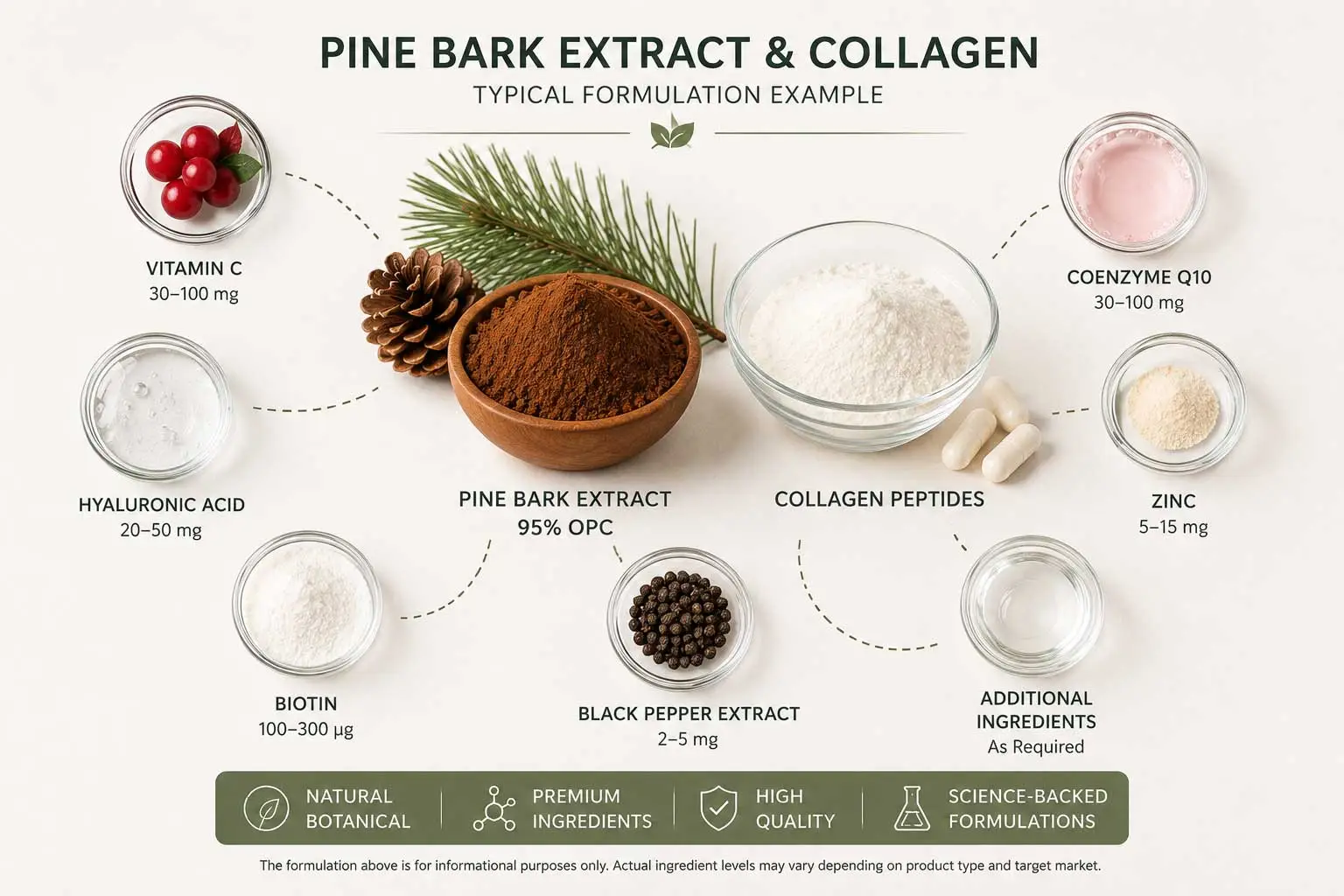
Typical Formulation Example for Beauty Supplement Capsules and Tablets
One of the most common applications of pine bark extract and collagen is in capsule and tablet formulations designed for beauty-from-within and premium wellness products. The following example reflects ingredient combinations frequently seen in commercial formulations.
|
Ingredient |
Typical Inclusion Level |
|
Hydrolyzed Collagen Peptides |
500–1,000 mg |
|
Pine Bark Extract Powder 95% OPC |
50–150 mg |
|
Vitamin C |
30–100 mg |
|
Hyaluronic Acid |
20–50 mg |
|
Biotin |
100–300 μg |
|
Black Pepper Extract |
2–5 mg |
These formulations are commonly positioned within the beauty supplement, healthy aging supplement, and nutricosmetic ingredient categories.
Typical Formulation Example for Powdered Beauty Sachets
Powder stick packs and sachets have become increasingly popular due to their portability and ability to deliver higher ingredient loads per serving. A typical formulation may include:
|
Ingredient |
Typical Inclusion Level |
|
Hydrolyzed Collagen Peptides |
3,000–6,000 mg |
|
Pine Bark Extract Powder 95% OPC |
100–200 mg |
|
Vitamin C |
60–100 mg |
|
Biotin |
100–300 μg |
|
Natural Flavors |
As Required |
|
Citric Acid |
As Required |
|
Anti-Caking Agents |
As Required |
Typical Formulation Example for Functional Beverage Development
The combination of pine bark extract and collagen is increasingly used in ready-to-drink products and powdered beverage systems. Commercial beverage formulations frequently include:
|
Ingredient |
Typical Inclusion Level Per Serving |
|
Hydrolyzed Collagen Peptides |
2,000–5,000 mg |
|
Water-Soluble Pine Bark Extract |
50–100 mg |
|
Vitamin C |
50–120 mg |
|
Electrolytes |
As Required |
|
Natural Fruit Flavors |
As Required |
|
Natural Sweeteners |
As Required |
Typical Formulation Example for Beauty-From-Within Gummies and Soft Chews
Gummies and soft chews continue to gain popularity among consumers seeking convenient and enjoyable supplement formats. A typical formulation framework may include:
|
Ingredient |
Typical Inclusion Level |
|
Hydrolyzed Collagen Peptides |
1,000–2,000 mg |
|
Pine Bark Extract Powder 95% OPC |
50–100 mg |
|
Vitamin C |
30–80 mg |
|
Hyaluronic Acid |
10–25 mg |
|
Natural Fruit Juice Concentrate |
As Required |
Typical Formulation Example for Premium Healthy Aging Supplements
Many brands targeting the healthy aging market combine collagen with standardized botanical extracts and additional supporting nutrients.
|
Ingredient |
Typical Inclusion Level |
|
Hydrolyzed Collagen Peptides |
2,000–5,000 mg |
|
Pine Bark Extract Powder 95% OPC |
100–150 mg |
|
Vitamin C |
60–120 mg |
|
Coenzyme Q10 |
30–100 mg |
|
Hyaluronic Acid |
20–50 mg |
|
Zinc |
5–15 mg |
Formulation Notes for Product Developers and Buyers
The ingredient levels shown above represent common commercial formulation ranges and are provided for reference purposes only. Actual inclusion levels may vary depending on product format, target market, regulatory requirements, and brand positioning.
When sourcing ingredients for these formulations, manufacturers should evaluate:
•Active compound standardization
•Collagen source and specification
•Solubility requirements
•COA documentation
•Heavy metal and microbiological testing
•Long-term supply stability
For companies developing commercial products, selecting a supplier capable of providing both standardized pine bark extract and comprehensive technical documentation can significantly simplify formulation development and supplier qualification.
Choosing the Right Supplier: Considerations for Pine Bark Extract and Collagen Formulations
Selecting a reliable supplier is one of the most important decisions during product development. While many suppliers can provide ingredient specifications, fewer can consistently support product quality, technical requirements, and long-term supply stability.
For procurement teams sourcing bulk pine bark extract, supplier evaluation should include:
•Manufacturing experience
•Production capacity
•Quality systems
•Documentation support
•Technical expertise
•Export experience
Many of these criteria are discussed in greater detail in our How to Choose a Reliable Pine Bark Extract Supplier guide, which outlines the key factors procurement managers should evaluate before approving a new ingredient source.
Similarly, companies planning commercial-scale production may benefit from reviewing our Bulk Pine Bark Extract Buying Guide: Specifications, Pricing, and Supplier Selection, which examines supplier qualification from a purchasing and supply chain perspective.

At CHEN LANG BIO TECH, we understand these requirements because we have been serving global ingredient markets since 1991. Today, our manufacturing facilities include seven GMP-oriented production lines and a 100,000-class clean workshop, supporting annual production and processing capacities exceeding 3,000 tons of botanical extracts and fruit powders.
Our quality management systems are supported by ISO9001 and ISO22000 certifications, SC production licenses, and multiple patented extraction technologies. More importantly, we work closely with customers across dietary supplements, functional beverages, cosmetics, pharmaceuticals, and animal nutrition sectors to help ensure that ingredient specifications align with real-world formulation requirements.
For manufacturers developing collagen-based wellness products, the ideal supplier should not only provide raw materials but also contribute technical expertise, documentation support, and long-term supply confidence.
Key Specifications to Review When Procuring Pine Bark Extract and Collagen Ingredients
Regardless of whether the final product is a capsule, beauty powder, functional beverage, or nutricosmetic formulation, ingredient quality begins with clear and consistent specifications. Many procurement issues arise not because of the formulation itself, but because suppliers use different testing methods, raw material standards, or quality control procedures. As a result, experienced buyers evaluate much more than the headline active ingredient content.
Pine Bark Extract Specifications
For Pine Bark Extract Powder 95% OPC, buyers should review the following parameters:
|
Specification Item |
Typical Requirement |
|
Appearance |
Reddish-brown to dark brown powder |
|
OPC Content |
95% OPC |
|
Test Method |
Supplier-specific validated method |
|
Moisture |
≤5% |
|
Particle Size |
80 Mesh or Customized |
|
Heavy Metals |
According to customer requirements |
|
Microbiological Standards |
According to food or supplement standards |
For a more detailed discussion of standardization and quality evaluation, readers may refer to our guide on Pine Bark Extract Powder 95% OPC: Specifications, Applications, and Buying Considerations.
Collagen Specifications
The quality of collagen can vary significantly depending on source material and manufacturing process. Common specification points include:
|
Specification Item |
Typical Requirement |
|
Source |
Bovine, Marine, Porcine, Chicken |
|
Protein Content |
≥90% |
|
Molecular Weight |
Product-specific |
|
Solubility |
High |
|
Moisture |
≤8% |
|
Microbiological Standards |
Food-grade compliance |
When sourcing collagen ingredients, buyers should always confirm the origin, processing method, and available documentation.
Documentation Requirements
A professional supplier should be able to provide:
· Certificate of Analysis (COA)
· Product Specification Sheet
· Heavy Metal Report
· Microbiological Report
· Safety Data Sheet (SDS)
· Allergen Statement (if applicable)
· Non-GMO Statement (if applicable)
Complete documentation not only supports regulatory compliance but also simplifies supplier qualification procedures.
Why Consistency Matters More Than Single-Batch Results
One common mistake is selecting a supplier based solely on one attractive COA.
Experienced procurement managers typically evaluate:
· Multiple production batches
· Long-term supply consistency
· Manufacturing systems
· Traceability procedures
Because a reliable ingredient program depends on consistency over years, not just a single shipment.
Supplier Considerations for Pine Bark Extract and Collagen Formulations
As demand for pine bark extract and collagen formulations continues to grow, supplier selection becomes increasingly important. Many companies can supply raw materials. Far fewer can support product development, documentation requirements, formulation challenges, and long-term commercial growth.
Evaluate Manufacturing Experience
Manufacturing experience often reflects process maturity and quality stability.
For botanical extracts, buyers should consider:
•Years in operation
•Extraction expertise
•Industry focus
•Application experience
For example, manufacturers that have specialized in botanical extraction for decades often possess stronger quality systems and broader technical capabilities than trading companies or newly established suppliers.
Assess Production Capacity
Supply interruptions can create significant challenges for brands. When evaluating a supplier, consider:
|
Evaluation Point |
Why It Matters |
|
Annual Production Capacity |
Supports growth |
|
Number of Production Lines |
Reduces supply risk |
|
Inventory Management |
Improves lead times |
|
Export Experience |
Simplifies logistics |
|
Technical Team |
Supports formulation development |
Companies developing long-term product portfolios should prioritize suppliers capable of supporting future demand as well as current requirements.
Quality Systems and Certifications
Reliable suppliers typically operate under recognized quality management systems.
Key certifications may include:
•ISO9001
•ISO22000
•GMP-oriented manufacturing systems
•Food production licenses
•Application-specific certifications
These certifications provide additional confidence that production processes are documented and controlled.
Why Buyers Look Beyond Price
While pricing remains important, ingredient procurement is rarely determined by cost alone.
Most successful brands evaluate:
•Product quality
•Documentation support
•Manufacturing reliability
•Technical assistance
•Long-term partnership potential
The lowest quotation often becomes expensive if quality issues, delays, or documentation problems occur later.
As discussed in How to Choose a Reliable Pine Bark Extract Supplier and Bulk Pine Bark Extract Buying Guide: Specifications, Pricing, and Supplier Selection, supplier selection should be viewed as a strategic decision rather than a purchasing transaction.
Frequently Asked Questions About Pine Bark Extract and Collagen Formulations
Can Pine Bark Extract and Collagen Be Used Together in the Same Formulation?
Yes. Many dietary supplements, beauty powders, functional beverages, and nutricosmetic products combine pine bark extract and collagen in the same formulation.
What Is the Typical Inclusion Level of Pine Bark Extract in Collagen Products?
Commercial formulations commonly include between 50 mg and 200 mg of standardized pine bark extract per serving, depending on product format and positioning.
What Is the Most Common Pine Bark Extract Specification Used in Beauty Supplements?
Pine Bark Extract Powder 95% OPC is one of the most widely used standardized grades in premium beauty and wellness formulations due to its high concentration and formulation consistency.
Can Pine Bark Extract and Collagen Be Used in Functional Beverages?
Yes. Many manufacturers use water-soluble pine bark extract together with hydrolyzed collagen peptides in ready-to-drink beverages, beauty drinks, and powdered beverage mixes. Additional formulation considerations can be found in Pine Bark Extract in Functional Beverages: Applications, Specifications & Supplier Insights.
What Documents Should a Supplier Provide?
A qualified supplier should provide:
•COA
•Specification Sheet
•Heavy Metal Report
•Microbiological Report
•SDS
Additional documentation may be required depending on the target market.
Conclusion
The growing popularity of pine bark extract and collagen formulations reflects broader market demand for premium ingredients that can be incorporated into beauty supplements, functional beverages, and healthy aging products.
For manufacturers, the success of these formulations depends not only on ingredient selection, but also on standardization, documentation, formulation compatibility, and supplier reliability. Whether developing capsules, powdered sachets, ready-to-drink beverages, or nutricosmetic products, selecting high-quality ingredients with consistent specifications helps support product development, manufacturing efficiency, and long-term brand growth.
Looking for a Reliable Pine Bark Extract Supplier?
At CHEN LANG BIO TECH, we have specialized in botanical extraction, ingredient manufacturing, and deep processing since 1991. With seven GMP-oriented production lines, a 100,000-class clean workshop, ISO9001 and ISO22000 certified quality systems, and an annual production capacity exceeding 3,000 tons, we support customers across the dietary supplement, functional beverage, cosmetic, pharmaceutical, and animal nutrition industries. Please contact our email: admin@chenlangbio.com if need more information about pine bark extract powder.
References
1. Rohdewald P. A review of the French maritime pine bark extract (Pycnogenol®), a herbal medication with a diverse clinical pharmacology. International Journal of Clinical Pharmacology and Therapeutics.
2. Packer L., Rimbach G., Virgili F. Antioxidant activity and biologic properties of a procyanidin-rich extract from pine bark.
3. Schunck M., Zague V., Oesser S., Proksch E. Dietary supplementation with specific collagen peptides: formulation and bioavailability considerations.
4. USDA National Nutrient Database. Flavonoid content of selected foods. U.S. Department of Agriculture.
5. European Food Safety Authority (EFSA). Scientific opinions on polyphenol-containing botanical preparations.
6. International Food Information Council (IFIC). Collagen ingredient applications and functional food guidance.
7. Institute of Food Technologists (IFT). Technical publications on functional beverage ingredient formulation.
8. Food and Agriculture Organization (FAO). Guidance documents on functional food ingredient applications.
9. ISO 9001 Quality Management Systems. Standards for manufacturing and documentation in food and supplement industries.
10. ISO 22000 Food Safety Management Systems. Standards for food safety, ingredient traceability, and quality control.
11. Good Manufacturing Practice (GMP) Guidelines. For dietary supplement, botanical extract, and functional food ingredient production.
12. Codex Alimentarius. Standards and recommendations for ingredient safety and quality in international food markets.

Send Inquiry

Related Industry Knowledge
- The Benefits of Beta Ecdysterone for Muscle Growth and Performance
- Does P5P Help With Anxiety?
- 3-O-Ethy Ascorbic Acid - The Skincare Superhero for A Radiant Glow
- Is Piroctone Olamine Better Than Ketoconazole?
- What Is Genistein and Where Does It Come From?
- Why is L-Carnosine Beneficial for Vegetarians
- What Is Alpha Glycerylphosphorylcholine Used For
- Are Lutein and Zeaxanthin the Same Thing
- Argireline Acetyl Hexapeptide 8 Anti-Wrinkle
- Why to Buy Fisetin Powder Discover the Fisetin Benefits and Connect with Us