
How Pine Bark Extract Is Used in Nutraceutical Formulations?
2026-06-01 14:54:58
Introduction
In today’s nutraceutical industry, formulators are increasingly prioritizing botanical ingredients that offer both efficacy and transparency. Among these, pine bark extract has emerged as a highly valued component due to its rich content of polyphenols and oligomeric proanthocyanidins (OPCs). For manufacturers developing dietary supplements, understanding how pine bark extract is used in nutraceutical formulations is essential to ensure consistent quality, regulatory compliance, and product differentiation.
The growing demand for plant-based wellness solutions has driven interest in extracts that provide scientifically supported active compounds. Standardized pine bark extract offers predictable levels of procyanidins, which are critical for formulation consistency across capsules, tablets, powders, and functional beverages. Beyond active compound content, procurement teams also consider solubility, particle size, and documentation support, which together determine the reliability and suitability of an extract for commercial production.
From a market perspective, maritime pine bark extract aligns with current consumer trends favoring natural, clean-label, and botanically sourced ingredients. Supplement brands, contract manufacturers, and ingredient distributors increasingly require suppliers to provide bulk pine bark extract with full technical documentation, including Certificates of Analysis (COAs) and specifications of active content. This approach ensures that formulations meet both scientific standards and market expectations, reinforcing the importance of strategic sourcing and quality assurance.
Why Pine Bark Extract Is Widely Used in Modern Nutraceutical Formulations
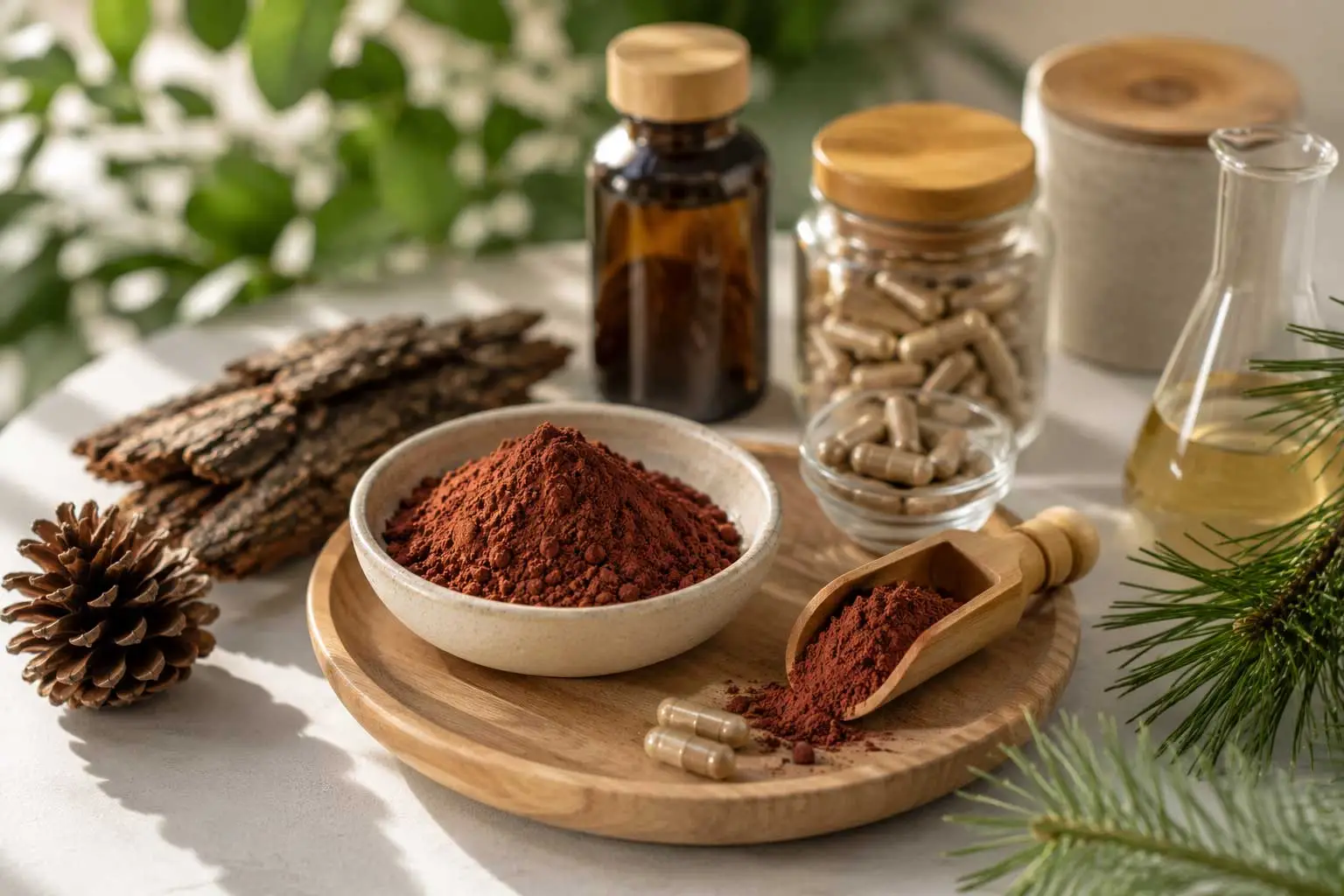
The popularity of pine bark extract in nutraceutical formulations stems from a combination of scientific credibility, formulation versatility, and consumer recognition. Formulators favor maritime pine bark extract powder because it provides a reliable source of procyanidins and other polyphenols, which are critical for antioxidant-focused supplement blends.
One key factor in its widespread adoption is ingredient standardization. Extracts with defined procyanidin content, commonly standardized to 95% OPC, allow manufacturers to produce multi-ingredient formulations with consistent bioactive profiles. This consistency is essential when combining pine bark extract with complementary ingredients such as collagen, vitamin C, Coenzyme Q10, grape seed extract, or hyaluronic acid, as it ensures predictable functional synergy and formulation stability.
Another reason for its extensive use is formulation flexibility. Pine bark extract for supplements can be incorporated into a wide range of product formats, including capsules, tablets, powdered blends, and functional beverages. Its compatibility across multiple dosage forms makes it particularly attractive for brands developing diverse product lines while maintaining ingredient efficiency and supply chain reliability.
Commercial considerations also drive its popularity. Suppliers capable of delivering bulk standardized pine bark extract with clear documentation, batch traceability, and compliance with international standards are preferred partners for nutraceutical manufacturers. This ensures that ingredient sourcing not only meets quality specifications but also supports regulatory compliance and production planning.
Finally, the botanical origin of pine bark extract enhances its appeal. As consumers increasingly favor natural, plant-derived ingredients, formulations containing polyphenol-rich botanical extracts allow brands to emphasize transparency, sustainability, and scientific integrity. This positioning supports both marketing objectives and customer trust, further solidifying pine bark extract as a cornerstone in modern nutraceutical development.
Active Compounds That Make Pine Bark Extract Valuable in Supplement Development
A critical reason pine bark extract is widely incorporated in nutraceutical formulations is its content of biologically relevant compounds. Chief among these are procyanidins, also referred to as oligomeric proanthocyanidins (OPCs), which are key indicators of extract potency and quality. These naturally occurring polyphenols contribute to the extract's versatility in various supplement applications, offering reliable performance across multiple formulation types.
In commercial practice, standardized pine bark extract is produced to maintain consistent levels of procyanidins, typically ranging from 65% to 95% OPCs depending on supplier specifications. This standardization ensures that formulations incorporating pine bark extract powder achieve predictable bioactive content, which is crucial for both efficacy perception and batch-to-batch consistency. Suppliers providing full Certificates of Analysis (COA) and documented active compound profiles allow formulators to integrate the extract seamlessly into capsules, tablets, powdered blends, and functional beverages.
Polyphenols in maritime pine bark extract complement other botanical antioxidants, enabling synergistic effects when combined with ingredients like vitamin C, collagen, grape seed extract, and Coenzyme Q10. These combinations are commonly found in antioxidant supplement blends and beauty-from-within formulations, highlighting the commercial appeal of high-quality pine bark extract as a functional ingredient.
From a sourcing perspective, manufacturers and procurement teams increasingly request suppliers capable of delivering bulk pine bark extract with transparent documentation, standardized procyanidin content, and technical support. This ensures that ingredient specifications are aligned with regulatory requirements, production standards, and international market expectations, strengthening the formulation’s commercial reliability.
The presence of OPCs and polyphenols also supports market positioning by allowing brands to highlight natural, plant-derived composition. This aligns with consumer preferences for botanical wellness products and enhances the perceived quality of supplements and nutraceuticals.
Common Nutraceutical Applications of Pine Bark Extract
Pine bark extract finds widespread use in supplement formulations across various categories. Its versatility, driven by standardized procyanidin content and polyphenol richness, makes it a preferred choice for manufacturers seeking consistent, high-quality botanical ingredients.
Antioxidant Formulations
Many supplement developers leverage pine bark extract antioxidant formulations to enhance cellular protection in combination products. The standardized OPC content ensures predictable activity when paired with complementary antioxidants such as vitamin C, CoQ10, and resveratrol.
Beauty-from-Within Products
The extract’s compatibility with ingredients like collagen, hyaluronic acid, and grape seed extract allows formulators to create beauty-from-within nutraceuticals, appealing to markets interested in skin health, anti-aging, and wellness-focused supplements.
Healthy Aging Supplements
Pine bark extract for supplements targeting healthy aging is increasingly common. Its procyanidin-rich profile supports inclusion in formulations promoting overall wellness, aligning with industry trends toward multifunctional botanical blends.
Botanical Wellness Blends
Manufacturers incorporate maritime pine bark extract into complex botanical combinations to provide polyphenol synergy. These blends are marketed as natural wellness products, capitalizing on consumer preference for plant-based, clean-label ingredients.
Functional Beverage Concepts
The water-soluble grades of pine bark extract powder enable its inclusion in powdered drink mixes, energy blends, and functional beverages. Standardized OPC content ensures consistency in taste, appearance, and active compound stability.

Ingredient Combinations Frequently Used with Pine Bark Extract
In nutraceutical product development, ingredients are rarely formulated in isolation. Instead, formulators focus on how individual compounds complement one another within a finished product. This is one reason pine bark extract has become such a versatile ingredient across the supplement industry. Its compatibility with a wide range of botanical extracts, vitamins, and specialty nutrients makes it suitable for numerous formulation strategies.
One of the most common combinations is pine bark extract with vitamin C. From a formulation perspective, both ingredients are frequently incorporated into antioxidant-focused supplement blends. Vitamin C remains one of the most recognized ingredients in the global supplement market, while OPC pine bark extract contributes a concentrated source of plant-derived polyphenols. Together, they are often included in capsules, tablets, and powdered nutritional products.
Another widely used combination is pine bark extract with collagen. As beauty-from-within products continue expanding across North America, Europe, and Asia, supplement manufacturers increasingly combine collagen peptides with botanical ingredients that support premium product positioning. In these formulations, maritime pine bark extract is commonly included alongside collagen, hyaluronic acid, biotin, and other beauty-oriented ingredients.
Formulators also frequently combine pine bark extract supplement blends with ingredients such as:
•Coenzyme Q10 (CoQ10)
•Grape Seed Extract
•Resveratrol
•Astaxanthin
•Green Tea Extract
•Alpha Lipoic Acid
These ingredients are often selected because they fit within broader antioxidant, wellness, and healthy aging formulation concepts. Rather than focusing on a single active compound, modern nutraceutical products increasingly emphasize ingredient synergy and comprehensive botanical profiles.
For manufacturers developing differentiated products, ingredient compatibility is an important consideration. A high-quality standardized pine bark extract should integrate smoothly into existing formulations without creating challenges related to solubility, stability, or manufacturing efficiency.
This is one reason procurement teams often evaluate more than just active content when sourcing ingredients. Factors such as particle size, moisture content, documentation support, and formulation compatibility can all influence how effectively an ingredient performs within a finished product.
As supplement categories become increasingly competitive, the ability to develop innovative custom nutraceutical formulations using well-established botanical ingredients remains an important advantage for both emerging brands and established manufacturers.
Choosing the Right Pine Bark Extract Specification for Your Product
Not all pine bark extracts are identical. While two products may carry the same ingredient name, their active content, processing methods, and formulation characteristics can vary significantly. For supplement manufacturers, selecting the appropriate specification is often one of the most important decisions during product development.
The first factor most buyers evaluate is procyanidin content. Depending on the intended application, suppliers may offer different standardized grades, including pine bark extract powder 95% OPC and other customized active-content options.
Higher standardization levels are not necessarily better in every situation. The most suitable specification depends on the product format, formulation goals, target market, and cost structure. A formulation designed for premium capsules may have different requirements than a powdered nutritional blend or functional beverage.
Beyond active content, procurement teams should also review:
•Solubility characteristics
•Particle size (mesh specification)
•Moisture content
•Appearance
•Bulk density
•Microbiological limits
These factors can directly impact manufacturing efficiency and product consistency.
For example, companies developing powdered drink mixes often require different technical specifications than brands producing tablets or capsules. In these cases, working with suppliers capable of providing customized pine bark extract specifications can help simplify formulation development and improve production performance.
Documentation is equally important. Before purchasing bulk pine bark extract, manufacturers typically request:
Product specification sheet
Certificate of Analysis (COA)
Heavy metal testing
Microbiological testing
Residual solvent information
Stability-related data when available
These documents are often required by quality teams, contract manufacturers, and regulatory departments before a raw material is approved for commercial use.
Another consideration is long-term supply consistency. A specification may perform well during initial product development, but if batch quality varies over time, manufacturing challenges can quickly emerge. This is why experienced procurement teams often prioritize suppliers with strong quality systems and reliable production processes.
Ultimately, selecting the right standardized maritime pine bark extract is not simply about choosing the highest active content. The goal is to find a specification that aligns with formulation objectives, manufacturing requirements, and long-term commercial strategy.
Supply Chain Considerations for Bulk Pine Bark Extract Sourcing
For supplement manufacturers, ingredient quality is only part of the equation. A technically strong raw material can still create challenges if supply consistency, documentation, or lead times are unreliable. This is why experienced procurement teams evaluate bulk pine bark extract suppliers not only on specification sheets, but also on their ability to support long-term production requirements.
One of the first factors buyers typically assess is batch-to-batch consistency. In nutraceutical manufacturing, consistency is essential because even minor variations in active compound content can affect formulation performance, product specifications, and quality control processes. Reliable suppliers of maritime pine bark extract should be able to demonstrate standardized production practices and provide supporting documentation for every batch.
Documentation has become increasingly important, particularly for companies selling products across multiple international markets. Before approving a raw material, quality teams often request:
•Product specifications
•Certificate of Analysis (COA)
•Heavy metal reports
•Microbiological testing
•Allergen information
•Non-GMO statements when applicable
The ability to provide complete documentation efficiently often reflects the maturity of a supplier's quality management system.
Another consideration is supply scalability. A supplier may be able to support a small development project, but commercial production requires a different level of capacity and planning. As supplement brands grow, demand forecasts can change quickly. Manufacturers therefore tend to favor bulk ingredient sourcing partners capable of supporting both current requirements and future expansion.
Packaging options can also play a role in procurement decisions. Depending on production needs, buyers may require different packaging formats, pallet configurations, or export-ready labeling. Flexible suppliers can help streamline logistics and reduce handling complexity during manufacturing.
Lead time reliability has become another major purchasing consideration. Global supply chains have experienced significant disruption in recent years, making inventory planning more important than ever. Suppliers that maintain stable production schedules and communicate proactively regarding availability often become preferred long-term partners.
Ultimately, successful sourcing is about reducing risk. A reliable pine bark extract manufacturer should provide not only a quality ingredient, but also the operational support necessary to keep formulation projects moving efficiently from development through commercial production.
What Supplement Manufacturers Look for in a Pine Bark Extract Supplier
When evaluating a potential pine bark extract supplier, manufacturers are typically looking for far more than competitive pricing. In many cases, supplier selection becomes a strategic decision that can influence product quality, production efficiency, and long-term business growth.
One of the most important factors is standardization. Manufacturers want confidence that the active compound profile remains consistent from batch to batch. This is particularly important for products formulated around procyanidins, where specification consistency directly impacts quality control and product positioning.
Technical documentation is another major consideration. Reliable suppliers should be able to provide clear and complete information regarding:
•Active compound content
•Product specifications
•COA documentation
•Testing procedures
•Storage recommendations
•Manufacturing standards
For formulation teams, access to technical information often accelerates product development and simplifies ingredient approval processes.
Communication also matters. Procurement managers frequently work under tight development timelines and need suppliers that respond quickly to technical questions, sample requests, and documentation inquiries. Strong communication can significantly reduce delays during both formulation and purchasing stages.
Manufacturers also increasingly value suppliers that understand application requirements. Rather than simply offering a raw material, experienced suppliers can provide guidance regarding specification selection, formulation compatibility, and production considerations based on the intended product format.
Another area that receives growing attention is export experience. Companies selling internationally often need support with documentation, labeling requirements, and logistics coordination. Suppliers familiar with global ingredient markets can often help simplify these processes.
Ultimately, supplement manufacturers tend to prioritize suppliers that combine:
•Consistent quality
•Technical expertise
•Reliable documentation
•Responsive support
•Scalable production capacity
Because in practice, the right supplier relationship can be just as important as the ingredient itself when developing successful nutraceutical products.
Conclusion
As nutraceutical formulations continue evolving toward more sophisticated botanical systems, pine bark extract remains one of the industry's most versatile plant-derived ingredients. Its naturally occurring procyanidins, broad formulation compatibility, and availability in standardized specifications make it suitable for a wide range of supplement applications, from antioxidant blends and beauty-from-within products to healthy aging and botanical wellness formulations.
For manufacturers, selecting the right ingredient goes beyond reviewing active compound percentages. Successful product development depends on a combination of formulation suitability, specification consistency, technical documentation, and supply chain reliability. These factors become especially important when scaling from product development to commercial production.
Whether the goal is to develop a premium capsule, a powdered nutritional blend, or a functional beverage concept, sourcing a high-quality standardized pine bark extract can help support both formulation efficiency and long-term product consistency.
As the market continues to move toward clean-label and plant-based wellness products, procurement teams are increasingly seeking suppliers capable of delivering not only quality ingredients, but also technical expertise, transparent documentation, and dependable supply support.
For companies evaluating bulk pine bark extract for current or future nutraceutical projects, taking a formulation-first approach to supplier selection can create a stronger foundation for product performance, regulatory compliance, and sustainable commercial growth.
Looking for a Reliable Pine Bark Extract Supplier?
Technical specifications, COA documentation, customized active contents, and bulk supply options are available upon request.
Email: admin@chenlangbio.com
WhatsApp: +86-17782478823

Send Inquiry
Related Industry Knowledge
- Marine Fish Oligopeptide Powder vs Tuna Oligopeptide Powder: Key Differences for Supplement Manufacturers
- Lycopene Powder Leads Natural Antioxidant Segment
- How Does Liposomal Coenzyme Q10 Improve Absorption?
- What Nutrients are Found in Cactus Extract Powder?
- Dimethylmethoxy Chromanol in Bulk: Benefits & Application
- Sesamin Powder for Inflammation and Wellness
- Top 5 Reasons to Add Sea Buckthorn Oligopeptide to Your Diet
- What is An Alternative to Monobenzone
- How Do You Dissolve Praziquantel Powder
- What’s Difference Between the Resveratrol Extract Powder, Coenzyme Q 10 Powder