Pine Bark Extract for Skincare: Applications, Specifications, and Supplier Considerations
2026-06-01 14:56:04
Introduction
In modern cosmetic formulation, pine bark extract has emerged as a highly valued botanical ingredient due to its naturally occurring procyanidins and polyphenols. Its consistent bioactive profile and compatibility with multiple product formats make it particularly attractive for brands focusing on skin health and beauty formulations. For ingredient sourcing teams, understanding the applications, specifications, and supplier considerations of maritime pine bark extract is critical to ensure both formulation success and regulatory compliance.
Consumers increasingly prefer products that combine natural ingredients with transparent sourcing. As a result, cosmetic brands and supplement manufacturers are looking for standardized pine bark extract that guarantees predictable levels of active compounds across production batches. Reliable suppliers provide bulk pine bark extract with full technical documentation, including Certificates of Analysis (COA), solubility specifications, and batch traceability, which are essential for maintaining product integrity and supporting commercial claims in B2B and international markets.
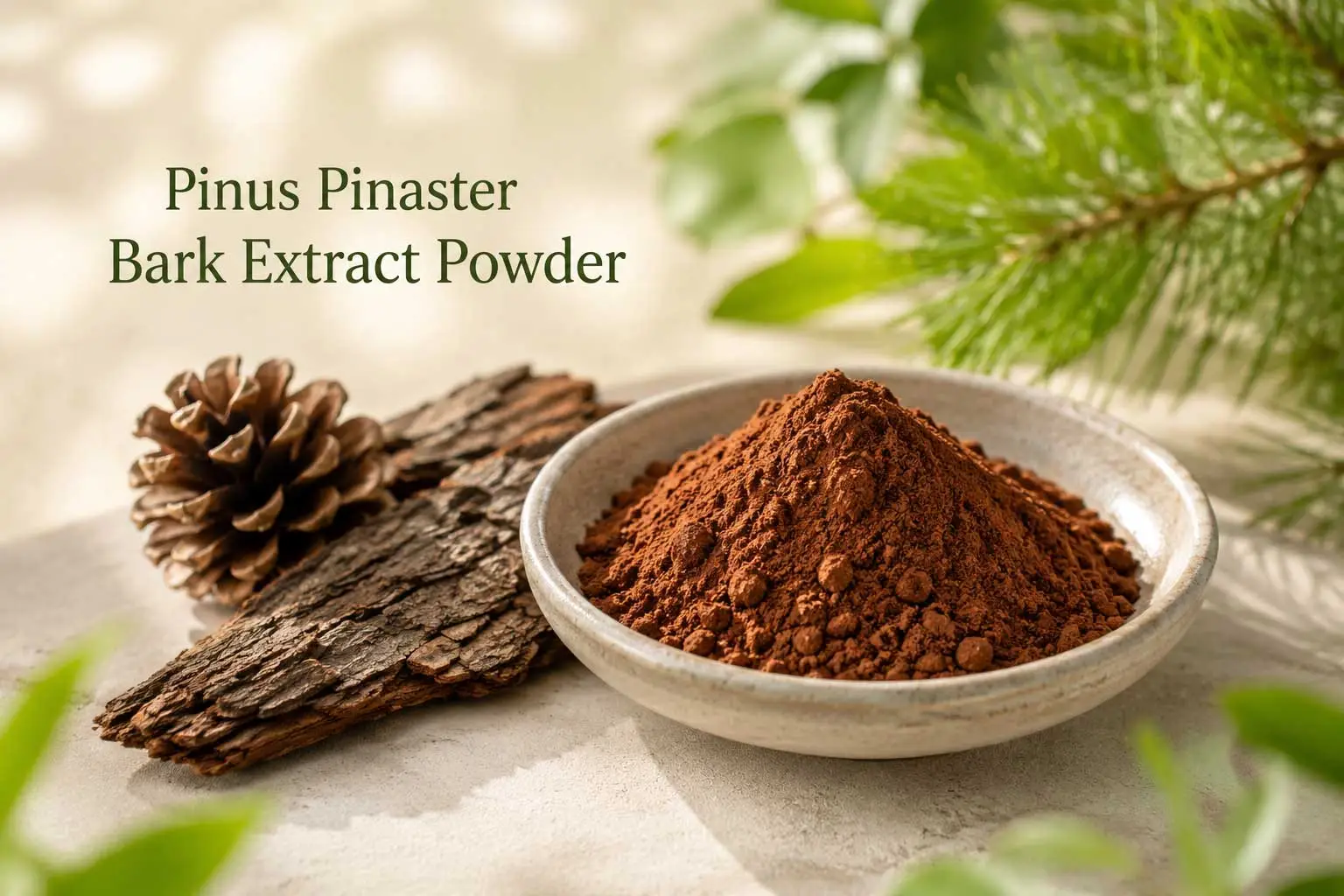
The growing interest in botanical skincare ingredients has driven formulators to explore how pine bark extract can complement other plant-derived compounds. Its polyphenol-rich composition allows integration into diverse product categories, from anti-aging creams and serums to botanical emulsions and beauty-from-within supplements. The combination of efficacy, versatility, and traceable supply positions pine bark extract as a key ingredient for manufacturers and brands aiming to differentiate products in competitive global skincare markets.
Key Bioactive Compounds in Pine Bark Extract for Cosmetic Applications
The effectiveness and commercial appeal of pine bark extract in skincare formulations is largely attributable to its active compounds. Chief among these are procyanidins, often standardized as oligomeric proanthocyanidins (OPCs), and a broad spectrum of polyphenols. These compounds contribute to the extract's stability and compatibility in cosmetic systems, making it suitable for both topical and ingestible applications.
In practice, standardized pine bark extract ensures consistent OPC content, typically ranging from 65% to 95%, depending on supplier specifications. This consistency is critical for formulators creating serums, creams, or emulsions where predictable ingredient performance is necessary to maintain both product quality and brand credibility. Suppliers providing comprehensive COA documentation enable manufacturers to verify active compound levels, supporting compliance with regulatory and internal quality standards.
The polyphenols present in maritime pine bark extract cosmetic ingredients complement other botanical actives commonly used in skincare formulations. Ingredients such as hyaluronic acid, collagen peptides, vitamin C, and botanical oils are often combined with pine bark extract to enhance formulation stability and market positioning. This strategic integration supports both the sensory profile of the product and its perceived efficacy, aligning with consumer expectations for premium botanical skincare.
From a commercial perspective, reliable sourcing of bulk pine bark extract with consistent active compound profiles is a prerequisite for scalable production. Procurement teams prioritize suppliers capable of delivering standardized grades, technical guidance, and documentation support, ensuring that formulations remain consistent across international markets. By providing flexible options and verified specifications, suppliers enable brands to innovate confidently while maintaining product quality and market differentiation.
In summary, the combination of procyanidins, OPCs, and polyphenols under standardized production is what makes pine bark extract a commercially viable and scientifically credible ingredient for skincare formulations. Manufacturers benefit not only from formulation compatibility but also from traceable, scalable supply that supports both product performance and brand positioning.
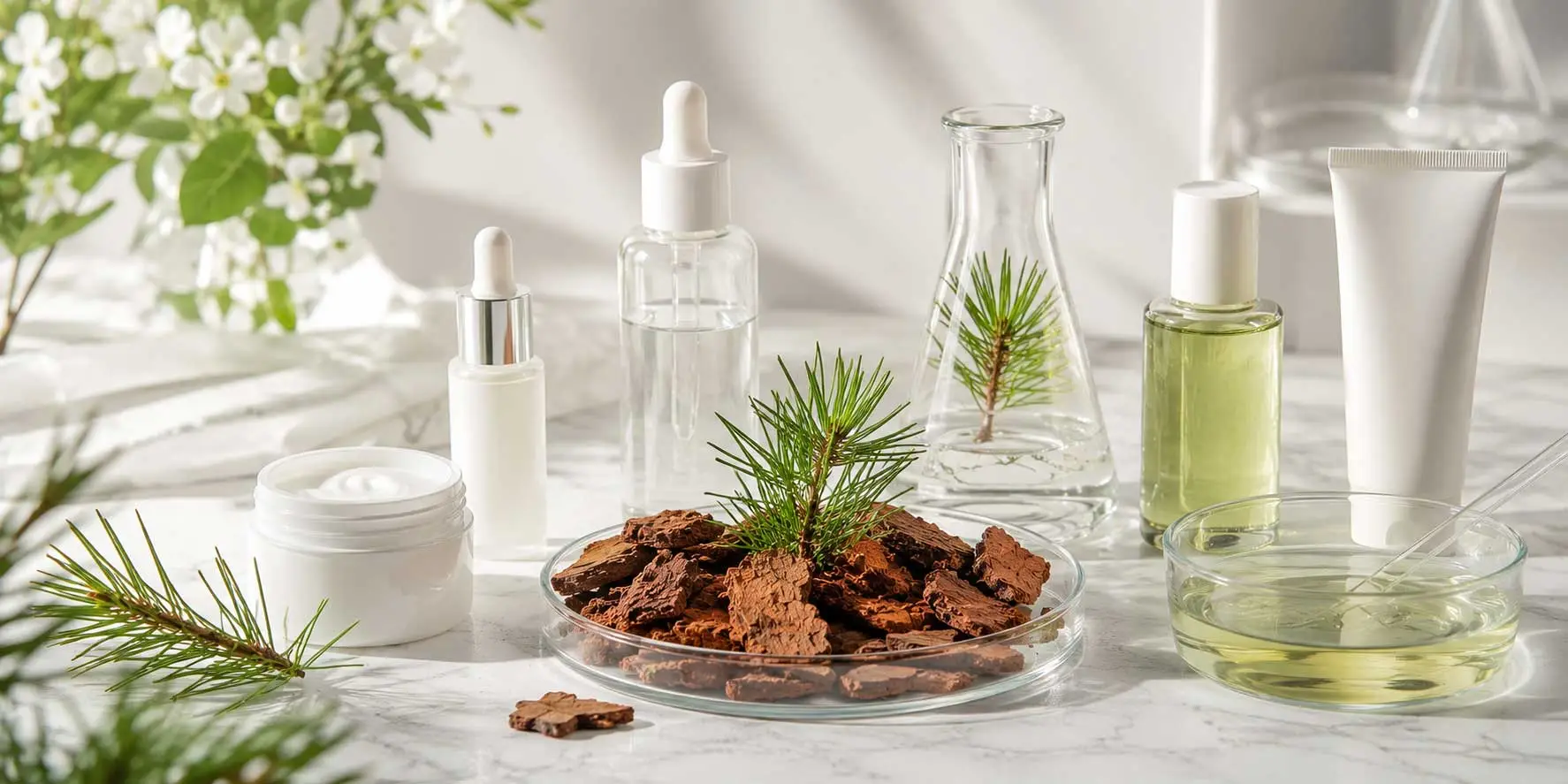
Common Skincare Applications of Pine Bark Extract
The increasing popularity of pine bark extract for skincare is closely linked to the broader shift toward plant-based, science-backed cosmetic ingredients. Today's consumers are paying more attention to ingredient labels than ever before, and cosmetic brands are responding by incorporating recognizable botanical extracts into their formulations. Among these ingredients, maritime pine bark extract has gained attention because of its naturally occurring procyanidins and polyphenols, which fit well within modern beauty and wellness concepts.
One of the most common applications is in anti-aging skincare formulations. Premium facial creams and serums frequently incorporate botanical extracts to create sophisticated ingredient profiles that appeal to consumers looking for naturally derived cosmetic solutions. In these formulations, pine bark extract cosmetic ingredient is often positioned alongside ingredients such as hyaluronic acid, peptides, and vitamin C to support a more comprehensive formulation strategy.
Another important application is within facial serums. Serums typically contain concentrated ingredient systems and are often used by brands to showcase premium botanical actives. The standardized nature of pine bark extract allows formulators to maintain greater consistency across production batches, which is particularly important in high-value skincare products where quality expectations are high.
The ingredient is also commonly incorporated into skin-conditioning formulations. In the cosmetic industry, formulators often evaluate ingredients based on compatibility, stability, and versatility. Standardized polyphenol-rich botanical extracts are attractive because they can be integrated into a wide variety of formulation systems without significantly impacting product texture, appearance, or manufacturing efficiency.
For brands developing clean-label products, botanical skincare ingredients continue to be a major area of focus. Consumers increasingly associate plant-derived ingredients with transparency and product authenticity. As a result, manufacturers are actively seeking standardized extracts that offer both technical reliability and strong marketing appeal. This trend has contributed to growing demand for bulk pine bark extract for cosmetics among both established cosmetic companies and emerging beauty brands.
In addition to traditional skincare products, maritime pine bark extract cosmetic ingredient is increasingly being explored within premium beauty concepts that combine topical products with beauty-from-within positioning. This reflects a broader industry trend toward integrated wellness and beauty solutions, where ingredient consistency and supply reliability become critical purchasing considerations.
For procurement teams, the commercial value of pine bark extract extends beyond its botanical origin. Reliable sourcing, documentation support, and standardized active content all contribute to a smoother product development process. This is why many cosmetic manufacturers prioritize suppliers capable of providing consistent standardized extract for skin formulations, particularly when launching products across multiple international markets.
Formulation Combinations and Synergies
One of the reasons pine bark extract continues to attract interest from cosmetic formulators is its compatibility with a wide range of skincare ingredients. Rather than functioning as a standalone component, it is frequently incorporated into multi-ingredient systems designed to create more sophisticated and differentiated cosmetic products.
Among the most common combinations is pine bark extract with hyaluronic acid. Hyaluronic acid remains one of the most widely recognized ingredients in modern skincare, making it a natural partner within premium cosmetic formulations. This combination allows brands to build formulations around both botanical and science-driven ingredient narratives, appealing to a broad consumer audience.
Another frequently used pairing is pine bark extract with vitamin C. Vitamin C continues to be a cornerstone ingredient in many skincare categories due to its strong market recognition. When combined with standardized botanical extracts, formulators can create ingredient stories that align with consumer demand for products containing both naturally derived and clinically familiar ingredients.
Collagen-related beauty products have also become a significant market segment. While collagen is often associated with ingestible products, topical formulations containing collagen-supporting ingredient systems remain popular. In these cases, pine bark extract with collagen may be included as part of a broader premium skincare positioning strategy.
Additional formulation combinations frequently seen in cosmetic product development include:
•Coenzyme Q10 (CoQ10)
•Niacinamide
•Green Tea Extract
•Resveratrol
•Botanical oils
•Plant-derived peptides
These combinations are not simply about adding more ingredients. Successful formulation design requires attention to ingredient compatibility, stability, processing requirements, and overall product positioning. This is why experienced formulators often evaluate ingredient systems as a whole rather than focusing on individual components.
From a sourcing perspective, ingredient compatibility is another reason why custom cosmetic formulations often require supplier support during product development. Technical factors such as particle size, solubility, and specification consistency can influence how effectively an ingredient integrates into a finished formulation.
As cosmetic brands continue looking for ways to differentiate products in competitive markets, botanical ingredients with strong formulation flexibility are becoming increasingly valuable. For suppliers, providing standardized extracts with reliable technical documentation helps support both formulation efficiency and long-term product consistency.
Choosing the Right Specification for Cosmetic Formulations
When selecting a pine bark extract cosmetic ingredient, the specification matters just as much as the ingredient itself. Cosmetic formulators often focus on active compounds, but specification details can have a direct impact on formulation stability, manufacturing efficiency, product appearance, and long-term consistency.
One of the first factors buyers typically evaluate is the concentration of procyanidins or OPCs (oligomeric proanthocyanidins). While higher active content may appear attractive on paper, the most appropriate specification depends on the intended application. A facial serum, for example, may have different formulation requirements than a cream, lotion, or botanical emulsion.
This is why experienced product development teams usually begin by defining formulation objectives before selecting a specification. Considerations often include:
•Product format
•Ingredient compatibility
•Processing requirements
•Target market positioning
•Cost structure
•Regulatory requirements
For cosmetic brands developing premium products, consistency is often a higher priority than simply maximizing active content.
Another important consideration is solubility. Depending on the formulation system, manufacturers may require specific processing characteristics to ensure smooth incorporation into the finished product. Suppliers capable of providing customized pine bark extract specifications can often help simplify development by matching ingredient characteristics to formulation requirements.
Particle size is equally important. Cosmetic manufacturers frequently request controlled mesh specifications to improve handling, dispersion, and manufacturing efficiency. Consistent particle size can also contribute to improved batch reproducibility, which becomes increasingly important as production volumes grow.
Quality documentation should never be overlooked. Before approving a raw material, quality assurance teams typically request:
•Product specification sheets
•Certificate of Analysis (COA)
•Heavy metal testing
•Microbiological testing
•Stability information when available
•Batch traceability documentation
These documents help ensure that the selected ingredient meets both internal quality standards and external regulatory expectations.
For international brands, specification consistency can directly influence product development timelines. Reliable suppliers of standardized maritime pine bark extract are able to maintain uniform quality across production batches, reducing the need for repeated formulation adjustments and supporting more efficient manufacturing operations.
Ultimately, selecting the right specification is about balancing formulation performance, commercial objectives, and long-term supply reliability. The most successful cosmetic brands often work closely with suppliers to identify a specification that aligns with both product requirements and future growth plans.
Supply Chain and Sourcing Considerations
For cosmetic manufacturers, sourcing decisions extend well beyond ingredient performance. A formulation may look excellent during development, but without a reliable supply chain, maintaining product consistency becomes increasingly difficult as commercial demand grows.
This is why procurement teams evaluating bulk pine bark extract supplier often focus on operational reliability as much as technical specifications.
One of the primary considerations is batch consistency. Cosmetic brands invest significant resources into product development, packaging, regulatory review, and market launch. Any unexpected variation in ingredient quality can create unnecessary production delays and quality control challenges.
Reliable maritime pine bark extract suppliers should be able to demonstrate:
•Standardized production processes
•Consistent active compound levels
•Batch traceability
•Comprehensive quality documentation
These factors help reduce risk throughout the supply chain.
Export experience is another important consideration. Many skincare brands manufacture products in one country and sell them in multiple markets. Suppliers familiar with international ingredient regulations and documentation requirements can help streamline purchasing and reduce administrative complexity.
Lead time stability has also become increasingly important. In recent years, cosmetic companies have placed greater emphasis on supply continuity and inventory planning. Manufacturers generally prefer suppliers that communicate clearly regarding production schedules and raw material availability.
Packaging flexibility may also influence purchasing decisions. Depending on annual demand and manufacturing requirements, buyers may request different packaging formats, pallet configurations, or customized labeling solutions.
For brands seeking long-term growth, scalability is critical. A supplier may be capable of supporting initial product development, but commercial success often requires significantly larger production volumes. Procurement teams therefore tend to favor suppliers that can accommodate future expansion without compromising quality or consistency.
From a commercial perspective, working with an experienced cosmetic ingredient supplier can help simplify sourcing, improve forecasting accuracy, and reduce operational risks throughout the product lifecycle.
As competition within the skincare industry continues to increase, strong supplier relationships are becoming a strategic advantage rather than simply a procurement necessity.
Evaluating a Pine Bark Extract Supplier for Cosmetic Applications
Selecting the right pine bark extract supplier is often one of the most important decisions during cosmetic product development. While ingredient specifications and pricing are certainly important, experienced formulators and procurement teams typically evaluate suppliers based on a much broader set of criteria.
The first area of focus is quality consistency. A supplier should be able to demonstrate reliable production processes and provide standardized material that performs consistently from batch to batch. This becomes particularly important for brands launching products across multiple markets, where maintaining product uniformity is essential for both regulatory compliance and customer satisfaction.
For cosmetic manufacturers, documentation support is equally critical. A professional cosmetic ingredient supplier should be prepared to provide:
•Product specifications
•Certificate of Analysis (COA)
•Heavy metal testing
•Microbiological reports
•Allergen information
•Stability-related documentation when available
These documents help quality assurance teams verify ingredient suitability before commercial production begins.
Technical support is another factor often overlooked during the supplier selection process. Formulation development can involve numerous variables, including ingredient compatibility, processing conditions, and specification adjustments. Suppliers capable of providing practical technical guidance often become valuable long-term partners rather than simply raw material vendors.
Many procurement managers also evaluate communication efficiency. Delayed responses to technical questions, documentation requests, or sample inquiries can slow product development and increase project timelines. Reliable suppliers understand the importance of timely communication and proactive support throughout the sourcing process.
Scalability is another major consideration. A supplier may be able to support small development orders, but successful product launches often require significantly larger commercial volumes. Cosmetic brands therefore tend to favor bulk pine bark extract manufacturers with sufficient production capacity and supply chain stability to support future growth.
Increasingly, brands are also seeking suppliers that understand the commercial side of product development. This includes awareness of global cosmetic trends, formulation requirements, export documentation, and market-specific compliance expectations.
Ultimately, the most valuable supplier relationships are built on a combination of:
•Consistent quality
•Technical expertise
•Documentation support
•Reliable communication
•Long-term supply stability
These factors often have a greater impact on product success than ingredient pricing alone.
Frequently Asked Questions
What are the main active compounds in pine bark extract?
The primary compounds found in pine bark extract include procyanidins, oligomeric proanthocyanidins (OPCs), and various polyphenols. These compounds are commonly standardized in commercial extracts used by cosmetic and nutraceutical manufacturers.
Can pine bark extract be used in facial serums?
Yes. Pine bark extract cosmetic ingredient applications frequently include facial serums due to its compatibility with a wide range of botanical and cosmetic formulation systems.
What specification is commonly used in cosmetic formulations?
Many manufacturers use pine bark extract powder 95% OPC, although the most suitable specification depends on formulation requirements and product positioning.
What documents should buyers request from suppliers?
Most procurement teams request:
•Product specification sheets
•COA documentation
•Heavy metal testing
•Microbiological reports
•Batch traceability information
before approving a raw material for commercial production.
What should brands look for in a pine bark extract supplier?
Key considerations include:
•Standardized production
•Consistent active content
•Technical support
•Documentation availability
•Supply chain reliability
•Export experience
These factors help ensure smoother product development and long-term sourcing stability.
Conclusion
As consumer demand continues to shift toward plant-derived and science-backed cosmetic ingredients, pine bark extract for skincare has become an increasingly relevant option for modern beauty formulations. Its naturally occurring procyanidins, OPCs, and polyphenols make it an attractive ingredient for brands seeking versatile botanical solutions that fit within premium skincare concepts.
From facial serums and anti-aging creams to multifunctional cosmetic systems, maritime pine bark extract cosmetic ingredient applications continue to expand across global beauty markets. However, successful formulation development depends on more than simply selecting the right ingredient. Specification quality, active compound consistency, technical documentation, and supply chain reliability all play important roles in ensuring long-term product performance.
For formulators, understanding how to evaluate standardized pine bark extract specifications can help reduce development challenges and improve manufacturing efficiency. For procurement teams, working with suppliers capable of supporting customized specifications and reliable bulk supply can create meaningful advantages throughout the product lifecycle.
As cosmetic markets become increasingly competitive, brands are placing greater emphasis on ingredient transparency, formulation quality, and supplier reliability. This trend is expected to continue driving demand for well-documented, standardized botanical extracts supported by strong technical and commercial expertise.
Whether the goal is to develop a premium skincare line, expand an existing beauty portfolio, or source ingredients for contract manufacturing projects, choosing the right bulk pine bark extract supplier remains a critical step in building successful cosmetic formulations.
Looking for a Reliable Pine Bark Extract Supplier?
Whether you are developing serums, creams, emulsions, or other skincare formulations, technical support and specification guidance can help streamline product development.
Available upon request:
•Product specifications
•COA documentation
•Customized OPC content
•Bulk quotation support
•Sample requests
•Export documentation
•Packaging information
Contact
Email: admin@chenlangbio.com
WhatsApp: +86-17782478823

Send Inquiry
Related Industry Knowledge
- Rhodiola Rosea Extract Powder: Standardization, Active Markers, and Industrial Applications
- Bifida Ferment Lysate vs Retinol Which Ingredient Is Better for Sensitive Skin?
- Laminaria Japonica Extract Suppresses VEGF-Induced Angiogenesis
- Is Dimethylmethoxy Chromanyl Palmitate Effective for Hyperpigmentation
- Instant Kava Powder: Benefits and Uses in 2024
- Can I Use Retinol and Bakuchiol Together
- What is the Difference Between Copper PCA and Copper Peptides
- What is Sophora Extract
- Does Resveratrol Powder Reverse Wrinkles
- What Benefits of Honokiol Powder