
Bulk Pine Bark Extract Buying Guide: Specifications, Pricing, and Supplier Selection
2026-06-02 12:36:57
Introduction: Why Pine Bark Extract Is a Key Ingredient for Modern Formulations
The global market for botanical ingredients continues to expand as consumers increasingly seek plant-based, clean-label, and science-backed products. Among these ingredients, pine bark extract has gained significant attention across dietary supplements, functional beverages, cosmetics, and healthy aging formulations.
For manufacturers, sourcing bulk pine bark extract is no longer simply about finding the lowest price. Product quality, active compound consistency, regulatory compliance, and supply reliability all play a critical role in long-term product success.
Whether you are developing a dietary supplement, a beauty-from-within formula, or a functional beverage, the quality of the extract and the capabilities of the supplier directly impact product performance and customer satisfaction.
This guide explores the most important considerations when purchasing bulk pine bark extract, including specifications, pricing, supplier evaluation, and sourcing best practices.
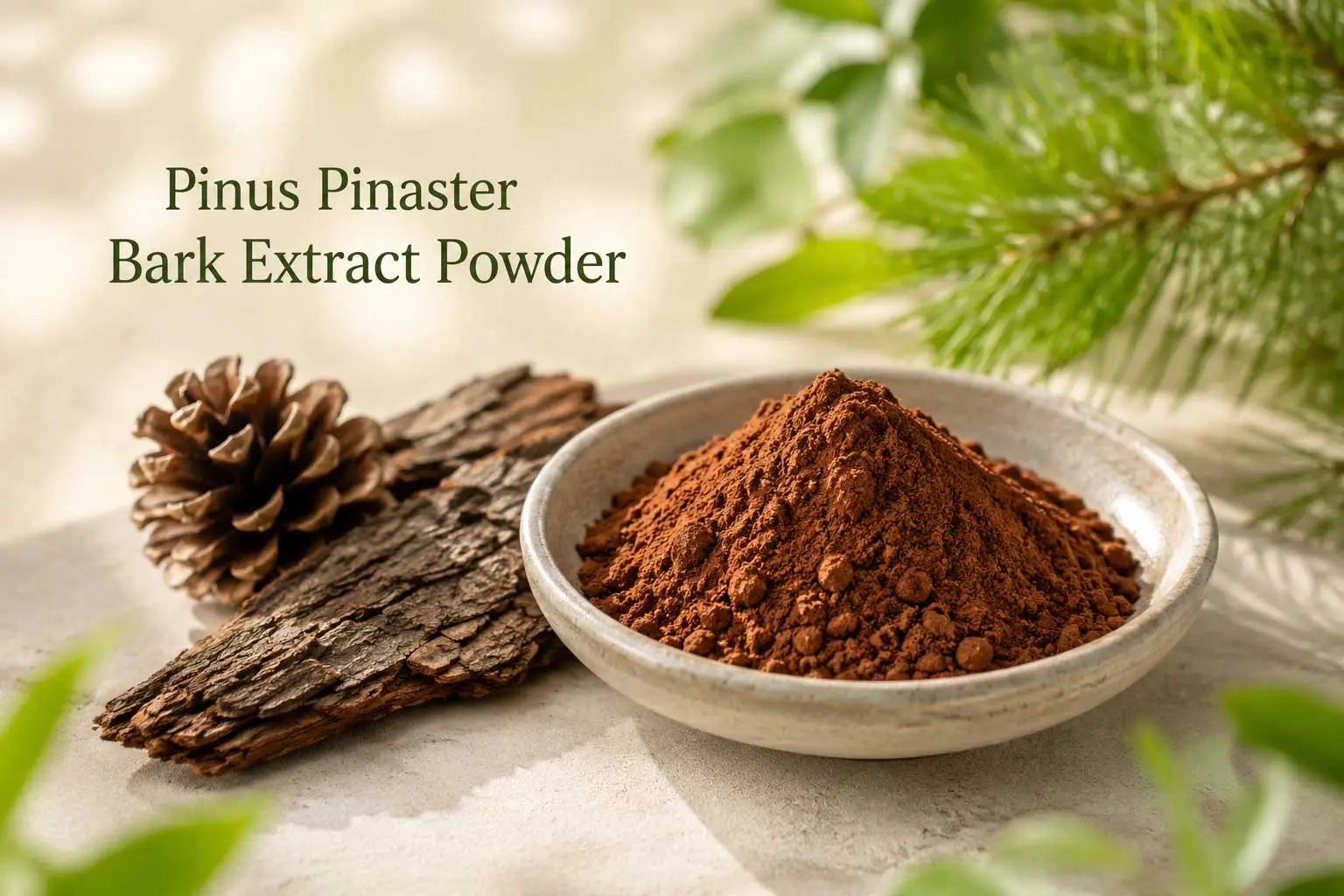
Understanding Specifications: Active Compounds, Grades, and Quality Standards
Why Specifications Matter
Not all pine bark extracts are manufactured to the same standards.
Different suppliers may use different extraction technologies, raw materials, and quality control procedures, resulting in significant variation in product performance.
When evaluating a pine bark extract specification, buyers should focus on the active compounds, standardization process, and supporting documentation.
Procyanidins and OPC Content
The primary active compounds in pine bark extract are procyanidins and oligomeric proanthocyanidins (OPCs).
Common commercial specifications include:
•65% OPC
•85% OPC
•95% OPC
Higher OPC content often requires more advanced extraction and purification processes, which can affect both quality and cost.
However, the highest specification is not always the most suitable choice. Different applications may require different levels of active compounds depending on formulation goals and budget considerations.
Batch Consistency and Standardization
For commercial production, consistency is often more important than peak assay results.
A supplier capable of producing standardized pine bark extract ensures:
•Consistent active compound levels
•Predictable formulation performance
•Reliable product quality
•Reduced manufacturing variability
This consistency helps manufacturers maintain stable product quality and meet customer expectations.
Application-Specific Specifications
Different industries have different requirements:
Dietary Supplements
Typically prioritize:
•High OPC content
•Standardization
•Regulatory documentation
Functional Beverages
Often focus on:
•Water solubility
•Taste compatibility
•Processing stability
Cosmetic Applications
Frequently evaluate:
•Appearance
•Color profile
•Formulation compatibility
•Stability characteristics
Understanding these differences helps buyers select the most appropriate specification.
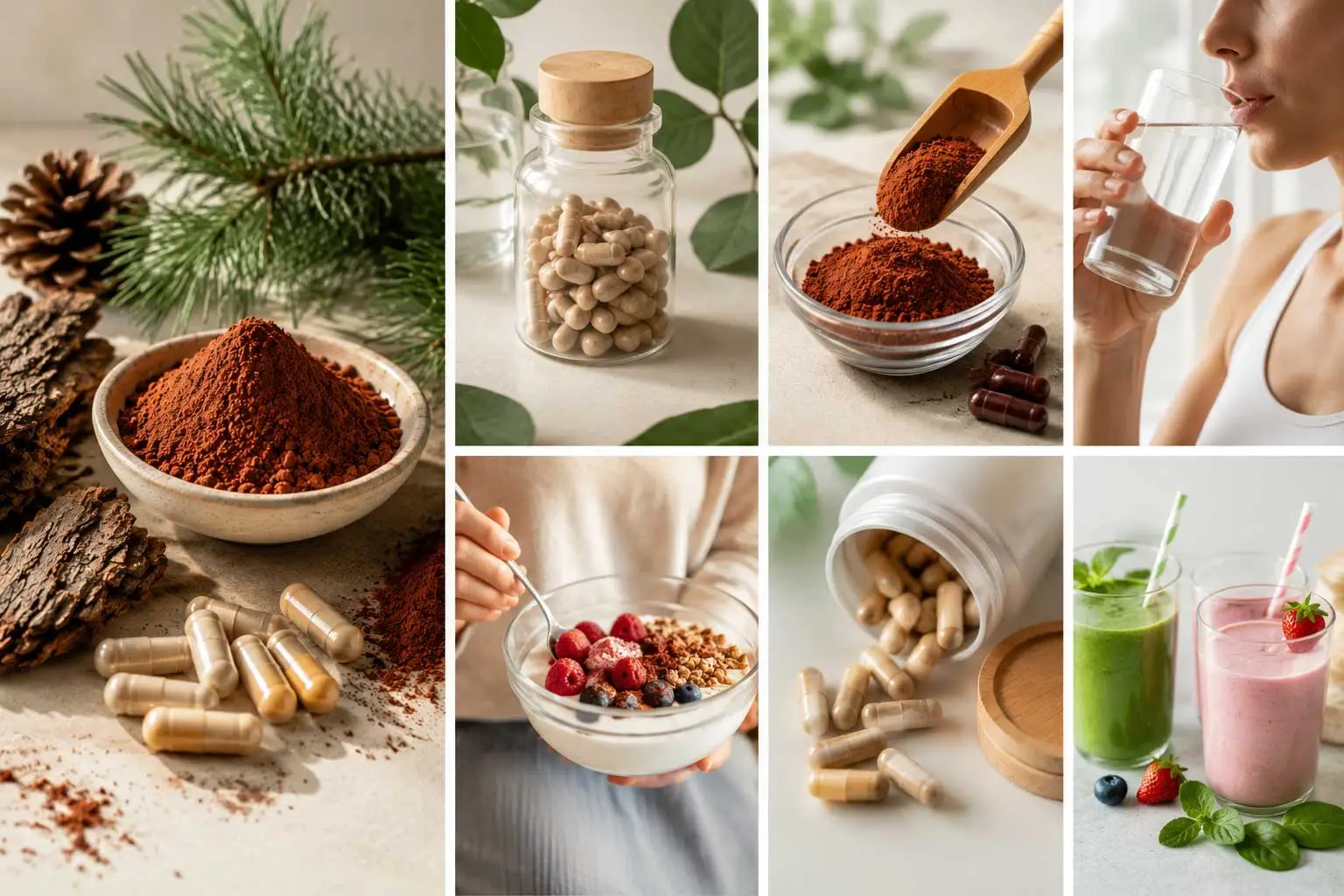
Documentation and Quality Systems
A professional pine bark extract manufacturer should provide:
•Certificate of Analysis (COA)
•Heavy metal testing
•Microbiological testing
•Traceability records
In addition, recognized quality systems such as ISO9001, ISO22000, and GMP-oriented manufacturing practices help ensure that product specifications are supported by consistent production controls.
Pricing Factors: What Determines the Cost of Bulk Pine Bark Extract
Active Compound Content
One of the most significant pricing factors is OPC standardization.
Extracts with higher concentrations of active compounds generally require more intensive processing and quality control, which increases production costs.
Raw Material Quality
The quality of the original pine bark directly affects the final extract.
Reliable suppliers invest in raw material selection and qualification to ensure consistent product quality.
Manufacturing Standards
Modern extraction facilities, cleanroom production environments, and advanced quality control systems contribute to higher operating costs but also improve consistency and reliability.
Certifications and Documentation
Providing comprehensive documentation, regulatory support, and testing reports requires additional resources.
These services add value for international buyers and contribute to overall product cost.
Logistics and Export Requirements
International shipping, packaging, customs compliance, and export documentation all influence final procurement costs.
For buyers, evaluating total value rather than simply comparing unit price often leads to better long-term sourcing decisions.
Supplier Selection: How to Choose a Reliable Pine Bark Extract Partner
When sourcing bulk pine bark extract, choosing the right partner is crucial for consistent product quality, regulatory compliance, and long-term supply stability. While many suppliers exist, selecting one with proven capabilities and technical expertise can significantly reduce sourcing risks.
Evaluate Manufacturing Capabilities
A reliable supplier should operate modern extraction facilities with standardized production systems. CHEN LANG BIO TECH, established in 1991, owns seven GMP-compliant production lines and a 100,000-class cleanroom, ensuring high-quality, consistent output. The company can produce and process over 3,000 tons of various extracts and fruit and vegetable powders annually, supporting large-scale manufacturing needs.
Key evaluation points include:
•GMP-oriented extraction and processing
•Cleanroom production environments
•Multiple modern production lines
•Scalable capacity for large orders
This level of infrastructure ensures that pine bark extract is manufactured under controlled conditions, minimizing batch-to-batch variation and supporting regulatory compliance.
Assess Quality Certifications and Compliance
Quality certifications provide assurance that a supplier adheres to rigorous production standards. CHEN LANG BIO TECH has obtained SC production licenses for food additives, plant beverage ingredients, and dietary supplement raw materials, along with ISO22000 and ISO9001 certifications. This demonstrates a commitment to both product quality and regulatory adherence.
International buyers should verify:
•ISO-certified quality management systems
•GMP-compliant manufacturing
•SC licensing for dietary supplement ingredients
•Availability of detailed COAs and testing documentation
By partnering with a certified supplier, manufacturers can reduce regulatory risk and have confidence in the reproducibility of their pine bark extract supply.
Review Technical Support and Product Development Assistance
A leading supplier does more than deliver raw material—it provides expertise to optimize product formulations. CHEN LANG BIO TECH offers comprehensive support, including:
•Guidance on standardized OPC levels
•Solubility and formulation compatibility advice
•Customized grades for supplements, beverages, or cosmetics
•Technical documentation and COA support
This hands-on assistance allows brands to integrate pine bark extract into their products efficiently, ensuring consistency and quality while reducing development risk.
Supply Chain and Global Export Readiness
For international procurement, suppliers must demonstrate logistical reliability. We maintain robust supply chain management and flexible packaging solutions for export markets. Their experience with global shipping ensures timely delivery, proper documentation, and adherence to import regulations.
Key considerations include:
•Bulk shipping capacity for large-scale orders
•Flexible packaging tailored to international markets
•Export documentation and customs compliance
•Traceable supply chains for ingredient verification
By evaluating suppliers based on these factors, buyers can secure a reliable source for pine bark extract, reducing disruptions in production schedules.
Frequently Asked Questions About Bulk Pine Bark Extract
1. How do I choose a reliable pine bark extract supplier for bulk orders?
When sourcing bulk pine bark extract, reliability and quality matter as much as price. A trustworthy supplier should provide:
•Consistent OPC and procyanidin content across batches
•Detailed Certificates of Analysis (COA) for every production lot
•GMP-compliant manufacturing facilities and ISO22000/ISO9001 certifications
•Technical guidance on specification selection and formulation compatibility
•Stable supply chains capable of supporting large international orders
Choosing an experienced supplier ensures long-term consistency, regulatory compliance, and smoother integration into dietary supplements, functional beverages, or cosmetic products.
2. What are the most common specifications for pine bark extract, and how do I choose the right grade?
Pine bark extract is typically standardized based on OPC (Oligomeric Proanthocyanidins) content. Common commercial grades include:
•65% OPC – often used for general wellness blends
•85% OPC – suitable for antioxidant-focused supplements or beverages
•95% OPC – used for high-potency nutraceuticals and specialized formulations
The ideal grade depends on your application:
•Dietary supplements: High OPC for capsules or tablets
•Functional beverages: Water-soluble grades with flavor neutrality
•Cosmetics: Grades compatible with creams, serums, and emulsions
Always review the supplier’s COA to verify actual active content and consistency across batches.
3. What documentation should I request before purchasing bulk pine bark extract?
A professional supplier should provide comprehensive documentation, including:
•Certificate of Analysis (COA) for every batch
•Product specifications (active compound content, particle size, solubility)
•Heavy metal testing results
•Microbiological analysis
•Allergen statements and Safety Data Sheets (SDS) if required
· Traceability records for quality assurance
Having these documents ensures regulatory compliance, supports internal quality control, and reduces risk during international procurement.
4. How much does bulk pine bark extract cost, and what factors affect pricing?
Pricing for bulk pine bark extract is influenced by multiple factors:
OPC content and active compound standardization
· Quality of raw pine bark material
· Extraction and processing technology
· Supplier production scale and capacity
· Packaging requirements for international shipment
· Regulatory compliance and certification support
5. Can pine bark extract be used in supplements, beverages, and cosmetic products?
Yes. Pine bark extract applications span multiple industries:
•Dietary supplements: Capsules, tablets, powder blends
•Functional beverages: Wellness drinks, beauty-from-within beverages, nutritional powders
•Cosmetic formulations: Anti-aging creams, serums, lotions
Each application may require different grades, solubility profiles, or particle sizes. An experienced supplier can recommend the most suitable specification for your product type.
6. Can suppliers provide customized pine bark extract grades?
Many professional suppliers offer customization options to meet specific formulation or marketing goals, including:
•Adjusted OPC content for desired potency
•Particle size tailored pine bark extract for beverages, capsules, or cosmetics
•Water-soluble or powder grades for enhanced formulation compatibility
•Custom packaging and labeling for international markets
This flexibility helps brands differentiate their products and ensures better integration into final formulations.
7. What makes a pine bark extract supplier suitable for long-term partnerships?
Long-term sourcing requires more than a high-quality ingredient. Look for suppliers that offer:
•Consistent product quality and batch-to-batch uniformity
•Stable production capacity to scale with demand
•Comprehensive documentation and certifications
•Technical support for formulation and application guidance
•Reliable international shipping and export experience
Suppliers with decades of experience, modern GMP-compliant production facilities, ISO certifications, and strong technical support are often best positioned to support long-term growth and global procurement.
Conclusion
Choosing a reliable pine bark extract supplier involves much more than comparing prices.
Successful procurement strategies evaluate:
•Product specifications
•Manufacturing capabilities
•Quality certifications
•Documentation systems
•Technical support
•Supply chain reliability
By focusing on these factors, buyers can reduce sourcing risks, improve product consistency, and build long-term supplier partnerships that support business growth.
For manufacturers operating in dietary supplements, functional beverages, cosmetics, and other health-related industries, selecting the right bulk pine bark extract supplier is a strategic decision that directly impacts product quality and market success.
Looking for a Reliable Bulk Pine Bark Extract Supplier?
Whether you require standardized OPC specifications, technical support, documentation assistance, or large-scale supply, our team is ready to help.
CHEN LANG BIO TECH
📧 Email: admin@chenlangbio.com
📱 WhatsApp: +86-17782478823
Request product specifications, COAs, samples, or a bulk quotation today.

Send Inquiry
You may like
Related Industry Knowledge
- What Is 3-O-Ethyl Ascorbic Acid? A Technical Guide for Cosmetic Manufacturers
- Ivermectin Powder for Dogs: A Trusted Solution for Parasite Control
- What is the Use of Myricetin?
- What is Cactus Extract Powder?
- Is Dimethylmethoxy Chromanol Safe
- What Is The Mechanism Of Action Of Dyphylline
- Is Honokiol Safe to Use
- What are the Benefits of Magnolol
- What is the Most Effective Skin Whitening Sepiwhite Powder MSH
- What is the Ginseng Root Extract Powder Good for