
How Does 3-O-Ethyl Ascorbic Acid Work in Skincare?
2026-10-27 15:00:07
3-O-Ethyl Ascorbic Acid is a modified vitamin C derivative used in skincare formulations for its antioxidant properties and potential effects on uneven skin tone. Its activity is associated with its molecular structure, interactions with oxidative and pigmentation-related pathways, and the ability of a formulation to deliver the ingredient into the skin.
Understanding how does 3-o-ethyl ascorbic acid work requires distinguishing laboratory observations from demonstrated clinical outcomes. Research has examined its skin penetration, antioxidant behavior, and influence on melanin-related signaling, but these findings do not establish that every finished formulation will produce the same results.
For cosmetic manufacturers, the practical value of this ingredient depends on three interconnected factors: biological activity, formulation stability, and raw material quality. This guide examines the available scientific evidence and explains how it can inform ingredient selection and commercial skincare development.
What Is 3-O-Ethyl Ascorbic Acid? Chemical Structure and Vitamin C Derivative Properties
3-O-Ethyl Ascorbic Acid Chemical Structure and the Role of C3 Ether Modification
3-O-Ethyl Ascorbic Acid is an ether derivative of L-ascorbic acid in which the hydroxyl group at the C3 position is modified with an ethyl group. This structural change distinguishes it from unmodified vitamin C and influences its chemical behavior.
The 3-o-ethyl ascorbic acid chemical structure retains much of the ascorbic acid molecular framework while changing one of the functional groups involved in its oxidation chemistry.
This modification is relevant because L-ascorbic acid is susceptible to oxidation, particularly under unfavorable conditions involving oxygen, elevated temperature, light, and certain metal ions.
Etherification at C3 can alter the compound's oxidation behavior and improve its suitability for some cosmetic formulations. However, chemical modification does not make the ingredient universally resistant to degradation.
Its actual stability must be evaluated in the intended formulation.
3-O-Ethyl Ascorbic Acid vs L-Ascorbic Acid: Molecular and Formulation Differences
The distinction between ethyl ascorbic acid vs l-ascorbic acid extends beyond their chemical names.
L-ascorbic acid is the biologically established form of vitamin C involved in numerous cellular processes, including collagen maturation. Its cosmetic formulation presents challenges because stability and delivery depend strongly on environmental conditions.
3-O-Ethyl Ascorbic Acid offers a different balance of molecular properties and formulation possibilities.
|
Property |
3-O-Ethyl Ascorbic Acid |
L-Ascorbic Acid |
|
Molecular structure |
C3 ethyl ether derivative |
Unmodified ascorbic acid |
|
Molecular weight |
Approximately 204.18 g/mol |
Approximately 176.12 g/mol |
|
Chemical behavior |
Modified oxidation characteristics |
Readily oxidized under unfavorable conditions |
|
Skin delivery |
Depends on solvent and formulation |
Depends on solvent, pH, and formulation |
|
Biological evidence |
Derivative-specific evidence is required |
Extensive established vitamin C biochemistry |
As an ethyl ascorbic acid vitamin c derivative, it should be evaluated on its own experimental evidence rather than treated as chemically or biologically identical to L-ascorbic acid.
How Does 3-O-Ethyl Ascorbic Acid Penetrate the Skin and Convert to Vitamin C?
Ethyl Ascorbic Acid Skin Penetration and the Stratum Corneum Barrier
The stratum corneum is the primary barrier limiting the movement of many externally applied substances into the skin.
For 3-O-Ethyl Ascorbic Acid, successful topical delivery depends on the interaction between its molecular properties and the formulation carrying it.
Its relatively low molecular weight may be favorable for topical delivery, but molecular size alone cannot predict penetration. Solubility, ionization, partitioning between formulation and skin, and the thermodynamic activity of the ingredient are also important.
Research on ethyl ascorbic acid skin penetration has demonstrated that solvent selection can substantially influence the amount of material entering or passing through experimental skin membranes.
In a 2019 study, researchers investigated the physicochemical characteristics and topical delivery of 3-O-Ethyl-L-Ascorbic Acid using different single-solvent systems and an ex vivo skin model.
The findings highlight an important formulation principle: increasing ingredient solubility does not necessarily produce a proportional increase in skin penetration.
A solvent that dissolves a large amount of active material may also retain it strongly within the vehicle, reducing its tendency to partition into the skin.
Consequently, 3-o-ethyl ascorbic acid skin absorption should be evaluated using relevant permeation or skin-retention experiments rather than inferred solely from a supplier's solubility data.
Does 3-O-Ethyl Ascorbic Acid Convert to L-Ascorbic Acid in the Skin?
The question of ethyl ascorbic acid conversion to vitamin c is particularly important when interpreting claims about collagen synthesis and other vitamin C-dependent biological functions.
3-O-Ethyl Ascorbic Acid contains an ether linkage at the C3 position. Its cleavage and conversion to free L-ascorbic acid cannot simply be assumed from the behavior of vitamin C esters or other derivatives.
Demonstrating conversion would require appropriate analytical evidence identifying L-ascorbic acid formation under relevant biological conditions.
A study measuring the disappearance of the original derivative would not, by itself, establish the identity or quantity of any metabolic product.
Similarly, evidence that the derivative affects a cellular signaling pathway does not prove that the effect depends on conversion to L-ascorbic acid.
For ingredient buyers, this distinction matters when evaluating technical claims. Statements that the material is automatically or completely converted into active vitamin C after skin absorption should be supported by derivative-specific studies.
How Solvent Systems Affect Ethyl Ascorbic Acid Skin Delivery
Research published in 2020 examined ethyl ascorbic acid topical delivery from more complex solvent systems.
The work demonstrated that formulation composition can influence delivery behavior beyond the effects observed with individual solvents.
Water, glycols, alcohols, and other formulation components can affect solubility, skin partitioning, and the physical state of the active ingredient.
For commercial serum development, the relevant question is therefore not simply how much powder dissolves in a vehicle. It is whether the finished formulation maintains an appropriate concentration while delivering the ingredient to the intended skin compartment.
3-O-Ethyl Ascorbic Acid Antioxidant Activity: Mechanisms and Skin Protection
How Ethyl Ascorbic Acid Interacts with Reactive Oxygen Species
Reactive oxygen species are produced through normal cellular metabolism and can increase following exposure to environmental stressors.
At elevated levels, oxidative reactions may affect lipids, proteins, and other cellular components associated with skin appearance and function.
The 3-o-ethyl ascorbic acid antioxidant activity of the molecule is related to its modified ascorbic acid framework and its ability to participate in relevant oxidation-reduction reactions.
However, the ethyl modification changes the molecule's chemical characteristics. Its antioxidant behavior should not automatically be considered identical to that of L-ascorbic acid.
3-O-Ethyl Ascorbic Acid Antioxidant Assays and Their Limitations
Laboratory evaluation of ethyl ascorbic acid free radical scavenging may involve chemical assays such as DPPH or ABTS, depending on the research objective.
These methods measure reactions under defined experimental conditions. Their results can be useful for comparing chemical antioxidant behavior, but they do not directly establish biological performance in human skin.
Cell-based oxidative stress experiments offer additional information because they introduce biological complexity. Nevertheless, such models still cannot fully reproduce the penetration, metabolism, and exposure conditions of a finished cosmetic product.
A meaningful interpretation should identify the tested concentration, experimental system, controls, and measured endpoint.
Ethyl Ascorbic Acid and Environmental Oxidative Stress in Cosmetic Formulations
Interest in ethyl ascorbic acid oxidative stress research reflects the broader role of antioxidants in skincare development.
The ingredient may be considered for formulations intended to support healthy-looking skin and address the visible effects associated with environmental exposure.
However, antioxidant activity does not establish sunscreen performance or protection against ultraviolet radiation at the level required for regulated sun-protection claims.
Finished-product testing remains necessary to support specific cosmetic performance statements.
Ethyl Ascorbic Acid and Tyrosinase: Skin Brightening Mechanisms and Scientific Evidence
How Tyrosinase Regulates Melanin Production in Human Skin
Melanin synthesis occurs within melanocytes through a series of enzymatic and regulatory processes.
Tyrosinase is a key enzyme involved in the early stages of melanogenesis, including reactions associated with the conversion of tyrosine into melanin precursors.
The pathway is also regulated by signaling mechanisms involving melanocyte activity and transcription factors such as MITF.
Understanding ethyl ascorbic acid melanin production research therefore requires examining both enzyme activity and the broader cellular mechanisms controlling pigmentation.
Ethyl Ascorbic Acid Tyrosinase Inhibition: What Do Laboratory Studies Show?
Research into ethyl ascorbic acid tyrosinase inhibition should distinguish direct enzyme inhibition from changes in cellular pigmentation pathways.
An ingredient may reduce melanin production in a cell model without directly inhibiting purified tyrosinase. Such an effect could involve changes in signaling, enzyme expression, melanosome processing, or other cellular responses.
A 2021 study investigating 3-O-Ethyl Ascorbic Acid examined pigmentation-related mechanisms involving Nrf2-associated signaling, α-MSH-related responses, MITF, and autophagy-associated processes.
These findings provide a basis for investigating its biological activity beyond a simple chemical antioxidant explanation.
However, results from experimental cell systems or animal models cannot automatically establish the magnitude of skin-brightening effects in humans.
The concentration reaching melanocytes after topical application may also differ considerably from the concentration used in laboratory experiments.
3-O-Ethyl Ascorbic Acid for Uneven Skin Tone and Hyperpigmentation
The potential application of 3-o-ethyl ascorbic acid skin brightening technology is particularly relevant to cosmetic products developed for uneven-looking skin tone.
For manufacturers evaluating ethyl ascorbic acid hyperpigmentation research, the strength of evidence depends on the study design.
A reduction in melanin content in cultured cells provides mechanistic information. An improvement in pigmentation measurements in a controlled human study provides more directly relevant evidence for cosmetic performance.
These outcomes should not be presented as interchangeable.
Product developers should also consider the concentration used, treatment duration, formulation vehicle, participant characteristics, and methods used to measure changes in skin appearance.
Ingredient-Level Evidence vs. Finished-Product Brightening Claims
An ingredient may demonstrate promising biological activity while performing differently in a finished serum or cream.
Stability during storage, ingredient interactions, skin delivery, and consumer use conditions can all affect performance.
For this reason, cosmetic manufacturers should distinguish between ingredient-level research and evidence supporting a finished-product claim.
A responsible approach is to use mechanistic studies to guide formulation development and then establish product-specific performance through appropriate testing.
Ethyl Ascorbic Acid and Collagen Synthesis: Potential Roles in Skin Aging
Vitamin C, Collagen Biosynthesis and Skin Structure
L-ascorbic acid has an established biochemical role in collagen biosynthesis, particularly through its involvement in reactions associated with proline and lysine hydroxylation.
These processes contribute to the maturation and structural properties of collagen.
However, the biological role of L-ascorbic acid does not automatically establish equivalent ethyl ascorbic acid collagen synthesis activity.
The derivative's cellular availability, metabolic behavior, and direct biological effects must be considered separately.
Does 3-O-Ethyl Ascorbic Acid Support Collagen Production?
Claims about collagen production require careful evaluation of the experimental evidence.
Changes in gene expression, fibroblast activity, or collagen-related biomarkers may suggest biological activity, but they do not necessarily demonstrate increased collagen deposition or visible improvement in human skin.
Where direct evidence for 3-O-Ethyl Ascorbic Acid is limited, it is more accurate to describe collagen-related effects as an area requiring further investigation.
It would be scientifically inappropriate to assume that the ingredient reproduces every collagen-related function of unmodified vitamin C.
Ethyl Ascorbic Acid in Anti-Aging Cosmetic Formulations
The use of 3-o-ethyl ascorbic acid anti-aging ingredients is often associated with antioxidant skincare and formulations intended to improve the appearance of skin affected by environmental stress.
When developing products for ethyl ascorbic acid skin aging applications, manufacturers should consider realistic cosmetic endpoints, including skin appearance, texture, and tone.
Claims about wrinkle reduction or structural skin changes should be supported by appropriate finished-product evidence rather than inferred solely from antioxidant or collagen-related laboratory findings.
3-O-Ethyl Ascorbic Acid Stability, Solubility and Formulation Performance
3-O-Ethyl Ascorbic Acid Solubility in Water-Based Skincare Formulations
Ethyl ascorbic acid solubility is a practical consideration when developing transparent serums, gels, emulsions, and other cosmetic systems.
The ingredient's dissolution behavior depends on solvent composition, concentration, temperature, and interactions with other formulation components.
A clear solution immediately after manufacturing does not guarantee that the material will remain dissolved throughout storage.
Temperature changes, solvent evaporation, or interactions with electrolytes and polymers may affect physical stability.
Formulators should therefore evaluate crystallization, clarity, and ingredient distribution under realistic storage conditions.
Ethyl Ascorbic Acid pH Stability and Oxidation Control
Although the C3 ether modification changes the compound's chemical behavior, ethyl ascorbic acid pH stability remains formulation-dependent.
pH can influence ionization, chemical degradation, and compatibility with other ingredients.
Oxygen exposure, light, elevated temperature, and trace metal contamination may also affect stability.
The appropriate pH should be selected using supplier information and finished-formulation testing rather than relying on a universal value assumed to be optimal for every product.
For 3-o-ethyl ascorbic acid stability in skincare, manufacturers should monitor assay retention alongside appearance, color, pH, viscosity, and packaging compatibility.
Analytical methods capable of distinguishing the parent ingredient from relevant degradation products provide stronger evidence than visual inspection alone.
Ethyl Ascorbic Acid Concentration and Finished-Product Performance
The appropriate ethyl ascorbic acid concentration in skincare depends on the intended product, available evidence, formulation characteristics, and applicable safety assessment.
Increasing the concentration does not necessarily improve performance proportionally.
Higher loading may introduce solubility challenges, affect sensory characteristics, or alter the balance of the formulation.
Commercial development should therefore evaluate the relationship between concentration, stability, skin delivery, and finished-product performance.
Ethyl Ascorbic Acid Compatibility with Retinol, Ectoin and Other Cosmetic Actives
Ethyl ascorbic acid formulation compatibility should be assessed in the context of the complete formulation rather than through ingredient names alone.
For example, retinol presents different solubility and degradation considerations, while ectoin is commonly incorporated into water-based systems.
Combining these ingredients requires attention to processing conditions, solvent selection, pH, phase distribution, and packaging.
The presence of two active ingredients does not automatically demonstrate synergistic performance.
A properly designed stability program should evaluate both the physical characteristics of the product and the chemical retention of relevant actives.
Cosmetic-Grade 3-O-Ethyl Ascorbic Acid 99%: Quality Specifications and Bulk Sourcing
Cosmetic-Grade 3-O-Ethyl Ascorbic Acid 99% Powder Specifications
For commercial skincare manufacturing, cosmetic grade 3-o-ethyl ascorbic acid should be purchased against clearly defined specifications.
CHEN LANG BIO TECH supplies 3-o-ethyl ascorbic acid 99% powder for cosmetic ingredient applications.
|
Parameter |
Product information |
|
Product name |
3-O-Ethyl Ascorbic Acid |
|
INCI |
3-O-Ethyl Ascorbic Acid |
|
CAS number |
86404-04-8 |
|
Assay |
≥99% |
|
Appearance |
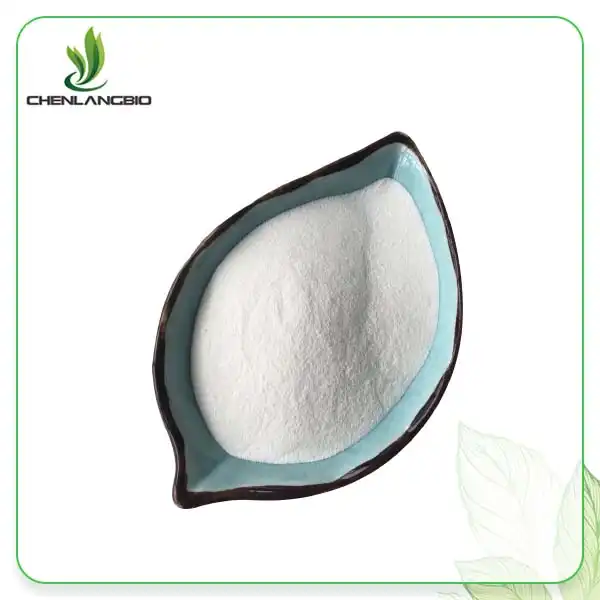
White to off-white crystalline powder |
|
Small packaging |
1–5 kg aluminum foil bags |
|
Bulk packaging |
25 kg paper drums |
Batch-specific documentation should be reviewed to confirm that delivered material meets the agreed quality requirements.
Choosing a 3-O-Ethyl Ascorbic Acid Manufacturer for Cosmetic Production
When selecting a 3-o-ethyl ascorbic acid manufacturer, buyers should evaluate more than the stated assay.
Relevant considerations include analytical methods, batch consistency, impurity controls, technical documentation, packaging, and the supplier's ability to support commercial production.
An experienced ethyl ascorbic acid supplier should be able to discuss product specifications and provide appropriate documentation for raw material qualification.
The Certificate of Analysis, Technical Data Sheet, and Safety Data Sheet serve different purposes and should be evaluated accordingly.
Bulk Ethyl Ascorbic Acid Powder: Samples, MOQ and Price per kg
Manufacturers sourcing bulk ethyl ascorbic acid powder should confirm the required quantity, packaging, quality specifications, and destination-market requirements before placing an order.
Buyers planning to buy 3-o-ethyl ascorbic acid can request samples for laboratory evaluation and formulation trials.
The ethyl ascorbic acid price per kg depends on commercial factors such as order quantity, packaging, and delivery arrangements.
For current 3-o-ethyl ascorbic acid bulk price information, available ethyl ascorbic acid MOQ, or 3-o-ethyl ascorbic acid wholesale requirements, our team can provide a quotation based on the purchasing project.
Frequently Asked Questions About 3-O-Ethyl Ascorbic Acid in Skincare
How Does 3-O-Ethyl Ascorbic Acid Differ from Pure Vitamin C?
3-O-Ethyl Ascorbic Acid contains an ethyl ether modification at the C3 position of the ascorbic acid molecule. This changes its chemical properties and can influence formulation behavior. It should not be assumed to have identical stability, skin delivery, or biological activity to L-ascorbic acid.
Does Ethyl Ascorbic Acid Convert into Vitamin C After Skin Absorption?
Conversion to free L-ascorbic acid should not be assumed without appropriate derivative-specific evidence. Demonstrating such conversion requires analytical identification of the resulting compound under relevant biological conditions. The ingredient may also exhibit biological activity that does not depend on complete conversion.
Can 3-O-Ethyl Ascorbic Acid Help Improve Uneven Skin Tone?
Laboratory research has investigated its effects on pigmentation-related pathways, including cellular signaling involved in melanin production. These findings support its consideration in skin-tone-focused cosmetic formulations, but the extent of visible improvement depends on the finished product and supporting human evidence.
Is 3-O-Ethyl Ascorbic Acid More Stable Than L-Ascorbic Acid?
The C3 ether modification changes the compound's oxidation characteristics and may offer stability advantages in certain formulations. However, performance depends on pH, solvent composition, oxygen exposure, temperature, and packaging. Direct comparative testing is necessary to establish stability under specific conditions.
Where Can Cosmetic Manufacturers Buy 3-O-Ethyl Ascorbic Acid 99% Powder?
Cosmetic manufacturers can source 99% 3-O-Ethyl Ascorbic Acid from qualified ingredient producers and suppliers. CHEN LANG BIO TECH provides commercial raw material options and can assist with technical specifications, COA requests, an ethyl ascorbic acid sample, and bulk purchasing inquiries.
Conclusion: Understanding How 3-O-Ethyl Ascorbic Acid Works in Cosmetic Formulations
3-O-Ethyl Ascorbic Acid offers a combination of modified vitamin C chemistry, investigated antioxidant activity, and potential applications in skin-tone-focused cosmetics. Its commercial performance depends on scientific evidence, formulation design, and consistent raw material quality.
For cosmetic-grade 3-O-Ethyl Ascorbic Acid 99%, technical documentation, samples, or bulk quotations, contact CHEN LANG BIO TECH at admin@chenlangbio.com.
References
1. Iliopoulos, F., et al. (2019). 3-O-Ethyl-L-Ascorbic Acid: Characterisation and Investigation of Single Solvent Systems for Delivery to the Skin. International Journal of Pharmaceutics: X, 1, 100025. DOI: 10.1016/j.ijpx.2019.100025.
2. Iliopoulos, F., et al. (2020). Topical Delivery of 3-O-Ethyl-L-Ascorbic Acid from Complex Solvent Systems. Scientia Pharmaceutica, 88(2), 19. DOI: 10.3390/scipharm88020019.
3. Pullar, J. M., Carr, A. C., & Vissers, M. C. M. (2017). The Roles of Vitamin C in Skin Health. Nutrients, 9(8), 866. DOI: 10.3390/nu9080866.
4. Telang, P. S. (2013). Vitamin C in Dermatology. Indian Dermatology Online Journal, 4(2), 143–146. DOI: 10.4103/2229-5178.110593.
5. International Organization for Standardization. ISO/TR 18811:2018 — Cosmetics — Guidelines on the Stability Testing of Cosmetic Products.
6. International Organization for Standardization. ISO 22716:2007 — Cosmetics — Good Manufacturing Practices (GMP) — Guidelines on Good Manufacturing Practices.

Send Inquiry
Related Industry Knowledge
- Thaumatin vs Sucralose: What Should Food Manufacturers Compare?
- 3% Rosavins vs 5% Salidroside: How to Choose the Right Rhodiola Extract Specification
- Tranexamic Acid for Skin: Benefits, Mechanism, and Cosmetic Ingredient Applications
- How to Verify Yohimbine Hydrochloride Purity by HPLC: A Supplier Quality
- What to Know about Magnesium Threonate?
- Is Genistein Safe for Men?
- What are the Health Benefits of Phellinus Linteus
- What is the Difference Between Ibuprofen And Flurbiprofen
- Is It Safe to Take Pure Fisetin Powder Every Day
- Kavalactone Powder Benefits