How to Verify Yohimbine Hydrochloride Purity by HPLC: A Supplier Quality
2026-07-31 15:18:48
Introduction: How Can Buyers Verify Yohimbine Hydrochloride Purity Before Bulk Purchase?
When purchasing yohimbine hydrochloride powder for dietary supplements, research applications, or ingredient distribution, purity verification is one of the most important steps in supplier evaluation. Although many suppliers provide a specification sheet claiming 98% purity yohimbine hydrochloride, professional buyers should not rely only on a stated percentage. The actual quality of a raw material depends on analytical verification, batch consistency, manufacturing control, and transparent documentation.
HPLC testing for yohimbine hydrochloride purity is one of the most widely accepted analytical methods used to confirm the assay value and identity of this alkaloid compound. By analyzing the chromatographic profile, manufacturers and buyers can evaluate whether the material meets the agreed specification and whether the supplier maintains stable quality control throughout production.
For companies sourcing bulk yohimbine hydrochloride powder, the evaluation process should include more than comparing the yohimbine hydrochloride price per kg. A reliable purchasing decision requires reviewing the supplier’s Yohimbine Hydrochloride COA, HPLC test data, manufacturing capability, and quality management system.
As a professional raw material manufacturer, we believe that a qualified supplier should provide clear technical information that helps customers understand what they are purchasing. This approach supports long-term cooperation between ingredient manufacturers, supplement brands, and distributors.
In this guide, we explain how yohimbine hydrochloride purity testing works, what buyers should check in HPLC reports, and how to select a reliable yohimbine hydrochloride supplier for commercial applications.
What Is Yohimbine Hydrochloride and Why Does Purity Testing Matter for Raw Material Buyers?
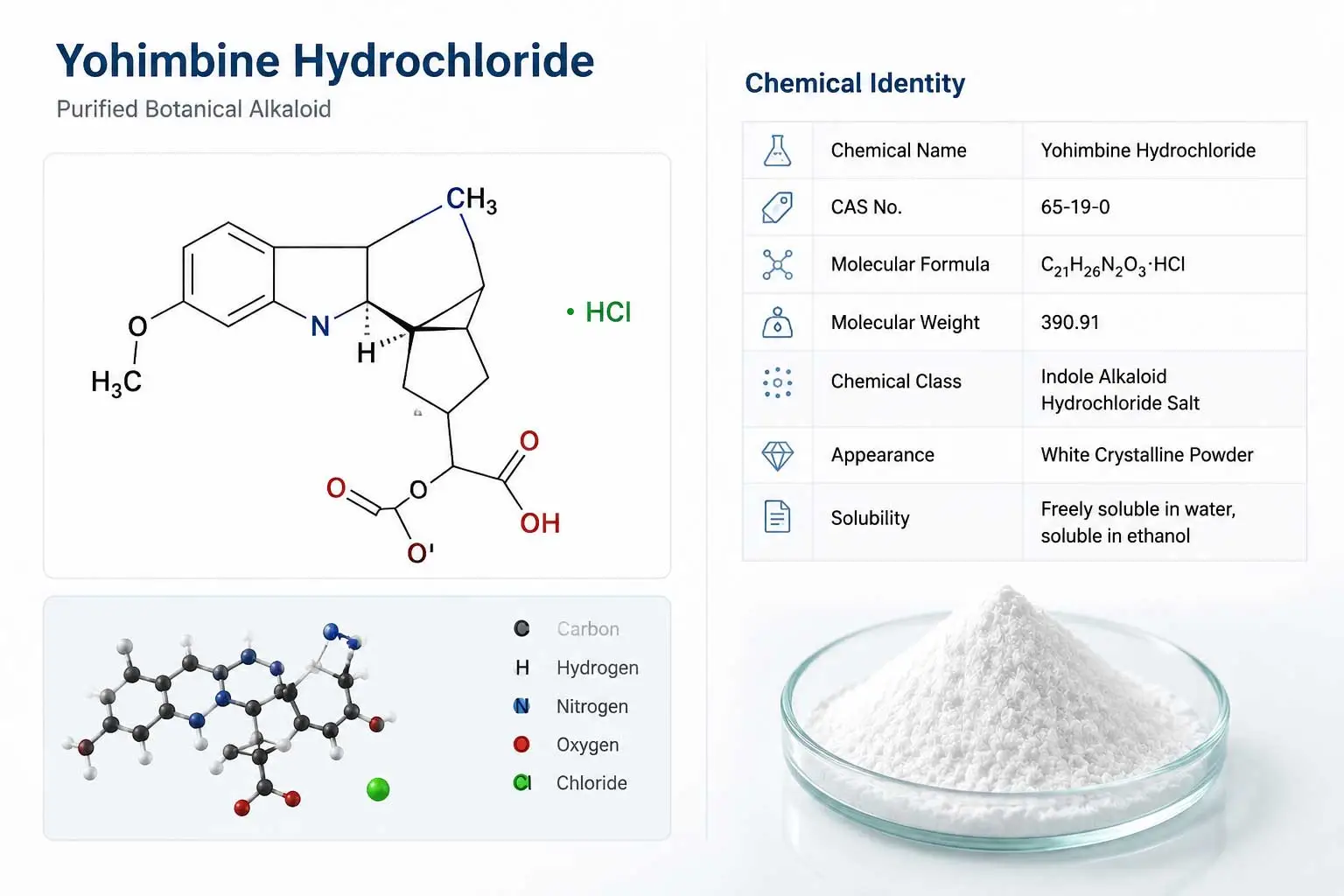
Yohimbine hydrochloride is a standardized hydrochloride salt form of yohimbine, an indole alkaloid originally associated with the bark of Pausinystalia yohimbe. Compared with traditional botanical extracts, the hydrochloride form provides a more defined chemical specification, making it easier for manufacturers to control formulation consistency and quality requirements.
For companies purchasing yohimbine HCL raw material, the main concern is not simply whether the product contains yohimbine, but whether the material meets the required analytical specifications for industrial use. A consistent raw material profile is essential for supplement manufacturers, ingredient distributors, and research organizations that require predictable performance between different production batches.
One of the main reasons buyers request yohimbine hydrochloride purity testing is because raw materials with inconsistent assay values may create challenges during formulation, quality control, and regulatory documentation. Even small variations in active compound concentration can affect the accuracy of finished product specifications.
A professional yohimbine hydrochloride manufacturer should therefore establish a complete quality control process covering raw material inspection, production monitoring, analytical testing, and final batch release.
The most commonly reviewed quality indicators include:
•Assay percentage of Yohimbine Hydrochloride
•Identity confirmation
•Related substances and impurities
•Moisture content
•Residual solvents
•Heavy metal limits
•Microbial specifications when applicable
Among these parameters, assay testing by HPLC is particularly important because it provides quantitative confirmation of the active compound concentration.
For buyers searching for a bulk yohimbine hydrochloride supplier, understanding the role of analytical testing helps reduce purchasing risks. A lower-priced product without reliable testing documentation may create additional costs later due to inconsistent formulation results, quality complaints, or failed incoming inspections.
Therefore, supplier selection should focus on quality transparency rather than price comparison alone.
A qualified supplier should be able to provide:
•Yohimbine hydrochloride COA
•HPLC chromatogram or analytical report
•Product specification sheet
•Safety documentation such as MSDS
•Batch traceability information
These documents allow buyers to verify whether the supplied material matches the agreed technical requirements before placing a larger order.
How Is Yohimbine Hydrochloride Purity Tested by HPLC?
Yohimbine hydrochloride HPLC analysis is a chromatographic method used to separate, identify, and quantify the target compound within a sample. For raw material buyers, understanding the basic principle of HPLC testing helps them evaluate supplier quality documents more effectively.
Unlike simple appearance inspection or basic identification tests, HPLC provides a quantitative measurement of the compound concentration. This makes it one of the most important methods for confirming whether yohimbine HCL powder meets its declared purity specification.
In a typical quality control process, the laboratory compares the Yohimbine Hydrochloride sample against a qualified reference standard. The analytical system separates different components in the sample, and the detector records the chromatographic peaks associated with specific compounds.
For buyers evaluating a yohimbine hydrochloride supplier, the presence of HPLC testing demonstrates that the supplier has a controlled quality management process rather than relying only on external documentation.
A complete yohimbine hydrochloride HPLC analysis report normally includes several important elements:
•Sample name and batch number
•Testing method
•Reference standard information
•Chromatographic conditions
•Retention time
•Peak area calculation
•Assay result
The assay result is usually expressed as a percentage, indicating the amount of Yohimbine Hydrochloride contained in the tested sample.
For example, a specification of yohimbine hydrochloride 98% purity means the material should meet or exceed the defined assay requirement according to the supplier’s specification and agreed testing method.
However, professional buyers should understand that purity percentage alone does not represent the entire quality profile. A reliable supplier must also demonstrate consistency between multiple batches, proper documentation control, and effective quality management procedures.
For this reason, HPLC testing should be considered part of a broader supplier evaluation system rather than an isolated laboratory result.
What Parameters Are Evaluated During Yohimbine Hydrochloride HPLC Analysis?
For buyers sourcing yohimbine hydrochloride powder in bulk, understanding the information contained in an HPLC report is essential because the chromatogram provides more than a simple purity percentage. A professional yohimbine hydrochloride HPLC analysis evaluates the relationship between the target compound peak, reference standard, and possible impurities, allowing quality teams to confirm whether the material meets the agreed specification.
In industrial raw material purchasing, the most important result from HPLC testing is usually the assay value, which indicates the percentage of Yohimbine Hydrochloride present in the tested sample. However, experienced buyers understand that a reported assay value should always be reviewed together with the analytical method, testing conditions, and supporting quality documents.
A reliable Yohimbine HCL assay method normally includes several key evaluation points.
Assay Percentage and Active Compound Content
The assay result is the first parameter many buyers check when reviewing a yohimbine hydrochloride COA. For a product specified as yohimbine hydrochloride 98% purity, the analytical result should demonstrate that the actual content meets the stated requirement.
The assay value is calculated by comparing the peak response of the sample with a qualified reference standard under controlled HPLC conditions. This comparison allows the laboratory to determine the concentration of Yohimbine Hydrochloride accurately.
For manufacturers producing dietary supplements or standardized formulations, maintaining consistent assay values between different batches is critical. Variations in active compound concentration may create challenges during formulation adjustment, finished product testing, and quality release.
Therefore, when evaluating a yohimbine hydrochloride supplier, buyers should not only request the purity percentage but also review whether the supplier can provide batch-specific testing records.
Retention Time and Identity Confirmation
Another important factor in yohimbine hydrochloride HPLC testing is identity confirmation.
During HPLC analysis, Yohimbine Hydrochloride produces a characteristic retention time under specific chromatographic conditions. The sample peak should correspond with the reference standard peak, confirming that the tested material is the expected compound.
This step is especially important because some raw materials may have similar physical appearances, such as white crystalline powders, while containing different chemical compositions. Appearance inspection alone cannot confirm chemical identity.
For this reason, professional yohimbine hydrochloride manufacturers use analytical identification methods to verify each batch before release.
A complete quality evaluation normally combines:
•HPLC identification
•Assay testing
•Appearance inspection
•Physicochemical testing
•Documentation review
This approach provides buyers with greater confidence when purchasing bulk yohimbine hydrochloride powder for commercial applications.
Related Substances and Impurity Profile
Although assay value is an important indicator, the impurity profile also plays a significant role in raw material quality assessment.
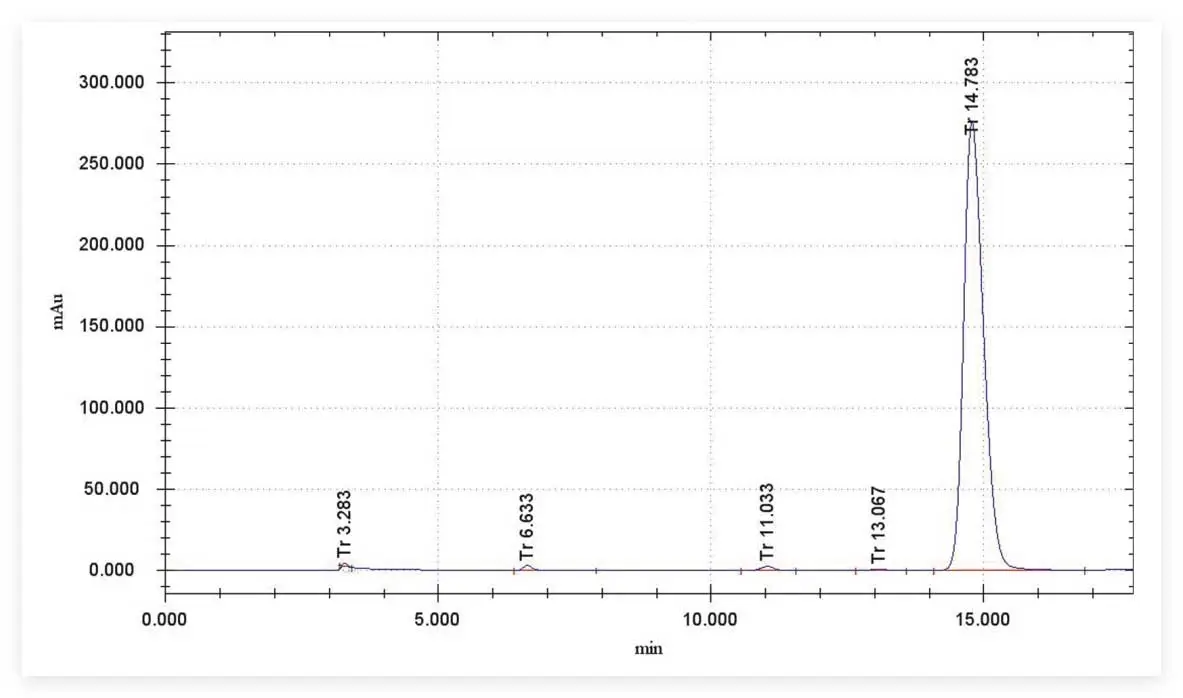
During yohimbine hydrochloride purity testing, HPLC analysis can help identify additional peaks that may represent related substances or impurities. Monitoring these components helps manufacturers maintain product consistency and comply with customer-specific requirements.
For supplement brands and ingredient distributors, impurity control is particularly important because raw materials must often pass internal quality approval procedures before entering production.
When qualifying a new yohimbine hydrochloride wholesale supplier, buyers should consider whether the supplier has a complete quality control system rather than relying only on a single purity number.
A mature supplier should be able to explain:
•What analytical method is used?
•How is the assay calculated?
•Are impurities monitored?
•Is each batch tested before shipment?
•Can the supplier provide supporting analytical documentation?
These questions help distinguish professional manufacturers from simple trading companies.
How to Read a Yohimbine Hydrochloride COA and Verify Supplier Quality?
A yohimbine hydrochloride COA (Certificate of Analysis) is one of the most important documents buyers review before placing a bulk order. However, many purchasing teams focus only on the final assay result and overlook other information that can indicate whether the supplier has reliable quality management practices.
A complete COA should provide traceable information connecting the tested sample with the actual production batch. This allows buyers to verify that the analytical results represent the material they will receive.
When reviewing a yohimbine HCL certificate of analysis, buyers should pay attention to the following sections.
|
COA Information |
Why It Matters for Buyers |
|
Product name |
Confirms the material identity |
|
Batch number |
Provides production traceability |
|
Manufacturing date |
Helps evaluate freshness and inventory control |
|
Testing date |
Shows quality inspection timing |
|
Assay result |
Confirms active compound content |
|
Testing method |
Indicates analytical reliability |
|
Appearance |
Confirms physical consistency |
|
Moisture content |
Helps evaluate storage stability |
|
Heavy metals |
Supports quality compliance |
|
Microbial testing |
Required for some supplement applications |
Why the HPLC Chromatogram Matters More Than a Purity Statement
Many suppliers advertise high purity raw materials, but professional buyers understand that a number printed on a product page is not enough to evaluate quality.
A genuine yohimbine hydrochloride HPLC report provides evidence behind the purity claim.
The chromatogram can show:
•The main Yohimbine Hydrochloride peak
•Peak separation quality
•Possible additional peaks
•Analytical consistency
For purchasing departments, this information is valuable because it demonstrates that the supplier has actual testing capability and quality control procedures.
When working with a long-term yohimbine hydrochloride powder supplier, buyers usually expect consistent documentation from batch to batch rather than receiving different formats or incomplete reports for every shipment.
What Buyers Should Confirm Before Purchasing Yohimbine Hydrochloride in Bulk
Before approving a new supplier, purchasing teams should evaluate several factors beyond the quotation.
The following checklist can help during supplier qualification:
1. Does the supplier provide batch-specific COA?
A reliable supplier should provide documentation linked to the actual production batch rather than a general specification sheet.
2. Is HPLC testing performed internally or by a qualified laboratory?
Internal analytical capability allows faster quality control and better production monitoring.
3. Can the supplier provide technical documents?
Commonly requested documents include:
•COA
•MSDS
•TDS
•Specification sheet
•HPLC analysis data
4. Does the supplier have stable production capability?
For distributors and supplement manufacturers, supply continuity is as important as product quality. A supplier should have consistent manufacturing processes, controlled raw material sourcing, and reliable export experience.
For companies looking to buy yohimbine hydrochloride powder, quality verification should always come before price comparison. A lower quotation may appear attractive initially, but inconsistent assay results, incomplete documentation, or unstable batch quality can increase overall procurement costs.
A professional yohimbine hydrochloride manufacturer focuses not only on supplying the material but also on providing the analytical confidence required for long-term cooperation.
How to Choose a Reliable Yohimbine Hydrochloride Supplier for Bulk Orders?
Selecting a suitable supplier is one of the most important steps when purchasing Yohimbine Hydrochloride powder for commercial applications. Although many suppliers can provide similar product descriptions and purity claims, the actual difference often lies in manufacturing control, analytical capability, documentation transparency, and long-term supply reliability.
For supplement manufacturers, distributors, and formulation companies, choosing a yohimbine hydrochloride supplier is not simply a price comparison process. A lower quotation may reduce the initial purchasing cost, but inconsistent quality, incomplete documentation, or unstable supply can create additional challenges during production and quality approval.
A professional raw material supplier should be able to demonstrate that every batch is produced and tested according to a controlled quality process. This includes raw material management, production monitoring, laboratory analysis, and final product release.
When evaluating a potential yohimbine hydrochloride manufacturer, buyers should focus on several key areas.
Manufacturing Capability and Production Control
A reliable yohimbine hydrochloride manufacturer should have a clear and controlled production system rather than depending only on third-party sourcing.
Manufacturing capability directly affects:
•batch-to-batch consistency
•production lead time
•quality stability
•supply continuity
For international buyers purchasing bulk yohimbine hydrochloride powder, supplier transparency is especially important because overseas procurement usually involves longer supply chains and stricter internal approval procedures.
A qualified manufacturer should be able to explain:
•where the raw materials are sourced;
•how production batches are controlled;
•how finished products are tested before shipment;
•how batch records are maintained.
At CHEN LANG BIO TECH, quality control is integrated into the complete production process. Each batch is evaluated through established analytical procedures, and quality documents are prepared according to customer requirements, including COA, specification sheets, and supporting analytical information.
This approach allows customers to evaluate not only the product itself but also the reliability behind the supply.
Why Analytical Capability Matters When Buying Yohimbine HCL Powder From China
China has become one of the major sourcing destinations for pharmaceutical and nutraceutical raw materials. However, the quality level among suppliers can vary significantly. For buyers searching for a yohimbine HCL powder supplier China, analytical capability is one of the most important factors for supplier qualification.
A supplier with internal quality testing capability can respond more efficiently to customer requirements and provide clearer batch information compared with companies that only trade finished materials.
For yohimbine hydrochloride quality control, commonly used analytical tools include:
•HPLC analysis for assay and identity confirmation
•moisture testing
•residual solvent analysis when required
•heavy metal testing
•microbiological examination according to application requirements
Among these methods, HPLC remains one of the most important techniques because it provides quantitative evidence of the active ingredient content.
For example, when a buyer receives a specification stating yohimbine hydrochloride 98% purity, the supporting analytical data should confirm that the actual batch meets this requirement. Without appropriate testing records, the purity statement alone does not provide sufficient assurance for professional procurement.
Therefore, experienced buyers usually evaluate the complete quality system rather than a single laboratory result.
What Documents Should Buyers Request Before Purchasing Yohimbine Hydrochloride in Bulk?
Before placing a commercial order, buyers should request technical documentation that allows them to evaluate product suitability and supplier reliability.
For a standard bulk Yohimbine Hydrochloride order, the following documents are commonly required:
►Certificate of Analysis (COA)
The yohimbine hydrochloride COA provides batch-specific quality information, including:
•product name
•batch number
•test results
•specification requirements
•analytical methods
•quality approval information
A complete COA helps buyers confirm that the shipment corresponds with the tested production batch.
►Product Specification Sheet
The specification sheet defines the technical requirements of the material, including:
•appearance
•assay range
•identification method
•storage conditions
•packaging requirements
This document is particularly important when buyers compare different suppliers because specifications may vary between manufacturers.
►Safety Data Sheet (MSDS)
For international shipments, an MSDS provides essential information related to:
•handling
•storage
•transportation
•safety requirements
Professional suppliers should maintain updated documentation to support global distribution.
►Additional Quality Information
Depending on the buyer’s application, additional documents may include:
•HPLC chromatogram
•stability information
•manufacturing process information
•quality certifications
A supplier that can provide complete technical support usually indicates stronger experience in international raw material supply.
How Does CHEN LANG BIO TECH Support Global Buyers of Yohimbine Hydrochloride Powder?
For international customers, selecting a supplier is not only about receiving a product shipment. It is about establishing a stable supply relationship supported by reliable communication, quality documentation, and consistent production standards.
As a professional supplier of yohimbine hydrochloride powder, CHEN LANG BIO TECH focuses on providing raw materials with controlled specifications and transparent quality information.
Our quality support includes:
•batch-specific COA documentation;
•HPLC-based quality verification;
•technical specification support;
•flexible packaging solutions;
•sample availability for evaluation before bulk purchasing.
For customers who need to buy yohimbine hydrochloride powder, sample evaluation is often an important step before commercial cooperation. Reviewing the sample, analytical documents, and technical specifications allows buyers to confirm whether the material matches their formulation requirements.
For distributors and supplement manufacturers, stable supply capability is equally important. A long-term supplier should understand the importance of consistent quality between different shipments and provide timely technical support when customers need additional documentation.
Frequently Asked Questions About Yohimbine Hydrochloride Purity Testing
What is the standard purity of Yohimbine Hydrochloride powder?
Commercial yohimbine hydrochloride powder is commonly supplied according to a defined purity specification, such as 98%. However, buyers should always confirm the actual assay result through batch-specific analytical testing rather than relying only on a general product description.
Why is HPLC used for Yohimbine Hydrochloride purity testing?
Yohimbine hydrochloride HPLC analysis is used because it provides quantitative measurement of the compound content and helps confirm product identity. It is widely accepted as a reliable analytical method for evaluating raw material purity.
Can suppliers provide Yohimbine Hydrochloride HPLC reports?
Professional suppliers can provide quality documentation related to analytical testing, including COA information and supporting HPLC data when required. These documents help buyers verify whether the product meets the agreed specification.
What should I check before choosing a Yohimbine Hydrochloride supplier?
Before selecting a supplier, buyers should evaluate:
•analytical capability;
•COA transparency;
•production consistency;
•documentation support;
•export experience;
•communication efficiency.
A reliable supplier should provide evidence of quality control rather than only making purity claims.
What is the MOQ for bulk Yohimbine Hydrochloride orders?
MOQ depends on supplier capability, packaging requirements, and customer needs. Many professional suppliers can support sample orders for evaluation before larger commercial purchases.
Conclusion: Choosing a Yohimbine Hydrochloride Supplier Based on Verified Quality
When sourcing yohimbine hydrochloride powder, purity verification should be considered a fundamental part of supplier qualification rather than an optional step. HPLC testing, COA review, and quality documentation allow buyers to understand whether a supplier can provide consistent raw materials suitable for long-term production.
A trustworthy yohimbine hydrochloride supplier should combine analytical capability, manufacturing control, transparent documentation, and responsive technical support.
For companies evaluating bulk yohimbine hydrochloride powder suppliers, CHEN LANG BIO TECH provides technical documents, quality verification support, and customized supply solutions to help customers make informed purchasing decisions.
If you are looking for yohimbine hydrochloride wholesale supply, please contact our team for product specifications, COA, sample evaluation, and quotation support.

Send Inquiry
You may like
Related Industry Knowledge
- How Does Retatrutide Work? Understanding Its Triple Receptor Agonist Mechanism
- Top Applications of Freeze-Dried Raspberry Powder in Functional Beverages and Nutritional Products
- Can 3-O-ethyl Ascorbic Acid Improve Collagen Synthesis and Skin Elasticity?
- Can Ascorbyl Tetraisopalmitate be Combined with Other Actives (e.g., Retinol, Niacinamide)?
- How to Make Phellinus Linteus Tea?
- How to Grow Bergenia Cordifolia?
- How to Use Centella Asiatica for Skin
- What not to Mix with Sodium Ascorbyl Phosphate
- What Are the Health Benefits of Roselle Extract
- Which is better Ashwagandha root or Ashwagandha Extract Withanolides