
L-Carnosine Powder vs N-Acetyl-L-Carnosine: Supplier Guide for Antioxidant Ingredient Selection
2026-07-03 15:53:29
1. Introduction: Market Positioning of L-Carnosine and N-Acetyl-L-Carnosine in Global Antioxidant Ingredient Supply
The global demand for antioxidant ingredients continues to expand rapidly across both dietary supplement and cosmetic formulation industries, driven by increasing interest in functional nutrition, skin health, and long-term wellness positioning. Within this evolving market, L-Carnosine powder and N-Acetyl-L-Carnosine have become two widely evaluated amino acid–based raw materials for formulation development.
From a procurement perspective, manufacturers are increasingly prioritizing not only functional performance but also supply chain reliability, documentation transparency, and manufacturing compliance. As a result, sourcing from a qualified L-Carnosine powder supplier in China or a verified N-Acetyl-L-Carnosine bulk manufacturer has become a critical factor in global ingredient selection strategies.
In parallel, demand for GMP-certified antioxidant raw materials continues to grow, particularly among nutraceutical and cosmetic brands that require consistent COA documentation, HPLC-tested purity, and stable batch-to-batch production. These requirements are essential for companies engaged in large-scale supplement formulation and functional cosmetic development.
Within this context, the comparison of L-Carnosine vs N-Acetyl-L-Carnosine is increasingly used as a technical reference point for formulators evaluating antioxidant systems, stability requirements, and application suitability in different product categories.
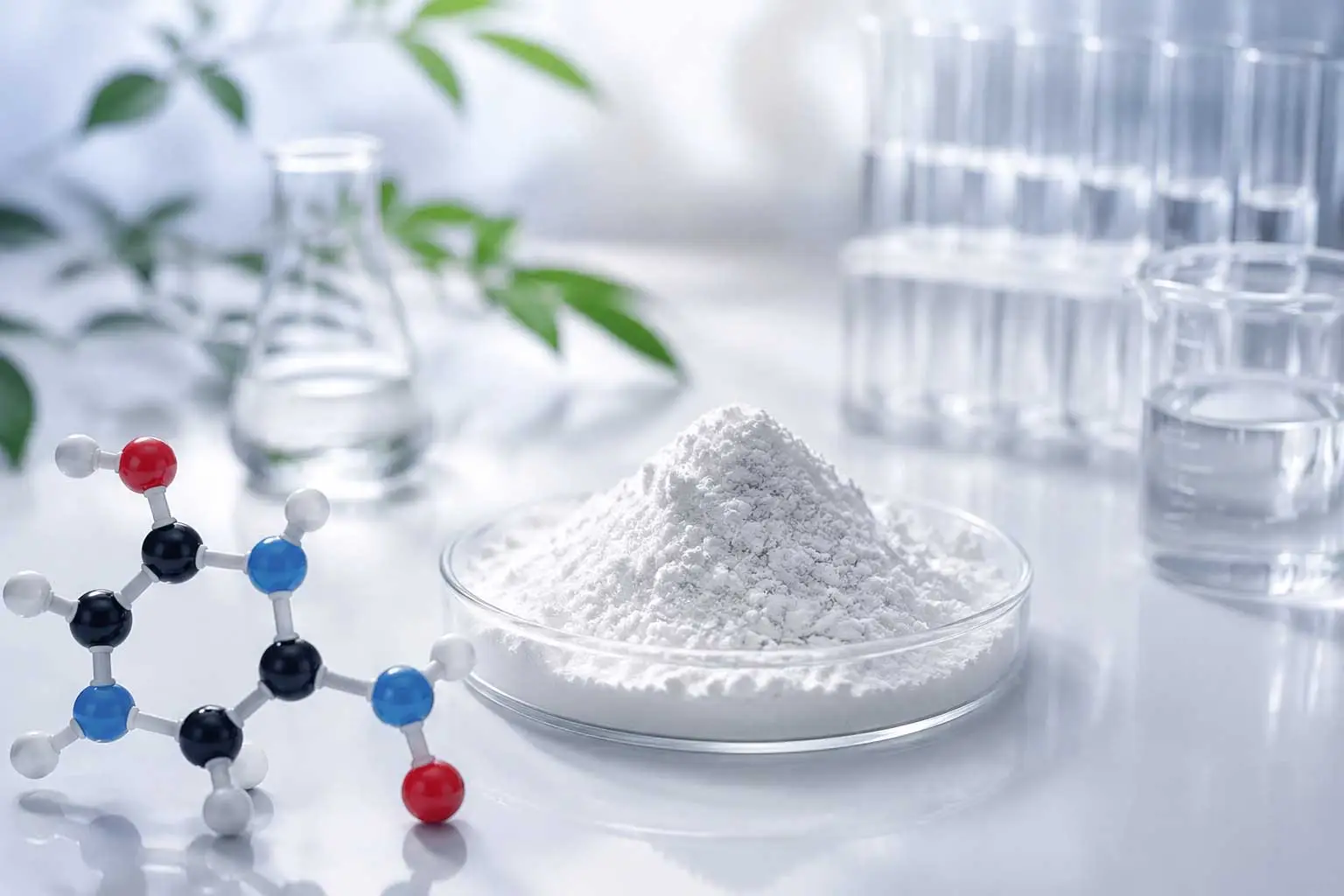
2. Chemical Structure and Functional Differences
The structural and physicochemical differences between L-Carnosine powder and N-Acetyl-L-Carnosine are fundamental to their performance in formulation systems, particularly in terms of stability, enzymatic resistance, and functional delivery behavior.
2.1 L-Carnosine (β-Alanyl-L-Histidine)
L-Carnosine powder is a naturally occurring endogenous dipeptide composed of beta-alanine and L-histidine, with the molecular formula C9H14N4O3 and a molecular weight of 226.23 g/mol. Its CAS number is 305-84-0.
Structurally, it contains:
•One β-alanine residue (non-proteinogenic amino acid)
•One L-histidine residue (imidazole-containing amino acid)
•A peptide bond linking the two amino acids
The imidazole ring of histidine plays a key role in its metal ion chelation capacity and pH-buffering behavior, which contributes to its antioxidant and anti-glycation functionality in biological and formulation systems.
Key physicochemical properties:
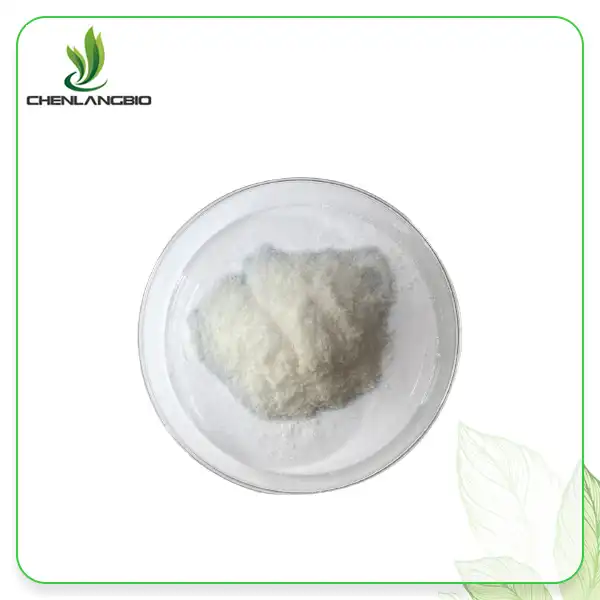
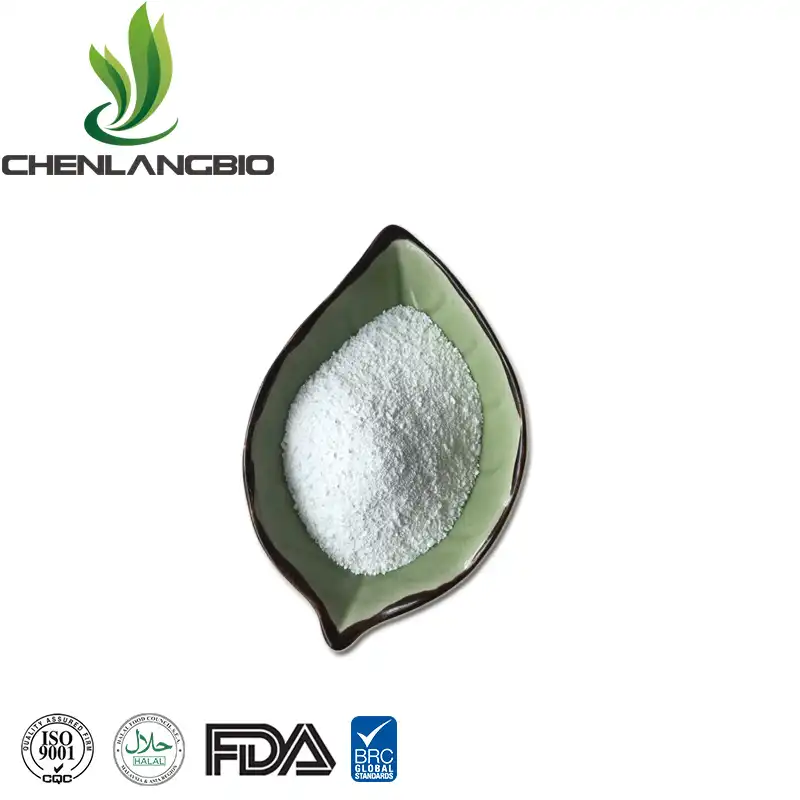
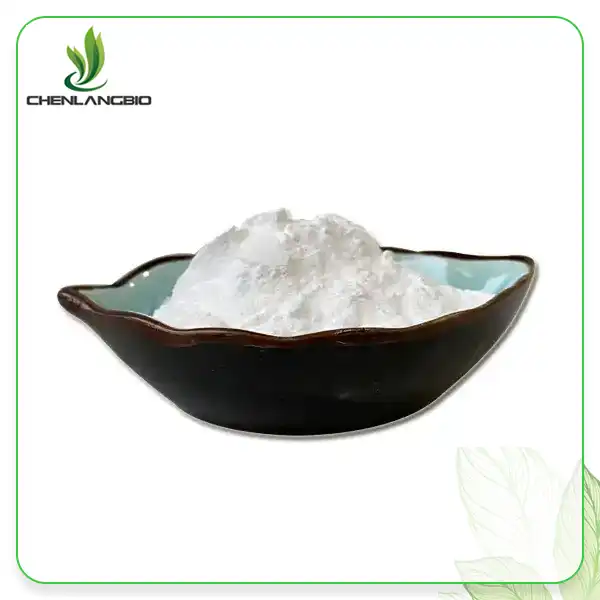
•Appearance: White crystalline powder
•Solubility: 20–50 mg/mL in water (20–25°C)
•Stability range: pH 6.0–7.5 (optimal formulation window)
•Thermal sensitivity: Moderate stability below 60°C in aqueous systems
•LogP: Highly hydrophilic (non-lipophilic behavior)
From a formulation standpoint, L-Carnosine is highly compatible with aqueous systems but may exhibit hydrolysis sensitivity under extreme pH or prolonged high-temperature processing conditions.
2.2 N-Acetyl-L-Carnosine (Acetylated Derivative)
N-Acetyl-L-Carnosine is a chemically modified derivative of L-Carnosine in which an acetyl functional group (-COCH₃) is introduced at the N-terminal amine group of the molecule.
This structural modification results in:
•Increased resistance to enzymatic hydrolysis (especially carnosinase degradation)
•Improved chemical stability in certain formulation environments
•Modified polarity and molecular interaction behavior
Although the exact molecular weight varies slightly depending on structural representation, it remains close to the parent compound with increased steric protection at the amino terminus.
Key physicochemical characteristics:
•Structure type: Acetylated dipeptide derivative
•Stability: Higher resistance to enzymatic degradation vs L-Carnosine
•Solubility: High aqueous solubility (generally comparable or slightly improved stability in solution systems)
•pH tolerance: Broader operational stability window compared to L-Carnosine
•Processing behavior: Better stability in long-term storage systems and emulsified formulations
From an industrial formulation perspective, N-Acetyl-L-Carnosine is often selected for systems requiring enhanced molecular stability and extended functional persistence, particularly in cosmetic or specialized antioxidant applications.
2.3 Technical Comparison Summary (Formulation-Oriented View)
From a bulk ingredient sourcing and formulation design perspective, the key differences can be summarized as follows:
•L-Carnosine powder provides strong anti-glycation and antioxidant activity but requires controlled formulation conditions (pH and temperature-sensitive system design).
•N-Acetyl-L-Carnosine offers improved stability against enzymatic degradation and is more suitable for long-duration or sensitive formulation systems.
For GMP-certified amino acid manufacturers and bulk antioxidant raw material suppliers, both materials are typically evaluated based on:
•HPLC purity (≥98–99%)
•Moisture content control
•Stability under accelerated conditions (40°C / 75% RH)
•COA reproducibility across batches
3. Solubility and Stability in Formulation Systems
The solubility and stability profiles of L-Carnosine powder vs N-Acetyl-L-Carnosine are critical parameters for formulation engineers, particularly in the development of aqueous supplement systems, emulsions, and functional cosmetic products.
3.1 L-Carnosine Powder – Solubility and Stability Profile
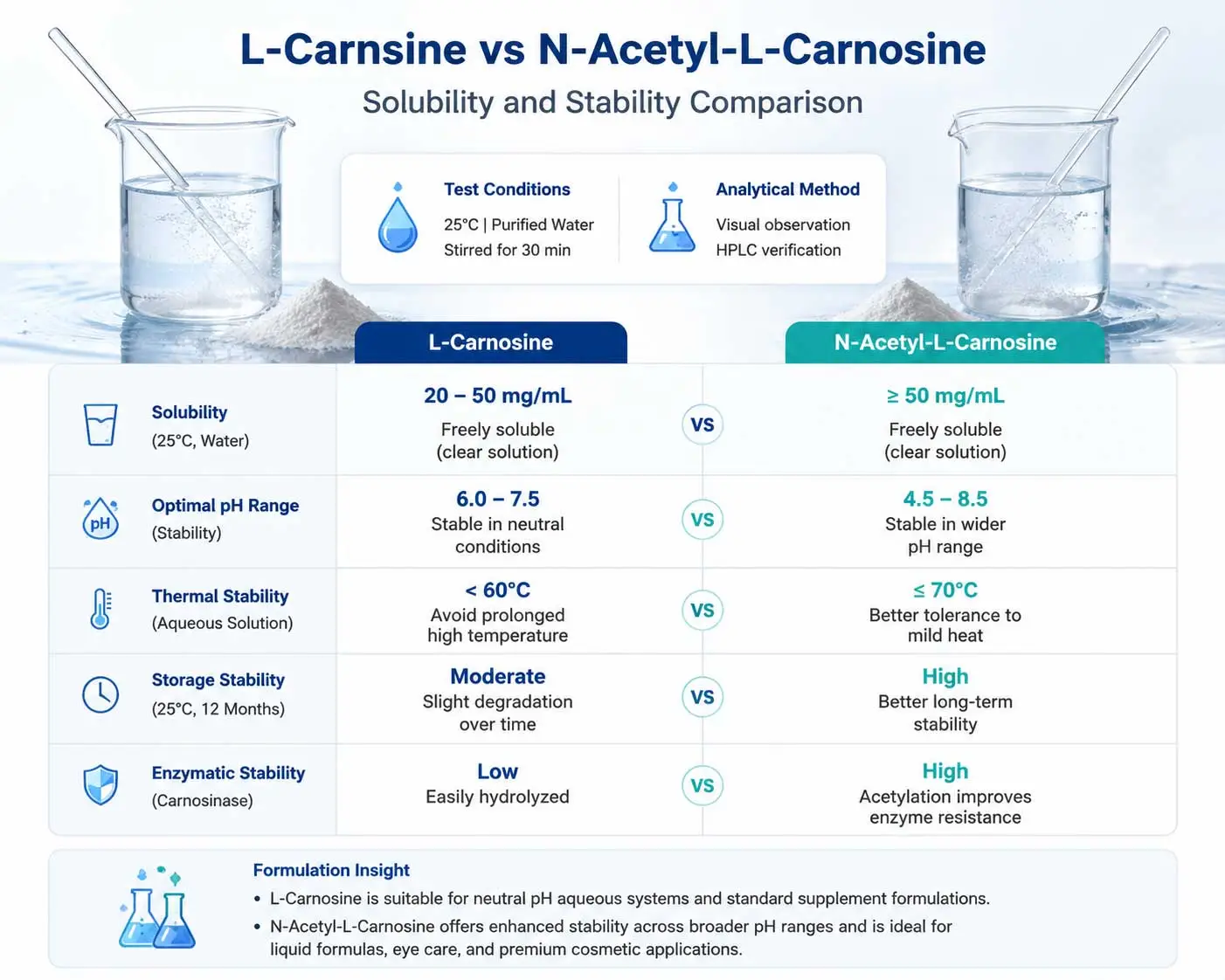
L-Carnosine powder demonstrates a well-characterized aqueous solubility profile of approximately 20–50 mg/mL at 20–25°C, depending on particle size distribution, ionic strength of the medium, and system pH.
Key formulation conditions:
•Optimal dissolution pH range: 6.0 – 7.5
•Reduced stability below pH 4.5: increased risk of hydrolytic degradation
•Alkaline sensitivity above pH 8.5: accelerated structural instability
•Thermal processing limit: recommended <60°C for aqueous systems
•Moisture sensitivity: moderate hygroscopic behavior under high RH (>60%)
From a formulation engineering perspective, L-Carnosine performs best in neutral buffered systems, where metal ion chelation and glycation inhibition activity remain stable. In multi-active antioxidant systems, chelating agents or buffering systems (e.g., phosphate or citrate buffers) are often used to maintain stability during production and shelf life.
In high-shear or high-temperature processing (such as spray drying or hot-fill systems), L-Carnosine is typically added in post-thermal blending stages to minimize degradation risk.
3.2 N-Acetyl-L-Carnosine – Solubility and Stability Profile
N-Acetyl-L-Carnosine exhibits improved structural protection due to N-terminal acetylation, which significantly reduces susceptibility to enzymatic hydrolysis (particularly carnosinase-mediated cleavage in biological systems).
Key formulation characteristics:
•Water solubility: high and comparable to L-Carnosine, with improved solution stability in long-term aqueous storage
•pH stability range: broader functional window (~pH 4.5 – 8.5)
•Enzymatic stability: significantly higher resistance to degradation compared to non-acetylated form
•Thermal behavior: improved stability under moderate heating conditions (≤70°C short exposure)
•Storage stability: reduced degradation rate in liquid formulations over extended time periods
From a formulation standpoint, N-Acetyl-L-Carnosine is better suited for long-duration liquid systems, emulsified cosmetic products, and applications requiring extended molecular integrity under storage stress conditions.
3.3 Comparative Formulation Engineering Insight
From an industrial formulation and procurement perspective, the selection between these two ingredients is primarily driven by stability requirements and processing conditions rather than solubility alone.
✔ L-Carnosine powder is preferred when:
•Neutral pH aqueous systems are used
•Cost-efficient antioxidant systems are required
•Standard capsule or powder supplements are developed
•Short-to-medium shelf-life formulations are targeted
✔ N-Acetyl-L-Carnosine is preferred when:
•Extended stability in liquid systems is required
•Formulations involve mild acidic or variable pH environments
•Long-term storage stability is critical
•High-end cosmetic or specialized antioxidant systems are developed
3.4 Industrial Supply Consideration
For GMP-certified amino acid manufacturers and bulk antioxidant raw material suppliers, both ingredients are typically evaluated under standardized stability protocols, including:
•Accelerated stability testing (40°C / 75% RH)
•pH stress testing across formulation ranges
•Moisture absorption behavior (hygroscopicity index)
•HPLC purity degradation tracking over time
These parameters are essential for formulators sourcing bulk L-Carnosine powder or N-Acetyl-L-Carnosine raw materials for scalable production systems in nutraceutical and cosmetic industries.
4. Application in Dietary Supplement and Cosmetic Formulation Systems
The application scope of L-Carnosine powder and N-Acetyl-L-Carnosine extends across both dietary supplement and cosmetic formulation industries, where antioxidant functionality, stability performance, and regulatory compliance are key selection criteria.
In dietary supplement systems, L-Carnosine powder is widely used in capsule, tablet, and powder formulations due to its well-documented antioxidant and anti-glycation properties. It is particularly suitable for standard formulation systems where aqueous stability and cost efficiency are primary considerations. As a result, it is frequently sourced from a bulk L-Carnosine powder supplier in China with verified GMP production capability and consistent COA documentation.
In contrast, N-Acetyl-L-Carnosine is more commonly applied in advanced or specialized supplement systems where extended molecular stability is required. Its acetylated structure provides improved resistance to enzymatic degradation, making it suitable for formulations designed for long-term performance stability in liquid or semi-solid systems.
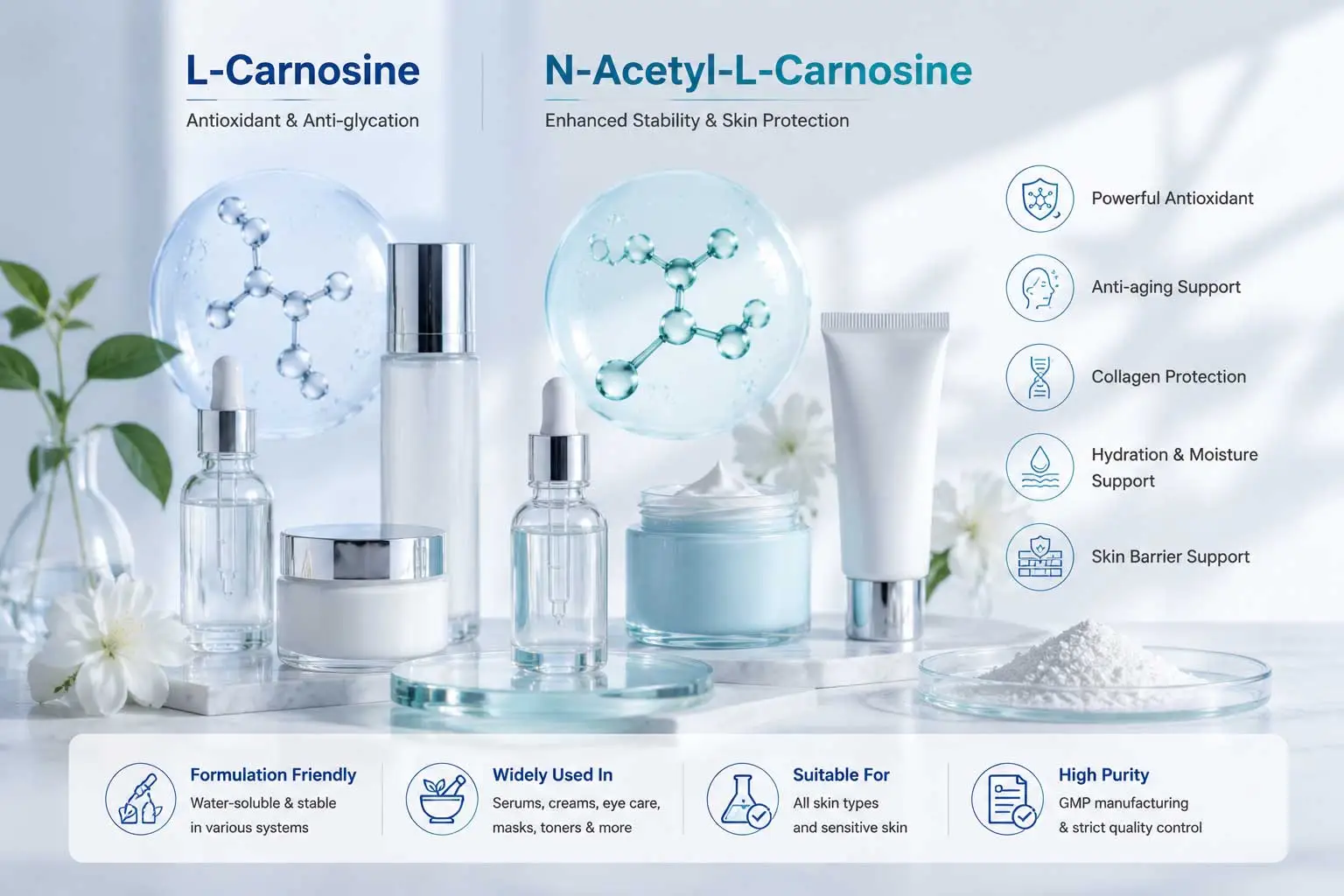
In cosmetic formulation systems, both ingredients are incorporated into antioxidant skincare products, anti-aging creams, and skin barrier support systems. However, L-Carnosine powder is typically used in standard emulsions and water-based formulations, while N-Acetyl-L-Carnosine is preferred in higher-end cosmetic systems requiring enhanced stability under variable pH and storage conditions.
From a procurement perspective, manufacturers sourcing from a cosmetic and nutraceutical ingredient supplier typically evaluate these materials based on formulation compatibility, stability data, and regulatory documentation including COA and HPLC test reports.
5. Manufacturing Process and Quality Control Standards
The manufacturing processes of L-Carnosine powder and N-Acetyl-L-Carnosine play a critical role in determining final product purity, stability, and suitability for industrial formulation applications.
L-Carnosine powder is generally produced via controlled synthesis or enzymatic peptide coupling processes, followed by purification and crystallization to achieve high purity levels, typically ≥99%. Leading GMP-certified amino acid manufacturers in China implement strict control over reaction conditions, impurity removal, and crystallization parameters to ensure batch-to-batch consistency.
N-Acetyl-L-Carnosine, on the other hand, is produced through a controlled acetylation process applied to purified L-Carnosine, requiring precise control of reaction conditions to ensure structural integrity and minimize byproduct formation.
Quality control systems for both ingredients typically include:
•HPLC purity analysis (≥98–99%)
•Moisture content control (LOD testing)
•Heavy metal and microbial limit testing
•Stability evaluation under accelerated conditions (40°C / 75% RH)
For global buyers sourcing from a bulk antioxidant raw material supplier, these parameters are essential to ensure regulatory compliance and formulation reliability in supplement and cosmetic manufacturing systems.
6. Cost Structure, MOQ and Bulk Supply Considerations
The cost structure of L-Carnosine powder vs N-Acetyl-L-Carnosine is influenced by production complexity, raw material input, and purification requirements.
In general, L-Carnosine powder is more widely produced and therefore offers a more cost-efficient pricing structure in global markets. It is commonly supplied by bulk amino acid manufacturers in China with scalable production capacity and flexible procurement options.
N-Acetyl-L-Carnosine, due to its additional chemical modification step and more controlled synthesis process, is typically positioned in a higher-value price segment. This makes it more suitable for premium formulation systems where stability performance is prioritized over raw material cost.
From a procurement perspective, MOQ (minimum order quantity) is an important consideration for both materials. For L-Carnosine powder, MOQ typically starts from 1 kilogram, supporting both laboratory testing and pilot-scale production. N-Acetyl-L-Carnosine may vary depending on supplier capability and grade specification.
Bulk pricing structures are generally optimized based on volume, long-term contracts, and formulation requirements, especially for companies engaging in continuous production of antioxidant supplement or cosmetic products.
7. Supplier Selection Guide for Global Buyers
Selecting a reliable supplier for L-Carnosine powder or N-Acetyl-L-Carnosine requires a structured evaluation framework focused on quality assurance, manufacturing capability, and documentation transparency.
Key evaluation criteria include:
•GMP certification and production compliance
•Availability of COA and HPLC test reports
•Stability and solubility data support
•Batch-to-batch consistency control
•Long-term supply reliability
Experienced amino acid manufacturers in China typically provide full technical documentation packages to support regulatory submissions and formulation development processes. This includes specification sheets, stability reports, and impurity analysis data.
For international formulators, working with a verified bulk antioxidant ingredient supplier is essential to minimize formulation risk and ensure consistent performance across production batches. Supplier reliability has therefore become a strategic factor in global nutraceutical and cosmetic supply chains.
8. Market Trends and Industry Outlook
The global antioxidant ingredient market continues to grow, driven by increasing demand for functional nutrition, anti-aging solutions, and advanced cosmetic formulations. Within this market, both L-Carnosine powder and N-Acetyl-L-Carnosine are expected to maintain strong relevance due to their complementary functional profiles.
Industry trends indicate a growing preference for ingredients with improved stability, enhanced formulation compatibility, and well-documented safety profiles. As a result, demand for GMP-certified bulk amino acid suppliers continues to increase across global supplement and cosmetic industries.
In the long term, L-Carnosine powder is expected to remain a core functional antioxidant in standard supplement systems, while N-Acetyl-L-Carnosine will likely see increased adoption in premium cosmetic and specialized formulation segments requiring extended stability performance.
For manufacturers and procurement teams, selecting the right ingredient combination and supplier partner will remain critical in ensuring formulation performance, regulatory compliance, and long-term market competitiveness.
9. FAQ about L-Carnosine Powder vs N-Acetyl-L-Carnosine
What is the main difference between L-Carnosine and N-Acetyl-L-Carnosine?
L-Carnosine powder is a naturally occurring dipeptide with strong anti-glycation and antioxidant activity, while N-Acetyl-L-Carnosine is a modified derivative designed to improve stability and resistance to enzymatic degradation in formulation systems.
Which ingredient is more stable in formulation systems?
N-Acetyl-L-Carnosine generally shows higher stability in a wider pH range and better resistance to degradation in liquid systems. L-Carnosine is stable under neutral pH conditions (6.0–7.5) but requires controlled formulation environments for long-term stability.
What is the recommended MOQ for bulk purchase?
For most L-Carnosine powder suppliers, MOQ typically starts from 1 kilogram for laboratory and pilot-scale formulation testing. N-Acetyl-L-Carnosine MOQ may vary depending on supplier production capacity and purity grade.
Can L-Carnosine and N-Acetyl-L-Carnosine be used together in formulations?
Yes. In advanced antioxidant systems, both ingredients can be combined to achieve complementary functionality, balancing anti-glycation activity with enhanced molecular stability.
What should buyers check before sourcing these ingredients?
Professional formulators typically evaluate:
•COA and HPLC purity data
•GMP certification of the manufacturer
•Solubility and stability profiles
•Batch-to-batch consistency
•Long-term supply capability from the supplier
What industries commonly use these ingredients?
Both ingredients are widely used in:
•Dietary supplement formulations (capsules, powders)
•Cosmetic antioxidant systems (anti-aging skincare)
•Functional nutrition products
•Specialized formulation development systems
How do suppliers ensure consistent quality?
Reliable GMP-certified amino acid manufacturers ensure quality consistency through HPLC testing, moisture control, impurity profiling, and accelerated stability testing under controlled temperature and humidity conditions.
10. Conclusion
From a technical and procurement standpoint, the selection between L-Carnosine powder and N-Acetyl-L-Carnosine depends primarily on formulation stability requirements, application environment, and cost-performance balance.
Both ingredients offer valuable antioxidant functionality, but their structural differences define distinct roles in supplement and cosmetic systems. Understanding these differences is essential for formulators seeking to optimize product performance and ensure long-term stability in commercial production.
In industrial sourcing practice, collaboration with a qualified GMP-certified bulk antioxidant raw material supplier is essential for obtaining consistent quality, reliable documentation, and scalable supply capacity for global manufacturing needs.
For formulation teams and procurement specialists requiring detailed specifications of L-Carnosine powder (CAS 305-84-0) and N-Acetyl-L-Carnosine, technical documentation such as COA, HPLC analysis, solubility data, and stability profiles can be provided upon request through standard technical communication channels.
📩 Technical contact: admin@chenlangbio.com
(For specification review, formulation support, and bulk supply coordination inquiries)

Send Inquiry
Related Industry Knowledge
- What Not to Mix with Madecassoside: A Practical Formulation Perspective
- Ergothioneine vs Resveratrol: Which Antioxidant Offers Better Value for Supplement Manufacturers?
- What is Chondroitin Sulfate Powder Used for?
- What Are the Health Benefits of Natural Genistein Powder?
- Tart Cherry Extract Powder for Active Lifestyles
- What is Nitenpyram Powder Used for
- Rutecarpine Powder: Effects and Best Dosage Guide
- How Long Does It Take for Monobenzone to Work
- What is EGCG Green Tea Extract Used for
- Can Acanthopanax Senticosus Root Extract Improve Body Immunity