
L-Carnosine in Cosmetic Formulations: Anti-Aging Mechanism and Ingredient Supplier Guide
2026-07-01 15:49:04
1. Introduction: Growing Demand for L-Carnosine in Cosmetic Anti-Aging Formulations
The global skincare industry continues to evolve toward high-performance functional ingredients, with increasing emphasis on antioxidant-based systems. Among these active compounds, L-carnosine cosmetic ingredient supplier solutions have gained significant attention due to their stability, formulation flexibility, and compatibility with modern skincare systems.
In recent years, formulators have shifted their focus from traditional cosmetic bases toward scientifically supported actives that enhance product differentiation. This trend has driven strong demand for anti-aging cosmetic raw material suppliers in China, particularly those capable of delivering consistent quality and regulatory compliance.
From a procurement perspective, buyers are increasingly prioritizing bulk cosmetic ingredient suppliers that can provide not only raw material consistency but also full technical documentation, including COA, HPLC testing, and stability data. These requirements are now considered standard in global cosmetic manufacturing.
As a result, L-carnosine powder for cosmetic formulations has become a widely adopted ingredient in anti-aging systems, especially in serums, emulsions, and functional skincare products designed for long-term skin maintenance applications.
2. What is L-Carnosine? Structure, Properties and Cosmetic Relevance
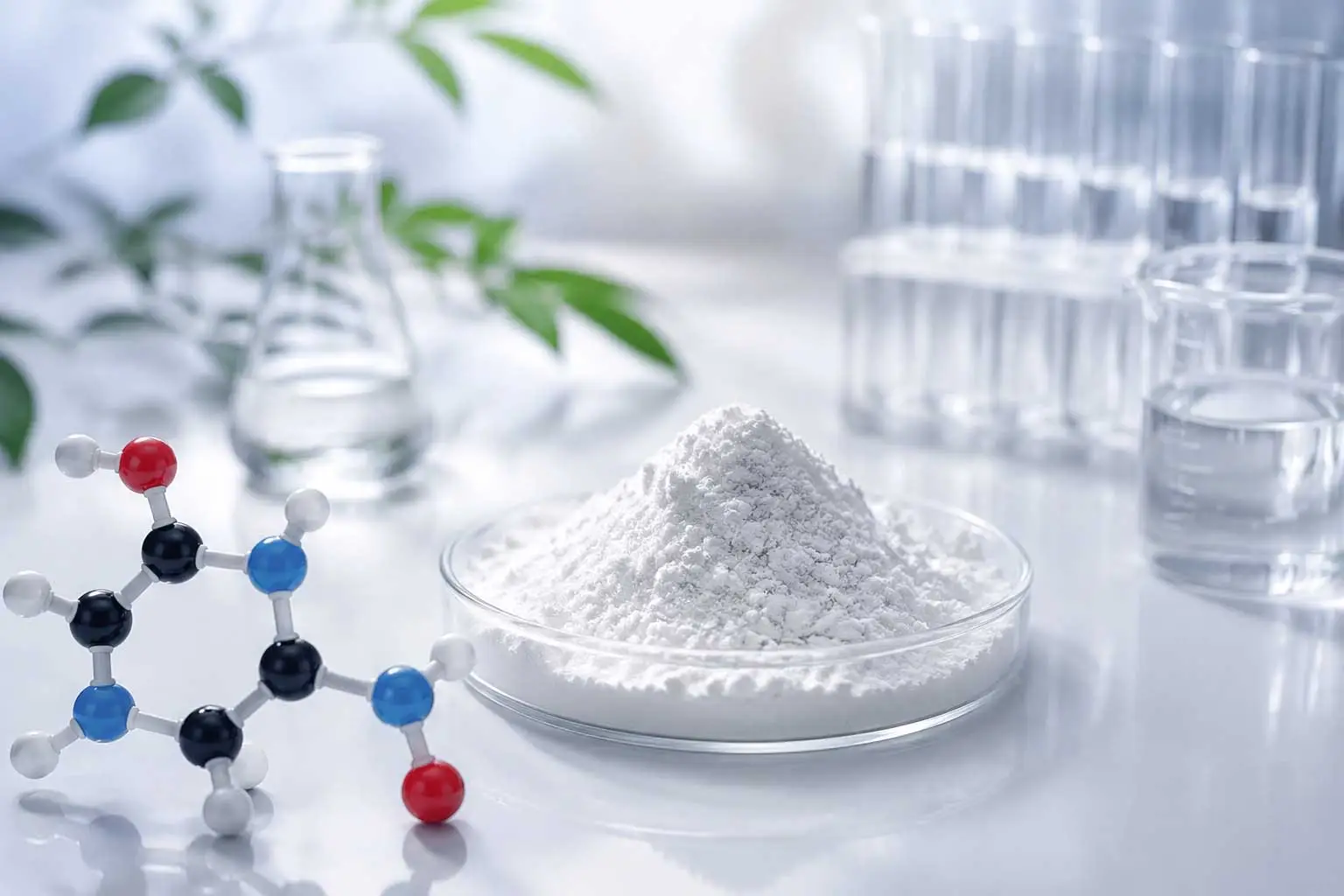
L-carnosine powder (CAS 305-84-0) is a naturally occurring dipeptide composed of beta-alanine and histidine. In cosmetic science, it is widely recognized as a multifunctional antioxidant ingredient used in advanced skincare formulations.
Its molecular structure allows it to integrate effectively into aqueous-based systems, making L-carnosine cosmetic raw material suppliers a key part of modern skincare supply chains. The ingredient is typically produced at high purity levels (≥99%) to ensure formulation stability and compatibility across different cosmetic bases.
From an industrial sourcing perspective, formulators evaluating cosmetic active ingredient suppliers in China often assess multiple parameters, including purity, solubility behavior, and batch consistency. These factors are essential when integrating antioxidant amino acid raw materials into emulsions, gels, and serum systems.
In addition, the increasing demand for functional cosmetic ingredient manufacturers reflects the shift toward science-driven skincare development, where ingredient performance and documentation transparency are as important as formulation aesthetics.
3. Anti-Aging Mechanism of L-Carnosine in Cosmetic Systems
In cosmetic formulation science, the anti-aging relevance of L-carnosine powder is primarily associated with its multifunctional role as an antioxidant and carbonyl-scavenging agent within the skin surface environment and formulation matrix.
One of the key mechanisms involves the inhibition of reactive carbonyl species (RCS) generated through oxidative stress and environmental exposure. These reactive intermediates are known to contribute to protein modification and structural degradation within cosmetic systems. In this context, L-carnosine cosmetic active ingredient suppliers position the material as a stabilizing functional peptide capable of reducing oxidative byproduct accumulation in formulation systems.
In addition, L-carnosine demonstrates a metal ion chelation capability, particularly with transition metals such as copper and iron, which are known catalysts for oxidation reactions in cosmetic emulsions. By reducing metal-catalyzed oxidation pathways, antioxidant cosmetic raw material suppliers in China often highlight its role in improving formulation stability and extending product shelf life under normal storage conditions.
From a formulation engineering perspective, L-carnosine also contributes to the reduction of protein glycation-related reactions within cosmetic systems. While glycation is primarily a biochemical aging process, in topical cosmetic applications it is often referenced in relation to maintaining the structural integrity of formulation proteins and peptides in complex emulsified systems.
Furthermore, L-carnosine powder for skincare formulations exhibits strong compatibility in aqueous-based systems, where it helps maintain oxidative balance in the presence of other sensitive actives such as vitamins, peptides, and botanical extracts. This makes it particularly valuable in multi-active anti-aging formulations where ingredient interaction stability is critical.
From a supply chain perspective, bulk cosmetic ingredient suppliers emphasize that the functional value of L-carnosine is not only dependent on its intrinsic chemical properties, but also on its purity level (≥99%), particle uniformity, and HPLC-verified consistency across batches. These parameters directly influence its performance in high-end anti-aging cosmetic formulations.
Overall, its mechanism is best understood not as a single-pathway action, but as a multi-target stabilization system within cosmetic matrices, making it a widely adopted ingredient in advanced skincare product development.
4. Formulation Applications: How L-Carnosine is Used in Cosmetic Systems
In modern cosmetic science, the use of L-carnosine powder in skincare formulations is primarily driven by its ability to integrate seamlessly into water-based systems while supporting formulation stability and functional performance across multiple product categories.
Rather than being limited to a single application type, L-carnosine is widely utilized as a multifunctional active ingredient in serums, emulsions, gels, and hybrid functional skincare systems, where it contributes to overall formulation robustness and ingredient synergy.
In water-based serum systems, L-carnosine is often incorporated as part of multi-active antioxidant complexes. Its compatibility with hydrophilic environments allows it to remain stable alongside other sensitive actives such as peptides, niacinamide, and botanical extracts. In these systems, cosmetic grade L-carnosine raw material suppliers position it as a stabilizing peptide that helps maintain the integrity of the formulation matrix under oxidative stress conditions.
In emulsion-based systems such as O/W creams and lotions, L-carnosine plays a supporting role in maintaining formulation equilibrium. Its presence contributes to the overall antioxidant network within the oil-water interface, helping formulators design more stable anti-aging systems. This is particularly relevant for bulk cosmetic ingredient suppliers in China who support OEM and private label skincare development.
In gel and hydrogel formulations, L-carnosine is valued for its excellent dispersion behavior and minimal interaction with gelling agents. This allows formulators to design lightweight, fast-absorbing skincare products without compromising actives’ stability or sensory performance.
From a formulation strategy perspective, L-carnosine cosmetic ingredient suppliers often emphasize its role in multi-functional “active stacks,” where it is combined with other antioxidant and barrier-supporting ingredients. Rather than acting as a single-function compound, it contributes to the overall oxidative balance of the formulation system.
In addition, in functional anti-aging skincare products, L-carnosine is increasingly used in combination with hydration systems and barrier-support ingredients to support modern “multi-benefit skincare concepts.” This reflects the industry shift toward integrated formulation design rather than single-claim actives.
From a sourcing and manufacturing perspective, formulators working with bulk L-carnosine powder suppliers require not only consistent purity (≥99%) but also predictable dispersion behavior, batch reproducibility, and full technical documentation support, including COA and stability data.
5. Stability, Compatibility and Formulation Challenges of L-Carnosine in Cosmetic Systems
From a formulation science perspective, the performance of L-carnosine powder in cosmetic systems is highly dependent on its stability profile within different pH environments and its interaction with co-actives commonly used in skincare development.
In aqueous-based cosmetic formulations, L-carnosine demonstrates optimal stability within a mildly acidic to neutral pH range, typically aligned with common skincare system conditions. This makes it suitable for integration into serums, emulsions, and hydrogel systems, where pH control is a critical factor in maintaining active ingredient integrity. For formulators, this stability window is an important consideration when designing anti-aging cosmetic formulations using amino acid-based actives.
Compatibility is another key factor in formulation design. L-carnosine cosmetic raw material suppliers often highlight its favorable interaction profile with other hydrophilic actives such as niacinamide, hyaluronic acid, and peptide complexes. However, in high-complexity systems containing multiple reactive actives, careful formulation balancing is required to maintain system stability and avoid potential interaction-driven degradation.
From an industrial sourcing perspective, bulk cosmetic ingredient suppliers in China typically provide technical guidance on formulation compatibility, ensuring that L-carnosine can be effectively integrated into OEM and private label skincare systems without compromising performance consistency.
In addition, storage stability under manufacturing and transport conditions is a critical consideration. Properly manufactured GMP-grade L-carnosine powder maintains structural integrity when stored under controlled temperature and low-humidity environments, which is essential for long-term supply chain reliability in global cosmetic production.
6. Manufacturing Standards and Supplier Qualification for Cosmetic Grade L-Carnosine
The selection of a reliable cosmetic ingredient supplier requires a comprehensive evaluation of manufacturing systems, regulatory compliance, and analytical validation capabilities. In global skincare ingredient procurement, these factors are essential for ensuring consistent quality and formulation safety.
A qualified L-carnosine powder manufacturer in China must operate under strict GMP-controlled environments, with validated production processes and multi-stage quality control systems. These systems ensure that each batch of cosmetic grade L-carnosine raw material meets consistent purity and performance standards required by international skincare brands.
At the industrial level, CHEN LANG BIO TECH operates under a multi-certification quality framework, including ISO9001:2015, EFfCI GMP, FSSC 22000, COSMOS, FDA cGMP, Halal, Kosher, ISO 45001:2018, CNAS, and intellectual property management system certification. These certifications provide a structured assurance system for global buyers sourcing bulk cosmetic raw materials from China.
Quality control is further supported by advanced analytical systems, including HPLC purity testing, batch traceability documentation, and COA issuance for every production lot. These systems are critical for formulators requiring reliable antioxidant cosmetic ingredient suppliers capable of supporting regulatory compliance across multiple markets.
In addition, scalable production infrastructure plays a key role in supplier qualification. Industrial manufacturing systems with high-capacity output ensure stable supply for global customers engaged in large-scale skincare formulation development and OEM production.
7. Global Market Trends and Future Outlook for L-Carnosine in Cosmetics
The global demand for functional cosmetic ingredients continues to shift toward scientifically validated, multifunctional actives. Within this trend, L-carnosine cosmetic ingredient suppliers are experiencing increasing demand from formulators seeking stable antioxidant systems for next-generation skincare products.
The anti-aging skincare segment, in particular, is driving significant growth in demand for amino acid-based cosmetic raw materials, as brands move toward more performance-driven and science-supported formulation strategies. This shift has positioned L-carnosine as a relevant ingredient in both mass-market and premium skincare categories.
From a supply chain perspective, bulk cosmetic ingredient suppliers in China continue to play a central role in global sourcing strategies due to their integrated manufacturing capabilities, cost efficiency, and scalable production systems. This has made China a key hub for functional cosmetic raw material supply chains.
Looking forward, the cosmetic industry is expected to place greater emphasis on ingredient transparency, GMP compliance, and multi-functional formulation design. As a result, demand for high-purity L-carnosine powder suppliers with strong technical documentation capabilities is expected to increase steadily across international markets.
Conclusion: Strategic Value of L-Carnosine in Cosmetic Formulations
The role of L-carnosine powder in cosmetic formulations extends beyond simple antioxidant functionality. It represents a multifunctional active ingredient that supports formulation stability, system compatibility, and modern anti-aging skincare design principles.
For global formulators and skincare manufacturers, selecting a reliable cosmetic ingredient supplier is a critical step in ensuring consistent product performance and regulatory compliance. Factors such as GMP certification, batch traceability, COA documentation, and scalable production capacity are essential in supplier evaluation.
Within this framework, bulk L-carnosine powder suppliers in China with integrated manufacturing systems and global logistics capability play an increasingly important role in supporting international skincare development.
For technical specifications, formulation guidance, or bulk supply requirements, direct communication with qualified suppliers ensures accurate product matching and stable long-term sourcing support.
📩 Contact: admin@chenlangbio.com

Send Inquiry
_1747705745203.webp "Natural Beta Glucan")
Related Industry Knowledge
- Oyster Peptide Manufacturer: Production Process, Quality Standards, and Bulk Supply
- How Much DHEA Should a Woman Take for Weight Loss?
- How to Choose the Best Coenzyme Q10 Powder Wholesale Supplier for Your Formulations?
- Top 7 Benefits of Elastin Peptide for Youthful Skin
- What are the Skin Care Benefits of Hydroxypropyl Tetrahydropyrantriol?
- Is Magnesium Ascorbyl Phosphate the Same as Vitamin C
- Macamides the Ultimate Solution for Improved Athletic Performance and Sexual Health
- Is Dimethylmethoxy Chromanyl Palmitate Safe
- What Benefits of the Acanthopanax Senticosus Root Extract Eleutheroside
- What Functions of Cnidium Monnieri fruit Extract Powder