
Oyster Peptide Manufacturer: Production Process, Quality Standards, and Bulk Supply
2025-12-26 14:08:16
Oyster peptide manufacturer is a term increasingly searched by buyers who are not looking for finished consumer products, but for reliable sources of functional ingredients used in dietary supplements and functional food formulations. In recent years, oyster peptide powder has gained attention due to its bioactive peptide profile, high absorption efficiency, and suitability for large-scale nutritional applications. As demand grows, the ability to distinguish between real manufacturers and simple resellers has become an important consideration for international buyers.
From a production standpoint, oyster peptide powder is not a generic extract. It is the result of controlled enzymatic hydrolysis, purification, and drying processes designed to obtain low-molecular-weight peptides with consistent quality and performance. The manufacturing process, raw material selection, and quality control standards directly affect peptide content, solubility, stability, and batch-to-batch consistency. These factors are especially relevant for brands and formulators planning long-term supply or bulk procurement.
As a manufacturer involved in the production of oyster peptide powder for overseas markets, we frequently receive questions related to processing methods, quality specifications, regulatory positioning, and supplier reliability. This article is intended to provide a clear, practical overview of how oyster peptide powder is manufactured, what quality indicators buyers should evaluate, and how to identify a manufacturer capable of supporting commercial-scale applications rather than short-term sourcing needs.
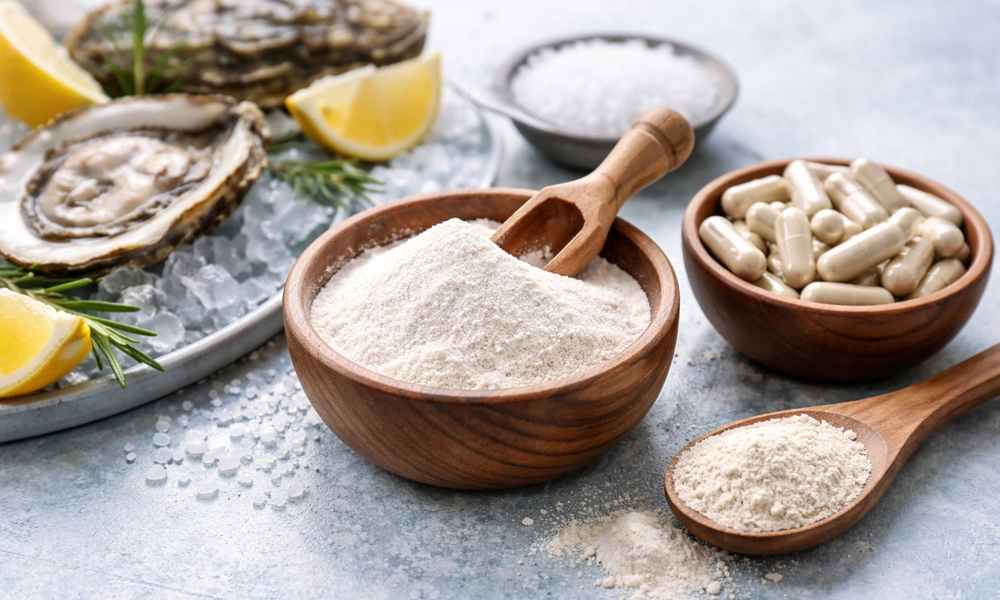
What Is Oyster Peptide Powder?
Oyster peptide powder is a functional ingredient derived from edible oyster species through controlled protein hydrolysis. Unlike whole oyster powder or simple oyster extracts, this ingredient is characterized by its high proportion of low-molecular-weight peptides, which are obtained by breaking down oyster proteins into shorter peptide chains. These peptides are valued in formulation work for their solubility, bioavailability, and consistency.
From a manufacturing perspective, the defining feature of oyster peptide powder is not the oyster itself, but the processing method used to convert complex proteins into stable, usable peptide fractions. Enzymatic hydrolysis is applied under controlled conditions to achieve a targeted molecular weight distribution, typically focused on peptides below 1000 Daltons. This distinction is critical, as molecular size directly influences absorption behavior and formulation performance.
It is important to differentiate oyster peptide powder from oyster extract, as the two materials serve different technical purposes. Oyster extracts are generally produced through solvent or water extraction and may contain a broad range of compounds, including proteins, minerals, and other constituents. Oyster peptide powder, by contrast, is designed to deliver a more refined peptide profile with predictable composition, making it more suitable for standardized dietary supplement and functional food applications.
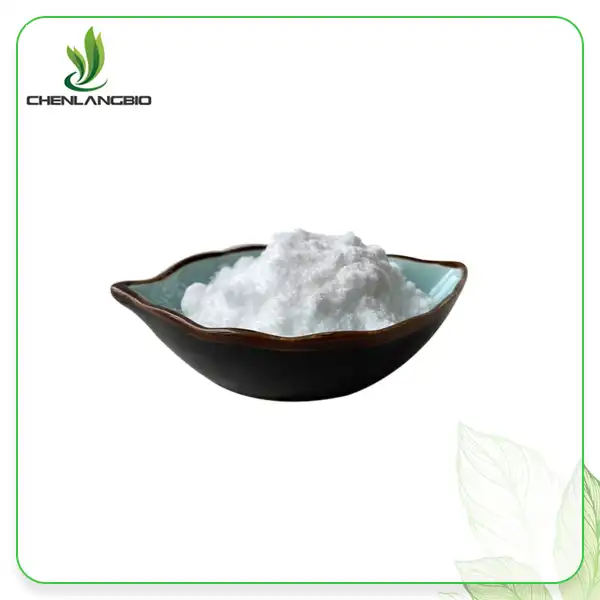
In commercial use, oyster peptide powder is supplied as a free-flowing, water-soluble powder with defined peptide content and supporting documentation. For buyers and formulators, understanding what oyster peptide powder represents at the ingredient level helps avoid sourcing confusion and ensures that the selected material aligns with the intended application, regulatory framework, and quality expectations.
How Oyster Peptide Is Manufactured
From a manufacturing standpoint, oyster peptide powder is produced through a sequence of controlled processes designed to convert raw oyster protein into stable, low-molecular-weight peptide fractions. The quality of the final product is determined not by a single step, but by how each stage is managed and integrated across production.
At CHEN LANG BIO TECH, production begins with the selection of edible-grade oyster raw materials that meet defined quality and traceability requirements. Incoming materials are evaluated for protein content, freshness indicators, and basic safety parameters before entering processing. This initial screening is essential, as raw material variability directly affects hydrolysis efficiency and peptide consistency.
The core step in oyster peptide production is enzymatic hydrolysis. Specific food-grade enzymes are applied under controlled temperature and pH conditions to break down oyster proteins into shorter peptide chains. Process parameters are adjusted to target a defined molecular weight range rather than maximum degradation. This approach allows us to balance peptide yield with functional performance, avoiding excessive breakdown that could negatively affect stability or sensory properties.
Following hydrolysis, the liquid peptide solution undergoes clarification and filtration to remove insoluble residues and high-molecular-weight fractions. This step plays a key role in achieving uniformity and improving solubility in the finished powder. Concentration is then carried out under controlled conditions to prepare the material for drying, while minimizing thermal stress on bioactive components.
The final stage involves spray drying, which converts the concentrated peptide solution into a free-flowing powder suitable for bulk handling and formulation. Drying parameters are carefully managed to preserve peptide integrity, control moisture content, and ensure consistent physical properties. Each production batch is evaluated against predefined specifications before release, supporting batch-to-batch reliability for long-term supply.
From our experience supplying oyster peptide powder to international customers, consistent manufacturing control is what distinguishes a true manufacturer from a simple processor or trader. A clearly defined production workflow, supported by quality documentation and repeatable results, is essential for customers who require stable performance across commercial-scale applications.
Key Quality Specifications Buyers Should Check
When sourcing oyster peptide powder for commercial use, quality specifications provide the most reliable basis for comparison between suppliers. From our experience as a manufacturer, buyers who focus only on pricing often overlook technical parameters that later determine formulation performance and supply stability.
One of the most important indicators is peptide content. Oyster peptide powder specifications typically include a defined peptide percentage, which reflects the extent of protein hydrolysis and the concentration of functional peptide fractions. A higher peptide content does not simply indicate “more protein,” but suggests a more controlled enzymatic process and better consistency in the final material.
Molecular weight distribution is another critical parameter. In most dietary supplement and functional food applications, buyers prefer oyster peptide molecular weight ranges concentrated below 1000 Daltons. Peptides within this range are generally associated with better solubility and absorption behavior. Suppliers should be able to explain not only the target range, but also how it is controlled during production.
Solubility is closely linked to both molecular weight and downstream processing. Well-manufactured oyster peptide powder should dissolve readily in water without forming visible sediment. Poor solubility often indicates incomplete filtration or inconsistent hydrolysis, which can create challenges during formulation and finished product stability testing.
In addition to functional properties, buyers should review standard documentation associated with the oyster peptide powder raw material. This typically includes a certificate of analysis outlining peptide content, moisture level, and basic safety parameters, as well as supporting documents such as a safety data sheet. Together, these materials help establish traceability and support internal quality and regulatory reviews.
From a manufacturing perspective, consistent specifications across multiple batches are often more important than achieving extreme values in a single test result. Long-term supply reliability depends on repeatable processes and defined acceptance criteria, rather than occasional peak performance.
Oyster Peptide vs Oyster Extract: What’s the Difference?
In ingredient sourcing, oyster peptide powder and oyster extract are often mentioned together, yet they represent fundamentally different materials. For buyers and formulators, understanding this distinction is essential, as the choice between the two directly affects formulation behavior, consistency, and application scope.
Oyster extract is generally produced through aqueous or solvent-based extraction methods. This process concentrates a broad range of oyster-derived components, including proteins, minerals, and other soluble substances. While extracts can be suitable for general nutritional formulations, their composition is often less defined, and batch-to-batch variability may be more difficult to control.
By contrast, oyster peptide powder is the result of targeted enzymatic hydrolysis designed to break oyster proteins into shorter peptide chains. This controlled process yields a material with a more predictable peptide profile and defined functional properties. For manufacturers, this distinction explains why oyster peptide vs oyster extract is not simply a matter of naming, but of production intent and technical outcome.
From a formulation perspective, oyster peptide powder vs extract performance differs most clearly in solubility and consistency. Peptide-based materials with controlled molecular weight distribution tend to dissolve more uniformly and integrate more easily into standardized formulations. Extracts, while nutritionally rich, may introduce greater variability in appearance or behavior depending on processing conditions.
For buyers evaluating suppliers, clarity around this difference helps avoid misalignment between product expectations and actual material performance. When an application requires defined peptide content and repeatable results, oyster peptide powder is typically selected for its manufacturing control rather than for its origin alone.
Applications in Dietary Supplements and Functional Foods
Oyster peptide powder is commonly incorporated into dietary supplements and functional food formulations where controlled peptide content and consistent performance are required. Its use is driven less by novelty and more by its suitability for standardized production, particularly in applications that demand predictable solubility and formulation stability.
In the dietary supplement sector, oyster peptide powder is often positioned as a nutritional ingredient rather than a single-purpose active. It is typically included in multi-ingredient formulations designed to support daily nutrition or specific lifestyle needs. For formulators, the advantage lies in its compatibility with other commonly used components such as minerals, amino acids, and botanical extracts. This flexibility explains the growing presence of oyster peptide dietary supplement products in international markets.
Functional foods represent another important application area. Products such as nutrition powders, beverages, and ready-to-mix formulations benefit from ingredients that dissolve easily and maintain uniformity during processing and storage. In this context, oyster peptide powder is valued for its relatively clean integration into food matrices without introducing significant texture or stability challenges. As a result, oyster peptide functional food applications continue to expand, particularly in regions where functional nutrition is well established.
From a manufacturing perspective, application suitability depends on how well the ingredient performs under real processing conditions. Factors such as heat exposure, mixing time, and interaction with other ingredients must be considered during formulation development. Suppliers that understand these practical requirements are better positioned to support customers beyond simple material delivery.
Overall, the application of oyster peptide powder reflects a balance between functional characteristics and manufacturing reliability. Its role in supplements and functional foods is defined not by isolated claims, but by its ability to perform consistently within regulated, large-scale production systems.
Safety and Regulatory Considerations
When evaluating oyster peptide powder for commercial use, safety and regulatory alignment are closely connected to how the ingredient is manufactured, documented, and positioned in the target market. From a production standpoint, oyster peptide powder is treated as a food-grade functional ingredient rather than a pharmaceutical substance, and its use is governed by applicable food and supplement regulations.
In most markets, oyster peptide powder is incorporated into products that fall under dietary supplement or functional food categories. Within these frameworks, safety is assessed through raw material quality, processing controls, and compliance with relevant standards. Questions such as is oyster peptide safe are therefore addressed through documented manufacturing practices and historical use, rather than through isolated claims or assumptions.
Proper documentation plays an essential role in regulatory acceptance. Manufacturers are expected to provide clear specifications, batch traceability, and safety-related information that supports downstream compliance reviews. For buyers, reviewing materials related to oyster peptide safety—including production descriptions and standard documentation—helps ensure that the ingredient can be used within established regulatory boundaries.
It is also important to recognize that regulatory requirements may vary by region. While the underlying ingredient remains the same, expectations related to labeling, application scope, and supporting documentation can differ between markets. This makes early communication between ingredient suppliers and customers especially valuable during product planning and formulation development.
From our perspective as a manufacturer, a responsible approach to safety focuses on consistency and transparency. When oyster peptide powder is produced under controlled conditions and supplied with appropriate documentation, it can be integrated into regulated products with a high degree of confidence. Regulatory considerations, in this sense, are not obstacles but part of a structured framework that supports reliable long-term use.
How to Choose a Reliable Oyster Peptide Manufacturer
For buyers sourcing oyster peptide powder at a commercial scale, selecting the right manufacturer is a decision that directly affects product consistency, regulatory readiness, and long-term supply stability. Beyond product samples, buyers should evaluate whether a supplier operates as a true manufacturer with integrated production capabilities or as an intermediary with limited process control.
A reliable oyster peptide manufacturer should be able to clearly explain its production process, quality control framework, and batch management practices. Transparency around enzymatic hydrolysis, molecular weight control, and documentation reflects not only technical capability, but also the ability to support customers through scale-up and repeat supply. Manufacturers who cannot provide this level of clarity often struggle to maintain consistency over time.
Production infrastructure is another important consideration. Facilities designed for functional ingredient manufacturing typically operate under defined quality systems, with standardized procedures for raw material intake, processing, and final inspection. This level of organization is especially important for buyers seeking oyster peptide bulk supply, where variability between batches can create downstream formulation challenges.
Equally important is communication. A dependable oyster peptide supplier should be able to respond to technical questions, provide supporting documentation, and align production parameters with customer requirements. In practice, long-term cooperation is built not on single transactions, but on a shared understanding of quality expectations and application needs.
Our Role as an Oyster Peptide Manufacturer
As a supplier focused on functional ingredient production, CHEN LANG BIO TECH operates with an emphasis on manufacturing control, documentation completeness, and international supply experience. Our role as an oyster peptide manufacturer China is defined by in-house production rather than outsourced processing, allowing us to maintain consistency across each stage of manufacturing.
Our oyster peptide powder is produced using controlled enzymatic hydrolysis and standardized downstream processing, with defined specifications for peptide content and molecular weight distribution. This approach supports stable performance across different applications and reduces variability for customers developing dietary supplements and functional foods. For overseas clients, this level of control is often a key factor when evaluating an oyster peptide factory for long-term cooperation.
In addition to production capability, we place strong emphasis on quality systems and traceability. Each batch is released based on internal acceptance criteria and supported by standard documentation, enabling customers to integrate the material into regulated products with confidence. This focus on consistency has led to ongoing cooperation with international customers who value predictable supply rather than short-term sourcing.
From our perspective, being a reliable supplier means more than delivering a finished powder. It involves supporting customers with clear technical information, stable specifications, and responsive communication throughout the sourcing process. These principles guide how we work with partners seeking a dependable manufacturer for oyster peptide powder.
Frequently Asked Questions About Oyster Peptide Powder
Is oyster peptide powder water soluble?
Yes. Well-manufactured oyster peptide powder is designed to dissolve readily in water. Solubility is closely related to molecular weight distribution and downstream filtration steps. When peptide fractions are properly controlled, the powder typically disperses evenly without visible sediment, which is important for both supplement and functional food applications.
What is the typical molecular weight range of oyster peptide powder?
Most commercial products focus on peptides below 1000 Daltons, as this range is generally associated with improved absorption and formulation compatibility. Buyers evaluating oyster peptide molecular weight should confirm not only the target range, but also how consistently it is maintained across batches.
Can oyster peptide powder be used in dietary supplements?
Oyster peptide powder is commonly used as a functional ingredient in dietary supplements, subject to applicable regulatory frameworks in the target market. Its use is typically positioned within nutritional formulations rather than as a standalone active. Reviewing specifications and documentation helps ensure alignment with oyster peptide dietary supplement requirements.
What documents should suppliers provide?
Standard documentation usually includes a certificate of analysis outlining peptide content, moisture level, and basic quality parameters, as well as a safety data sheet. These materials support internal quality reviews and help buyers assess oyster peptide powder specifications before commercial use.
How should oyster peptide powder be stored?
For best stability, oyster peptide powder should be stored in sealed containers under controlled temperature and humidity conditions. Proper storage helps preserve flow properties and prevents moisture-related issues prior to formulation.
Conclusion
Oyster peptide powder has become an increasingly important ingredient in dietary supplements and functional foods due to its controlled peptide profile, solubility, and suitability for large-scale manufacturing. Its performance in finished products depends not only on its origin, but on how it is produced, specified, and supported throughout the supply chain.
From a sourcing perspective, identifying a reliable manufacturer requires attention to production capability, quality systems, and transparency. Manufacturers who can clearly explain their processing methods, maintain consistent specifications, and support customers with complete documentation are better positioned to meet the demands of long-term commercial supply.
As an oyster peptide manufacturer, CHEN LANG BIO TECH focuses on manufacturing discipline, batch consistency, and international supply experience. Our approach is centered on providing functional ingredients that perform reliably within regulated applications, supported by clear technical information and responsive communication.
If you are evaluating oyster peptide powder for dietary supplement or functional food development and would like to review specifications, documentation, or bulk supply options, our team is available to support your assessment. Please contact us now:
For technical inquiries, sampling requests, or sourcing discussions, please contact CHEN LANG BIO TECH through our official website or submit an inquiry to our sales and technical team. We are pleased to provide the information needed to support your specific application and market requirements.
Email: admin@chenlangbio.com
Whatsapp: +86-17782478823

Send Inquiry
Related Industry Knowledge
- Minoxidil Powder: Uses, Specifications & Bulk Supply from Manufacturer
- Where to Buy P5P?
- Where to Buy Ajuga turkestanica Extract – CHEN LANG BIO TECH Verified China Manufacturer
- Grape Seed Extract and Collagen: The Perfect Skin Duo
- How Can Evodiamine Powder Enhance Your Product Line's Effectiveness?
- What are the Benefits of Potassium Methoxysalicylate for Skin?
- How Long Does It Take for Centella Asiatica to Work
- Instant Kava Powder for Better Sleep: Does It Work
- Does All Green Tea Have EGCG?
- What is Hops Extract Xanthohumol Good for