
L-Carnosine Powder Manufacturing Process: Fermentation vs Synthesis for Bulk Supplier Applications
2026-06-30 15:58:13
1. Introduction: Industrial Demand for High Purity L-Carnosine Powder in Global Supply Chain
The growing demand for functional antioxidant ingredients has significantly reshaped the global nutraceutical supply chain. Within this evolving landscape, L-Carnosine powder has emerged as a key amino acid–based raw material widely used in dietary supplements, functional foods, and cosmetic formulations.
From a procurement perspective, the focus has shifted beyond basic ingredient availability toward more advanced sourcing requirements such as consistency, documentation transparency, and manufacturing reliability. As a result, demand for a qualified L-Carnosine powder supplier in China has increased steadily among international supplement manufacturers seeking stable long-term supply.
In parallel, formulators are placing greater emphasis on GMP compliance, batch-to-batch consistency, and analytical verification systems such as HPLC testing. These requirements are particularly important when sourcing bulk L-Carnosine powder manufacturer solutions, where scalability and quality assurance directly impact downstream formulation performance.
Within this context, fermentation and chemical synthesis have become the two dominant production routes under evaluation. Understanding the differences between these processes is essential for manufacturers who rely on antioxidant amino acid raw materials with predictable performance, regulatory compliance, and cost efficiency in large-scale production systems.
2. L-Carnosine Powder Overview: Structure, Properties and Industrial Relevance
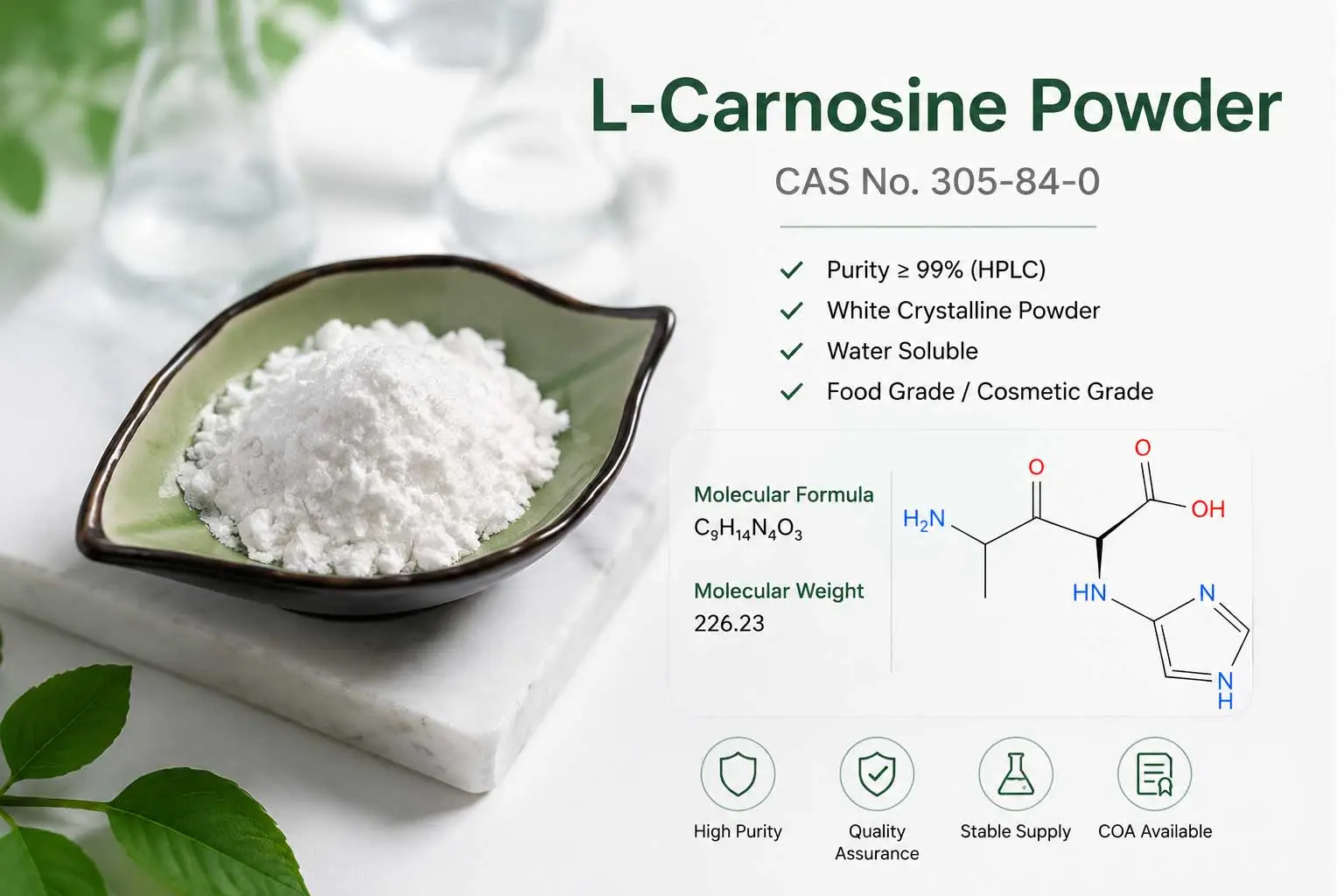
L-Carnosine powder (CAS 305-84-0) is a naturally occurring dipeptide composed of beta-alanine and histidine. Its unique molecular structure enables it to function as both an antioxidant and anti-glycation agent, making it a widely used ingredient in modern nutraceutical and cosmetic formulations.
From a formulation standpoint, L-Carnosine powder 99% purity is typically required by supplement developers to ensure consistency in finished products. High-quality material is expected to demonstrate excellent solubility in water, stable behavior under neutral pH conditions, and compatibility with a wide range of delivery systems including capsules, tablets, and powdered blends.
In industrial sourcing practice, companies often evaluate bulk L-Carnosine powder suppliers based on multiple parameters, including production capacity, COA documentation, HPLC verification, and regulatory compliance. These factors are critical for ensuring stable supply in global markets where ingredient traceability and quality assurance are increasingly important.
As demand continues to expand, cosmetic grade L-Carnosine raw material suppliers and food grade amino acid manufacturers are playing an increasingly important role in supporting both functional nutrition and skincare industries. This dual application profile has strengthened its position as a strategic antioxidant ingredient in global supply chains.
3. Fermentation Method in L-Carnosine Manufacturing: Process, Advantages and Limitations
The fermentation process used in L-Carnosine powder manufacturing represents a biologically driven production route that relies on microbial systems or enzymatic pathways to generate precursor amino acids, which are then converted into the final dipeptide structure.
From an industrial perspective, this method is often associated with bio-based amino acid production suppliers who focus on sustainability, scalability, and environmentally friendly manufacturing systems. The fermentation route can offer advantages in terms of raw material sourcing efficiency and potential cost optimization at scale.
However, in real-world production environments, fermentation-based L-Carnosine powder suppliers must also manage challenges related to yield variability, process control complexity, and downstream purification requirements. These factors can influence batch consistency, which is a critical consideration for supplement manufacturers requiring stable bulk antioxidant raw material supply.
Despite these limitations, fermentation remains an important production strategy for companies prioritizing bio-based manufacturing systems. It is particularly relevant for large-scale operations where GMP certified amino acid manufacturers aim to balance sustainability goals with commercial production efficiency.
4. Chemical Synthesis of L-Carnosine: Industrial Process and Quality Control
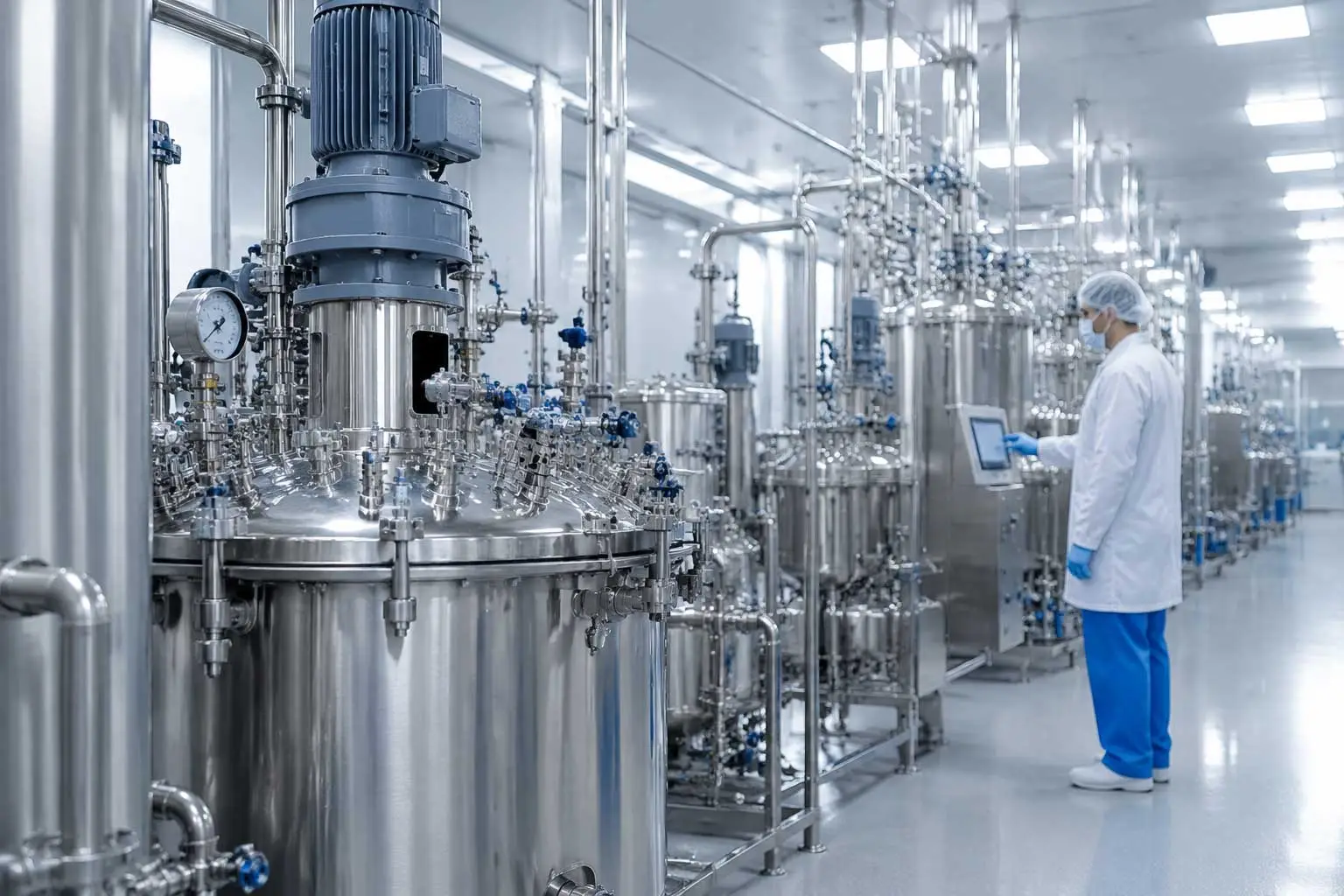
Chemical synthesis is another widely used method in L-Carnosine powder manufacturing, particularly in industrial settings where consistency, scalability, and purity control are primary requirements. This process typically involves controlled peptide synthesis reactions followed by purification and crystallization to achieve high-purity final material.
From a supplier perspective, synthetic L-Carnosine powder manufacturers are often able to achieve more consistent batch-to-batch quality compared to fermentation-based systems. This makes the synthesis route particularly attractive for formulators who require strict specification control and reproducible performance in finished products.
In addition, chemical synthesis allows for more precise control over L-Carnosine powder 99% purity standards, which is essential for applications in dietary supplements and cosmetic formulations. High-performance suppliers typically validate product quality using HPLC analysis and provide complete documentation packages including COA and MSDS reports.
However, the synthesis route also requires strict process control and compliance with GMP manufacturing standards to ensure safety, purity, and regulatory acceptance. As a result, buyers evaluating bulk L-Carnosine powder supplier options often consider both production methods in relation to cost efficiency, stability requirements, and long-term supply chain strategy.
5. Fermentation vs Synthesis: Key Differences for Supplement Formulators
When evaluating L-Carnosine powder manufacturing process, formulators increasingly compare fermentation and chemical synthesis not only from a technical perspective, but also from a commercial sourcing standpoint.
The comparison between fermentation and synthesis methods is particularly important for companies sourcing bulk L-Carnosine powder for supplement formulation, where consistency, scalability, and regulatory compliance directly affect final product performance.
Fermentation-based production is generally associated with bio-based systems that emphasize sustainability and renewable feedstock utilization. In contrast, synthetic routes are often preferred by GMP certified L-Carnosine powder manufacturers due to their ability to deliver tighter control over molecular purity and batch reproducibility.
From a formulation engineering perspective, both methods can produce high-quality antioxidant amino acid raw materials, but their suitability depends on the intended application.
Fermentation may be favored in cost-sensitive, large-scale applications, while synthesis is often selected for high-precision formulations requiring strict specification control.
As a result, procurement teams evaluating bulk antioxidant ingredient suppliers must carefully assess not only production methods but also supplier capability, documentation standards, and long-term supply reliability.
6. Quality Control Systems in L-Carnosine Powder Production
Quality assurance plays a critical role in L-Carnosine powder manufacturing, particularly in global supply chains where regulatory compliance and product consistency are essential requirements.
Leading L-Carnosine powder suppliers in China typically implement multi-stage quality control systems that include raw material inspection, in-process monitoring, and final product verification. These systems ensure that each batch meets strict specifications before release.
A key element of quality validation is HPLC testing, which is widely used to confirm L-Carnosine powder 99% purity standards. In addition, heavy metal analysis, microbial limit testing, and moisture content control are standard procedures for ensuring product safety and stability.
From a documentation perspective, professional bulk L-Carnosine powder manufacturers provide full regulatory support including COA, MSDS, and technical data sheets (TDS). This level of transparency is increasingly required by international buyers sourcing antioxidant raw materials for supplement production.
In modern procurement systems, quality control is not only a compliance requirement but also a key decision factor in supplier selection, particularly when evaluating long-term partnerships with amino acid ingredient manufacturers.
7. Application of L-Carnosine Powder in Supplement and Cosmetic Industry
The versatility of L-Carnosine powder has contributed significantly to its widespread use across dietary supplement, functional food, and cosmetic formulation industries.
In supplement applications, it is commonly incorporated into antioxidant blends, anti-aging formulations, and cellular health products. Its dual function as an antioxidant and anti-glycation agent makes it particularly valuable in products targeting oxidative stress support.
In cosmetic systems, cosmetic grade L-Carnosine raw material is frequently used in anti-aging skincare formulations, where it supports skin protection mechanisms and improves formulation stability in combination with other active ingredients.
From an industrial sourcing perspective, manufacturers developing such products often rely on bulk L-Carnosine powder suppliers capable of providing consistent quality, regulatory documentation, and scalable production capacity.
As demand continues to grow, the role of functional amino acid ingredient suppliers has expanded beyond raw material provision to include technical support for formulation development and stability optimization.
8. Cost, MOQ and Global Supply Chain Considerations
In the global sourcing of L-Carnosine powder, cost structure, minimum order requirements, and supply chain stability are among the most influential factors in procurement decision-making.
The pricing of bulk L-Carnosine powder is generally influenced by production method, purity level, order volume, and long-term supply arrangement. Fermentation and synthesis routes may also result in different cost efficiencies depending on process scale and operational optimization.
In practical sourcing scenarios, most L-Carnosine powder suppliers in China offer flexible MOQ structures to accommodate both R&D-level evaluation and large-scale industrial procurement. Within this framework, CHEN LANG BIO TECH typically maintains a minimum order quantity starting from 1 kilogram, which allows formulators and distributors to conduct initial testing without excessive inventory pressure.
For larger volume requirements, pricing is usually adjusted based on order scale, and volume-based cost optimization is available for long-term or repeated procurement agreements. This approach is particularly relevant for companies sourcing antioxidant amino acid raw materials for continuous production cycles in supplement or functional food manufacturing.
Beyond pricing and MOQ considerations, supply chain reliability has become a critical factor in supplier evaluation. Manufacturers are increasingly expected to ensure stable production capacity, consistent batch quality, and predictable delivery timelines. As a result, long-term cooperation with qualified bulk ingredient suppliers is often prioritized over short-term purchasing strategies.
In this context, supplier capability, rather than unit price alone, has become the determining factor in securing stable access to high-purity L-Carnosine powder (≥99%) for global formulation applications.
9. How to Choose a Reliable L-Carnosine Powder Supplier
Selecting a reliable L-Carnosine powder supplier requires careful evaluation of both technical capability and commercial reliability.
Key evaluation criteria include GMP compliance, production capacity, analytical verification systems, and documentation transparency. Suppliers capable of providing L-Carnosine powder COA and HPLC reports are generally preferred in regulated markets.
In addition, manufacturing consistency is a critical factor. Leading bulk L-Carnosine powder manufacturers in China are expected to maintain strict batch control systems to ensure uniform quality across production cycles.
From a commercial perspective, factors such as MOQ flexibility, pricing transparency, and long-term supply capability also play a significant role in supplier selection. Companies sourcing antioxidant raw materials for supplement manufacturing often prioritize partners capable of supporting both technical development and large-scale production.
Ultimately, the ideal supplier is one that combines manufacturing reliability with strong documentation support and stable global supply capability.
10. Conclusion: Future of L-Carnosine Manufacturing in Global Antioxidant Market
The global demand for antioxidant ingredients continues to evolve rapidly, and L-Carnosine powder manufacturing process is becoming increasingly important in shaping next-generation formulation strategies across nutraceutical and cosmetic industries.
As market expectations shift toward higher purity standards, improved stability, and more reliable supply chains, both fermentation and synthesis routes will continue to play complementary roles in the production of bulk L-Carnosine powder. Each method offers distinct advantages, and their selection is often determined by application requirements, cost structure, and regulatory positioning.
Looking ahead, manufacturers capable of delivering consistent quality, strong analytical documentation, and scalable production capacity will be better positioned to serve the growing demand for antioxidant amino acid raw materials in global markets.
Within this framework, supply continuity and technical communication are becoming increasingly important. For formulation teams and procurement specialists working on L-Carnosine powder (CAS 305-84-0), direct access to technical support and specification discussion is often essential during product development and qualification stages.
For technical inquiries, COA documentation requests, or bulk supply discussions, communication is typically handled through direct manufacturer channels:
📩 Email: admin@chenlangbio.com
(Technical support, specification review, and bulk ingredient supply coordination)

Send Inquiry
Related Industry Knowledge
- Is Monobenzone Powder Safe? Exploring Its Side Effects and Safety Profile
- What Is Hexamidine Diisethionate and How Is It Used in Cosmetics?
- Why Lutein Ester Is the Preferred Ingredient in Eye Care Formulas?
- What Are the Key Benefits of Pharmaceutical-Grade Progesterone Micronized Powder?
- What is Potassium Methoxysalicylate Used for?
- Is Pyrrolidinyl Diaminopyrimidine Oxide Effective Against Hair Loss?
- Are There Any Side Effects of Using Dimethylmethoxy Chromanol
- How Should Dimethylmethoxy Chromanyl Palmitate Be Applied
- What is Ectoin Made of
- How Quickly Does Praziquantel Work