
What Is Berberine HCl Powder? Properties, Sources and Quality
November 2, 2026
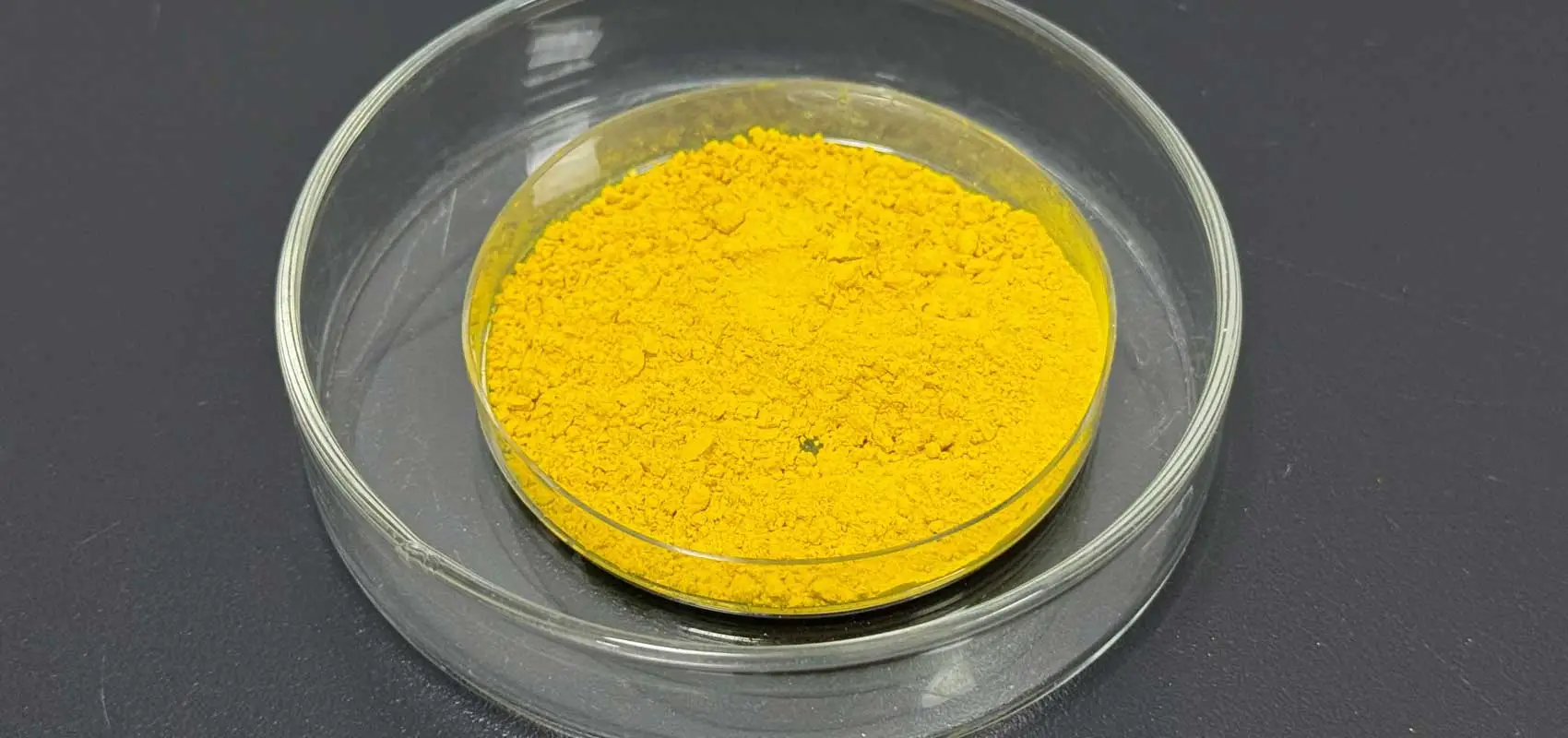
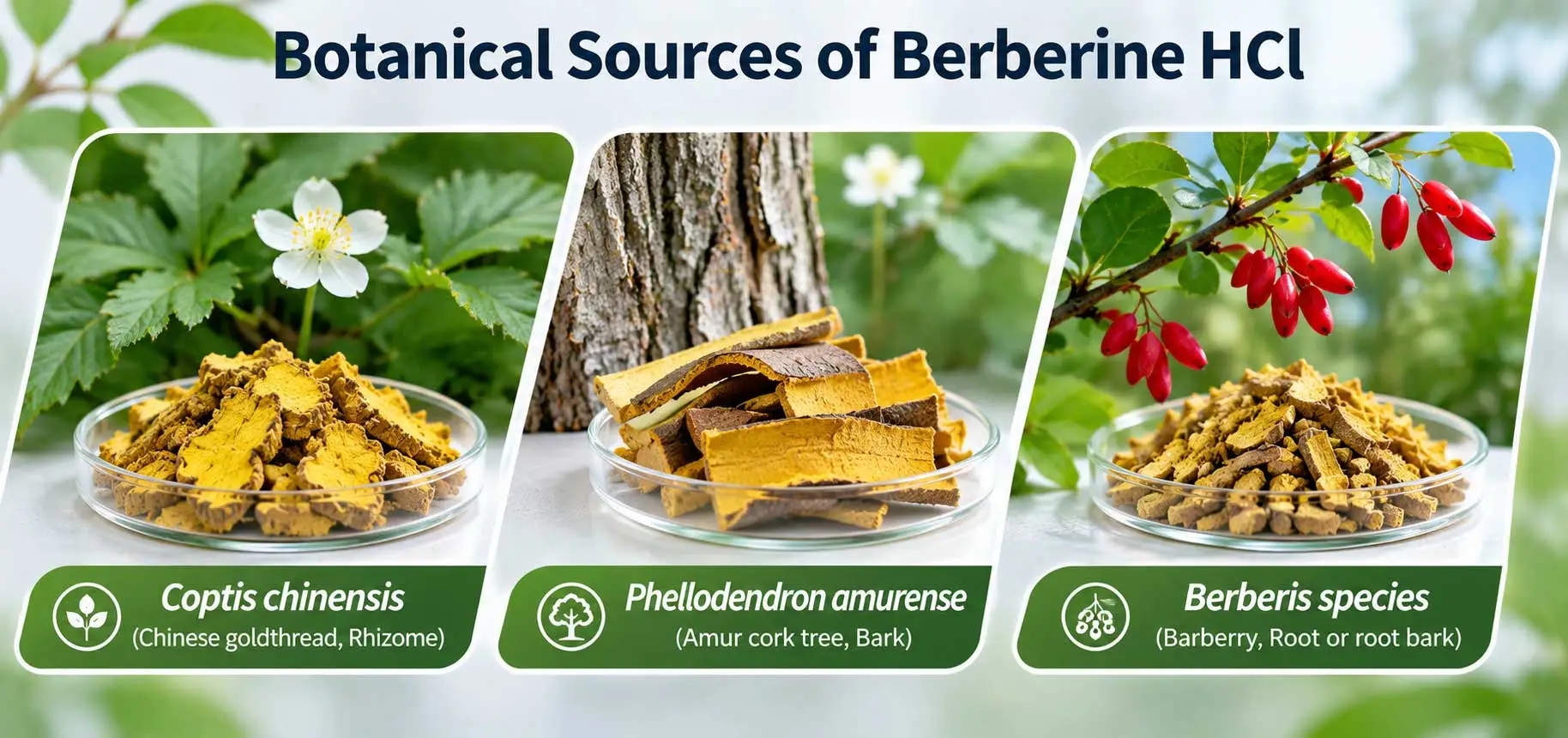
Berberine HCl powder is a purified form of berberine chloride, a salt of the naturally occurring protoberberine alkaloid found in plants such as Coptis chinensis, Phellodendron amurense, and several Berberis species. It is commonly supplied as a yellow crystalline ingredient for dietary supplement manufacturing, where chemical identity, assay purity, botanical traceability, and batch consistency are important purchasing requirements.
For supplement manufacturers and ingredient distributors, understanding what is berberine hcl powder involves more than identifying its botanical origin. Commercial suitability depends on the chemical form, extraction and purification controls, analytical methods, and physical characteristics of the finished material.
This guide examines the properties, sources, manufacturing considerations, and quality requirements of berberine hydrochloride powder, with particular attention to the information buyers should verify before approving a material for commercial production.
Berberine HCl Chemical Identity, Molecular Formula and CAS Number
Berberine hydrochloride is commonly referred to as berberine chloride. It contains the positively charged berberine molecular structure and a chloride counterion. This distinction matters because the molecular weight and analytical reporting basis of the hydrochloride salt differ from those of the berberine cation alone.
The berberine hcl molecular formula for the anhydrous salt is C₂₀H₁₈ClNO₄, with a molecular weight of approximately 371.81 g/mol.
|
Parameter |
Technical information |
|
Chemical name |
Berberine chloride / Berberine hydrochloride |
|
CAS number |
633-65-8 |
|
Molecular formula |
C₂₀H₁₈ClNO₄ (anhydrous) |
|
Molecular weight |
371.81 g/mol (anhydrous) |
|
Chemical class |
Protoberberine alkaloid |
|
Molecular form |
Quaternary ammonium cation with chloride counterion |
|
Typical appearance |
Yellow to yellow-orange crystalline powder |
|
Commercial application |
Dietary supplement ingredient manufacturing |
Berberine Hydrochloride Molecular Structure and Salt Form
The berberine hydrochloride chemical structure consists of the berberine cation, C₂₀H₁₈NO₄⁺, paired with chloride. The molecular mass of the berberine cation is approximately 336.36 g/mol, while the anhydrous hydrochloride salt has a molecular mass of approximately 371.81 g/mol.
This difference becomes relevant when comparing specifications expressed as berberine content versus berberine hydrochloride content.
For example, pure anhydrous berberine hydrochloride theoretically contains approximately 90.47% berberine by mass when calculated using the molecular weight of the berberine cation. This is a stoichiometric relationship, not an indication that the salt is only 90.47% pure.
When reviewing berberine hcl CAS 633-65-8 documentation, buyers should also confirm whether the material is supplied in an anhydrous or hydrated form. Water content and the assay calculation basis can affect the interpretation of reported results.
Berberine HCl Botanical Sources: Coptis, Phellodendron and Berberis
The berberine hcl botanical sources used in commercial manufacturing can influence the composition of the starting extract, the purification requirements, and the traceability information available to buyers.
Berberine occurs naturally in several plant families, although its concentration and associated alkaloid profile vary by species, plant part, growing conditions, and extraction method.
Coptis chinensis and Phellodendron amurense as Berberine Sources
Coptis chinensis, commonly known as Chinese goldthread, is an established botanical source of berberine. Its rhizomes contain berberine alongside other protoberberine alkaloids, including compounds such as coptisine and palmatine.
The presence of these related alkaloids is important during purification. Although they share structural features, they are distinct chemical compounds and should not automatically be included in the quantitative assay of berberine hydrochloride.
Coptis chinensis berberine production therefore requires appropriate botanical identification and purification controls.
Phellodendron amurense, commonly associated with Amur cork tree bark, is another recognized source. Its alkaloid composition can include berberine and other constituents whose relative concentrations depend on botanical material and processing conditions.
For phellodendron berberine sourcing, buyers should verify the declared species, plant part, and raw-material traceability rather than relying exclusively on the common plant name.
Berberis Species and Botanical Raw Material Traceability
Several Berberis species also contain berberine. However, the botanical identity and chemical composition of these materials are not interchangeable.
|
Botanical source |
Commonly used plant material |
Key procurement consideration |
|
Coptis chinensis |
Rhizome |
Related alkaloid profile and species authentication |
|
Phellodendron amurense |
Bark |
Botanical identity, plant part, and traceability |
|
Berberis species |
Root, root bark, or other species-dependent material |
Species verification and variability in alkaloid composition |
A natural berberine hcl powder claim should be supported by documented botanical sourcing and manufacturing records. The term “natural” alone does not establish purity, absence of processing residues, or regulatory compliance.
For buyers assessing a berberine raw material source, traceability should extend from the botanical material through extraction, purification, and finished-batch identification.
Berberine HCl Extraction Process and Manufacturing Quality Control
A typical berberine hcl extraction process involves recovering berberine-containing alkaloids from authenticated botanical material, separating unwanted constituents, and isolating the desired salt through controlled purification.
The actual manufacturing sequence varies with the plant source, extraction technology, solvent system, and finished-product specification.
From Botanical Extraction to Berberine Hydrochloride Purification
Manufacturing generally begins with botanical raw-material selection, cleaning, size reduction, and extraction. The resulting liquid extract contains berberine together with other soluble plant constituents.
Solid–liquid separation removes insoluble material, while subsequent purification steps are designed to reduce related alkaloids, pigments, and other impurities.
The berberine hydrochloride purification process may involve controlled salt isolation and crystallization. However, a supplier should not describe a specific extraction solvent, reaction condition, or purification technology without supporting manufacturing records.
For commercial buyers, the relevant question is whether the selected process consistently produces material meeting the agreed chemical and contaminant specifications.
Crystallization, Drying and Batch-to-Batch Consistency
Crystallization and drying influence the final material's moisture content, crystal characteristics, and processing behavior. Milling and classification may subsequently be used to achieve the required particle-size distribution.
A robust berberine hcl manufacturing process should include defined controls for botanical identity, in-process quality, residual solvents where applicable, and finished-product testing.
Batch consistency is particularly important for repeat orders. Two lots can meet the same assay specification while exhibiting different particle-size distributions, bulk densities, or moisture levels.
When evaluating a berberine hcl manufacturer, procurement teams should therefore consider both chemical specifications and the supplier's ability to reproduce the physical characteristics needed for manufacturing.
Berberine HCl Chemical Properties: Solubility, Appearance and Stability
The berberine hcl chemical properties relevant to supplement manufacturing include its crystalline appearance, limited aqueous solubility, moisture-related behavior, and stability under defined storage or formulation conditions.
Although berberine hydrochloride is commonly supplied as a yellow to yellow-orange powder, color and appearance cannot establish chemical identity. Related alkaloids and other constituents may exhibit similar coloration, making instrumental testing essential.
Berberine HCl Solubility in Water and Formulation Media
Published research provides useful quantitative information about berberine hydrochloride water solubility. In a physicochemical study, berberine chloride exhibited an aqueous solubility of 5.27 ± 0.29 mM at 25°C, equivalent to approximately 1.96 ± 0.11 mg/mL. At 37°C, the reported solubility increased to 8.50 ± 0.40 mM, or approximately 3.16 mg/mL.
The same study demonstrated that buffer composition substantially affected solubility. Phosphate buffer at pH 7.0 produced a measured value of approximately 4.05 mM at 25°C, while several other buffer systems gave considerably lower results.
These findings illustrate why berberine hcl solubility cannot be characterized by a single universal number. Temperature, buffer ions, and the formulation matrix can all influence dissolution behavior.
For capsule and tablet manufacturers, solubility data can inform formulation development. However, raw-material solubility should not be confused with the dissolution performance of a finished supplement.
Moisture, Temperature and Storage Stability
The same investigation reported less than 5% degradation over six months under the solution-stability conditions evaluated. However, these findings do not establish a universal shelf life for commercial powders or finished products.
Berberine hcl stability must be assessed in relation to the actual material and its packaging environment.
For commercial storage, the supplier should establish appropriate berberine hcl storage conditions using stability evidence and packaging compatibility. Buyers should confirm the recommended temperature, moisture protection, shelf life, and handling instructions in the current technical documentation.
In addition, stability assessment should distinguish chemical degradation from physical changes such as caking, altered powder flow, or moisture uptake.
Berberine HCl Purity and HPLC Testing: How to Interpret 97% and 98%
The declared berberine hcl purity is often one of the first parameters reviewed during supplier qualification. Commercial quotations may specify 97% or 98%, but the meaning of these values depends on the analytical method and reporting basis.
Berberine HCl 97% vs 98% Assay Specifications
A nominal 98% assay represents a higher reported content than 97% when both measurements use the same validated method and calculation basis. It does not automatically establish better performance in capsules, tablets, or other formulations.
A berberine hcl 98% powder specification should identify whether the assay is calculated on an as-is, dried, or anhydrous basis.
For example, if a material contains 2% water and has an assay of 98% on a dried basis, its approximate as-is content would be 96.04%, assuming the water result appropriately represents the mass excluded by that calculation.
This distinction can affect ingredient input calculations and purchasing comparisons.
HPLC Quantification, Reference Standards and Reporting Basis
Berberine hcl HPLC testing is widely used to evaluate berberine content and related chromatographic characteristics.
However, buyers should distinguish between an assay quantified against an appropriate reference standard and a result calculated through peak-area normalization.
Peak-area percentages depend on detector response and the compounds detected under the selected conditions. They do not necessarily represent the absolute mass percentage of berberine hydrochloride in the sample.
A meaningful berberine hcl assay report should identify the analytical procedure, reference standard, calculation basis, acceptance limits, and actual batch result.
For buyers requesting high purity berberine hcl, the assay should be considered alongside moisture, related substances, residual solvents where relevant, and contaminant testing.

Berberine HCl Quality Standards and COA Requirements for Bulk Buyers
A comprehensive berberine hcl quality standards review should cover chemical identity, composition, contaminants, and manufacturing suitability.
The certificate of analysis provides an important starting point, but a single COA cannot independently demonstrate that a supplier maintains consistent process controls across multiple batches.
Berberine HCl COA: Identity, Assay and Contaminant Testing
A batch-specific berberine hcl coa should contain clearly defined test parameters, methods, specifications, and actual results.
|
Quality parameter |
What commercial buyers should verify |
|
Identification |
Analytical confirmation of berberine hydrochloride |
|
Assay |
Reported content, method, and calculation basis |
|
Moisture or loss on drying |
Acceptance limit and relationship to assay reporting |
|
Related alkaloids |
Control of relevant process-related constituents |
|
Residual solvents |
Solvents associated with the actual manufacturing process |
|
Heavy metals |
Element-specific results and applicable acceptance limits |
|
Microbiology |
Total counts and relevant organism-specific requirements |
|
Particle size |
Distribution appropriate for the intended formulation |
|
Batch traceability |
Lot number, test records, and production traceability |
A berberine hcl specification sheet should define the acceptance criteria used to release commercial material. The COA should then demonstrate whether a particular batch meets those criteria.
Heavy Metals, Microbiology and Residual Solvent Controls
Botanical materials can introduce contamination risks associated with cultivation, harvesting, drying, and processing. Consequently, berberine hcl heavy metals testing should address relevant elements such as lead, cadmium, arsenic, and mercury according to the intended use and destination market.
Microbiological acceptance criteria should reflect the manufacturing process and the risk profile of the ingredient.
Residual-solvent testing should be linked to the solvents actually used during extraction and purification rather than treated as a generic checklist.
For US dietary supplement manufacturing, applicable current good manufacturing practice requirements include establishing ingredient identity and other necessary component specifications. Supplier COAs may support certain qualification activities, but manufacturers retain responsibilities for appropriate identity verification and quality control.
Effective berberine raw material quality control therefore requires both analytical evidence and a documented supplier qualification process.
Berberine HCl Powder for Supplement Manufacturing and Ingredient Selection
The selection of berberine hcl for supplement manufacturing should account for both chemical quality and processing suitability.
A material with a satisfactory assay may still require additional evaluation before it can be used consistently in high-speed capsule filling, tablet compression, or multi-ingredient powder blending.
Berberine HCl Powder for Capsules and Tablets
For berberine hcl powder for capsules, bulk density and powder flow influence fill-volume requirements and weight consistency.
Particle-size distribution is also relevant. A very fine powder may exhibit cohesive behavior, while a coarser material may behave differently during blending or segregation.
For tablet manufacturing, compressibility, excipient selection, lubrication, and disintegration performance become additional considerations.
These characteristics should be evaluated using representative samples rather than inferred from chemical purity alone.
Particle Size, Bulk Density and Powder Flowability
The berberine hcl powder particle size specification should reflect the intended manufacturing process.
A mesh designation can provide a preliminary description, but it does not necessarily define the complete particle-size distribution. Where processing performance is critical, buyers may need more detailed measurements.
Bulk and tapped density can help formulators assess packing behavior, while flow testing provides information relevant to equipment handling.
For multi-ingredient formulations, compatibility and blend uniformity should be evaluated with the actual excipients and other ingredients.
These practical tests help determine whether a berberine supplement ingredient is suitable for repeat commercial production.
How to Evaluate a Berberine HCl Powder Supplier for Commercial Production
Selecting a reliable berberine hcl powder supplier requires an assessment of product quality, technical documentation, manufacturing transparency, and commercial reliability.
The lowest quoted price does not necessarily represent the lowest procurement risk, particularly when formulation changes, rejected batches, or delayed deliveries could interrupt production.
Supplier Qualification, Sample Evaluation and Quality Documentation
A qualified berberine hydrochloride bulk supplier should be able to identify the supplied material, explain its specification, and provide batch-specific quality documentation.
For manufacturers comparing a berberine hcl supplier in China with other sourcing options, the same evaluation principles apply: traceability, analytical consistency, documentation, communication, and reliable delivery.
An effective berberine hcl supplier qualification process should include representative sample testing, review of quality agreements where appropriate, and verification that commercial batches remain consistent with approved samples.
Buyers should also clarify how specification changes, deviations, and quality complaints will be handled.
Bulk Berberine HCl Powder: Price, MOQ and Wholesale Purchasing
When sourcing bulk berberine hcl powder, buyers should compare offers using equivalent specifications, order quantities, documentation requirements, and delivery terms.
Factors Affecting Berberine HCl Powder Price per kg
The berberine hcl powder price per kg may be influenced by botanical raw-material costs, extraction and purification requirements, assay specification, order volume, and analytical testing.
A higher-assay material may require additional purification, but the price difference should be evaluated against actual quality requirements rather than assumed to provide superior finished-product performance.
For berberine hcl wholesale purchasing, freight, import procedures, packaging, and testing expenses can also affect the total landed cost.
Bulk Order Quantities, Samples and Packaging
Before requesting a commercial quotation, buyers should confirm the required purity, physical specifications, intended application, quantity, and destination country.
The berberine hcl MOQ may depend on available stock, production planning, and packaging requirements.
A representative berberine hcl sample is useful for identity verification, laboratory testing, and preliminary formulation trials. Where possible, sample approval criteria should also apply to subsequent commercial batches.
Berberine HCl Raw Material Supply from CHEN LANG BIO TECH
At CHEN LANG BIO TECH, we work with international ingredient buyers who require clearly defined specifications and dependable documentation for their manufacturing projects.
We can discuss berberine hcl raw material requirements, available grades, quality documentation, sample evaluation, and commercial order arrangements.
If you are planning to buy berberine hcl powder in bulk, please share your required assay, target quantity, intended application, and destination market. Our team can review the requirements and provide available product information and a berberine hcl bulk quotation.
Explore our Berberine HCl Powder product page or contact us to request the current specification and batch COA.
Frequently Asked Questions About Berberine HCl Powder
What is berberine HCl powder made from?
Berberine hydrochloride contains the berberine cation and a chloride counterion. Commercial material may be manufactured using berberine recovered from botanical sources. The exact origin and processing route should be confirmed through the supplier's traceability and manufacturing documentation.
Is berberine HCl powder naturally derived?
Berberine occurs naturally in several botanical species, and commercially supplied berberine hydrochloride can be produced from plant-derived material. However, the chemical identity alone does not establish botanical origin. Buyers should request appropriate sourcing documentation when natural derivation is a purchasing requirement.
What purity is commonly specified for berberine HCl powder?
Commercial suppliers may offer 97% and 98% assay grades, among others. The appropriate specification depends on the intended use, analytical method, and customer requirements. Buyers should confirm whether the reported assay refers to berberine hydrochloride and how moisture or hydration is treated.
What documents should buyers request from a berberine HCl supplier?
Buyers should request a current specification, representative or batch-specific COA, technical data sheet, and safety data sheet. Additional documentation may include botanical-origin information, contaminant results, manufacturing-quality evidence, and market-specific regulatory information, depending on the application.
Conclusion — Berberine HCl Quality Starts with Verified Raw Material Identity
Understanding what is berberine hcl powder requires more than recognizing its chemical name or botanical origin. Reliable commercial sourcing depends on verified identity, documented raw-material traceability, appropriate purification controls, meaningful analytical specifications, and suitability for the intended manufacturing process.
For supplement manufacturers and ingredient distributors, a well-qualified supplier should support these requirements with consistent product quality, transparent documentation, and practical technical communication.
References
1. U.S. Food and Drug Administration. Substance Registration System: Berberine Chloride. Chemical identity, molecular formula, synonyms, and CAS registry information. https://precision.fda.gov/uniisearch/srs/unii/UOT4O1BYV8
2. National Institute of Health Sciences, Japan. Japanese Pharmacopoeia XIV: Berberine Chloride Monograph. Chemical identity, hydrate designation, and assay basis. https://jpdb.nihs.go.jp/jp14e/14data/Part-I/Berberine_Chloride.pdf
3. Battu, S. K., Repka, M. A., Maddineni, S., Chittiboyina, A. G., Avery, M. A., & Majumdar, S. (2010). Physicochemical Characterization of Berberine Chloride: A Perspective in the Development of a Solution Dosage Form for Oral Delivery. AAPS PharmSciTech, 11, 1466–1475. https://doi.org/10.1208/s12249-010-9520-y
4. U.S. Food and Drug Administration. Small Entity Compliance Guide: Current Good Manufacturing Practice in Manufacturing, Packaging, Labeling, or Holding Operations for Dietary Supplements. Requirements concerning component specifications, identity testing, and supplier qualification.
5. U.S. Electronic Code of Federal Regulations. 21 CFR §111.70 — Specifications for Dietary Supplement Manufacturing. Component identity, purity, strength, composition, and contamination controls.

Send Inquiry
Related Industry Knowledge
- How to Read a Zeaxanthin COA: A Guide for Ingredient Buyers
- Oyster Peptide Powder vs Whey Protein: Functional Benefits, Ingredient Applications, and Bulk Supply Comparison
- How Much Pomegranate Powder vs Extract for Heart Health
- Does Beta Ecdysterone Build Muscle?
- Can D-Luciferin Sodium Salt Be Used for in Vivo Imaging?
- Can Kopexil be Used in Combination with Other Hair Loss Treatments?
- What Does Phytosphingosine Do For Your Skin?
- What Is The Best Fisetin Supplement?
- Unlock the Power of Astaxanthin: The Ultimate Antioxidant from Haematococcus Pluvialis Extract
- What are the Benefits of Lotus Leaf Extract Powder for Weight Loss