
Oyster Peptide Powder vs Whey Protein: Functional Benefits, Ingredient Applications, and Bulk Supply Comparison
2026-05-29 14:30:25
Why Marine Peptides Are Gaining Attention in Functional Nutrition
The global market for functional foods and dietary supplements is rapidly shifting toward more specialized and application-driven protein ingredients. As brands continue to develop next-generation wellness products, the conversation surrounding oyster peptide powder vs whey protein has become increasingly important among formulation teams, procurement managers, and nutritional product developers.
Traditionally, whey protein has dominated the sports nutrition industry due to its high protein concentration and long-standing market presence. However, modern supplement trends are evolving beyond conventional protein supplementation. Consumers are now paying closer attention to ingredient origin, formulation flexibility, solubility, clean-label positioning, and multifunctional nutritional value. This shift has created growing demand for marine bioactive peptides and alternative protein ingredients that can support a broader range of product concepts.
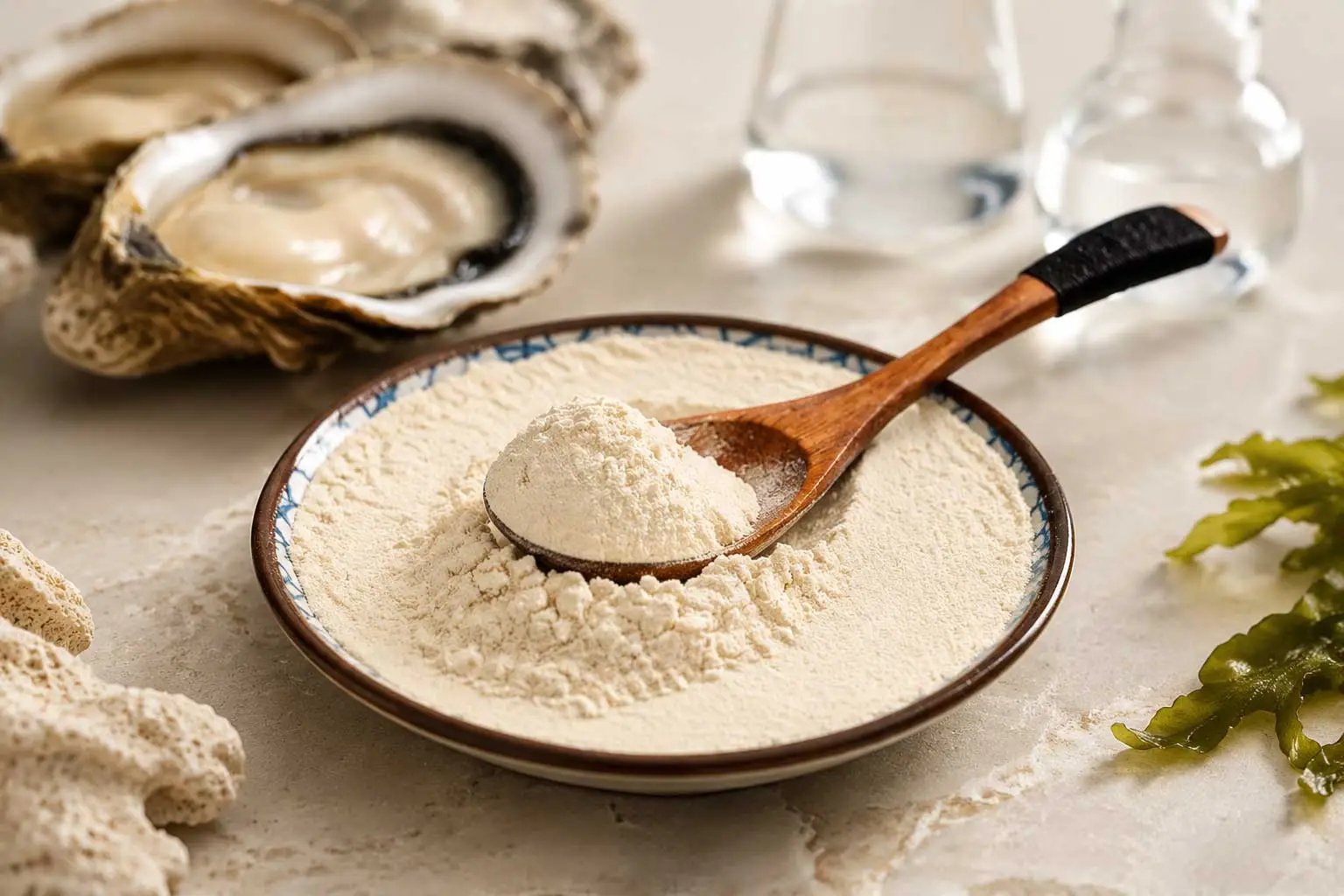
Among these emerging ingredients, oyster peptide powder has gained significant attention as a premium marine peptide ingredient suitable for modern wellness formulations. Produced through controlled enzymatic hydrolysis, oyster peptide powder contains low molecular weight peptides with excellent water solubility and formulation compatibility. Compared with many traditional dairy proteins, marine-derived peptides are often easier to integrate into functional beverages, powdered supplements, gummies, and ready-to-drink nutrition systems.
The growing comparison between oyster peptide powder vs whey protein is also driven by changing product development priorities across the global supplement industry. Today’s manufacturers are increasingly focused on developing:
•Functional beverage systems
•Marine-based nutritional products
•Healthy aging formulations
•Premium daily wellness supplements
•Advanced sports recovery concepts
•High-solubility protein applications
Unlike conventional whey-based products, marine bioactive peptides allow brands to create lighter texture profiles and differentiated ingredient positioning within competitive supplement markets. As a result, international buyers are actively searching for reliable oyster peptide suppliers, marine peptide manufacturers, and bulk oyster peptide powder partners capable of supporting long-term product development and scalable production.
From a sourcing perspective, quality consistency has become equally important. Experienced oyster peptide manufacturers with large-scale production capacity, molecular weight testing systems, and international certifications such as ISO22000, HACCP, FSSC22000, and FDA registration are becoming preferred partners for global supplement brands.
As the demand for specialized protein ingredients continues to expand, the discussion around oyster peptide powder vs whey protein is no longer limited to sports nutrition alone. It now represents a broader industry movement toward multifunctional marine-derived ingredients designed for modern functional foods, wellness supplements, and premium nutritional formulations.
What Is Oyster Peptide Powder and How Does It Compare to Whey Protein?
To properly evaluate oyster peptide powder vs whey protein, it is important to understand the origin, production process, molecular structure, and formulation behavior of each ingredient. While both are widely used in nutritional products, they differ significantly in functionality, ingredient positioning, and application flexibility.
What Is Oyster Peptide Powder?
Oyster peptide powder is a marine-derived ingredient produced through enzymatic hydrolysis of oyster protein. During this process, large protein chains are broken down into smaller peptide fragments, resulting in concentrated marine bioactive peptides with relatively low molecular weight, typically ranging from 500–2000 Daltons.
This low molecular peptide structure is one of the defining characteristics of oyster peptide powder. Compared with larger intact proteins, low molecular peptides generally demonstrate:
•Faster dispersion in water
•Excellent formulation compatibility
•Improved beverage solubility
•Reduced sedimentation
•Lighter texture performance
Because of these properties, oyster peptide powder is increasingly used in modern functional foods and dietary supplements, especially in products requiring clean texture systems and rapid ingredient dispersion.
In addition to peptide content, oyster peptide powder naturally contains amino acids such as taurine, glycine, glutamic acid, alanine, and arginine. These amino acids contribute to its positioning within:
•Functional wellness products
•Marine nutritional supplements
•Sports recovery beverages
•Daily vitality formulations
•Premium nutritional powders
As global demand grows for marine-derived nutritional ingredients, many international brands are working directly with experienced oyster peptide suppliers and oyster peptide factories capable of providing stable bulk supply, customized packaging, and OEM/ODM support.
What Is Whey Protein?
Whey protein is a dairy-derived protein fraction obtained during the cheese manufacturing process. It is typically available in three major forms: whey concentrate, whey isolate, and whey hydrolysate.
|
Whey Protein Type |
Characteristics |
|
Whey Concentrate |
Moderate protein concentration with lactose and fat content |
|
Whey Isolate |
Higher protein purity with reduced lactose |
|
Whey Hydrolysate |
Pre-digested form with faster absorption |
Compared with oyster peptide powder, whey protein generally has larger molecular protein fractions and a denser texture profile. Whey remains highly popular in conventional sports nutrition because of its established association with muscle-focused protein supplementation.
However, when brands compare oyster peptide powder vs whey protein, important formulation differences become clear. Whey proteins may create viscosity, foaming, or dairy flavor limitations in certain beverage applications, whereas marine peptide ingredients typically offer cleaner integration into functional beverage systems and wellness-oriented nutritional products.
Professional Comparison: Oyster Peptide Powder vs Whey Protein
|
Property |
Oyster Peptide Powder |
Whey Protein |
|
Source |
Marine-derived oyster protein |
Dairy-derived milk protein |
|
Molecular Structure |
Low molecular peptides |
Larger intact proteins |
|
Molecular Weight |
500–2000 Da |
Higher molecular fractions |
|
Solubility |
Excellent water solubility |
Moderate to high |
|
Texture Impact |
Light and clean |
Thick and creamy |
|
Flavor Profile |
Mild marine profile |
Dairy flavor |
|
Beverage Compatibility |
Excellent |
Moderate |
|
Typical Applications |
Functional beverages, wellness supplements |
Sports protein powders |
|
Ingredient Positioning |
Functional marine peptide |
Conventional sports protein |
The growing market interest in oyster peptide powder vs whey protein reflects broader changes within the global supplement industry. Modern consumers increasingly seek differentiated ingredients with premium positioning, especially in categories such as:
•Functional beverages
•Marine wellness nutrition
•Protein sachets
•Healthy aging supplements
•Daily nutritional systems
•Performance recovery formulations
For international buyers and supplement manufacturers, working with a reliable oyster peptide manufacturer is becoming increasingly important. Suppliers capable of offering large-scale peptide production, amino acid analysis, molecular weight testing, and global export support are now playing a critical role in the evolving functional protein ingredient market.
Functional Benefits of Oyster Peptide Powder vs Whey Protein
As brands continue to explore advanced ingredient systems for modern nutrition products, the comparison between oyster peptide powder vs whey protein increasingly focuses on functionality rather than protein content alone. While whey protein remains strongly associated with conventional sports nutrition, oyster peptide powder is emerging as a versatile marine bioactive peptide ingredient suitable for a wider range of wellness-oriented applications.
Energy and Daily Wellness Support
One of the most notable distinctions in the comparison of oyster peptide powder vs whey protein is the role each ingredient plays within daily wellness formulations.
Oyster peptide powder naturally contains marine bioactive peptides and amino acids commonly incorporated into products positioned around:
•Daily vitality
•Functional wellness
•Nutritional balance
•Marine nutrition support
•Premium wellness beverages
Because of its low molecular peptide structure, oyster peptide powder disperses efficiently in liquid systems without creating excessive viscosity. This characteristic makes it particularly suitable for modern ready-to-drink nutritional products where clean texture and drinkability are essential.
In contrast, whey protein is primarily used in formulations designed around high protein loading and muscle-focused supplementation. While highly effective for traditional protein products, whey may create formulation limitations in lighter beverage systems due to foaming and texture density.
As a result, many product developers evaluating marine peptides vs whey protein increasingly position oyster peptides as premium ingredients for wellness-oriented nutritional concepts rather than purely protein-heavy sports products.
Sports Nutrition and Recovery Applications
Whey protein continues to dominate traditional sports nutrition categories because of its association with muscle protein formulations and recovery-focused products. Protein shakes, gym nutrition powders, and mass-gainer products remain major application areas for whey ingredients.
However, modern sports nutrition is evolving beyond conventional bodybuilding concepts. Consumers increasingly seek products that combine:
•Performance support
•Functional hydration
•Recovery nutrition
•Daily wellness positioning
•Premium ingredient sourcing
In this environment, oyster peptide powder is increasingly incorporated into:
•Marine recovery beverages
•Functional hydration systems
•Sports nutrition blends
•Endurance-focused nutritional products
•Daily performance supplements
Compared with whey protein, marine peptide ingredients allow formulators to create lighter, more drinkable products with broader wellness positioning. This is one reason why many international supplement brands are actively sourcing from experienced oyster peptide suppliers and marine peptide manufacturers to develop differentiated sports nutrition concepts.
Solubility and Beverage Compatibility
One of the most commercially important aspects of the comparison between oyster peptide powder vs whey protein is formulation behavior in liquid systems. As the global market for functional beverages continues to expand, ingredient solubility and beverage stability have become critical considerations for manufacturers developing premium nutritional products.
Compared with traditional whey protein systems, oyster peptide powder demonstrates excellent water solubility due to its low molecular peptide structure. These smaller peptide fractions disperse rapidly in both hot and cold water applications, helping formulators create clean and stable beverage systems with reduced sedimentation.
This formulation advantage is particularly valuable in applications such as:
•Ready-to-drink wellness beverages
•Functional hydration products
•Marine nutrition drinks
•Daily vitality sachets
•Powdered beverage systems
•Nutritional stick packs
In contrast, whey protein often creates viscosity, foaming, and texture density challenges in beverage formulations. While these characteristics may be acceptable in traditional protein shakes, they can become limiting factors in lighter wellness-oriented drinks where texture and mouthfeel are closely tied to consumer experience.
For this reason, many brands comparing oyster peptide powder vs whey protein increasingly select marine peptides for products requiring:
•Light texture profiles
•High beverage clarity
•Fast dissolution
•Stable suspension systems
•Premium functional positioning
Another important advantage of marine bioactive peptides is their compatibility with multi-functional beverage systems. Oyster peptide powder can be more easily combined with:
•Botanical extracts
•Vitamins
•Electrolytes
•Collagen ingredients
•Functional amino acids
•Nutritional minerals
This versatility allows product developers to create advanced formulations targeting modern wellness trends without heavily affecting beverage stability or texture performance.
As beverage applications continue to grow across Asia, Europe, and North America, international supplement brands are increasingly partnering with experienced oyster peptide manufacturers capable of supplying highly soluble peptide ingredients suitable for large-scale beverage production.
Functional Food Formulation Flexibility
Beyond beverages, the discussion surrounding oyster peptide powder vs whey protein also extends into broader functional food ingredient applications. Modern nutritional products increasingly require ingredients that offer both functionality and formulation adaptability across multiple delivery formats.
Because of its low molecular weight and excellent dispersibility, oyster peptide powder can be efficiently incorporated into a wide range of product systems without significantly affecting texture or processing stability. This flexibility makes marine peptides particularly attractive for manufacturers developing premium wellness-focused products.
Common applications for oyster peptide powder include:
•Nutritional gummies
•Functional powder blends
•Protein sachets
•Daily wellness capsules
•Meal replacement systems
•Nutritional bars
•Functional granules
•Instant beverage powders
Compared with whey protein, which is typically associated with heavier sports nutrition products, oyster peptide powder allows formulators to develop lighter and more versatile product concepts positioned around wellness, convenience, and daily nutritional support.
For example, in gummy or sachet applications, whey protein may create processing limitations due to viscosity or flavor interactions. In contrast, marine peptide ingredients generally provide cleaner integration into compact dosage formats, especially where high solubility and rapid dispersion are required.
This formulation flexibility is one of the reasons why global brands are increasingly sourcing from professional oyster peptide suppliers and marine peptide factories capable of supporting customized ingredient applications across multiple product categories.
From a commercial perspective, manufacturers evaluating oyster peptide powder vs whey protein are not simply comparing protein content. They are assessing:
•Ingredient functionality
•Production compatibility
•Product positioning potential
•Consumer experience
•Beverage performance
•Processing efficiency
•Premium formulation value
As consumer demand shifts toward more advanced nutritional concepts, marine bioactive peptides are increasingly becoming part of the next generation of functional foods and wellness-oriented supplement systems.
Oyster Peptide Powder vs Whey Protein in Ingredient Applications
As the global supplement market evolves, the comparison between oyster peptide powder vs whey protein increasingly depends on real-world formulation applications rather than nutritional labeling alone. Product developers today are looking for ingredients that support innovation across beverages, powders, capsules, gummies, and premium wellness products.
While whey protein continues to dominate traditional high-protein categories, oyster peptide powder is gaining attention for its broader flexibility within modern functional nutrition systems.
Functional Beverages
One of the fastest-growing application areas for oyster peptide powder is the functional beverage sector. Modern consumers increasingly seek nutritional drinks that are lighter, more refreshing, and easier to consume throughout the day.
Due to its excellent water solubility and low molecular peptide structure, oyster peptide powder integrates smoothly into:
•Ready-to-drink wellness beverages
•Marine nutrition drinks
•Functional hydration systems
•Nutritional shot formulations
•Daily vitality beverages
Compared with whey protein, which may create foaming or thicker textures, marine peptide ingredients allow formulators to maintain cleaner beverage systems with improved drinkability.
This is especially important for premium beverage concepts targeting:
•Healthy aging consumers
•Wellness-focused lifestyles
•Daily nutritional support
•Functional hydration trends
As a result, many beverage brands are actively searching for experienced oyster peptide suppliers capable of providing highly soluble peptide ingredients suitable for large-scale beverage manufacturing.
Dietary Supplements
The global market for dietary supplements continues to diversify beyond traditional sports nutrition products. Modern supplement consumers increasingly prefer convenient dosage formats with multifunctional ingredient systems.
Because of its formulation flexibility, oyster peptide powder is now widely incorporated into:
•Capsule formulations
•Powdered sachets
•Stick packs
•Nutritional granules
•Functional tablets
•Daily wellness powders
Compared with whey protein, which is primarily associated with protein supplementation, oyster peptide powder is often positioned as a premium marine bioactive ingredient suitable for broader wellness-oriented nutritional concepts.
This versatility allows manufacturers to develop differentiated products within competitive supplement markets while maintaining clean-label ingredient positioning.
For procurement teams and product developers, working with a reliable oyster peptide manufacturer ensures stable bulk supply, technical documentation, and formulation support across multiple supplement categories.
Sports Nutrition Products
The comparison between oyster peptide powder vs whey protein is especially relevant within the rapidly evolving sports nutrition industry. While whey protein has traditionally dominated gym-focused formulations, modern sports nutrition products are increasingly moving toward more comprehensive wellness positioning that combines performance, recovery, hydration, and daily nutritional support.
In conventional sports nutrition, whey protein is primarily used in:
•High-protein powders
•Muscle-building shakes
•Mass-gainer products
•Post-workout recovery formulas
Its strong association with protein loading and muscle-focused supplementation continues to make whey a staple ingredient in traditional fitness products. However, many modern consumers now seek lighter formulations with improved drinkability, cleaner ingredient positioning, and broader wellness applications.
This industry shift is one reason why oyster peptide powder is attracting increasing attention in advanced sports nutrition systems. Due to its excellent solubility and low molecular peptide structure, marine bioactive peptides can be incorporated into products designed around:
•Functional recovery beverages
•Performance hydration systems
•Endurance nutrition
•Daily active lifestyle supplements
•Multi-functional sports wellness products
Compared with whey protein, oyster peptide powder allows manufacturers to formulate products with lighter textures and cleaner beverage systems, particularly in ready-to-drink applications where viscosity control is important.
Another important factor in the comparison of oyster peptide powder vs whey protein is ingredient positioning. While whey remains heavily associated with traditional bodybuilding products, marine peptide ingredients are increasingly viewed as premium wellness-oriented protein solutions suitable for broader consumer groups, including:
•Active lifestyle consumers
•Wellness-focused athletes
•Healthy aging populations
•Daily nutrition users
•Functional beverage consumers
As sports nutrition continues to evolve toward more holistic wellness concepts, international supplement brands are increasingly partnering with experienced oyster peptide manufacturers and marine peptide suppliers capable of supporting customized formulations, bulk supply, and advanced ingredient applications.
Healthy Aging and Daily Nutrition Products
The global healthy aging market is becoming one of the fastest-growing sectors within the nutritional supplement industry. Consumers are increasingly seeking nutritional products that support long-term wellness, convenience, and premium ingredient quality.
In this environment, the comparison between oyster peptide powder vs whey protein extends far beyond sports nutrition. Product developers are now evaluating which ingredients can best support daily nutritional systems designed for broad consumer wellness applications.
Because of its mild flavor profile, excellent solubility, and versatile formulation compatibility, oyster peptide powder is increasingly used in:
•Daily nutritional sachets
•Wellness powder blends
•Healthy aging supplements
•Functional granules
•Marine-based nutritional beverages
•Premium vitality products
Compared with whey protein, which is often associated with dense protein shakes and sports applications, marine bioactive peptides allow brands to create more versatile product systems suitable for daily consumption and broader demographic positioning.
Another advantage of oyster peptide powder is its compatibility with other premium wellness ingredients. Many manufacturers combine marine peptide ingredients with:
•Botanical extracts
•Vitamins
•Minerals
•Collagen ingredients
•Functional amino acids
•Antioxidant systems
This flexibility supports the development of advanced multi-functional products aligned with current trends in healthy aging and daily wellness nutrition.
From a commercial perspective, global demand for premium marine-derived ingredients is creating significant opportunities for experienced oyster peptide suppliers, oyster peptide factories, and bulk marine peptide manufacturers capable of supporting long-term international partnerships.
As more brands explore alternatives to traditional dairy proteins, the discussion surrounding oyster peptide powder vs whey protein is expected to continue expanding across the global market for functional foods, wellness beverages, and premium nutritional supplements.
Bulk Supply Comparison: Choosing the Right Oyster Peptide Supplier or Manufacturer
For international supplement brands and functional food manufacturers, ingredient sourcing is no longer based solely on price or protein content. As demand for premium marine-derived ingredients grows, selecting the right oyster peptide supplier has become a critical part of ensuring product consistency, formulation performance, and long-term supply stability.
When evaluating oyster peptide powder vs whey protein from a procurement perspective, manufacturers increasingly focus on factors such as:
•Production capacity
•Ingredient traceability
•Quality consistency
•Molecular testing standards
•Export experience
•OEM/ODM support
•Regulatory compliance
Because oyster peptide powder is used in premium wellness-oriented formulations, buyers typically expect higher levels of quality documentation and technical support compared with conventional commodity protein ingredients.
What to Look for in an Oyster Peptide Manufacturer
An experienced oyster peptide manufacturer should provide transparent quality systems and standardized production processes to ensure stable peptide quality across all batches.
Key certifications and production standards often include:
•HACCP certification
•ISO22000 food safety management
•FSSC22000 certification
•FDA registration
•GMP-compliant manufacturing systems
Professional oyster peptide factories also typically provide:
•Certificates of Analysis (COA)
•Amino acid profiles
•Molecular weight testing
•Heavy metal analysis
•Microbiological testing reports
These documents are increasingly important for international supplement brands developing high-end functional foods and dietary supplements for regulated global markets.
Bulk Production Capacity and OEM/ODM Support
Large-scale production capability has become increasingly important as global demand for bulk oyster peptide powder continues to grow. Reliable suppliers should be able to support:
•Bulk ingredient supply
•Flexible packaging solutions
•OEM formulations
•ODM product development
•International export logistics
•Long-term supply agreements
Manufacturers developing marine-based nutritional products often require customized ingredient specifications depending on beverage systems, powder blends, or supplement delivery formats. Experienced oyster peptide suppliers with technical formulation support can help optimize ingredient performance across different applications.
This level of technical collaboration is becoming increasingly valuable as the global market for marine bioactive peptides continues to expand into new product categories.
Quality Control and Traceability
As the market for marine bioactive peptides continues to expand globally, quality assurance and ingredient traceability have become essential considerations for supplement brands evaluating oyster peptide powder vs whey protein. International buyers increasingly expect suppliers to provide not only stable bulk supply, but also comprehensive technical documentation and transparent production standards.
For premium nutritional formulations, professional oyster peptide manufacturers typically implement multi-stage quality control systems throughout raw material sourcing, enzymatic hydrolysis, drying, packaging, and final product inspection. This process helps ensure that bulk oyster peptide powder maintains consistent peptide composition, solubility, and formulation performance across production batches.
Compared with commodity protein ingredients, oyster peptide powder often requires more advanced testing standards because it is positioned as a premium marine peptide ingredient within the global functional foods and dietary supplements market.
Reliable oyster peptide supplier commonly provide the following quality documentation:
|
Quality Control Item |
Purpose |
|
Certificate of Analysis (COA) |
Confirms product specifications |
|
Amino Acid Profile |
Verifies peptide composition |
|
Molecular Weight Analysis |
Confirms peptide size distribution |
|
Heavy Metal Testing |
Ensures regulatory compliance |
|
Microbiological Testing |
Verifies product safety |
|
Solubility Testing |
Confirms beverage compatibility |
These testing systems are particularly important for manufacturers developing high-end products such as:
•Functional beverages
•Marine wellness supplements
•Sports nutrition formulations
•Healthy aging products
•Premium nutritional sachets
Another increasingly important factor in the comparison of oyster peptide powder vs whey protein is ingredient traceability. Global supplement brands are now placing greater emphasis on raw material sourcing transparency and sustainable production systems.
Professional oyster peptide factories typically establish traceability systems covering:
•Raw oyster sourcing
•Production batch management
•Ingredient processing records
•Export documentation
•Packaging traceability
This level of supply chain transparency is becoming increasingly valuable for international buyers operating in regulated markets across North America, Europe, Southeast Asia, and the Middle East.
As global procurement standards continue to rise, supplement brands are increasingly choosing experienced oyster peptide manufacturers capable of delivering both large-scale production capacity and advanced quality management systems.
Packaging and International Logistics
Efficient packaging and export logistics are critical factors when sourcing bulk oyster peptide powder for international supplement manufacturing. As more brands incorporate marine bioactive peptides into their product lines, reliable supply chain management has become a major competitive advantage for professional oyster peptide suppliers.
Most oyster peptide powder intended for industrial use is packaged in moisture-resistant food-grade materials designed to maintain peptide stability during storage and transportation. Common packaging formats include:
|
Packaging Type |
Typical Application |
|
1 kg Aluminum Foil Bags |
Sample and small-scale formulations |
|
10 kg Cartons |
Mid-scale supplement production |
|
25 kg Fiber Drums |
Bulk industrial procurement |
|
Customized OEM Packaging |
Private label and contract manufacturing |
To preserve peptide quality, oyster peptide powder is typically stored in cool, dry environments away from direct sunlight and humidity exposure. Proper packaging helps maintain:
•Peptide stability
•Solubility performance
•Ingredient freshness
•Export safety compliance
Compared with certain dairy proteins, marine peptide ingredients may also offer advantages in transportation flexibility for specific international markets where dairy import regulations are more restrictive. This has contributed to increasing interest in oyster peptide powder vs whey protein among supplement brands seeking alternative protein ingredients for global distribution.
Experienced oyster peptide manufacturers usually provide comprehensive export support services, including:
•International shipping coordination
•OEM labeling support
•Customs documentation
•COA and export certificates
•Flexible Incoterm solutions (FOB, CIF, DDP)
For large-scale supplement companies, working with an established oyster peptide factory capable of supporting stable export logistics can significantly reduce procurement risks and improve long-term supply consistency.
As the global market for functional foods and premium marine-derived ingredients continues to grow, efficient packaging systems and professional international logistics support are becoming increasingly important parts of the overall supplier evaluation process.
Frequently Asked Questions About Oyster Peptide Powder vs Whey Protein
What is the main difference between oyster peptide powder and whey protein?
The primary difference between oyster peptide powder vs whey protein lies in their source, molecular structure, and formulation applications. Oyster peptide powder is a marine-derived ingredient composed of low molecular weight peptides with excellent solubility, while whey protein is a dairy-derived protein commonly used in traditional sports nutrition products.
Why are more supplement brands using oyster peptide powder?
Many manufacturers are incorporating oyster peptide powder into modern functional foods and dietary supplements because of its formulation flexibility, clean beverage compatibility, and premium marine ingredient positioning. Demand for marine bioactive peptides has increased significantly in categories such as functional beverages, wellness supplements, and healthy aging products.
Can oyster peptide powder be used in functional beverages?
Yes. Due to its excellent water solubility and low molecular peptide structure, oyster peptide powder is highly suitable for:
•Ready-to-drink beverages
•Functional hydration products
•Nutritional sachets
•Powdered drink systems
Compared with whey protein, marine peptide ingredients generally create lighter beverage textures with reduced foaming and sedimentation.
How do I choose a reliable oyster peptide supplier?
When selecting an oyster peptide supplier or oyster peptide manufacturer, buyers should evaluate:
•Production certifications
•Quality testing systems
•Bulk supply capacity
•OEM/ODM capabilities
•Export experience
•Traceability standards
Reliable suppliers typically provide COA documentation, amino acid analysis, molecular weight testing, and international logistics support for global supplement brands.
Can oyster peptide powder and whey protein be combined in one formulation?
Yes. Some manufacturers combine oyster peptide powder with whey protein to create multi-functional nutritional products that balance protein supplementation with marine-derived peptide functionality. This approach is increasingly common in advanced sports nutrition and wellness-oriented supplement systems.
Conclusion — Choosing the Right Protein Ingredient for Modern Functional Nutrition
The growing discussion surrounding oyster peptide powder vs whey protein reflects broader changes across the global nutritional supplement industry. Modern product development is no longer focused solely on protein quantity. Manufacturers are increasingly evaluating ingredient functionality, formulation flexibility, beverage compatibility, and long-term market differentiation.
While whey protein continues to play an important role in conventional sports nutrition, oyster peptide powder is emerging as a highly versatile marine bioactive peptide ingredient suitable for a wider range of modern wellness applications. Its low molecular peptide structure, excellent solubility, and compatibility with advanced functional beverage systems make it increasingly attractive for brands developing premium functional foods and dietary supplements.
As global demand for marine-derived nutritional ingredients continues to grow, working with an experienced oyster peptide supplier, oyster peptide manufacturer, or oyster peptide factory becomes increasingly important for ensuring stable product quality and long-term supply reliability.
Manufacturers seeking large-scale bulk oyster peptide powder supply, OEM/ODM support, or customized ingredient solutions can contact: admin@chenlangbio.com
Professional technical support, export experience, and scalable manufacturing capacity help ensure that modern supplement brands can successfully integrate premium marine peptide ingredients into next-generation nutritional products for international markets.

Send Inquiry
Related Industry Knowledge
- Spermidine Benefits for Longevity: What Research Says About Cellular Health
- Unlocking the Power of Mangiferin in Modern Industries
- How L-Carnosine Enhances Muscle Performance and Recovery?
- Lycopene Powder Leads Natural Antioxidant Segment
- What is Camellia Oleifera Seed Extract Powder Used for
- Is Loratadine Good for Poison Ivy
- What Is Lysozyme Powder
- How Do I Use Hyaluronic Acid Powder In My Skincare Routine
- Lutein Extract Powder and zeaxanthin: Eye and vision benefits
- What Is Griffonia Extract Powder Used For