
How to Read a Zeaxanthin COA: A Guide for Ingredient Buyers
2026-09-04 15:26:28
A zeaxanthin COA is a batch-specific quality document that shows whether a particular lot meets the release requirements established for that ingredient. For an ingredient buyer, however, reading a Certificate of Analysis should involve more than checking whether each line says “Pass.” A useful review establishes what material was tested, which specification applies, how the active content was measured, and whether the results belong to the batch that will actually be supplied.
This distinction becomes particularly important with zeaxanthin because the commercial name can cover substantially different ingredient forms. A high-assay carotenoid material, a standardized powder, and a microencapsulated CWS grade may all contain zeaxanthin, but their assay levels, carrier composition, physical properties, and relevant quality parameters are not necessarily comparable.
A well-prepared zeaxanthin certificate of analysis should therefore be read in the context of the approved product specification rather than as a standalone sales document.
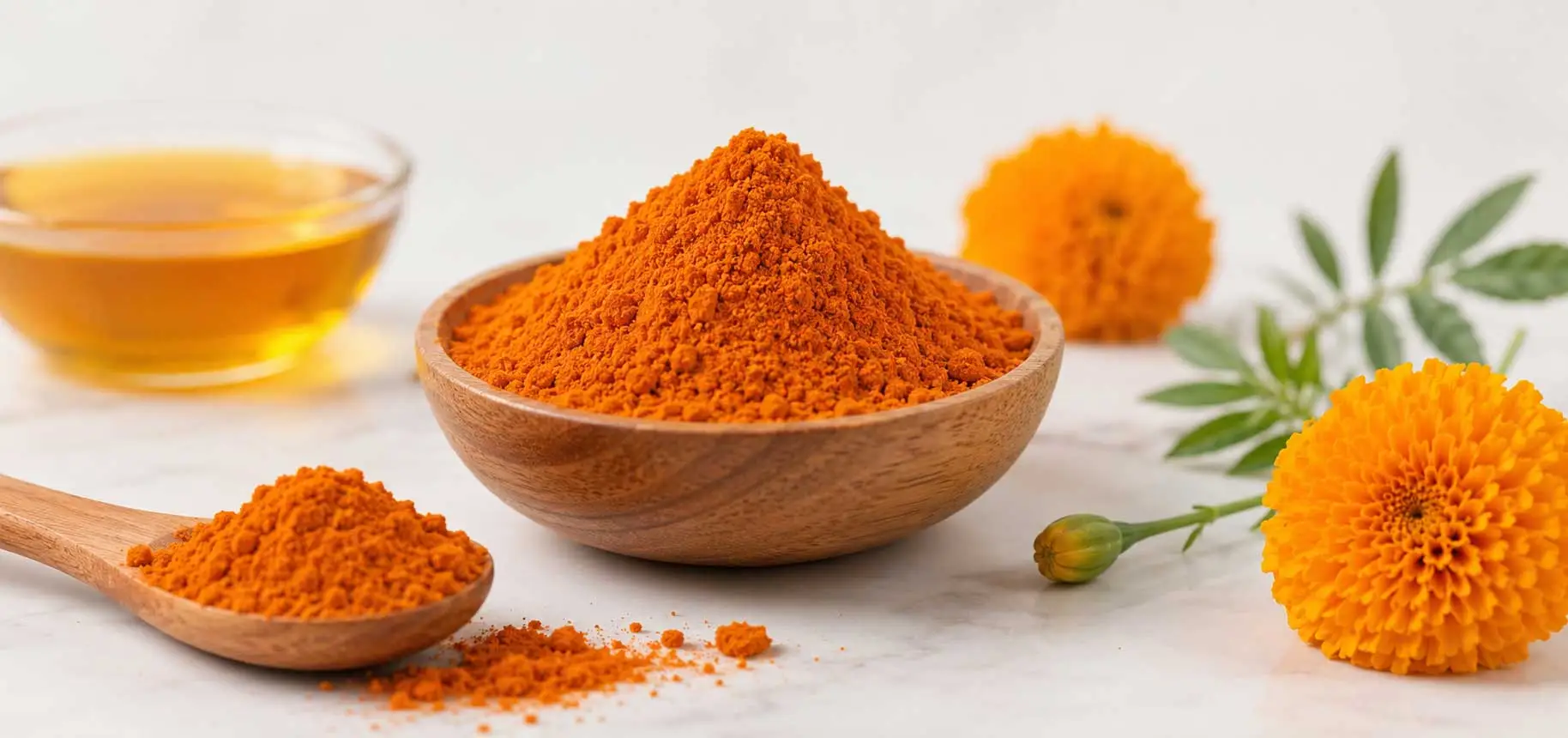
Zeaxanthin COA vs Product Specification: What Is the Difference?
The distinction between a zeaxanthin COA vs specification is fundamental to raw-material qualification. A specification defines what an approved product is required to meet. The COA records how one particular production batch performed against those requirements.
For example, a specification may establish a minimum zeaxanthin assay of 5.0%. If the corresponding production lot produces an analytical result of 5.27%, that actual result should normally appear on the batch COA. The 5.0% figure defines the acceptance criterion; 5.27% describes the tested batch.
A Technical Data Sheet has another purpose. It generally provides broader information about composition, physical characteristics, storage, and intended application rather than serving as evidence of batch release.
|
Document |
Primary Function |
Typical Buyer Use |
|
Product Specification |
Defines acceptance criteria |
Supplier and material approval |
|
COA |
Reports actual batch results |
Batch release and incoming QC |
|
TDS |
Describes technical characteristics |
Formulation and product evaluation |
|
SDS |
Provides safety and handling information |
Workplace handling and compliance |
A good zeaxanthin product specification and its corresponding COA should therefore agree on product identity, acceptance criteria, and analytical basis. When these documents contradict one another, clarification should come before batch approval.
Start With Product Identity: Does the COA Match the Zeaxanthin You Are Buying?
Zeaxanthin product identification should be checked before looking at the assay result. This sounds elementary, but it prevents one of the easiest mistakes in ingredient qualification: comparing analytical numbers from products that are not actually equivalent.
The product name and grade on the document should correspond to the material ordered. Product code, source information where relevant, and physical form provide additional confirmation. The lot number becomes particularly important once an actual shipment is involved.
A marigold zeaxanthin COA, for example, should correspond to the botanical-derived grade being evaluated. If the purchased product is a formulated CWS powder, a document simply headed “Zeaxanthin Powder” may not provide enough information to establish that it belongs to the required grade.
This matters because zeaxanthin can be supplied in different concentrations and delivery systems. Microencapsulation introduces carrier materials around or alongside the carotenoid, while conventional high-assay materials have a different composition and formulation purpose. Product identity must therefore be established before assay numbers are interpreted.
Zeaxanthin Assay: What Does the Percentage on a COA Really Mean?
Zeaxanthin assay indicates the measured content of zeaxanthin according to the analytical basis stated for the product. It should not automatically be interpreted as the purity of every component in the finished powder.
This distinction is especially important for formulated products.
Consider a microencapsulated powder standardized to 5% zeaxanthin. If the specification requires ≥5.0% and the zeaxanthin content reported for the batch is 5.24%, the result indicates that the finished ingredient meets its active-content requirement. It does not mean that the zeaxanthin used inside the delivery system was only 5.24% pure. Much of the finished powder may intentionally consist of carrier or encapsulation materials required to create the desired physical properties.
For this reason, zeaxanthin purity vs assay should be understood before quotations or samples are compared. A 5% formulated grade and a much higher-assay raw material are different commercial forms, not simply “low-purity” and “high-purity” versions of an otherwise identical powder.
The reporting basis also deserves attention. Depending on the specification and analytical procedure, a result may be reported as received or on another defined basis. Buyers comparing zeaxanthin percentage data should make sure the figures were generated and reported on comparable terms.
The most useful assay figure is therefore one supported by a clearly identified method and an unambiguous product definition.
Why Is HPLC Used for Zeaxanthin Testing?
Zeaxanthin HPLC analysis is valuable because carotenoid materials can contain structurally related compounds that cannot be meaningfully evaluated by visual appearance alone. High-performance liquid chromatography separates components before detection and quantification, allowing the laboratory to determine the target carotenoid more selectively.
That selectivity matters in marigold-derived materials. Natural carotenoid systems can contain lutein, zeaxanthin, related carotenoids, and different geometric forms. Zeaxanthin itself can undergo cis-trans isomerization under unfavorable processing or storage conditions. A chromatographic method provides much more information than simply measuring the intensity of a yellow-orange color.
In a properly controlled zeaxanthin HPLC analysis, sample preparation, chromatographic conditions, detection parameters, calibration, and the reference material all contribute to the reported result. Consequently, an assay percentage should not be separated conceptually from the method used to produce it.
For routine purchasing, buyers do not necessarily need a full zeaxanthin chromatogram attached to every COA. The chromatogram can, however, be useful supporting information during initial supplier qualification, analytical-method review, or investigation of an unexpected result.
The key point is that zeaxanthin assay by HPLC is not simply a number generated by an instrument. Its reliability depends on a defined analytical procedure and appropriate identification and quantification of the target compound.
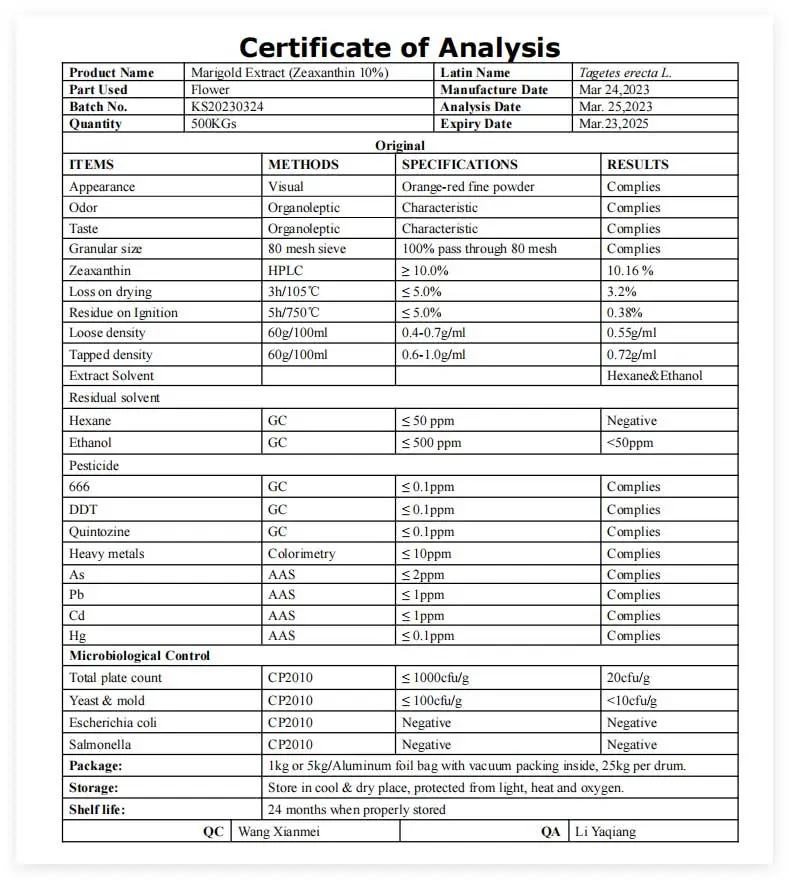
How Should Buyers Read a Zeaxanthin HPLC Result?
A zeaxanthin HPLC method should allow a reported batch result to be interpreted against the approved acceptance criterion. A simplified COA entry might look like this:
|
Test |
Specification |
Result |
Method |
|
Zeaxanthin |
≥5.0% |
5.28% |
HPLC |
The immediate conclusion is that the tested batch satisfies the stated minimum. For technical qualification, however, 5.28% is not the entire story.
The laboratory must first establish the identity of the relevant chromatographic response. Zeaxanthin retention time, comparison with an appropriate reference standard, and adequate separation from interfering components can contribute to that determination within the applicable analytical procedure.
A technical team reviewing a zeaxanthin HPLC chromatogram may also consider whether the target peak is adequately resolved from neighboring carotenoid peaks and whether unexpected signals require investigation. The exact criteria depend on the validated or otherwise appropriate method being used.
This is why comparing two supplier COAs solely because both report “5% zeaxanthin” can be misleading. The product form and analytical basis need to be understood before the numbers are treated as equivalent.
Appearance, Moisture and Physical Parameters: Which Results Matter?
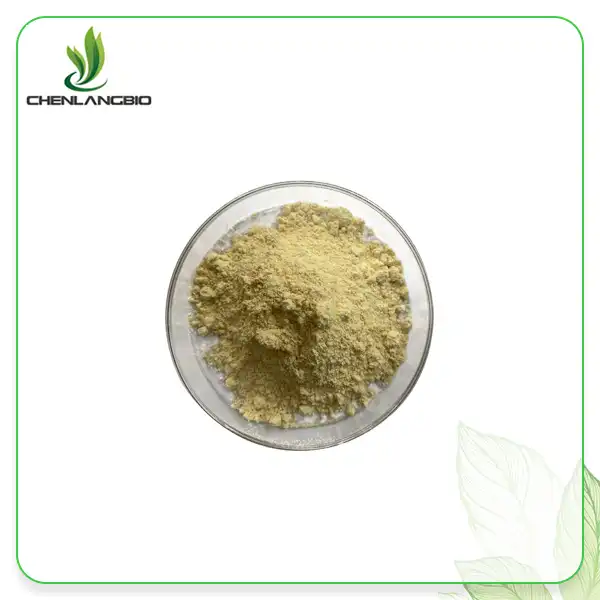
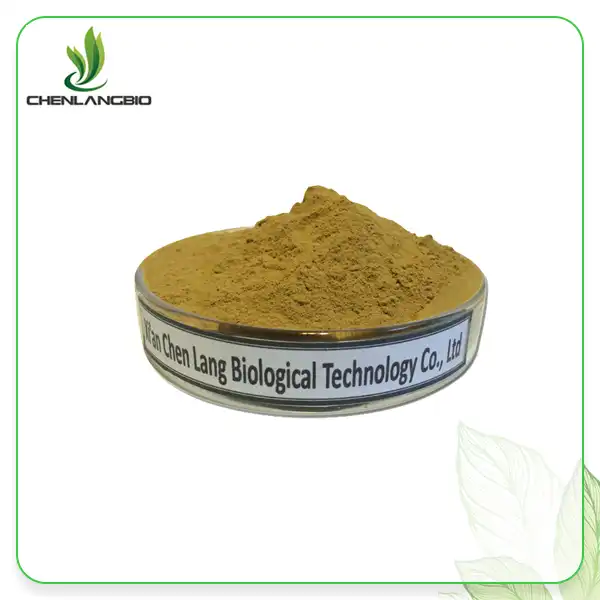
Zeaxanthin powder appearance is useful as an identity and consistency observation, but color should never be treated as a substitute for chemical analysis. Carotenoid-containing materials naturally have characteristic yellow-to-orange tones, yet visually similar powders can differ significantly in composition.
Moisture has a different function in quality control. Zeaxanthin moisture content can affect powder handling and storage behavior, particularly in formulated materials containing hygroscopic carrier systems. The appropriate limit depends on the grade rather than on a universal value for every zeaxanthin ingredient.
Physical requirements become even more product-specific with microencapsulated or dispersible powders. Particle characteristics may influence flow and reconstitution, while aqueous dispersion can be critical for a beverage-grade material.
A meaningful zeaxanthin physical specification should therefore reflect how the ingredient is manufactured and used. Adding tests to a COA simply because another supplier lists them does not necessarily improve quality control.
How Should Heavy Metals, Microbiology and Residual Solvents Be Evaluated?
A zeaxanthin heavy metals test provides information that the active assay cannot. Depending on the applicable specification and market, controls may address individual elements such as lead, arsenic, cadmium, and mercury.
Buyers should be cautious about assuming that one set of limits is globally applicable. Acceptance criteria depend on the intended use, destination market, customer requirements, and relevant regulatory framework. Where individual elemental limits are required, a generic entry stating only “Heavy Metals: Pass” may provide less useful information than element-specific results.
The same principle applies to a zeaxanthin microbiological test. Total aerobic microbial count, yeast and mold, and specified microorganisms may form part of a food or supplement ingredient specification, but appropriate limits should reflect the product and its intended use. Finished-batch testing complements rather than replaces hygienic manufacturing and upstream botanical control.
Zeaxanthin residual solvents become particularly relevant when the manufacturing route involves solvent extraction or other processing in which solvent residues need to be controlled. The testing program should correspond to the actual process and applicable requirements rather than reproducing an arbitrary list of solvents that were never used.
For procurement teams, these sections of the COA are most valuable when they demonstrate that the quality program has been designed around the real ingredient and manufacturing process.
What Should You Look for on a CWS or Microencapsulated Zeaxanthin COA?
A CWS zeaxanthin COA requires slightly different interpretation because CWS material is a formulated delivery system rather than simply a concentrated carotenoid powder.
The active assay remains important, but it needs to be considered alongside the formulation. Carrier composition may explain why a CWS product has a considerably lower zeaxanthin concentration than a conventional high-assay ingredient. That lower concentration alone is not evidence of inferior quality.
For a microencapsulated zeaxanthin COA, physical properties can also become more commercially relevant. Moisture, powder characteristics, and a defined dispersibility parameter may contribute directly to how the material performs during manufacturing or reconstitution.
This is particularly important when reviewing a zeaxanthin dispersibility test. If the result simply states “Pass,” the technical team should understand what the approved method means by passing. Product concentration, water temperature, mixing conditions, observation time, and acceptance criteria can materially change the result.
Water dispersibility should also not be confused with molecular solubility. Zeaxanthin itself is strongly lipophilic. CWS and microencapsulation technologies are used to improve the way zeaxanthin-containing material wets and disperses in aqueous systems; they do not make the native carotenoid molecule intrinsically water soluble.
A useful CWS zeaxanthin specification therefore combines chemical content with the physical properties that matter in the intended formulation.
Why Do Batch Number, Manufacturing Date and Expiry Information Matter?
A zeaxanthin batch COA should be traceable to the physical material supplied. The lot or batch number is the most important link because it connects analytical results with production and packaging records.
Manufacturing date, testing or release information, and expiry or retest information may also appear according to the manufacturer's document system and product requirements. These details help establish where the material sits within its defined shelf life.
During incoming inspection, the zeaxanthin batch number on the package should correspond with the COA provided for that shipment. A representative COA received during supplier evaluation is useful for understanding typical specifications and document format, but it does not replace the actual lot-specific document supplied with a commercial batch.
If the number on the packaging and analytical certificate does not correspond, the discrepancy should be resolved before material approval.
Why Can Two Zeaxanthin COAs With the Same Assay Describe Different Products?
A zeaxanthin assay comparison establishes only one point of equivalence. Two ingredients reporting 10% zeaxanthin can still differ in ways that matter during manufacturing.
One product may be a conventional standardized powder while another uses a carrier system. Their physical behavior can consequently differ even when the declared active concentration is identical. Botanical source and processing route can add further differences.
Analytical context matters as well. If the reporting basis or test methods differ, identical-looking percentages should not automatically be interpreted as analytically equivalent.
|
Comparison Point |
Product A |
Product B |
|
Zeaxanthin assay |
10% |
10% |
|
Physical form |
Conventional powder |
Formulated powder |
|
Carrier system |
None / grade-specific |
Present |
|
Water behavior |
Limited |
Formulation-dependent |
|
Analytical basis |
Must be verified |
Must be verified |
This is why zeaxanthin quality comparison should combine composition, analytical information, and physical form. Matching assay values alone do not establish ingredient equivalence.
COA Red Flags That Deserve Follow-Up Before Batch Approval
Zeaxanthin COA verification becomes particularly important when a document provides too little information to connect the reported results with a real production lot.
A COA that reports only “Pass” for most quantitative tests deserves closer review when actual numerical results would normally be expected. Missing analytical methods can also make comparisons difficult, particularly for the active assay.
Product descriptions that are too generic create another problem. If a company offers several concentrations or formulated grades, a document headed simply “Zeaxanthin” may not identify the material precisely enough for purchasing control.
Batch information deserves the same attention. The certificate should be internally consistent with the lot being supplied and with the approved specification.
Unrealistically identical analytical results across repeated production batches can also justify a question. Manufacturing and analytical systems normally exhibit some legitimate variation within specification. A COA is intended to report batch data, not merely reproduce target values from a specification sheet.
None of these observations automatically proves that a document is invalid. They are reasons to request clarification before zeaxanthin batch approval.
What Supporting Documents Should Be Reviewed With a Zeaxanthin COA?
Zeaxanthin quality documents serve different purposes, and expecting one certificate to answer every technical question can make supplier qualification less effective.
The product specification establishes acceptance criteria. A zeaxanthin TDS can provide composition, physical characteristics, storage information, and application guidance. The SDS—sometimes still requested as a zeaxanthin MSDS—addresses safe handling and related hazard communication rather than batch quality.
Depending on the intended market, additional documentation may be relevant to allergen status, GMO status, manufacturing controls, or certification requirements.
The principle is simple: documentation should be matched to the question being asked. The COA answers, “What were the results for this batch?” It is not intended to replace technical, safety, regulatory, and quality-system documentation.
From Sample COA to Commercial Batch Approval
A zeaxanthin sample is often the point at which analytical qualification and formulation evaluation come together. The representative documentation can first be reviewed to confirm that the material corresponds to the intended specification. The sample can then be tested in the customer's actual formulation.
This is particularly important for CWS products, where a compliant active assay does not by itself predict dispersibility in a finished beverage or solid drink. Application testing provides information that the analytical certificate cannot.
Once a material has been approved and commercial supply begins, each shipment should be linked to the appropriate production-lot documentation. The COA used during sample evaluation should not simply be reused as evidence for future batches.
This progression—from documentation review to sample evaluation and then lot-specific incoming control—creates a much stronger qualification process than approving a raw material on the basis of a representative certificate alone.
How Quality Documentation Supports Reliable Zeaxanthin Supply
A zeaxanthin supplier becomes easier to evaluate when analytical results can be connected to defined raw materials, production records, and batch-release procedures.
At CHEN LANG BIO TECH, our quality-control system is supported by trained analytical personnel and laboratory instrumentation, including HPLC capability. For natural carotenoid production, quality management also extends upstream to raw-material sourcing and traceability rather than beginning only when finished powder reaches the laboratory.
This connection is particularly relevant to marigold-derived material. Agricultural origin, processing history, analytical results, and the finished batch should form a traceable quality record. The objective is not simply to produce a professional-looking certificate, but to ensure that the values reported on it correspond to controlled manufacturing and actual testing.
How Should Buyers Compare Zeaxanthin Price After COA Qualification?
Zeaxanthin price becomes meaningful only after the products being compared have been technically defined. A quotation for a formulated 5% CWS grade cannot be evaluated directly against a higher-assay conventional material simply by comparing dollars per kilogram.
Active concentration, formulation technology, testing requirements, and application performance can all affect cost-in-use. Establishing specification equivalence first prevents an inexpensive-looking quotation from becoming more costly when dosage or processing requirements are considered later.
For commercial purchasing, technical qualification should therefore come before price normalization.
A Good Zeaxanthin COA Should Make a Batch Easier to Understand, Not Harder
A useful zeaxanthin COA should allow the buyer to identify the material, connect the certificate to a specific lot, understand the analytical results, and determine whether that batch meets the agreed requirements.
The best question during document review is therefore not simply, “Does everything pass?” It is: Does this certificate provide enough evidence to approve this specific material for its intended application?
When product identity, specification, test method, actual results, and lot information tell the same story, the COA becomes a practical quality document rather than an administrative formality.
Frequently Asked Questions About Zeaxanthin COAs
What is a zeaxanthin COA?
A zeaxanthin certificate of analysis is a quality document reporting test results for a defined production batch. It normally identifies the product and lot, states relevant acceptance criteria, and records the analytical or quality-control results used for batch release.
Is a COA the same as a zeaxanthin specification?
No. The specification establishes what the ingredient is required to meet, while the COA reports how an individual batch performed. A buyer should review them together because a result cannot be meaningfully interpreted without knowing the acceptance criterion behind it.
What does zeaxanthin assay mean on a COA?
The assay reports the measured zeaxanthin content according to the stated analytical procedure and reporting basis. For formulated products, assay should not be confused with purity. A 5% microencapsulated powder can intentionally contain carrier materials that provide the physical functionality of the finished ingredient.
Why is HPLC used to test zeaxanthin?
Zeaxanthin HPLC analysis can separate the target carotenoid from other components before quantification. This is valuable in natural carotenoid systems containing structurally related compounds and makes chromatographic analysis more informative than judging identity or concentration from color alone.
Should a CWS zeaxanthin COA include dispersibility?
A CWS zeaxanthin COA may include dispersibility when it forms part of the approved release specification. Because CWS grades are intended for improved aqueous performance, the test can be commercially meaningful. The test method should be understood, however, because “Pass” has limited value without defined conditions and acceptance criteria.
Should every commercial batch have its own COA?
Commercial shipments should be supported by documentation corresponding to the actual production lot. A representative certificate can help during preliminary supplier evaluation, but the zeaxanthin batch COA associated with the delivered lot is the relevant document for incoming quality review.
Can buyers request a COA before ordering zeaxanthin?
Yes. Before deciding to buy zeaxanthin powder, a representative COA can help evaluate the supplier's specification, analytical approach, and document format. After the required grade has been confirmed, sample testing provides another opportunity to verify suitability before commercial scale-up.
Zeaxanthin COA and Sample Support from CHEN LANG BIO TECH
As a zeaxanthin manufacturer, CHEN LANG BIO TECH supports raw-material qualification with product specifications, analytical documentation, quality-control testing, and sample evaluation according to the selected grade. Our natural carotenoid supply chain combines controlled marigold sourcing with processing and batch-level quality management.
Commercial packaging and zeaxanthin MOQ can be confirmed once the required concentration and product form have been identified, avoiding comparisons between technically different grades.
For a specification, representative COA, sample, or project-specific documentation, contact us at admin@chenlangbio.com

Send Inquiry
Related Industry Knowledge
- Buy DHEA Powder: Where to Get High-Quality Wholesale
- What is Sodium Polyglutamate Used for?
- Asiaticoside Powder vs Madecassoside: Which Is Better?
- Does Broccoli Extract Powder Have Any Side Effects?
- What Are the Potential Health Benefits of L-Ergothioneine?
- Witch Hazel Leaf Extract: Nature’s Solution for Acne
- What is the Mechanism of Action of Praziquantel
- Does Bakuchiol Actually Work?
- Can You Mix Hyaluronic Acid with Bakuchiol
- China Troxerutin Powder Supplier