Red Clover Extract 8% vs 20% vs 40% Isoflavones: How to Choose
November 18, 2026
Choosing between 8%, 20%, and 40% red clover extract isoflavones involves more than comparing the percentage printed on a specification sheet. For supplement manufacturers, the right concentration depends on the intended isoflavone content, available formulation space, analytical methods, ingredient cost, and consistency between production batches.
A 40% extract delivers five times the theoretical total isoflavone content of an 8% extract at the same powder weight. However, a higher concentration does not automatically mean better quality, greater stability, or a more suitable ingredient for every formulation.
At CHEN LANG BIO TECH, we supply standardized red clover extract containing 8%, 20%, and 40% total isoflavones, tested by HPLC. This guide explains how these specifications differ, what their percentages mean, and how ingredient buyers can evaluate them before moving from laboratory samples to commercial production.
Red Clover Extract 8% vs 20% vs 40%: Key Differences
The primary difference between these three specifications is the concentration of total isoflavones in the finished extract. Each grade provides a different amount of standardized material per gram, which affects formulation calculations and purchasing decisions.
For a manufacturer developing a capsule or tablet, the most useful comparison is not simply the extract percentage. It is how much material must be incorporated into the finished product to meet the intended total isoflavone content.
|
Specification |
8% Isoflavones |
20% Isoflavones |
40% Isoflavones |
|
Total isoflavone content |
8% |
20% |
40% |
|
Theoretical isoflavones per gram |
80 mg |
200 mg |
400 mg |
|
Extract required for 40 mg total isoflavones |
500 mg |
200 mg |
100 mg |
|
Relative powder requirement |
Highest |
Moderate |
Lowest |
|
Formulation space required |
More |
Moderate |
Less |
|
Analytical verification |
HPLC |
HPLC |
HPLC |
|
Main purchasing consideration |
Cost and powder volume |
Concentration and cost balance |
Active density and formulation space |
The quantities above are theoretical calculations based on the stated assay percentages, not recommended serving sizes. Actual manufacturing quantities must account for the applicable analytical basis, formulation requirements, and processing losses.
For example, a formulation requiring a specified amount of total isoflavones would need substantially more red clover extract 8% isoflavones than red clover extract 40% isoflavones. This difference becomes particularly relevant when several botanical ingredients, vitamins, minerals, or excipients must fit within a limited capsule volume.
However, concentration alone does not establish whether a powder will perform well during manufacturing. Particle size, bulk density, moisture content, flow properties, and excipient composition can influence processing efficiency independently of the isoflavone assay.
Consequently, buyers comparing red clover extract 8% vs 20% vs 40% should request both analytical documentation and formulation-relevant physical specifications.
What Does Total Isoflavone Content Mean in Standardized Red Clover Extract?
Red clover (Trifolium pratense L.) contains several naturally occurring isoflavones, a group of plant-derived polyphenolic compounds. In commercial botanical extracts, standardization is used to establish a defined concentration of selected constituents in the finished ingredient.
A standardized red clover extract labeled 20% total isoflavones is intended to contain 20% of the specified isoflavone fraction, as determined by the stated analytical procedure.
However, the percentage alone does not explain how individual compounds contribute to the result.
•The Four Major Red Clover Isoflavones
Four compounds are particularly relevant when evaluating the red clover isoflavone composition:
Biochanin A: A naturally occurring methylated isoflavone commonly associated with red clover.
Formononetin: Another methylated isoflavone that contributes to the characteristic phytochemical profile of red clover.
Genistein: An isoflavone also found in other botanical sources, including soy.
Daidzein: A structurally related isoflavone that may contribute to the total assay.
These compounds differ in chemical structure, polarity, and analytical behavior. Their relative proportions can also vary with botanical material, extraction conditions, and processing.
For ingredient buyers, this distinction matters because two extracts with identical total isoflavone percentages may not have identical individual compound profiles.
•Total Isoflavones vs Individual Isoflavone Profile
The term total isoflavones describes an analytical sum calculated according to a defined method. It should not be interpreted as the purity of one isolated molecule.
Some analytical procedures quantify selected isoflavones directly, while others account for different conjugated forms through additional sample preparation or conversion steps.
Therefore, a specification reporting 40% total isoflavones should be accompanied by a clear explanation of the analytical basis.
When a formulation requires a particular biochanin A and formononetin profile, buyers should request individual compound results rather than relying exclusively on the total percentage.
This is particularly important when comparing extracts from different manufacturers or qualifying an alternative supplier for an established formulation.
Red Clover Extract 8%, 20% and 40% for Supplement Formulation
Selecting red clover extract for supplements requires matching the ingredient specification to the finished product's technical requirements.
The concentration influences the amount of extract needed, but it does not independently determine processing suitability. Manufacturers should evaluate the standardized assay alongside powder characteristics and the intended dosage form.
Red Clover Extract 8% Isoflavones for Formulation Development
An 8% extract provides 80 mg of theoretical total isoflavones per gram of material.
Because it contains a lower concentration of the standardized fraction, a greater quantity of powder is needed to achieve a given isoflavone target.
This can be acceptable in formulations with sufficient space for botanical ingredients. However, manufacturers developing compact capsules or multi-ingredient products must calculate the resulting fill weight carefully.
The commercial attractiveness of red clover extract 8% isoflavones also depends on its price relative to the standardized content delivered.
A lower purchase price per kilogram does not necessarily translate into a lower cost per finished unit.
Furthermore, an 8% specification should not automatically be assumed to offer better solubility, flowability, or stability than a more concentrated extract. These properties require separate evaluation.
Red Clover Extract 20% Isoflavones for Capsule and Tablet Formulations
A 20% extract contains a theoretical 200 mg of total isoflavones per gram.
Compared with an 8% specification, it requires 60% less extract by weight to provide the same theoretical amount of total isoflavones.
This difference may provide additional formulation flexibility, particularly in red clover extract capsules containing multiple ingredients.
For tablet manufacturing, however, the concentration must be evaluated alongside compressibility, powder flow, particle size distribution, and compatibility with the selected excipients.
A higher standardized content does not guarantee better tablet performance.
For this reason, red clover extract 20% isoflavones should be assessed through practical formulation trials rather than selected solely because its concentration falls between 8% and 40%.
Red Clover Extract 40% Isoflavones for Concentrated Supplement Formulas
A 40% specification provides a theoretical 400 mg of total isoflavones per gram, making it the most concentrated of the three grades discussed here.
Its principal formulation advantage is the lower amount of extract required to deliver a specified quantity of total isoflavones.
This may be useful when developing products with limited capsule capacity or multiple active ingredients.
Nevertheless, red clover extract 40% isoflavones should not automatically be described as superior to lower-concentration grades.
Higher standardization can involve differences in processing, ingredient composition, or physical properties. Buyers should examine the actual specification rather than assume all 40% extracts behave identically.
Before commercial production, manufacturers should evaluate powder handling, formulation compatibility, and the finished product's stability under the intended storage conditions.
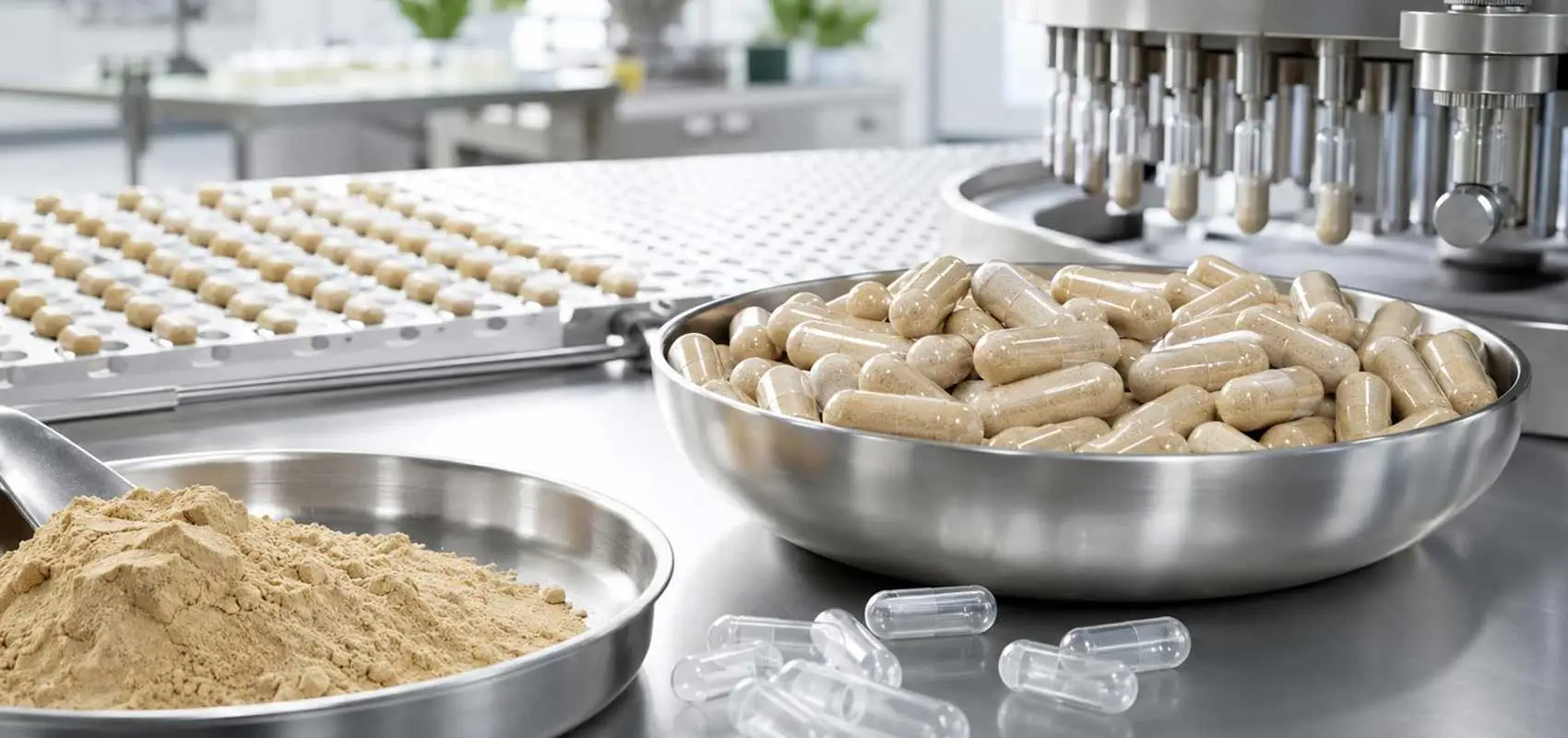
HPLC Testing and Red Clover Extract Standardization
Accurate analytical testing is essential when purchasing botanical ingredients standardized to specific active constituents.
For red clover extract HPLC testing, high-performance liquid chromatography is commonly used to separate and quantify selected isoflavones in the extract.
However, the term HPLC identifies an analytical technique, not a single universally interchangeable testing procedure.
How HPLC Measures Red Clover Isoflavone Content
During HPLC analysis, a prepared sample is introduced into a chromatographic system. Individual constituents are separated according to their interactions with the stationary and mobile phases.
Appropriate reference standards and calibration procedures allow the laboratory to identify and quantify target compounds.
A reliable red clover extract HPLC analysis should therefore be supported by a documented method specifying sample preparation, analytical conditions, reference materials, calculations, and acceptance criteria.
Chromatographic peak area alone does not establish an ingredient's total isoflavone percentage without the relevant calibration and calculation procedures.
For procurement teams, the most important question is whether the reported result was generated using a validated or otherwise appropriately qualified method suitable for the intended specification.
Why Different Isoflavone Assay Methods Matter
Red clover contains isoflavones in different chemical forms, including aglycones and conjugated derivatives.
Depending on the method, sample preparation may involve hydrolysis or other procedures that influence which compounds are measured and how results are expressed.
Consequently, two laboratories may report different total isoflavone values for the same material if their analytical definitions and calculation methods differ.
When comparing red clover extract assay methods, buyers should verify whether the reported result represents individual compounds, a defined sum, or an aglycone-equivalent calculation.
This is particularly important when evaluating competing quotations or transferring an existing formulation to a new supplier.
Chinese and European Specifications: What Should Buyers Verify?
CHEN LANG BIO TECH offers red clover extract specifications designated for Chinese and European requirements, with 8%, 20%, and 40% total isoflavone options.
However, these designations should not be treated as proof that the analytical methods or regulatory requirements are identical.
Before ordering, buyers should request the applicable specification document and confirm the relevant method, reference standards, calculation basis, and acceptance limits.
Where a particular pharmacopoeial or regulatory standard is required, its exact identity and version should be established in writing.
A product described as meeting a European specification should not be assumed to comply automatically with every European Union requirement governing botanical ingredients or finished supplements.
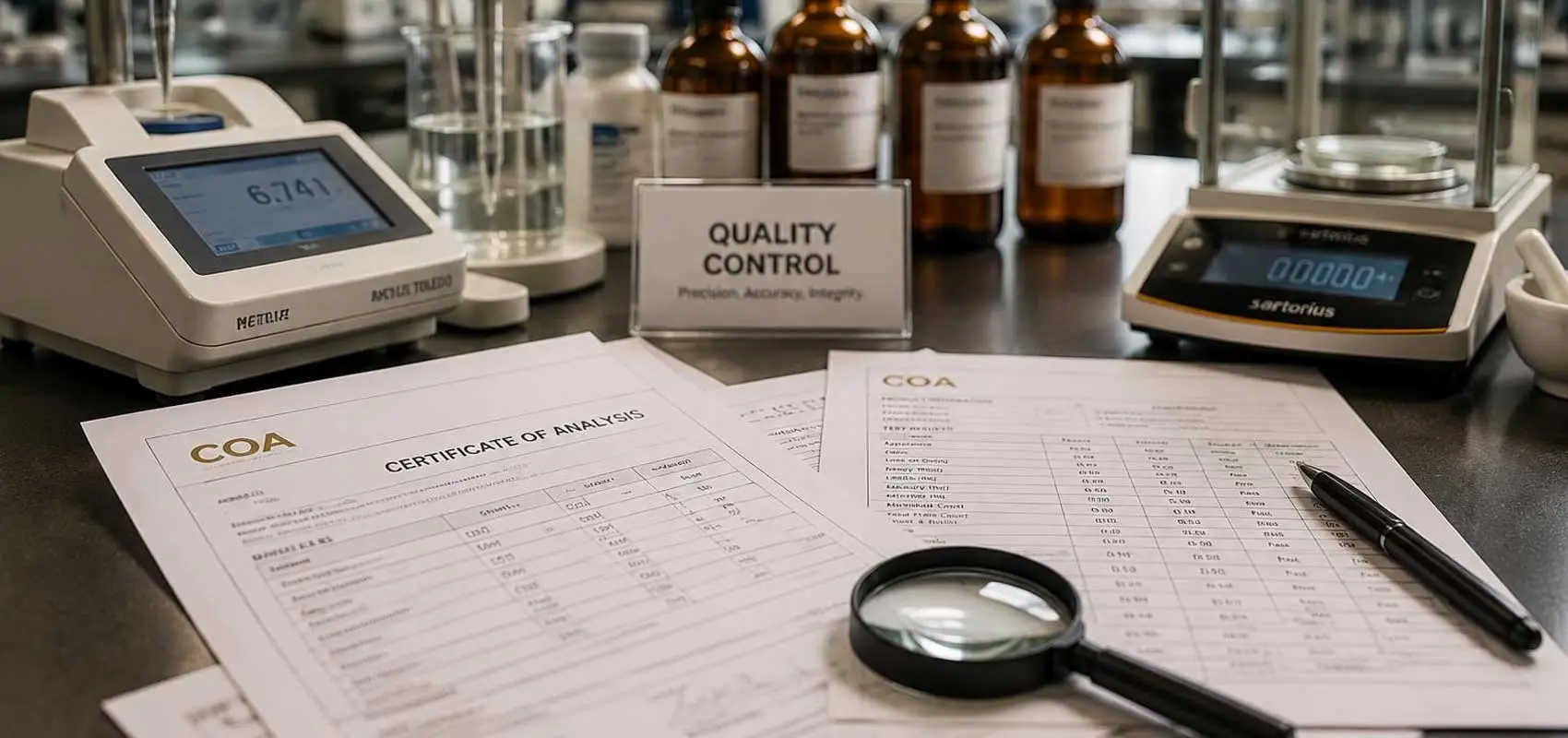
Red Clover Extract COA and Quality Specifications for Bulk Buyers
A batch-specific red clover extract COA is one of the most important documents in supplier qualification.
Although the total isoflavone assay is central to the specification, it represents only one aspect of ingredient quality.
Manufacturers should also examine botanical identity, potential contaminants, physical characteristics, and batch traceability.
|
Quality Parameter |
What Buyers Should Verify |
|
Botanical identity |
Confirmed Trifolium pratense L. and declared plant part |
|
Total isoflavones |
Specified 8%, 20%, or 40% assay |
|
HPLC method |
Defined analytical procedure and calculation basis |
|
Individual isoflavones |
Compound profile where required |
|
Heavy metals |
Results against applicable limits |
|
Microbiological quality |
Appropriate limits for the intended application |
|
Residual solvents |
Solvent-related limits based on the extraction process |
|
Moisture |
Specified limit and analytical result |
|
Batch traceability |
Lot number and supporting production records |
A red clover extract certificate of analysis should clearly identify the tested batch, relevant specifications, results, and analytical methods.
However, the COA should not be confused with other technical documentation.
A Technical Data Sheet (TDS) generally describes the ingredient's specifications and relevant technical characteristics, while a Safety Data Sheet (SDS) communicates applicable hazard and handling information.
For red clover extract quality control, these documents serve complementary purposes.
International buyers should request the documentation needed for their own supplier approval process and confirm whether additional testing is required by their destination market.
Red Clover Extract Price: Comparing Cost per Gram of Isoflavones
The red clover extract price should be evaluated in relation to standardized content rather than powder weight alone.
An 8% extract may have a lower price per kilogram than a 40% extract, but it also contains substantially less total isoflavones per kilogram.
For supplement manufacturers, this difference can affect raw material consumption and the ingredient cost of each finished product.
Why Price per Kilogram Is Not Enough
Consider a hypothetical comparison using illustrative prices rather than current market quotations.
|
Specification |
Example Price/kg |
Total Isoflavones/kg |
Cost/g Isoflavones |
|
8% |
$30 |
80 g |
$0.375 |
|
20% |
$60 |
200 g |
$0.300 |
|
40% |
$100 |
400 g |
$0.250 |
Although the 40% extract has the highest hypothetical kilogram price, it has the lowest calculated cost per gram of total isoflavones in this example.
This demonstrates why comparing red clover extract price per kg without considering assay concentration can produce misleading purchasing conclusions.
Calculating the Cost of Standardized Isoflavones
The basic calculation is:

For example, a 20% extract purchased at $60/kg provides a theoretical 200 g of total isoflavones per kilogram, resulting in a calculated cost of $0.30 per gram.
However, this calculation is meaningful only when the compared assay results use compatible analytical definitions.
The final commercial assessment should also consider testing costs, packaging, freight, minimum order quantities, processing losses, and the amount of extract required in each finished unit.
When requesting a red clover extract bulk price, buyers should specify the intended concentration, estimated purchase volume, destination market, and documentation requirements.
These details allow suppliers to prepare quotations that reflect the actual purchasing requirements rather than provide a generic price.
How to Choose a Bulk Red Clover Extract Supplier
Choosing a bulk red clover extract supplier requires more than confirming that a company can offer the requested isoflavone percentage.
For long-term supplement production, reliable supply depends on documented specifications, analytical consistency, technical communication, and the ability to support repeat orders.
A qualified supplier should be able to explain how its standardized extract is tested and provide appropriate documentation for the intended application.
Questions to Ask a Red Clover Extract Manufacturer
Before approving a new red clover extract manufacturer, purchasing and quality teams should establish several practical points.
First, confirm whether the supplier can consistently provide the required concentration. Availability of an 8%, 20%, or 40% specification does not necessarily establish that every production batch has the same physical or analytical characteristics.
Second, request a representative red clover extract sample and its corresponding COA. This allows the receiving laboratory to evaluate the material against internal requirements before committing to commercial quantities.
Third, clarify the analytical method, particularly when comparing products offered under different regional specifications.
Finally, review batch traceability, documentation availability, packaging, lead times, and international shipping arrangements.
For distributors purchasing red clover extract wholesale, these considerations become especially important because the material may be supplied to multiple downstream manufacturers with different quality requirements.
A supplier's ability to provide clear technical answers is often as important as the initial quotation.
Which Red Clover Extract Specification Should Buyers Choose?
There is no universally superior concentration for every supplement formulation.
The appropriate specification depends on the intended product, standardized isoflavone target, manufacturing requirements, and total purchasing cost.
|
Buyer Requirement |
Recommended Evaluation |
|
Limited capsule space |
Compare higher-concentration specifications |
|
Cost-sensitive formulation |
Calculate cost per gram of total isoflavones |
|
Defined isoflavone profile |
Request individual compound analysis |
|
Multi-ingredient formulation |
Evaluate powder quantity and compatibility |
|
International distribution |
Verify market-specific documentation |
|
Long-term commercial production |
Confirm batch consistency and supply reliability |
For many procurement teams, the most effective approach is to compare two or more grades using the same technical and commercial criteria.
The best red clover extract for supplements is not necessarily the one with the highest stated isoflavone percentage. It is the specification that meets the formulation target, satisfies the required quality standards, and provides a competitive cost per unit of standardized material.
Frequently Asked Questions About Red Clover Extract Isoflavones
What is the difference between 8% and 40% red clover extract?
The main difference is standardized total isoflavone concentration. An 8% extract theoretically contains 80 mg of total isoflavones per gram, while a 40% extract contains 400 mg. Therefore, the 40% grade requires one-fifth as much powder to provide the same theoretical isoflavone quantity, assuming comparable analytical definitions.
Is 40% red clover extract better than 20%?
Not necessarily. A 40% extract provides twice the standardized isoflavone content of a 20% extract per unit weight. However, ingredient selection also depends on price, powder characteristics, analytical methods, formulation compatibility, and supplier quality.
How are total isoflavones measured in red clover extract?
Total isoflavones can be measured using HPLC methods designed to quantify specified isoflavone compounds. The reported result depends on the analytical procedure, reference standards, sample preparation, and calculation basis. Buyers should review the applicable method when comparing different suppliers.
Can red clover extract be used in capsules and tablets?
Red clover extract powder for supplements can be evaluated for capsule and tablet formulations, subject to the intended market's regulatory requirements. Manufacturers should assess powder flow, bulk density, compressibility, excipient compatibility, and finished product stability before commercial production.
What documents should buyers request when purchasing bulk red clover extract?
Buyers should request a batch-specific COA, relevant technical specifications, and applicable safety documentation. Depending on the intended application and destination market, additional information concerning botanical identity, analytical methods, contaminants, manufacturing controls, and traceability may be necessary.
Source Standardized Red Clover Extract from CHEN LANG BIO TECH
CHEN LANG BIO TECH supplies red clover extract powder standardized to 8%, 20%, and 40% total isoflavones, with HPLC testing and specification options for different purchasing requirements.
We work with supplement manufacturers, botanical ingredient distributors, and formulation teams seeking consistent raw materials for product development and commercial supply.
Whether you are comparing concentrations, qualifying a new ingredient source, or planning a bulk red clover extract purchase, our team can help you review the available specifications and discuss your documentation and ordering requirements.
Contact us Email: admin@chenlangbio.com to request red clover extract specifications, available COA documentation, sample information, and a quotation for your required quantity.
References
1. United States Pharmacopeia (USP–NF). Powdered Red Clover Extract. Official monograph. https://doi.org/10.31003/USPNF_M18964_02_01
2. United States Pharmacopeia (USP–NF). Red Clover Powder. Official monograph.
3. European Medicines Agency (EMA). Trifolium pratense L. — relevant botanical and regulatory resources, where applicable.
4. National Center for Biotechnology Information (NCBI), PubChem. Chemical compound records for Biochanin A, Formononetin, Genistein, and Daidzein.

Send Inquiry
Related Industry Knowledge
- Ethyl Ascorbic Acid and Retinol: Can They Be Formulated Together?
- Is Centella Asiatica Extract Powder Better Than Niacinamide?
- Saw Palmetto Extract vs Finasteride: Which Is Better for Hair Loss?
- Can Hydroxypropyl Tetrahydropyrantriol be Used for Sensitive Skin?
- What are the Health Benefits of Mung Bean Peptide Powder?
- Dimethylmethoxy Chromanol in Bulk: Benefits & Application
- Red Wine Extract Powder: Benefits and Uses
- Is Nitenpyram Effective Against Fleas
- Does pqq lower blood pressure?
- Magnesium Ascorbyl Phosphate Benefits for Skin