Pine Bark Extract and Hyaluronic Acid in Beauty Supplements
2026-06-04 16:00:15
Introduction: The Growing Trend of Botanical and Hyaluronic Acid Supplements
In recent years, the beauty and wellness industry has witnessed a significant shift toward botanical ingredients and functional compounds that support skin health and hydration. Among the most compelling combinations in this sector is pine bark extract and hyaluronic acid, which are increasingly incorporated into dietary supplements, functional beverages, and nutricosmetic products.
Consumers are seeking products that combine efficacy with natural sourcing, transparency, and clean-label positioning. This has driven brands and ingredient procurement teams to evaluate not just the active ingredients themselves, but also supplier reliability, bulk sourcing capabilities, and technical documentation. Standardization of pine bark extract powder and verified hyaluronic acid specifications has become critical for ensuring consistent formulation performance across capsules, powders, and beverage systems.
For suppliers, providing consistent OPC content, solubility data, and formulation guidance not only improves client satisfaction but also strengthens brand credibility. By offering these services, suppliers can support global nutraceutical markets, where quality, documentation, and traceability are increasingly prioritized over pricing alone.
Understanding Pine Bark Extract and Its Role in Skin Health
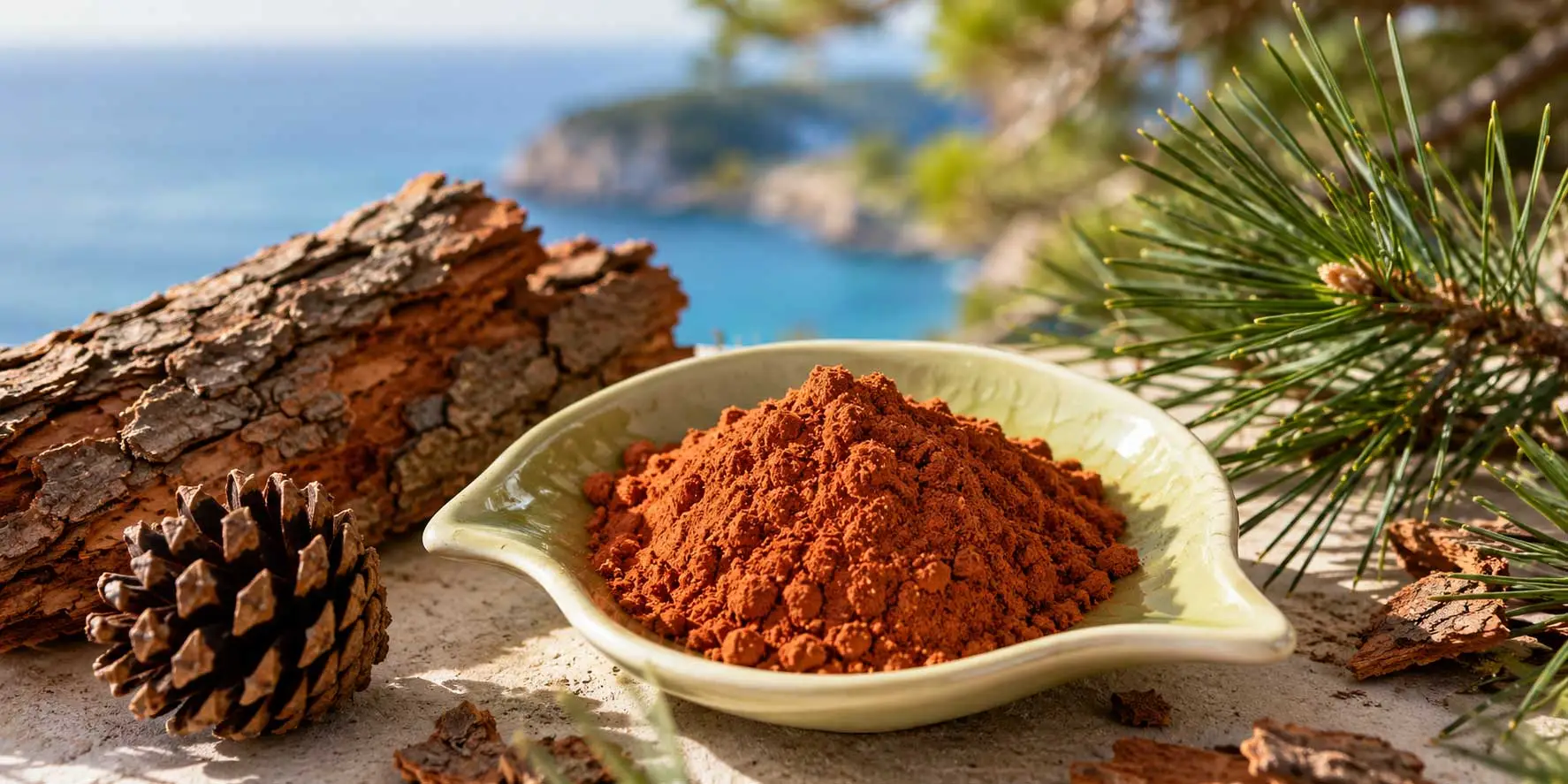
Pine bark extract is a naturally derived botanical ingredient, highly valued for its oligomeric proanthocyanidins (OPCs) and polyphenolic content. In beauty supplements, these compounds are commonly leveraged for their antioxidant properties, which complement other skin-focused nutrients.
High-quality pine bark extract powder 95% OPC ensures predictable active compound levels, critical for formulation consistency and regulatory compliance. For procurement teams, sourcing standardized extracts allows for greater control over product performance, batch-to-batch reproducibility, and claims support without overstepping regulatory boundaries.
In commercial applications, pine bark extract is often incorporated alongside vitamins, minerals, or plant-based co-ingredients to enhance the perceived value and efficacy of the product. Typical pairings in beauty-from-within formulations include collagen peptides, hyaluronic acid, vitamin C, and biotin. These combinations are designed to address consumer demand for products that support hydration, skin elasticity, and overall wellness.
Suppliers offering detailed COA documentation, batch-specific test results, and technical support are preferred by international brands, as these resources simplify ingredient qualification and reduce formulation risk. The strategic selection of a pine bark extract supplier is therefore as important as the ingredient itself for brands targeting premium beauty and wellness markets.
The Benefits of Hyaluronic Acid in Beauty Supplements
Hyaluronic acid (HA) is a naturally occurring glycosaminoglycan that has gained prominence in dietary supplements due to its hydration-supportive properties and market recognition as a premium beauty-from-within ingredient. In combination with botanical extracts like pine bark extract, HA enhances the overall appeal and efficacy profile of beauty supplements.
Typical supplement formulations leverage hyaluronic acid in synergy with collagen and polyphenol-rich ingredients to support skin moisture retention, elasticity, and a youthful appearance, without making explicit therapeutic claims. Commercially, the inclusion of HA can differentiate a product in the increasingly competitive beauty and wellness category.
For formulation specialists and procurement teams, sourcing high-quality hyaluronic acid with reliable molecular weight specifications, solubility data, and COA support is crucial. Bulk sourcing from suppliers that provide both pine bark extract and hyaluronic acid allows brands to streamline ingredient management, reduce variability, and maintain a premium positioning.
This combination aligns well with current market trends emphasizing plant-based, clean-label, and multifunctional dietary supplements, particularly in North American and European markets. By integrating HA with OPC-rich pine bark extract, brands can develop innovative nutricosmetic formulations that resonate with health-conscious consumers.
Synergistic Effects: Combining Pine Bark Extract with Hyaluronic Acid
The integration of pine bark extract and hyaluronic acid in beauty supplements leverages complementary mechanisms: OPCs provide antioxidant support, while HA enhances hydration and skin barrier properties. This synergy is increasingly used in capsules, powders, and functional beverages targeted at beauty-conscious consumers.
Formulation teams often pair standardized pine bark extract with HA to create products that are versatile across multiple formats. Capsules and tablets benefit from precise dosing, powdered sachets offer convenience and higher ingredient load, and ready-to-drink beverages require water-soluble extract grades and optimized solubility for HA.
From a commercial perspective, combining these ingredients can add formulation flexibility and market differentiation. Suppliers who offer technical guidance, specification sheets, and consistent bulk supply support help brands navigate the complexity of multi-ingredient formulations.
For procurement and R&D teams, the benefits include:
•Predictable active content levels across batches
•Simplified regulatory documentation and COA management
•Access to bulk ingredient supply suitable for global distribution
•Enhanced product positioning in the beauty-from-within and anti-aging supplement segments
Integrating pine bark extract and hyaluronic acid demonstrates to both consumers and buyers that a brand prioritizes scientifically recognized, high-quality ingredients while maintaining a natural, premium product narrative.
Formulation Considerations for Beauty Supplements
While both pine bark extract and hyaluronic acid are widely used in the beauty supplement industry, successful product development depends on more than simply combining trending ingredients. Factors such as ingredient specifications, dosage strategy, product format, stability, and supplier support all influence the commercial viability of a formulation.
Selecting the Right Pine Bark Extract Specification
One of the first decisions formulators face is selecting an appropriate pine bark extract specification. For premium beauty supplements, highly standardized grades such as Pine Bark Extract Powder 95% OPC are commonly used because they offer predictable active compound levels and simplify quality control procedures.
When evaluating a pine bark extract supplier, buyers typically review:
•OPC standardization level
•Heavy metal testing
•Microbiological specifications
•Particle size
•Solubility characteristics
•Batch-to-batch consistency
As discussed in our article Pine Bark Extract Powder 95% OPC: Specifications, Applications, and Buying Considerations, standardization plays a critical role in maintaining formulation consistency across commercial production batches.
Choosing the Appropriate Hyaluronic Acid Grade
Not all hyaluronic acid ingredients are identical. Different molecular weight ranges may be selected depending on the intended product format and formulation objectives.
When sourcing hyaluronic acid for beauty supplements, procurement teams often evaluate:
|
Specification Item |
Typical Consideration |
|
Molecular Weight |
Product-specific requirements |
|
Purity |
High purity preferred |
|
Solubility |
Important for beverage applications |
|
Flowability |
Important for powder processing |
|
Stability |
Required for long shelf life |
For manufacturers developing powders, capsules, or beverage systems, ingredient compatibility should be assessed during early-stage formulation work.
Typical Commercial Formulation Approaches
Many beauty supplement brands combine pine bark extract and hyaluronic acid with additional complementary ingredients to create more comprehensive product concepts. Below are examples of formulation frameworks commonly seen in the market.
Beauty Capsule Formulations
|
Ingredient |
Typical Inclusion Level |
|
Pine Bark Extract Powder 95% OPC |
50–150 mg |
|
Hyaluronic Acid |
50–120 mg |
|
Vitamin C |
50–100 mg |
|
Biotin |
100–300 mcg |
This type of formulation is commonly positioned within the beauty-from-within supplement category and appeals to consumers seeking premium daily beauty products.
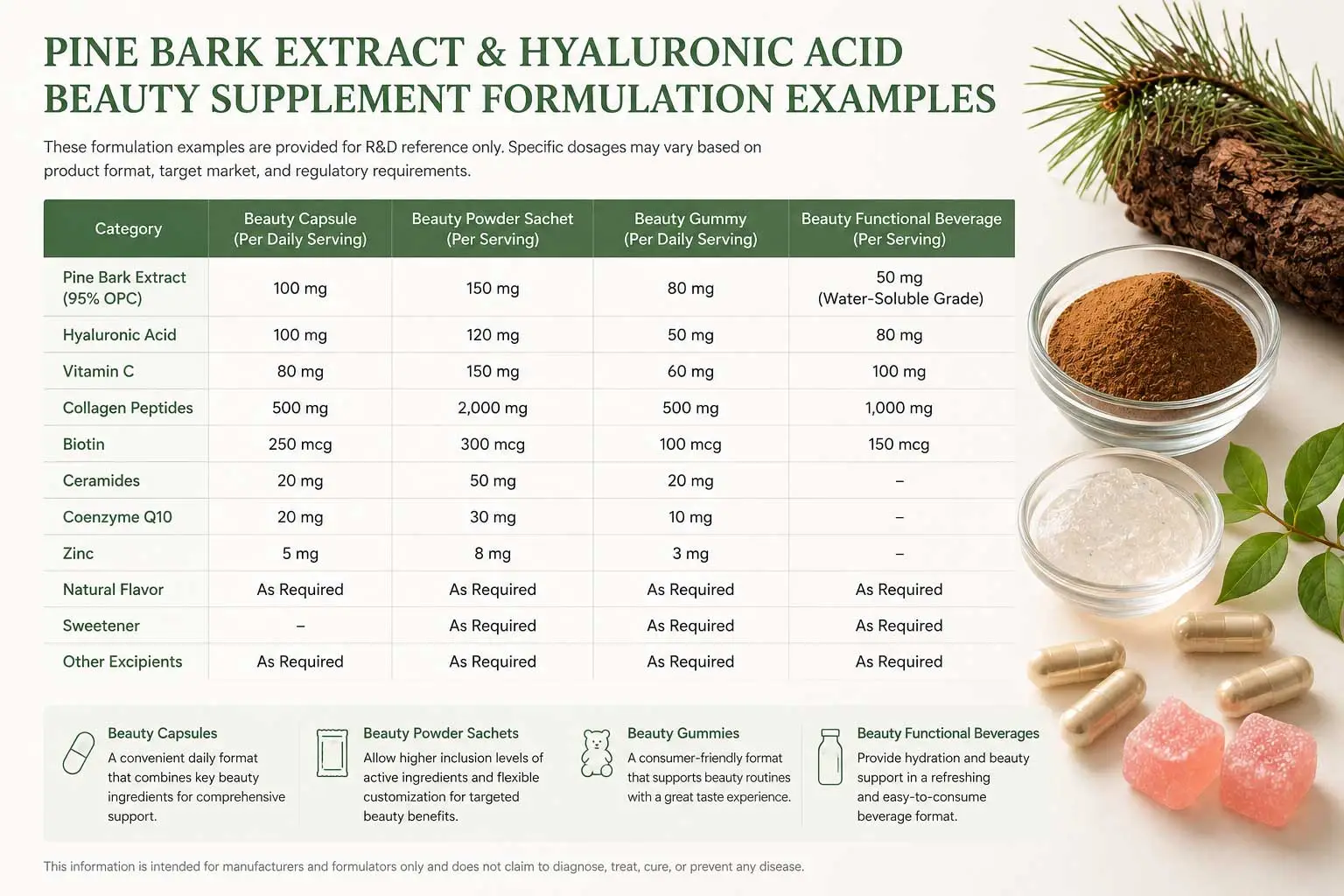
Beauty Powder Sachets
|
Ingredient |
Typical Inclusion Level |
|
Pine Bark Extract Powder 95% OPC |
100–200 mg |
|
Hyaluronic Acid |
80–150 mg |
|
Vitamin C |
100–200 mg |
|
Natural Flavor System |
As Required |
Powdered beauty sachets continue to gain popularity because they allow higher inclusion levels and flexible serving formats.
Functional Beauty Beverages
|
Ingredient |
Typical Inclusion Level Per Serving |
|
Water-Soluble Pine Bark Extract |
50–100 mg |
|
Hyaluronic Acid |
50–120 mg |
|
Vitamin C |
50–150 mg |
|
Natural Fruit Flavors |
As Required |
This format aligns closely with current consumer demand for convenient beauty and wellness products. Manufacturers interested in beverage applications may also find our article Pine Bark Extract in Functional Beverages: Applications, Specifications & Supplier Insights useful for understanding formulation and sourcing considerations.
Supporting Ingredient Selection
Many brands choose to combine pine bark extract and hyaluronic acid with additional ingredients such as:
•Vitamin C
•Biotin
•Collagen Peptides
•Ceramides
•Coenzyme Q10
The final formulation depends on target consumers, regional regulations, product positioning, and dosage requirements. Regardless of the formulation strategy, consistent ingredient quality remains one of the most important factors influencing product success.
Quality, Certification, and Choosing a Reliable Supplier
For international supplement brands, ingredient quality and supplier reliability are often more important than small differences in pricing. The beauty supplement category is highly competitive, and product quality issues can quickly damage consumer trust and brand reputation.
As a result, procurement teams increasingly focus on sourcing partners that can provide not only ingredients, but also technical support, regulatory documentation, and long-term supply stability.
Manufacturing Experience and Technical Expertise
Manufacturing experience often reflects process maturity, quality control standards, and technical capability. When evaluating a potential pine bark extract supplier or hyaluronic acid supplier, buyers should consider:
•Years of manufacturing experience
•Extraction expertise
•Quality management systems
•Export experience
•Technical support capabilities
Suppliers with established production systems are generally better positioned to support commercial-scale projects and long-term partnerships.
Production Capacity and Supply Security
Ingredient sourcing decisions should also consider future growth. Questions buyers commonly ask include:
•Can the supplier support increasing order volumes?
•Are multiple production lines available?
•What is the average lead time?
•How is inventory managed?
•Is there a contingency plan for supply disruptions?
These factors become particularly important for brands operating in multiple international markets.
Documentation and Regulatory Support
Professional ingredient suppliers should provide complete documentation packages. Typical requirements include:
•Certificate of Analysis (COA)
•Product Specification Sheet
•Heavy Metal Report
•Microbiological Report
•Safety Data Sheet (SDS)
•Traceability Documentation
Comprehensive documentation simplifies supplier qualification and supports regulatory compliance across different regions.
Quality Systems and Certifications
Reliable suppliers generally operate under recognized quality standards. Common certifications include:
•ISO9001
•ISO22000
•GMP-oriented manufacturing systems
•Food Production Licenses
•Application-specific certifications
These systems help ensure consistency, traceability, and process control throughout manufacturing.

Why Global Brands Work With Established Manufacturers
Founded in 1991, CHEN LANG BIO TECH has focused on botanical extraction, ingredient manufacturing, and deep processing for more than three decades. Today, our facilities include seven GMP-oriented production lines and a 100,000-class clean workshop, supporting annual production and processing capacities exceeding 3,000 tons of botanical extracts and fruit powders.
Our products are widely used in dietary supplements, functional beverages, cosmetic formulations, pharmaceutical ingredients, and animal nutrition applications.
More importantly, we support customers throughout the sourcing process with:
•Product specifications
•COA documentation
•Sample evaluation
•Technical consultation
•Customized ingredient solutions
•Bulk supply programs
For companies developing premium beauty supplements containing pine bark extract and hyaluronic acid, supplier selection should be viewed as a long-term strategic decision rather than a simple purchasing transaction.
As discussed in our guides How to Choose a Reliable Pine Bark Extract Supplier and Bulk Pine Bark Extract Buying Guide: Specifications, Pricing, and Supplier Selection, successful sourcing strategies balance quality, consistency, technical support, and long-term supply security.
Suggested Applications and Dosage Guidelines
The combination of pine bark extract and hyaluronic acid has been widely adopted across multiple product formats in the beauty supplement market. While actual formulations vary depending on brand strategy, target consumers, and regulatory requirements, several typical frameworks are frequently employed in commercial products.
Beauty Supplement Capsules and Tablets
|
Ingredient |
Typical Inclusion Level per Capsule/Tablet |
Notes |
|
Hydrolyzed Collagen Peptides |
500–1,000 mg |
Core structural protein for skin and connective tissue support |
|
Pine Bark Extract Powder 95% OPC |
50–150 mg |
Standardized botanical antioxidant component |
|
Hyaluronic Acid |
50–120 mg |
Moisture-supporting ingredient for skin hydration |
|
Vitamin C |
30–100 mg |
Enhances stability and synergistic effect |
|
Biotin |
100–300 μg |
Supports overall beauty positioning |
This format allows precise dosing and is commonly used for daily beauty supplements targeting skin hydration and wellness-conscious consumers. Suppliers providing batch-specific COAs and consistent OPC content are preferred for these formulations.
Powdered Beauty Sachets
|
Ingredient |
Typical Inclusion Level per Sachet |
Notes |
|
Hydrolyzed Collagen Peptides |
3,000–6,000 mg |
Convenient, higher dosage format |
|
Pine Bark Extract Powder 95% OPC |
100–200 mg |
High-standardized antioxidant ingredient |
|
Hyaluronic Acid |
80–150 mg |
Supports skin hydration |
|
Vitamin C |
60–100 mg |
Maintains ingredient stability |
|
Natural Flavors |
As Required |
Improves palatability |
|
Citric Acid / Anti-Caking Agents |
As Required |
Ensures solubility and flowability |
Powder sachets are increasingly popular for beauty-from-within formulations and functional drink blends. They are ideal for consumers seeking portable, easy-to-use products.
Functional Beverage Formulations
|
Ingredient |
Typical Inclusion Level per Serving |
Notes |
|
Hydrolyzed Collagen Peptides |
2,000–5,000 mg |
Soluble form suitable for beverages |
|
Water-Soluble Pine Bark Extract |
50–100 mg |
Ensures even dispersion in liquid systems |
|
Hyaluronic Acid |
50–120 mg |
Maintains hydration support in drinks |
|
Vitamin C |
50–150 mg |
Antioxidant synergy |
|
Natural Fruit Flavors |
As Required |
Enhances taste profile |
|
Sweeteners (Optional) |
As Required |
Consumer-friendly flavor adjustments |
Functional beverages allow brands to deliver both collagen and pine bark extract in convenient formats while meeting clean-label and plant-based trends. Water-soluble grades are preferred to maintain stability and clarity in ready-to-drink systems.
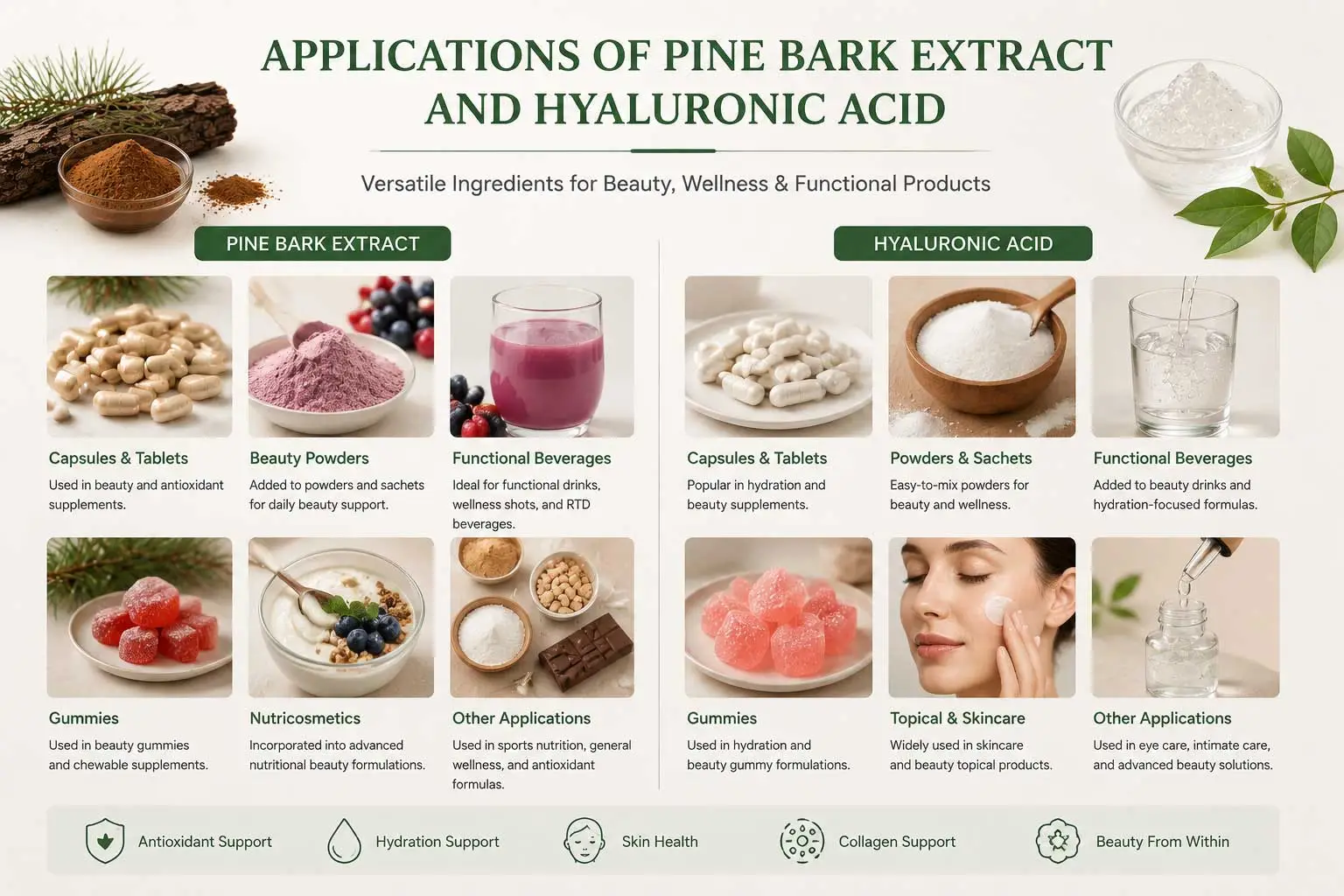
Nutricosmetic Soft Chews and Gummies
|
Ingredient |
Typical Inclusion Level per Unit |
Notes |
|
Hydrolyzed Collagen Peptides |
1,000–2,000 mg |
Bite-sized daily dosage |
|
Pine Bark Extract Powder 95% OPC |
50–100 mg |
Maintains standardized antioxidant level |
|
Hyaluronic Acid |
30–80 mg |
Supports moisture retention in skin |
|
Vitamin C |
30–80 mg |
Complements antioxidant profile |
|
Natural Fruit Juice / Flavors |
As Required |
Improves palatability and product appeal |
Soft chews and gummies provide an enjoyable consumption experience, ideal for brands aiming to combine convenience with premium beauty-from-within positioning.
Formulation Notes for Manufacturers
•Ingredient consistency is critical. Procurement teams should ensure batch-to-batch standardization, particularly for OPC content in pine bark extract and molecular weight in hyaluronic acid.
•Dosage ranges in these tables represent typical commercial usage and are for industry reference only, not for medical advice.
•Inclusion levels can be adjusted based on product format, target consumer demographic, and regulatory compliance.
•Suppliers offering technical support, customized grades, and COA documentation simplify product development and accelerate market entry.
Frequently Asked Questions About Pine Bark Extract and Hyaluronic Acid in Beauty Supplements
Can Pine Bark Extract and Hyaluronic Acid Be Used Together in Beauty Supplements?
Yes. Pine bark extract and hyaluronic acid are frequently used together in beauty supplements because they offer complementary formulation characteristics. Pine bark extract is valued for its standardized polyphenol content, while hyaluronic acid is widely used in hydration-focused products. This combination is commonly found in capsules, powders, gummies, beauty sachets, and functional beverages. Formulators often combine both ingredients with collagen peptides, vitamin C, or biotin when developing premium beauty-from-within products.
What Is the Most Common Pine Bark Extract Specification Used in Beauty Supplements?
One of the most widely used specifications is pine bark extract powder 95% OPC. This grade provides a concentrated source of oligomeric proanthocyanidins (OPCs) and offers consistent active compound levels across production batches. For supplement manufacturers, standardized extracts simplify quality control, formulation consistency, and supplier qualification procedures. Buyers should always request a current COA and product specification sheet before sourcing.
What Should Buyers Look for When Choosing a Pine Bark Extract Supplier?
A reliable pine bark extract supplier should provide standardized products, complete technical documentation, consistent manufacturing quality, and long-term supply capability. Key evaluation criteria include OPC standardization, production capacity, quality certifications, export experience, and batch traceability. Suppliers that can provide technical support and formulation guidance are often preferred by brands developing commercial nutraceutical and beauty supplement products.
Can Pine Bark Extract and Hyaluronic Acid Be Used in Functional Beverages?
Yes. Many beverage manufacturers use water-soluble grades of pine bark extract together with hyaluronic acid in powdered drink mixes, beauty beverages, and ready-to-drink wellness products. When developing beverage formulations, factors such as ingredient solubility, flavor compatibility, processing stability, and shelf-life performance should be evaluated to ensure consistent product quality and consumer acceptance.
Can Pine Bark Extract, Hyaluronic Acid, and Collagen Be Used in the Same Formula?
Yes. This ingredient combination is commonly used in premium beauty supplement formulations. Collagen peptides are frequently combined with pine bark extract and hyaluronic acid in capsules, beauty powders, gummies, and functional beverages. Product developers often include additional ingredients such as vitamin C, biotin, ceramides, or coenzyme Q10 depending on the target market and product positioning.
What Documentation Should a Beauty Supplement Ingredient Supplier Provide?
Professional ingredient suppliers should provide a complete documentation package that typically includes a Certificate of Analysis (COA), Product Specification Sheet, Heavy Metal Report, Microbiological Report, Safety Data Sheet (SDS), and traceability records. These documents support supplier qualification, quality assurance programs, regulatory compliance, and international ingredient sourcing requirements. For commercial projects, documentation quality is often as important as the ingredient specification itself.
Conclusion
As the beauty supplement market continues to evolve, manufacturers are increasingly seeking ingredient combinations that align with consumer demand for premium, science-supported, and multifunctional formulations. The combination of pine bark extract and hyaluronic acid has become a popular choice across capsules, beauty powders, functional beverages, gummies, and other nutricosmetic products due to its versatility and compatibility with modern product concepts.
For product developers and procurement teams, selecting the right ingredients is only part of the equation. Equally important are ingredient standardization, manufacturing consistency, documentation support, regulatory compliance, and long-term supply reliability. These factors directly influence formulation performance, production efficiency, and the ability to scale successfully in competitive global markets.
When evaluating suppliers, buyers should look beyond price alone and focus on quality systems, production capabilities, traceability, and technical expertise. Reliable suppliers can help simplify formulation development, support regulatory requirements, and provide the consistency needed for sustainable brand growth.
With more than three decades of experience in botanical extraction and ingredient manufacturing, CHEN LANG BIO TECH supports customers worldwide with Pine Bark Extract Powder 95% OPC, customized botanical extract solutions, fruit powders, cosmetic ingredients, and nutraceutical raw materials. Our facilities include seven GMP-oriented production lines, a 100,000-class clean workshop, and ISO9001 and ISO22000 certified quality management systems, providing a solid foundation for quality assurance and long-term supply stability.
Whether you are developing a new beauty supplement, optimizing an existing formulation, or evaluating ingredient suppliers for future projects, our team is available to provide product specifications, technical documentation, samples, and sourcing support.
Contact CHEN LANG BIO TECH
📧 Email: admin@chenlangbio.com
🌐 Website: www.chenlangbio.com
📱 WhatsApp: +86-17782478823
For product specifications, COA documentation, sample requests, pricing information, or bulk purchasing inquiries, feel free to contact our team. We are always happy to discuss your formulation and sourcing requirements.
References
1,Rohdewald P. A Review of the French Maritime Pine Bark Extract (Pycnogenol®). International Journal of Clinical Pharmacology and Therapeutics. This review details the chemical composition and bioactive properties of pine bark extract, including typical OPC content ranges.
2, Packer L., Rimbach G., Virgili F. Antioxidant Activity and Biological Properties of a Procyanidin-Rich Extract from Pine Bark. Focuses on standardized OPC content and antioxidant mechanisms relevant to nutraceutical formulations.
3, Schunck M., Zague V., Oesser S., Proksch E. Dietary Supplementation with Specific Collagen Peptides. Provides dosage ranges for hydrolyzed collagen in both capsule and powder formulations for skin health and beauty supplements.
4, European Food Safety Authority (EFSA). Scientific Opinions on Polyphenol-Containing Botanical Preparations. Offers guidance on safe and effective inclusion levels of polyphenol-rich extracts in dietary supplements.
5, USDA FoodData Central. Flavonoid Content of Selected Foods. Provides compositional data supporting standardized botanical ingredient selection for nutraceuticals.
6, Institute of Food Technologists (IFT). Technical Publications on Functional Beverage and Nutraceutical Formulations. Guides formulation practices, solubility considerations, and ingredient inclusion levels for plant-based and antioxidant-rich supplements.

Send Inquiry
Related Industry Knowledge
- Avenanthramides vs Centella asiatica Which Ingredient Offers Better Comfort for Reactive and Red-Prone Skin?
- Kaempferol: Unveiling Its Anti-inflammatory Properties for Therapeutic Innovation
- Is Piroctone Olamine Better Than Zinc Pyrithione?
- What Makes Serrapeptase Powder a Top Pick for Food and Beverage Applications?
- Are Hops High in Histamine?
- Top Benefits of Pro-Xylane Powder for Skincare
- What are the Side Effects of Centella Asiatica Extract
- What is the Mechanism of Action of Praziquantel
- What is Quaternium 73 Used For In Cosmetics
- What is Green Tea Extract EGCG Powder Used For