
Is 3-O-Ethyl Ascorbic Acid Better Than L-Ascorbic Acid?
2026-02-13 17:05:55
In the world of cosmetic formulation, few ingredients are discussed as often—or as intensely—as vitamin C. For decades, formulators have relied on L-Ascorbic Acid as the benchmark for brightening and antioxidant performance. Yet over the past several years, derivatives such as 3-O-Ethyl Ascorbic Acid have steadily gained ground, particularly among brands seeking improved stability and better skin tolerance.
As a manufacturer and bulk supplier of cosmetic-grade actives, CHEN LANG BIO TECH works closely with formulation laboratories, contract manufacturers, and brand owners across Europe, North America, and emerging markets. One of the most frequent questions we receive is straightforward:
Is 3-O-Ethyl Ascorbic Acid actually better than L-Ascorbic Acid?
The honest answer is more nuanced than a simple yes or no. “Better” depends on formulation goals, target consumer profile, packaging strategy, regulatory positioning, and supply chain considerations. In this article, we provide a detailed, technical yet practical comparison to help procurement teams and formulators make informed decisions.
A Quick Executive Summary
Before diving deeper, here is a high-level comparison that many buyers find useful:
If you are developing a classic low-pH, water-based vitamin C serum focused on maximum historical validation, L-Ascorbic Acid remains a strong option.
If you require improved oxidative stability, broader formulation flexibility, and enhanced skin tolerance, 3-O-Ethyl Ascorbic Acid may offer practical advantages.
For hot, humid markets or longer shelf-life requirements, stabilized derivatives often reduce formulation risk.
From a sourcing perspective, factors such as purity, batch consistency, and documentation (COA, MSDS, TDS) are just as important as the molecule itself.
Now let’s examine each ingredient in detail.
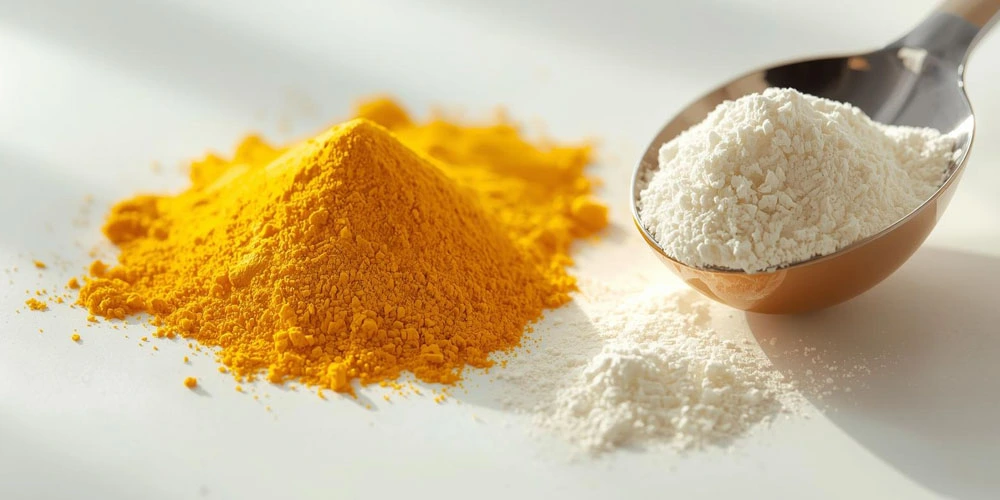
Understanding L-Ascorbic Acid: The Benchmark Form of Vitamin C
L-Ascorbic Acid (LAA) is the pure, biologically active form of vitamin C. It is water-soluble and widely recognized for its antioxidant activity and role in supporting collagen synthesis pathways in topical applications.
Mechanism and Functional Profile
In skincare formulations, L-Ascorbic Acid is typically used to:
•Help reduce the visible appearance of hyperpigmentation
•Support antioxidant protection against environmental stressors
•Improve the look of uneven skin tone
•Contribute to a more radiant complexion
Because it is already in its active form, it does not require enzymatic conversion in the skin. This direct activity is often cited as its key strength.
Limitations in Real-World Formulation
However, from a manufacturing and stability standpoint, L-Ascorbic Acid presents several challenges:
♦High Oxidation Sensitivity
Exposure to air, light, heat, and metal ions accelerates degradation. Discoloration from clear to yellow or brown is common in unstable systems.
♦Strict pH Requirements
For optimal performance and stability, L-Ascorbic Acid is usually formulated below pH 3.5. This acidic environment may increase the risk of irritation for sensitive skin.
♦Limited Compatibility
It can be difficult to combine with certain actives in the same formula without compromising stability.
♦Packaging Constraints
Airless pumps, opaque bottles, and antioxidant co-systems are often necessary to protect product integrity.
These formulation constraints are manageable in experienced laboratories, but they add cost, complexity, and potential variability across production batches.
What Is 3-O-Ethyl Ascorbic Acid?
3-O-Ethyl Ascorbic Acid, sometimes referred to as Ethyl Ascorbic Acid, is a stabilized derivative of vitamin C in which an ethyl group is attached at the third carbon position of the ascorbic acid molecule.
This modification significantly alters its stability profile while retaining functional activity relevant to cosmetic use.
Why It Was Developed
The primary goal behind developing derivatives such as 3-O-Ethyl Ascorbic Acid was to address the instability issues associated with pure L-Ascorbic Acid—without sacrificing performance in brightening and antioxidant support applications.
The ethylation at the 3-position enhances resistance to oxidation and improves compatibility within a wider pH range, making it more adaptable to diverse formulations including:
•Serums;
•Emulsions;
•Creams;
•Lotions;
•Hybrid water-oil systems;
•Functional Characteristics.
From a formulation standpoint, 3-O-Ethyl Ascorbic Acid offers:
•Improved oxidative stability compared to LAA;
•Greater tolerance in moderately acidic to near-neutral systems;
•Good solubility characteristics in water-based phases;
•Enhanced flexibility for combination with other brightening actives.
These properties have led to increasing demand for cosmetic grade 3-O-Ethyl Ascorbic Acid among global skincare brands.
Stability: The Decisive Technical Factor
When comparing these two ingredients, stability is often the defining criterion.
Oxidation Behavior
L-Ascorbic Acid is inherently unstable in aqueous systems. Even under ideal conditions, degradation may occur during:
•Manufacturing;
•Filling;
•Storage;
•Distribution.
In contrast, 3-O-Ethyl Ascorbic Acid stability under similar environmental stress is typically more robust. While no vitamin C ingredient is completely immune to degradation, the ethylated derivative demonstrates slower discoloration and improved shelf-life consistency.
Impact on Commercial Production
For brand owners and contract manufacturers, improved stability translates into:
•Reduced product returns;
•Lower batch rejection rates;
•Extended shelf life;
•Greater confidence in global distribution.
In tropical or high-humidity markets, this advantage becomes even more significant.
Efficacy: Does Derivatization Reduce Performance?
A common question among buyers is whether modifying the molecule reduces its functional performance.
The answer depends on expectations and formulation context.
Direct vs. Converted Activity
L-Ascorbic Acid acts directly because it is already in its biologically active form. Derivatives like 3-O-Ethyl Ascorbic Acid are designed to maintain functionality while improving handling characteristics.
In cosmetic applications, performance outcomes depend on:
•Concentration;
•Vehicle system;
•Penetration enhancers;
•Overall formula design.
In practical terms, many formulators report comparable visible brightening performance when 3-O-Ethyl Ascorbic Acid is used at appropriate levels within optimized systems.
The key takeaway is that performance cannot be evaluated in isolation from formulation science.
Irritation and Skin Tolerance
Skin tolerance is another major consideration.
L-Ascorbic Acid and Low pH
Because LAA requires a low pH environment, it may cause stinging or redness in sensitive individuals. The irritation is often pH-related rather than molecule-specific.
3-O-Ethyl Ascorbic Acid and Formulation Flexibility
3-O-Ethyl Ascorbic Acid can be incorporated into slightly higher pH systems compared to LAA. This often allows formulators to design products that are perceived as gentler.
For brands targeting:
Sensitive skin;
Barrier-compromised skin;
Post-procedure skincare;
derivatives may offer practical advantages in user experience.
Formulation Considerations: Practical Differences
From a technical standpoint, these two ingredients demand different development strategies.
♦pH Range
L-Ascorbic Acid: Optimal below ~3.5
3-O-Ethyl Ascorbic Acid: Compatible across a broader mildly acidic range
♦Compatibility
3-O-Ethyl Ascorbic Acid formulation guide considerations often include easier integration with:
•Niacinamide
•Peptides
•Botanical extracts
•Certain emulsifier systems
•Processing Stability
Temperature control, metal contamination avoidance, and antioxidant systems are critical for both ingredients—but the margin for error is generally smaller with LAA.
Cost and Supply Chain Realities
Procurement decisions rarely depend solely on molecular performance.
Raw Material Cost vs. Total Cost of Ownership
L-Ascorbic Acid may appear less expensive per kilogram. However, buyers should consider:
•Higher formulation failure risk
•Greater packaging costs
•Increased stability testing requirements
In contrast, sourcing bulk 3-O-Ethyl Ascorbic Acid may provide downstream savings through improved batch stability and reduced reformulation cycles.
Quality Documentation
For either ingredient, reputable suppliers should provide:
•Certificate of Analysis (COA);
•MSDS;
•Technical Data Sheet;
•Stability data upon request;
•Heavy metal and microbiological testing.
As a 3-O-Ethyl Ascorbic Acid manufacturer, CHEN LANG BIO TECH ensures batch-level traceability and HPLC-verified purity to meet international cosmetic standards.
Use-Case Scenarios: Choosing the Right Ingredient
To simplify the decision process:
Choose L-Ascorbic Acid if:
You are developing a traditional low-pH serum
Your brand positioning emphasizes “pure vitamin C”
You have strong formulation and packaging control
Choose 3-O-Ethyl Ascorbic Acid if:
You require improved stability
You are formulating emulsions or creams
You target sensitive skin demographics
You distribute globally across diverse climates
In many modern formulations, derivatives are selected not because LAA is ineffective, but because they offer practical formulation advantages.
Quality and Specification Checklist for Buyers
When sourcing either ingredient, procurement teams should evaluate:
•Purity percentage (assay);
•Residual solvent profile;
•Heavy metal limits;
•Microbial limits;
•Packaging integrity;
•Shelf-life validation;
•Supplier manufacturing capacity.
At CHEN LANG BIO TECH, our production facility includes 5 dedicated production lines within controlled clean areas, covering 6,400 square meters. ISO9001 certification supports our quality management system, and each shipment of cosmetic grade 3-O-Ethyl Ascorbic Acid is accompanied by batch-specific documentation.
Frequently Asked Questions
1. What is the typical purity specification for cosmetic grade 3-O-Ethyl Ascorbic Acid?
High-quality 3-O-Ethyl Ascorbic Acid for cosmetic applications is typically supplied at ≥99% purity, verified by HPLC. Buyers should always request batch-specific assay results rather than relying on generic specifications.
2. Can you provide COA, MSDS, and technical data sheets for bulk orders?
Yes. A professional 3-O-Ethyl Ascorbic Acid supplier should provide complete documentation including:
•Certificate of Analysis (batch-specific);
•MSDS;
•Technical Data Sheet;
•Stability data (if available);
These documents are essential for regulatory review and formulation validation.
3. What is the MOQ for bulk 3-O-Ethyl Ascorbic Acid?
Our minimum order quantities vary depending on packaging configuration and export destination, common is 1Kg. Most manufacturers offer flexible MOQs for initial trial orders, with scalable options for long-term supply contracts.
4. How is 3-O-Ethyl Ascorbic Acid packaged for international shipment?
For export, bulk 3-O-Ethyl Ascorbic Acid is typically packed in fiber drums or cartons with inner double PE lining to protect against moisture and contamination. Proper packaging helps maintain product stability during transit.
5. What is the typical lead time for bulk supply?
Lead times depend on production scheduling and order volume. Reliable manufacturers maintain regular production cycles to ensure consistent availability, particularly for repeat customers.
6. How should 3-O-Ethyl Ascorbic Acid be stored?
The material should be stored in a cool, dry environment away from direct sunlight and moisture. Proper storage significantly extends shelf life and maintains assay stability.
7. Is 3-O-Ethyl Ascorbic Acid suitable for use in emulsions and creams?
Yes. One advantage of 3-O-Ethyl Ascorbic Acid compared to L-Ascorbic Acid is its broader compatibility with different formulation systems, including emulsions and multi-active brightening formulas. However, stability testing within the final formula is always recommended.
8. How does 3-O-Ethyl Ascorbic Acid compare in stability under accelerated testing?
Under accelerated stability conditions (elevated temperature and humidity), derivatives often demonstrate slower discoloration compared to pure L-Ascorbic Acid. That said, final stability always depends on the complete formulation matrix.
9. What quality controls should buyers verify when choosing a manufacturer?
When evaluating a 3-O-Ethyl Ascorbic Acid manufacturer, procurement teams should confirm:
•GMP or ISO-certified quality systems;
•Independent clean production areas;
•In-house analytical testing capability;
•Batch traceability;
•Export compliance documentation.
10. Can you support long-term supply agreements for global brands?
Yes. For clients requiring stable annual volumes, manufacturers with scalable production lines and consistent raw material sourcing can provide structured supply agreements to minimize pricing volatility.
Conclusion
Both L-Ascorbic Acid and 3-O-Ethyl Ascorbic Acid have clear value in modern skincare formulation. L-Ascorbic Acid remains the classic active form of vitamin C, while 3-O-Ethyl Ascorbic Acid offers improved stability, broader formulation flexibility, and often better compatibility in real-world manufacturing conditions.
For brands and procurement teams, the decision is not only about efficacy—it is about consistency, stability during transport, documentation, and long-term supply reliability.
As a direct 3-O-Ethyl Ascorbic Acid manufacturer and bulk supplier, CHEN LANG BIO TECH provides cosmetic-grade material with batch-level COA, complete technical documentation, and scalable production capacity. Our focus is simple: stable quality, transparent specifications, and dependable global supply.
For samples, technical data, or a quotation for bulk 3-O-Ethyl Ascorbic Acid, please contact:
CHEN LANG BIO TECH
Email: admin@chenlangbio.com
Website: www.chenlangbio.com
We are ready to support your next formulation with consistent quality and reliable manufacturing.

Send Inquiry
Related Industry Knowledge
- Does DHEA Affect Sleep?
- Where to Buy P5P?
- Mangiferin Applications Every Manufacturer Should Know
- Melatonin Powder: Sourcing High-Quality Ingredients for Optimal Efficacy
- 5 Reasons Cosmetic Brands Choose Piroctone Olamine Powder in 2025
- Can Chrysin Powder Be the Key to Better Platelet Activity?
- What is Centella Asiatica Extract Good for
- Is Tetrahydrocurcumin Safe for the Skin
- Can Dimethylmethoxy Chromanol Reduce Signs of Aging
- Pure Hydrolyzed Keratin Powder for Sale and Hydrolyzed Keratin Benefits