
Does DHEA Affect Sleep?
2025-12-02 13:47:55
Introduction — Why “DHEA and Sleep” Has Become an Important Question for Today’s Supplement Brands
As more consumers turn to hormone-support supplements to improve energy, mood, and healthy aging, discussions around Dehydroepiandrosterone (DHEA) have expanded beyond vitality and men’s health. One question has come up repeatedly—both from consumers and from the supplement brands we work with: Does DHEA affect sleep?
It’s an understandable concern. Sleep quality plays a major role in overall well-being, and many adults exploring DHEA are already dealing with stress, fatigue, or hormonal fluctuations—factors that directly influence sleep patterns. At the same time, product developers want to understand how DHEA powder behaves physiologically before incorporating it into a broader formulation, especially in categories where sleep, recovery, and hormone balance intersect.
From our experience supporting global supplement manufacturers, the topic is often misunderstood. Some users worry that DHEA might be overly stimulating, while others believe it may actually help them sleep better. The truth lies somewhere in between, and depends heavily on dosage, timing, and the individual’s hormonal profile.
This article brings clarity to the topic with a calm, science-forward approach—explaining what researchers know about DHEA’s relationship with sleep, which users may experience benefits, and how brands can position the ingredient responsibly. Whether you are formulating a stress-support blend, a hormone-balance product, or a general vitality supplement, understanding how DHEA interacts with sleep will help you make more informed decisions for both your customers and your formulations.
What Is DHEA (Dehydroepiandrosterone) and How Does It Work in the Body?
Before we look at how DHEA influences sleep, it helps to understand what this hormone precursor actually does. Dehydroepiandrosterone, commonly known as DHEA, is produced naturally by the adrenal glands and serves as the foundation for several downstream hormones. It doesn’t behave like a stimulant or a sedative; instead, it acts more like a regulatory buffer, helping the body maintain balance in areas such as mood, stress response, energy, and hormone production.
What makes DHEA particularly relevant to both consumers and supplement brands is the way its levels change with age. Production peaks in early adulthood and then declines steadily over the years. By the time someone reaches their mid-40s or 50s, their DHEA levels may be significantly lower than in their twenties. This decline is often felt in subtle ways—reduced resilience to stress, lower motivation, slower recovery, or shifts in sleep quality. These are the same concerns that lead many adults to explore hormone-support supplements in the first place.
From a formulation perspective, DHEA powder offers a controlled and consistent way to replenish what the body is producing less of. It’s not intended to push hormones beyond normal ranges; instead, it helps support a more stable internal environment. And because DHEA interacts with pathways related to cortisol, serotonin, and general adrenal function, it can indirectly influence how someone sleeps—not through sedation, but by shaping the hormonal context that contributes to restful or disrupted sleep.
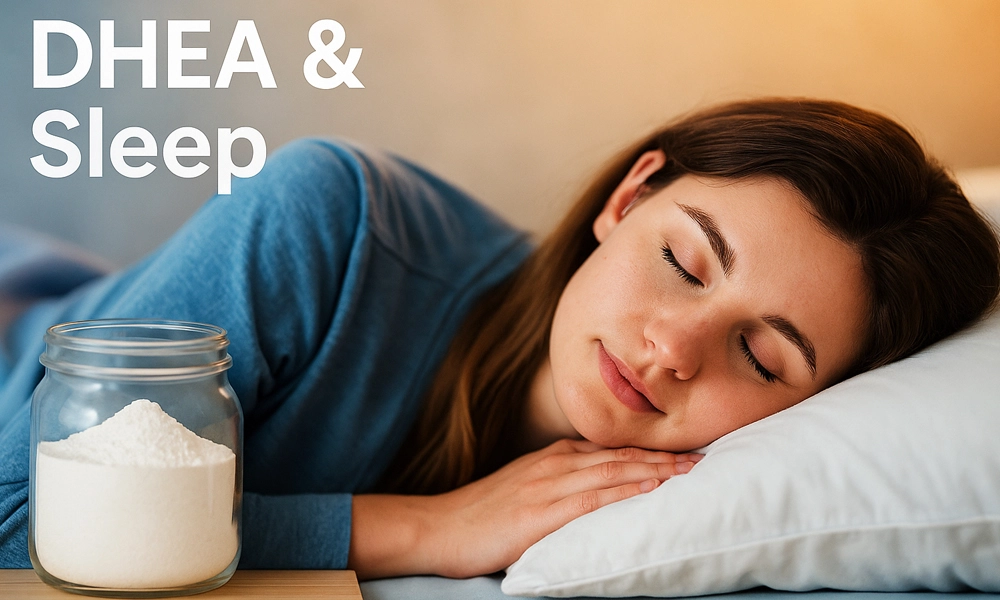
The Connection Between DHEA and Sleep — What Researchers Actually Found
Once you understand how DHEA functions as a hormone precursor, the next question is whether it has a measurable effect on sleep. This is an area where both consumers and supplement formulators often encounter mixed information, largely because DHEA doesn’t act like traditional sleep ingredients. It doesn’t trigger drowsiness, increase melatonin, or directly slow down the nervous system. Instead, its influence on sleep comes from the way it interacts with the body’s broader hormonal network—particularly cortisol and the stress response.
Several studies suggest that DHEA plays a balancing role between cortisol and the body’s natural rhythms. When cortisol is elevated—whether from chronic stress, overtraining, or inconsistent routines—it can create the kind of mental restlessness that keeps people awake even when they’re tired. In these cases, DHEA may help by moderating cortisol’s impact, allowing the body to settle more easily into a restful state. This is why some users, especially those under persistent stress, report that their sleep quality subtly improves after DHEA supplementation—not because the ingredient is sedating, but because the overall hormonal landscape becomes more stable.
At the same time, research shows that not everyone experiences sleep improvements with DHEA. In individuals who are very sensitive to hormonal fluctuations or who take higher-than-needed doses, DHEA may create a mild sense of alertness. This isn’t common, but it’s something brands should be aware of when determining serving size or advising consumers on timing. The distinction between a supportive dose and an overly stimulating one is often what determines whether DHEA feels calming or energizing.
In other words, the relationship between DHEA and sleep is not binary. It depends on the user’s baseline hormone levels, stress patterns, and the amount of DHEA they take. The ingredient doesn’t directly induce sleep or interfere with it; rather, it influences the systems that shape how easily the body transitions into a restful state. This nuance is important for both consumers and manufacturers, especially when positioning DHEA within products targeting energy, recovery, mood balance, or adrenal support.
Can DHEA Improve Sleep? Potential Benefits for Specific Populations
While DHEA is not a traditional sleep ingredient, certain individuals do report improvements in sleep quality, and research helps explain why these experiences are more pronounced in specific groups. Its benefit is not tied to sedation, but rather to the way Dehydroepiandrosterone supports stress regulation, emotional balance, and overall hormonal stability—all of which play meaningful roles in sleep patterns.
1. Adults Experiencing Chronic Stress or High Cortisol
People dealing with ongoing stress often experience elevated cortisol late in the day, making it difficult to fall asleep or stay asleep. Because DHEA naturally counterbalances cortisol, individuals in this group may find that their sleep becomes deeper or more consistent once hormonal tension is reduced. It’s an indirect effect, but a noticeable one.
2. Middle-Aged and Older Adults With Low Baseline DHEA
As DHEA levels decline with age, many adults report changes in mood, resilience, and nighttime rest. For this population, restoring DHEA to a healthier physiological range may ease the mental restlessness that often accompanies hormonal decline. This does not replace melatonin or sleep aids, but it can create a more favorable foundation for restful sleep.
3. Individuals With Mood Fluctuations Affecting Sleep
DHEA interacts with pathways involved in emotional stability, and some adults experience sleep improvements once their mood becomes more balanced. Again, this effect is subtle, but for people whose sleep issues are linked to stress or emotional tension, DHEA can be part of a broader solution.
4. Those Using DHEA as Part of an Adrenal Support Program
People who rely on DHEA powder to support adrenal health—especially those with fatigue, low motivation, or irregular energy patterns—may find that improved daytime balance supports more consistent sleep at night. The ingredient contributes to overall hormonal harmony, and sleep is often one of the first areas where users notice the difference.
When DHEA Might Disrupt Sleep — Factors Brands Should Know
Although many adults tolerate DHEA well, and some even notice improvements in how easily they unwind at night, there are situations where DHEA may feel more stimulating than expected. These cases are not the norm, but they do happen—and understanding the pattern helps supplement brands guide their customers more responsibly.
1. Taking DHEA Too Late in the Day
Because DHEA interacts with adrenal activity, taking it in the evening can sometimes create a mild feeling of alertness. It doesn’t behave like caffeine or a stimulant, but for individuals with sensitive sleep rhythms, introducing hormonal activity too close to bedtime may interfere with wind-down. This is why most professionals recommend morning dosing.
2. Using Higher-Than-Necessary Dosages
More is not always better with hormone precursors. High doses may create an imbalance, especially in individuals who are already producing adequate DHEA. Some users describe this as a “wired but tired” sensation—mentally alert but physically fatigued—which can make falling asleep more difficult. Most sleep-related concerns appear in people taking significantly above standard dosages.
3. Hormonal Sensitivity or Underlying Endocrine Variations
Some individuals simply respond more strongly to hormonal shifts. Women in particular, or men with naturally fluctuating androgen levels, may feel subtle changes in mood or energy shortly after starting DHEA. These shifts are usually temporary, but for a small minority, they may impact sleep while the body adjusts.
4. Interaction With Stress or Lifestyle Factors
If someone is experiencing high daytime stress or poor sleep hygiene, adding DHEA may amplify alertness rather than reduce it—especially in the first week of use. In these cases, the issue is less about DHEA itself and more about how it interacts with an already overstimulated system. Brands often see better outcomes when DHEA is paired with calming ingredients in stress-support formulas.
5. Individual Variation in Cortisol Balance
DHEA and cortisol share an interconnected relationship, and in some adults, a shift in one hormone may temporarily influence the other. If cortisol remains elevated in the evening, even a well-timed DHEA dose may feel indirectly activating. This scenario typically resolves with a lower dose or earlier timing.
Best Practices: How to Use DHEA Powder Without Affecting Sleep
Because DHEA interacts with adrenal activity and the body’s hormonal rhythm, a few thoughtful adjustments can make a meaningful difference in how comfortably users respond to it. These considerations are especially important for brands developing formulations with DHEA powder and for consumers who want the benefits of Dehydroepiandrosterone without disrupting their sleep. Below are practical guidelines grounded in real-world experience and consistent user patterns.
1. Take DHEA Early in the Day
The most reliable way to prevent sleep disturbances is to take DHEA in the morning. This approach aligns the ingredient with the body’s natural adrenal rhythm and minimizes any chance of nighttime alertness. Brands often highlight this simple advice in their usage instructions, especially for formulas marketed with “does DHEA affect sleep” or “DHEA and circadian rhythm”–related concerns.
2. Start With a Moderate Dose and Adjust Slowly
Higher doses increase the likelihood of overstimulation. Beginning with a conservative amount allows users to gauge their responses and avoid pushing adrenal activity too hard. This is particularly useful for buyers searching for “DHEA dosage for sleep-sensitive individuals” or formulating with micronized DHEA powder, which absorbs more efficiently.
3. Avoid Evening or Late-Afternoon Dosing
Even if someone feels fine during the day, taking DHEA close to bedtime may interfere with relaxation. The ingredient doesn’t act like a stimulant, but for sensitive users it can slightly elevate mental clarity at a time when the body is trying to wind down. This is why most formulations clearly avoid any messaging linked to “nighttime DHEA” or “DHEA before bed”.
4. Pair DHEA With Ingredients That Support Stress and Hormonal Balance
Many brands combine DHEA with calming adaptogens or mood-supportive elements—such as L-theanine, ashwagandha, GABA, or magnesium—to help users maintain a smoother transition into rest. This pairing is especially popular among companies targeting “DHEA for stress and sleep balance” or “DHEA cortisol regulation”.
5. Consider Individual Factors: Stress Load, Lifestyle, and Hormonal Baseline
People who are under heavy stress or who naturally produce more cortisol in the evening may have a slightly different response to DHEA. For these individuals, personalized dosing and early-morning use can make a significant difference. These nuances are important for supplement brands responding to long-tail queries such as “can DHEA cause insomnia”, “DHEA sleep disturbance risk”, or “DHEA effect on cortisol and sleep”.
6. Choose High-Purity, Consistent Raw Material
Impurities or inconsistent potency can create unpredictable user experiences. High-quality bulk DHEA powder—especially when verified through HPLC and produced with tight controls—helps ensure stable outcomes and reduces the risk of unwanted side effects. This is important for brands attracting searches like “best DHEA powder supplier” or “Dehydroepiandrosterone raw material quality”. XI AN CHEN LANG BIO TECH supply this powder can satisfy for many clients in different countries, we guarantee the quality and supply all docuemnts of DHEA powder.
Does DHEA Support Stress Reduction That Indirectly Improves Sleep?
One of the most overlooked aspects of Dehydroepiandrosterone is its role in the body’s stress-regulation system. While DHEA is not a sedative and doesn’t function like traditional sleep aids, it can influence how easily the body manages daily stress—and this, in turn, affects sleep quality. For some individuals, this indirect effect becomes one of the most valuable DHEA benefits.
DHEA and cortisol share a tightly linked relationship. Cortisol rises in response to physical or emotional stress, and when levels remain elevated into the evening, the mind tends to stay active even when the body feels tired. This is a common pattern in adults who describe their sleep struggles as “wired but tired.” In these cases, supporting the hormonal balance between DHEA and cortisol can make falling asleep feel more natural.
This is where DHEA powder may play a meaningful role. Research suggests that DHEA helps buffer the effects of cortisol, creating a more stable emotional baseline throughout the day. Users under chronic stress often describe feeling less reactive, more resilient, and better able to unwind—benefits that naturally support deeper rest at night. This makes DHEA a strategic addition to formulas aimed at handling long-tail concerns such as “DHEA for stress and sleep”, “DHEA cortisol balance”, and “does DHEA help sleep quality”.
Another point worth noting is that DHEA interacts with pathways that influence mood and emotional comfort. For individuals whose sleep is disrupted more by mental tension than by physical restlessness, improved emotional balance can make a noticeable difference. This is why some users report that once their stress levels stabilize, their sleep improves even though DHEA itself is not a direct sleep aid.
Is DHEA Powder the Right Ingredient for Your Sleep Formulation?
Whether DHEA powder belongs in a sleep-support product depends entirely on the type of formula you’re creating and the needs of your target audience. Unlike melatonin, magnesium, or herbal sedatives, Dehydroepiandrosterone is not designed to make people sleepy. Instead, it influences the deeper hormonal environment that often determines how easily someone can fall asleep and how refreshed they feel the next morning.
For brands developing formulas focused on stress resilience, adrenal balance, and mood stability, DHEA can be a meaningful addition. These categories attract consumers who struggle not with falling asleep directly, but with the underlying issues that prevent restful sleep—racing thoughts, elevated cortisol in the evening, inconsistent energy during the day, or emotional tension. In formulations like these, DHEA plays a supportive, foundational role.
Where DHEA powder is less appropriate is in products marketed as rapid-onset sleep aids. Customers looking for an immediate sedative effect will not get that from DHEA, and positioning it this way may create confusion or disappointment. Instead, DHEA works best within formulas aiming to bring the body back to a state of balance over time—something more aligned with long-term hormone and stress management rather than short-term sedation.
Another factor to consider is dosage. For formulations that mention sleep or nighttime comfort, lower or moderate amounts are typically preferred. This approach helps avoid stimulating effects in sensitive users and is more aligned with what people expect when they search terms like “DHEA for stress and sleep quality” or “how DHEA affects nighttime relaxation.”
DHEA also pairs well with complementary ingredients that support calmness and mood—such as L-theanine, ashwagandha, phosphatidylserine, or GABA. These combinations can help brands craft a more well-rounded bedtime or adrenal-support product, especially for users who stay alert at night due to stress rather than insomnia. Searches like “best DHEA combinations for sleep” and “DHEA cortisol balance ingredients” consistently reflect this interest.
For supplement manufacturers, the key question is not whether DHEA induces sleep, but whether it supports the biological context in which better sleep naturally occurs. If your formulation is designed to help users manage stress, improve emotional steadiness, or rebalance adrenal function, then DHEA powder can be an effective, science-backed ingredient. If the goal is direct sedation, another ingredient category is more appropriate.
Where to Buy High-Purity DHEA Powder (Bulk & Wholesale) — Your Trusted Supplier for Reliable Quality
For supplement brands developing sleep-support, stress-balance, or healthy-aging formulas, choosing the right source of high-purity DHEA powder is just as important as understanding the ingredient itself. Consistency, traceability, and documentation have a direct impact on how your finished product performs—and how confidently you can market it. This is especially true for hormone-related ingredients like Dehydroepiandrosterone, where accuracy and stability matter more than ever.
At XI AN CHEN LANG BIO TECH CO., LTD, we supply bulk DHEA powder to global supplement manufacturers who rely on dependable quality and clean documentation. Every batch undergoes HPLC verification to ensure purity and identity, giving your formulation team predictable results whether you are producing capsules, tablets, or complex multi-ingredient blends. For many brands searching for “DHEA powder supplier”, “DHEA manufacturer China”, or “where to buy Dehydroepiandrosterone wholesale”, this level of transparency has become a core requirement.

Beyond raw material quality, we understand the importance of compliance. Our DHEA is shipped with ISO certifications, COA, MSDS, TDS, Halal, Kosher, and allergen statements—making it easier for you to meet regulatory standards across the U.S., EU, and other international markets. Stable inventory, flexible MOQs, and responsive export support further help streamline your production schedule, whether you are preparing a new launch or scaling an existing formula.
If your goal is to build products that deliver consistently—especially in categories where stress, sleep, and hormone balance intersect—we’re here to support you with dependable raw materials and practical technical guidance. Our team works closely with formulators to address questions around dosing, ingredient compatibility, and the advantages of micronized DHEA powder, helping you create formulas that perform exactly as intended.
📩 Email: admin@chenlangbio.com
📱 WhatsApp: +86-17782478823
Contact us today for samples, pricing, or formulation support—and discover why international supplement brands trust us as their long-term supplier of high-quality DHEA powder.

Send Inquiry
Related Industry Knowledge
- Choosing the Right Insecticide: The Benefits of Natural Pyrethrin Over Synthetics
- Does DHM help with Weight Loss?
- How to Choose the Best 5HTP Powder: A Buyer's Guide to Purity & Value
- Can 3-O-ethyl Ascorbic Acid Improve Collagen Synthesis and Skin Elasticity?
- Can Women Use Turkesterone?
- What are the Benefits of Acetyl Hexapeptide-8 in Skincare?
- Is Pyrrolidinyl Diaminopyrimidine Oxide Safe to Use?
- Is Dimethylmethoxy Chromanyl Palmitate Effective for Hyperpigmentation
- Is Camellia Oleifera Seed Extract Good for Skin
- Can Icariin Increase Testosterone