
How to Read a 3-O-Ethyl Ascorbic Acid COA: A Buyer's Guide
2026-10-27 14:59:25
A 3-o-ethyl ascorbic acid coa provides batch-specific evidence of raw material quality, but a reported purity of 99% does not automatically establish that an ingredient is suitable for commercial cosmetic manufacturing. Buyers also need to understand how the assay was performed, whether relevant impurities are controlled, and how consistently the supplier can reproduce the specified quality.
For cosmetic brands, contract manufacturers, and ingredient distributors, the ethyl ascorbic acid certificate of analysis should therefore be evaluated alongside manufacturing information, analytical methods, supplier documentation, and the intended formulation requirements.
This guide examines the technical and commercial factors that matter when qualifying 3-O-Ethyl Ascorbic Acid for skincare production, with particular attention to HPLC analysis, impurity control, batch traceability, and supplier selection.
3-O-Ethyl Ascorbic Acid COA and Cosmetic Raw Material Quality Requirements
What a Batch-Specific Ethyl Ascorbic Acid Certificate of Analysis Establishes
A Certificate of Analysis (COA) records the results obtained when a particular manufacturing batch is tested against defined specifications. For 3-O-Ethyl Ascorbic Acid, it commonly includes product identification, batch number, appearance, assay, applicable impurity tests, and an authorized quality release.
The distinction between a specification and a result is important. A specification describes the acceptance criteria; a COA documents whether the tested batch meets those criteria.
For example, a specification may require an assay of at least 99.0%, while the corresponding batch result should report the measured value or an appropriately documented result. A statement of conformity alone provides less analytical information.
Cosmetic-Grade Ethyl Ascorbic Acid Quality vs. Supplier Specifications
Cosmetic grade ethyl ascorbic acid is generally supplied according to a manufacturer's established quality specifications. However, there is no single universally applicable global monograph that makes every supplier's cosmetic-grade specification identical.
One manufacturer may report chromatographic purity, while another provides a calibrated quantitative assay. Differences may also exist in moisture limits, impurity testing, and reporting conventions.
Consequently, buyers should establish their own ethyl ascorbic acid quality specifications based on formulation requirements, product risk, and applicable regulatory expectations.
Why a COA Alone Cannot Establish Cosmetic Ingredient Compliance
A satisfactory COA supports batch release, but it does not independently verify manufacturing-site conditions, supply-chain authenticity, or compliance with every destination-market requirement.
Effective cosmetic ingredient quality control combines analytical evidence with supplier qualification, appropriate manufacturing controls, and documented material traceability.
A supplier's ability to explain its testing methods and investigate unexpected results is often as important as the numerical values appearing on the certificate.
3-O-Ethyl Ascorbic Acid Identity, CAS Number and Raw Material Specifications
Chemical Identity of 3-O-Ethyl Ascorbic Acid: CAS 86404-04-8
3-O-Ethyl Ascorbic Acid is an ether derivative of L-ascorbic acid used in cosmetic formulations. Its chemical identity must be distinguished from other vitamin C derivatives, including Ascorbyl Glucoside, Magnesium Ascorbyl Phosphate, and Ascorbyl Tetraisopalmitate.
|
Parameter |
Technical information |
|
INCI name |
3-O-Ethyl Ascorbic Acid |
|
CAS number |
86404-04-8 |
|
Molecular formula |
C₈H₁₂O₆ |
|
Molecular weight |
Approximately 204.18 g/mol |
|
Appearance |
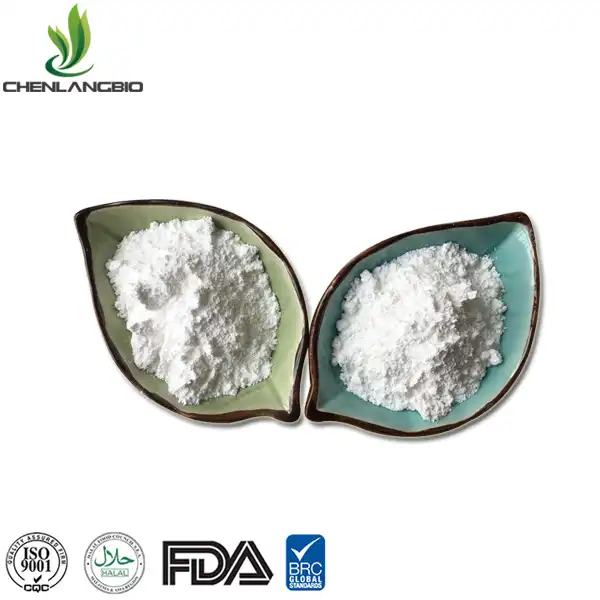
White to off-white crystalline powder |
|
Commercial specification |
≥99% assay, subject to the defined analytical method |
The 3-o-ethyl ascorbic acid CAS 86404-04-8 identifier is useful for checking product documentation, but a CAS number printed on a certificate is not itself analytical proof of identity.
3-O-Ethyl Ascorbic Acid Identity Testing by HPLC, FTIR and NMR
Appropriate ethyl ascorbic acid identity testing can involve chromatographic and spectroscopic methods.
HPLC retention-time comparison may support identification when the sample and authenticated reference standard are analyzed under suitable conditions. However, retention time alone is not definitive structural evidence because different compounds can sometimes exhibit similar chromatographic behavior.
FTIR provides information about characteristic molecular vibrations, while NMR can offer more detailed structural confirmation. These techniques may be particularly valuable during initial supplier qualification or when investigating an unusual material.
Routine batch release does not necessarily require every method. The testing strategy should reflect the manufacturer's validated procedures and the buyer's risk assessment.
Cosmetic-Grade Ethyl Ascorbic Acid Specifications for Commercial Production
Commercial 3-o-ethyl ascorbic acid specifications should define the critical quality attributes that affect ingredient identity, consistency, and suitability for the intended application.
These may include assay, appearance, related substances, water content, and process-relevant residual solvents. Additional requirements can be established where justified by manufacturing risks or customer needs.
Specifications should also state the analytical method and reporting basis whenever these materially affect interpretation.
3-O-Ethyl Ascorbic Acid 99% Purity: HPLC Assay and Analytical Method Reliability
What Does 99% Purity Mean for 3-O-Ethyl Ascorbic Acid?
A 3-o-ethyl ascorbic acid 99% purity claim is commercially meaningful only when the measurement behind it is clearly defined.
The figure may represent chromatographic area percentage or a quantitative assay result. Although these values can sometimes be numerically similar, they do not necessarily describe the same property.
A supplier reporting 99.5% HPLC area purity has not automatically demonstrated that 99.5% of the sample's total mass consists of 3-O-Ethyl Ascorbic Acid.
For commercial procurement, buyers should confirm whether the result is expressed on an as-received basis, a dried basis, or another specified basis.
HPLC Area Purity vs. Quantitative Ethyl Ascorbic Acid Assay
An ethyl ascorbic acid HPLC assay can be developed to measure the concentration of the target compound using an appropriate reference standard and calibrated analytical procedure.
By contrast, HPLC area normalization generally calculates the proportion of the target peak area relative to the total integrated peak area under the method's detection conditions.
The latter may not account adequately for differences in detector response, non-detectable substances, water, inorganic residues, or impurities that are not separated or detected.
|
Analytical parameter |
What it establishes |
Important limitation |
|
HPLC area purity |
Relative peak area under specified conditions |
Does not automatically establish mass fraction |
|
Quantitative HPLC assay |
Amount of target analyte determined by a calibrated method |
Accuracy depends on validation and calculation basis |
|
Water content |
Moisture measured using a specified procedure |
Not necessarily reflected in HPLC purity |
|
Related substances |
Impurities covered by the analytical procedure |
Undetected or unresolved impurities may remain outside its scope |
A properly documented ethyl ascorbic acid assay method should explain how the reported value is obtained and whether corrections or reference-standard potency factors are applied.
HPLC Reference Standards, Calibration and Method Validation
Analytical reliability depends on more than the instrument used.
A quantitative method should demonstrate appropriate specificity, accuracy, precision, range, and other relevant performance characteristics. System suitability criteria help establish that the chromatographic system is functioning adequately during analysis.
Reference-standard identity, purity assignment, and calibration procedures also influence the result.
For this reason, comparing two suppliers solely on reported assay percentages can be misleading when their methods and reporting bases differ.
Interpreting Batch-Specific HPLC Results for Supplier Qualification
A 3-o-ethyl ascorbic acid HPLC report may provide additional evidence when the buyer needs to assess an unfamiliar supplier or investigate discrepancies.
Useful supporting information can include the chromatographic method, reference-standard details, representative chromatograms, integration practices, and calculation procedures.
Buyers do not necessarily need a complete validation dossier for every routine purchase. However, suppliers should be able to provide an appropriate level of analytical transparency, particularly for long-term manufacturing agreements.
Where material quality is commercially critical, independent testing using a suitably qualified laboratory can help establish confidence in the reported results.
Ethyl Ascorbic Acid Impurity Profile, Residual Solvents and Contaminant Control
Related Substances and Process Impurities in Ethyl Ascorbic Acid Manufacturing
An ethyl ascorbic acid impurity profile should reflect the actual manufacturing process and the chemical behavior of the material.
Potential impurity sources may include starting materials, reaction by-products, incomplete purification, and degradation during processing or storage. Their identities and relative significance depend on the manufacturing route.
Because different suppliers may employ different processes, it would be inappropriate to assume that every commercial batch contains the same impurities.
A meaningful control strategy should identify relevant risks, establish suitable analytical methods, and define justified acceptance criteria.
Residual Solvent Testing for Cosmetic-Grade Ethyl Ascorbic Acid
Ethyl ascorbic acid residual solvents should be evaluated in relation to the solvents actually used during manufacturing and purification.
Gas chromatography is commonly employed for residual solvent analysis, although the method and target substances must be appropriate for the process.
ICH Q3C provides a useful scientific framework for understanding solvent-related toxicological risks. Nevertheless, its pharmaceutical scope should not be confused with an automatically applicable legal requirement for every cosmetic raw material.
Buyers should request process-relevant solvent information rather than treating an extensive, generic solvent panel as proof of superior quality.
Moisture Content, Heavy Metals and Microbiological Quality
Moisture may influence handling characteristics, storage behavior, and the interpretation of assay results. A validated Karl Fischer or other suitable method can be used where water determination is part of the specification.
Elemental impurities and microbiological quality should also be considered according to raw material risk, manufacturing conditions, and intended use.
Not every test requires the same frequency. Some risks may justify routine batch testing, while others can be managed through periodic verification and documented process controls.
Establishing Risk-Based Ethyl Ascorbic Acid Quality Specifications
Effective cosmetic grade ethyl ascorbic acid testing is based on relevant risks rather than the number of parameters printed on a COA.
A well-designed specification connects the manufacturing process, analytical capability, product requirements, and customer expectations.
This approach provides a stronger foundation for ethyl ascorbic acid quality assurance than simply copying another supplier's acceptance limits.
Ethyl Ascorbic Acid Batch Consistency and Commercial Quality Control
Evaluating Batch-to-Batch Consistency in 3-O-Ethyl Ascorbic Acid 99%
A single compliant batch does not demonstrate sustained manufacturing consistency.
For repeat purchasing, ethyl ascorbic acid batch consistency should be assessed using results from multiple commercial batches where available.
Buyers may compare assay trends, appearance, moisture, and selected impurity results. The objective is not to demand identical values but to determine whether the process remains controlled within justified limits.
Unexpected changes deserve investigation even when the reported results remain technically within specification.
Manufacturing Process Control and Ethyl Ascorbic Acid Traceability
Reliable 3-o-ethyl ascorbic acid quality control requires connections between production records, laboratory testing, packaging operations, and released batch numbers.
A functioning ethyl ascorbic acid batch traceability system should allow a supplier to identify the manufacturing history of a delivered lot and support investigations if a customer reports an issue.
Traceability is especially important for cosmetic manufacturers using the same ingredient across several finished-product batches.
Retesting, Storage Stability and Shelf-Life Documentation
Ethyl ascorbic acid shelf life should be supported by appropriate stability information rather than assumed from the general reputation of vitamin C derivatives.
Storage temperature, moisture exposure, packaging integrity, and handling after opening can influence material quality.
Buyers should also distinguish between a retest date and an expiry date. A retest date indicates when material quality should be reassessed under the supplier's established system; it does not automatically mean the ingredient becomes unusable on that date.
Ethyl Ascorbic Acid Supplier Qualification and Quality Documentation
Evaluating a 3-O-Ethyl Ascorbic Acid Manufacturer Beyond the COA
Selecting a 3-o-ethyl ascorbic acid manufacturer involves evaluating both technical competence and commercial reliability.
A supplier should demonstrate control over product identity, specifications, analytical testing, batch release, and customer complaints. Buyers should also assess whether the supplier can communicate manufacturing changes that may affect previously approved material.
For long-term supply agreements, manufacturing continuity and transparent change control can be more valuable than small differences in reported assay results.
ISO 9001, Cosmetic GMP and Supplier Audit Considerations
An ethyl ascorbic acid supplier qualification program may consider relevant quality management certifications, manufacturing procedures, analytical capabilities, and audit findings.
ISO 9001 provides a general quality management framework. ISO 22716 addresses cosmetic good manufacturing practices within its defined scope.
However, certification status must be interpreted carefully. A certificate should be verified for validity, covered activities, and manufacturing location rather than assumed to apply automatically to every product offered by a company.
A risk-based cosmetic ingredient supplier audit can examine documentation controls, deviation handling, traceability, change management, and corrective actions.
COA, TDS, SDS and Third-Party Testing for International Buyers
A supplier's documentation package should serve distinct purposes.
The COA provides batch-specific analytical information. The Technical Data Sheet describes relevant material characteristics and handling guidance. The Safety Data Sheet communicates hazard and safe-handling information according to applicable requirements.
Requests for an ethyl ascorbic acid COA and SDS are therefore complementary, not interchangeable.
Third-party analytical verification may be appropriate during supplier onboarding, following an unexpected result, or when a purchase carries significant manufacturing risk.
Bulk 3-O-Ethyl Ascorbic Acid Purchasing: Specifications, Samples and Supplier Selection
Cosmetic-Grade 3-O-Ethyl Ascorbic Acid 99% for Commercial Manufacturing
For buyers sourcing bulk 3-o-ethyl ascorbic acid 99%, a commercially useful offer should combine clear specifications with appropriate batch documentation and dependable communication.
CHEN LANG BIO TECH supplies 3-O-Ethyl Ascorbic Acid for cosmetic ingredient applications, with a commercial specification of at least 99% assay.
As a cosmetic grade ethyl ascorbic acid supplier, our objective is to support ingredient evaluation through relevant product specifications, quality documentation, and practical procurement information.
Bulk Ethyl Ascorbic Acid Packaging, MOQ and Sample Evaluation
Our standard packaging options for bulk ethyl ascorbic acid powder include 1–5 kg aluminum foil bags and 25 kg paper drums with protective inner packaging.
Packaging selection should reflect order volume, storage requirements, and the customer's manufacturing workflow.
Before commercial approval, buyers may request an ethyl ascorbic acid sample for identity confirmation, formulation compatibility, and internal quality evaluation.
The ethyl ascorbic acid MOQ and delivery arrangements should be confirmed for the specific order, particularly when sampling, custom packaging, or larger production volumes are involved.
Ethyl Ascorbic Acid Price per kg and Total Procurement Cost
An ethyl ascorbic acid price per kg comparison should consider more than the quoted unit cost.
Relevant commercial factors include analytical documentation, packaging, freight, import requirements, batch consistency, and the potential cost of material rejection.
A lower quotation may offer limited savings if it creates additional testing expenses or production delays.
For a meaningful 3-o-ethyl ascorbic acid bulk price comparison, buyers should request quotations based on equivalent specifications, quantities, and delivery terms.
Requesting a 3-O-Ethyl Ascorbic Acid COA and Bulk Quotation
Companies planning to buy ethyl ascorbic acid powder for cosmetic production can contact our team to discuss material specifications, available documentation, sample requirements, and purchasing quantities.
For wholesale ethyl ascorbic acid inquiries, please include your intended application, required quantity, destination country, and any specific analytical requirements.
Contact CHEN LANG BIO TECH: admin@chenlangbio.com
Frequently Asked Questions About 3-O-Ethyl Ascorbic Acid COA and Quality Testing
Does 99% HPLC Purity Mean 99% Ethyl Ascorbic Acid Assay?
Not necessarily. HPLC area purity expresses a relative chromatographic response, whereas a quantitative assay measures analyte content using an appropriate calibrated method. Buyers should confirm the calculation method and reporting basis before comparing results from different suppliers.
What Quality Tests Should a Cosmetic-Grade Ethyl Ascorbic Acid COA Include?
A COA should identify the material and report results against the agreed specification. Common considerations include appearance, identity, assay, and relevant impurity or moisture controls. Additional tests should reflect manufacturing risks and customer requirements rather than an assumed universal testing list.
Can a 3-O-Ethyl Ascorbic Acid COA Verify the Original Manufacturer?
A COA may identify its issuing organization and provide batch traceability information, but it cannot independently establish the entire manufacturing chain. Buyers should verify manufacturer details through supplier qualification records and supporting documentation when origin is important.
Should Buyers Request Third-Party HPLC Testing Before Bulk Purchasing?
Independent testing can be valuable when approving a new supplier, investigating inconsistent results, or purchasing material for commercially sensitive formulations. The decision should reflect supplier history, analytical risk, order value, and the buyer's internal quality requirements.
How Can Buyers Compare COAs from Different Ethyl Ascorbic Acid Suppliers?
Compare the analytical methods, assay reporting basis, acceptance limits, impurity controls, and batch-specific results. Two certificates reporting 99% purity are not necessarily equivalent unless the underlying measurements and specifications are sufficiently comparable.
Conclusion: Selecting Cosmetic-Grade Ethyl Ascorbic Acid with Reliable Quality Documentation
A reliable 3-O-Ethyl Ascorbic Acid purchasing decision requires more than a satisfactory COA. Chemical identity, validated analytical methods, relevant impurity controls, batch consistency, and supplier traceability collectively determine confidence in commercial raw material quality.
For cosmetic manufacturers seeking 99% 3-O-Ethyl Ascorbic Acid with supporting quality documentation, CHEN LANG BIO TECH can assist with technical evaluation, samples, and bulk purchasing inquiries.
References
1. International Council for Harmonisation (ICH). Q2(R2): Validation of Analytical Procedures. 2023.
2. International Council for Harmonisation (ICH). Q14: Analytical Procedure Development. 2023.
3. International Council for Harmonisation (ICH). Q3C(R9): Impurities—Guideline for Residual Solvents. 2024.
4. International Organization for Standardization. ISO 9001:2015 — Quality Management Systems — Requirements.
5. International Organization for Standardization. ISO 22716:2007 — Cosmetics — Good Manufacturing Practices (GMP) — Guidelines on Good Manufacturing Practices.
6. Iliopoulos, F., et al. 3-O-Ethyl-L-Ascorbic Acid: Characterisation and Investigation of Single Solvent Systems for Delivery to the Skin. International Journal of Pharmaceutics: X, 2019, 1, 100025. DOI: 10.1016/j.ijpx.2019.100025.
7. International Organization for Standardization. ISO/TR 18811:2018 — Cosmetics — Guidelines on the Stability Testing of Cosmetic Products.

Send Inquiry

Related Industry Knowledge
- How to Choose a Reliable Urolithin A Powder Supplier
- What Are the Key Benefits of Using 3-O-ethyl Ascorbic Acid in Cosmetic Formulations?
- Is Cactus Extract Powder Safe to Consume?
- Does L-Ergothioneine Have Cardiovascular Benefits?
- What is Bulk Dimethylmethoxy Chromanol? Benefits & Uses
- Future Trends of Sodium Methylesculetin Acetate in Healthcare
- What is Ectoin in Skincare
- Curcumin vs Turmeric
- How to Use Aloe Vera Gel Freeze-Dried Powder
- Where to Buy Epimedium Extract Powder