Ergothioneine vs Astaxanthin: Which Antioxidant Is Better for Supplement Formulators?
2026-06-17 10:23:15
Why Supplement Formulators Are Comparing Ergothioneine and Astaxanthin in Advanced Antioxidant Systems
The comparison between ergothioneine vs astaxanthin has become increasingly important as supplement formulators shift toward multi-functional antioxidant ingredient systems designed for both skin health and cellular protection applications. While astaxanthin has long been recognized as a premium lipid-soluble antioxidant widely used in skincare and anti-aging supplement formulations, ergothioneine is emerging as a next-generation water-soluble compound focused on intracellular oxidative stress defense.
In the current nutraceutical landscape, formulators are no longer selecting ingredients solely based on traditional application categories. Instead, decisions are increasingly driven by formulation compatibility, stability performance, and scalability of bulk supply chains. This has led to growing interest in bulk ergothioneine powder suppliers as brands seek more versatile and stable antioxidant systems for multi-category product development.
Astaxanthin continues to dominate in beauty-focused applications, particularly in skin elasticity, UV protection, and eye health formulations. However, its lipid-soluble nature often requires oil-based delivery systems, which can increase formulation complexity and production cost. In contrast, ergothioneine powder for supplement applications offers direct water solubility and integration flexibility, making it attractive for modern nutraceutical ingredient manufacturers developing functional beverages, capsules, and powder blends.
From a commercial perspective, both ingredients serve distinct but increasingly overlapping roles in the antioxidant supplement ingredient market, where demand is expanding across skincare, sports nutrition, and longevity categories.
🔹 Market Comparison Overview
|
Factor |
Astaxanthin |
Ergothioneine |
|
Primary Function |
Skin & eye antioxidant protection |
Cellular oxidative stress defense |
|
Solubility |
Lipid-soluble |
Water-soluble |
|
Main Market |
Skincare & beauty supplements |
Longevity & cellular health |
|
Formulation Flexibility |
Requires oil/emulsion systems |
Direct integration in water-based systems |
|
Supply Chain |
Algae-based or synthetic |
Fermentation-based scalable production |
This structural difference is driving formulators to increasingly evaluate both compounds not as competitors, but as complementary elements in advanced antioxidant formulation strategies.
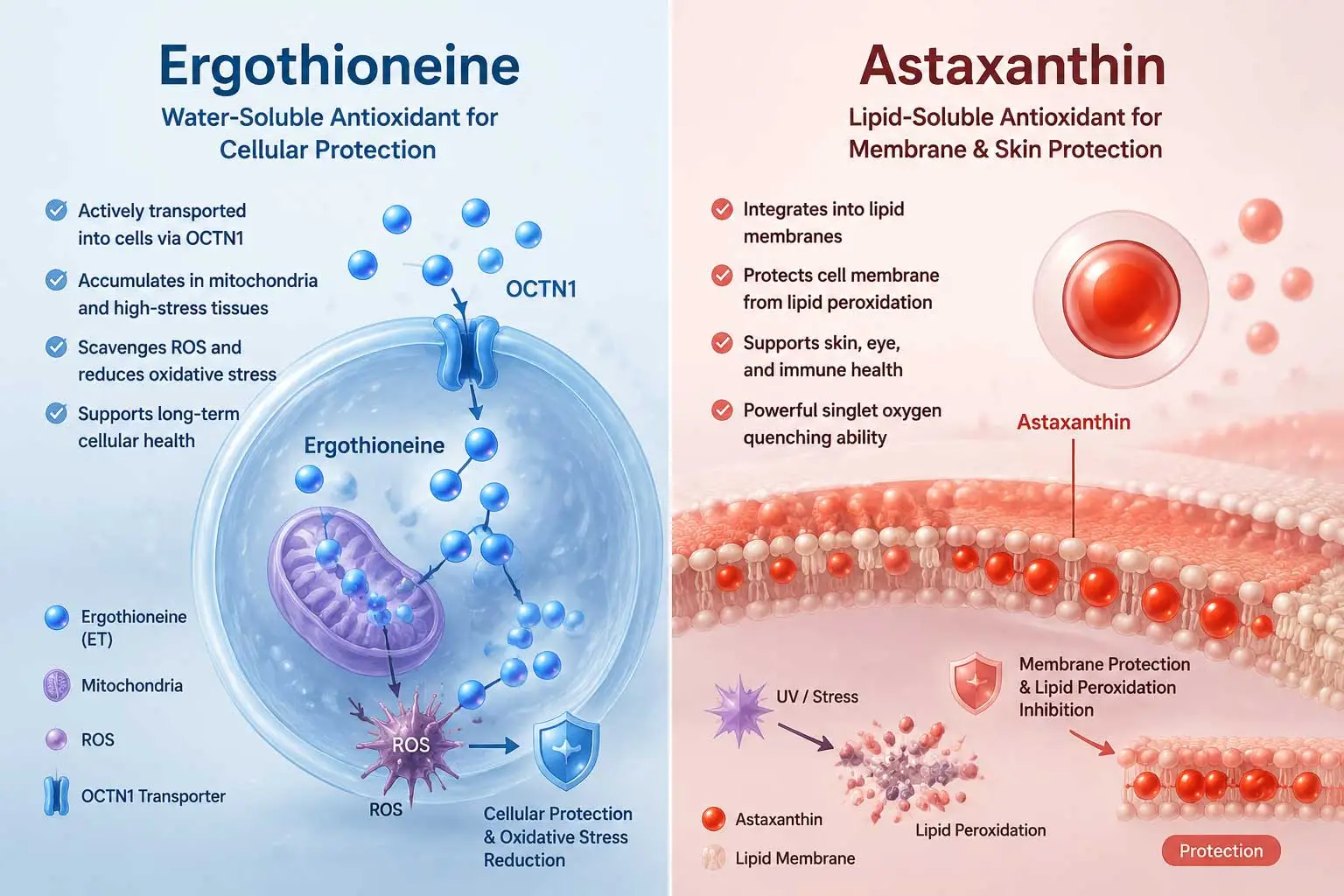
Mechanism of Action: Lipid-Soluble Skin Protection (Astaxanthin) vs Water-Soluble Cellular Defense (Ergothioneine)
Astaxanthin is a lipid-soluble carotenoid that integrates into cell membranes, where it provides protection against lipid peroxidation. This makes it particularly effective in skin-related applications such as UV protection, elasticity support, and visible aging reduction. As a result, it is widely used in skincare supplement ingredient systems and beauty-from-within formulations.
Ergothioneine, in contrast, is a water-soluble amino acid derivative that is actively transported into cells via a specific transporter (OCTN1). Once inside the cell, it accumulates in mitochondria and high-oxidative-stress tissues, where it provides long-term protection against reactive oxygen species. This unique mechanism makes it highly relevant for cellular health supplement formulations targeting oxidative stress at the intracellular level.
For formulators working with functional ingredient suppliers, this distinction is critical because it defines whether the product strategy is oriented toward external skin protection (astaxanthin) or internal cellular defense (ergothioneine). Increasingly, manufacturers are combining both ingredients in multi-pathway antioxidant systems that address both surface-level and intracellular oxidative stress.
At industrial supply level, CHEN LANG BIO TECH provides high-purity fermentation-derived ergothioneine powder designed for integration into these advanced formulation systems, supporting both standalone antioxidant products and hybrid beauty + longevity applications.
Stability, Solubility, and Formulation Performance in Supplement Manufacturing
One of the most practical differences in the ergothioneine vs astaxanthin comparison lies in formulation behavior during manufacturing and product development.
Astaxanthin is highly lipophilic, which limits its solubility in water-based systems. As a result, it typically requires emulsification, softgel encapsulation, or lipid carrier technologies to ensure proper absorption and bioavailability. These additional processing steps can increase production complexity and raise overall formulation costs, particularly in large-scale manufacturing environments.
By contrast, ergothioneine powder for supplement manufacturing demonstrates excellent water solubility and high thermal stability, allowing direct incorporation into capsules, powders, and functional beverages without requiring complex delivery systems. This significantly reduces formulation barriers for manufacturers developing scalable antioxidant products.
Formulation Performance Comparison
|
Feature |
Astaxanthin |
Ergothioneine |
|
Water Solubility |
Low |
High |
|
Heat Stability |
Moderate |
High |
|
Beverage Compatibility |
Limited |
Excellent |
|
Oxidation Resistance |
High (lipid phase) |
High (cellular level) |
For supplement formulation ingredient suppliers, this difference directly impacts production efficiency, batch consistency, and final product performance across different dosage forms.
As a result, many brands sourcing from a bulk ergothioneine powder supplier are prioritizing manufacturing simplicity and formulation flexibility when designing next-generation antioxidant systems.
Functional Applications: Skin Health, Anti-Aging, Sports Recovery, and Cellular Protection
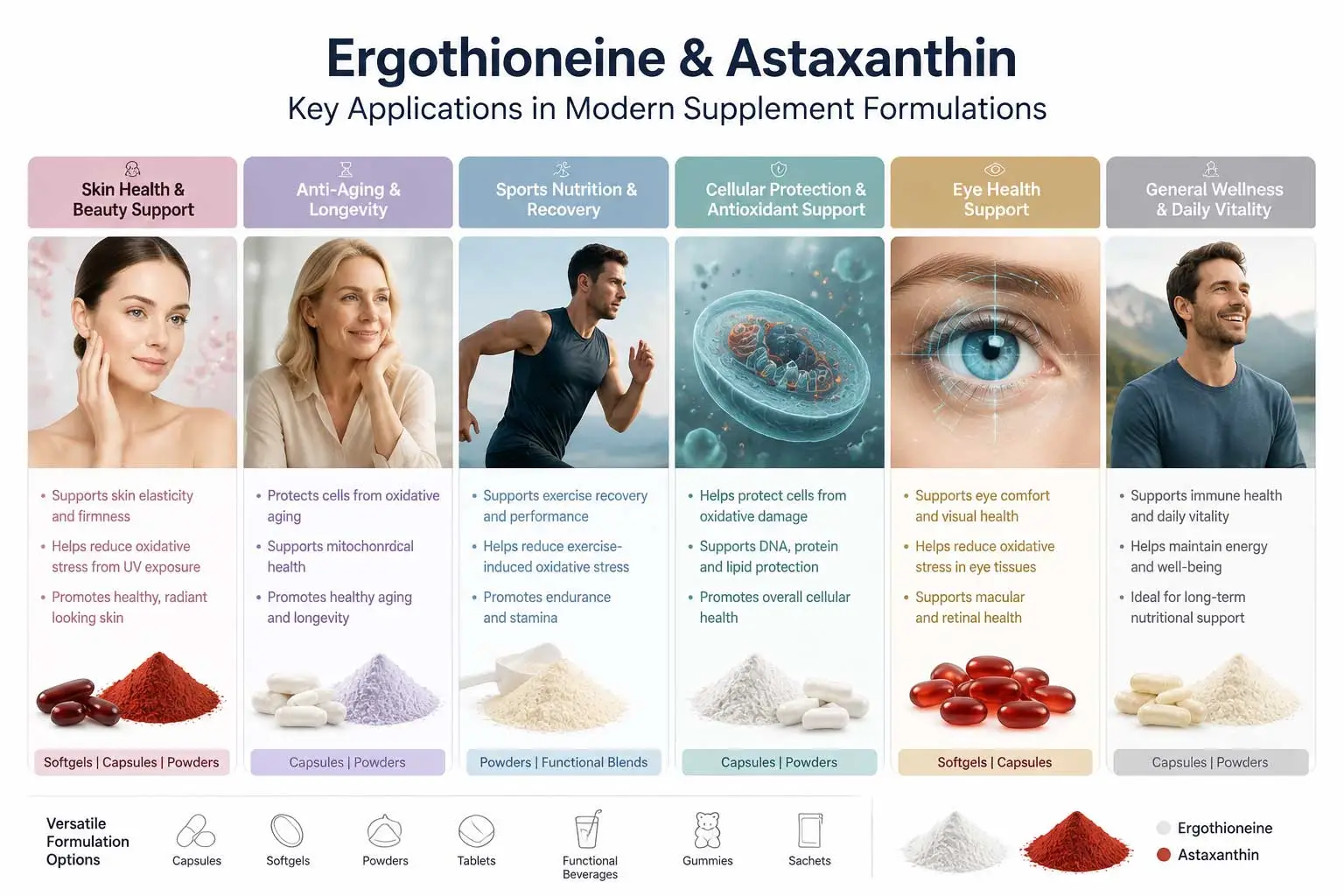
In modern supplement development, the functional positioning of ergothioneine vs astaxanthin is no longer defined by general antioxidant claims, but by highly specific application-driven formulation design. Supplement formulators are now selecting ingredients based on delivery system compatibility, target tissue performance, and end-use product category across skin health, anti-aging, sports recovery, and cellular protection systems.
Skin Health and Beauty-from-Within Formulations (Astaxanthin Dominant Application)
Astaxanthin is widely integrated into skin health supplement formulations, particularly in beauty-from-within products targeting photoaging, skin elasticity, and dermal hydration. Its lipid-soluble structure allows it to incorporate directly into cellular membranes, where it helps protect against UV-induced lipid peroxidation.
In practical formulation systems, astaxanthin is commonly used in:
Softgel capsules combined with omega-3 oils for skin elasticity support
Beauty-from-within capsules targeting wrinkle reduction and skin firmness
Premium antioxidant blends combining collagen peptides and carotenoids
Eye-skin dual health formulations for UV and blue light exposure protection
These applications are typically positioned in high-end anti-aging supplement ingredient systems, where consumer demand is driven by visible skin improvement outcomes rather than systemic health markers.
Ergothioneine is increasingly being added to these formulations as a complementary intracellular antioxidant. Unlike astaxanthin, it does not act primarily at the membrane level, but instead supports deeper cellular oxidative stress protection, particularly in skin cells exposed to environmental stressors such as pollution and UV radiation.
This has led to its inclusion in next-generation skincare supplement ingredient systems, especially in combination formulas designed for long-term skin resilience rather than short-term cosmetic effects.
Anti-Aging and Longevity Formulations (Dual-Pathway Antioxidant Strategy)
In anti-aging formulations, the comparison of ergothioneine vs astaxanthin becomes more strategic, as formulators increasingly move toward multi-layer antioxidant systems rather than single-ingredient positioning.
Astaxanthin is typically used in anti-aging products focused on visible aging markers, including skin tone, elasticity, and oxidative skin damage reduction. It is often included in beauty-focused anti-aging capsules and softgels.
Ergothioneine, however, is positioned as a systemic longevity ingredient due to its ability to accumulate in high-oxidative-stress tissues such as brain, liver, and mitochondria-rich organs. This makes it highly relevant in cellular aging and longevity supplement formulations, where oxidative stress at the intracellular level is a key target.
In advanced product development, formulators often design hybrid systems such as:
Astaxanthin + collagen + hyaluronic acid beauty capsules
Ergothioneine + resveratrol + CoQ10 longevity stacks
Multi-antioxidant formulations targeting skin + cellular aging simultaneously
This dual-pathway approach is increasingly adopted by nutraceutical ingredient manufacturers developing next-generation anti-aging systems that go beyond cosmetic appearance and target biological aging mechanisms.
Sports Nutrition and Recovery Applications (Emerging Role for Ergothioneine)
In sports nutrition, astaxanthin is occasionally used in endurance and recovery formulations due to its ability to support muscle oxidative stress reduction. However, its application remains relatively limited compared to more established sports ingredients.
Ergothioneine is gaining stronger adoption in sports recovery supplement systems, particularly in formulations designed to reduce exercise-induced oxidative stress and support post-exercise cellular recovery.
Typical applications include:
Post-workout recovery powders combined with amino acids and electrolytes
Functional hydration beverages designed for oxidative stress reduction
Endurance support formulations targeting mitochondrial stress balance
Recovery-focused capsules used in professional sports nutrition systems
Unlike lipid-soluble antioxidants, ergothioneine integrates efficiently into water-based systems, making it highly suitable for functional beverage formulations and ready-to-drink sports products.
For manufacturers sourcing from a bulk ergothioneine powder supplier, this solubility advantage reduces formulation complexity and improves manufacturing efficiency in large-scale production environments.
Cellular Protection and Oxidative Stress Defense Systems (Core Differentiation Layer)
The most fundamental difference in the ergothioneine vs astaxanthin comparison lies in their role in cellular protection systems.
Astaxanthin provides membrane-level antioxidant defense, primarily protecting lipid structures from oxidative damage. This makes it highly effective in skin and eye-related applications but limits its intracellular reach.
Ergothioneine, by contrast, is actively transported into cells via the OCTN1 transporter and accumulates in mitochondria and high-stress tissues. This allows it to function as a long-term cellular antioxidant system ingredient, directly reducing intracellular oxidative stress.
In formulation practice, ergothioneine is increasingly used in:
Cellular protection antioxidant capsules
Multi-antioxidant longevity blends
Functional wellness powders targeting oxidative balance
Brain and organ health support formulations
This intracellular activity is one of the key reasons why ergothioneine is being adopted in next-generation cellular health supplement ingredient systems, particularly in products targeting long-term health maintenance rather than surface-level benefits.
Application Summary for Supplement Formulators
|
Application Area |
Astaxanthin Functional Role |
Ergothioneine Functional Role |
|
Skin Health |
Lipid membrane UV protection |
Cellular-level skin protection |
|
Anti-Aging |
Visible cosmetic anti-aging |
Systemic longevity support |
|
Sports Recovery |
Limited oxidative support |
Strong post-exercise recovery antioxidant |
|
Cellular Protection |
Membrane antioxidant defense |
Intracellular oxidative stress regulation |
|
Functional Beverages |
Low compatibility |
High water-soluble integration |
From a formulation strategy perspective, many supplement ingredient suppliers are now positioning these two antioxidants not as competing ingredients, but as complementary components within multi-layered antioxidant systems.
At industrial level, CHEN LANG BIO TECH provides high-purity fermentation-derived ergothioneine powder suitable for integration into these advanced formulations, supporting both standalone antioxidant products and hybrid systems combining astaxanthin and other carotenoid-based ingredients.
Cost Efficiency and Market Demand: Which Antioxidant Offers Better Commercial Value?
In the commercial evaluation of ergothioneine vs astaxanthin, cost efficiency, formulation yield, and long-term market positioning are becoming increasingly important for supplement manufacturers and nutraceutical ingredient suppliers.
Astaxanthin is positioned as a premium skin health antioxidant ingredient, widely used in high-end beauty-from-within formulations. However, its production cost remains relatively high due to algae cultivation or synthetic production routes, as well as additional formulation requirements such as emulsification or oil-based delivery systems. These factors directly impact final product manufacturing cost, especially in large-scale anti-aging supplement production.
Ergothioneine, on the other hand, benefits from fermentation-based scalable production, which provides more stable cost control across industrial supply chains. This makes it increasingly attractive for brands sourcing from a bulk ergothioneine powder supplier, particularly those focused on long-term product development in cellular health and longevity supplement categories.
From a demand perspective, astaxanthin continues to dominate the beauty and skincare supplement market, while ergothioneine is experiencing faster expansion across sports nutrition, cognitive support, and cellular protection applications. This diversification significantly increases its commercial value for formulators looking to build multi-category product portfolios.
For procurement teams, the decision is no longer based solely on ingredient price per kilogram, but on total formulation efficiency, stability-related waste reduction, and compatibility across multiple dosage forms when working with a reliable ergothioneine manufacturer.
Market Comparison Overview
|
Factor |
Astaxanthin |
Ergothioneine |
|
Market Position |
Mature beauty antioxidant |
Emerging cellular antioxidant |
|
Production Cost |
High (algae/synthetic) |
Moderate and scalable |
|
Supply Stability |
Region-dependent |
High (fermentation-based) |
|
Formulation Efficiency |
Requires lipid systems |
Direct water-soluble use |
|
Application Expansion |
Skin & eye health |
Multi-category (aging, sports, cellular health) |
Frequently Asked Questions (FAQ)
Is ergothioneine better than astaxanthin for supplement formulations?
The answer depends on application goals. Astaxanthin is more effective in skin health and beauty supplement formulations, while ergothioneine is stronger in cellular protection and systemic antioxidant support. Many modern formulations combine both ingredients for multi-layer antioxidant coverage.
Can ergothioneine replace astaxanthin in skincare supplements?
Not directly. Astaxanthin plays a dominant role in lipid membrane protection and visible skin improvement, while ergothioneine focuses on intracellular oxidative stress reduction. They are better positioned as complementary rather than substitutive ingredients.
What are the formulation advantages of ergothioneine powder?
Ergothioneine powder for supplement manufacturing offers high water solubility, strong thermal stability, and excellent compatibility with capsules, powders, and functional beverages. This simplifies formulation compared to lipid-soluble antioxidants like astaxanthin.
What should buyers consider when sourcing bulk ergothioneine or astaxanthin?
Key factors include purity, stability, formulation compatibility, supply chain reliability, and documentation support such as COA, TDS, and MSDS from a qualified nutraceutical ingredient supplier or manufacturer.
Where can supplement brands source bulk ergothioneine powder?
Brands typically work with specialized bulk ergothioneine powder suppliers capable of providing fermentation-derived material with consistent batch quality and scalable production capacity. CHEN LANG BIO TECH supplies ergothioneine with full technical documentation support for global nutraceutical applications.
Conclusion: Why Supplement Formulators Are Moving Toward Multi-Layer Antioxidant Systems
The comparison between ergothioneine vs astaxanthin does not represent a direct replacement scenario, but rather a structural shift in how modern supplement formulators design multi-functional antioxidant systems for skin health, longevity, and cellular protection.
Astaxanthin remains a key ingredient in skincare supplement formulations, particularly those targeting visible aging, UV protection, and dermal health. Its lipid-soluble nature makes it highly effective in membrane-level protection systems, which is why it continues to dominate premium beauty-from-within product categories.
However, ergothioneine powder for supplement applications is increasingly being adopted as a complementary intracellular antioxidant due to its unique ability to accumulate within cells and support long-term oxidative stress regulation. This makes it highly relevant in next-generation cellular health supplement ingredient systems.
In modern formulation strategy, many brands are now combining both ingredients in hybrid systems that integrate astaxanthin for skin-level protection and ergothioneine for deep cellular defense. This multi-layer approach is becoming a standard in premium anti-aging and functional wellness formulations.
From a supply chain perspective, consistency, scalability, and documentation remain essential. For technical specifications, sample requests, or bulk ergothioneine powder supply, procurement teams typically coordinate directly with qualified manufacturers to ensure formulation compatibility and regulatory compliance.
For professional inquiries regarding ergothioneine supplier solutions, formulation support, or bulk ingredient sourcing, communication can be directed to:
CHEN LANG BIO TECH
Email: admin@chenlangbio.com
This enables formulation teams and ingredient buyers to access technical documentation, evaluate samples, and integrate ergothioneine antioxidant ingredients into advanced supplement development projects.

Send Inquiry
Related Industry Knowledge
- How to Choose a Reliable 8-Methoxypsoralen Supplier?
- Where to Buy P5P?
- What Makes Freeze-Dried Raspberry Powder a Must-Have Ingredient for Food Manufacturers?
- 3 Compelling Uses of Fucoidan Powder for Beauty Brands
- How Does Chondroitin Sulfate Powder Benefit Joint Health?
- Does Turkesterone Increase Testosterone?
- Is Phellinus Linteus Edible
- What to Avoid When Using Bakuchiol
- Beta Ecdysterone Powder Benefits
- Is Lotus Leaf Extract Powder Good for Weight Loss