
Ergothioneine vs Alpha Lipoic Acid: Which Antioxidant Delivers Better Value for Supplement Formulators?
2026-06-18 10:41:50
Ergothioneine vs Alpha Lipoic Acid Is Becoming a Key Formulation Comparison in Modern Antioxidant Supplement Ingredient Selection
The comparison of ergothioneine vs alpha lipoic acid is increasingly relevant in modern antioxidant supplement ingredient systems, as formulation teams reassess traditional metabolic antioxidants against next-generation intracellular protective compounds.
Alpha lipoic acid supplement ingredient has been widely used in metabolic health, glucose support, and energy-related formulations for decades. Its role in mitochondrial redox cycling makes it a well-established component in many nutraceutical ingredient formulations, particularly in mainstream wellness products.
However, as product development moves toward more advanced cellular health supplement ingredient systems, limitations related to stability, processing sensitivity, and system compatibility are becoming more visible in certain formulation environments.
At the same time, ergothioneine is being evaluated as a fermentation-derived cellular antioxidant ingredient designed for intracellular oxidative stress regulation rather than general metabolic support. This shift reflects a broader industry transition toward targeted cellular protection strategies in supplement design.
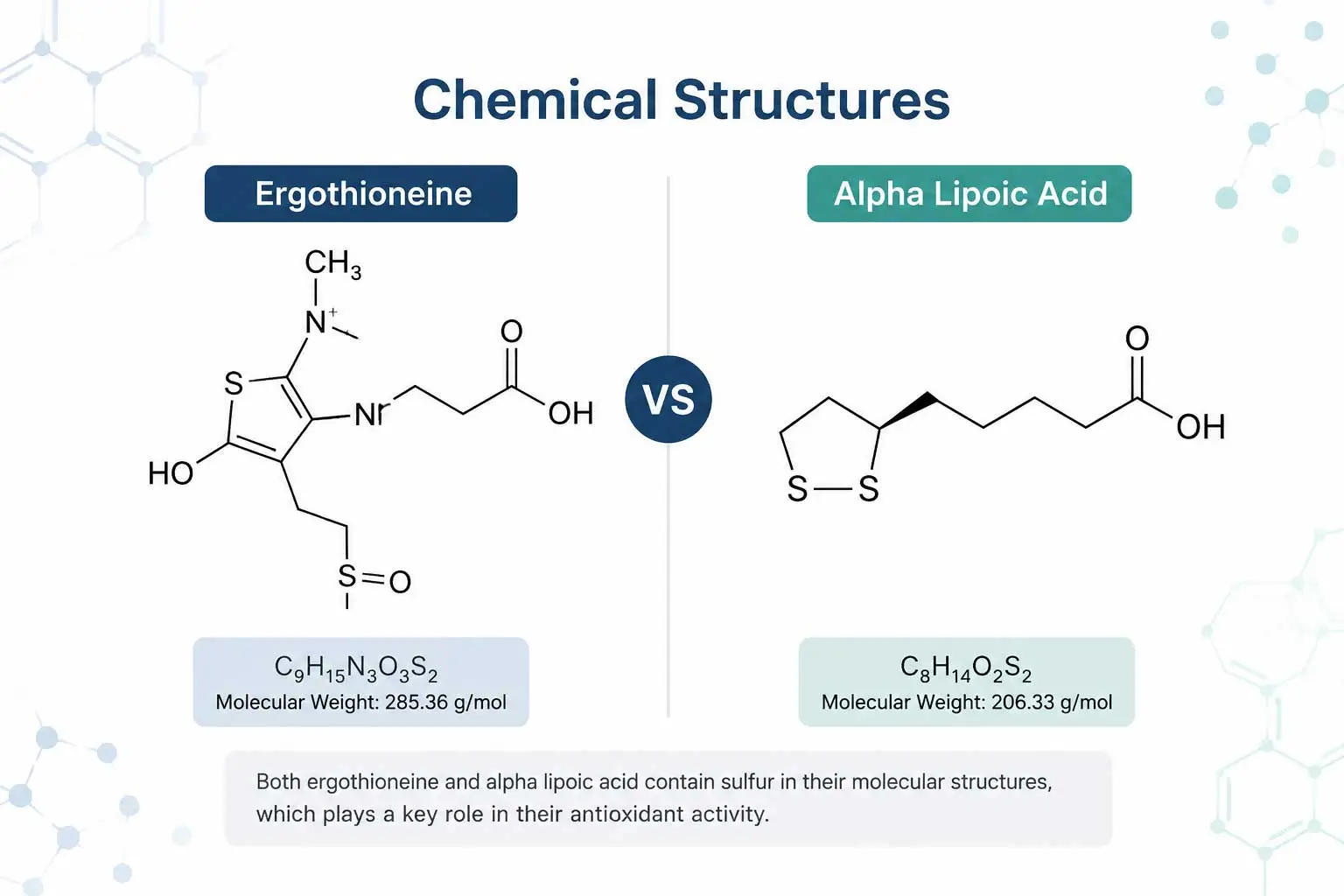
Functional Positioning Differences Between Ergothioneine and Alpha Lipoic Acid Define Their Roles in Modern Antioxidant Systems
In current formulation science, the comparison of ergothioneine vs alpha lipoic acid is no longer centered only on antioxidant capacity, but on biological positioning and cellular targeting behavior.
Alpha lipoic acid functions primarily within mitochondrial metabolic pathways and acts as a redox cofactor involved in energy metabolism. Its amphipathic nature allows interaction in both lipid and aqueous environments, making it suitable for metabolic health supplement ingredient applications.
In contrast, ergothioneine operates through a dedicated transporter system (OCTN1), enabling active cellular uptake and accumulation in tissues exposed to high oxidative stress. This mechanism positions it as a long-term intracellular protective compound within advanced oxidative stress supplement ingredient systems.
From a formulation perspective, this creates two distinct functional layers: metabolic antioxidant activity versus intracellular oxidative protection. Many modern antioxidant formulation ingredient suppliers now consider this distinction critical when designing next-generation supplement systems.
Formulation Stability and Processing Behavior Create Practical Performance Differences in Supplement Manufacturing
In industrial production environments, the real-world performance of ergothioneine vs alpha lipoic acid is strongly influenced by stability and processing behavior during manufacturing.
Alpha lipoic acid can be sensitive to heat, oxygen exposure, and formulation conditions, particularly in liquid systems or functional beverages. These characteristics can lead to degradation during processing, affecting the consistency of finished antioxidant supplement ingredient systems.
Ergothioneine demonstrates higher water solubility and stronger chemical stability under a wide range of manufacturing conditions. This allows it to be integrated more efficiently into capsules, powders, and functional beverage ingredient systems without requiring complex stabilization technologies.
For supplement manufacturers working with a bulk ergothioneine powder supplier, this improved stability translates into higher formulation flexibility and reduced processing loss, which is particularly important in large-scale nutraceutical production.
Application Segmentation Shows How Ergothioneine and Alpha Lipoic Acid Serve Different Commercial Supplement Markets
In commercial product development, the positioning of ergothioneine vs alpha lipoic acid is defined more by application strategy than direct competition.
Alpha lipoic acid is primarily used in metabolic health supplement ingredient formulations, including glucose support, energy metabolism, and mitochondrial function products. Its established role in these categories ensures continued relevance in mainstream nutraceutical markets.
Ergothioneine, however, is increasingly positioned within premium cellular health supplement ingredient systems, including longevity formulations, sports recovery blends, and functional beverages targeting oxidative stress management at the cellular level.
Rather than replacing each other, these ingredients operate in different product layers within modern supplement portfolios. Many formulators working with nutraceutical ingredient suppliers are now designing multi-layer antioxidant systems that integrate both metabolic and intracellular protective functions.
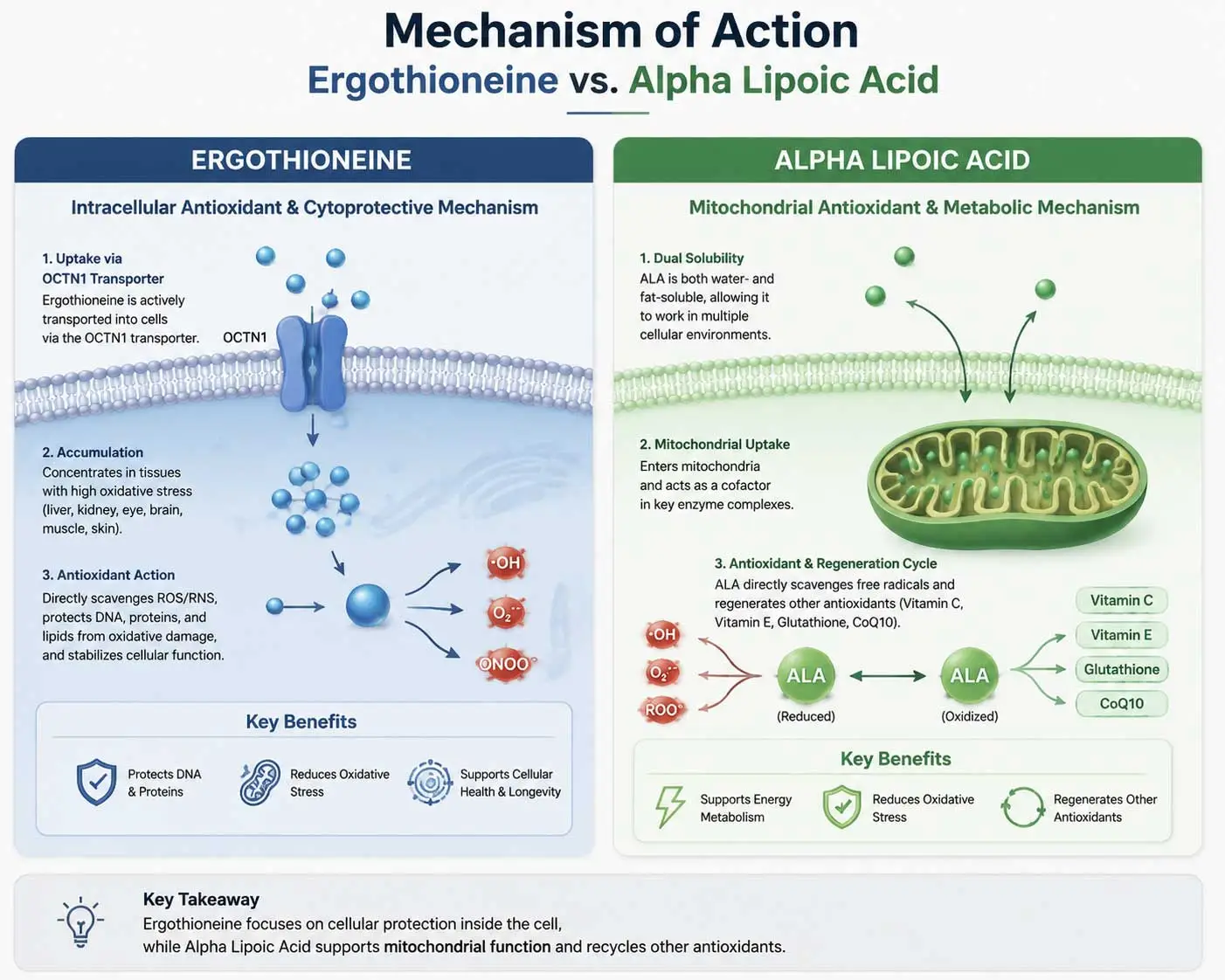
Supply Chain Structure Differences Between Ergothioneine and Alpha Lipoic Acid Are Becoming a Key Procurement Factor for Supplement Manufacturers
In the global antioxidant supplement ingredient supply chain, the comparison of ergothioneine vs alpha lipoic acid is no longer limited to functional performance. Increasingly, procurement teams are evaluating production routes, scalability, and long-term supply stability as primary decision factors.
Alpha lipoic acid is typically produced through established chemical synthesis routes at industrial scale. This creates a relatively mature and cost-efficient nutraceutical ingredient manufacturing system, where pricing is largely driven by commodity-level supply dynamics.
In contrast, ergothioneine is produced through controlled fermentation processes that require specific microbial systems and tightly regulated production environments. This allows for more consistent purity profiles and improved batch-to-batch stability, which is particularly important for premium cellular health supplement ingredient systems.
As a result, many brands sourcing from a bulk ergothioneine powder supplier prioritize traceability, fermentation control, and documentation support (COA, MSDS, TDS) to ensure compliance in regulated markets such as the EU and North America.
This structural difference is increasingly influencing long-term ingredient selection strategies in modern supplement development.
Cost Efficiency in Ergothioneine vs Alpha Lipoic Acid Is Determined by Formulation Yield Rather Than Raw Material Price
When evaluating ergothioneine vs alpha lipoic acid, experienced supplement manufacturers are shifting away from simple raw cost comparisons toward a more accurate metric: functional yield in finished formulations.
Alpha lipoic acid is generally positioned as a cost-efficient antioxidant supplement ingredient, but its performance in certain systems may require additional stabilization or protective formulation strategies. These added steps can increase processing complexity and reduce effective yield in final products.
Ergothioneine, although higher in raw material cost, demonstrates strong formulation efficiency due to its stability, water solubility, and compatibility with multi-ingredient systems. This reduces degradation losses during processing and improves overall system efficiency in antioxidant formulation ingredient applications.
From a procurement perspective, this shifts the evaluation model from “cost per kilogram” to “cost per functional dose,” especially in high-value categories such as cellular health supplement ingredient systems and functional beverage formulations.
This approach is increasingly adopted by manufacturers working with advanced nutraceutical ingredient suppliers focused on long-term product performance rather than commodity pricing.
Industry Direction: From Metabolic Antioxidants to Multi-Layer Cellular Protection Systems
The evolution of ergothioneine vs alpha lipoic acid reflects a broader transformation in antioxidant supplement formulation strategy.
Alpha lipoic acid continues to play a stable role in metabolic health and mitochondrial energy support formulations. Its established position ensures continued use in mainstream metabolic health supplement ingredient systems.
However, ergothioneine is increasingly integrated into next-generation formulations targeting intracellular oxidative stress management and long-term cellular protection. Its role as a fermentation-derived cellular antioxidant ingredient aligns with the growing demand for precision-targeted functional nutrition.
Rather than replacing one another, these ingredients are now often positioned in complementary layers within multi-functional antioxidant systems. This reflects a shift from single-mechanism supplementation toward system-based formulation architecture.
For modern supplement developers, this layered approach is becoming a key design principle in advanced product development pipelines.
Frequently Asked Questions
1. Is ergothioneine better than alpha lipoic acid for supplement formulations?
The comparison of ergothioneine vs alpha lipoic acid depends on formulation goals. Alpha lipoic acid is widely used in metabolic health systems, while ergothioneine provides intracellular antioxidant protection and is more suitable for advanced cellular health formulations.
2. Can ergothioneine replace alpha lipoic acid in supplements?
In most cases, no. These ingredients serve different biological roles. Alpha lipoic acid supports mitochondrial metabolism, while ergothioneine focuses on intracellular oxidative stress regulation. Many formulations use both in complementary systems.
3. What are the main formulation advantages of ergothioneine?
Ergothioneine powder for supplement applications offers high water solubility, strong thermal stability, and compatibility with capsules, powders, and functional beverages, reducing formulation complexity.
4. What should buyers consider when sourcing bulk ergothioneine?
Key factors include fermentation-based production, batch consistency, regulatory documentation, and supplier reliability within global nutraceutical ingredient supply chains.
Conclusion: Ergothioneine vs Alpha Lipoic Acid Is Ultimately a Formulation Strategy Decision, Not a Direct Substitution Choice
The comparison of ergothioneine vs alpha lipoic acid highlights how antioxidant selection in modern supplement formulation has evolved beyond simple efficacy comparison and is now increasingly driven by system-level design considerations.
Alpha lipoic acid remains a widely used antioxidant supplement ingredient, particularly in metabolic health and energy-support formulations. Its established production systems and cost efficiency ensure continued relevance in mainstream nutraceutical applications.
Ergothioneine, however, represents a structural upgrade in cellular health supplement ingredient systems, offering improved intracellular targeting, higher stability, and better formulation flexibility across capsules, powders, and functional beverages.
For manufacturers evaluating next-generation antioxidant systems, sourcing from a reliable bulk ergothioneine powder supplier is no longer only a procurement decision, but part of broader formulation architecture planning.
In practice, many formulation teams and procurement departments prefer to align directly with the production side when evaluating specifications, stability data, or compatibility in multi-ingredient systems. This helps ensure that ingredient selection matches both regulatory requirements and finished product performance expectations.
For technical coordination, specification review, or bulk ingredient evaluation, communication is typically handled through dedicated technical channels rather than commercial sales workflows to maintain accuracy in formulation discussions.
This channel is generally used for formulation-level communication, documentation exchange, and ingredient integration discussions within nutraceutical ingredient supply chains, particularly for projects involving ergothioneine vs alpha lipoic acid system design considerations.

Send Inquiry
Related Industry Knowledge
- Why Fermentation Is Becoming the Preferred Source of Ergothioneine?
- Why Choose Vitamin E Powder for Skin Glow?
- What are the Benefits of Potassium Methoxysalicylate for Skin?
- Red Wine Extract Powder: Benefits and Uses
- Why Paeoniflorin 80% Is Trending in Natural Medicine
- How Do You Dissolve Praziquantel Powder
- What Is Alpha Glycerylphosphorylcholine Used For
- Apple Polyphenol Benefits
- What is Ashwagandha Extract Withanolides
- Does Coenzyme Q10 Extract Actually Work