
Why Fermentation Is Becoming the Preferred Source of Ergothioneine?
2026-06-11 13:56:20
The Rise of Fermentation in Ergothioneine Production
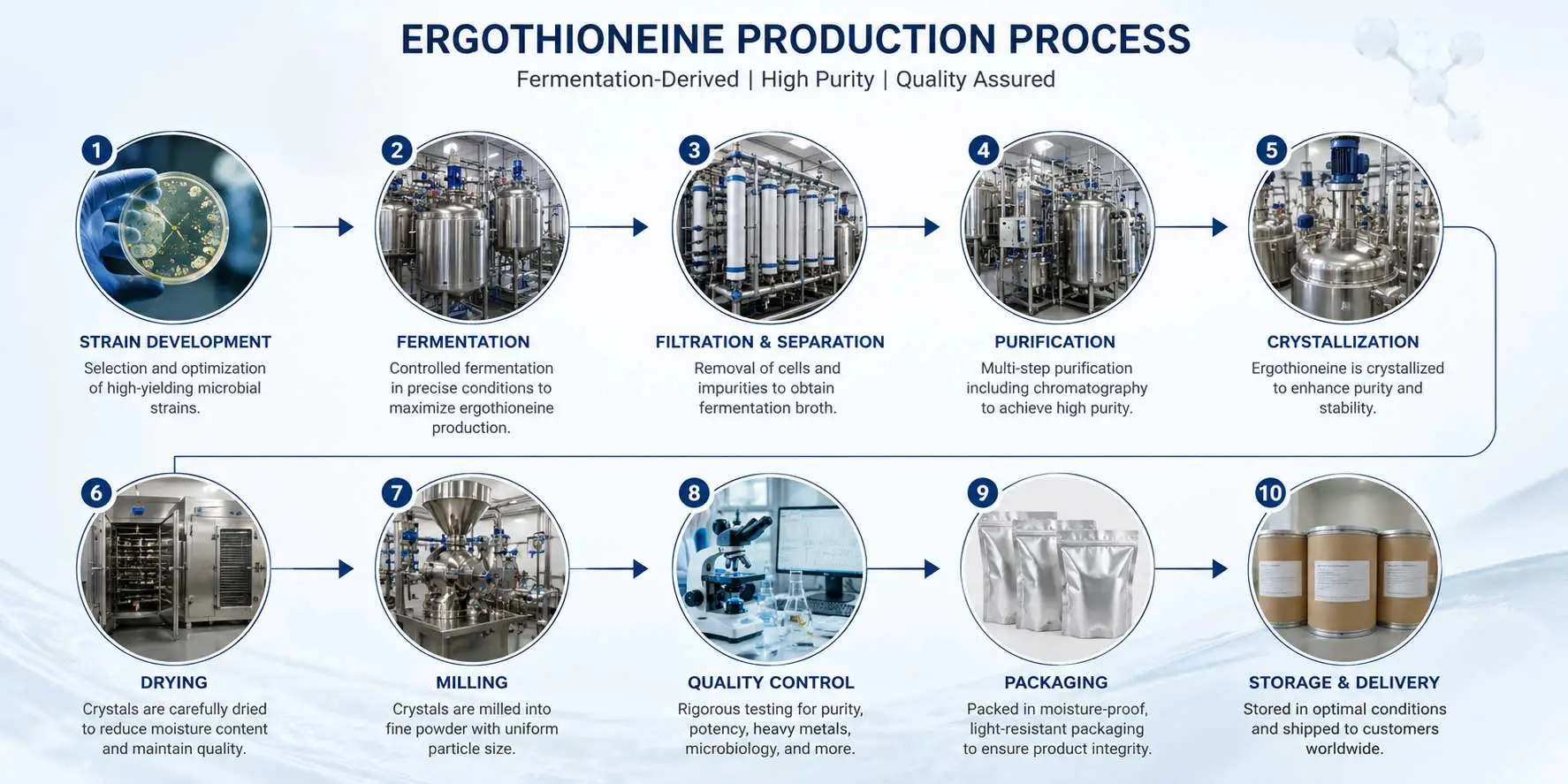
In recent years, fermentation-derived ergothioneine has emerged as the dominant source for commercial production. For bulk buyers and international nutraceutical brands, the shift toward microbial fermentation reflects both technical and commercial advantages over alternative methods such as natural extraction or chemical synthesis.
Microbial fermentation enables precise control over production conditions, which directly impacts L-ergothioneine purity, batch-to-batch consistency, and long-term supply reliability. These qualities are crucial for supplement manufacturers, functional food companies, and cosmetic formulators who depend on predictable ingredient performance.
From a market perspective, fermentation allows ergothioneine suppliers to scale production efficiently, meeting the growing global demand without compromising quality. Traditional extraction from mushrooms or other natural sources faces inherent limitations in yield and sustainability, while chemical synthesis often requires extensive purification and verification to achieve equivalent purity levels.
Furthermore, sustainability and regulatory compliance have become increasingly important for international buyers. Fermentation production typically aligns with eco-friendly practices and adheres to Good Manufacturing Practice (GMP) standards, making it a preferred choice for companies seeking both reliability and regulatory transparency.
In short, the rise of fermentation ergothioneine reflects a combination of high-quality output, commercial scalability, and alignment with modern supply chain and regulatory expectations.
Limitations of Natural Extraction Methods
While natural extraction ergothioneine can offer marketing advantages for certain “naturally sourced” products, it is often less practical for large-scale commercial applications.
Natural sources, such as mushrooms, inherently produce low yields, limiting scalability for bulk ergothioneine powder. Variability in source material leads to inconsistent assay values, creating challenges for manufacturers who need predictable purity for formulation consistency.
Cost is another significant factor. Harvesting, extraction, and purification from natural materials generally result in higher production costs compared with microbial fermentation. For international buyers, these costs can compound further when factoring in logistics, storage, and potential supply constraints.
Additionally, natural extraction methods present sustainability concerns. Overharvesting of wild or cultivated mushrooms can impact ecosystems, and inconsistent raw material availability introduces risk to supply continuity. Brands seeking bulk orders often require stable, long-term availability, which natural extraction struggles to guarantee.
Ultimately, while natural extraction may suit niche, high-value applications, it is rarely the most practical or cost-effective solution for high-purity ergothioneine at scale. This explains why procurement teams increasingly evaluate alternative production methods.
Advantages of Fermentation for Bulk Buyers
For bulk buyers and industrial-scale users, fermentation-derived ergothioneine offers multiple commercial and technical benefits that make it the preferred source.
♦Consistency and Purity
Controlled microbial fermentation ensures consistent growth conditions, resulting in high-purity L-ergothioneine powder across all batches. This reliability is particularly important for companies producing capsules, tablets, functional beverages, and powders, where even small variations in purity or moisture content can affect formulation stability and regulatory compliance.
♦Scalability and Supply Security
Fermentation allows suppliers to scale production volumes efficiently, supporting both small pilot runs and large-volume bulk orders. This scalability translates into predictable lead times, fewer supply disruptions, and the ability to meet international demand with confidence.
♦Cost Efficiency
While initial fermentation infrastructure requires investment, the overall cost per kilogram of high-purity ergothioneine is typically lower than natural extraction. This makes it more attractive for international procurement, particularly when recurring bulk orders are involved.
♦Sustainability and Regulatory Alignment
Fermentation production aligns with global sustainability expectations by minimizing raw material consumption and waste. Additionally, adherence to GMP and validated quality control protocols ensures that the ingredient meets regulatory requirements in major markets, including North America, Europe, and Asia.
♦Commercial Flexibility
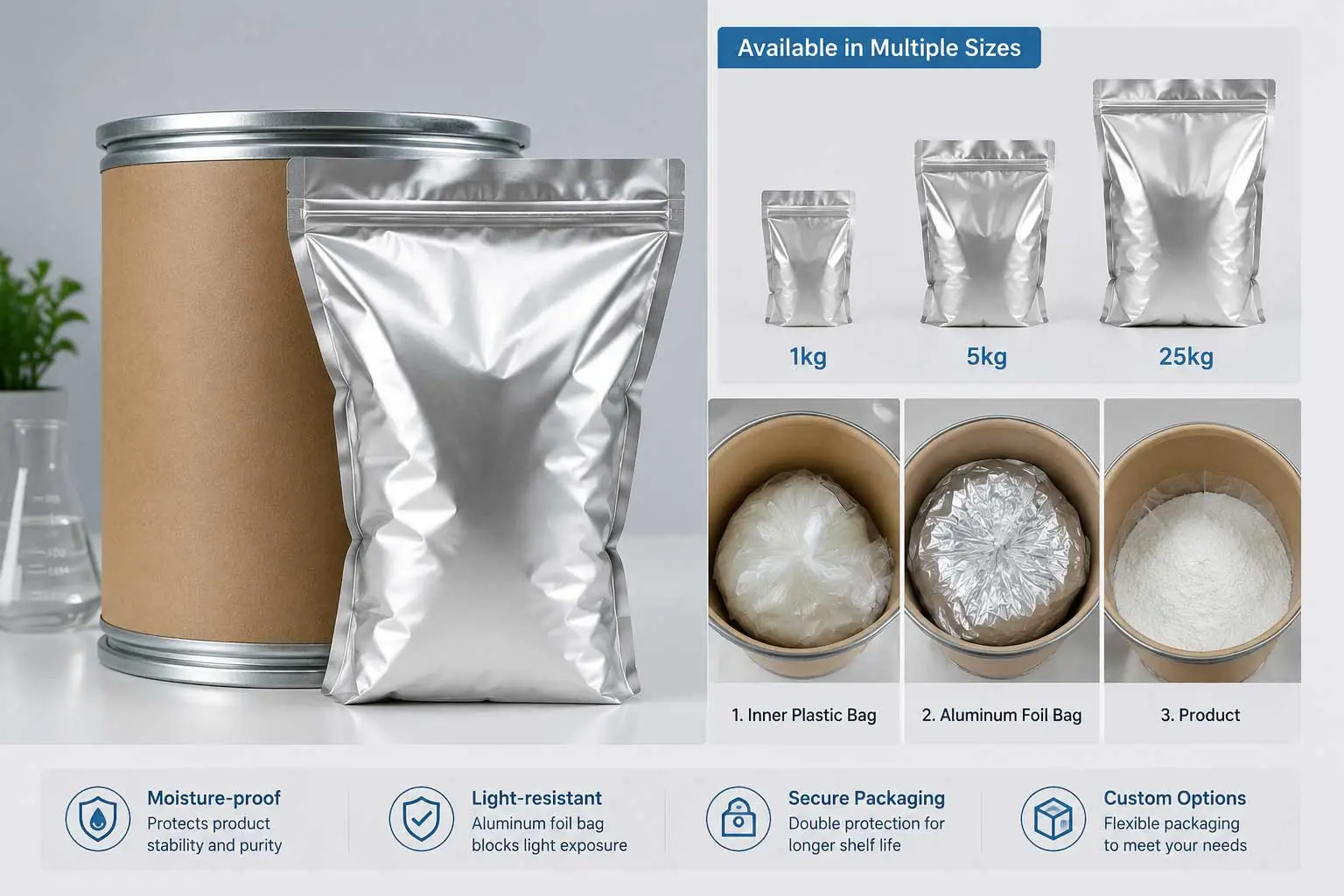
Suppliers offering fermentation-derived ergothioneine can provide multiple packaging formats—ranging from 1 kg and 5 kg lab-scale packages to 25 kg fiber drums—facilitating diverse procurement needs. Combined with documented COAs, stability reports, and batch traceability, this flexibility makes fermentation a practical choice for ergothioneine suppliers serving global clients.
Applications Where Fermentation-Derived Ergothioneine Excels
The benefits of fermentation-derived ergothioneine extend beyond manufacturing efficiency and cost, directly influencing product performance across multiple industries.
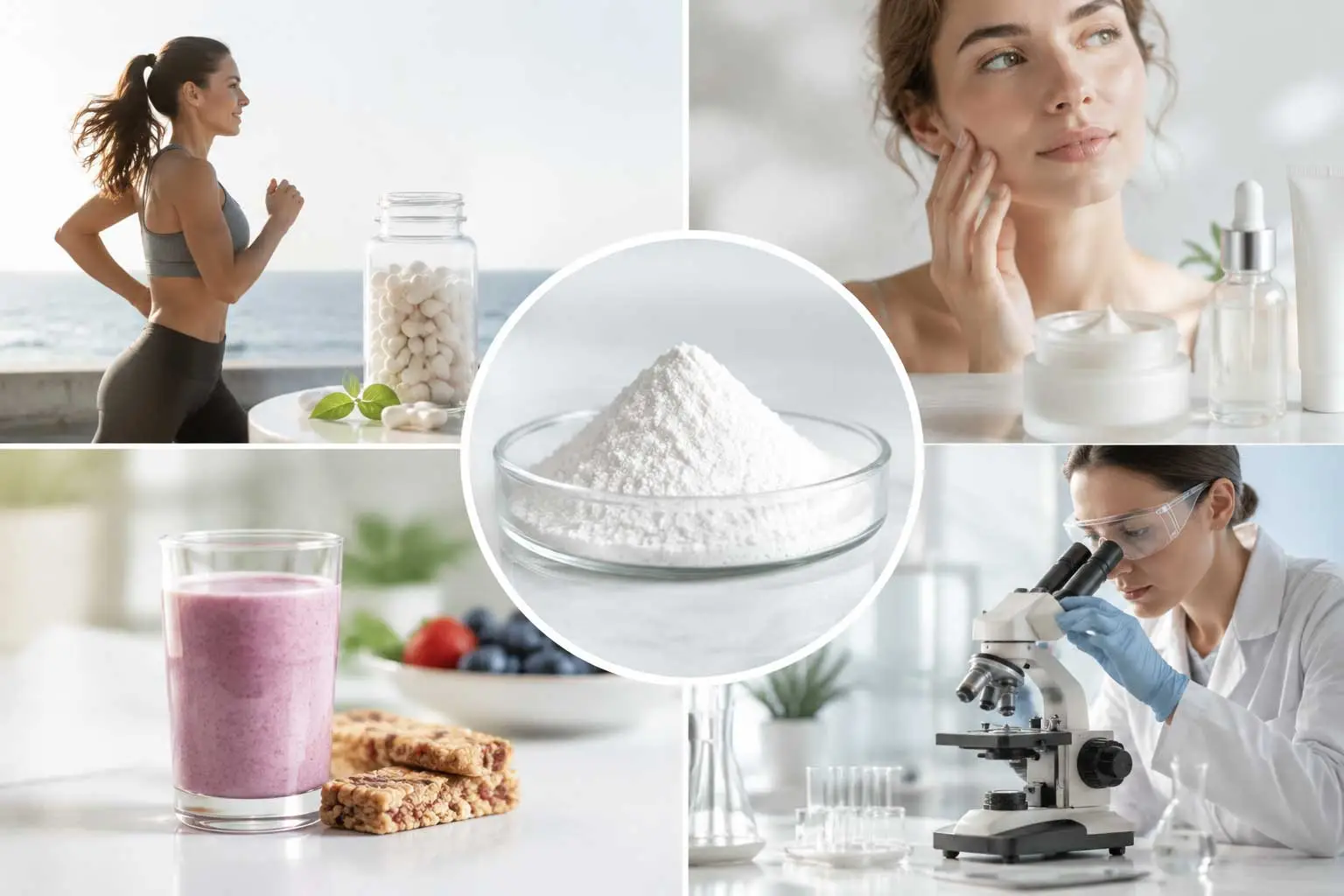
♦Dietary Supplements
In the nutraceutical sector, high-purity ergothioneine powder is increasingly used for healthy aging, cognitive support, and antioxidant formulations. Consistent L-ergothioneine content is essential to ensure reliable efficacy, making fermentation-derived material the preferred choice for supplement brands.
♦Functional Foods
Food manufacturers incorporating ergothioneine require stable, high-quality ingredients compatible with diverse formulations, from beverages to protein powders. Fermentation-derived ergothioneine delivers predictable functionality, enabling more reliable product development and formulation success.
♦Cosmetic Applications
Antioxidant properties make ergothioneine attractive for skincare and personal care formulations. Purity and traceability are critical in this sector, particularly for high-end products targeting sensitive skin. Controlled microbial fermentation ensures consistency and quality across batches.
♦Research and Advanced Formulations
For R&D labs and advanced formulation developers, fermentation ergothioneine offers reproducibility and high assay values. Even minor batch variability can impact research outcomes or experimental consistency, so reliable microbial production becomes essential.
Across these applications, fermentation production ensures a combination of bulk availability, high purity, and regulatory confidence that natural extraction cannot consistently deliver. For international buyers, this makes fermentation-derived ergothioneine the strategic choice for both commercial and research-grade applications.
Evaluating Ergothioneine Suppliers for Fermentation Products
As demand for fermentation-derived ergothioneine continues to grow, buyers face an increasingly important challenge: selecting a supplier capable of delivering consistent quality, reliable documentation, and long-term supply stability.
While product specifications are often the first thing procurement teams review, experienced buyers understand that ingredient quality is only one part of the equation.
The true value of a supplier is reflected in manufacturing capability, quality management systems, technical support, and operational transparency.
When sourcing bulk ergothioneine powder, evaluating these factors can significantly reduce procurement risks and support more sustainable supplier relationships.
Manufacturing Capability Should Be Verified
Not all companies offering ergothioneine powder operate actual production facilities.
Some function primarily as traders or distributors, while others manage the complete manufacturing process, from fermentation through purification and packaging.
For buyers seeking long-term supply security, understanding this distinction is important.
A supplier involved directly in fermentation production typically has greater control over:
•Production scheduling
•Quality consistency
•Raw material traceability
•Inventory management
•Process optimization
Manufacturing transparency often indicates a higher level of technical competence and operational stability.
For this reason, many international buyers request information regarding:
•Production technology
•Annual capacity
•Manufacturing certifications
•Quality management procedures
before approving a supplier.
Documentation Is More Important Than Marketing Claims
Professional procurement teams rarely rely on promotional materials alone. Instead, they evaluate documented evidence of quality and compliance.
Reliable ergothioneine manufacturers should be capable of providing:
•Certificate of Analysis (COA)
•Technical Data Sheet (TDS)
•Safety Data Sheet (SDS)
•Stability Reports
•Product Specifications
•Batch Traceability Documentation
These documents help buyers verify that the material meets internal quality standards and regulatory requirements. They also provide valuable insight into the supplier's commitment to quality control.
In many cases, the quality of a supplier's documentation reflects the maturity of its manufacturing systems.
Batch Consistency Is a Critical Indicator
A single high-quality batch does not necessarily indicate a reliable manufacturing process. What matters most is the ability to achieve the same specifications repeatedly over time.
This is particularly important for:
•Dietary supplement manufacturers
•Functional food producers
•Cosmetic brands
•Contract manufacturers
Small variations in purity, moisture content, or microbiological quality can create formulation challenges and increase production costs.
For this reason, many buyers request historical batch data when evaluating a new ergothioneine supplier.
Consistency demonstrates process control, quality discipline, and manufacturing reliability.
Packaging and Logistics Support Matter
Packaging is often overlooked during supplier evaluation, but it plays an important role in maintaining product quality throughout storage and transportation.
Professional suppliers should be able to offer packaging solutions appropriate for commercial supply chains, including:
•1 kg sample packaging
•5 kg pilot-scale packaging
•25 kg fiber drum packaging
Proper packaging should include:
•Food-grade inner liners
•Moisture barrier protection
•Secure sealing systems
•Export-ready labeling
For international customers, logistics experience is equally important.
Reliable suppliers should understand documentation requirements, customs procedures, and transportation conditions necessary to protect product integrity during global shipments.
Frequently Asked Questions About Fermentation-Derived Ergothioneine
Is fermentation-derived ergothioneine considered natural?
This is one of the most common questions among supplement brands.
Although fermentation ergothioneine is produced using microbial fermentation technology, it is widely recognized as a naturally derived ingredient because it is generated through biological processes rather than synthetic chemical reactions.
Many brands view fermentation as a practical balance between natural sourcing and commercial scalability.
Why are more manufacturers choosing fermentation over natural extraction?
The primary reasons include:
•Higher purity
•Better batch consistency
•Greater scalability
•Improved supply reliability
•More sustainable production
These advantages make fermentation-derived ergothioneine particularly attractive for commercial applications requiring long-term ingredient availability.
Does fermentation affect the biological activity of ergothioneine?
No. When properly manufactured, fermentation produces L-ergothioneine, the naturally occurring and biologically active form used in dietary supplements, cosmetics, and functional foods.
Quality control testing ensures that the final ingredient meets established purity and identity specifications.
Which source is better for bulk purchasing?
For most commercial buyers, fermentation ergothioneine offers significant advantages. Its scalable production model allows suppliers to provide stable pricing, predictable lead times, and consistent product quality.
These factors are particularly important for brands planning long-term product development or recurring production runs.
How can buyers verify product quality?
The most effective approach is reviewing documentation and quality testing data. Buyers should request:
•COA reports
•Identity testing results
•Heavy metal analysis
•Microbiological testing data
•Stability information
Comprehensive documentation provides confidence that the material meets required quality standards.
What packaging options are commonly available?
Commercial suppliers typically offer:
•1 kg packaging for evaluation and R&D
•5 kg packaging for pilot production
•25 kg fiber drums for industrial supply
Packaging systems are designed to protect ergothioneine powder from moisture, oxygen exposure, and contamination during transportation and storage.
Conclusion: Why Fermentation Is Becoming the Preferred Source of Ergothioneine
The rapid growth of the global ergothioneine market has increased the importance of ingredient quality, supply reliability, and manufacturing transparency. While natural extraction continues to have a place in certain niche applications, the commercial realities of modern ingredient sourcing increasingly favor fermentation-derived ergothioneine.
Its ability to deliver:
•High purity
•Consistent quality
•Scalable production
•Sustainable manufacturing
•Reliable global supply
has made fermentation the preferred production method for many supplement brands, food manufacturers, cosmetic companies, and ingredient distributors.
For procurement teams evaluating ergothioneine suppliers, the decision often extends beyond purity alone.
Factors such as batch consistency, documentation quality, production capacity, and long-term supply security are equally important when selecting a sourcing partner.
As demand continues to expand across healthy aging, cognitive health, functional nutrition, and cosmetic applications, fermentation-based production is expected to remain the dominant source of commercial ergothioneine powder.
For buyers interested in reviewing product specifications, COA documentation, packaging options, stability data, or sample availability, additional technical information can be requested through our team at admin@chenlangbio.com.
Making informed sourcing decisions begins with understanding how an ingredient is produced—and why that production method matters.

Send Inquiry
Related Industry Knowledge
- Ergothioneine Price per Kg in 2026: What Affects Bulk Cost?
- What is Ergothioneine Powder Used for?
- How Does Ergothioneine Benefit Health?
- Is Ergothioneine A Longevity Vitamin
- Could Ergothioneine Cure Alzheimer's Disease
- What is Ergothioneine in Skin Care
- What Foods are High in Ergothioneine and Glutathione
- What is Ergothioneine Good for
- What is the Function of Ergothioneine
- What is the Best Ergothioneine Supplement