
Diosmin Dosage Guide: Understanding Dosage Levels, Uses, and Differences Between Diosmin and Aescin
November 9, 2026
Diosmin has become a widely recognized natural flavonoid ingredient in pharmaceutical and health-related formulations. It is commonly used in products designed for vascular support and circulation management.
For manufacturers, understanding diosmin dosage is an important part of product development. The right dosage level depends on several factors. These factors include formulation type, target market, regulatory requirements, and product positioning.
Diosmin is often compared with Aescin because both ingredients come from natural sources. They are frequently discussed in the field of vascular health ingredients. However, they belong to different chemical families and have different application characteristics.
A clear understanding of diosmin dosage helps formulators select suitable raw materials. It also helps companies create products that meet customer expectations.
At Chenlangbio, we provide high-quality Diosmin raw material solutions for global pharmaceutical and health product manufacturers. We support customers with technical documents, product information, and reliable supply services.
1. What Is Diosmin?
Diosmin is a naturally derived flavonoid compound. It belongs to the flavone glycoside family.
The ingredient is mainly associated with citrus plants. It is commonly produced from natural flavonoid sources through extraction and purification processes.
Diosmin has attracted attention because of its unique chemical properties. Many pharmaceutical companies use it as an active ingredient in specialized formulations.
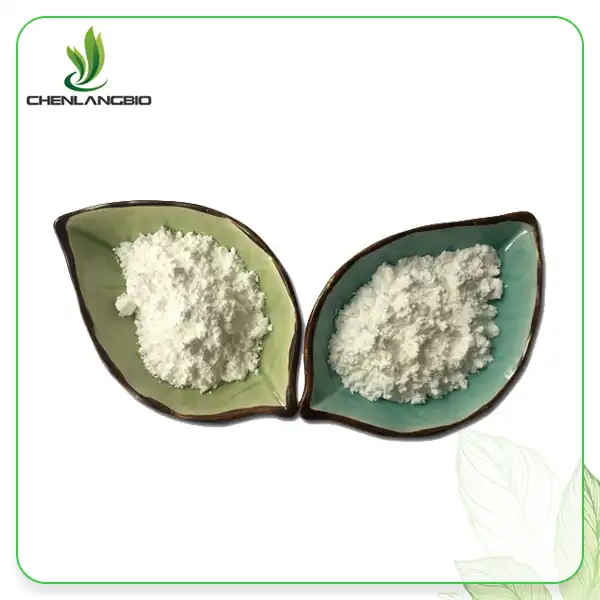
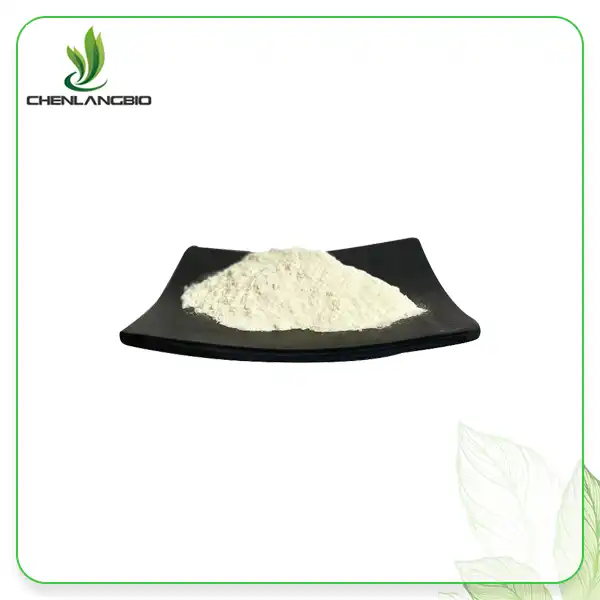
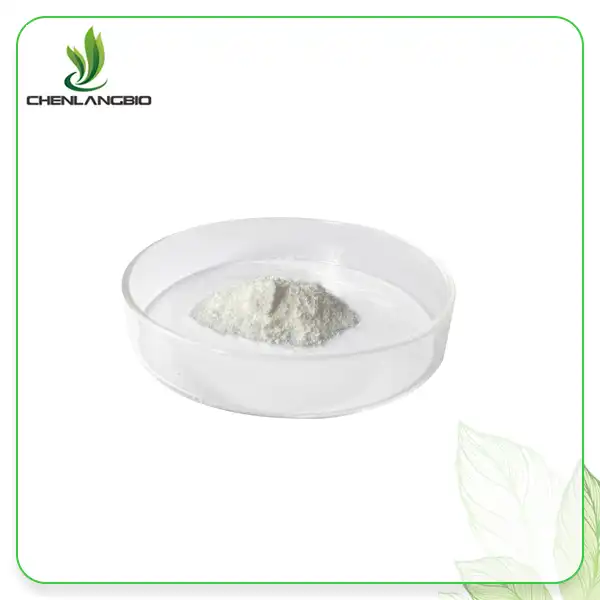
The ingredient is usually supplied as a fine powder. Pharmaceutical manufacturers often evaluate its purity, assay value, appearance, and documentation before purchasing.
Common quality documents include:
· Certificate of Analysis (COA)
· Technical Data Sheet (TDS)
· Safety Data Sheet (MSDS)
· Specification sheet
These documents help manufacturers confirm product quality before formulation.
2. Understanding Diosmin Dosage Requirements
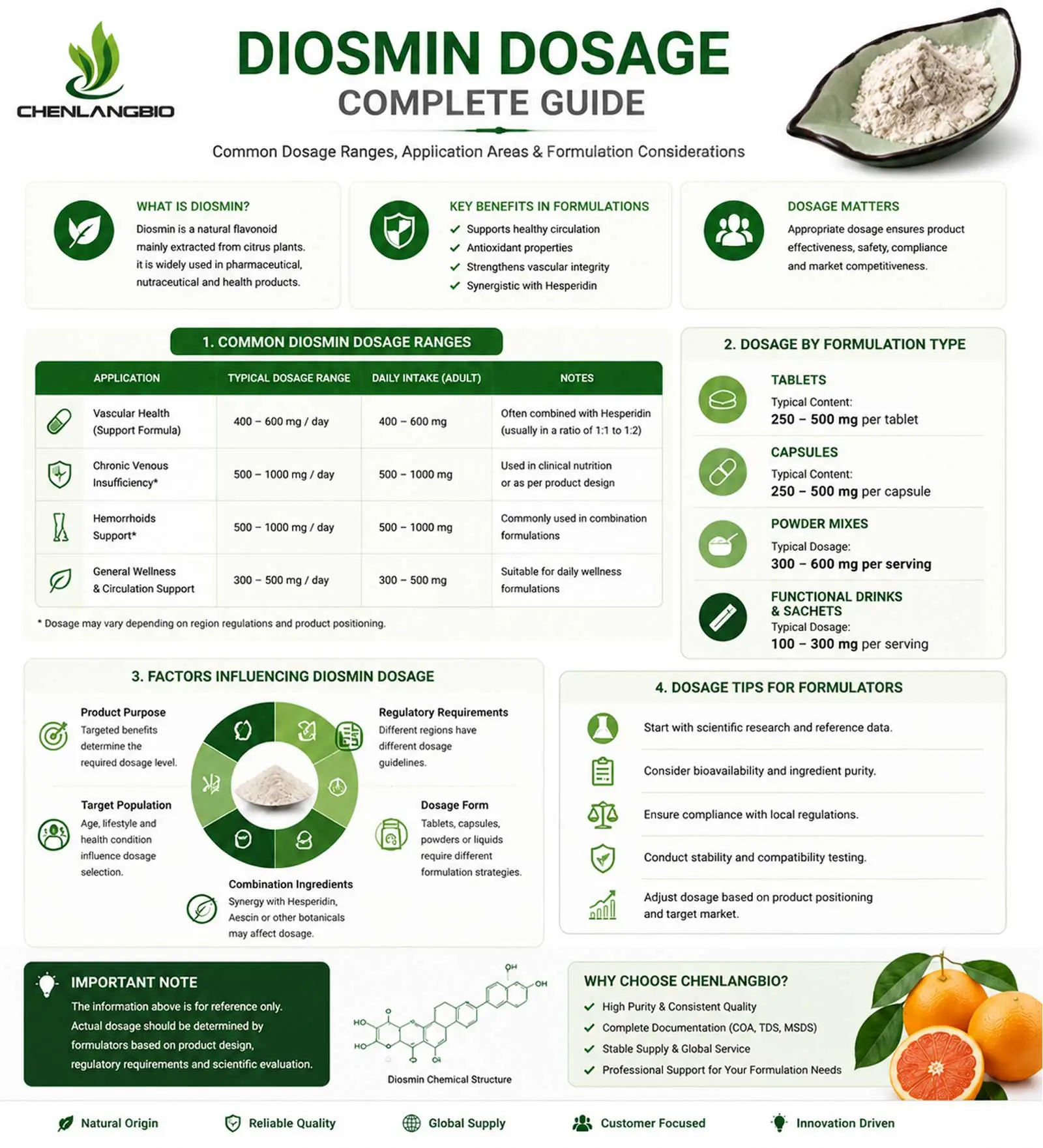
The topic of diosmin dosage requires careful consideration. Different products may use different dosage levels depending on their intended application.
There is no single universal dosage value for every formulation. Manufacturers usually determine dosage according to product design, regulatory standards, and market requirements.
For example, pharmaceutical products may follow specific dosage guidelines in different countries. Dietary supplements may use different approaches based on local regulations.
The final dosage decision belongs to the product developer. It depends on the finished product format and intended use.
Common Diosmin Dosage Ranges
Diosmin dosage can vary widely between different formulations.
In many commercial products, daily amounts are commonly found within the range of several hundred milligrams. Some formulations may use higher levels depending on their composition and regulatory approval.
The following factors can influence diosmin dosage:
1. Product Category
A pharmaceutical tablet may have different dosage requirements compared with a dietary supplement capsule.
Manufacturers design products according to their classification. They also consider local regulations and consumer expectations.
2. Combination Ingredients
Diosmin is sometimes combined with other flavonoids or botanical ingredients.
A common example is the combination of diosmin with hesperidin. This combination may influence the overall formulation strategy.
When multiple ingredients are included, manufacturers evaluate the role of each component carefully.
3. Product Form
Diosmin dosage may also depend on the final dosage form.
Common forms include:
· Tablets
· Capsules
· Powder blends
· Functional nutrition products
Each format has different manufacturing considerations.
3. Factors That Influence Diosmin Dosage Selection
Choosing the correct diosmin dosage requires more than looking at a single number.
Professional formulators consider several technical factors.
Purity and Concentration
Raw material quality can influence dosage calculation.
Higher purity materials allow manufacturers to control formulations more accurately.
For example, a supplier providing consistent assay results helps companies maintain batch stability.
Target Market Requirements
Different markets may have different expectations.
European, American, and Asian markets can have different regulatory approaches.
Manufacturers usually review local requirements before finalizing dosage levels.
Consumer Usage Preferences
Product convenience also affects dosage decisions.
Many companies prefer formulations that allow simple daily usage.
A balanced dosage strategy can improve product acceptance.
4. Diosmin Dosage and Raw Material Quality
Raw material quality plays an important role in dosage planning.
A reliable Diosmin supplier should provide clear specifications and consistent quality.
At Chenlangbio, Diosmin raw material is supplied with complete technical support. Customers can review product specifications before production decisions.
Quality evaluation usually includes:
· Appearance
· Identification
· Assay testing
· Moisture content
· Microbial testing when required
These factors help manufacturers understand the characteristics of the ingredient.
A professional supply chain reduces uncertainty during product development.
5. Diosmin Dosage for Different Formulations
The diosmin dosage used in a product depends on the final formulation design. Pharmaceutical companies and supplement manufacturers usually adjust the dosage according to product goals, ingredient combinations, and regulatory requirements.
Different dosage forms may require different approaches.
Diosmin Dosage in Tablets
Tablets are one of the most common product forms for Diosmin.
Manufacturers often choose tablets because they allow accurate ingredient measurement. They also provide convenient daily use.
When developing Diosmin tablets, companies usually consider:
· Active ingredient concentration
· Tablet size
· Additional ingredients
· Recommended daily intake
A consistent Diosmin dosage helps maintain product quality between different production batches.
Tablet manufacturers also evaluate compression properties, stability, and storage conditions.
The final formula is normally developed through laboratory testing and production evaluation.
Diosmin Dosage in Capsules
Capsules provide another popular option for Diosmin products.
Capsules allow manufacturers to combine Diosmin with other botanical ingredients. They also offer flexibility in formulation design.
During capsule development, companies usually review:
· Capsule capacity
· Powder flow characteristics
· Ingredient compatibility
· Target dosage per serving
The selected Diosmin dosage should match the product positioning.
For example, a single-ingredient capsule may use a different approach from a multi-ingredient vascular support formula.
Diosmin Dosage in Combination Products
Diosmin is often used together with other natural ingredients.
One common example is the combination of Diosmin and hesperidin.
Some formulations also include botanical extracts such as Aescin.
When multiple active ingredients are combined, formulators must evaluate the contribution of each component.
The total formula should maintain a balanced ingredient ratio.
This approach helps companies create products with clear positioning in the market.
At Chenlangbio, we provide Diosmin and related natural active ingredients for customers developing combination formulas.
6. Diosmin Dosage Compared With Aescin Dosage
Diosmin and Aescin are often mentioned together. However, they are different compounds with different characteristics.
Understanding their differences helps manufacturers choose the correct ingredient.
Diosmin Dosage Characteristics
Diosmin belongs to the flavonoid family.
It is commonly used in oral formulations.
Product developers usually focus on:
· Ingredient purity
· Flavonoid content
· Daily serving size
· Combination strategy
Diosmin dosage selection often depends on the finished product category.
Aescin Dosage Characteristics
Aescin, also known as Escin, is a mixture of triterpene saponins.
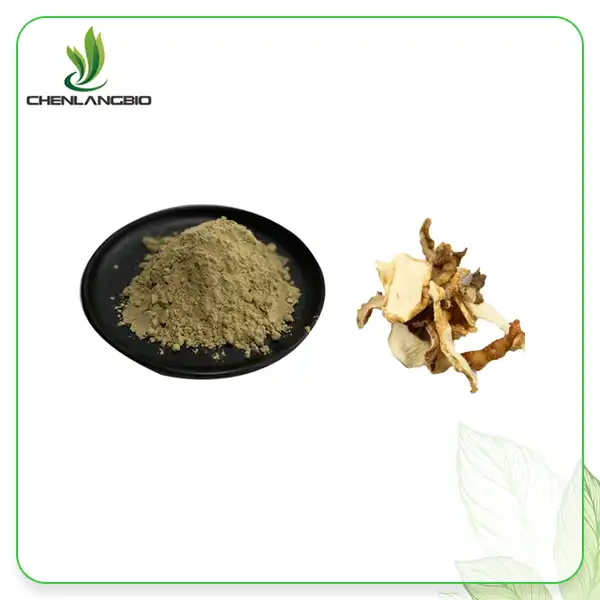
It is mainly extracted from horse chestnut seeds.
Aescin is commonly used in:
· Oral products
· Topical formulations
· Botanical extracts
Its dosage strategy differs from Diosmin because the chemical structure and extract characteristics are different.
Manufacturers evaluate Aescin based on:
· Aescin content
· Extract concentration
· Product form
· Regulatory requirements
7. Diosmin vs Aescin: Key Differences
Although Diosmin and Aescin are both natural ingredients, they have several important differences.
|
Feature |
Diosmin |
Aescin |
|
Source |
Citrus plants |
Horse chestnut seeds |
|
Chemical family |
Flavonoid glycoside |
Triterpene saponins |
|
Common form |
Powder |
Extract powder |
|
Main application |
Oral formulations |
Oral and topical products |
|
Quality focus |
Assay and purity |
Aescin content and extract quality |
These differences influence how manufacturers use each ingredient.
Diosmin is often selected for flavonoid-based formulations.
Aescin is often selected when companies need a botanical extract with saponin characteristics.
Neither ingredient can simply replace the other.
The selection depends on the formulation purpose.
8. How Manufacturers Decide Between Diosmin and Aescin
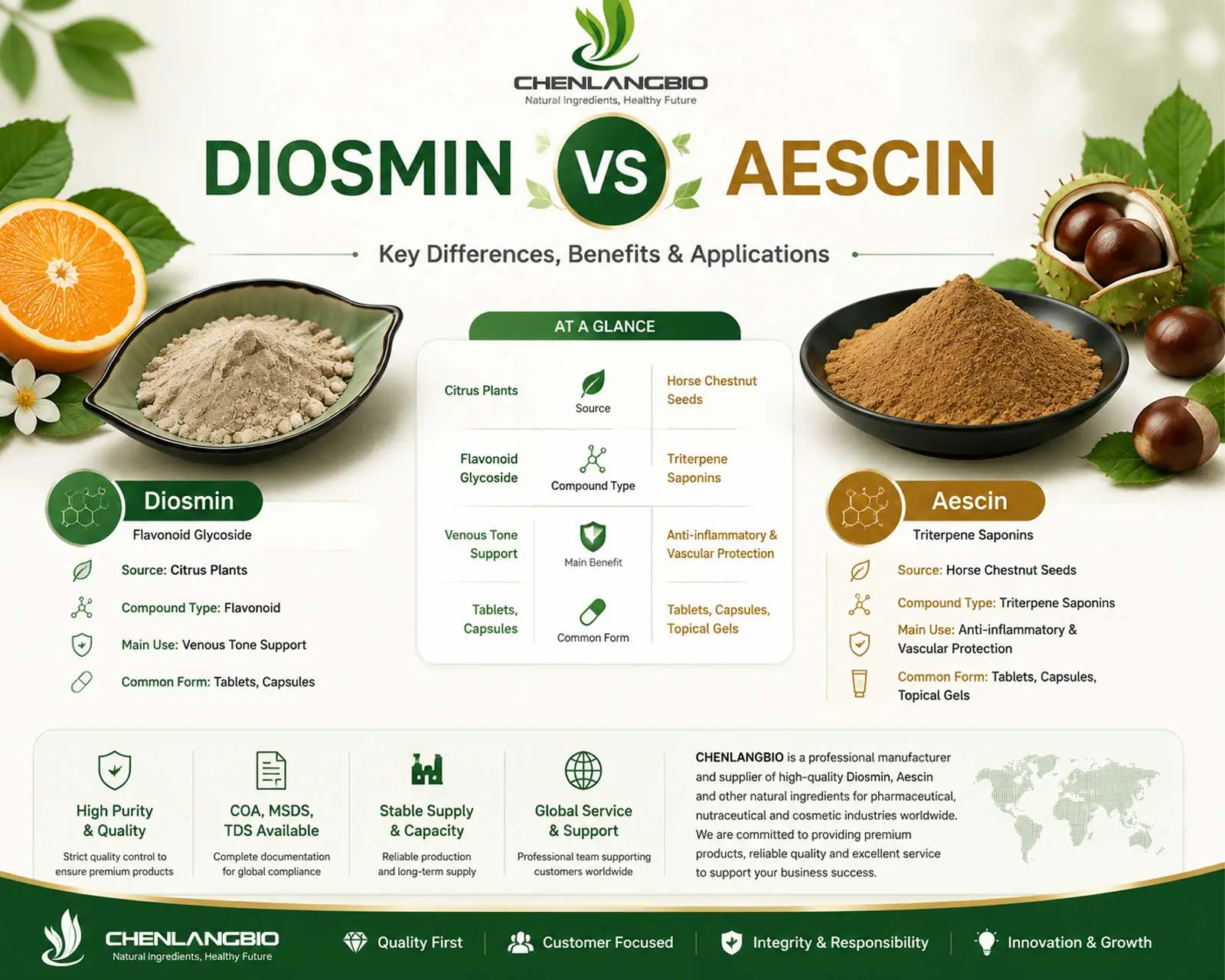
Choosing between Diosmin and Aescin requires careful product planning.
Manufacturers usually consider several questions.
What Is the Product Goal?
The first question involves the purpose of the formulation.
Companies need to understand their target customers and market positioning.
Different products require different ingredient strategies.
What Dosage Form Will Be Used?
A tablet, capsule, or topical product may require different ingredient choices.
The dosage form affects:
· Ingredient compatibility
· Manufacturing process
· Consumer experience
What Are the Regulatory Requirements?
Regulations vary between countries.
Manufacturers must review local rules before selecting ingredients and dosage levels.
A reliable raw material supplier can provide technical information to support this process.
9. Importance of Choosing a Reliable Diosmin Supplier
Raw material quality directly affects finished product development.
A professional supplier should provide stable quality and transparent documentation.
Important supplier factors include:
Product Consistency
Each batch should meet agreed specifications.
Consistent quality helps manufacturers maintain production standards.
Technical Documentation
Professional buyers often request:
· COA
· TDS
· MSDS
· Product specifications
Complete documentation improves communication between suppliers and customers.
Supply Capability
Long-term supply stability is important for pharmaceutical manufacturers.
Production capacity, quality management, and export experience all influence supplier selection.
At Chenlangbio, we focus on supplying natural pharmaceutical ingredients with reliable quality control and professional export support.
10. How to Evaluate Diosmin Dosage in Product Development
When companies develop Diosmin-based products, dosage selection requires a structured approach.
A professional formulation process does not focus only on the ingredient amount. It also considers product quality, customer needs, and market regulations.
Manufacturers usually review several important factors before confirming the final Diosmin dosage.
Ingredient Purity and Assay Value
The purity of Diosmin raw material plays an important role in formulation planning.
A higher assay value allows better control during production.
For example, manufacturers need accurate testing data before calculating the amount of raw material required.
Common quality tests include:
· Identification testing
· Assay determination
· Moisture analysis
· Residual solvent testing
· Heavy metal testing
These tests help confirm that the raw material meets the required specification.
A reliable supplier should provide complete testing information for each batch.
At Chenlangbio, we provide Diosmin documentation to support customers during product evaluation and formulation development.
11. Common Questions About Diosmin Dosage
What Is the Typical Diosmin Dosage?
The typical Diosmin dosage depends on the product type and regulatory requirements.
Different countries may have different standards.
Pharmaceutical products, dietary supplements, and functional nutrition products may use different dosage strategies.
Manufacturers should always check local regulations before launching products.
Can Diosmin Dosage Be Adjusted?
Yes, manufacturers can adjust the dosage according to their formulation goals.
The final amount depends on:
· Product category
· Target market
· Combination ingredients
· Recommended serving size
A flexible dosage strategy allows companies to develop different product formats.
Is Higher Diosmin Dosage Always Better?
A higher amount does not always mean a better formulation.
Product developers usually focus on balance.
The ideal dosage depends on scientific evaluation, product design, and market requirements.
A well-designed formula should provide appropriate ingredient levels without unnecessary increases.
12. Diosmin Dosage and Combination With Aescin
Diosmin and Aescin are sometimes discussed together because both ingredients are used in vascular health formulations.
However, they have different chemical structures.
Diosmin belongs to the flavonoid family.
Aescin belongs to the triterpene saponin family.
When companies combine these ingredients, they usually evaluate the following points:
Ingredient Ratio
The ratio between Diosmin and Aescin affects the overall formula design.
Manufacturers select ratios based on their product concept.
Product Formulation
A combination formula may require additional testing.
Companies need to evaluate:
· Stability
· Compatibility
· Manufacturing process
· Storage conditions
Market Positioning
Different markets have different consumer expectations.
Some companies focus on single-ingredient products.
Others prefer multi-ingredient botanical formulas.
Both strategies can be suitable depending on the target market.
13. Manufacturing Considerations for Diosmin Products
Producing a high-quality Diosmin product requires attention throughout the supply chain.
Raw material selection is the first important step.
Manufacturers usually evaluate suppliers based on:
Production Capability
A stable production system helps maintain consistent supply.
This is especially important for companies with long-term product plans.
Quality Management
Quality control procedures help reduce batch variation.
Reliable suppliers should follow strict internal quality standards.
Export Experience
International buyers often require suppliers with export experience.
Proper documentation and communication help create smooth cooperation.
At Chenlangbio, we work with global customers who require dependable natural pharmaceutical ingredients and professional support.
14. How to Choose a Diosmin Supplier for Global Markets
Selecting the right supplier requires more than comparing prices.
Professional buyers usually consider several aspects.
Product Quality
The supplier should provide clear specifications.
Customers should understand:
· Product origin
· Manufacturing process
· Testing methods
· Storage conditions
Documentation Support
International customers often request technical files before purchasing.
Important documents include:
· COA
· MSDS
· TDS
· Specification sheet
Fast document support improves the purchasing process.
Communication and Service
Good communication is important for international cooperation.
A supplier should respond clearly to technical questions.
They should also provide accurate information about products and delivery.
Chenlangbio supports customers worldwide with professional communication and reliable raw material supply.
15. Why Diosmin Remains Important for Pharmaceutical Ingredient Buyers
Diosmin continues to attract interest from pharmaceutical and health product manufacturers.
Its natural origin and established application history make it a valuable ingredient.
However, successful product development requires careful consideration.
Companies need to evaluate:
· Suitable dosage levels
· Raw material quality
· Market regulations
· Product positioning
Understanding Diosmin dosage helps manufacturers make better formulation decisions.
It also helps buyers communicate more effectively with ingredient suppliers.
Conclusion: Understanding Diosmin Dosage and Choosing the Right Ingredient Strategy
Diosmin and Aescin are both important natural ingredients used in modern pharmaceutical and health-related formulations.
They share some application areas, but they have different chemical characteristics.
Diosmin is a flavonoid ingredient commonly selected for oral formulations.
Aescin is a botanical saponin extract with different properties and applications.
When choosing between them, manufacturers should consider their product goals, dosage form, and market requirements.
The correct diosmin dosage depends on many factors. These factors include formulation design, ingredient quality, and regulatory expectations.
A reliable raw material partner can help companies develop products with consistent quality.
At Chenlangbio, we supply high-quality Diosmin and Aescin raw materials for international customers. We provide technical documents, product information, and professional support for pharmaceutical and health product development.
Choosing the right ingredient and dosage strategy is an important step toward creating successful products in global markets.

Send Inquiry
Related Industry Knowledge
- Nitenpyram for Flea Control in Dogs and Cats: How This Fast-Acting Insecticide Works
- Does P5P Interfere With Sleep?
- Zeaxanthin for Gummies: Ingredient Selection and Formulation Considerations
- How to Evaluate Tranexamic Acid Powder Quality Through COA Before Buying
- What Is Spermidine Trihydrochloride? Benefits, Uses and Applications
- Sourcing Levodopa Powder? 5 Critical Factors for Pharmaceutical Grade Quality
- How Does Diosmin Powder Reduce Venous Hyperpressure Effectively?
- What Are the Key Benefits of Pharmaceutical-Grade Progesterone Micronized Powder?
- How Does PQQ Work in the Body?
- What is Tetrahydrocurcumin Used for?