
How to Evaluate Tranexamic Acid Powder Quality Through COA Before Buying
2026-07-25 10:46:53
Introduction: Understanding Quality Evaluation Before Purchasing Tranexamic Acid Powder
Tranexamic acid powder quality evaluation is an essential step for cosmetic manufacturers, skincare brands, and ingredient buyers before establishing cooperation with a raw material supplier. When purchasing cosmetic ingredients, a Certificate of Analysis (COA) is often the first document buyers review, but a professional evaluation should go beyond checking a single purity value. The reliability of a raw material depends on multiple factors, including analytical methods, specification standards, batch consistency, and the supplier’s overall quality management system.
For companies looking to buy tranexamic acid powder, understanding how to read and evaluate a COA helps purchasing teams make better decisions and reduce potential risks during product development and commercial manufacturing. Different suppliers may provide materials with similar specifications, but differences in production control, testing procedures, and documentation transparency can directly influence long-term supply reliability.
A professional tranexamic acid powder supplier should provide clear and accurate quality information that allows buyers to verify the material before purchase. This includes not only the COA itself but also supporting documents such as product specifications, technical information, and quality records when required.
For cosmetic manufacturers, the goal of evaluating a COA is not simply to confirm that the ingredient meets a basic requirement. It is to ensure that the raw material can consistently support formulation development, production stability, and long-term cooperation with a reliable cosmetic ingredient supplier.

What Is a Tranexamic Acid COA and Why Is It Important for Buyers?
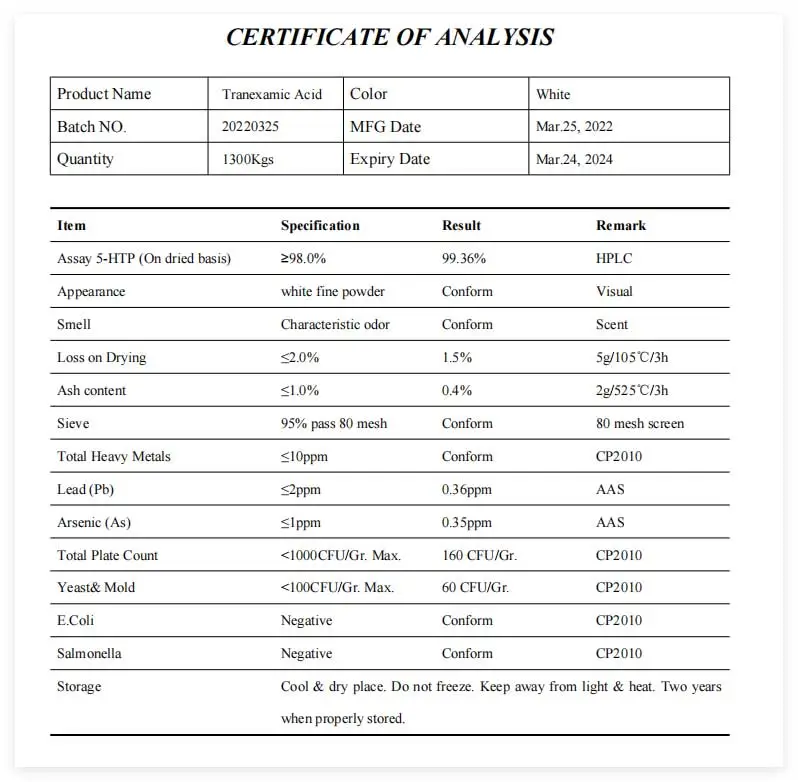
Tranexamic acid COA is one of the most important quality documents provided by a professional raw material supplier. A Certificate of Analysis records the analytical results of a specific production batch and demonstrates whether the material meets the agreed product specifications. For international cosmetic buyers, the COA provides essential information needed for internal quality review, supplier qualification, and purchasing approval.
When evaluating a new tranexamic acid supplier, buyers should understand that a COA is more than a simple document attached to a shipment. It represents the supplier’s quality control process and provides evidence that the ingredient has been tested before release. A complete COA allows purchasing teams and quality departments to confirm important product characteristics and compare supplier capabilities more effectively.
For companies sourcing tranexamic acid powder with COA, the quality of the documentation itself can also reflect the professionalism of the supplier. A reliable manufacturer should provide consistent, traceable, and clearly presented analytical information rather than incomplete or unclear test reports.
The Role of COA in Cosmetic Raw Material Purchasing
In the cosmetic industry, raw material selection involves multiple departments, including procurement, research and development, quality control, and regulatory teams. Before an ingredient enters a commercial formula, each department needs confidence that the material meets the required standards.
A detailed tranexamic acid certificate of analysis helps buyers evaluate key aspects of the ingredient, including purity, identity, physical characteristics, and quality consistency. This information supports technical discussions between suppliers and customers and allows manufacturers to make informed sourcing decisions.
For skincare brands developing products with cosmetic grade tranexamic acid, a reliable COA is especially important because consistent raw material quality helps maintain stable formulation performance during scale-up production. A sample that performs well during initial testing is only the beginning; the supplier must also demonstrate the ability to provide the same quality level across repeated commercial orders.
This is why experienced buyers usually evaluate both the product specification and the supplier behind the product. A supplier with strong quality management practices can provide greater confidence that future batches will meet expectations.
Why Buyers Should Look Beyond the Purity Number
One common mistake when evaluating tranexamic acid powder quality is focusing only on the assay or purity percentage. While purity is an important indicator, it does not represent the entire quality profile of the ingredient.
A professional evaluation should also consider:
•how the testing was performed;
•whether the specification is clearly defined;
•whether related substances are controlled;
•whether the supplier can maintain batch consistency;
•whether the documentation matches the actual product.
For example, two suppliers may both offer high-purity Tranexamic Acid, but the overall reliability may differ depending on their testing capability, manufacturing control, and quality release procedures.
For this reason, companies searching for a high purity tranexamic acid powder supplier should evaluate the complete quality system rather than selecting a supplier based only on the lowest quotation.
Which Parameters Should Buyers Check in a Tranexamic Acid Powder COA?
Tranexamic acid powder COA evaluation requires an understanding of the key parameters that determine raw material quality. For cosmetic manufacturers, these parameters provide important information about whether the ingredient is suitable for formulation development and commercial production.
A complete COA normally includes several analytical results, each providing different information about the material. Experienced buyers review these results together instead of relying on only one specification.
Assay and Purity Results: The First Indicator of Raw Material Quality
Tranexamic acid assay is one of the first items buyers usually check when reviewing a COA. The assay value indicates the content of the target ingredient in the tested batch and provides an important reference for evaluating material quality.
For companies purchasing high purity tranexamic acid powder, the assay result should be reviewed together with the supplier’s specification range and testing method. A professional supplier should clearly define the acceptance criteria and provide analytical data that matches the agreed specification.
However, purity alone does not determine whether a supplier is reliable. A consistent supply requires the ability to maintain the same quality profile across multiple production batches. This is particularly important for cosmetic manufacturers that require stable raw materials for continuous production.
A dependable tranexamic acid manufacturer focuses not only on achieving a qualified result for one batch but also on maintaining consistent quality through controlled production and testing procedures.
Identification Testing: Confirming Ingredient Authenticity
Tranexamic acid identification testing is another important part of quality verification. While assay testing evaluates the amount of active ingredient, identification testing confirms that the material corresponds to the expected chemical identity.
For buyers sourcing tranexamic acid raw material, identification testing provides additional confidence that the supplied ingredient matches the required product standard.
A professional cosmetic raw material supplier should maintain clear testing procedures to verify product identity before batch release. This helps prevent quality risks and ensures that customers receive the correct ingredient for their formulation projects.
Related Substances and Impurity Control: Why They Matter for Tranexamic Acid Powder Quality
Tranexamic acid impurity control is an important consideration when evaluating the overall quality of a raw material supplier. While assay results indicate the content of the target ingredient, the control of related substances provides additional information about the purity profile and manufacturing consistency of the material.
For cosmetic manufacturers purchasing tranexamic acid powder, understanding impurity control helps them evaluate whether a supplier has a reliable production and quality management system. A professional supplier should not only provide a qualified assay result but also demonstrate that potential impurities and related substances are controlled within the required specification range.
In commercial raw material sourcing, quality consistency is often more important than a single test result. A supplier may provide a qualified sample, but the ability to maintain the same quality profile across multiple production batches determines whether the supplier can support long-term manufacturing needs.
This is especially important for skincare brands that develop products for global markets. When a formulation has completed development and enters commercial production, changing raw material sources can require additional evaluation and testing. Therefore, working with a reliable tranexamic acid powder supplier from the beginning helps manufacturers maintain product consistency and reduce unnecessary supply chain risks.
Appearance, Solubility, and Physical Characteristics of Tranexamic Acid Powder
Tranexamic acid powder specification evaluation should include not only analytical parameters such as assay and purity but also important physical characteristics that influence handling, storage, and formulation development. For cosmetic manufacturers purchasing raw materials, understanding these properties helps determine whether the ingredient can be efficiently incorporated into different skincare systems.
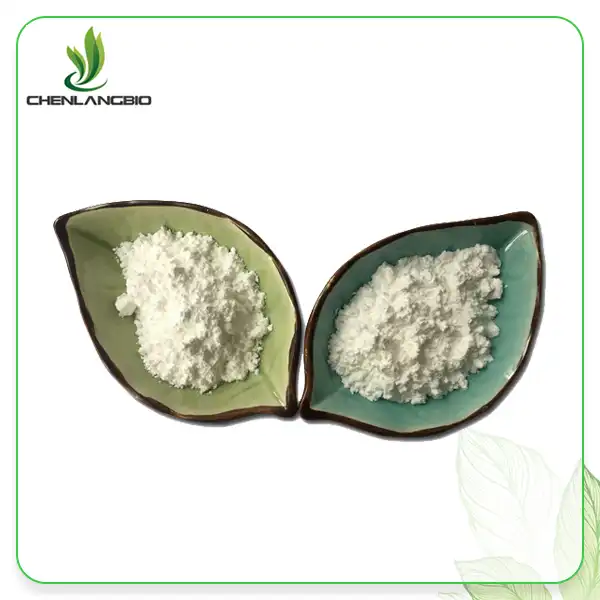
Tranexamic Acid is a synthetic amino acid derivative with the chemical name trans-4-(aminomethyl)cyclohexane carboxylic acid. In its raw material form, tranexamic acid powder is typically supplied as a white or almost white crystalline powder with a consistent particle appearance. The physical characteristics of the powder provide an initial indication of material quality and manufacturing consistency.
For companies sourcing cosmetic grade tranexamic acid, appearance inspection is one of the basic quality checks performed during raw material evaluation. A qualified product should maintain a consistent appearance between batches without abnormal coloration, visible foreign particles, or significant physical variation.
However, appearance alone is not sufficient for professional quality evaluation. Cosmetic manufacturers also need to understand the ingredient’s solubility characteristics because dissolution behavior directly affects formulation processing and product development.
Water Solubility of Tranexamic Acid Powder and Its Importance in Skincare Formulations
Tranexamic acid solubility is one of the key physical properties considered by cosmetic formulators. According to published technical information and pharmaceutical references, Tranexamic Acid has good solubility in water, which is related to its polar molecular structure and amino acid derivative characteristics.
The good water solubility of tranexamic acid powder makes it suitable for use in water-based cosmetic formulation systems. During product development, formulators commonly consider water compatibility because many skincare products, including serums, essences, and lotions, contain an aqueous phase where active ingredients need to be properly dispersed or dissolved.
For manufacturers developing tranexamic acid powder for skincare formulation, understanding solubility behavior helps determine appropriate processing conditions and formulation strategies. The ingredient can generally be incorporated into the water phase of a formulation, although the final compatibility depends on the complete formula system, concentration level, pH environment, and interaction with other ingredients.
A professional tranexamic acid supplier should provide accurate technical information regarding solubility and handling characteristics so that formulation teams can evaluate the ingredient effectively during development.
Solubility Characteristics and Formulation Considerations
The solubility of high purity tranexamic acid powder is influenced by several formulation factors, including temperature, solvent system, concentration, and pH conditions.
In cosmetic manufacturing, formulators typically evaluate:
•how quickly the powder dissolves during processing;
•whether complete dissolution can be achieved under the intended manufacturing conditions;
•compatibility with other active ingredients and excipients;
•whether the final formula maintains physical stability.
Because Tranexamic Acid is highly water soluble compared with many oil-soluble cosmetic ingredients, it is commonly considered for formulations where water-phase incorporation is preferred.
For a cosmetic ingredient supplier, providing consistent physical property information is important because it helps customers optimize their manufacturing processes. A clear understanding of solubility characteristics allows skincare brands to reduce trial-and-error during formulation development.
pH Characteristics and Stability Considerations of Tranexamic Acid Powder
Tranexamic acid powder specification commonly includes pH testing as part of quality evaluation. Tranexamic Acid solutions generally show a slightly neutral to mildly alkaline characteristic depending on concentration and testing conditions.
For cosmetic formulators, pH compatibility is an important consideration because the final performance and stability of a skincare product depend on the interaction between all ingredients in the formula.
When developing products containing cosmetic grade tranexamic acid, manufacturers typically evaluate:
•formula pH range;
•compatibility with other active ingredients;
•long-term stability;
•storage conditions.
Although raw material quality provides the foundation, the final stability of a cosmetic product depends on the complete formulation design and manufacturing process.
Storage and Handling Recommendations for Tranexamic Acid Powder
For companies purchasing bulk tranexamic acid powder, proper storage conditions are essential to maintain product quality throughout the supply chain.
Tranexamic Acid Powder should generally be stored in a cool, dry environment and protected from excessive moisture exposure. Proper packaging helps maintain the physical condition of the powder during transportation and storage.
A reliable tranexamic acid powder manufacturer should provide appropriate packaging information and handling recommendations together with quality documents such as COA and product specifications.
For international buyers, these details are especially valuable because raw materials may experience longer transportation periods before reaching the final manufacturing facility.
Why Physical Characteristics Matter When Selecting a Tranexamic Acid Supplier
When evaluating different suppliers, professional buyers should consider both analytical quality and practical usability. A supplier that provides detailed information about appearance, solubility, pH characteristics, and storage requirements demonstrates a stronger understanding of customer needs.
For companies looking to buy tranexamic acid powder, selecting a supplier with transparent technical information can improve communication between procurement teams and formulation departments.
A reliable tranexamic acid powder supplier should not only provide a qualified ingredient but also support customers with the technical details required for successful product development and long-term manufacturing.
Why Testing Methods Matter When Evaluating Tranexamic Acid Powder Quality
Tranexamic acid testing methods play an important role in determining whether a supplier can provide reliable and consistent raw materials. For professional buyers, the quality of testing is often a reflection of the supplier’s technical capability and commitment to quality control.
A specification sheet may show the expected product standard, but testing methods provide the evidence that the supplied material actually meets those requirements. This is why experienced procurement teams consider analytical capability when selecting a long-term tranexamic acid manufacturer.
How HPLC Testing Supports Reliable Quality Evaluation
Tranexamic acid HPLC testing is one of the commonly used analytical approaches for evaluating purity and confirming batch consistency. Compared with simple physical inspection, analytical testing provides more detailed information about the composition of the raw material.
For buyers purchasing high purity tranexamic acid powder, HPLC analysis provides important quality assurance by helping verify assay content and monitor consistency between batches.
A professional supplier with established analytical capabilities can use testing results to support:
•quality verification before shipment;
•batch release decisions;
•customer quality approval;
•long-term product consistency.
For international cosmetic companies, access to reliable testing information is especially valuable because it allows quality teams to review the material before large-scale purchasing.
A strong tranexamic acid powder supplier should be able to explain its testing procedures clearly and provide supporting analytical documents when requested.
Why Third-Party Testing Can Provide Additional Buyer Confidence
Tranexamic acid third party testing can provide additional assurance for buyers who require independent verification of raw material quality. While routine supplier testing is an essential part of quality control, third-party analysis may provide additional confidence during supplier evaluation or large-volume purchasing.
For global ingredient buyers, independent testing can be particularly useful when establishing cooperation with a new supplier or entering a new supply chain relationship.
A professional cosmetic ingredient supplier understands that transparency is an important part of international business cooperation. Providing clear quality information allows customers to complete their internal review process more efficiently and build confidence in the supplier relationship.
How Does a Reliable Tranexamic Acid Supplier Maintain Batch-to-Batch Consistency?
Tranexamic acid batch consistency is one of the most important factors considered by cosmetic manufacturers when choosing a long-term raw material partner. A supplier’s ability to provide one qualified batch is important, but maintaining consistent quality over repeated orders is what truly supports commercial manufacturing.
For skincare brands, product quality depends on every production batch performing as expected. If raw material characteristics change significantly between orders, manufacturers may need to adjust formulas, repeat testing, or delay production schedules.
This is why experienced buyers often evaluate not only the product itself but also the supplier’s manufacturing capability and quality management approach.
Quality Control During Manufacturing and Final Product Release
A professional tranexamic acid manufacturer should have controlled procedures throughout the production process to ensure product consistency. Quality management begins with production control and continues through analytical testing and final batch approval.
For a bulk tranexamic acid powder supplier, maintaining consistency requires more than producing large quantities. It requires a structured system that ensures each batch meets the same quality expectations before delivery.
Reliable suppliers typically focus on:
•consistent production processes;
•controlled testing procedures;
•accurate documentation;
•traceable batch information;
•effective quality release systems.
These practices help ensure that customers receive materials with predictable characteristics, which is essential for companies engaged in commercial skincare manufacturing.
Why Stable Supply Matters for Cosmetic Manufacturers
Bulk tranexamic acid powder purchasing requires careful consideration of supply stability. Cosmetic companies investing in product development need suppliers who can support not only initial sample testing but also future commercial demand.
A stable tranexamic acid wholesale supplier can help manufacturers maintain production schedules and reduce sourcing uncertainty. This becomes increasingly important for brands expanding into international markets where consistent product availability is essential.
For this reason, professional buyers often prefer suppliers that demonstrate long-term reliability rather than selecting based only on short-term pricing advantages.
A successful supplier relationship is built on three key factors: consistent product quality, transparent communication, and dependable supply capability.
Common Mistakes Buyers Make When Evaluating Tranexamic Acid Suppliers
Tranexamic acid supplier evaluation requires careful consideration because choosing the wrong supplier can create quality and production challenges. Many purchasing mistakes happen when buyers focus on one factor while ignoring the complete supplier profile.
Only Comparing Price Instead of Overall Value
One common mistake is selecting a supplier based mainly on the lowest quotation. While competitive pricing is important, raw material quality, documentation, and supply stability often have a greater impact on long-term production costs.
A slightly lower price may not provide real value if the supplier cannot maintain consistent quality or provide complete technical support.
Ignoring the Details Behind the COA
Another common mistake is reviewing only the final assay value without understanding the complete tranexamic acid COA.
Professional buyers should evaluate:
•testing methods;
•specification requirements;
•impurity control;
•documentation accuracy.
A complete quality assessment provides a clearer understanding of the supplier’s reliability.
Choosing a Supplier Without Evaluating Manufacturing Capability
A supplier’s ability to support future orders is just as important as the quality of the initial sample. Companies planning regular purchasing should evaluate whether the supplier has sufficient experience, quality systems, and production capability.
For this reason, selecting a trusted tranexamic acid powder supplier requires looking beyond the product itself and considering the supplier’s overall ability to support long-term cooperation.
How to Choose a Reliable Tranexamic Acid Powder Supplier Based on COA Evaluation
Tranexamic acid powder supplier selection should not be based only on whether a COA meets the required specification. For cosmetic manufacturers and ingredient buyers, the COA is an important starting point, but the real value comes from understanding the supplier behind the document.
A qualified COA can confirm that a specific batch meets defined quality requirements, but long-term cooperation depends on whether the supplier has the capability to consistently produce the same quality level over time. For companies planning regular purchasing of tranexamic acid powder, evaluating the supplier’s testing capability, manufacturing experience, and quality management system is equally important.
When comparing different suppliers, professional buyers usually look beyond the product specification and consider whether the supplier can provide reliable support throughout the entire purchasing process. This includes accurate documentation, technical communication, stable production capacity, and the ability to maintain consistent quality between different batches.
Evaluating the Supplier Behind the COA
A tranexamic acid manufacturer with strong quality management should be able to explain how the product is tested, how specifications are controlled, and how each batch is released before shipment.
For buyers sourcing cosmetic grade tranexamic acid, a supplier’s responsibility does not end with providing a COA. The supplier should also have a clear understanding of cosmetic raw material requirements and be able to support customers with relevant technical information.
This is especially important for skincare brands and formulation companies because ingredient sourcing is closely connected with product development. A supplier that understands the expectations of cosmetic manufacturers can provide more effective communication and reduce unnecessary delays during evaluation.
Why Long-Term Supplier Capability Matters More Than a Single Sample
Many buyers begin supplier evaluation by requesting samples and comparing initial test results. While sample testing is an important step, it does not always represent the supplier’s long-term capability.
For companies purchasing bulk tranexamic acid powder, the more important question is whether the supplier can maintain the same quality standard after repeated production cycles.
A reliable supplier should be able to demonstrate:
•consistent analytical results between batches;
•stable product specifications;
•professional quality documentation;
•reliable communication during purchasing;
•sufficient supply capability for future demand.
For this reason, experienced procurement teams often prefer to establish relationships with suppliers that demonstrate manufacturing reliability rather than selecting a supplier only because of an attractive initial price.
Choosing a Supplier That Supports Global Cosmetic Ingredient Sourcing
For international buyers, selecting a cosmetic ingredient supplier involves evaluating both product quality and business reliability. Communication efficiency, documentation accuracy, and understanding of export requirements all influence the overall purchasing experience.
A professional supplier should be prepared to provide information needed by different departments, including purchasing teams, quality control teams, and formulation specialists.
When companies buy tranexamic acid powder, the ideal supplier relationship is based on transparency and cooperation. The supplier should help customers understand the material, evaluate quality information, and establish confidence before moving into commercial orders.

Frequently Asked Questions About Tranexamic Acid COA and Quality Testing
What information should be included in a tranexamic acid COA?
Tranexamic acid COA should provide important information about the tested production batch, including product identification, assay results, quality specifications, and relevant analytical data.
For buyers evaluating tranexamic acid powder quality, the COA helps confirm whether the material meets the supplier’s stated specification. A professional supplier should provide clear and traceable quality documentation to support customer evaluation.
What purity should buyers look for when purchasing tranexamic acid powder?
When purchasing high purity tranexamic acid powder, buyers should evaluate the stated assay value together with the complete specification and testing information.
Purity is an important quality indicator, but it should be considered together with other factors, including impurity control, identification testing, batch consistency, and supplier quality management.
A reliable tranexamic acid powder supplier should provide complete quality information rather than focusing only on one specification value.
Why is HPLC testing important for tranexamic acid quality control?
Tranexamic acid HPLC testing provides detailed analytical information about ingredient purity and consistency. It is commonly used by professional suppliers to verify assay results and support batch quality evaluation.
For cosmetic manufacturers, analytical transparency helps ensure that the raw material received during commercial purchasing maintains the expected quality level.
Can suppliers provide tranexamic acid powder with COA and testing reports?
Yes. Professional suppliers can provide tranexamic acid powder with COA and relevant technical documentation according to customer requirements.
For international cosmetic companies, access to complete documentation helps quality teams review the ingredient efficiently and complete supplier qualification procedures.
What should cosmetic manufacturers consider when choosing a tranexamic acid supplier?
When selecting a tranexamic acid supplier, cosmetic manufacturers should evaluate several factors, including product quality, testing capability, documentation support, manufacturing stability, and supplier experience.
The most suitable supplier is not always the one offering the lowest price, but the one that can provide consistent quality and reliable support throughout long-term cooperation.
Conclusion: Selecting the Right Tranexamic Acid Supplier for Reliable Cosmetic Production
Tranexamic acid powder quality evaluation is an essential step for cosmetic manufacturers that require reliable raw materials for skincare product development. A COA provides valuable information about a specific batch, but choosing the right supplier requires a broader understanding of quality systems, testing capability, and long-term supply reliability.
For companies sourcing cosmetic grade tranexamic acid, working with an experienced tranexamic acid powder supplier can help reduce purchasing risks and improve supply chain stability. A professional supplier should provide not only high-quality raw material but also complete documentation, technical support, and consistent service throughout the cooperation process.
CHEN LANG BIO TECH focuses on providing reliable cosmetic raw materials for global customers, supporting ingredient sourcing with quality documentation, professional testing, and stable supply capability.
For product specifications, COA, samples, or bulk purchasing requirements of tranexamic acid powder, please contact us for further information.
References
1. Dunn, C. J., & Goa, K. L. (1999). Tranexamic acid: a review of its use in the management of bleeding. Drugs, 57(6), 1005-1032.
2. McCormack, P. L. (2012). Tranexamic acid: a review of its use in the treatment of bleeding disorders and surgical bleeding. Drugs, 72(5), 585-617.
3. Pilbrant, Å., Schannong, M., & Vessman, J. (1981). Pharmacokinetics and bioavailability of tranexamic acid after oral administration. European Journal of Clinical Pharmacology, 20, 65-72.
4. European Pharmacopoeia Commission. (2023). Tranexamic Acid Monograph. European Pharmacopoeia.
5. United States Pharmacopeial Convention. (2023). Tranexamic Acid Monograph. United States Pharmacopeia.
6. British Pharmacopoeia Commission. (2023). Tranexamic Acid Monograph. British Pharmacopoeia.
7. World Health Organization. (2017). WHO recommendation on tranexamic acid for the treatment of postpartum haemorrhage. World Health Organization.
8. Pabinger, I., Brenner, B., Kalina, U., et al. (2017). Beriplex® P/N anticoagulation reversal and tranexamic acid-related hemostatic mechanisms. Thrombosis Research, 150, 1-8.

Send Inquiry
Related Industry Knowledge
- How to Choose a Reliable Yohimbine Hydrochloride Powder Supplier
- Adenosine Triphosphate vs Creatine: Which Energy Ingredient Is Right for Your Sports Nutrition Formula?
- What Is Dutasteride Powder Used For? A Practical Guide for Pharmaceutical Buyers and Product Development Teams
- Coenzyme Q10 Powder vs Ubiquinol: Which Raw Material is Best for Supplements
- What Does Sodium Polyglutamate Do in a Formulation?
- How to Choose High-Quality Palmitoylethanolamide Powder for Your Brand?
- Top 5 Benefits of Using Meglumine Powder Daily
- How Should Cetyl Tranexamate HCL Be Used in A Skincare Routine?
- What is the Best Ergothioneine Supplement
- Is Glutathione GSH Powder Good for Skin Whitening