
Coenzyme Q10 Powder vs Ubiquinol: Which Raw Material is Best for Supplements
2026-05-22 15:38:57
The global supplement industry increasingly relies on coenzyme Q10 powder vs ubiquinol as two primary raw materials for energy-supporting formulations. Both Coenzyme Q10 powder and Ubiquinol play essential roles in supporting cellular energy production, antioxidant protection, and overall wellness. For manufacturers and supplement developers, understanding the distinct characteristics of Coenzyme Q10 powder vs Ubiquinol is critical when selecting the optimal raw material that balances bioavailability, stability, and formulation performance. This guide provides an in-depth, professional analysis of Coenzyme Q10 powder and Ubiquinol, offering actionable insights on sourcing, material properties, and application strategies for high-quality supplements.
Understanding the Differences Between Coenzyme Q10 Powder (Ubiquinone) and Ubiquinol
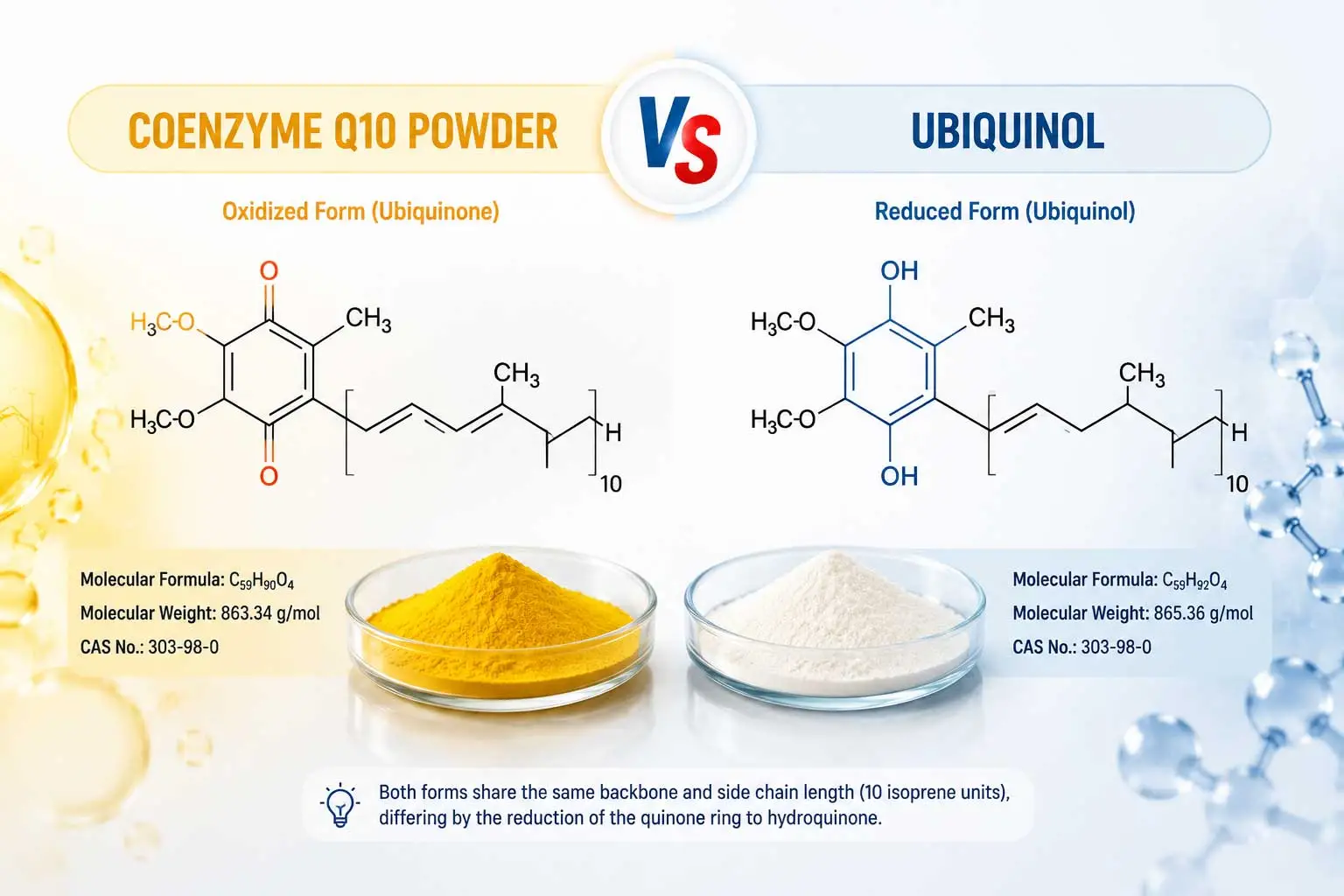
Coenzyme Q10 powder, also known as ubiquinone, represents the oxidized form of CoQ10. It is the standard material for bulk production, offering stability, ease of handling, and consistent integration into dietary supplements. In contrast, Ubiquinol is the reduced, active form of CoQ10, naturally present in the body in its antioxidant form. While both compounds play critical roles in cellular energy metabolism, their physicochemical characteristics and functional applications differ significantly.
From a stability perspective, Coenzyme Q10 powder provides a robust solution for large-scale manufacturing, with minimal susceptibility to oxidation under standard storage conditions. Its ease of handling makes it particularly suitable for bulk CoQ10 powder supply chains targeting international markets. Conversely, Ubiquinol exhibits higher sensitivity to light, heat, and oxygen, necessitating specialized packaging and storage conditions. Manufacturers integrating Ubiquinol powder must account for these considerations to maintain material integrity.
Functionally, Ubiquinol offers enhanced bioavailability compared to CoQ10 powder, particularly in formulations targeting rapid absorption and antioxidant activity. However, both forms complement each other in supplement applications, depending on the desired product positioning and end-user needs. Understanding these differences is essential for informed raw material selection and optimizing supplement efficacy while maintaining supply chain efficiency.
Benefits of Coenzyme Q10 Powder in Supplement Formulations
The utilization of high-quality CoQ10 powder in supplement formulations provides multiple advantages for manufacturers and end consumers alike. As a potent antioxidant and cofactor in mitochondrial energy production, CoQ10 powder is foundational in products designed for cardiovascular support, energy metabolism, and overall wellness. Its stability and ease of handling make it particularly attractive for companies seeking bulk CoQ10 powder for supplements.
In cardiovascular-focused formulations, CoQ10 powder supports cellular energy mechanisms critical for heart health. Additionally, its incorporation into general wellness and anti-aging supplements leverages its ability to combat oxidative stress. For manufacturers, sourcing pharmaceutical-grade CoQ10 powder ensures that each batch adheres to strict quality standards, enhancing product reliability and consistency across production cycles.
From a commercial perspective, CoQ10 powder is cost-effective relative to Ubiquinol, allowing for scalable production without compromising quality. Its longer shelf-life and robust stability reduce logistical risks associated with shipping and storage, particularly for international bulk procurement. Manufacturers benefit from predictable performance, easier regulatory compliance, and lower operational risk, all of which reinforce the value of high-quality CoQ10 powder as a primary raw material.
Advantages of Ubiquinol in High-Performance Supplements
Ubiquinol has emerged as a premium raw material in high-performance supplement formulations due to its enhanced bioavailability and immediate antioxidant activity. Unlike Coenzyme Q10 powder, which requires conversion in the body to its active form, Ubiquinol powder is already in a reduced state, providing rapid functional benefits for formulations targeting energy, cardiovascular support, or oxidative stress reduction.
Manufacturers seeking to differentiate products in competitive markets often integrate Ubiquinol powder into premium capsules or functional foods. Its superior absorption profile supports formulations aimed at consumers who prioritize efficacy, including aging populations and individuals with specific health goals. While more sensitive to environmental factors, careful formulation, encapsulation, and storage strategies allow suppliers to maintain Ubiquinol stability, ensuring consistent product quality.
Commercially, although Ubiquinol typically incurs a higher cost per kilogram than CoQ10 powder, the added value in terms of market positioning and product performance justifies the investment for premium product lines. Selecting a reliable supplier capable of delivering bulk ubiquinol powder with documented Certificates of Analysis (COA) and controlled handling protocols is critical to achieving both regulatory compliance and consistent production outcomes.
Factors to Consider When Choosing Raw Materials for Supplement Production
Selecting the right raw material is crucial for supplement manufacturers aiming to deliver consistent, high-quality products. When evaluating Coenzyme Q10 powder vs Ubiquinol, several factors should be carefully considered to ensure efficacy, stability, and compliance.
Regulatory Compliance and Certifications
Suppliers of high-quality CoQ10 powder or Ubiquinol powder should provide documentation demonstrating adherence to global standards such as USP, Kosher, Halal, and GMP certifications. Regulatory compliance not only safeguards the end product but also facilitates entry into key international markets like the United States, Europe, and Japan. Manufacturers sourcing bulk CoQ10 powder for supplements benefit from working with suppliers that provide verified Certificates of Analysis (COA) for each batch.
Supplier Reliability and Batch Consistency
Consistent material quality is critical for formulation stability. Variations in coenzyme Q10 powder or ubiquinol can affect bioavailability, product shelf-life, and consumer outcomes. Selecting a supplier with proven reliability, transparent production processes, and stable batch-to-batch performance minimizes risks associated with raw material inconsistencies.
Formulation Objectives and Target Market
Choosing between Coenzyme Q10 powder vs Ubiquinol also depends on the intended application and target consumer. While CoQ10 powder provides stability and cost efficiency for high-volume cardiovascular or general wellness supplements, Ubiquinol powder may be preferred for premium, bioavailability-focused formulations. Understanding these nuances allows manufacturers to align material selection with brand positioning and market expectations.
Cost, Stability, and Logistics Considerations for CoQ10 and Ubiquinol
When sourcing Coenzyme Q10 powder vs Ubiquinol, manufacturers must weigh several critical factors including cost, stability, handling, and logistics. Both forms serve distinct roles in supplement formulations, and understanding their differences ensures optimal raw material selection for performance and operational efficiency.
Cost Considerations
CoQ10 powder is generally more cost-effective, making it suitable for high-volume manufacturing. Ubiquinol powder, as the active reduced form, is typically priced higher due to its enhanced bioavailability and more complex production process.
Stability and Handling
CoQ10 powder is more chemically stable under standard storage conditions, maintaining its integrity over longer periods. Ubiquinol powder, in contrast, is sensitive to light, heat, and oxygen, requiring specialized packaging and controlled environments to prevent degradation.
Logistics and Bulk Procurement
Shipping and storing CoQ10 powder in bulk is relatively straightforward, with less stringent temperature and light considerations. Ubiquinol requires careful handling, such as light-resistant containers and temperature control during transport, to preserve quality. Both forms necessitate documentation including Certificates of Analysis (COA) for regulatory compliance.
Summary Table: Coenzyme Q10 Powder vs Ubiquinol
|
Feature |
Coenzyme Q10 Powder (Ubiquinone) |
Ubiquinol Powder |
|
Chemical Form |
Oxidized |
Reduced (active) |
|
Bioavailability |
Moderate; requires conversion in the body |
High; active antioxidant form |
|
Stability |
High; long shelf life |
Lower; sensitive to light, heat, oxygen |
|
Handling |
Easy; standard storage |
Requires temperature control and protective packaging |
|
Cost |
More cost-effective |
Premium cost due to production complexity |
|
Bulk Procurement |
Simple logistics, suitable for high-volume orders |
Requires careful logistics management |
|
Recommended Use |
General cardiovascular and wellness supplements |
Premium formulations emphasizing bioavailability |
This comparison helps manufacturers make informed decisions, balancing cost, stability, and application requirements when choosing between Coenzyme Q10 powder vs Ubiquinol for their supplement lines. Suppliers that provide detailed COA, technical guidance, and reliable logistics further enhance the value of both materials in global production.
7. Case Studies: Successful Use of Coenzyme Q10 Powder and Ubiquinol in Supplements
Real-world examples highlight the practical implications of material selection and supplier collaboration.
Case Study 1: Cardiovascular Supplement Manufacturer
A European producer switched to high-quality CoQ10 powder sourced from a certified supplier, resulting in improved batch consistency and predictable cellular energy support for end products. The verified COA and reliable supply chain reduced production delays and minimized risk of regulatory non-compliance.
Case Study 2: Premium Anti-Aging Formulation
A North American skincare and wellness brand integrated Ubiquinol powder into capsules and functional foods to leverage enhanced absorption. By partnering with a supplier specializing in bulk Ubiquinol powder, the company achieved measurable improvements in product bioavailability, consumer satisfaction, and overall brand value.
Case Study 3: Energy Supplement Series
Manufacturers combining Coenzyme Q10 powder vs Ubiquinol in blended formulations were able to balance cost, stability, and efficacy. Strategic sourcing from experienced suppliers enabled both high-volume production and premium product differentiation, demonstrating the importance of informed raw material selection.
Conclusion and Recommendations for Raw Material Selection
Selecting between coenzyme Q10 powder vs ubiquinol is a strategic decision with direct implications for supplement performance, consumer trust, and market positioning. Manufacturers are advised to consider bioavailability, stability, regulatory compliance, and supplier reliability when sourcing these materials.
For stable, cost-effective bulk production, high-quality CoQ10 powder remains a practical choice, particularly for cardiovascular and general wellness supplements. For premium formulations with enhanced absorption, Ubiquinol powder offers advantages that justify its higher cost, provided proper handling and storage protocols are observed.
To ensure consistent supply and technical support, manufacturers can reach out to experienced suppliers. CHEN LANG BIO TECH provides certified, pharmaceutical-grade CoQ10 powder and Ubiquinol powder for global supplement production, with comprehensive documentation, technical guidance, and reliable logistics. For inquiries, bulk quotations, or sample requests, please contact:
Email: admin@chenlangbio.com
Phone/Whatsapp: +86-17782478823
Website: www.chenlangbio.com
Partnering with a trusted supplier ensures that your formulations consistently meet quality, efficacy, and regulatory standards, enabling manufacturers to succeed in competitive international markets.

Send Inquiry
Related Industry Knowledge
- Ergothioneine Price per Kg in 2026: What Affects Bulk Cost?
- Lutein Ester Applications in Beverages, Gummies, and Softgels
- Is Kopyrrol Powder Water-soluble
- Where to Buy Authentic Pro-xylane Powder Online
- Can Nitenpyram Be Used for Dogs and Cats
- Is Monobenzone Same As Hydroquinone
- What Should I Pay Attention to When Using Alpha Arbutin
- How to Use Troxerutin Powder
- What is Senna Leaf Extract Powder
- What is Ginger Extract Powder Good for