
Adenosine Triphosphate vs Creatine: Which Energy Ingredient Is Right for Your Sports Nutrition Formula?
2026-01-12 14:10:38
ATP vs Creatine in Sports Nutrition
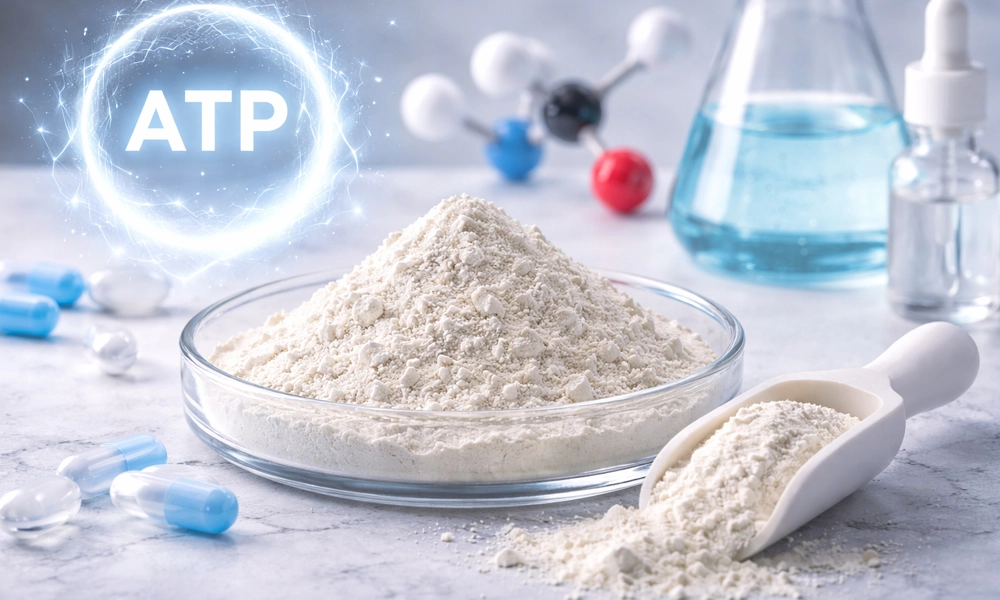
In sports nutrition formulation, adenosine triphosphate (ATP) and creatine are often compared because both are linked to energy and performance, yet they serve distinctly different physiological roles. ATP functions as the body’s direct cellular energy currency, powering muscle contraction and energy utilization at the moment of physical effort. Creatine, on the other hand, supports performance by regenerating ATP through the phosphocreatine system, particularly during repeated high-intensity activity.
In practical applications, ATP is used in sports nutrition formulas to support immediate energy availability, muscle work efficiency, and non-stimulant performance, making it suitable for performance blends and advanced pre-workout products. Creatine is widely used in strength and power formulations due to its ability to sustain ATP levels across multiple sets or bouts of exercise.
Rather than being interchangeable, ATP and creatine are complementary energy ingredients. Many modern sports nutrition products combine both to address different stages of the energy cycle—ATP supporting energy utilization and creatine supporting rapid ATP regeneration. When choosing between ATP and creatine, formulators should base decisions on product goals, serving format, dosage strategy, and target consumer needs rather than viewing one ingredient as a replacement for the other.
For manufacturers and procurement teams, sourcing high-quality ATP or creatine requires attention to batch consistency, stability, and documentation. Working with an experienced supplier, CHEN LANG BIO TECH provides full Certificates of Analysis and stable bulk supply is essential for ensuring product performance and regulatory compliance.
Why ATP and Creatine Are Often Compared in Sports Nutrition
ATP and creatine are frequently discussed together because both are associated with energy availability during exercise. However, this comparison can be misleading if their roles are not clearly defined. ATP is the direct energy currency of cells, while creatine functions as part of the energy regeneration system that helps replenish ATP during repeated high-intensity activity.
From a formulation standpoint, both ingredients appear in pre-workout, strength, and performance-focused products, which is why buyers often evaluate ATP vs creatine during ingredient selection. The key is recognizing that they address different stages of energy metabolism rather than competing for the same role.
Understanding Energy at the Cellular Level
To understand where ATP and creatine fit, it is important to look briefly at cellular energy production.
ATP is produced continuously inside cells through metabolic pathways such as glycolysis and oxidative phosphorylation. When ATP releases energy, it is converted into ADP, and the body must regenerate ATP to sustain muscle contraction.
Creatine supports this process indirectly. Stored as phosphocreatine in muscle tissue, creatine donates phosphate groups to ADP, allowing ATP to be regenerated more rapidly during short, intense bursts of activity.
This distinction explains why ATP is associated with energy utilization, while creatine is linked to energy buffering and regeneration.
What Adenosine Triphosphate Is Used for in Sports Nutrition Formulas
When buyers ask what adenosine triphosphate is used for, the answer goes beyond basic biology. In sports nutrition, ATP is used to support cellular-level energy availability during exercise, particularly when energy demand increases rapidly.
ATP is commonly included in performance-oriented formulations designed to support:
♦Muscle contraction efficiency;
♦Short-duration power output;
♦Training intensity during resistance or explosive movements.
Because ATP is the molecule directly involved in muscle contraction, it plays a role in how efficiently muscles perform work. In practical terms, ATP is often positioned in pre-workout and performance blends where the goal is to support strength output and physical performance, rather than long-term endurance fuel.
Unlike stimulants, ATP does not act on the nervous system. Instead, it supports energy processes at the cellular level, which is why it is often combined with other non-stimulant performance ingredients.
What Creatine Is Commonly Used for in Performance Products
Creatine has a long history of use in sports nutrition and remains one of the most researched performance ingredients. In contrast to ATP, creatine is not a direct energy source. Instead, it supports ATP regeneration through the phosphocreatine system.
Creatine is commonly used in products designed for:
♦Strength and power development;
♦Repeated high-intensity exercise;
♦Muscle performance during resistance training.
When ATP is depleted during intense activity, phosphocreatine donates phosphate groups to regenerate ATP quickly. This mechanism explains why creatine is particularly effective for activities such as weightlifting, sprinting, and short bursts of maximal effort.
From a formulation perspective, creatine is valued for its role in sustaining performance across multiple sets or repetitions, rather than for immediate energy delivery.
Key Functional Differences Between ATP and Creatine
When formulators discuss adenosine triphosphate vs Creatine, the most useful way to compare them is not by “which works better,” but by identifying where each ingredient sits in the energy pathway, what performance outcome it is most aligned with, and what that means for real-world product design. In other words, the true ATP vs creatine difference is functional—ATP is part of the energy transfer event, while creatine supports energy buffering and rapid regeneration during repeated effort.
1) Where They Act in the Energy Pathway: “Energy Currency” vs “Energy Buffer”
ATP is the body’s direct energy currency. During muscular work, ATP is hydrolyzed to ADP + phosphate, releasing energy immediately for muscle contraction. This is why ATP is often described in product development discussions as supporting cellular energy transfer, ATP energy metabolism, and the “last step” of usable energy delivery.
Creatine, by contrast, does not directly supply energy to the muscle fiber in the same way. Instead, creatine—stored in muscle largely as phosphocreatine—helps regenerate ATP from ADP rapidly when demand is high. That’s why creatine is discussed in the context of creatine energy system, ATP regeneration, and repeated high-intensity performance.
We always explain this to our customers: ATP is the spend, creatine is the quick recharge mechanism.
2) What They’re Best Matched to: “Peak Output” vs “Repeated Output”
From a sports nutrition positioning viewpoint, ATP is typically aligned with formulations targeting energy utilization at the moment of output—supporting the muscle’s ability to perform work efficiently. Creatine is highly aligned with repeated high-intensity effort and strength training consistency, which is why it’s routinely used in products for creatine for strength training, repeated sets, and performance over time.
This difference matters in practice:
If the product concept focuses on “supporting performance during high-intensity training,” ATP can be framed within ATP used in sports nutrition and ATP for athletic performance contexts.
If the concept focuses on “helping sustain training quality across sets,” creatine naturally fits creatine monohydrate applications and regeneration-based claims.
This is also why many brands consider ATP vs creatine for pre workout not as an either/or decision, but as a choice between two different performance angles—immediate energy transfer vs rapid replenishment.
3) Formulation Reality: Dose, Serving Size, and Label Strategy
In formulation, ATP and creatine behave differently from a serving-size perspective.
Creatine is commonly used at gram-level daily intakes (often positioned as a foundational ingredient), which makes it prominent on the label and often central to the formula story.
ATP is typically used at milligram-level ranges in performance blends. That means ATP can be integrated into complex formulas without heavily impacting scoop size, and it can support a performance narrative in a way that complements creatine rather than competing with it. This is particularly relevant for brands that want to differentiate beyond a “standard creatine product.”
This practical difference is often overlooked in basic comparisons of ATP supplementation vs creatine supplementation, but it’s a real deciding factor for procurement teams managing cost-in-formula, finished product positioning, and consumer compliance.
4) Mechanism Summary for Buyers: What They Do (and Don’t Do)
A clear buyer-friendly statement is:
ATP is associated with energy availability and utilization at the cellular level.
Creatine is associated with rapid ATP resynthesis during short, intense repeated work.
What neither should be framed as:
Neither ATP nor creatine is a central nervous system stimulant (unlike caffeine). That distinction is important for “non-stim” positioning and for avoiding consumer confusion.
5) Which One Should a Formulator Choose—or Combine?
If the question is “ATP compared to creatine—what should we choose?”, the most accurate answer is: it depends on the product’s primary job.
If the product is positioned for power output, training intensity, and non-stimulant performance support, ATP can be a strong functional addition.
If the product is positioned for strength progression, repeat performance, and established market expectations, creatine is often the foundation.
For many modern formulas, a combined approach makes sense because their roles do not overlap perfectly—this is why “ATP and creatine together” is a common question in formulation discussions.
ATP vs Creatine: Technical Comparison Table
|
Attribute |
Adenosine Triphosphate (ATP) |
Creatine |
|
Primary functional role |
Direct energy transfer for cellular work |
Rapid ATP regeneration via phosphocreatine |
|
“Best-fit” performance angle |
Energy utilization and muscle work efficiency |
Repeated high-intensity performance and strength support |
|
Where it sits in energy metabolism |
ATP → ADP energy release step |
Supports ADP → ATP resynthesis (buffer system) |
|
Typical label positioning |
Performance blend component |
Foundational daily ingredient |
|
Stimulant? |
No (non-stim) |
No (non-stim) |
|
Common product context |
Performance formulas, non-stim pre-workouts |
Strength & power formulas, daily performance stacks |
Can ATP and Creatine Be Used Together in One Formula?
In formulation discussions, one of the most frequently asked questions is whether ATP and creatine can be used together in the same sports nutrition product. From a biochemical and formulation standpoint, the answer is yes—and in many modern formulas, this combination is intentional rather than incidental.
The reason lies in how these two ingredients operate at different stages of the energy cycle. Adenosine triphosphate (ATP) supports energy utilization at the moment muscle work occurs, while creatine supports rapid ATP regeneration during repeated high-intensity effort. Because their mechanisms do not overlap, combining ATP and creatine allows formulators to address both immediate performance output and sustained training capacity.
In practical terms, ATP is often positioned to support cellular energy transfer and muscle contraction efficiency, while creatine contributes to maintaining ATP availability across multiple sets or repeated bursts of activity. This complementary relationship explains why many buyers evaluating ATP vs creatine for pre workout formulas ultimately consider a dual-ingredient approach rather than choosing one over the other.
From a product design perspective, combining ATP and creatine also offers flexibility in positioning. Creatine often serves as the foundational ingredient associated with strength and power, while ATP can be used to differentiate the formula by emphasizing non-stimulant performance support, energy utilization, or metabolic efficiency. This is particularly relevant for brands seeking to move beyond traditional creatine-only products.
It is also important to note what this combination does not imply. Neither ATP nor creatine acts on the central nervous system, which means they can be used together in formulas designed for non-stimulant performance support. This makes the combination suitable for consumers who are sensitive to caffeine or who prefer stimulant-free training products.
For buyers and formulators, the key takeaway is that ATP and creatine are not redundant. When used together thoughtfully, they support different but complementary performance outcomes, which aligns well with current trends in advanced sports nutrition formulation.
Dosage and Formulation Considerations for ATP and Creatine
When evaluating ATP supplementation vs creatine supplementation, dosage and formulation strategy play a critical role in how these ingredients are positioned and perceived in finished products. Unlike marketing-driven claims, professional formulation decisions are guided by established industry practice, regulatory considerations, and functional intent.
Typical Usage Levels in Sports Nutrition
In sports nutrition applications, ATP and creatine are used at very different dosage levels due to their distinct roles and physical characteristics.
|
Ingredient |
Typical Usage Range |
Formulation Context |
|
Adenosine Triphosphate (ATP) |
100–400 mg per serving |
Performance blends, pre-workout formulas |
|
Creatine (commonly monohydrate) |
3–5 g per day |
Strength, power, repeated-effort products |
These ranges reflect common industry usage rather than fixed recommendations. ATP is typically included at milligram levels as a functional performance component, while creatine is used at gram levels as a core daily ingredient.
Formulation Strategy and Product Design Implications
From a formulation standpoint, ATP’s lower inclusion rate allows it to be integrated into multi-ingredient products without significantly increasing scoop size or capsule count. This makes ATP particularly attractive for complex performance formulas where label space, serving size, and ingredient synergy must be carefully balanced.
Creatine, by contrast, often defines the structure of the formula. Its higher dosage requirement influences serving size and consumer usage patterns, which is why creatine-based products are frequently positioned as daily supplements rather than situational performance enhancers.
This difference is especially relevant for buyers comparing ATP vs creatine dosage from a commercial standpoint. The choice affects not only performance positioning but also manufacturing cost, packaging format, and consumer compliance.
Stability, Compatibility, and Handling Considerations
ATP requires careful handling due to its sensitivity to moisture and temperature. Proper packaging, storage conditions, and quality control are essential to maintain stability throughout the product’s shelf life. For this reason, sourcing ATP from an experienced ATP powder supplier with complete batch documentation is critical.
Creatine is generally more stable and well understood from a manufacturing perspective, but quality can still vary depending on raw material source, particle size, and processing methods. Buyers sourcing creatine should pay attention to consistency, purity, and supplier reliability, especially when producing for regulated markets.
Practical Guidance for Buyers and Formulators
For procurement teams and formulators, dosage decisions should always align with the product’s intended role:
♦Products emphasizing energy utilization and non-stimulant performance may prioritize ATP at appropriate milligram levels.
♦Products focused on strength progression and repeated high-intensity output typically rely on creatine as the primary ingredient.
♦Advanced formulas often combine both, using ATP to enhance functional performance while creatine supports sustained output.
Where to Buy Adenosine Triphosphate and Creatine for Manufacturing
When buyers search where to buy adenosine triphosphate powder, they are often looking for suppliers who can provide both technical reliability and commercial stability.
At CHEN LANG BIO TECH, we supply bulk adenosine triphosphate powder and creatine raw materials with:
Batch-specific COA;
Stable inventory;
Fast order processing;
Experience supporting international markets.
Our role as a manufacturer and supplier is to support customers with consistent quality and long-term sourcing confidence.
Conclusion: Choosing the Right Energy Ingredient for Your Formula
The choice between adenosine triphosphate (ATP) and creatine is not about which ingredient is superior, but about which one best aligns with your formulation objectives. ATP primarily supports energy utilization at the cellular level, while creatine contributes to energy regeneration during repeated high-intensity effort. In many modern sports nutrition products, combining both ingredients provides a more comprehensive approach to performance support without relying on stimulants.
For sports nutrition brands, formulators, and ingredient buyers, clearly understanding these functional differences enables more precise product positioning, cleaner formulation logic, and better alignment with end-user needs. Ingredient selection should always be guided by application goals, dosage strategy, and long-term supply reliability.
As an experienced adenosine triphosphate manufacturer and supplier, CHEN LANG BIO TECH supports global customers with high-quality ATP raw materials and related performance ingredients. We operate our own manufacturing facilities, provide full batch-specific Certificates of Analysis, and maintain stable inventory to support bulk orders and long-term cooperation. With fast processing times and international shipping experience, we help customers move efficiently from formulation to market.
If you are evaluating ATP or creatine for sports nutrition applications, or looking to buy adenosine triphosphate powder in bulk, our technical and sales teams are available to provide product specifications, documentation, and sourcing support.
📩 Contact us at: admin@chenlangbio.com to discuss your formulation requirements or request a quotation.

Send Inquiry
Related Industry Knowledge
- 5 Proven Health Benefits of Saw Palmetto Extract
- What is Sodium Polyglutamate Used for?
- How Can Acetylcysteine Powder Improve Your Respiratory Health Formulations?
- Does Turkesterone Increase Testosterone?
- Chenopodium Quinoa Seed Extract in Skincare
- Pelargonium Sidoides: Natural Support for Respiratory Health
- Durian Fruit Powder vs. Fresh Durian
- China Dimethylmethoxy Chromanyl Palmitate Supplier
- What is Shilajit Extract Powder
- Does Naringin Powder Lower Cholesterol