
Ashwagandha Extract 5% vs 10% Withanolides: How to Choose the Right Specification
2026-03-27 17:04:17
Ashwagandha Extract Powder: Why Withanolides Percentage Matters in Supplement Formulation
In modern supplement development, the use of ashwagandha extract powder has evolved from traditional herbal applications toward highly standardized, performance-driven formulations. This shift has made active compound concentration—particularly withanolides—one of the most critical parameters in ingredient selection.
Withanolides are widely recognized as the primary bioactive compounds in ashwagandha. As a result, the percentage of withanolides is not simply a labeling detail, but a defining factor in how a formulation performs in real-world applications. For this reason, standardized ashwagandha extract is now the preferred format in many supplement categories, especially those requiring consistency and reproducibility.
From a formulation standpoint, the importance of withanolides content can be understood across three dimensions:
•Functional consistency: standardized extracts ensure predictable active compound delivery
•Dosage precision: defined concentrations allow for controlled formulation strategies
•Product positioning: higher standardization levels support premium supplement categories
For manufacturers and brands working with a reliable ashwagandha extract supplier or ashwagandha extract powder manufacturer, standardization provides a technical foundation that aligns ingredient quality with formulation goals.
In practice, the choice between different specifications—such as 5% and 10% withanolides—is not about selecting a “better” extract, but about selecting the right specification for a specific application.
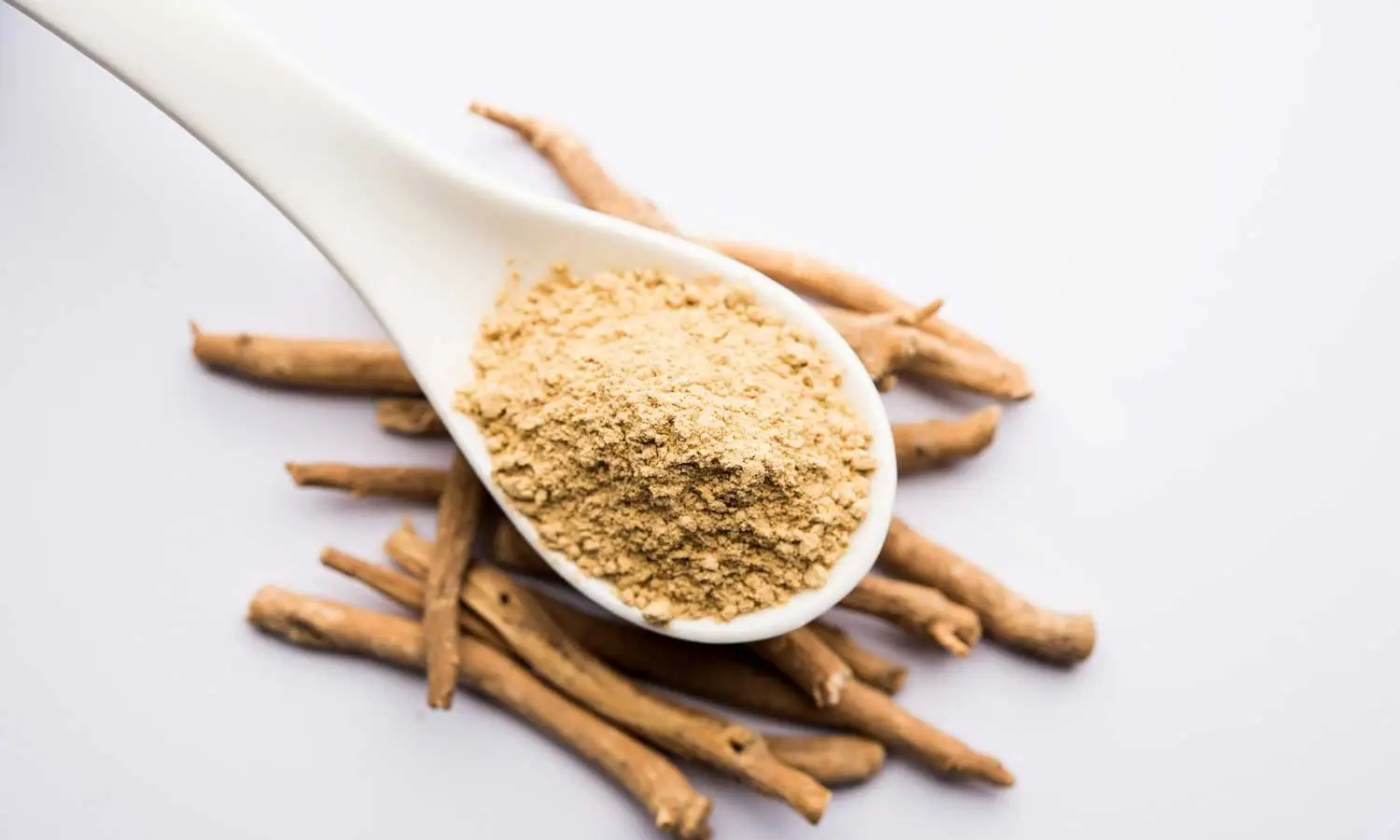
What Does 5% vs 10% Withanolides Mean in Ashwagandha Extract?
Understanding the difference between ashwagandha extract 5% withanolides and 10% withanolides ashwagandha begins with how these extracts are defined and measured.
How Withanolides Content Is Measured
Withanolides content is typically quantified using analytical methods such as High-Performance Liquid Chromatography (HPLC). This process determines the percentage of withanolides present in the extract, expressed as a proportion of the total extract weight.
For example:
•A 5% withanolides extract contains approximately 50 mg of withanolides per 1,000 mg of extract
•A 10% withanolides ashwagandha extract contains approximately 100 mg per 1,000 mg
This distinction directly affects how much extract is required to achieve a target functional dosage.
For buyers sourcing bulk ashwagandha extract, this measurement is critical for evaluating both potency and cost-efficiency.
Why Standardization Matters for Supplement Quality
Standardization is essential for ensuring consistent extract quality across batches. Without it, variations in raw material, harvest conditions, and processing can lead to unpredictable levels of active compounds.
A standardized herbal extract provides:
•Reproducible active compound levels
•Improved formulation accuracy
•Greater control over product performance
This is particularly important for brands aiming to develop products aligned with clinical research or regulatory expectations.
From a supply perspective, working with a qualified ashwagandha extract supplier ensures that standardization is maintained across production cycles, supporting long-term formulation stability.
Ashwagandha Extract 5% vs 10% Withanolides: Key Differences
When comparing different specifications of ashwagandha extract powder, the most important factors include potency, dosage, cost, and application suitability.
Comparison of 5% vs 10% Withanolides Extract
|
Parameter |
5% Withanolides Extract |
10% Withanolides Extract |
|
Withanolides Content |
Moderate |
High |
|
Potency Level |
Standard |
High potency |
|
Typical Dosage |
Higher |
Lower |
|
Cost per kg |
Lower |
Higher |
|
Cost per Serving |
Balanced |
Often optimized |
|
Application |
General wellness |
Targeted / premium |
|
Formulation Flexibility |
Broad |
More precise |
Interpretation of Key Differences
The difference between 5% and 10% ashwagandha extract is primarily a difference in concentration rather than a difference in ingredient type.
•5% extracts provide moderate potency and are widely used in general wellness formulations
•high potency ashwagandha extract (10%) delivers a more concentrated active profile, allowing for lower dosage levels
From a formulation perspective, higher concentration does not necessarily mean better performance—it means greater efficiency and precision.
For buyers evaluating ashwagandha extract price per kg, it is important to consider not only raw material cost but also dosage requirements and formulation efficiency.
Dosage and Application Differences Between 5% and 10% Extract
Dosage is one of the most practical and technically significant differences between extract specifications. It directly influences formulation design, capsule size, and product positioning.
Typical Dosage Ranges Based on Extract Standardization
Based on commonly referenced clinical studies and formulation practices, dosage ranges can be summarized as follows:
|
Extract Type |
Withanolides Level |
Typical Daily Dose |
Application |
|
Standard Extract |
5% |
300 – 600 mg |
Stress support, daily wellness |
|
High Potency Extract |
10% |
125 – 300 mg |
Sports nutrition, premium products |
Formulation Implications
The difference in dosage between specifications highlights the concept of dosage efficiency supplement ingredients:
•Lower concentration extracts require higher intake to achieve functional levels
•Higher concentration extracts reduce dosage size while maintaining active compound delivery
This has several implications:
1. Capsule Design
High-potency extracts allow for smaller capsule sizes or combination formulas
2. Formulation Flexibility
Lower dosage creates more space for additional active ingredients
3. Product Positioning
Higher potency extracts are often used in premium or performance-oriented formulations
For companies sourcing from an experienced ashwagandha extract powder supplier or high potency extract manufacturer, selecting the appropriate specification ensures alignment between ingredient performance and product design. If you are evaluating different ingredient formats, it is also helpful to understand the differences between extract and raw materials. Our guide on ashwagandha extract vs powder provides a detailed comparison for supplement applications.
When to Choose 5% Ashwagandha Extract Powder
Selecting the appropriate specification of ashwagandha extract powder depends largely on formulation intent, cost structure, and target market positioning. In many applications, ashwagandha extract 5% withanolides remains a practical and widely adopted choice.
Suitable for Daily Wellness and Broad-Market Formulations
The 5% specification is commonly used in:
•General stress-support supplements
•Daily wellness formulations
•Adaptogen blends
Its moderate potency allows for flexible dosing while maintaining cost efficiency. For brands developing products aimed at a broader consumer base, standard extract applications often prioritize balance between effectiveness and affordability.
From a formulation perspective, 5% extracts offer:
•Stable performance across a wide dosage range
•Compatibility with multi-ingredient formulations
•Lower raw material cost per kilogram
This makes it a suitable option for companies sourcing from a cost effective supplement ingredients strategy, particularly in high-volume product lines.
Optimized for Cost-Sensitive Product Development
When evaluating ingredient selection at scale, cost considerations become critical. Compared to higher potency extracts, ashwagandha extract 5% withanolides typically offers:
•Lower ashwagandha extract price per kg
•Easier integration into high-dose formulations
•Greater flexibility for bulk production
For companies working with a ashwagandha extract bulk supplier, this specification allows for consistent product development without significantly increasing formulation costs.
When to Choose 10% Withanolides Ashwagandha Extract
In contrast, 10% withanolides ashwagandha is generally selected for applications where precision, potency, and formulation efficiency are prioritized.
Preferred for Targeted and High-Performance Formulations
Higher potency extracts are commonly used in:
•Sports nutrition products
•Performance and recovery formulations
•Premium adaptogen blends
In these applications, high potency ashwagandha extract applications require more precise control of active compound delivery. The higher concentration allows for:
•Lower dosage requirements
•More compact formulations
•Greater flexibility in multi-ingredient products
This is particularly relevant for brands developing premium supplement ingredients where formulation efficiency and positioning are closely linked.
Aligned with Premium Product Positioning
Products positioned in higher-end markets often rely on standardized extracts to support:
•Defined active compound levels
•Consistent label claims
•Alignment with clinical research ranges
As a result, high performance formulation strategies frequently incorporate 10% extracts, especially when targeting performance-oriented or science-backed product categories.
Cost vs Performance: Is Higher Withanolides Always Better?
A common misconception in ingredient selection is that higher concentration automatically results in better outcomes. In reality, the relationship between potency and performance is more nuanced.
Evaluating Cost Efficiency in Formulation
When comparing ashwagandha extract cost vs potency, it is important to distinguish between:
•Cost per kilogram
•Cost per effective dosage
While higher potency extracts have a higher unit cost, they often require significantly lower dosage. This can result in:
•Reduced capsule count
•Lower excipient requirements
•Improved formulation efficiency
For this reason, cost efficiency supplement formulation should be evaluated based on total formulation economics rather than raw material pricing alone.
Application-Driven Specification Selection
The decision between 5% and 10% extracts should be based on:
•Target application (daily wellness vs performance)
•Product positioning (mass market vs premium)
•Dosage strategy
In practice, is higher withanolides better is not a universal question. The correct specification is the one that aligns with the intended formulation and market positioning.
How to Choose the Right Ashwagandha Extract Powder Supplier
Selecting a qualified supplier is a critical step in ensuring both product quality and long-term consistency. Beyond specification, manufacturing capability and quality control systems play a decisive role.
Certifications, Quality Systems, and Manufacturing Standards
A reliable ashwagandha extract powder manufacturer should operate under recognized quality systems and provide full documentation.
At CHEN LANG BIO TECH, production is supported by internationally recognized frameworks, including HACCP, ISO systems, and global compliance certifications such as Halal and Kosher. These certifications reflect structured control over food safety, processing environments, and product traceability.
Manufacturing is conducted in facilities aligned with GMP herbal extract supplier standards, ensuring:
•Clean production environments
•Controlled processing conditions
•Consistent product quality
•Raw Material Sourcing and Standardization Capability
The quality of ashwagandha extract powder begins with raw material selection. Direct sourcing plays a significant role in ensuring consistency.
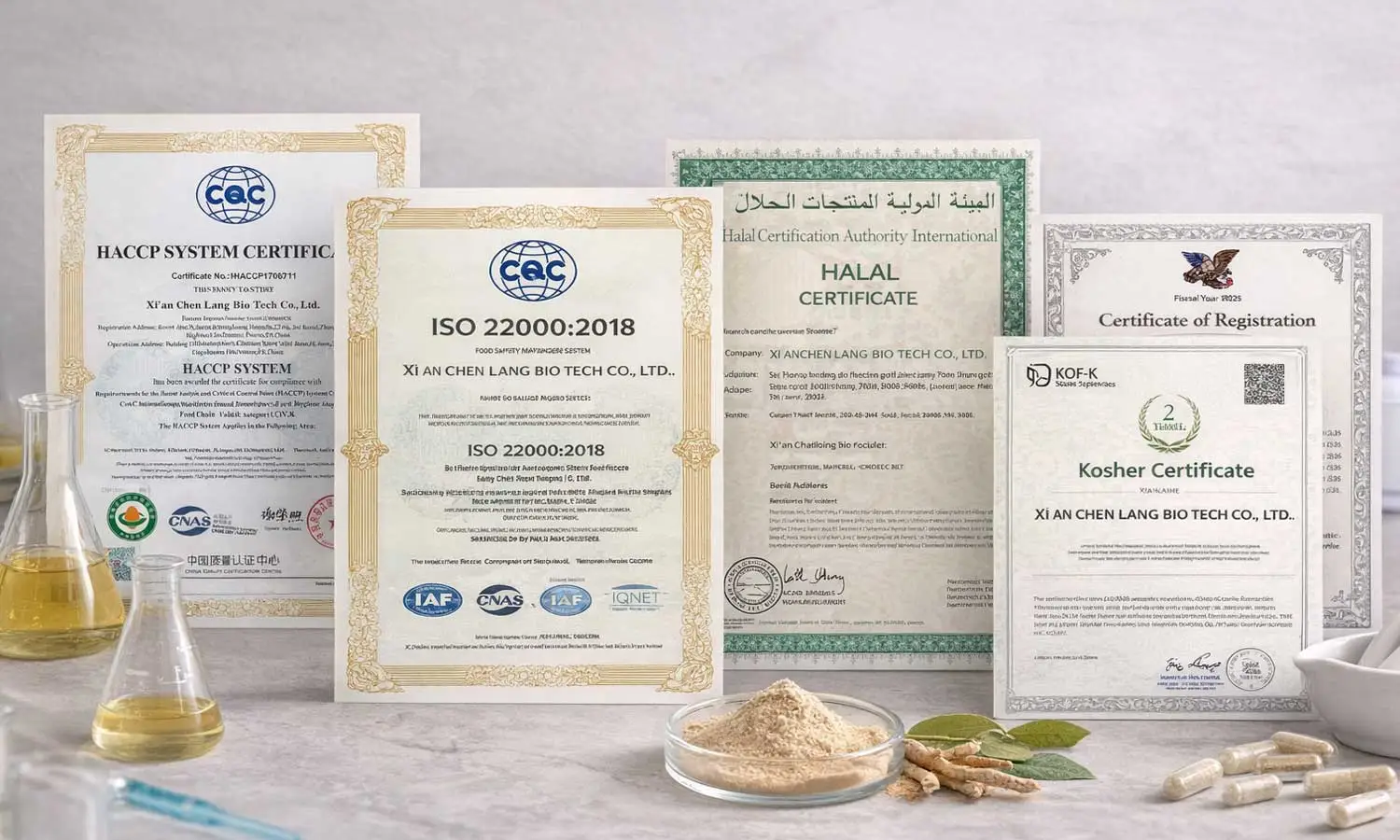
At CHEN LANG BIO TECH, raw materials are sourced directly from India, the primary origin of ashwagandha. This approach supports:
•Stable raw material supply
•Controlled sourcing standards
•Reduced variability at the raw material level
In addition, extract standardization is supported by USP reference standards, ensuring that withanolides content is accurately calibrated and consistent across batches.
Analytical Verification and Testing Methods
Reliable testing methods are essential for validating extract quality.
Each batch of ashwagandha extract powder is analyzed using HPLC testing, providing:
•Quantifiable withanolides content
•Reproducible analytical results
•Verifiable testing methodology
This ensures that the extract meets defined specifications and supports formulation consistency.
Processing Technology and Product Quality
Manufacturing processes directly influence extract purity and usability.
Production is carried out in China-based GMP-standard facilities, ensuring:
•Clean and controlled production environments
•Absence of foreign contaminants
•Stable processing conditions
In addition, specialized processing technologies—such as water-based debittering techniques—are applied to improve taste and usability in finished formulations.
This is particularly relevant for applications in functional foods and beverages, where ingredient sensory profile plays an important role.
Supply Stability and Global Delivery Capability
For companies sourcing at scale, supply stability is essential.
A qualified bulk ashwagandha extract supplier should provide:
•Consistent batch production
•Scalable manufacturing capacity
•Reliable export experience
At CHEN LANG BIO TECH, production systems are designed to support long-term supply partnerships, ensuring that customers can maintain consistent product quality across different markets.
FAQ: 5% vs 10% Ashwagandha Extract Powder
Is 10% ashwagandha extract stronger than 5%?
Yes, 10% withanolides ashwagandha contains a higher concentration of active compounds, resulting in greater potency per unit weight.
Which extract is better for supplement applications?
The choice depends on formulation goals. 5% extracts are suitable for general wellness products, while high potency ashwagandha extract is preferred for targeted or premium formulations.
Does higher withanolides mean better results?
Not necessarily. The effectiveness of ashwagandha extract powder depends on dosage, formulation design, and application context rather than concentration alone.
What is the best specification for capsules?
Higher potency extracts are often preferred for capsules due to lower dosage requirements and improved formulation efficiency.
Where to source bulk ashwagandha extract powder?
Bulk sourcing typically involves working with an experienced ashwagandha extract powder supplier or manufacturer capable of providing standardized extracts, full documentation, and consistent supply.
Conclusion: Selecting the Right Withanolides Specification for Your Product
Choosing between 5% and 10% ashwagandha extract powder ultimately depends on formulation objectives rather than a fixed standard.
Lower concentration extracts provide flexibility and cost efficiency, while higher potency extracts offer precision and formulation efficiency.
From a technical perspective, the most effective approach is to align extract specification with:
•Product positioning
•Dosage strategy
•Target application
At the same time, the reliability of the supplier remains a key factor in ensuring consistent product performance. Selecting an experienced ashwagandha extract supplier with strong manufacturing capability, validated testing methods, and stable raw material sourcing is essential for long-term success in supplement development. Please contact our email: admin@chenlangbio.com if you need more information about ashwagandha extract withanolides 10%.

Send Inquiry
Related Industry Knowledge
- Yohimbine vs L-Carnitine: Key Differences in Fat Loss Mechanisms
- Grape Seed Extract and Collagen: The Perfect Skin Duo
- 3 Compelling Uses of Fucoidan Powder for Beauty Brands
- How does D-Luciferin Sodium Salt Work in Bioluminescence?
- What are the Benefits of Camellia Oleifera Seed Extract
- What is An Alternative to Monobenzone
- Can Loratadine Cause Weight Gain
- What Are the Side Effects of Ascorbyl Tetraisopalmitate
- Chrysin Benefits
- Does Tribulus Terrestris Extract Powder Work