
What Is Nitenpyram Powder? Uses, Benefits and Applications
2026-03-16 13:50:01
In modern agriculture and veterinary medicine, effective pest control solutions are essential for maintaining crop productivity and animal health. Among the many insecticides used worldwide, nitenpyram powder has become a widely recognized active ingredient due to its rapid action and reliable performance against a variety of insect pests.
Nitenpyram insecticide belongs to the neonicotinoid class of compounds, a group of systemic insecticides designed to target the nervous system of insects. Because of its fast-acting properties and high effectiveness, nitenpyram pesticide is commonly used in both agricultural pest management and veterinary applications, particularly for flea control in companion animals.
In its raw material form, nitenpyram powder—often supplied as high purity nitenpyram powder or nitenpyram technical grade—is used by agrochemical manufacturers to formulate insecticide products. These formulations are applied to control pests such as aphids, whiteflies, leafhoppers, and other insects that can cause significant damage to crops.
Due to its excellent solubility and rapid systemic activity, nitenpyram insecticide active ingredient has gained global attention as a reliable solution for pest control. Today, nitenpyram powder 98% is widely produced and supplied as a technical raw material for both agricultural formulations and veterinary pharmaceutical products.
Understanding how nitenpyram insecticide works, its main applications, and its advantages can help formulators, distributors, and agricultural professionals make informed decisions when selecting an effective pest control solution.
What Is Nitenpyram Powder?
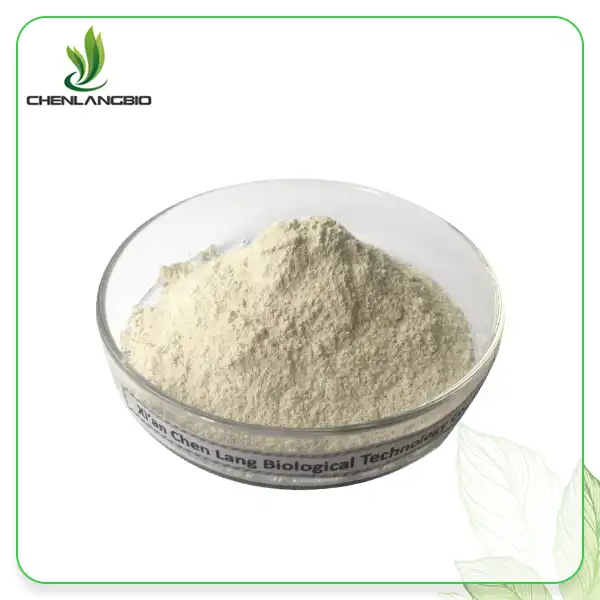
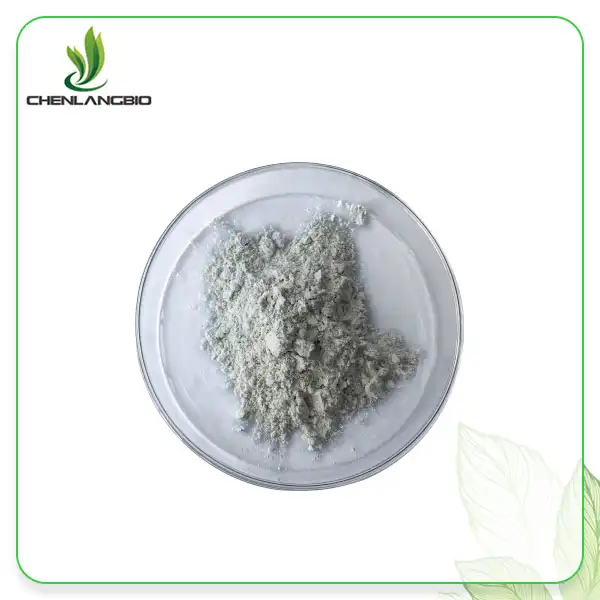
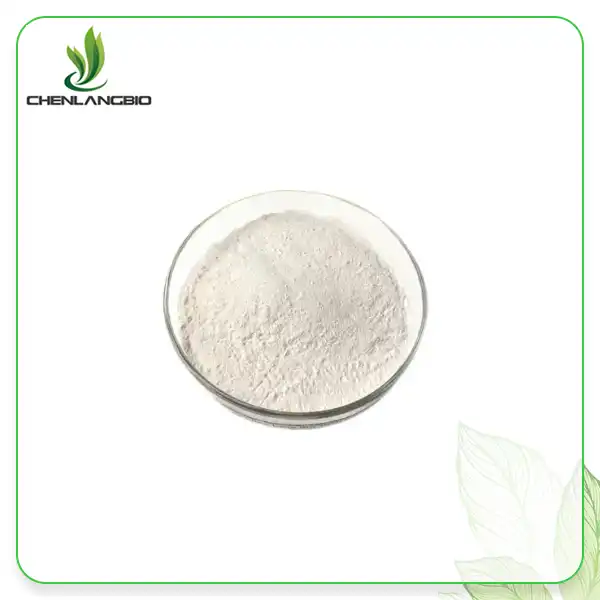
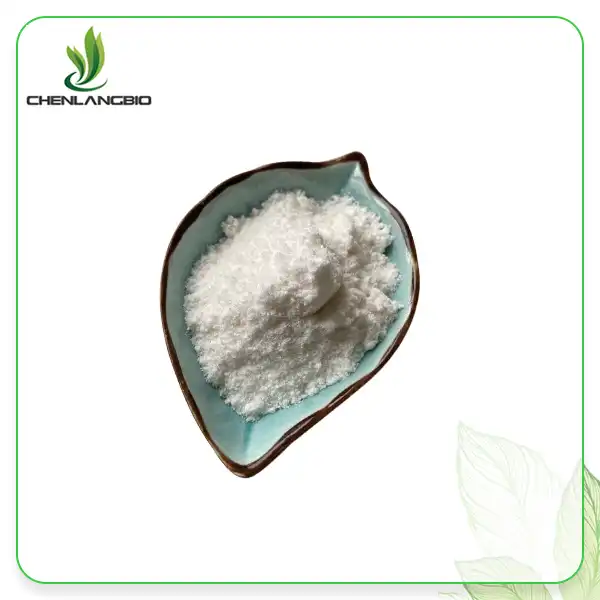
Nitenpyram powder is a technical-grade insecticide raw material belonging to the neonicotinoid class of chemicals. It is widely used as an active ingredient in agricultural insecticide formulations and veterinary flea control products due to its rapid action against a broad range of insect pests.
In the agrochemical industry, nitenpyram technical grade is typically produced as a high-purity crystalline powder and serves as the base ingredient for various insecticide formulations. Manufacturers commonly supply nitenpyram powder 98% as the standard technical material used in formulation development.
Chemical Identity and Basic Properties
From a chemical perspective, nitenpyram CAS 150824-47-8 is a neonicotinoid compound designed to target insect nervous systems with high specificity. Its chemical structure allows the compound to bind to insect neural receptors, making it an effective systemic insecticide.
Key chemical information includes:
|
Chemical Name |
Nitenpyram |
|
CAS |
150824-47-8 |
|
Molecular Formula |
C₁₁H₁₅ClN₄O₂ |
|
Molecular Weight |
270.7154 |
|
Appearance |
Yellow powder |
Because of its chemical stability and strong insecticidal activity, nitenpyram active ingredient is widely incorporated into pest control formulations. The compound also demonstrates good water solubility, which contributes to its rapid absorption and distribution within plant tissues or animal systems.
These properties make nitenpyram insecticide technical particularly suitable for systemic pest control products designed for fast results.
Nitenpyram Technical Specifications
In industrial production and formulation development, the quality of nitenpyram powder is typically defined by several technical parameters. Agrochemical manufacturers generally require high purity nitenpyram powder to ensure consistent formulation performance.
Common technical specifications for nitenpyram 98% TC include:
|
TEST ITEM |
SPECIFICATION |
RESULTS |
|
Appearance |
Pale yellow powder |
Complies |
|
Melting Range |
83-84℃ |
83.5℃ |
|
Density |
1.40(26℃) |
Qualified |
|
Water insoluble matter |
1.0% |
0.05% |
|
Water Content |
1.0% |
0.10% |
|
Residue on ignition |
No more than 0.1% |
0.05% |
|
Solubility (g/L、20℃) |
Water (pH=7)840 |
Qualified |
|
Chloroform 700 |
Qualified |
|
|
Acetone 290 |
Qualified |
|
|
Xylene 4.5 |
Qualified |
|
|
Total Impurities: no more than 0.5% |
0.19% |
|
|
Assay |
98.5%~101.0%(dried basis) |
98.2% |
Because of these characteristics, nitenpyram technical specification standards allow formulators to develop effective insecticide products with predictable performance. High purity raw material also ensures reliable efficacy when targeting major agricultural pests.
For companies developing pest control formulations, sourcing bulk nitenpyram powder with stable purity and consistent quality is essential for maintaining product reliability and regulatory compliance.
Mode of Action of Nitenpyram
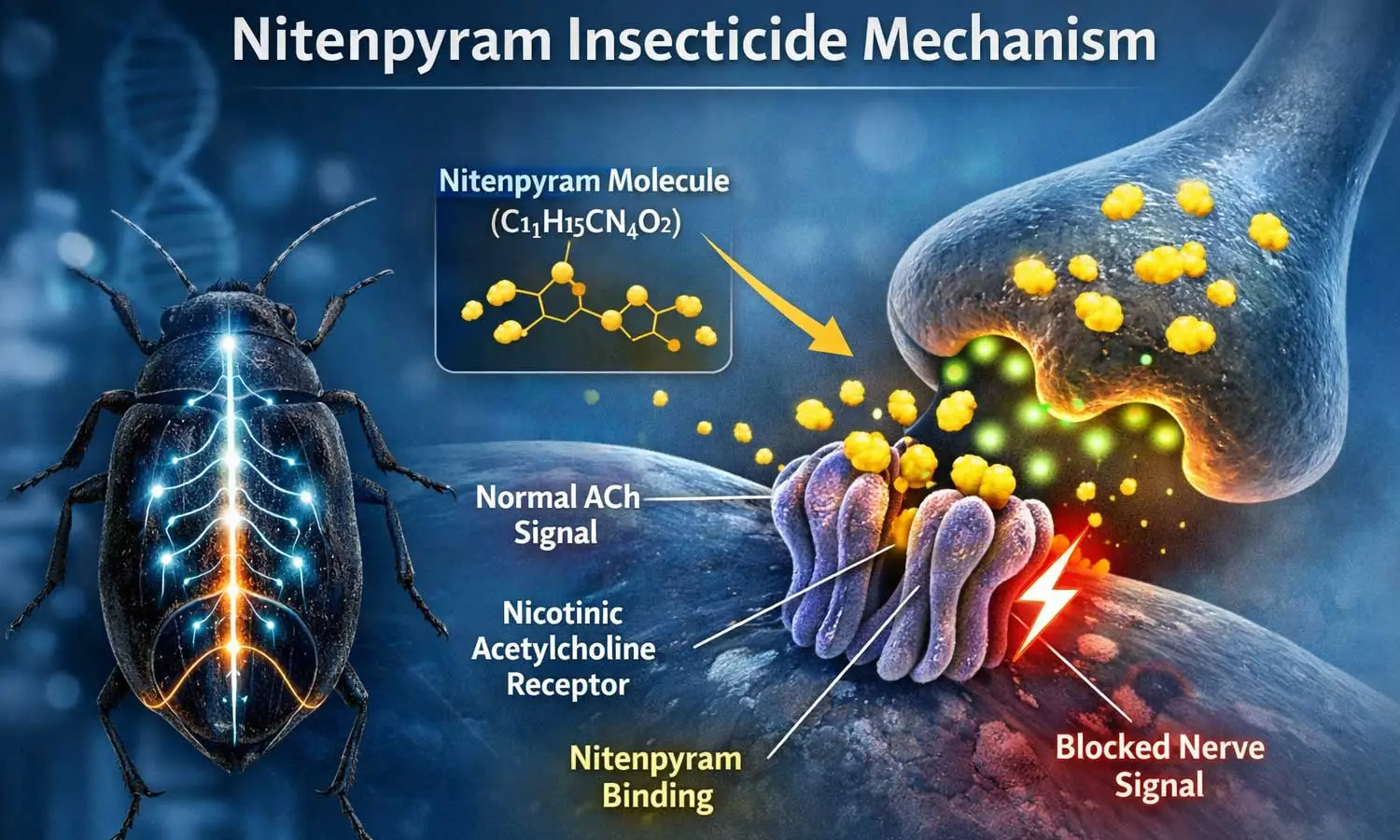
The effectiveness of nitenpyram insecticide is largely due to its unique mechanism of action within the insect nervous system. Like other neonicotinoid insecticides, nitenpyram mode of action involves targeting specific neural receptors that regulate nerve signal transmission in insects.
How Nitenpyram Affects the Insect Nervous System
To understand how nitenpyram works, it is important to examine its interaction with insect neural receptors. Nitenpyram neonicotinoid insecticide binds to nicotinic acetylcholine receptors (nAChRs) in the central nervous system of insects.
Once nitenpyram insecticide active ingredient binds to these receptors, it disrupts normal nerve signal transmission. This interference causes overstimulation of the insect nervous system, ultimately leading to paralysis and death.
Because of this targeted action, systemic insecticide nitenpyram is highly effective against many sap-feeding pests. Insects exposed to the compound typically stop feeding shortly after exposure, which significantly reduces crop damage.
Another advantage of this mechanism is its speed. Compared with some traditional insecticides, fast acting insecticide nitenpyram can begin killing insects within a relatively short period of time, making it particularly valuable for situations where rapid pest control is required.
Main Uses of Nitenpyram Powder
Because of its rapid action and strong systemic activity, nitenpyram powder is widely used in both agriculture and veterinary medicine. As a broad-spectrum insecticide, it is effective against several types of sap-feeding pests that can damage crops or affect animal health.
The versatility of nitenpyram insecticide applications has made it an important active ingredient in modern pest control programs. Its ability to act quickly and disrupt insect feeding behavior allows farmers and veterinarians to manage infestations more efficiently.
Use of Nitenpyram in Agriculture
In agricultural production, nitenpyram insecticide for crops is mainly used to control sucking insects that feed on plant sap. These pests often cause significant yield losses and can also transmit plant diseases.
Some of the most common agricultural pests targeted by nitenpyram pest control include:
•aphids
•whiteflies
•leafhoppers
•thrips
Because nitenpyram systemic insecticide can be absorbed by plant tissues, it helps protect crops from pests that feed internally or on the underside of leaves. Once insects ingest plant sap containing the active ingredient, the compound begins affecting their nervous system.
For many growers, nitenpyram for aphids and nitenpyram for whiteflies has proven particularly useful in greenhouse production systems and high-value crops where rapid pest suppression is important.

Nitenpyram for Flea Control in Pets
In addition to agricultural applications, nitenpyram flea treatment has become widely used in veterinary medicine. The compound is known for its ability to quickly eliminate adult fleas on companion animals such as dogs and cats.
Veterinary formulations containing nitenpyram for dogs and nitenpyram for cats are designed to act rapidly after administration. Fleas exposed to the active ingredient are typically affected within a short period of time, making fast acting flea control nitenpyram particularly useful when immediate relief is needed.
Because of its effectiveness and rapid action, nitenpyram flea medicine has become a common component in flea control strategies used by veterinarians and pet owners.
Nitenpyram in Veterinary and Animal Health Applications
Beyond flea control, nitenpyram veterinary use may also be incorporated into broader parasite management programs for animals. In veterinary pharmaceutical development, nitenpyram active ingredient is valued for its reliability and well-understood mechanism of action.
Its safety profile and targeted effect on insect nervous systems make nitenpyram animal health applications suitable for carefully controlled veterinary treatments when used according to recommended guidelines.
Benefits of Nitenpyram Powder
One reason for the widespread use of nitenpyram insecticide is the number of practical advantages it offers in pest control. Compared with many traditional insecticides, benefits of nitenpyram include fast activity, strong systemic action, and reliable effectiveness against several important pest species.
Fast-Acting Pest Control
One of the most notable characteristics of fast acting insecticide nitenpyram is the speed at which it affects target pests. Because it quickly interferes with nerve transmission, insects exposed to the compound typically stop feeding soon after contact or ingestion.
This rapid action makes nitenpyram rapid pest control particularly valuable in situations where pest populations must be suppressed quickly to prevent crop damage or discomfort in animals.
High Water Solubility
Another important feature is the compound’s high water solubility, which contributes to its systemic properties. As a water soluble insecticide, nitenpyram active ingredient can be readily absorbed and transported within plant tissues.
This systemic behavior allows systemic insecticide nitenpyram to reach pests that feed on internal plant fluids, improving overall pest control efficiency.
Broad-Spectrum Pest Control
Many insecticides are designed to target only specific pest species. However, broad spectrum insecticide nitenpyram can be effective against multiple types of sap-feeding insects.
Because of this versatility, nitenpyram pest control applications are often integrated into pest management programs for crops and animals alike.
Effective at Low Dosage
Another advantage is the compound’s effectiveness even at relatively low concentrations. High efficiency insecticide nitenpyram can achieve strong insecticidal activity without requiring excessive application rates.
This efficiency helps reduce the overall amount of pesticide needed in some pest control programs.
Nitenpyram vs Other Neonicotinoid Insecticides
Within the neonicotinoid class, nitenpyram insecticide is often compared with other active ingredients that share a similar mechanism of action. Understanding the differences between these compounds helps formulators and agricultural professionals choose the most appropriate insecticide for specific applications.
Nitenpyram vs Imidacloprid
When comparing nitenpyram vs imidacloprid, both compounds belong to the neonicotinoid group and target insect nicotinic acetylcholine receptors.
However, there are several practical differences:
•nitenpyram insecticide is known for its rapid action
•imidacloprid is often used for longer residual control
•nitenpyram is widely used in veterinary flea treatments
Because of these characteristics, nitenpyram vs imidacloprid comparison often focuses on the balance between speed of action and duration of pest control.
Nitenpyram vs Acetamiprid
Another common comparison is nitenpyram vs acetamiprid. While both compounds are neonicotinoids, their agricultural uses can differ.
Acetamiprid insecticide is frequently used in crop protection programs with longer persistence, while nitenpyram insecticide is often selected when rapid pest suppression is required.
These differences allow agricultural professionals to select the most suitable compound depending on pest pressure, crop type, and application strategy.
Safety and Environmental Profile
Like all pesticides, nitenpyram insecticide safety must be considered when evaluating its use in agricultural and veterinary applications.
Studies on nitenpyram toxicity indicate that the compound is specifically designed to target insect nervous systems. When used according to recommended guidelines, the compound demonstrates a safety profile that allows it to be incorporated into regulated pest control programs.
Environmental considerations also play an important role. Assessments of nitenpyram environmental impact generally focus on proper usage, application rates, and adherence to regulatory guidelines.
As with all agrochemicals, responsible handling and compliance with regulatory standards remain essential for ensuring the safe and effective use of nitenpyram pesticide products.
Choosing a Reliable Nitenpyram Powder Supplier
For agrochemical manufacturers and formulation companies, sourcing high-quality nitenpyram powder is an important part of maintaining consistent product performance.
When evaluating potential suppliers of bulk nitenpyram powder, buyers typically consider several key factors, including product purity, quality control systems, and supply stability.
High-quality nitenpyram technical grade material should meet established purity standards and be accompanied by reliable documentation such as COA (Certificate of Analysis) and third-party testing reports. These documents help verify that the nitenpyram active ingredient meets the required technical specifications.
In addition, stable production capacity and consistent inventory are essential for ensuring reliable supply. For companies developing agricultural or veterinary formulations, sourcing high purity nitenpyram powder 98% with consistent quality helps support long-term product stability and regulatory compliance.
Manufacturers with established quality control systems and dependable production capabilities are generally better positioned to meet the needs of global agrochemical companies.
Conclusion
As a member of the neonicotinoid insecticide family, nitenpyram powder has become an important active ingredient in both agricultural pest control and veterinary flea treatment applications. Its rapid mode of action, systemic properties, and effectiveness against several common pest species have contributed to its continued use in modern pest management strategies.
From controlling aphids and whiteflies in crops to serving as an active component in flea control products for dogs and cats, nitenpyram insecticide offers a versatile solution for a variety of pest control challenges. The availability of high purity nitenpyram technical grade material has also supported its widespread adoption by agrochemical and veterinary product manufacturers.
For companies seeking a reliable supply of bulk nitenpyram powder, working with experienced raw material producers is an important step in ensuring consistent product quality and formulation performance.
CHEN LANG BIO TECH specializes in the supply of high purity nitenpyram powder 98% technical grade, with consistent quality standards, COA documentation, and stable production capacity to support long-term industrial demand. For technical specifications or supply inquiries related to nitenpyram insecticide raw material, the team can be contacted at: admin@chenlangbio.com

Send Inquiry
Related Industry Knowledge
- Is Pomegranate Extract Good for Erectile Dysfunction?
- How Does Dihydromyricetin Work?
- Why Lutein Ester Is Essential for Premium Vision Products?
- What are the Benefits of Chondroitin Sulfate Powder?
- What are the Potential Health Benefits of Spermidine Supplementation?
- Can PQQ be Combined with Other Supplements?
- Top 5 Applications of Meglumine Powder in Medicine
- Top Myths About Saccharomyces Ferment Lysate Debunked
- What is the Role of Aminolevulinic Acid
- What is Cnidium Monnieri Fruit Extract Used for