
Thaumatin in Chewing Gum: Sweetness, Flavor Release and Formulation
2026-10-10 06:51:53
Thaumatin in chewing gum offers manufacturers a way to refine sweetness perception and explore flavor modification in products where taste changes continuously during chewing. Unlike beverages, chewing gum contains an insoluble gum base surrounded by ingredients that dissolve or disperse gradually in saliva. As a result, the performance of a high-intensity sweetener depends not only on its sweetness potency but also on how it is incorporated, released, and perceived throughout the chewing experience.
For manufacturers developing sugar-free gum, mint-flavored products, or long-lasting chewing gum, thaumatin deserves evaluation as part of the complete sweetening system. Its distinctive sweetness profile may offer formulation opportunities, but commercial performance must be established through controlled sensory testing and processing trials.
What Does Thaumatin Do in Chewing Gum?
Thaumatin for chewing gum is primarily evaluated for high-intensity sweetness and flavor-modifying properties. It is a sweet-tasting protein traditionally associated with Thaumatococcus daniellii and is approximately 2,000–3,000 times sweeter than sucrose under commonly cited comparison conditions.
Its role in chewing gum is different from that of bulk sweeteners such as sorbitol or xylitol. Thaumatin contributes sweetness at low concentrations but does not replace the mass, texture, or processing functions of those ingredients.
|
Function |
Formulation Consideration |
|
High-intensity sweetness |
Sweetness intensity and perception during chewing |
|
Flavor modification |
Interaction with mint, fruit, and other flavor systems |
|
Sweetness persistence |
Balance between initial and lingering sweetness |
|
Sweetener blending |
Compatibility with the existing sweetener system |
|
Commercial application |
Dosage consistency, processing, and sensory validation |
For manufacturers considering a sweet protein in chewing gum, the objective should be to improve a defined sensory attribute rather than simply increase total sweetness.
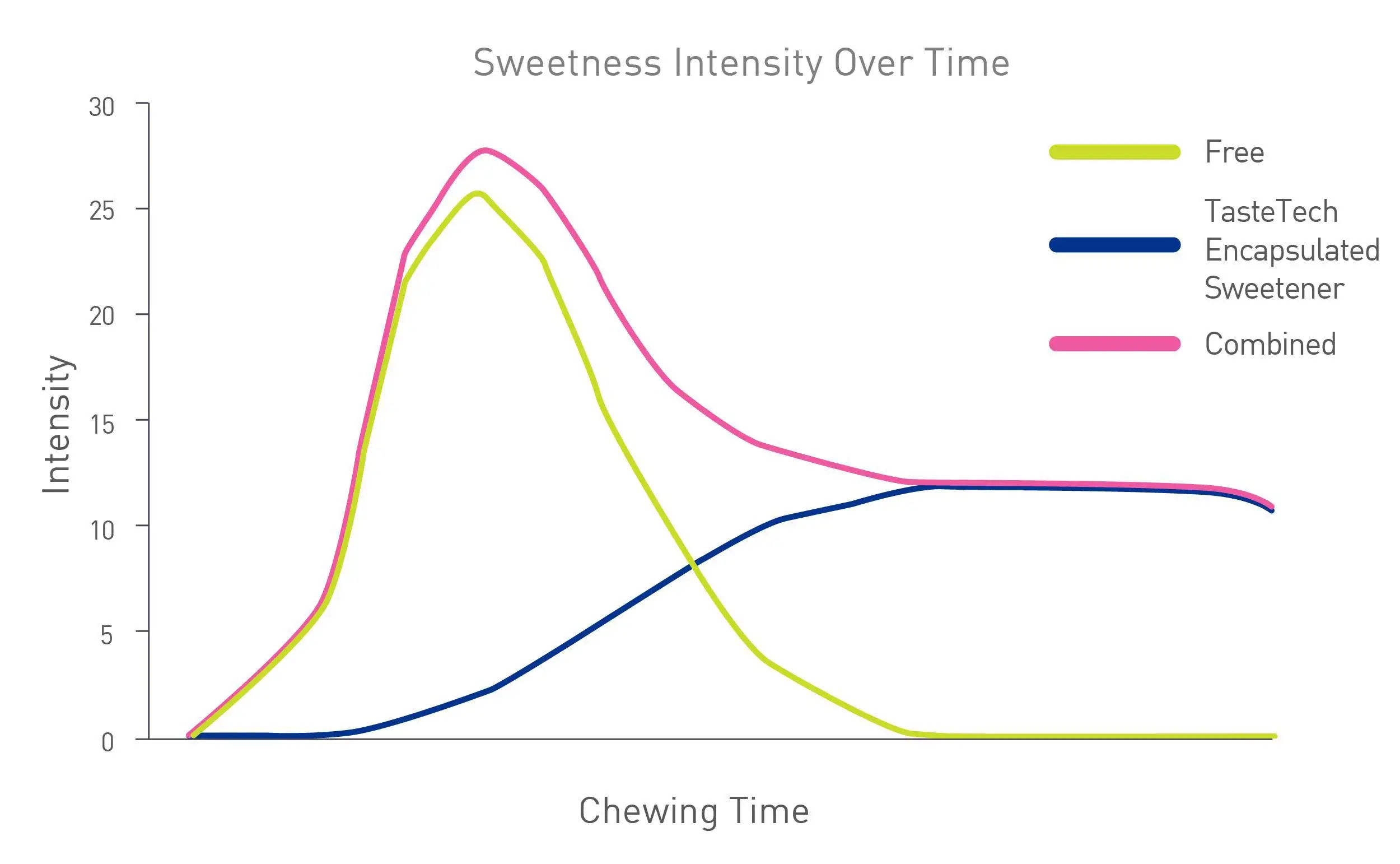
Thaumatin Sweetness in Chewing Gum: Onset, Intensity, and Persistence
The thaumatin sweetness profile differs from sucrose in both the development and persistence of perceived sweetness. Thaumatin is often characterized by a relatively delayed sweetness onset and a lingering sweet sensation, although the extent of these characteristics depends on concentration and the surrounding formulation.
This distinction becomes particularly important in chewing gum.
During the first few moments of chewing, soluble ingredients are exposed to saliva and begin to dissolve. Sweetness may rise rapidly as these ingredients become available, followed by a gradual decline as chewing continues.
A formulation containing thaumatin may exhibit a different time-intensity pattern from one using conventional high-intensity sweeteners alone.
However, the frequently cited 2,000–3,000-fold sweetness comparison cannot be used to calculate a finished gum dosage directly. Relative sweetness is influenced by the reference concentration, test conditions, and food matrix.
When assessing thaumatin sweetness in chewing gum, manufacturers should examine initial intensity, peak sweetness, persistence, and overall balance rather than relying on a single sweetness-equivalence figure.
Lingering sweetness should also be distinguished from an undesirable thaumatin aftertaste. A persistent sweet sensation may be desirable in one formulation but excessive in another.
Thaumatin Flavor Release in Chewing Gum: Sweetness Persistence vs. Flavor Longevity
Understanding thaumatin flavor release in chewing gum requires separating two processes that are often discussed together: sweetener release and aroma release.
Sweetness develops when sweet-tasting compounds become available to interact with taste receptors. Flavor perception, meanwhile, also involves volatile aroma compounds released during chewing and perceived through retronasal olfaction.
These processes are related, but they are not identical.
For example, a peppermint gum may retain some perceived sweetness after its characteristic peppermint aroma has noticeably declined. Conversely, a strong cooling sensation may remain even when the sweet taste has weakened.
This is why chewing gum flavor longevity should not be measured using sweetness intensity alone.
Thaumatin's lingering sweetness may help maintain the overall sensory balance of certain formulations, but it should not automatically be described as extending the physical release of flavor compounds.
Manufacturers should measure sweetness, aroma intensity, cooling sensation, and overall flavor quality separately over a defined chewing period.
For products marketed around sustained sensory performance, chewing gum sweetness release is best evaluated alongside aroma release and consumer acceptability rather than as an isolated formulation parameter.
Thaumatin as a Flavor Modifier in Mint and Fruit Chewing Gum
Beyond sweetness, thaumatin flavor modifier applications are relevant when manufacturers want to adjust how individual flavor notes are perceived.
The response depends on the flavor composition, sweetness system, concentration, and chewing conditions.
Thaumatin in Mint Chewing Gum
Peppermint and spearmint formulations combine sweetness with volatile mint compounds and, in some products, menthol-derived cooling sensations.
A thaumatin flavor enhancement in chewing gum study should investigate whether the ingredient improves the balance between sweetness and mint character during the early, middle, and later stages of chewing.
A prolonged sweet sensation is not necessarily desirable if it overwhelms the mint profile or creates an unbalanced finish.
Thaumatin in Fruit-Flavored Chewing Gum
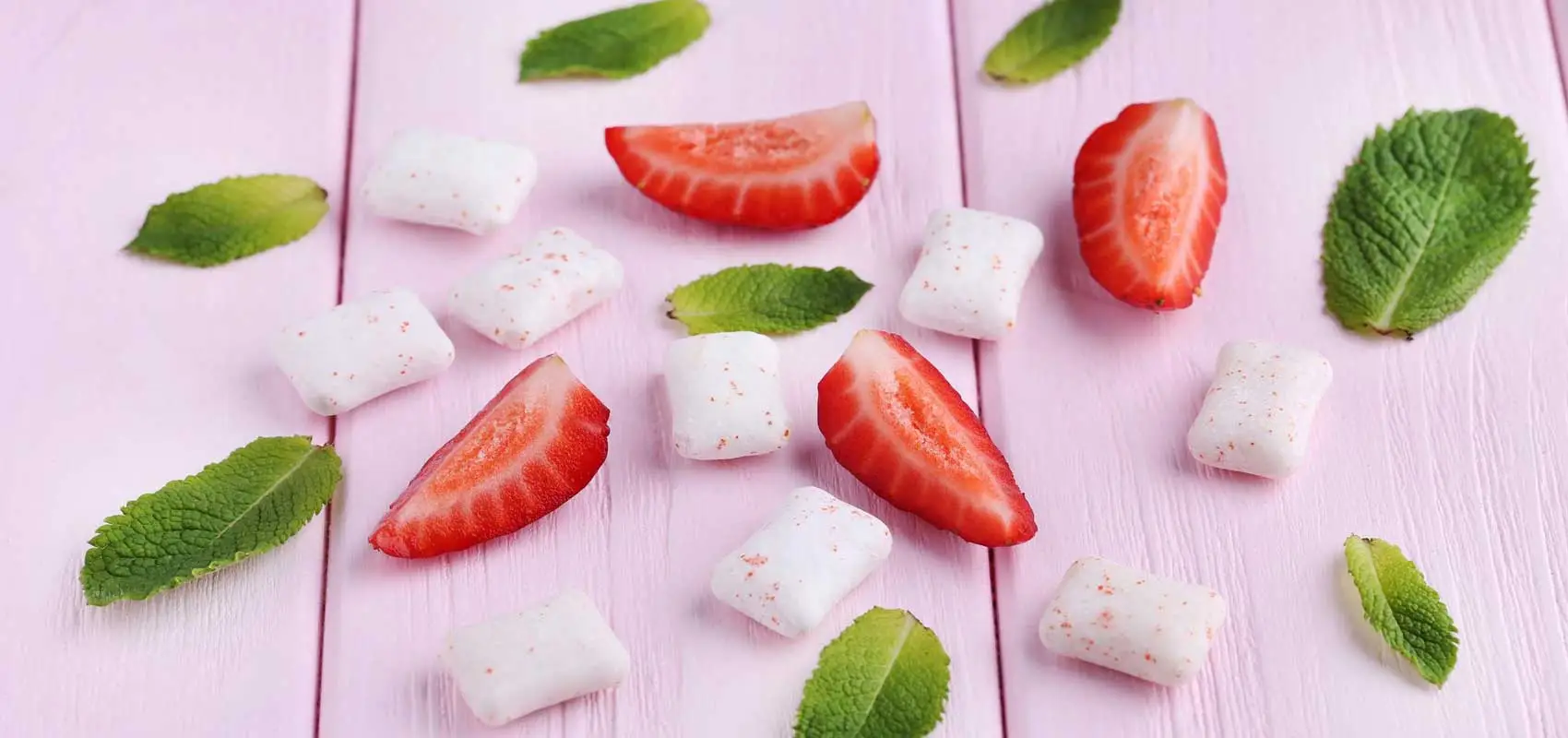
Fruit-flavored gum introduces different challenges. Strawberry, citrus, and mixed-fruit flavors may require different sweetness profiles because their aroma compositions and perceived acidity vary.
In these systems, thaumatin can be screened for its contribution to sweetness and flavor balance.
Manufacturers should compare the complete flavor experience against a control formulation rather than assuming that a higher sweetness intensity produces a more authentic fruit taste.
How Much Thaumatin Should Manufacturers Use in Chewing Gum?
Determining the appropriate thaumatin dosage in chewing gum requires application-specific testing.
There is no single dosage that can be recommended reliably for every gum base, flavor system, sweetener blend, or product format.
The starting point should be the intended function. A manufacturer using thaumatin primarily to modify flavor may require a different concentration from one evaluating it as a significant contributor to total sweetness.
A practical dosage study begins with a control formulation and several carefully selected trial concentrations. All other ingredients and processing conditions should remain consistent wherever possible.
Each sample should then be assessed for sweetness onset, peak intensity, persistence, flavor balance, and undesirable lingering notes.
The final use level should be selected only after confirming that the formulation performs consistently during manufacturing and storage.
For teams asking how much thaumatin to use in chewing gum, the relevant answer is therefore a validated concentration range established within the actual product, subject to applicable regulatory requirements.
Thaumatin in Sugar-Free Chewing Gum: Working with Polyols
Thaumatin in sugar free chewing gum should be considered within the broader sweetener system, which commonly includes polyols and one or more high-intensity sweeteners.
Polyols contribute much more than sweetness. They provide bulk, influence mouthfeel, and help determine the physical characteristics of the finished gum.
Thaumatin cannot independently replace these functions.
Thaumatin with Xylitol
When evaluating thaumatin with xylitol, manufacturers should consider the sweetness and cooling characteristics of xylitol together with the intended contribution of thaumatin.
Xylitol dissolves in saliva and can produce a noticeable cooling effect. This may be particularly relevant in mint-flavored gum, where sweetness and cooling need to remain balanced throughout chewing.
Thaumatin with Sorbitol
Thaumatin with sorbitol represents another formulation approach, especially where sorbitol is already used as a major bulk sweetener.
Sorbitol contributes bulk and sweetness, while thaumatin can be evaluated as a low-dose component of the overall sweetening system.
The objective is not to replace sorbitol gram for gram but to determine whether thaumatin improves the sensory profile without compromising product structure.
Polyol Particle Size and Sweetener Release
Particle size, dissolution behavior, and ingredient distribution may affect the rate at which soluble components become available during chewing.
Research on chewing gum formulations has shown that polyol properties can influence sweetener and aroma release. However, results obtained with other high-intensity sweeteners should not be treated as direct evidence of thaumatin performance.
For thaumatin in sugarless gum, the complete formulation must be evaluated under realistic chewing conditions.
Thaumatin and Gum Base: How the Chewing Matrix Affects Release
A successful thaumatin chewing gum formulation depends partly on the physical behavior of the gum base.
Gum base contains water-insoluble components that remain during chewing, while many sweeteners and other soluble ingredients gradually leave the product.
The composition and texture of the base can influence chewing behavior, ingredient distribution, and the release of certain flavor compounds.
Hydrophobic aroma ingredients may interact differently with gum-base components than water-soluble sweeteners.
Consequently, the same thaumatin concentration may not produce identical sensory results in two gums with different base compositions.
Manufacturers should evaluate ingredient release in the finished gum rather than assuming that solubility measurements in water predict performance during chewing.
Thaumatin in Gum Centers and Coated Chewing Gum
Ingredient placement is another important consideration.
In a conventional gum center, thaumatin must be incorporated into a formulation that undergoes mixing, forming, and subsequent chewing.
In thaumatin in coated chewing gum applications, the ingredient may instead be evaluated within a coating system, where processing conditions and early sensory exposure differ from those of the gum center.
|
Application |
Primary Evaluation |
|
Gum center |
Ingredient distribution and sweetness during chewing |
|
Coating |
Coating compatibility and initial sweetness |
|
Center and coating |
Balance between early and later sensory perception |
A formulation designed for thaumatin in gum center applications should not automatically be transferred to a coating process.
The preferred location depends on the intended sweetness profile, process compatibility, and validated performance.
Thaumatin Sweetener Blends for Chewing Gum Formulations
Thaumatin sweetener blends may offer opportunities to shape the overall sweetness experience by combining ingredients with different sensory characteristics.
For example, a manufacturer may evaluate thaumatin alongside sucralose or acesulfame K to investigate whether the combination better matches the desired onset, peak intensity, and persistence.
The objective is not simply to maximize sweetness.
A product intended to deliver long lasting sweetness in chewing gum needs an appropriate balance between the initial impression and the later stages of chewing.
Potential interactions between sweeteners should be investigated experimentally. A perceived improvement in one formulation does not establish a universally effective blend ratio.
The final blend should also be assessed for regulatory suitability, ingredient cost, and manufacturing consistency.
Thaumatin Solubility and Incorporation During Gum Manufacturing
Thaumatin solubility in water is a useful material property, but it does not guarantee uniform distribution in a chewing gum formulation.
Gum manufacturing involves a complex mixture of insoluble base components, soluble sweeteners, flavors, and processing aids.
Because thaumatin is used at relatively low concentrations, accurate weighing and consistent incorporation are especially important.
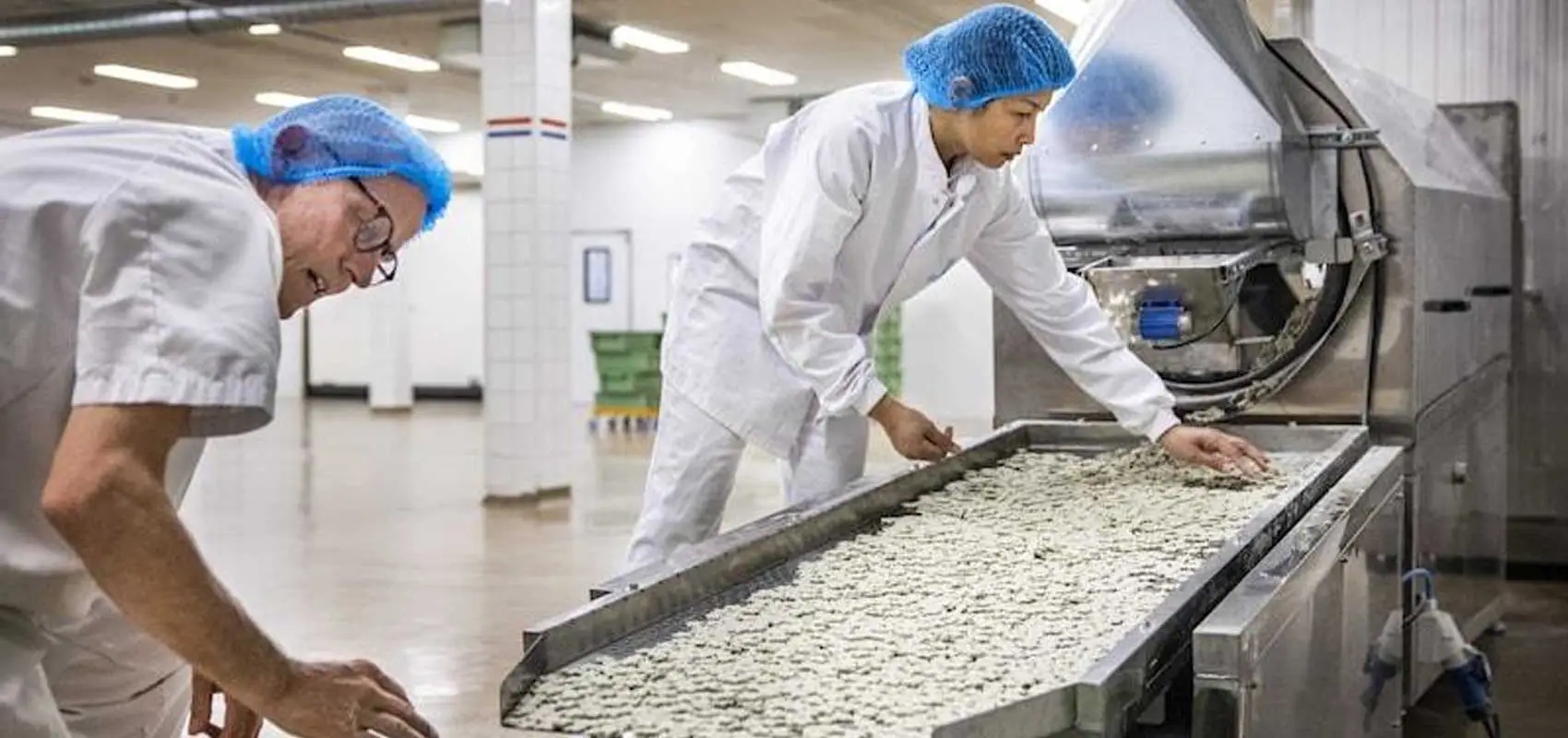
Manufacturers evaluating how to use thaumatin in chewing gum should consider the suitability of premixing, the sequence of ingredient addition, mixing uniformity, and the material's exposure to processing conditions.
The preferred incorporation method should be established through trials using the actual manufacturing equipment.
A uniform laboratory mixture does not necessarily demonstrate equivalent performance at commercial production scale.
Thaumatin Stability in Chewing Gum: Processing and Storage
Thaumatin stability in chewing gum should be assessed as a combination of ingredient stability and finished-product sensory performance.
Thaumatin is a protein, and its behavior may be affected by processing temperature, exposure time, moisture, and the surrounding formulation.
Although research has demonstrated that thaumatin can retain sweetness under certain heat-treatment conditions, this should not be interpreted as unlimited thermal stability.
For thaumatin heat stability evaluations, manufacturers should consider the actual time-temperature history of the ingredient during processing.
Storage testing is equally important. Changes in moisture, flavor composition, or gum texture may alter the sensory experience even when the ingredient itself remains analytically acceptable.
A useful validation framework is:
Temperature × Exposure Time × Moisture × Formulation × Storage
The finished gum should be tested throughout its intended shelf life under representative packaging and storage conditions.
How to Evaluate Thaumatin Flavor Longevity in a Chewing Gum Pilot Test
A structured pilot study is essential before moving from laboratory development to commercial production.
For a meaningful chewing gum flavor longevity evaluation, manufacturers should prepare a control and several trial formulations under consistent processing conditions.
A trained sensory panel can assess samples at predefined chewing intervals, recording sweetness intensity, aroma intensity, cooling sensation, undesirable notes, and overall acceptability.
Time-intensity curves are particularly useful because they show how perception changes throughout chewing rather than relying on a single overall score.
The evaluation should also include product texture and any relevant manufacturing observations.
If the objective is to support a long-lasting flavor claim, the manufacturer should establish an appropriate testing method and evidence for the intended market.
The selected formulation should subsequently undergo pilot-scale confirmation and storage testing before commercial approval.
Food Grade Thaumatin Specifications and E957 Regulatory Considerations
Food grade thaumatin must meet the identity, quality, and regulatory requirements applicable to its intended use and destination market.
Thaumatin is associated with CAS 53850-34-3 and is identified as INS 957 in international food additive systems. In the European Union, the conventional food additive designation is E957.
However, regulatory identity requires more than matching a name or CAS number.
Traditional thaumatin specifications have described material obtained from Thaumatococcus daniellii. Commercial products manufactured through biosynthesis may require separate regulatory assessment depending on the production organism, manufacturing route, material characteristics, and jurisdiction.
Therefore, the use of E957 in chewing gum should be reviewed against the applicable legislation and authorized conditions of use.
Manufacturers should request documentation that accurately identifies the supplied material and supports its suitability for the intended market.
Thaumatin COA and TDS: What Should Ingredient Buyers Check?
A current thaumatin COA should provide the analytical results needed to assess a specific production batch against an established specification.
Purchasers should review identity, applicable assay methodology, microbiological criteria, relevant impurities, and batch traceability.
The thaumatin TDS should complement the COA with information on material characteristics, handling, storage, and relevant application considerations.
Particular attention should be given to whether the analytical methods and reported specifications are appropriate for the supplied manufacturing route.
For commercial qualification, the specification approved during product development should remain consistent with the requirements applied to incoming production batches.
How Should Chewing Gum Manufacturers Evaluate a Thaumatin Supplier?
Selecting a thaumatin supplier involves more than comparing product descriptions or quoted prices.
Manufacturers should establish whether the supplier can provide consistent material identity, reliable analytical documentation, batch traceability, and appropriate regulatory information.
Technical support is also valuable when a new ingredient is being evaluated in a complex gum formulation.
An important purchasing question is whether future commercial batches will remain consistent with the material approved during development.
Supplier evaluation should therefore consider manufacturing capability, quality control, change notification procedures, and the ability to support ongoing commercial demand.
From Thaumatin Sample Evaluation to Commercial Gum Production
A thaumatin sample should represent the material intended for future commercial supply.
The qualification process typically moves from laboratory screening to pilot production, sensory approval, specification confirmation, and routine purchasing.
When transitioning to bulk thaumatin powder, manufacturers should confirm that the approved product grade, analytical specification, and relevant manufacturing information remain consistent.
Any material change that could affect quality, regulatory status, or application performance should be assessed before implementation.
This approach reduces the risk of approving a successful laboratory formulation that cannot be reproduced reliably at production scale.
Thaumatin Price and Cost-in-Use for Chewing Gum Manufacturers
The thaumatin price per kilogram is only one component of the purchasing decision.
Because thaumatin is a high-intensity sweetener, its contribution to finished-product cost depends on the validated use level.
For example, ingredient cost can be calculated as:
\[ \text{Cost per kg Gum}= \frac{\text{Use Level (mg/kg)}\times\text{Price (USD/kg)}}{1{,}000{,}000} \]
A meaningful thaumatin price per kg comparison should also consider the required formulation adjustments, quality requirements, processing performance, and consistency of commercial supply.
The lowest quoted ingredient price does not necessarily produce the lowest cost in the finished gum.
Thaumatin Manufacturing and Technical Support from CHEN LANG BIO TECH
As a thaumatin manufacturer, CHEN LANG BIO TECH supports food ingredient customers through its sweetener production capabilities, research activities, and analytical quality control.
Our experience in the sweetener industry spans more than 30 years, supported by technology platforms covering biosynthesis, chemical synthesis, and plant extraction.
Our commercial thaumatin is produced through biosynthesis, with an annual production capacity of approximately 10 metric tons.
For chewing gum manufacturers evaluating new formulations, we can provide product specifications, available technical documentation, and samples for qualification.
Our standard minimum order quantity is 1 kg, with packaging options including 1–5 kg aluminum foil bags and 25 kg paper drums.
These capabilities support both initial formulation development and subsequent commercial purchasing requirements.
Frequently Asked Questions About Thaumatin in Chewing Gum
What is thaumatin used for in chewing gum?
Thaumatin is evaluated as a high-intensity sweetener and flavor-modifying ingredient. Its suitability depends on the intended sensory function, gum formulation, processing conditions, and applicable regulatory requirements.
Does thaumatin make chewing gum sweetness last longer?
Thaumatin is known for a lingering sweetness profile, but its contribution to the finished product must be established through time-intensity testing. The result depends on the complete sweetener system and chewing matrix.
How much thaumatin should be added to chewing gum?
There is no universally appropriate concentration. Manufacturers should establish the dosage through controlled formulation trials and confirm that the selected use level complies with relevant food additive requirements.
Can thaumatin be used in sugar-free chewing gum?
Thaumatin may be evaluated in sugar-free formulations alongside polyols and other permitted sweeteners, subject to the applicable regulatory status of the supplied material. It contributes sweetness but does not replace the bulk functions of polyols.
Does thaumatin improve mint flavor longevity?
Thaumatin may influence perceived sweetness and overall flavor balance. However, prolonged sweetness does not necessarily mean that peppermint aroma compounds remain available for longer. These characteristics should be measured separately.
What documents should buyers request before commercial production?
Purchasers should request the current COA, TDS, product specification, manufacturing-route information, relevant regulatory documentation, and available quality assurance records. The documentation should correspond to the actual material being supplied.
Request Technical Support for Your Chewing Gum Project
If you are evaluating thaumatin for a new chewing gum formulation, our team can support your project with samples, technical documentation, and product qualification information.
Please share your gum type, target sweetness profile, manufacturing conditions, destination market, and estimated purchasing volume. We can then discuss the appropriate material for evaluation and provide a quotation based on your project requirements.
CHEN LANG BIO TECH Email: admin@chenlangbio.com
References
1. Joint FAO/WHO Expert Committee on Food Additives (JECFA). Thaumatin: Specifications and Evaluations. FAO/WHO.
2. Codex Alimentarius Commission. General Standard for Food Additives (GSFA), CXS 192-1995.
3. European Commission. Commission Regulation (EU) No 231/2012: Specifications for Food Additives, including E957.
4. European Parliament and Council. Regulation (EC) No 1333/2008 on Food Additives.
5. Kaneko, R., and Kitabatake, N. (2001). Sweetness of Sweet Protein Thaumatin Is More Thermoresistant Under Acid Conditions Than Under Neutral or Alkaline Conditions. Bioscience, Biotechnology, and Biochemistry.
6. Masuda, T., et al. (2022). Structure of Thaumatin Under Acidic Conditions: Structural Insight into the Conformations in Lysine Residues Responsible for Maintaining the Sweetness After Heat-Treatment.
7. International Organization for Standardization. ISO 13299:2016 — Sensory Analysis: Methodology — General Guidance for Establishing a Sensory Profile.
8. International Organization for Standardization. ISO 8586:2023 — Sensory Analysis: Selection and Training of Sensory Assessors.

Send Inquiry
Related Industry Knowledge
- How Pyrroloquinoline Quinone Powder Is Used in Dietary Supplements: Applications and Industry Reference Levels
- Avenanthramides in Oat Extract: What Cosmetic Manufacturers Should Know About This High-Value Active?
- Buy 5 Alpha Hydroxy Laxogenin Powder in Bulk: High Purity Supply from China Manufacturer
- Buy Bulk Tadalafil Powder: Wholesale Tips for International Procurement
- Top 5 Benefits of Laminaria Japonica Extract for Glowing Skin
- What is the Difference Between Regular Coenzyme Q10 and Liposomal Coenzyme Q10?
- Why Paeoniflorin 80% Is Trending in Natural Medicine
- Is Bergenia Invasive
- Is EGCG the Same As Green Tea Extract
- Are Turmeric and Curcumin Turmeric Extract Powder the Same Thing