
Piroctone Olamine vs Climbazole: What Should Formulators Consider?
2026-09-15 14:01:13
Choosing between Piroctone Olamine vs Climbazole is not a simple matter of deciding which ingredient is “stronger” or which one carries the lower price per kilogram. Both are used in scalp-care and anti-dandruff shampoo development, but they differ in chemistry, regulatory treatment, solubility behavior, formulation handling, and the way they interact with the finished shampoo system.
For a formulator, the right question is therefore not simply Piroctone Olamine or Climbazole? It is whether one ingredient, or in some cases a carefully validated combination, fits the intended surfactant system, pH, target market, stability profile, and manufacturing process better than the other.
That distinction matters commercially as well. A raw material can look attractive on a specification sheet yet create additional formulation work, processing risk, or regulatory constraints. This guide compares the two ingredients from the perspective of R&D teams, shampoo manufacturers, contract manufacturers, and ingredient buyers who need to make a practical formulation and sourcing decision.
Piroctone Olamine vs Climbazole: The Quick Answer for Formulators
There is no universal winner in the Piroctone Olamine vs Climbazole comparison.
Piroctone Olamine is the monoethanolamine salt of piroctone, while Climbazole is an imidazole derivative. Their different chemical structures translate into different raw-material properties and formulation considerations. Climbazole has very low water solubility; a recent European Commission JRC assessment cites 58 mg/L at pH 7.4 and 25°C. Piroctone Olamine also has limited solubility in water, but its behavior can change substantially with pH, solvents, and surfactant systems.
From a formulation perspective, neither ingredient should be judged in isolation.
|
Decision Factor |
Piroctone Olamine |
Climbazole |
Why It Matters |
|
Chemical type |
Piroctone monoethanolamine salt |
Imidazole derivative |
Different formulation behavior |
|
Water solubility |
Limited, system-dependent |
Very low |
Premix design |
|
Shampoo use |
Widely used in scalp-care systems |
Widely used in anti-dandruff shampoo |
Product positioning |
|
pH/stability |
Finished system must be validated |
Finished system must be validated |
Formula robustness |
|
Surfactant interaction |
Micellar behavior can affect delivery |
Requires compatibility testing |
Performance |
|
EU regulatory status |
Annex V limits when used as preservative |
Annex III and Annex V restrictions |
Market access |
|
Combination use |
Documented in published shampoo studies |
Documented with Piroctone Olamine |
Requires full validation |
The practical answer to which is better, Piroctone Olamine or Climbazole is therefore: the one that performs more reliably within the regulatory, technical, and commercial requirements of the finished product.
What Is the Difference Between Piroctone Olamine and Climbazole?
The difference between Piroctone Olamine and Climbazole begins with chemical identity.
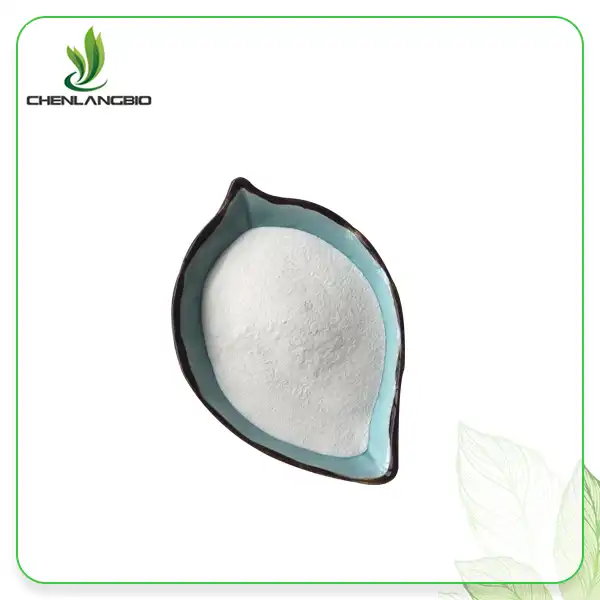
Piroctone Olamine, CAS 68890-66-4, is the monoethanolamine salt of piroctone. CHEN LANG BIO TECH supplies it as a high-purity white to off-white crystalline powder with a current purity specification of ≥99.0%.
Climbazole, CAS 38083-17-9, has the molecular formula C15H17ClN2O2 and a molecular weight of 292.76 g/mol. PubChem classifies it as an imidazole-containing ketone with a chlorophenoxy group, while commercial reference materials commonly appear as white to almost white crystalline powder.
Those differences matter because Piroctone Olamine and Climbazole cannot be treated as interchangeable raw materials simply because both may appear in similar shampoo applications.
They may require different premix strategies, different solvents, different processing assumptions, and different regulatory checks. A formulator should therefore compare the two at the level of the complete finished system rather than at the level of product name alone.
Piroctone Olamine vs Climbazole Solubility: Why It Changes Formulation Strategy
Piroctone Olamine vs Climbazole solubility is one of the most important technical differences for shampoo development.
Climbazole is poorly soluble in water. The European Commission JRC report cites water solubility of 58 mg/L at pH 7.4 and 25 ±1°C, while TCI lists the material as insoluble in water and soluble in methanol.
Piroctone Olamine also has limited aqueous solubility, but its behavior can be improved by selecting appropriate solvents, surfactant systems, and pH conditions. This is why how to dissolve Piroctone Olamine often involves a validated premix rather than direct addition to water.
The same logic applies to how to dissolve Climbazole. Very low water solubility means that the formulator must think about the complete solubilization system rather than assume that high shear will solve the problem.
For clear shampoos, this becomes especially important. A hot batch may look transparent and homogeneous but develop haze or crystals during cooling if the solubilization capacity of the final system is inadequate.
In practice, the correct comparison is not simply “which ingredient is more soluble?” It is:
Which ingredient can be incorporated more reliably into this specific shampoo base, at this target concentration, with acceptable clarity and long-term stability?
For a detailed discussion of Piroctone Olamine handling, see our formulation guide on Piroctone Olamine solubility and premix design.
Piroctone Olamine vs Climbazole Use Level: Concentration Is Not a Simple Comparison
Comparing Piroctone Olamine vs Climbazole use level requires caution because supplier recommendations, experimental concentrations, and regulatory limits are not the same thing.
For Piroctone Olamine, current EU Annex V lists a maximum concentration of 1.0% in rinse-off products and 0.5% in other products when used as a preservative.
For Climbazole, EU Regulation 2019/698 added an Annex III entry allowing up to 2.0% in rinse-off anti-dandruff shampoo when used for purposes other than preservation. Climbazole also has a separate Annex V preservative entry.
Those legal ceilings should not be interpreted as direct evidence that one ingredient is “stronger” than the other.
A Piroctone Olamine recommended use level or a Climbazole recommended use level must still be considered within the formulation, market, and intended function.
A useful formulation hierarchy is:
1. Confirm target market.
2. Confirm intended cosmetic function.
3. Check the applicable legal maximum.
4. Select a formulation target.
5. Validate performance and stability in the finished shampoo.
Published studies reinforce this point. A 2011 shampoo study used 0.5% Piroctone Olamine together with 0.45% Climbazole. A more recent 2024 study evaluated several combinations ranging from 0.1–1.0% Piroctone Olamine and 0.1–0.5% Climbazole. These are experimental formulations, not universal commercial recommendations.
Piroctone Olamine vs Climbazole pH and Stability in Shampoo
The Piroctone Olamine vs Climbazole stability question cannot be reduced to a single pH number.
For both ingredients, the pH of the finished shampoo matters more than a standalone raw-material pH or premix measurement.
With Piroctone Olamine pH stability, formulators should consider how pH affects solubility and the way the ingredient behaves after dilution into the final surfactant matrix. The pH specification on a raw-material COA should never be mistaken for the recommended pH of the finished shampoo.
The same applies to Climbazole pH stability. Its limited water solubility makes system design particularly important, and a stable premix does not guarantee stability after the ingredient encounters the complete shampoo formula.
A good comparative stability program should monitor:
•clarity or haze
•crystallization
•precipitation
•pH drift
•viscosity
•color
•active-content stability where applicable
•package compatibility
The key point is that Piroctone Olamine pH in shampoo and the corresponding Climbazole conditions must be validated in the complete formulation rather than copied from isolated technical data.
Piroctone Olamine vs Climbazole in Surfactant Systems
The surfactant environment can significantly affect how scalp-care actives behave.
Research published in the International Journal of Cosmetic Science showed that surfactant micellar stability and the association of Piroctone Olamine with micelles can influence delivery from shampoo. The study found that weaker micellar association could improve Piroctone Olamine retention on the scalp, while polymer coacervation also affected deposition.
This is important when evaluating Piroctone Olamine surfactant compatibility. Solubilization is necessary, but keeping as much active as possible inside the most stable micelles is not necessarily the only formulation objective.
For Climbazole surfactant compatibility, the same finished-system approach should be used. Its low aqueous solubility means that surfactant architecture, solubilizers, and other ingredients can materially affect the formula.
Formulators should reassess compatibility when changing:
anionic or amphoteric surfactants, conditioning polymers, electrolyte level, fragrance, solubilizers, or viscosity modifiers.
The practical rule is simple:
Compare Piroctone Olamine and Climbazole in shampoo, not in isolated beakers of water.
Piroctone Olamine vs Climbazole for Shampoo: A Formulator’s Decision Matrix
For teams deciding between Piroctone Olamine vs Climbazole for shampoo, a decision matrix is more useful than a generic advantages-and-disadvantages list.
|
Formulation Question |
Piroctone Olamine |
Climbazole |
Decision Point |
|
Water solubility |
Limited |
Very low |
Premix requirements |
|
Clear shampoo |
Requires stability validation |
Requires careful solubilization |
Clarity after cooling |
|
Surfactant interaction |
Published micellar-delivery data |
Formula-dependent |
Test actual shampoo |
|
Target concentration |
Product/market dependent |
Product/market dependent |
Avoid copying generic dosage |
|
EU anti-dandruff use |
Check intended regulatory function |
Annex III allows up to 2% in rinse-off anti-dandruff shampoo |
Regulatory strategy |
|
Combination potential |
Published with Climbazole |
Published with Piroctone Olamine |
Combination needs validation |
|
QC |
COA/specification |
COA/specification |
Batch consistency |
|
Cost |
Cost-in-use |
Cost-in-use |
Not price/kg alone |
The best anti-dandruff ingredient for shampoo is therefore not determined by one technical data point. It is the ingredient that fits the entire formulation brief with the lowest acceptable regulatory, stability, processing, and supply risk.
Can Piroctone Olamine and Climbazole Be Used Together in Shampoo?
Yes, Piroctone Olamine and Climbazole have been used together in published shampoo research.
The 2011 study by Schmidt-Rose and colleagues evaluated a shampoo containing 0.5% Piroctone Olamine and 0.45% Climbazole. In that study, the combination showed anti-mycotic performance comparable to the tested 1% zinc pyrithione shampoo and performed favorably in substantivity and wet-combing assessments.
A 2024 study also evaluated several Piroctone Olamine Climbazole combination systems, including formulations with 0.1% of each ingredient and other concentration combinations.
These data demonstrate that Piroctone Olamine and Climbazole shampoo systems are technically plausible.
They do not establish a universal commercial formula.
Before combining the two, formulators should re-evaluate:
•total active load
•solubility
•solvent system
•surfactant compatibility
•pH
•viscosity
•stability
•regulatory classification
•market-specific concentration limits
The existence of a published study is evidence that a combination has been investigated, not a substitute for a company's own safety, regulatory, and stability assessment.
Piroctone Olamine vs Climbazole Regulations: Why the Target Market Matters
The regulatory distinction between these two ingredients is commercially important.
For Piroctone Olamine EU regulation, Annex V currently lists Piroctone Olamine at up to 1.0% in rinse-off products and 0.5% in other products when used as a preservative.
For Climbazole EU regulation, Regulation (EU) 2019/698 added Climbazole to Annex III for rinse-off anti-dandruff shampoo at a maximum of 2.0% when used for a purpose other than inhibiting microorganisms in the product. Its function must be apparent from the product presentation.
The SCCS had previously assessed Climbazole up to 2.0% as an anti-dandruff agent in rinse-off shampoo under the evaluated exposure scenarios.
These rules illustrate why formulators should not assume that “allowed in cosmetics” means the same thing for every ingredient.
Before locking a formula:
Target country → product type → intended function → permitted level → safety assessment → finished-product compliance
For brands selling into several regions, the most restrictive target market may influence the global formula.
Piroctone Olamine vs Climbazole Quality Specifications: What Should Buyers Compare?
Ingredient selection does not stop when the formulation team chooses an active. Buyers must still qualify the raw material.
A Piroctone Olamine specification should be reviewed alongside the supplier's COA, test methods, and batch traceability. For our current material, the purity specification is ≥99.0%, and a recent batch reported 99.8% purity and 99.9% assay.
A Climbazole specification should be assessed on the same principle. Commercial analytical material, for example, may be supplied at ≥98% HPLC purity, but an analytical reference grade is not automatically equivalent to a cosmetic commercial grade.
When comparing Piroctone Olamine COA and Climbazole COA, buyers should look beyond one purity figure and review:
identity, assay, relevant impurities, residual solvents where applicable, moisture or loss on drying, analytical methods, batch number, release information, and supporting TDS/SDS documentation.
This is much more useful than comparing two products simply because both appear as white powders.
Piroctone Olamine vs Climbazole Cost-in-Use: Why Price per Kilogram Is Not Enough
A meaningful Piroctone Olamine vs Climbazole cost comparison should calculate cost-in-use rather than raw-material price alone.
Piroctone Olamine price may be higher or lower than Climbazole price at a particular moment, but the final manufacturing economics depend on more variables:
raw-material price
× target concentration
•solvent or premix requirements
•process complexity
•stability risk
•QC/documentation requirements
•potential batch rework.
A material with a lower Piroctone Olamine price per kg equivalent comparison is not necessarily cheaper if it creates additional formulation complexity or forces a redesign of a clear shampoo.
For procurement teams, the best comparison is therefore based on the same approved specification and the same finished-product target.
Choosing a Piroctone Olamine or Climbazole Supplier
A qualified Piroctone Olamine supplier or Climbazole supplier should provide more than a quotation.
For commercial product development, buyers should evaluate:
•defined specification
•lot-specific COA
•batch traceability
•TDS and SDS
•sample support
•technical communication
•regulatory documentation
•repeat supply capability
•export and logistics support
When evaluating a Piroctone Olamine manufacturer, formulation support can be particularly valuable because solubility, pH, and processing questions often arise during pilot development.
CHEN LANG BIO TECH supplies cosmetic grade Piroctone Olamine with a current ≥99.0% purity specification and supports customers with quality and technical documentation. Our broader ingredient business integrates R&D, manufacturing, and international supply, supported by a modern production base in Shandong.
The important point for the buyer is not the number of certificates shown on a webpage, but whether the supplier can deliver consistent material, traceable documentation, and practical support from sample evaluation through repeat production.
From Sample to Bulk Purchase: Commercial Considerations for Ingredient Buyers
The appropriate purchasing sequence is technical qualification first, commercial approval second.
Before moving to bulk Piroctone Olamine Powder, confirm that the sample has passed incoming QC and formulation validation.
Then establish:
commercial specification
packaging
lead time
Piroctone Olamine MOQ
shipping terms
required documentation.
A customer ready to buy Piroctone Olamine Powder should also confirm whether the commercial shipment will be supplied to the same agreed specification as the approved sample.
For a repeat Piroctone Olamine bulk order, batch-to-batch consistency becomes as important as the original sample result.
FAQ: Piroctone Olamine vs Climbazole
Is Piroctone Olamine the same as Climbazole?
No. Piroctone Olamine vs Climbazole compares two different chemical ingredients. Piroctone Olamine is the monoethanolamine salt of piroctone, whereas Climbazole is an imidazole derivative with CAS No. 38083-17-9.
Which is better, Piroctone Olamine or Climbazole?
There is no universal answer to which is better, Piroctone Olamine or Climbazole. Selection depends on target market, concentration, solubility, surfactant system, stability, finished-product requirements, and supplier quality.
Which is easier to formulate into shampoo?
That depends on the formula. Climbazole has very low water solubility, while Piroctone Olamine also requires attention to solubilization and pH. Both should be tested in the intended shampoo system rather than judged from water solubility alone.
Can Piroctone Olamine and Climbazole be used together?
Published studies have evaluated Piroctone Olamine and Climbazole together, including a shampoo containing 0.5% Piroctone Olamine and 0.45% Climbazole. This does not establish a universal commercial recommendation; the combination must still be validated for the target market and formula.
What concentrations are used in shampoo?
Published research has evaluated several concentrations and combinations. Regulatory ceilings differ by ingredient, function, and jurisdiction, so study concentrations should not be copied directly into a commercial formula.
Are Piroctone Olamine and Climbazole allowed in the EU?
Yes, under specific conditions. Piroctone Olamine appears in Annex V with maximum concentrations of 1.0% in rinse-off products and 0.5% in other products when used as a preservative. Climbazole is permitted up to 2.0% in rinse-off anti-dandruff shampoo under Annex III for the specified non-preservative purpose.
Should manufacturers test samples before choosing one?
Yes. Sample testing allows the formulator to compare solubilization, pH, viscosity, clarity, cooling behavior, and stability in the same base before committing to commercial quantities.
Conclusion: Choose the Ingredient for the Formula, Not the Ingredient Name
The Piroctone Olamine vs Climbazole decision should be made at the level of the finished shampoo, not from an isolated specification or a single concentration number.
The most useful comparison covers chemistry, solubility, target concentration, pH, surfactant interaction, stability, regulation, COA quality, sample performance, and cost-in-use. Published research also shows that Piroctone Olamine and Climbazole can be used together in properly designed shampoo systems, but formulation evidence is not a substitute for market-specific regulatory review and finished-product validation.
For formulators and ingredient buyers evaluating Piroctone Olamine for shampoo or scalp-care development, CHEN LANG BIO TECH can provide specification, COA, TDS/SDS, samples, technical information, and commercial quotation support.
Contact: admin@chenlangbio.com
References
1. Schmidt-Rose T, Braren S, Fölster H, Hillemann T, Oltrogge B, Philipp P, Weets G, Fey S. Efficacy of a piroctone olamine/climbazol shampoo in comparison with a zinc pyrithione shampoo in subjects with moderate to severe dandruff. International Journal of Cosmetic Science. 2011;33(3):276–282.
2. Johnson ES et al. Enhanced piroctone olamine retention from shampoo for superior anti-dandruff efficacy. International Journal of Cosmetic Science. 2023.
3. Ergin C et al. Evaluation of novel cosmetic shampoo formulations against Malassezia species: Preliminary results of anti-dandruff shampoo formulations. Journal of Cosmetic Dermatology. 2024.
4. European Commission. Regulation (EC) No 1223/2009, Annex V: Piroctone Olamine, rinse-off products 1.0%, other products 0.5%.
5. European Commission. Commission Regulation (EU) 2019/698 amending Annexes III and V to Regulation (EC) No 1223/2009 regarding Climbazole.
6. Scientific Committee on Consumer Safety. Addendum to the scientific Opinions on Climbazole (P64), SCCS/1600/18.
7. European Commission Joint Research Centre. Climbazole (CAS No. 38083-17-9): Substance identity and physicochemical properties. Water solubility reported as 58 mg/L at pH 7.4 and 25 ±1°C.
8. PubChem. Climbazole, CID 37907. Chemical identity, molecular formula, molecular weight, and CAS data.
9. Tokyo Chemical Industry. Climbazole CAS 38083-17-9. Reference physical properties and analytical specification.
10. CHEN LANG BIO TECH. Current Piroctone Olamine specification and batch quality documentation.

Send Inquiry
Related Industry Knowledge
- How Resveratrol Works in the Body: Antioxidant, Anti-Aging & Cellular Benefits
- How to Choose a Reliable Quaternium-73 Supplier
- Is Sodium Ascorbyl Phosphate the Same As Ascorbic Acid?
- What Happens If a Human Takes Praziquantel
- Does Bakuchiol Fade Dark Spots
- What are the Benefits of Polyphenols in Apples
- What is Cyanotis Arachnoidea Extract
- Where Can I Buy Nitenpyram Powder
- Beta Ecdysterone Powder Benefits
- What Functions of the Cycloastragenol Powder