
How to Read a Piroctone Olamine COA: A Quality Guide for Ingredient Buyers
2026-09-11 18:37:16
A Piroctone Olamine COA should do more than confirm that a supplier sells a material called Piroctone Olamine. For cosmetic ingredient buyers, formulators, and quality teams, a Certificate of Analysis is a batch-specific record that helps determine whether the material delivered meets the agreed purchasing specification. The most useful COAs connect identity, batch traceability, test parameters, acceptance limits, and actual results in a way that can be reviewed before the material enters production.
This matters particularly for cosmetic grade Piroctone Olamine, CAS 68890-66-4. In the European cosmetics framework, Piroctone Olamine is associated with both Annex III restrictions applicable to monoalkanolamines and their salts and an Annex V preservative entry. Relevant Annex III conditions include a minimum purity of 99%, controls concerning secondary amines and nitrosamines, and nitrite-free containers.
At CHEN LANG BIO TECH, our current Piroctone Olamine specification sets purity at ≥99.0%. The batch COA used as an example in this guide reports 99.8% purity and 99.9% assay. Those two numbers are useful, but neither should be read in isolation. A professional purchasing decision requires understanding what each test means, how the result relates to its specification, and whether the complete quality profile is appropriate for the intended market and formulation.
Piroctone Olamine COA: The Quick Answer for Ingredient Buyers
A Piroctone Olamine certificate of analysis is a quality document reporting test results for a defined production batch against established specifications. A buyer should be able to identify the product, lot, manufacturing information, tested characteristics, acceptance criteria, actual results, and quality release information.
Before approving a shipment, use this quick check:
|
COA Check |
Example From Our Batch |
What the Buyer Should Verify |
|
Product |
Piroctone Olamine (OCT) |
Correct identity and grade |
|
Batch No. |
20250220 |
Matches the supplied material |
|
Production date |
2025-02-20 |
Traceability |
|
Appearance |
Conforms |
Meets physical specification |
|
pH |
10.6 |
Within 10.0–11.0 |
|
Loss on drying |
0.1% |
Within ≤0.3% |
|
Ethanolamine |
20.4% |
Within 20.0–21.0% |
|
Nitrosamine |
<10 ppb |
Within ≤50 ppb |
|
Purity |
99.8% |
Meets ≥99.0% |
|
Assay |
99.9% |
Within 98.5–101.5% |
|
Microbial tests |
Within limits |
Meets stated microbiological criteria |
The key point in how to read a Piroctone Olamine COA is to compare the specification and the batch result side by side. A limit such as ≥99.0% tells you the acceptance criterion; a result such as 99.8% tells you what was reported for that particular batch.
What Is a Piroctone Olamine Certificate of Analysis—and What Is It Not?
A Piroctone Olamine COA is not the same document as a specification sheet, TDS, or SDS.
A product specification defines the criteria that material must satisfy before release. A COA applies those criteria to a particular batch and reports the corresponding test results. This distinction becomes important when buyers compare products described simply as “99% Piroctone Olamine.”
Suppose a Piroctone Olamine specification states:
Purity: ≥99.0%
That is the acceptance limit. If the batch result is 99.8%, the latter is the reported result for that lot. A COA that merely repeats “≥99.0%” in both columns gives the buyer less batch-specific information than one that reports the actual quantitative result.
A Piroctone Olamine TDS, meanwhile, normally provides broader technical information such as product characteristics, recommended handling, formulation information, storage, and applications. A Piroctone Olamine SDS addresses hazards, handling, transport, exposure, and safety information.
These documents complement one another; they should not be treated as interchangeable.
How to Read a Piroctone Olamine COA Step by Step
A good review starts at the top of the document rather than jumping immediately to purity.
►Step 1: Verify Piroctone Olamine Identity
Confirm the product name and chemical identity against your approved raw-material specification. Piroctone Olamine is associated with CAS No. 68890-66-4 and EC No. 272-574-2. The same CAS number is used for commercially available analytical reference material, and the official cosmetic ingredient record identifies Piroctone Olamine under this identity.
For regulated-market procurement, identity is the foundation. A high assay number is meaningless if it belongs to the wrong chemical form or grade.
►Step 2: Confirm Batch Traceability
Our example Piroctone Olamine test report identifies Batch No. 20250220, a production date of February 20, 2025, and a batch quantity of 500 kg.
When the commercial material arrives, the batch number on the package should correspond to the accompanying COA. If several lots are shipped together, buyers should establish which COA belongs to each lot rather than accepting a generic document.
►Step 3: Compare Standards With Results
This is where the COA becomes useful as a quality record.
For example:
Purity specification: ≥99.0%
Batch result: 99.8%
and:
Assay specification: 98.5–101.5%
Batch result: 99.9%
The first column defines what is acceptable. The second describes the reported batch performance.
►Step 4: Understand the Test Method
The Piroctone Olamine testing method matters, especially when results from different laboratories or suppliers are being compared. A number without analytical context can be misleading.
HPLC is an established analytical approach for Piroctone Olamine. For example, a published International Journal of Cosmetic Science study quantified Piroctone Olamine by validated HPLC, while Taiwan FDA has published an HPLC method for identification and assay of Piroctone Olamine and several other antimicrobial agents in cosmetics. Commercial Piroctone Olamine analytical standards are also available at ≥99.0% assay by HPLC.
This does not mean every number on every raw-material COA must be generated by HPLC. Buyers should confirm the method actually associated with the supplier's specification rather than assume one.
►Step 5: Confirm Quality Release
Finally, check whether the document contains appropriate tester, checker, approver, or quality-release information according to the supplier's quality system. Our example identifies testing, checking, and approval personnel, which supports traceability of the release process.
Piroctone Olamine Specification: Which COA Parameters Matter Most?
A useful Piroctone Olamine quality specification should be evaluated as a complete profile. Our current COA provides a good example because it goes beyond a single assay figure.
•Appearance and Solubility
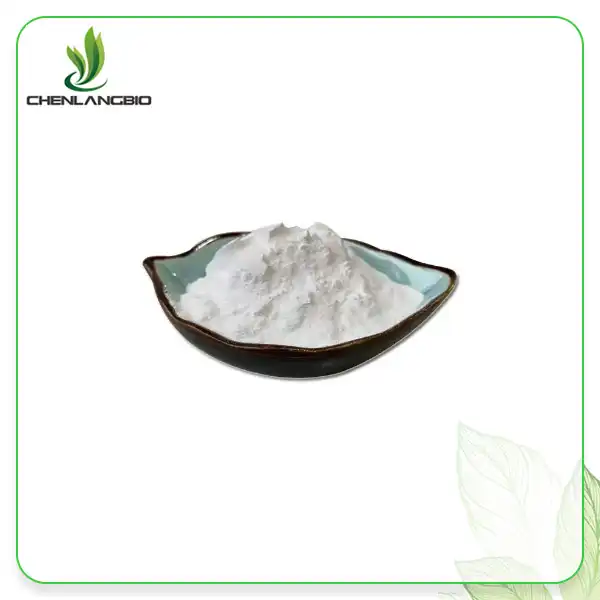
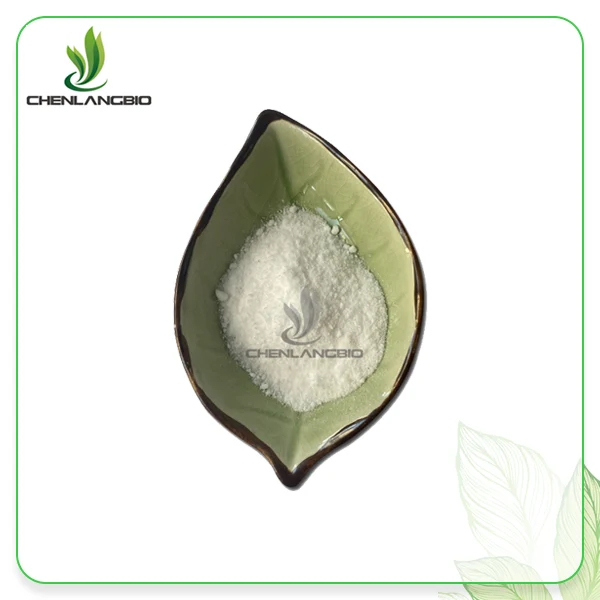
The material is specified as a white to off-white powder, with the batch reported as conforming. The COA also includes a methanol-solubility test.
Appearance is a simple but valuable incoming inspection. Unexpected color, agglomeration, contamination, or other physical differences should prompt investigation even if the assay meets specification.
•pH
Our specification sets pH at 10.0–11.0 for a 1% preparation at 20°C; the example batch reports 10.6.
A pH result should always be interpreted together with the stated test conditions. Comparing a 1% solution result with another supplier's number measured at a different concentration or temperature is not necessarily an apples-to-apples comparison.
•Loss on Drying and Ignition Residue
The Piroctone Olamine COA specification sets loss on drying at ≤0.3%, with the example batch reporting 0.1%. Ignition residue is controlled at ≤0.2%.
For buyers, these parameters provide information beyond nominal active content and can help assess raw-material consistency.
•Ethanolamine
Our specification sets ethanolamine at 20.0–21.0%, with a batch result of 20.4%. Because Piroctone Olamine is the monoethanolamine salt of piroctone, this parameter forms part of the material's quality profile rather than being a generic cosmetic marketing claim.
•Nitrosamine
The example specification sets nitrosamine at ≤50 ppb, while the batch result is reported at <10 ppb.
This is a particularly relevant procurement parameter. EU-linked conditions for monoalkanolamines and their salts specify minimum purity of 99%, maximum secondary amine content of 0.5% in the raw material, maximum nitrosamine content of 50 μg/kg, avoidance of nitrosating systems, and storage in nitrite-free containers.
•Residual Solvents and Microbiology
The COA also controls ethyl acetate, methanol, and toluene, along with total plate count, moulds and yeasts, thermophilic coliform, Staphylococcus aureus, and Pseudomonas aeruginosa.
These should be evaluated against the agreed purchasing specification rather than treated as a universal template that every supplier must reproduce identically.
Piroctone Olamine Purity and Assay: What Does ≥99.0% Really Mean?
The terms Piroctone Olamine purity and Piroctone Olamine assay are sometimes used loosely in commercial discussions, but a professional buyer should look at how each parameter is defined in the supplier's analytical specification.
Our example COA contains both:
Purity: ≥99.0%; batch result 99.8%
and:
Assay: 98.5–101.5%; batch result 99.9%
Therefore, describing the material as Piroctone Olamine 99% communicates the commercial grade, but it does not reproduce the entire quality specification.
This distinction also matters when comparing suppliers. Merck/Supelco, for example, lists a Piroctone Olamine analytical standard with ≥99.0% HPLC assay. That demonstrates that ≥99% is a meaningful analytical benchmark, but an analytical reference standard and a commercial cosmetic raw material are not the same product category and should not be qualified using identical purchasing logic.
A buyer should therefore ask a better question than “Is it 99%?”
Ask instead:
What is the agreed specification, what was the actual batch result, how was it measured, and what other controlled parameters define the grade?
Test Methods Matter: How Is Piroctone Olamine Quality Verified?
Reliable Piroctone Olamine quality control combines appropriate analytical methods with defined acceptance criteria.
HPLC is particularly relevant to quantitative analysis. Published cosmetic-science research has used reverse-phase HPLC for Piroctone Olamine determination, including validated calibration and controlled chromatographic conditions. Taiwan FDA's published method likewise uses HPLC for identification and assay in cosmetic matrices.
For procurement, however, the objective is not to demand HPLC for every line on a COA. Different parameters require different methods.
The more important questions are whether the supplier has defined methods, whether the methods are consistently applied, and whether quantitative parameters provide useful batch-specific results.
“Conforms” can be perfectly appropriate for qualitative identification or appearance tests. For parameters such as pH, purity, assay, loss on drying, or a controlled impurity, a numerical result or appropriately reported limit often provides more information for trend analysis.
What Can a COA Tell You About Batch-to-Batch Consistency?
A single passing COA establishes that one lot was reported as meeting its release specification. It does not, by itself, establish long-term Piroctone Olamine batch consistency.
For repeat procurement, compare several lots.
If Batch A, B, and C all meet specification, examine whether purity, assay, pH, loss on drying, ethanolamine, and relevant impurities remain reasonably consistent. The objective is not to demand identical numbers—the normal variation of analytical methods makes that unrealistic—but to identify unexplained shifts or recurring results near an acceptance limit.
This is where a long-term relationship with a Piroctone Olamine manufacturer becomes different from buying a one-off sample. Consistent raw-material performance reduces the risk that the customer's formulation or incoming QC needs to accommodate unnecessary variability.
COA Red Flags: What Should Piroctone Olamine Buyers Watch For?
Piroctone Olamine COA verification is partly about identifying information that needs clarification.
A buyer should investigate further if a COA lacks a lot number, does not distinguish specifications from results, carries inconsistent chemical identity information, or cannot be linked to the material being shipped. The same applies when every quantitative result is replaced by “Conforms,” particularly if the buyer needs numerical data for supplier qualification.
Another reason for clarification is unexplained duplication. Results that appear exactly identical across many batches are not automatically evidence of a problem, but they may justify asking how results are generated and reported.
None of these observations alone proves that a document is invalid. They are verification triggers, not accusations.
A professional Piroctone Olamine supplier quality review should resolve questions through documentation, technical communication, and—where appropriate—independent incoming testing.
Why a Piroctone Olamine COA Is Not Enough for Supplier Qualification
A COA tells you about a batch. Supplier qualification asks whether the system behind that batch is capable of supplying acceptable material repeatedly.
When evaluating a Piroctone Olamine supplier, buyers should therefore look beyond the certificate and review quality-management capability, traceability, manufacturing or sourcing controls, change management, documentation support, complaint handling, and repeat-batch consistency.
Regulatory suitability also depends on the destination market. For example, current Piroctone Olamine conditions are not identical worldwide. South Korea lists 1.0% for rinse-off products and 0.5% for other products, while Japan uses a different restriction matrix.
That is why supplier qualification should not be reduced to a claim that a material is simply “global compliant.”
Sample Testing Before Buying Bulk Piroctone Olamine Powder
Before approving bulk Piroctone Olamine Powder, a representative Piroctone Olamine sample allows the customer's QC and formulation teams to evaluate the material under their own conditions.
Incoming QC can compare selected results against the supplier's COA. Formulators can then evaluate practical properties in the intended shampoo or scalp-care system, including dissolution behavior, pH compatibility, clarity, crystallization, and finished-product stability.
This is especially relevant to Piroctone Olamine because raw-material compliance does not guarantee performance in every formulation.
For a deeper discussion of that issue, see our technical guide, Piroctone Olamine Solubility: How to Dissolve Piroctone Olamine Powder.
Once the sample has been approved, the commercial specification should be agreed before the Piroctone Olamine bulk purchase. The commercial shipment should then be supplied against that agreed specification, rather than against an undefined “same as sample” promise.
How to Compare Piroctone Olamine Suppliers Using COA Data
When comparing a Piroctone Olamine Powder supplier, avoid ranking candidates by assay or quotation alone.
A more useful procurement matrix looks like this:
|
Evaluation Area |
What to Compare |
|
Identity |
INCI/CAS/grade alignment |
|
Purity specification |
Defined acceptance limit |
|
Batch result |
Actual lot-specific result |
|
Impurity controls |
Relevant limits and results |
|
Test methods |
Defined and reproducible |
|
Traceability |
COA matches supplied lot |
|
Documentation |
Specification, COA, TDS, SDS |
|
Sample support |
Available for qualification |
|
Repeat supply |
Batch consistency |
|
Technical response |
Ability to resolve formulation/QC questions |
This approach also helps distinguish a cosmetic grade Piroctone Olamine supplier from a company that simply offers a chemical under the same CAS number without the documentation required by cosmetic manufacturers.
Beyond the COA: What Documents Should Buyers Request?
A complete Piroctone Olamine documentation package will depend on the customer's market and internal qualification procedure, but the COA should normally sit alongside an agreed specification, Piroctone Olamine TDS, Piroctone Olamine SDS, storage and shelf-life information, and relevant regulatory or quality statements.
Packaging information is also important where nitrite-control requirements apply. EU-linked restrictions specifically address nitrite-free containers for the relevant monoalkanolamine category.
For regulated cosmetic products, the finished-product responsible party or manufacturer remains responsible for determining whether the ingredient and formulation comply with the rules applicable in the destination market.
What Determines Piroctone Olamine Price Beyond the Assay Number?
Piroctone Olamine price cannot be evaluated intelligently without knowing what is included in the offer.
Two quotations may both state “99%,” yet differ in agreed specification, testing scope, documentation, packaging, quantity, destination, and commercial terms. Those differences can affect the final cost.
For the same reason, Piroctone Olamine price per kg becomes more meaningful only after the purchasing specification has been aligned.
For development quantities, Piroctone Olamine MOQ may also matter differently than it does for a commercial shampoo manufacturer planning repeat production. Buyers should therefore qualify the material first and then compare commercial offers on an equivalent specification and supply basis.
Working With a Piroctone Olamine Manufacturer: Our Quality Approach
CHEN LANG BIO TECH supplies Piroctone Olamine Powder for cosmetic ingredient applications, with our current specification setting purity at ≥99.0%. The batch example discussed throughout this guide demonstrates the type of quantitative information we believe buyers need: purity, assay, pH, loss on drying, ethanolamine, nitrosamine, residual-solvent controls, microbiological parameters, and traceable batch information.
Our broader ingredient business integrates R&D, production, and supply, supported by a manufacturing base in Shandong covering approximately 218 mu, or about 145,000 m². The company's quality and market-support systems include ISO 9001, ISO 22000, BRC, Kosher, Halal, and FDA registration.
For a buyer evaluating a Piroctone Olamine Powder manufacturer, these credentials are useful only when they translate into practical purchasing support: consistent specifications, traceable batches, appropriate quality documentation, responsive technical communication, and reliable commercial supply.
Buyer Checklist Before Approving a Piroctone Olamine Order
Before you buy Piroctone Olamine Powder, the purchasing process should move through three stages rather than directly from quotation to bulk order:
Supplier qualification: confirm the supplier or manufacturer, review the specification and representative COA, understand relevant test methods, and obtain the required technical documents.
Material qualification: request a sample, perform incoming QC as appropriate, and evaluate the material in the actual formulation.
Commercial approval: agree the final purchasing specification, confirm packaging and shelf life, establish the applicable MOQ and lead time, and ensure that the shipment documentation meets destination requirements.
For a repeat Piroctone Olamine bulk order, retain batch COAs and use them as part of ongoing supplier-performance review rather than filing each certificate without comparison.
FAQ About Piroctone Olamine COA and Quality
What should a Piroctone Olamine COA include?
A Piroctone Olamine COA should identify the product and batch, state applicable specifications, report batch-specific results, and provide sufficient release and traceability information. The exact test panel depends on the agreed product specification and market requirements.
What does ≥99.0% Piroctone Olamine mean?
For our material, ≥99.0% is the minimum Piroctone Olamine purity specification. The example batch reports an actual purity result of 99.8%. Buyers should distinguish a minimum specification from the measured result of a particular lot.
Is Piroctone Olamine assay the same as purity?
Not necessarily. The terms depend on the supplier's analytical specification and methods. Our COA reports purity and Piroctone Olamine assay as separate parameters, with results of 99.8% and 99.9%, respectively. Buyers should ask how each is defined rather than assuming the terms are interchangeable.
How can I verify a Piroctone Olamine COA?
For practical Piroctone Olamine COA verification, confirm that the identity and batch number match the material supplied, compare actual results against specifications, review methods where relevant, and perform risk-based incoming testing according to your company's qualification program.
Is a COA the same as a TDS?
No. A COA reports batch-specific quality results, while a TDS describes broader product characteristics and technical information. An SDS addresses safety and handling. A qualified purchasing file may require all three.
Should I test a Piroctone Olamine sample before placing a bulk order?
For a new supplier or formulation, sample qualification is advisable. It allows the buyer to compare incoming quality with the COA and determine whether the raw material performs appropriately in the intended formulation before committing to commercial quantities.
What documents should a Piroctone Olamine supplier provide?
Requirements vary by customer and market, but buyers commonly evaluate the product specification, batch COA, TDS, SDS, storage and shelf-life information, packaging details, and applicable regulatory or quality documentation.
Conclusion: Use the COA as a Quality Decision Tool, Not Just a Certificate
A Piroctone Olamine COA is most valuable when it is treated as a decision tool rather than a document collected after the purchase. Start with identity and traceability, distinguish specifications from actual results, understand the important analytical parameters, and compare repeat batches whenever a long-term supply program is planned.
For Piroctone Olamine, purity is particularly relevant, but a ≥99% statement alone does not describe the complete raw-material quality profile. The buyer should connect COA review with sample qualification, formulation testing, supplier assessment, and destination-market requirements.
For customers evaluating Piroctone Olamine for cosmetic formulations, CHEN LANG BIO TECH can provide product specifications, batch COA, TDS/SDS, samples, and commercial quotation information. Contact us at admin@chenlangbio.com to discuss your required specification and purchasing quantity.
References
1. European cosmetic ingredient and restriction records for Piroctone Olamine, CAS 68890-66-4, including Annex III/61 and Annex V/35.
2. Merck/Supelco. Piroctone Olamine PESTANAL® Analytical Standard, CAS 68890-66-4; ≥99.0% assay by HPLC.
3. Tang M. et al. Investigation of piroctone olamine delivery to the skin from single, binary and ternary solvent systems. International Journal of Cosmetic Science. HPLC analytical methodology for Piroctone Olamine.
4. Taiwan Food and Drug Administration. Method of Test for Antimicrobial Agents in Cosmetics—Identification and Assay of Salicylic Acid, Zinc Pyrithione, Ketoconazole, Climbazole and Piroctone Olamine.
5. South Korea MFDS cosmetic rule for Piroctone Olamine, current 2026 dataset.
6. Current cross-market regulatory records for Piroctone Olamine, including EU, New Zealand, Japan and South Korea.
7. CHEN LANG BIO TECH. Certificate of Analysis of Piroctone Olamine, Batch 20250220, production date February 20, 2025.

Send Inquiry
Related Industry Knowledge
- Spermidine vs NMN: Key Differences, Benefits and Supplement Applications
- Ivermectin Powder for Dogs: A Trusted Solution for Parasite Control
- Is Cetyl Tranexamate HCL Safe for All Skin Types
- Is 4-Butylresorcinol Safe
- Does Dimethylmethoxy Chromanol Help with UV Protection
- Can Loratadine Cause Weight Gain
- Can NMN Raise Blood Pressure
- Does Elderberry Extract Powder Good For Flu
- Pure Lycopene Powder and Dosage
- Is Lotus Leaf Extract Powder Good for Weight Loss