
How to Choose a Reliable Quaternium-73 Supplier
2026-08-22 14:44:10
Choosing a Quaternium-73 supplier should begin with technical qualification, not price comparison. A reliable supplier should be able to confirm the material as Quaternium-73, CAS 15763-48-1, provide a clearly defined specification and representative batch COA, explain how key quality parameters are tested, and supply a sample that represents the grade intended for commercial orders. Once these points are verified, buyers can compare packaging, MOQ, lead time, supply continuity and price on an equivalent basis.
This distinction matters with specialty cosmetic ingredients. Two companies may both quote Quaternium-73 and state similar purity, yet their specifications, analytical methods, batch consistency and commercial supply arrangements may be quite different. For a cosmetic manufacturer that has already invested time in formulation trials and stability work, changing to an inadequately qualified source can cost considerably more than the difference between two quotations.
The following framework is intended for formulators, purchasing managers, cosmetic manufacturers and distributors evaluating a reliable Quaternium-73 supplier, whether the material is listed as Quaternium-73, Pionin or CAS 15763-48-1.
What Should Buyers Check First When Comparing Quaternium-73 Suppliers?
A useful Quaternium-73 supplier comparison separates technical qualification from commercial negotiation. Before discussing the lowest possible price, determine whether the suppliers are actually offering comparable material.
The sequence we recommend is straightforward: confirm identity, compare specifications, review analytical documentation, evaluate a representative sample and then assess whether the supplier can reproduce that quality on subsequent commercial orders. Packaging, MOQ, availability, lead time and price become meaningful only after the technical offer has been understood.
A practical Quaternium-73 supplier evaluation checklist looks like this:
|
Supplier check |
What to verify |
Why it matters |
|
Material identity |
INCI name and CAS number |
Confirms the material being quoted |
|
Specification |
Defined acceptance limits |
Establishes the commercial grade |
|
COA |
Actual batch results |
Shows whether a specific lot meets specification |
|
Analytical method |
Method used for key tests |
Helps buyers interpret purity/assay data |
|
Sample |
Representative commercial material |
Allows formulation qualification |
|
Batch consistency |
Repeatability across lots |
Important after scale-up |
|
Documentation |
Specification, COA, TDS, SDS |
Supports QA and purchasing review |
|
Packaging |
Primary pack and net weight |
Affects handling and storage |
|
Availability |
Stock or production lead time |
Determines supply risk |
|
Price |
Comparable quotation basis |
Should be evaluated after technical qualification |
This approach is more useful than asking whether a supplier has a large catalogue or describing itself as a manufacturer. A Quaternium-73 raw material supplier ultimately needs to demonstrate control of the material you intend to purchase.
Confirm Quaternium-73 Identity Before Comparing Supplier Prices
The first step in Quaternium-73 sourcing is surprisingly basic: make sure every quotation refers to the same ingredient.
For cosmetic documentation, the relevant INCI name is Quaternium-73, and the material is associated with CAS 15763-48-1. Buyers may also encounter the alternative name Pionin when searching supplier catalogues. For this reason, an RFQ written as “Quaternium-73, CAS 15763-48-1” is clearer than one that relies only on an alternative name.
This is particularly useful when comparing a Pionin supplier with a CAS 15763-48-1 supplier found through a chemical marketplace. The names used in online listings may differ even when the intended chemical identity is the same.
Identity, however, is only the first filter. Matching INCI and CAS information does not prove that two commercial materials have equivalent purity, impurity control, moisture limits, physical characteristics or analytical standards. Once identity has been confirmed, the specification becomes the document that matters.
Compare the Quaternium-73 Specification, Not Just the Product Name
A proper Quaternium-73 specification tells a purchasing team what the supplier agrees to deliver. Rather than accepting statements such as “high purity” or “cosmetic grade,” ask for measurable acceptance criteria.
Depending on the supplier's grade and testing program, relevant parameters may include appearance, identification, Quaternium-73 purity or assay, moisture or water content, and other quality parameters established for the material. Storage conditions and shelf life should also be defined in the supporting technical documentation.
The specification is particularly important when qualifying cosmetic grade Quaternium-73 from more than one source. If Supplier A quotes ≥98% and Supplier B quotes ≥99%, it may appear that Supplier B is automatically offering a superior product. That conclusion is premature unless the analytical basis and overall specifications are understood.
Does Higher Quaternium-73 Purity Always Mean Better Quality?
Not necessarily.
A stated Quaternium-73 assay of 99% is not inherently more useful than 98% if the test methods are different, the result cannot be supported by batch data, or the additional purity provides no meaningful advantage for the intended formulation.
Buyers should ask how purity is determined and whether the method remains consistent from batch to batch. They should also consider the complete specification rather than optimizing one number in isolation.
For an established cosmetic formula, consistency against the approved specification is often more commercially important than chasing a slightly higher nominal purity from a different source every time an order is placed.
How to Read a Quaternium-73 COA Before Approving a Supplier
The Quaternium-73 COA is one of the most important documents in supplier qualification, but it needs to be read together with the specification.
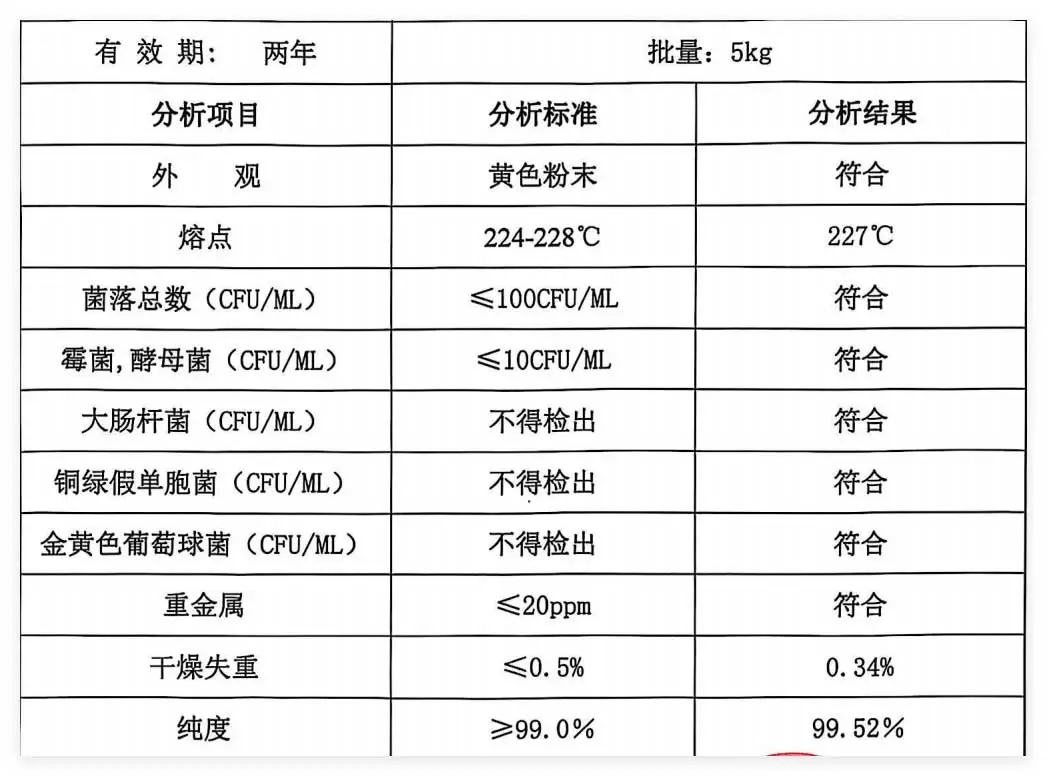
A specification establishes acceptance criteria. A Quaternium-73 certificate of analysis should report the results obtained for an identifiable production batch. If a document contains only specification ranges and no actual batch results, buyers should clarify whether they have received a specification sheet, a sample COA or a genuine lot-specific certificate.
Check Whether the COA Is Batch-Specific
At minimum, the document should allow the buyer to associate the analytical results with a particular lot. The product identification, batch number, specification limits and reported results should be internally consistent.
This becomes particularly important when a sample is submitted for approval. Record its lot number and retain its COA. When the first commercial shipment arrives, the quality team then has a documented reference against which the supplied material can be assessed.
How Is Quaternium-73 Purity Tested?
Quaternium-73 HPLC analysis is relevant when chromatographic purity is used as a release parameter. However, the presence of “HPLC” on a COA should not itself be interpreted as proof of superior quality.
The important questions are what is being measured, how the result is calculated, what acceptance criterion applies and whether the same analytical approach is used consistently.
For buyers comparing several offers, this prevents a common mistake: treating every “98%” or “99%” value as directly comparable simply because the percentages look similar.
Why a Quaternium-73 Sample Should Be Tested Before Bulk Purchase
A Quaternium-73 sample bridges the gap between documents and actual formulation performance. A specification can tell R&D what the supplier intends to deliver, but it cannot demonstrate exactly how the material will behave in the buyer's formulation.
Sample evaluation should therefore go beyond checking whether the powder looks acceptable. Depending on the finished product, the laboratory may need to assess dissolution or pre-dissolution behavior, compatibility with the formulation system, clarity, precipitation, color contribution, processing behavior and stability.
For a new Quaternium-73 bulk purchase, it is also important to confirm that the sample represents the same commercial grade that will be supplied later. A formulation trial has limited qualification value if the subsequent bulk material is produced against a materially different specification.
A sensible record should link the sample supplier, batch number, COA, formulation trial and R&D conclusion. This creates traceability when purchasing moves from laboratory quantities to a commercial order.
How to Evaluate Batch-to-Batch Consistency from a Quaternium-73 Manufacturer
Asking whether a company is a Quaternium-73 manufacturer is useful, but the more important question is whether it can repeatedly deliver material within the specification approved by your quality and formulation teams.
During initial qualification, a representative COA provides a starting point. With repeat purchases, buyers can compare results across several production lots and monitor relevant parameters such as assay, appearance and other agreed quality criteria.
The goal is not to demand identical numerical results from every batch. Manufacturing naturally operates within validated or controlled acceptance ranges. What matters is whether variation remains within the approved specification and whether unexpected deviations are investigated and communicated appropriately.
For a commercial cosmetic manufacturer, this Quaternium-73 batch consistency becomes more valuable as production scales. Reformulating or repeating stability work because a new shipment behaves differently can be much more expensive than a small difference in raw-material price.
What Documents Should a Reliable Quaternium-73 Supplier Provide?
Documentation should answer specific technical or compliance questions. The number of PDFs a supplier sends is not a useful quality metric.
For most initial evaluations, a Quaternium-73 supplier should be able to provide a current specification and representative COA. A Quaternium-73 TDS can provide technical information such as physical characteristics, recommended handling, storage or formulation guidance, while the Quaternium-73 SDS addresses safety, handling and transport information.
Additional documentation will depend on the buyer's quality system and destination market.
The documents should also agree with one another. Product identity, CAS number, grade and major specification information should not inexplicably change between the quotation, specification, COA and technical sheet.
A current, internally consistent and traceable documentation package is more useful than a large collection of certificates that cannot clearly be connected to the Quaternium-73 raw material being purchased.
Packaging, Storage and Shelf Life Matter When Buying Quaternium-73
Because Quaternium-73 is normally used at relatively low levels in finished formulations, packaging should suit both transportation and the way the customer intends to consume the material.
When reviewing Quaternium-73 packaging, ask about net weight per package, primary packaging material, secondary protection where applicable, resealing after opening and recommended Quaternium-73 storage conditions.
For example, 25 kg may be commercially attractive on a price-per-kilogram basis, but smaller individual packages can be more practical for a manufacturer that consumes only a limited quantity per production campaign. Repeatedly opening one large package may complicate warehouse handling and material control.
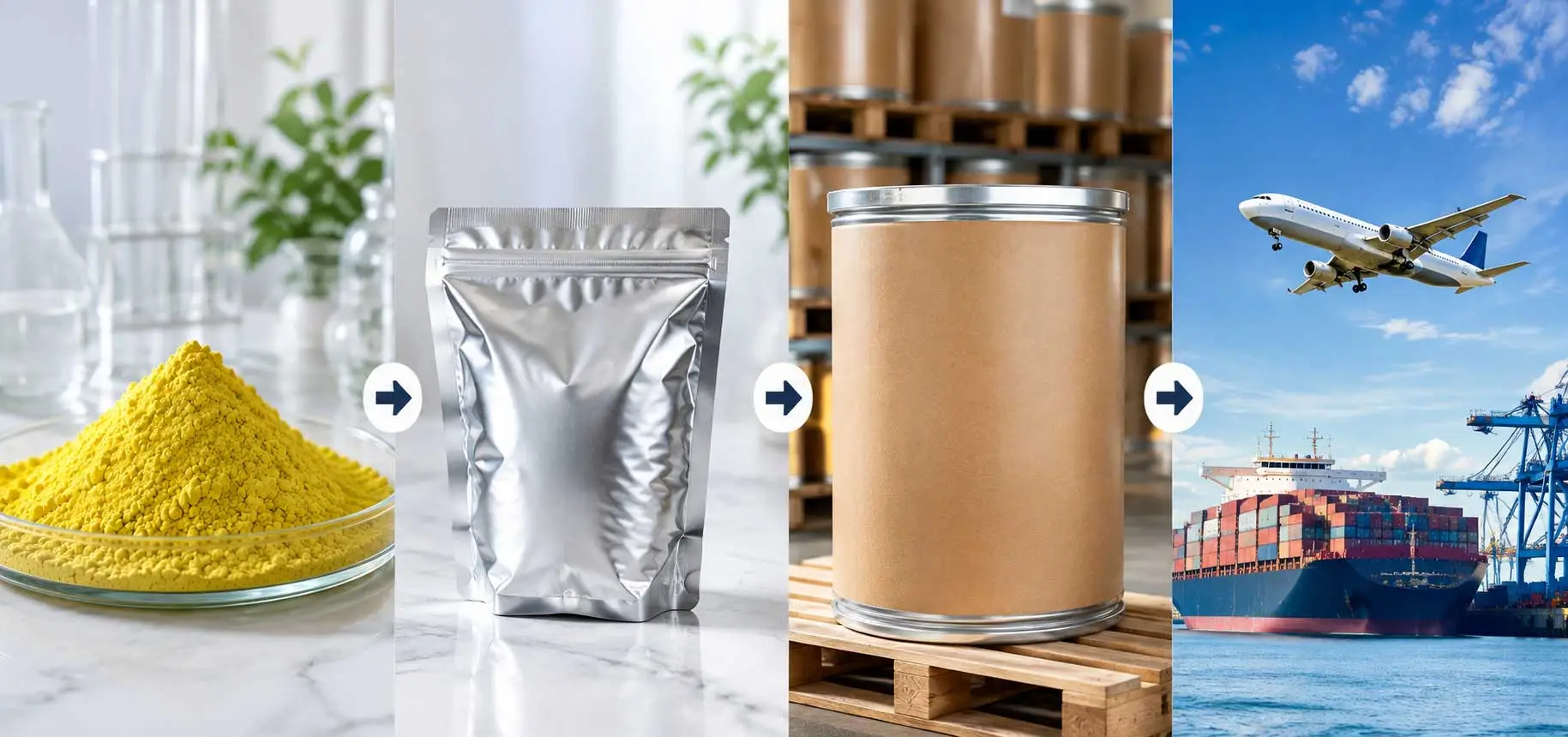
At CHEN LANG BIO TECH, smaller commercial quantities can be supplied in aluminum foil packaging, with larger-order packaging arranged according to quantity and shipment requirements. Exact packing should be confirmed on the quotation and PI so that the purchasing and warehouse teams know what will actually arrive.
Quaternium-73 MOQ, Lead Time and Supply Capacity: Can the Supplier Support Scale-Up?
Supplier qualification should anticipate what happens after the first sample succeeds.
A typical project progresses from sample evaluation to a pilot quantity, first commercial order and eventually repeat purchasing. The Quaternium-73 MOQ that works for R&D may therefore be different from the quantity required when a finished product reaches regular production.
Ask the supplier about sample availability, MOQ, current stock, normal dispatch time and lead time for larger quantities. If your forecast is substantial, discuss it before the first commercial order rather than waiting until inventory becomes urgent.
For routinely stocked quantities, we generally arrange shipment within approximately 2–3 working days after payment, subject to stock confirmation at the time of order. For larger bulk Quaternium-73 requirements, production and delivery schedules should be confirmed according to the requested quantity.
This is more useful than a generic promise of “fast delivery.” A professional Quaternium-73 bulk supplier should distinguish between material currently available from stock and material that requires a new production schedule.
How Should Buyers Compare Quaternium-73 Price per kg?
Quaternium-73 price per kg should be compared only after competing materials have passed an initial technical review. Otherwise, the purchasing department may be comparing different grades, packaging configurations or documentation levels under the same product name.
Several factors can influence Quaternium-73 price, including specification, assay requirements, order quantity, packaging, testing requirements, available stock, shipping terms and destination.
Quotation basis matters as well. A supplier quoting an ex-works or FOB material price should not be directly compared with a delivered quotation without separating freight, customs-related costs and other logistics expenses.
Why the Lowest Quaternium-73 Price May Not Be the Lowest Purchasing Cost
Raw-material cost is only one part of procurement cost.
Suppose a lower-priced source requires repeated incoming testing, causes an unexpected formulation problem or fails to reproduce the material used during initial R&D. The resulting reformulation work, rejected batch, production delay or supplier requalification can quickly exceed the saving on the original Pionin price.
For this reason, professional purchasing teams usually establish technical equivalence first and negotiate commercial terms second.
That does not mean price is unimportant. It means price becomes meaningful only when the buyer knows what is included in the offer.
Quaternium-73 Manufacturer vs Supplier: Which Is Better?
A Quaternium-73 manufacturer vs supplier comparison should not be reduced to the assumption that a factory is always good and a distributor is always bad.
A competent distributor may maintain strong documentation, inventory and technical support, while manufacturer status alone does not guarantee consistent quality. Buyers should verify actual capabilities rather than relying on a company description.
For longer-term sourcing, however, working with a source that has direct control over production, specifications and quality testing can offer advantages in traceability, technical communication and repeat supply.
When evaluating a direct Quaternium-73 manufacturer, ask practical questions. Who controls the specification? Where is batch release testing performed? Can the supplier explain its analytical data? Can the same approved grade be supplied six months later? How are deviations handled?
These answers reveal more about supply reliability than a factory photograph or a “manufacturer” label on a marketplace profile.
Red Flags When Evaluating a Quaternium-73 Supplier
Several inconsistencies deserve investigation during Quaternium-73 supplier qualification. None should automatically lead to rejection without clarification, but unresolved discrepancies increase sourcing risk.
Be cautious when product identity differs between documents; CAS or INCI information cannot be clearly confirmed; a supplier advertises a purity value but cannot explain the analytical basis; the “COA” contains only specification limits instead of actual batch results; the sample and commercial material are offered against different specifications; or packaging and lead-time information changes substantially between quotation and order confirmation.
Extremely low pricing also deserves technical comparison rather than an immediate assumption that the offer is attractive. If one Quaternium-73 supplier price is substantially below otherwise comparable offers, check specification, assay basis, quantity, packaging and trade terms before drawing a conclusion.
The objective is not to eliminate every supplier that needs to answer a question. It is to resolve material inconsistencies before money, formulation time and production capacity are committed.
A Practical Quaternium-73 Supplier Qualification Process
For companies developing a repeatable Quaternium-73 sourcing process, the following sequence keeps technical and commercial decisions in the correct order:
1. Confirm identity. Match Quaternium-73, Pionin where referenced, and CAS 15763-48-1.
2. Request the specification. Establish exactly what grade is being offered.
3. Review a representative COA. Compare actual results with the stated acceptance criteria.
4. Understand critical test methods. Do not compare assay percentages without understanding their analytical basis.
5. Request a representative sample. Make sure it corresponds to the intended commercial grade.
6. Conduct formulation evaluation. Test the material in the actual or representative finished-product system.
7. Complete documentation review. Check COA, specification, TDS, SDS and any documents required by your quality system.
8. Confirm commercial conditions. Establish packaging, MOQ, stock status, lead time and shipping terms.
9. Compare technically qualified quotations. Now Quaternium-73 price per kg can be evaluated on a meaningful basis.
10. Place a controlled commercial order and monitor subsequent lots. Supplier approval should continue through incoming material verification and repeat-order performance.
This process is applicable whether a buyer wants to buy Quaternium-73 for a new formulation or qualify a second source for an established product.
Where to Buy Quaternium-73 for Cosmetic Manufacturing
Companies researching where to buy Quaternium-73 should shortlist suppliers that can support both technical qualification and commercial supply. An online product listing establishes availability; it does not establish suitability for your formulation.
Before requesting a final bulk Quaternium-73 quotation, ask for the current specification, representative COA, sample availability, packaging options, MOQ and lead time. If international shipment is required, confirm the relevant shipping documentation and trade terms at the same stage.
CHEN LANG BIO TECH supplies Quaternium-73 for cosmetic raw-material projects and works with formulation laboratories, cosmetic manufacturers and ingredient distributors on sample evaluation and commercial orders. Buyers looking to buy Pionin, source CAS 15763-48-1 or qualify a new Quaternium-73 raw material supplier can request technical documentation before proceeding with a larger purchase.
Quaternium-73 Supplier FAQ for Raw Material Buyers
What should I look for in a Quaternium-73 supplier?
A reliable Quaternium-73 supplier should be able to confirm material identity, provide a defined specification and representative COA, explain relevant analytical testing, supply a representative sample and maintain the approved quality across commercial batches. Packaging, lead time and price should be evaluated after these technical points.
How can I verify a Quaternium-73 manufacturer?
Do not rely solely on the word “manufacturer.” Evaluate the company's control over production, specification, testing, batch release, traceability and repeat supply. For a Quaternium-73 manufacturer, the ability to explain and reproduce the approved material is more meaningful than general factory claims.
What should a Quaternium-73 COA include?
A useful Quaternium-73 certificate of analysis should identify the material and batch, show applicable specification limits and report actual test results for that lot. Critical results such as purity or assay should be interpreted with the corresponding analytical method where relevant.
Should I request a Quaternium-73 sample before a bulk order?
Yes, particularly for a new formulation or supplier change. The Quaternium-73 sample should represent the commercial grade and be evaluated in the intended formulation before a larger purchase whenever practical.
What affects Quaternium-73 price per kg?
Quaternium-73 price per kg can vary with specification, assay requirements, order quantity, packaging, testing requirements, stock status, trade terms and international freight. Buyers should compare quotations only after confirming that the offered materials are technically comparable.
Where can I buy Quaternium-73 in bulk?
When searching where to buy Quaternium-73, prioritize a Quaternium-73 bulk supplier that can provide specifications, COA information, representative samples and clear commercial terms. For larger requirements, confirm supply capacity and lead time before approving the source for repeat orders.
Final Supplier Decision: Quality First, Price After Technical Qualification
A dependable Quaternium-73 supplier is not defined by the lowest quotation or the longest certificate list. The stronger commercial source is the one that can document the correct material identity, supply against an agreed specification, provide traceable batch data and representative samples, and reproduce the approved quality when orders move from R&D quantities to regular production.
For cosmetic manufacturers, formulation laboratories, OEM/ODM companies and distributors currently evaluating bulk Quaternium-73, CHEN LANG BIO TECH can provide current specification and COA information, sample availability, packaging details, MOQ, lead time and a commercial quotation for review.
Email: admin@chenlangbio.com

Send Inquiry
You may like
Related Industry Knowledge
- Is Shilajit Beneficial For Erectile Dysfunction?
- Sodium Polyglutamate: Superior Hydration in Skincare
- Grape Seed Extract and Collagen: The Perfect Skin Duo
- How Does Ergothioneine Benefit Health?
- Is Camellia Oleifera Seed Extract Good for Anti-aging
- Is Dimethylmethoxy Chromanyl Palmitate Safe
- Do Green Tea Extract Have Caffeine
- Is Sodium Ascorbyl Phosphate Good for Acne
- What Is The Use of Lysozyme
- What Is The Best Way To Take Fisetin?