
L-Theanine vs Ashwagandha: Which Natural Ingredient Is Better for Stress Support Supplements?
2026-07-08 16:30:20
Introduction: L-Theanine vs Ashwagandha — Choosing the Right Natural Ingredient for Modern Stress Support Supplements
The global wellness industry has experienced strong growth in recent years, especially in categories focused on relaxation, mental wellness, cognitive performance, and daily stress management. As consumers increasingly look for natural solutions, supplement manufacturers are exploring a wider range of functional ingredients to create differentiated products that meet evolving market demands.
Among the most widely discussed ingredients are L-Theanine and Ashwagandha powder. Both ingredients have gained significant attention in the dietary supplement industry, but they represent two different approaches to stress support formulations. L-Theanine is a naturally occurring amino acid primarily associated with relaxation and calm focus, while ashwagandha powder is a botanical ingredient traditionally recognized for its adaptogenic properties.
For supplement brands and product developers, the question is not simply “Which ingredient is better?” Instead, the more important consideration is understanding which ingredient fits a specific product concept, target consumer group, and formulation strategy.
A professional comparison of L-Theanine vs Ashwagandha requires evaluating multiple factors, including:
•Source and composition
•Mechanism of action
•Functional benefits
•Formulation compatibility
•Supply reliability
•Quality requirements
For companies developing stress support supplements, choosing the right ingredient partner is equally important as selecting the right active ingredient. Reliable sourcing of bulk L-Theanine powder or Ashwagandha powder requires attention to quality documentation, batch consistency, testing standards, and long-term supply capability.
This article provides a comprehensive comparison of L-Theanine vs Ashwagandha from both scientific and commercial perspectives, helping supplement brands, formulators, and ingredient buyers make informed decisions when developing modern wellness products.
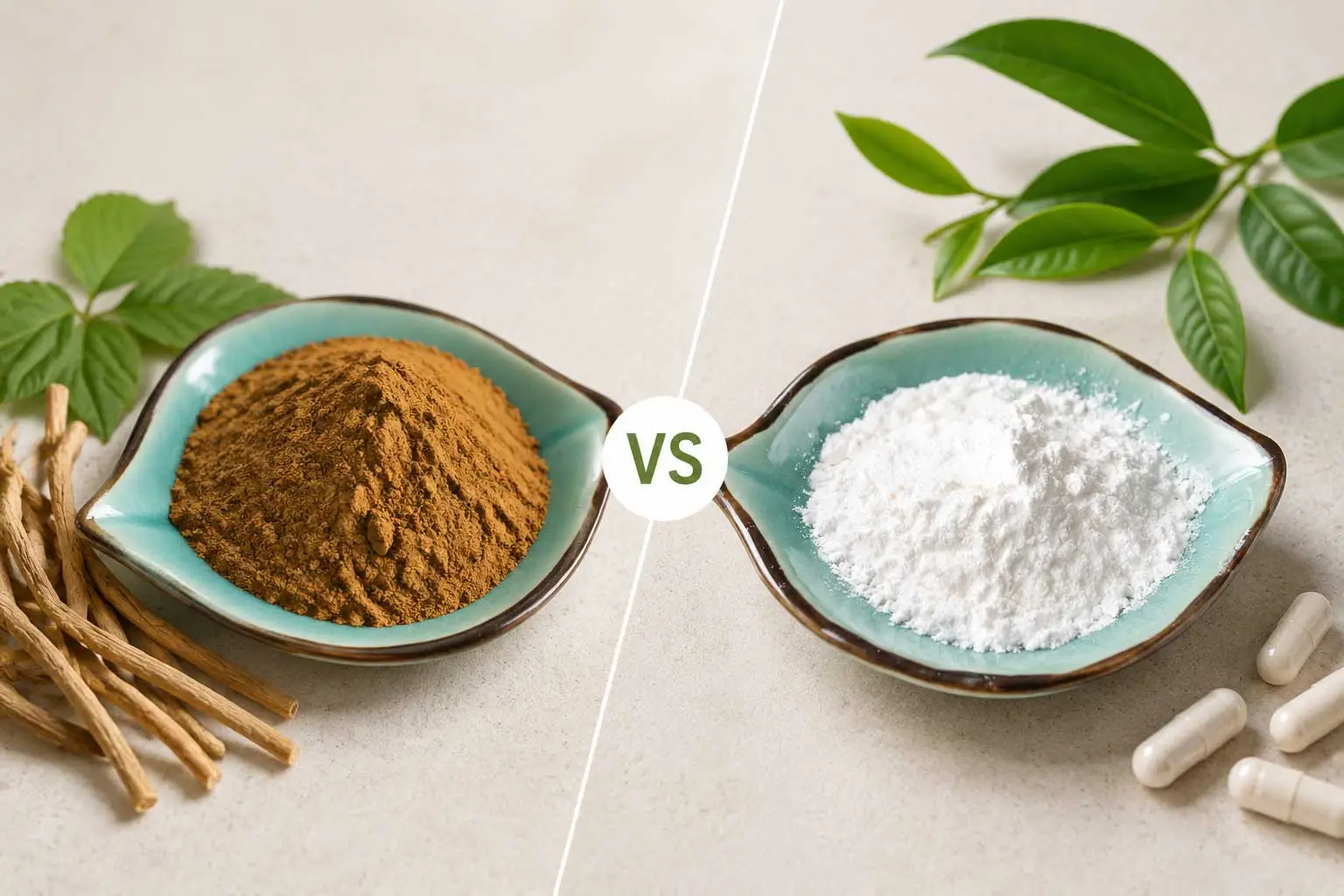
What Are L-Theanine and Ashwagandha Powder? Understanding Two Popular Stress Support Ingredients
The increasing demand for natural wellness products has created significant opportunities for functional ingredients with strong consumer recognition. Both L-Theanine powder and Ashwagandha powder have become popular choices among supplement manufacturers, but their origins, chemical characteristics, and applications are different.
Understanding these differences is essential for brands designing products in competitive categories such as relaxation supplements, cognitive wellness formulas, and functional beverages.
What Is L-Theanine Powder? A Natural Amino Acid Used in Relaxation Supplements
L-Theanine is a naturally occurring amino acid mainly found in green tea (Camellia sinensis). Unlike protein-forming amino acids, L-Theanine has a unique structure and biological profile that has attracted interest in the nutrition and wellness industries.
Today, L-Theanine powder is widely used as a functional ingredient in dietary supplements because of its compatibility with various product formats and its ability to support relaxation-focused positioning.
Common applications of L-Theanine supplement ingredient solutions include:
•Relaxation capsules
•Stress support formulas
•Cognitive support products
•Nootropic supplements
•Functional beverages
•Combination wellness formulas
One reason many brands choose L-Theanine powder is its formulation flexibility. Compared with many botanical extracts, L-Theanine typically offers a clean sensory profile and can be incorporated into different delivery systems.
For manufacturers purchasing bulk L-Theanine powder, important considerations often include:
•Purity level
•Manufacturing consistency
•Solubility characteristics
•Documentation availability
•Supply stability
A reliable L-Theanine powder supplier should provide comprehensive technical information, including product specifications, COA documentation, and analytical testing support to help brands meet their internal quality requirements.
As consumer demand continues to grow for natural relaxation and cognitive wellness products, L-Theanine has become an important ingredient option for companies developing next-generation dietary supplements.
What Is Ashwagandha Powder? Understanding This Adaptogenic Botanical Ingredient
Ashwagandha powder is derived from the roots of Withania somnifera, a botanical ingredient traditionally used in Ayurvedic practices and increasingly incorporated into modern wellness formulations.
Unlike L-Theanine, which is classified as an amino acid, Ashwagandha is a botanical extract known for naturally occurring compounds called withanolides. These active components are often considered important quality indicators when evaluating Ashwagandha ingredients.
In the modern supplement market, ashwagandha powder is commonly used in products positioned around:
•Stress support
•Herbal wellness
•Healthy lifestyle products
•Adaptogenic formulations
•Daily balance supplements
For supplement manufacturers, sourcing high-quality Ashwagandha powder requires careful evaluation of:
•Botanical identification
•Extraction method
•Standardization level
•Withanolide content
•Quality testing
A professional ashwagandha supplier should be able to provide detailed specifications and documentation to support product development and regulatory review.
Compared with amino acid-based ingredients such as L-Theanine, Ashwagandha offers a different market positioning based on traditional botanical recognition and growing consumer interest in adaptogenic supplements.
L-Theanine vs Ashwagandha: Differences in Source, Composition, and Ingredient Characteristics
When comparing L-Theanine vs Ashwagandha, the first major difference is their fundamental classification. Although both ingredients are widely used in stress support products, they belong to different ingredient categories and provide different formulation opportunities.
For supplement brands, understanding these distinctions helps determine which ingredient better matches the desired product positioning.
L-Theanine vs Ashwagandha: Amino Acid vs Botanical Extract
The basic comparison between these two ingredients can be summarized as follows:
|
Feature |
L-Theanine |
Ashwagandha |
|
Ingredient Category |
Amino acid |
Botanical extract |
|
Natural Source |
Green tea leaves |
Withania somnifera root |
|
Main Components |
L-Theanine |
Withanolides |
|
Common Applications |
Relaxation, calm focus, cognitive formulas |
Herbal wellness, adaptogenic supplements |
|
Typical Formats |
Capsules, tablets, beverages, powders |
Capsules, powders, botanical blends |
From a formulation perspective, L-Theanine powder is often selected when brands want an ingredient associated with relaxation and cognitive balance. On the other hand, Ashwagandha powder is frequently chosen for products emphasizing botanical wellness and traditional herbal positioning.
For ingredient buyers, the choice between these two ingredients depends largely on:
•Target consumer expectations
•Product category
•Marketing positioning
•Formula design
•Regional market preferences
Rather than viewing L-Theanine vs Ashwagandha as direct competitors, many experienced formulators evaluate them as different tools for different product concepts.
Comparing L-Theanine and Ashwagandha Active Compounds
The difference between these ingredients becomes clearer when examining their active components.
♦L-Theanine Active Characteristics
The primary compound in L-Theanine powder is L-Theanine itself, a unique amino acid studied for its relationship with relaxation-related pathways. Its popularity in supplement formulations comes from its ability to support products designed around:
•Calm focus
•Mental relaxation
•Cognitive wellness
♦Ashwagandha Active Characteristics
The key compounds in Ashwagandha powder are withanolides, naturally occurring plant compounds commonly used as quality markers for standardized botanical ingredients.
For supplement manufacturers, withanolide content is often an important specification when selecting an sshwagandha supplier.
These different active profiles explain why the two ingredients are used in different formulation strategies:
•L-Theanine is often associated with amino acid-based wellness products.
•Ashwagandha is commonly positioned within botanical and adaptogenic supplement categories.
Understanding these differences allows brands to select ingredients based on scientific characteristics rather than simply following market trends.
L-Theanine Mechanism of Action vs Ashwagandha Adaptogenic Properties
How L-Theanine Supports Relaxation and Calm Focus
Understanding the L-Theanine mechanism of action helps explain why this ingredient has become popular in modern relaxation and cognitive support formulas. Research has explored how L-Theanine may interact with pathways related to neurotransmitter activity and brain relaxation responses. It has been studied in relation to compounds involved in maintaining a balanced mental state, including GABA-related pathways.
Another area of interest is L-Theanine’s relationship with alpha brain wave activity, which is commonly associated with a relaxed but attentive state.
This unique positioning makes L-Theanine supplement ingredient solutions attractive for brands developing products where consumers want relaxation support without compromising daytime focus.
Common applications include:
•Focus supplements
•Productivity formulas
•Stress support products
•Functional beverages
For formulators, this creates opportunities to develop products that combine relaxation positioning with cognitive wellness benefits.
How Ashwagandha Supports Stress Response and Wellness Formulas
Ashwagandha is widely recognized as an adaptogenic botanical ingredient. In supplement development, adaptogens are commonly positioned around supporting the body’s normal response to everyday stress.
The functional positioning of Ashwagandha powder is closely related to its botanical profile and withanolide content.
Modern supplement brands often incorporate Ashwagandha into:
•Herbal wellness formulas
•Stress support supplements
•Botanical blends
•Healthy aging products
When selecting an Ashwagandha powder supplier, manufacturers typically evaluate:
•Extract ratio
•Standardization
•Botanical authenticity
•Testing documentation
Compared with L-Theanine, Ashwagandha offers a stronger botanical and traditional wellness identity, making it attractive for brands targeting consumers who prefer plant-based herbal solutions.
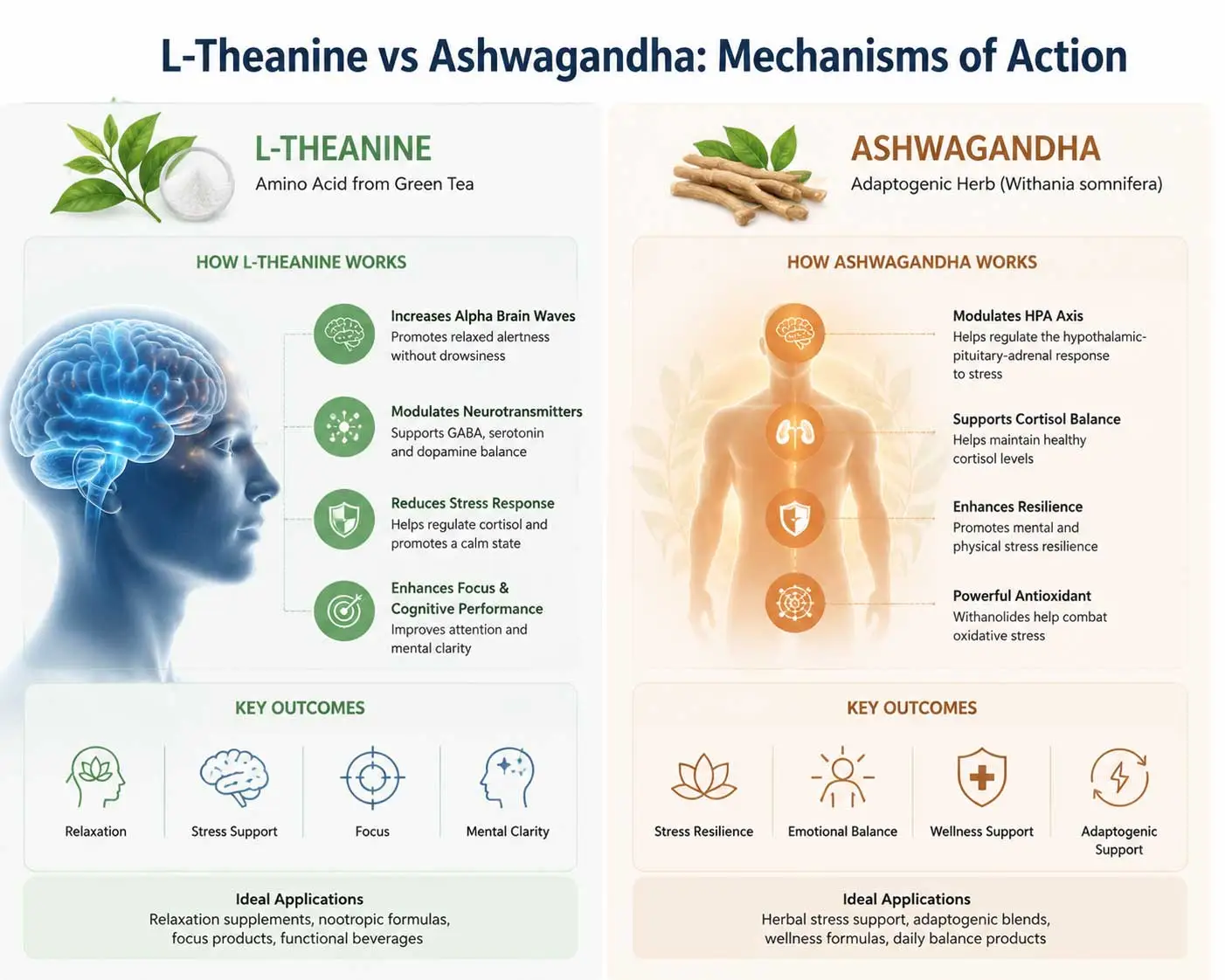
L-Theanine Benefits vs Ashwagandha Benefits for Stress Support Supplements
L-Theanine Benefits in Relaxation and Cognitive Support Products
When evaluating L-Theanine benefits for modern supplement formulations, one of the most important factors is its unique positioning between relaxation support and cognitive wellness.
Unlike many traditional relaxation ingredients that are primarily associated with nighttime products, L-Theanine is frequently selected for formulas designed to support calm focus and mental balance during daily activities.
This positioning has created strong interest among brands developing:
•Stress support supplements
•Nootropic formulas
•Functional beverages
•Focus and productivity products
•Daily wellness supplements
From a formulation perspective, L-Theanine powder offers several advantages:
1. Suitable for Relaxation-Focused Products
Many consumers are looking for natural ingredients that support a sense of calm while maintaining normal daytime function. This has increased demand for L-Theanine for stress support products.
Supplement brands often incorporate L-Theanine into formulas designed for:
•Workplace wellness
•Academic performance support
•Lifestyle stress management
•General relaxation products
2. Compatible With Cognitive Support Formulas
Another important advantage of L-Theanine supplement ingredient solutions is their application in cognitive wellness products. L-Theanine is often combined with other functional compounds, especially in formulas targeting:
•Focus
•Attention
•Mental performance
This versatility allows manufacturers to create differentiated products rather than competing only in traditional relaxation categories.
3. Flexible Supplement Applications
Because of its formulation characteristics, L-Theanine powder can be used in multiple delivery systems, including:
•Capsules
•Tablets
•Powder blends
•Gummies
•Functional beverages
For brands purchasing bulk L-Theanine powder, ingredient consistency and technical support are essential factors when scaling from product development to commercial production.
Ashwagandha Benefits in Herbal Stress Support Formulations
The popularity of ashwagandha powder has grown significantly as consumers increasingly seek plant-based wellness solutions. Compared with amino acid ingredients such as L-Theanine, Ashwagandha offers a stronger botanical identity and is often positioned within the adaptogenic supplement category.
Common ashwagandha benefits discussed in the supplement industry include its application in products designed for:
•Stress support
•Daily wellness
•Herbal balance
•Healthy lifestyle formulas
For brands developing botanical supplements, Ashwagandha provides strong consumer recognition because of its traditional history and modern popularity.
Ashwagandha Powder Applications in Modern Supplements
A professional Ashwagandha supplier typically supports customers developing products such as:
•Herbal capsules
•Botanical blends
•Functional powders
•Wellness formulas
Important quality considerations for Ashwagandha powder include:
•Plant source
•Extraction process
•Active compound content
•Batch consistency
•Testing documentation
For supplement manufacturers, selecting between L-Theanine vs Ashwagandha often depends on whether the final product is positioned as a cognitive relaxation formula or a botanical wellness solution.
L-Theanine vs Ashwagandha for Supplement Formulations: Which Ingredient Fits Different Products?
For supplement formulators, choosing the right ingredient requires looking beyond general consumer interest. The most suitable ingredient depends on the product concept, delivery format, target audience, and desired market positioning.
Both L-Theanine powder and ashwagandha powder have strong commercial potential, but they serve different formulation strategies.
L-Theanine Powder Applications in Dietary Supplements
The application range of L-Theanine powder continues to expand as brands develop more sophisticated wellness products. Typical applications include:
♦Relaxation Supplements
L-Theanine is commonly selected for formulas targeting:
•Calmness
•Relaxation
•Stress support
These products are often positioned for consumers who want natural daily wellness solutions.
♦Nootropic and Focus Products
One of the unique advantages of L-Theanine supplement ingredient solutions is their compatibility with cognitive wellness products.
Brands developing nootropic formulas often evaluate L-Theanine because it supports a balanced positioning between:
•Mental focus
•Relaxation
•Productivity
♦Functional Beverages
The growing functional beverage market has created additional opportunities for bulk L-Theanine powder.
Applications include:
•Ready-to-drink wellness beverages
•Functional teas
•Cognitive drinks
For beverage manufacturers, factors such as solubility, stability, and sensory characteristics are important when selecting a supplier.
Ashwagandha Powder Applications in Functional Wellness Products
Ashwagandha powder is widely used in botanical-based supplement categories. Common applications include:
•Herbal stress support formulas
•Plant-based wellness products
•Adaptogenic blends
•Natural lifestyle supplements
For these applications, manufacturers usually focus on:
•Botanical authenticity
•Standardization
•Extract quality
•Supply consistency
A reliable Ashwagandha supplier should provide complete documentation to support product development and quality evaluation.
Can L-Theanine and Ashwagandha Be Combined in One Formula?
Although many discussions focus on L-Theanine vs Ashwagandha, these ingredients do not necessarily need to be viewed as competitors. Some supplement developers explore combinations of L-Theanine and Ashwagandha because they represent different ingredient categories:
•L-Theanine: amino acid-based relaxation support
•Ashwagandha: botanical adaptogenic positioning
A combination formula may allow brands to create products with broader market positioning.
For formulators considering a L-Theanine Ashwagandha combination, important factors include:
•Ingredient ratio
•Target consumer
•Product claims strategy
•Regulatory requirements
•Stability testing
The best formulation approach depends on the final product objective and market strategy.
Solubility, Stability, and Quality Considerations When Buying L-Theanine and Ashwagandha Powder
For professional ingredient buyers, quality and technical performance are critical factors when selecting functional ingredients. A successful supplement product depends not only on marketing appeal but also on reliable raw material performance.
L-Theanine Powder Solubility and Formulation Considerations
One reason L-Theanine powder is widely used in supplement development is its favorable formulation characteristics.
Important considerations include:
►Solubility
L-Theanine’s water compatibility makes it suitable for:
•Powder drinks
•Liquid supplements
•Functional beverages
This is especially valuable for brands developing convenient wellness products.
►Stability
When purchasing bulk L-Theanine powder, manufacturers should evaluate:
•Storage requirements
•Packaging protection
•Shelf-life information
•Batch consistency
Professional suppliers typically provide:
•Specification sheets
•COA documentation
•Analytical testing reports
These documents help brands maintain quality control throughout the manufacturing process.
Ashwagandha Powder Standardization and Quality Requirements
For botanical ingredients, quality evaluation requires additional considerations.
When sourcing Ashwagandha powder, buyers commonly review:
•Botanical identification
•Active compound levels
•Extraction method
•Heavy metal testing
•Microbiological analysis
For standardized Ashwagandha products, withanolide content is often an important quality indicator. Working with an experienced sshwagandha supplier helps brands reduce sourcing risks and maintain product consistency.
How to Choose Between L-Theanine Powder and Ashwagandha Powder for Your Product
Selecting between L-Theanine vs Ashwagandha depends on the intended product positioning.
A simple comparison:
|
Product Goal |
Recommended Ingredient Direction |
|
Calm focus supplements |
L-Theanine |
|
Nootropic formulas |
L-Theanine |
|
Functional beverages |
L-Theanine |
|
Botanical wellness products |
Ashwagandha |
|
Herbal stress support formulas |
Ashwagandha |
|
Multi-ingredient wellness blends |
Both options |
Choosing Based on Consumer Positioning
Brands should consider:
If the product focuses on cognitive wellness:
L-Theanine powder may be more suitable because of its association with:
•Calm focus
•Mental balance
•Relaxation support
If the product focuses on botanical wellness:
Ashwagandha powder may better match consumers seeking:
•Herbal ingredients
•Traditional botanical solutions
•Adaptogenic products
Choosing Based on Supply Requirements
From a procurement perspective, brands should evaluate:
•Manufacturing capability
•Quality documentation
•MOQ flexibility
•Packaging options
•International shipping experience
A professional L-Theanine supplier or ashwagandha supplier should support customers with reliable information throughout product development.
Where to Buy Bulk L-Theanine and Ashwagandha Powder From a Reliable Supplier
For supplement brands and distributors, selecting a dependable ingredient partner is an important part of building long-term product success. When purchasing bulk L-Theanine powder or bulk ashwagandha powder, buyers typically evaluate several factors.
What Supplement Brands Should Look for in a Functional Ingredient Supplier
A qualified supplier should provide:
►Quality Documentation
Including:
•COA
•Product specifications
•Analytical testing
•Safety documentation
►Consistent Manufacturing Capability
Reliable suppliers should demonstrate:
•Stable production
•Batch consistency
•Quality management systems
•Technical support capability
►Flexible Supply Solutions
Different customers have different requirements.
Start-up brands may need smaller quantities for product development, while established manufacturers may require larger-scale supply.
Therefore, flexibility in:
•MOQ
•Packaging
•Delivery schedules
is an important advantage.
CHEN LANG BIO TECH provides functional ingredient solutions for global supplement companies, including L-Theanine powder and other wellness ingredients. Our team supports customers with technical documentation, quality information, and supply solutions based on their product development needs.
For companies evaluating specifications, requesting COA documents, or discussing bulk ingredient requirements, our ingredient team can provide further information:
Email: admin@chenlangbio.com
Website: www.chenlangbio.com
WhatsApp: +86-17782478823
Bulk Packaging, MOQ, and Supply Support for Global Buyers
For international buyers, practical supply details are often an important part of ingredient selection.
Typical considerations include:
•Packaging requirements
•Minimum order quantity
•Shipping method
•Documentation support
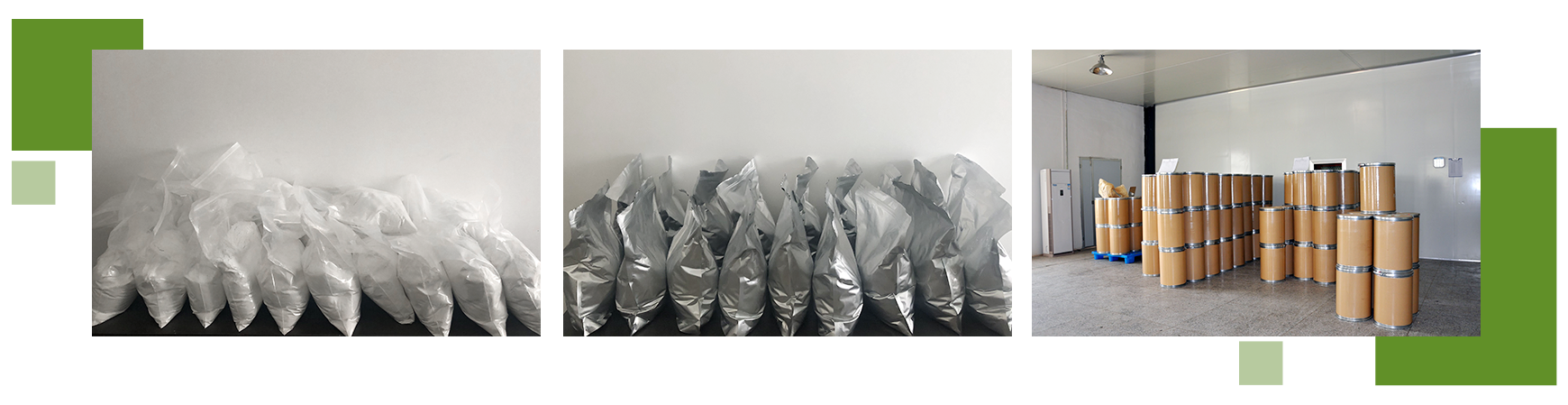
For bulk L-Theanine powder and bulk ashwagandha powder, professional packaging helps maintain ingredient quality during storage and transportation.
Common packaging options include:
•1 kg aluminum foil bags
•25 kg fiber drums
Before commercial purchasing, buyers usually request:
•COA
•Specification sheet
•Sample evaluation
•Quotation
A reliable ingredient partner helps brands move efficiently from formulation development to commercial production.
Frequently Asked Questions About L-Theanine vs Ashwagandha
Is L-Theanine better than Ashwagandha for stress support?
Both ingredients have unique characteristics. L-Theanine is commonly used in relaxation and cognitive support products, while Ashwagandha powder is often selected for botanical wellness formulations. The better choice depends on product positioning and formulation goals.
Can L-Theanine and Ashwagandha be combined?
Yes, some supplement developers explore combining both ingredients because they represent different functional categories. Final formulation decisions should consider dosage, stability, and regulatory requirements.
What is the difference between L-Theanine powder and Ashwagandha powder?
L-Theanine powder is an amino acid ingredient derived primarily from green tea, while Ashwagandha powder is a botanical ingredient derived from Withania somnifera.
Which ingredient is better for relaxation supplements?
For products focused on calm focus and cognitive wellness, brands often consider L-Theanine supplement ingredient solutions. For herbal wellness positioning, Ashwagandha may be preferred.
Where can I buy bulk L-Theanine powder?
Companies looking to source bulk L-Theanine powder should work with an experienced L-Theanine supplier that provides quality documentation, stable supply, and technical support.
Conclusion: Choosing the Right Natural Ingredient for Your Stress Support Supplement Formula
The comparison between L-Theanine vs Ashwagandha shows that both ingredients offer valuable opportunities for modern wellness product development. L-Theanine powder is widely used in relaxation, focus, and cognitive support formulas due to its amino acid profile and formulation flexibility.
Ashwagandha powder provides a strong botanical positioning for herbal wellness and adaptogenic supplement categories.
For supplement brands, the best ingredient choice depends on the desired product concept, target market, and formulation strategy.
Whether sourcing bulk L-Theanine powder, bulk Ashwagandha powder, or developing a combination formula, working with a reliable ingredient supplier helps ensure consistent quality and long-term supply stability.
CHEN LANG BIO TECH supports global partners with functional ingredient solutions, technical documentation, and professional supply services for modern dietary supplement development.

Send Inquiry
Related Industry Knowledge
- Ergothioneine vs Resveratrol: Which Antioxidant Offers Better Value for Supplement Manufacturers?
- Tadalafil Powder vs Vardenafil API: Industrial and Research Comparison
- How Does High-Purity Silymarin in Milk Thistle Extract Support Liver Health?
- What are the Benefits of Ascorbyl Tetraisopalmitate in Skincare?
- What is D-Luciferin Potassium Salt Used for?
- Everything You Need to Know About Sesamin Powder
- Is 4-Butylresorcinol Better Than Hydroquinone
- How Old Age Suit Use Aloe Vera Gel Freeze-Dried Powder
- What Benefits of the Acanthopanax Senticosus Root Extract Eleutheroside
- What is Different Between Low Molecular and High Molecular Hyaluronic Acid Powder