
Is Tranexamic Acid the Same as Niacinamide? Key Differences for Cosmetic Formulations
2026-02-04 16:18:51
Tranexamic acid and niacinamide are not the same cosmetic ingredient, and they do not serve identical roles in skin care formulations. While both ingredients are commonly used in products positioned for improving the appearance of uneven skin tone, their mechanisms of action, formulation functions, and best-fit applications differ significantly. Understanding these differences is essential for cosmetic brands and ingredient buyers making formulation or sourcing decisions.
In cosmetic applications, tranexamic acid vs niacinamide is best understood as a comparison between a targeted tone-correcting active and a multifunctional barrier-supportive ingredient. Tranexamic acid is primarily used to address the appearance of discoloration linked to inflammatory and environmental triggers, whereas niacinamide is valued for its broad cosmetic benefits, including barrier support, oil balance appearance, and overall skin condition improvement.
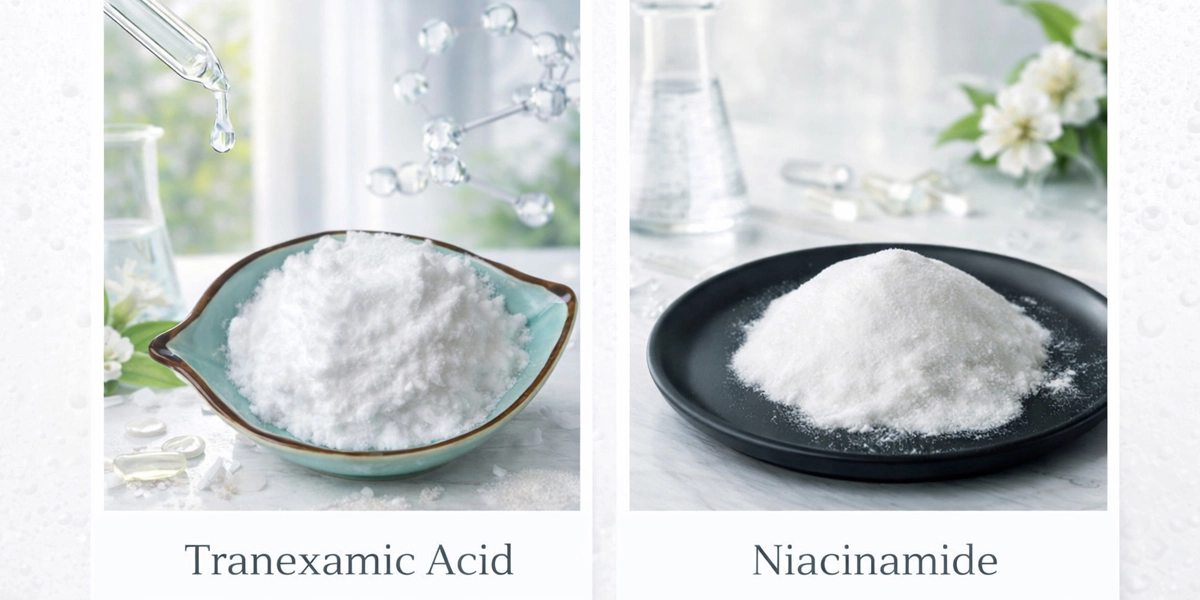
From a formulation perspective, are tranexamic acid and niacinamide the same is a question that often arises during product development, particularly in brightening or tone-evening concepts. In practice, these ingredients are not interchangeable. Replacing one with the other may alter both the performance profile and positioning of the finished product. However, when properly formulated, tranexamic acid and niacinamide can be used together to support complementary cosmetic functions within a single formulation.
For ingredient buyers, the distinction between these two actives extends beyond functional claims. Differences in solubility behavior, pH compatibility, typical use levels, and sourcing requirements all influence formulation stability and scalability. Selecting a qualified cosmetic ingredient supplier with consistent specifications and complete documentation is therefore critical for both tranexamic acid and niacinamide.
This article provides a formulation-focused comparison of tranexamic acid vs niacinamide, examining their cosmetic roles, mechanisms, compatibility, and sourcing considerations. The goal is to support cosmetic brands, formulators, and procurement teams in making informed decisions when evaluating whether to use tranexamic acid, niacinamide, or a combination of both in cosmetic formulations.
Are Tranexamic Acid and Niacinamide the Same?
No, tranexamic acid and niacinamide are not the same cosmetic ingredient, although they both offer benefits for improving the appearance of uneven skin tone. Their primary roles in cosmetic formulations differ: tranexamic acid is used for targeting discoloration caused by inflammatory and environmental factors, while niacinamide functions as a multi-purpose active for barrier support, skin texture improvement, and overall tone-evening.
Can tranexamic acid replace niacinamide? In most cases, they are not interchangeable. Tranexamic acid is more specialized in addressing post-inflammatory hyperpigmentation (PIH) and discoloration, while niacinamide works broadly across multiple skin concerns, including texture, oil production, and redness. However, these two actives can complement each other when used together in formulations, particularly in brightening or multi-functional skincare products.
When deciding whether to use tranexamic acid or niacinamide, formulators and ingredient buyers should consider the specific product's target consumer, desired benefits, and compatibility with other ingredients. In some formulations, both ingredients may be used synergistically to achieve a well-rounded, tone-evening, and barrier-supporting product.
What Is Tranexamic Acid in Cosmetics?
Tranexamic acid is a synthetic derivative of the amino acid lysine and is widely used in cosmetic formulations for improving the appearance of uneven skin tone. As an active ingredient, it works primarily by modulating the signaling pathways involved in melanin production, rather than directly inhibiting melanin synthesis. This makes tranexamic acid a suitable ingredient for addressing discoloration linked to inflammation, acne scarring, and UV exposure. It is typically used in cosmetic-grade formulas, designed for daily or long-term use, where gradual tone correction and skin appearance improvement are key goals.
Tranexamic acid for skin care is often positioned as an ingredient that helps even out skin tone, especially in the treatment of post-inflammatory hyperpigmentation (PIH), dark spots, and areas of discoloration caused by environmental factors. It is a popular choice for brightening serums, spot treatments, and other formulations designed to address uneven pigmentation.
Primary Use Cases
In cosmetics, tranexamic acid is particularly effective for treating hyperpigmentation conditions that arise from factors like acne, sun exposure, or hormonal changes. Unlike traditional lightening agents, tranexamic acid does not rely on aggressive depigmenting actions. Instead, it targets the underlying biological pathways that contribute to melanin overproduction, making it a gentler alternative for consumers looking for long-term, non-invasive tone-correction.
Tranexamic acid for hyperpigmentation appearance is a preferred choice in high-end skin care lines targeting mature skin, sensitive skin, or hyperpigmented skin types. By integrating it into formulations with ingredients like niacinamide, vitamin C, or alpha-arbutin, formulators can develop synergistic products that improve skin tone, while maintaining overall skin health.
What Is Niacinamide in Cosmetics?
Niacinamide, also known as vitamin B3, is a water-soluble vitamin that plays a vital role in maintaining the skin's natural barrier function. In cosmetic formulations, niacinamide is renowned for its versatile skin care benefits. It is a key ingredient in many formulations targeting a variety of skin concerns, including uneven skin tone, redness, oil balance, and fine lines. As a multi-functional active, niacinamide works at the cellular level to improve overall skin appearance, making it a staple in barrier-repair, brightening, and anti-aging products.
Niacinamide’s cosmetic-grade formulation is widely used in both mass-market and high-end skin care products, and it can be included in various forms, such as serums, moisturizers, and masks. The ingredient’s gentle action and compatibility with many other actives make it suitable for daily use, even for sensitive skin types.
Primary Use Cases
Niacinamide is best known for its ability to improve the appearance of uneven skin tone, especially in cases of redness, blemishes, and hyperpigmentation. Unlike other actives that directly target melanin production, niacinamide works by inhibiting the transfer of melanin to skin cells, thus helping to brighten the skin's surface over time. In addition to its brightening effects, niacinamide plays a critical role in strengthening the skin's protective barrier, reducing moisture loss, and improving overall skin texture.
Commonly found in products aimed at oilier skin types, niacinamide helps to regulate sebum production and can reduce the appearance of enlarged pores. It also supports skin health by reducing inflammation, making it an excellent choice for people with acne-prone or sensitive skin.
Niacinamide for skin care is used to treat a range of cosmetic concerns from mild discoloration to more complex skin health issues. It is often paired with tranexamic acid, vitamin C, or retinoids in formulations to create multi-functional products that support both skin barrier health and aesthetic improvements.
Key Differences for Cosmetic Formulations
Function & Mechanism
|
Feature |
Tranexamic Acid |
Niacinamide |
|
Mechanism of Action |
Modulates melanin signaling pathways; targets inflammation-driven pigmentation |
Inhibits melanin transfer to skin cells; strengthens skin barrier |
|
Primary Function |
Tone correction and discoloration reduction |
Skin texture improvement, barrier support, and overall skin health |
|
Key Use Cases |
Post-inflammatory hyperpigmentation (PIH), dark spots, uneven tone |
Redness, oil balance, enlarged pores, uneven texture, anti-aging |
Tranexamic Acid works by influencing upstream signaling pathways involved in melanin overproduction, particularly in response to inflammation. It does not directly inhibit melanin production but helps to modulate the overactive pathways that lead to hyperpigmentation. This makes tranexamic acid ideal for products targeting post-inflammatory hyperpigmentation (PIH) or dark spots caused by acne or sun exposure.
Niacinamide, on the other hand, works at the cellular level to prevent melanin from transferring to the skin surface. It improves overall skin texture and enhances the skin barrier, making it suitable for a wide range of skin concerns, including redness, oil control, pore appearance, and general skin health. It’s often included in products for daily use due to its mild action and wide-ranging benefits.
Best-Fit Product Concepts
|
Product Type |
Tranexamic Acid |
Niacinamide |
|
Best for |
Brightening serums, spot treatments, toners for uneven tone |
Barrier repair creams, anti-aging serums, oil control lotions |
|
Ideal for Skin Types |
Pigmented or sensitive skin prone to discoloration |
Oily, acne-prone, sensitive, or dry skin |
|
Usage Frequency |
Often used in targeted treatments for dark spots and PIH |
Typically used in daily skin care routines |
•Tranexamic acid is often used in products that focus on specific tone correction (e.g., dark spots, post-acne marks) and is particularly effective in brightening serums and spot treatments. It is a targeted active that is applied only where discoloration exists and is generally not included in daily moisturizers.
•Niacinamide, on the other hand, is a multi-functional active that works well in a variety of products, from oil control lotions to anti-aging serums. It’s suitable for use in daily routines, providing cumulative benefits over time. It’s often found in barrier-repair products as well.
Compatibility & Formulation Behavior
|
Compatibility Factor |
Tranexamic Acid |
Niacinamide |
|
Solubility |
Water-soluble, stable in aqueous formulations |
Water-soluble, highly stable in various formulations |
|
pH Compatibility |
Best in slightly acidic to neutral pH (4–7) |
Best in slightly acidic to neutral pH (5–7) |
|
Compatible With |
Works well in water-based serums and toners |
Highly compatible with most skin care actives |
•Tranexamic acid is generally soluble in water and performs best in slightly acidic to neutral pH formulations (pH 4–7). When incorporated in serums or toners, it remains stable and effective over time, provided the pH range is maintained. It’s important to test compatibility with other actives to avoid precipitation in sensitive formulations.
•Niacinamide is also water-soluble and highly compatible with other actives. It’s often used in combination with ingredients like vitamin C, hyaluronic acid, and alpha-arbutin. Niacinamide works effectively across a variety of pH levels and can be used in both daily moisturizers and serums. It is widely recognized for its compatibility with sensitive skin formulations.
Typical Use Levels and pH Windows
|
Active Ingredient |
Tranexamic Acid |
Niacinamide |
|
Typical Use Level |
1–5% (depending on product type and target efficacy) |
2–5% (common range in most skin care formulations) |
|
Formulation pH Range |
Slightly acidic to neutral pH (4.5–7) |
Slightly acidic to neutral pH (5–7) |
•Tranexamic acid is typically used at 1–5% in targeted treatments, depending on the desired strength of the tone-correcting effect. While effective at lower concentrations, higher levels may be required for products targeting more stubborn hyperpigmentation.
•Niacinamide is commonly used in concentrations between 2–5% in most formulations. It is effective at these levels in a wide variety of product types, including moisturizers, serums, and anti-aging products.
Can You Use Tranexamic Acid with Niacinamide
Yes, tranexamic acid and niacinamide can be used together in cosmetic formulations, and in many cases, they work synergistically to address multiple skin concerns. Tranexamic acid, with its targeted approach to treating discoloration and hyperpigmentation, works well when combined with niacinamide, which focuses on barrier repair, evening skin tone, and oil control. Together, they can create a multi-functional formula that not only improves the appearance of dark spots and uneven tone but also supports overall skin health.
The combination of these two actives is particularly effective in products aimed at multi-step brightening regimes or high-performance serums that target both skin texture improvement and discoloration reduction. Niacinamide's ability to reduce redness and support barrier function complements tranexamic acid's role in toning and brightening the skin, resulting in a gentler yet effective solution for consumers with sensitive or pigmentation-prone skin.
Formulation Tips to Maximize Benefits
While combining tranexamic acid and niacinamide in formulations can be highly effective, formulators should be mindful of the following tips to maximize their benefits and ensure stability:
Use proper pH balance: Both ingredients perform best in a slightly acidic to neutral pH range (pH 4.5–7). Ensure the formulation maintains an ideal pH for both actives to be stable and effective.
Consider layering in serums: In serum formulations, tranexamic acid can be used as a targeted treatment for spots and discoloration, while niacinamide works as a multi-functional brightening and barrier-repair ingredient. Layering these two ingredients allows them to work more efficiently without compromising their individual functions.
Ensure solubility: Both ingredients are water-soluble, but ensure the formulation process facilitates their complete dissolution to prevent any precipitation or formulation instability.
While the combination of tranexamic acid and niacinamide is generally safe and effective for most skin types, formulators should exercise caution when using high concentrations of either ingredient in highly sensitive skin formulations. In such cases, starting with lower concentrations of both actives and gradually increasing usage is advisable. Patch testing before full application is recommended for sensitive or reactive skin types.
In terms of compatibility, tranexamic acid should be carefully blended into aqueous formulations, and niacinamide should be added in a way that ensures it retains its stability, especially in more complex, multi-active systems.
Which One Should a Brand Choose?
When to choose tranexamic acid?
Tranexamic acid is the optimal choice for brands and formulators who are primarily focused on improving the appearance of discoloration and hyperpigmentation. It is especially effective for targeting post-inflammatory hyperpigmentation (PIH), dark spots, and uneven skin tone caused by external stressors such as sun exposure, acne, and environmental pollution. For formulations intended to even out skin tone and address visible discoloration, tranexamic acid is a highly specialized active ingredient.
Brands looking to develop high-performance brightening serums or targeted spot treatments for consumers with pigmented skin or uneven tone will find tranexamic acid to be an essential ingredient. The ingredient's gentle but effective approach to skin tone correction is especially suited for products in the anti-pigmentation or skin recovery categories.
•Ideal for: Brightening serums, dark spot correctors, post-acne treatment products
•Best for skin types: Hyperpigmented skin, acne-prone skin, sun-damaged skin
•When to choose: If your product’s goal is focused on targeted tone correction and hyperpigmentation reduction
At CHEN LANG BIO TECH, we provide cosmetic-grade tranexamic acid that is highly suitable for these applications, backed by complete COA, MSDS, and TDS documentation. We ensure batch-to-batch consistency, allowing brands to deliver predictable and reliable results in every product batch.
When to choose niacinamide powder?
Niacinamide is a multi-functional ingredient and should be chosen if the formulation is designed to target a broader range of skin concerns beyond just pigmentation. It is ideal for products that aim to improve skin texture, reduce redness, balance oil production, and provide barrier support. Niacinamide is an all-around ingredient that not only addresses uneven skin tone but also plays a critical role in maintaining overall skin health.
For brands creating daily-use moisturizers, anti-aging creams, or multi-benefit serums, niacinamide is an essential ingredient. It is well-suited for sensitive skin types and can be used for oil control, pore-minimizing, and hydration. The ingredient’s versatility also allows it to be combined with other actives like vitamin C, alpha-arbutin, and even tranexamic acid for enhanced overall skin tone correction.
•Ideal for: Multi-benefit products, daily use moisturizers, anti-aging products, oil control treatments
•Best for skin types: Sensitive skin, oily skin, acne-prone skin, aging skin
•When to choose: If your product needs to address multiple concerns, including skin texture, barrier repair, and uneven tone
At CHEN LANG BIO TECH, we supply high-purity niacinamide that is ideal for these versatile formulations. Our niacinamide is produced under strict quality control conditions, ensuring it meets the needs of sensitive-skin formulations while providing stable performance in a wide variety of skin care products.
When to use them together?
In certain formulations, both tranexamic acid and niacinamide can be used together to create multi-functional, high-performance skin care products. This combination is particularly effective in brightening systems where discoloration and texture improvement are both key concerns. Tranexamic acid addresses specific dark spots and PIH, while niacinamide works across multiple pathways, improving overall skin texture, barrier function, and even tone.
This combination is ideal for premium skincare lines that target complex skin concerns, such as uneven tone, skin aging, and sensitive skin. Using both ingredients in one product allows formulators to create a product that addresses multiple skin concerns in one go, offering a more holistic approach to skin care.
•Ideal for: Premium brightening lines, multi-functional anti-aging products
•Best for skin types: All skin types, including sensitive, acne-prone, and aging skin
•When to choose: When you need a comprehensive solution that targets multiple skin issues, especially those related to tone, texture, and overall skin health
At CHEN LANG BIO TECH, we provide high-quality tranexamic acid and niacinamide for bulk sourcing and large-scale cosmetic production. Both ingredients are available with complete documentation to ensure smooth regulatory compliance and quality assurance.
Cosmetic-Grade Sourcing Requirements for Tranexamic Acid and Niacinamide
Key Specifications for Cosmetic-Grade Tranexamic Acid and Niacinamide
When sourcing cosmetic-grade tranexamic acid and niacinamide, it is essential for brands and formulators to ensure the ingredient quality meets the specific standards required for safe, effective, and compliant cosmetic formulations. These standards typically include appearance, purity levels, moisture content, and impurity profiles. Both tranexamic acid and niacinamide should meet the highest standards of purity to ensure consistent performance across batches and to guarantee that the active ingredients are stable and safe for topical use.
Tranexamic acid: Common specifications include appearance as a white crystalline powder, purity (usually >99%), and low levels of impurities such as residual solvents. The moisture content should typically be less than 5%, and particle size should be uniform to ensure easy incorporation into formulations.
Niacinamide: Typically available as a white powder, niacinamide must also meet high purity standards (usually above 98%). The presence of impurities should be minimal, and it must meet microbiological safety requirements to ensure its safe use in skin care products. Additionally, niacinamide must be free from any harmful heavy metals or solvents.
Ensuring these specifications will result in a reliable supply of ingredients, and ultimately help maintain the efficacy and stability of your final product.
Documentation You Should Expect from Suppliers
Cosmetic ingredient suppliers must provide a set of critical documentation to guarantee the traceability, compliance, and quality assurance of their products. When sourcing tranexamic acid and niacinamide, these documents typically include:
•Certificate of Analysis (COA): A batch-specific document verifying that the ingredient meets the specified quality parameters.
•Material Safety Data Sheet (MSDS): Essential for understanding the handling, safety, and storage requirements of the ingredient.
•Technical Data Sheet (TDS): Provides detailed information on solubility, pH compatibility, and recommended usage levels for effective incorporation into formulations.
•Traceability Statement: Ensures that the ingredient can be traced back through the supply chain for quality control.
These documents are not only important for formulation stability but also crucial for ensuring that the ingredient is regulatory-compliant in different markets (e.g., EU, US, and Asia).
Quality Assurance and Consistency in Supply
In addition to ensuring that the ingredients meet the required specifications, quality assurance plays a key role in sourcing cosmetic-grade tranexamic acid and niacinamide. CHEN LANG BIO TECH prides itself on maintaining strict quality control throughout the production process, from raw material sourcing to final product release. With ISO 9001-certified facilities and stringent batch-to-batch consistency protocols, we guarantee that our products meet the highest industry standards.
Our comprehensive documentation, such as COA, MSDS, and TDS, is readily available to support regulatory reviews and formulation testing. Furthermore, we emphasize traceability, ensuring that each batch can be traced back to its production lot, which minimizes risks and ensures that every unit delivered is consistent with the quality our customers expect.
At CHEN LANG BIO TECH, we understand that sourcing cosmetic-grade tranexamic acid and niacinamide is a crucial step for your product’s success. By ensuring you have the right specifications, documentation, and quality assurance in place, we provide the foundation for creating high-quality, effective skin care products.
Safety, Regulatory, and Market Considerations
Safety and Regulatory Considerations for Tranexamic Acid and Niacinamide
When sourcing tranexamic acid and niacinamide for cosmetic formulations, it is essential to ensure that both ingredients comply with global regulatory standards. These two ingredients are commonly used in a wide range of cosmetic products, but they must meet specific safety requirements to ensure that they are suitable for topical application. Regulatory bodies like the European Medicines Agency (EMA), the US Food and Drug Administration (FDA), and other local authorities regulate the use of these ingredients within specific concentrations and formulations.
Tranexamic acid is generally regarded as safe for topical use in concentrations typically ranging from 1% to 5% in cosmetic products. It is important to ensure that safe use levels are adhered to and that the product does not make medical claims, as tranexamic acid is not intended for use as a drug or medical treatment.
Niacinamide is widely considered to be a safe, non-irritating ingredient and is commonly used in concentrations from 2% to 5% in cosmetic formulations. Niacinamide is generally recognized as safe for all skin types, including sensitive skin, but it should be used at appropriate levels to avoid excessive concentration in highly sensitive or reactive formulations.
Labeling and INCI Considerations
Both tranexamic acid and niacinamide must be correctly labeled in accordance with the International Nomenclature of Cosmetic Ingredients (INCI) guidelines, ensuring that each active ingredient is listed under its appropriate name. Proper labeling ensures transparency, facilitates regulatory compliance, and helps consumers understand the role of each active ingredient in the product.
♦Tranexamic acid should be listed as “Tranexamic Acid” in the INCI list.
♦Niacinamide is listed as "Niacinamide" and is commonly included in formulations for its brightening and barrier-supportive benefits.
For brands looking to expand into international markets, having a compliant INCI list is a fundamental requirement. In addition, suppliers must ensure that they can provide complete documentation, including COA and MSDS, to support regulatory review.
Market-Specific Regulations
In addition to ensuring global compliance, brands must also be aware of region-specific regulations for the use of tranexamic acid and niacinamide in cosmetic products. Different regions may have specific guidelines on ingredient usage, product claims, and labeling.
European Union (EU): The EU has stringent Cosmetic Regulation (EC) No 1223/2009, which governs the use of cosmetic ingredients, including the acceptable concentrations of tranexamic acid and niacinamide. Both ingredients are commonly included in formulations sold in the EU, but any claims made must comply with cosmetic claim regulations.
United States (US): In the US, tranexamic acid and niacinamide are generally recognized as safe when used according to FDA guidelines for cosmetics. However, it is important that the claims made for products in the US do not mislead consumers or claim therapeutic effects.
Asia: In Asian markets, such as China and Japan, cosmetic ingredients are regulated by respective authorities such as the National Medical Products Administration (NMPA) in China. Ensuring compliance with local regulations is essential, and certain ingredients may require special certification before being sold in these regions.
At CHEN LANG BIO TECH, we ensure that our tranexamic acid and niacinamide meet international regulatory standards for cosmetic use. We provide full regulatory support and documentation to help our customers navigate the complexities of global compliance and safe product claims.
Laern More About CHEN LANG BIO TECH
At CHEN LANG BIO TECH, we specialize in the production of cosmetic-grade active ingredients such as tranexamic acid and niacinamide, providing high-quality raw materials for skin care formulations worldwide. As a trusted supplier, we focus on providing consistent, reliable, and compliant ingredients to help cosmetic brands create products that meet both consumer expectations and industry standards.
With two production workshops, totaling 6,400 square meters and ISO 9001 certification, we maintain the highest standards of quality control at every step of production. Our facilities are equipped with independent cleanroom environments, ensuring that every batch of tranexamic acid and niacinamide is produced under stringent conditions for both purity and consistency.

Why Choose CHEN LANG BIO TECH?
Quality Assurance: Every batch of tranexamic acid and niacinamide is rigorously tested for purity, impurity levels, and microbial safety. We provide COA (Certificate of Analysis), MSDS (Material Safety Data Sheet), and TDS (Technical Data Sheet) for every batch, ensuring full traceability and compliance with regulatory standards.
Consistency and Reliability: With our robust batch-to-batch consistency protocols, we guarantee that you receive the same high-quality ingredients with every order. Our products are ideal for both small-scale formulations and large-scale manufacturing, giving your brand the flexibility to scale without sacrificing quality.
Global Compliance: Our products meet international regulatory standards, including EU, US, and Asian cosmetic regulations. We support brands in navigating the complexities of cosmetic ingredient compliance, providing all necessary documentation to help meet market-specific requirements.
Sustainability and Innovation: At CHEN LANG BIO TECH, we are committed to supporting sustainable practices. We continuously strive to improve our production processes while meeting global demand for high-quality cosmetic ingredients. Our research and development team works closely with our clients to explore new possibilities for ingredient innovation and formulation enhancement.
Whether you're looking to source bulk tranexamic acid for brightening serums or niacinamide for barrier-supporting moisturizers, CHEN LANG BIO TECH is your trusted partner in high-quality cosmetic ingredients. Our dedicated sales and support team is available to answer all of your questions and provide the documentation you need to get started.

Conclusion
In conclusion, both tranexamic acid and niacinamide offer unique benefits for cosmetic formulations, but they serve different roles. Tranexamic acid excels in targeting pigmentation and uneven skin tone, while niacinamide offers broad skin health benefits, including barrier support and texture improvement. Both ingredients can be used independently or in combination to create multi-functional, high-performance products.
At CHEN LANG BIO TECH, we understand the importance of high-quality ingredients in building effective and compliant cosmetic products. Our cosmetic-grade tranexamic acid and niacinamide are sourced, tested, and supplied to meet the most stringent industry standards. We’re committed to helping cosmetic brands create superior formulations with ingredients they can trust.
For reliable sourcing, custom formulations, and bulk supply of cosmetic-grade tranexamic acid and niacinamide, contact us today to learn more about how we can support your product development needs. We look forward to partnering with you and helping you bring your next product to market with confidence. Our email: admin@chenlangbio.com

Send Inquiry

Related Industry Knowledge
- Oyster Peptide Manufacturer: Production Process, Quality Standards, and Bulk Supply
- Avenanthramides Skin Benefits Explained: What International Buyers Should Know Before Sourcing
- Where to Buy P5P?
- How Much Dihydromyricetin Should I Take?
- What are the Chemical Properties of Sodium Methylesculetin Acetate?
- Enhance Your Skincare Routine with Pro-Xylane Powder
- How Does Loratadine Affect the Brain
- Potential Green Tea Extract Benefits
- Bakuchiol: A “More Natural Retinol” That’s Equally Effective for Skin
- What Does Black Pepper Extract Do for Your Body