
How to Choose a Reliable L-Carnosine Powder Supplier: GMP Manufacturer Guide
2026-07-01 15:52:29
1. Introduction: Why Supplier Selection Matters in L-Carnosine Powder Sourcing
The global demand for antioxidant amino acids continues to expand rapidly across dietary supplement and functional nutrition industries. Among these ingredients, L-carnosine powder has become a key focus for formulators due to its stability profile, formulation flexibility, and compatibility with multiple delivery systems.
In modern procurement practice, sourcing decisions are no longer driven solely by price. Instead, manufacturers increasingly prioritize regulatory compliance, documentation transparency, and long-term supply reliability when selecting a bulk L-carnosine powder supplier in China. This shift reflects the growing complexity of global nutraceutical supply chains, where consistency and traceability are critical for market approval and brand reputation.
As a result, the role of a GMP certified amino acid manufacturer has become significantly more important. Buyers now expect full COA documentation, HPLC verification, and batch-level traceability when sourcing antioxidant amino acid raw materials for supplement and cosmetic applications.
Within this framework, supplier selection is not only a commercial decision but also a technical validation process that directly influences formulation stability, regulatory approval, and final product performance.
2. What is L-Carnosine Powder? Structure, Properties and Industrial Relevance
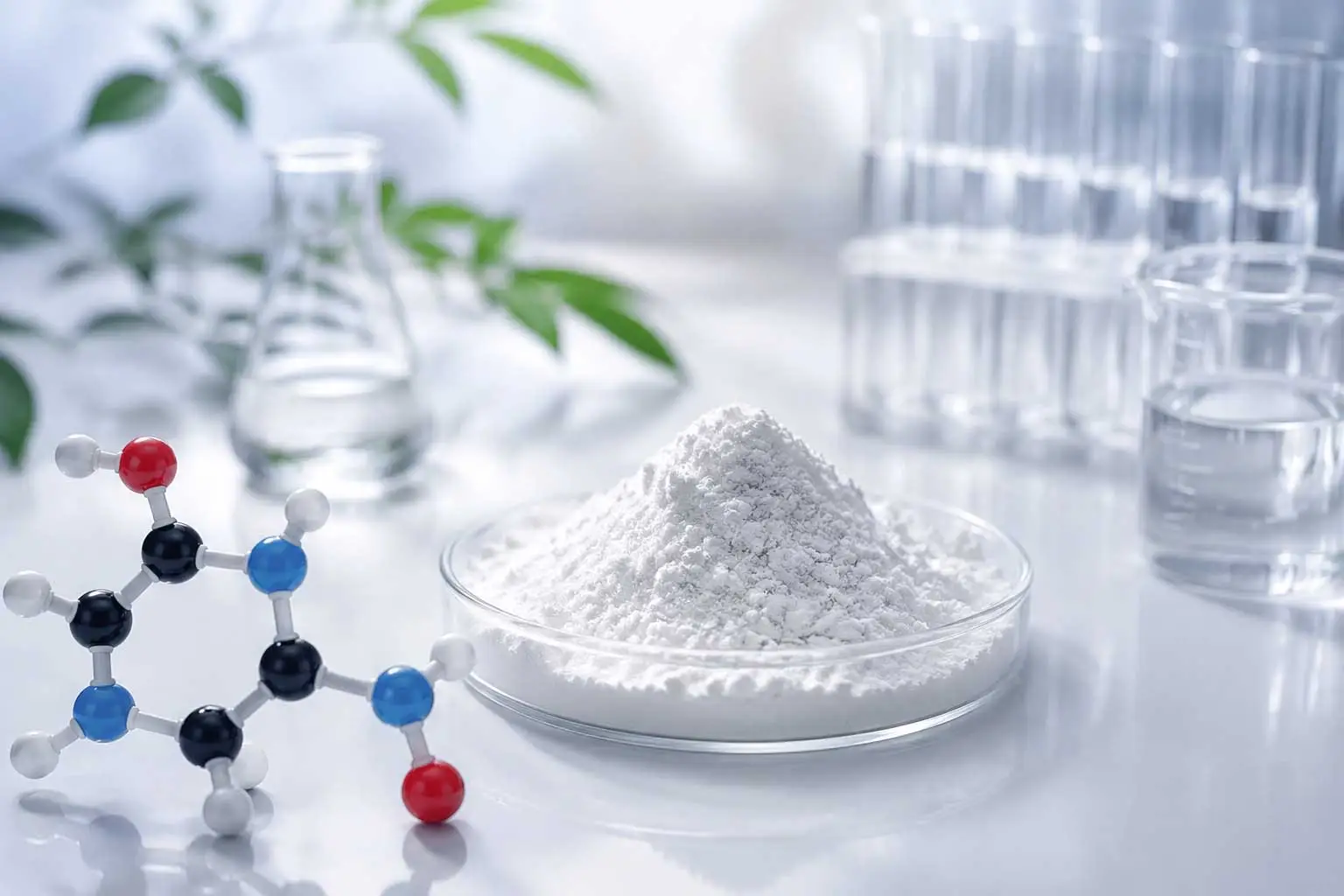
L-carnosine powder (CAS 305-84-0) is a naturally occurring dipeptide composed of beta-alanine and L-histidine. It is widely recognized in the nutraceutical industry for its antioxidant and anti-glycation properties, making it a functional ingredient in both dietary supplements and cosmetic formulations.
From an industrial perspective, L-carnosine powder 99% purity is typically required to ensure consistent performance across large-scale manufacturing processes. Its physicochemical stability and water compatibility allow it to be used in capsules, tablets, powdered blends, and liquid systems without significant formulation complexity.
For global buyers, evaluating a bulk L-carnosine powder manufacturer involves assessing multiple technical parameters, including purity specification, particle size distribution, moisture control, and HPLC testing results. These factors are essential for ensuring predictable behavior in downstream formulation systems.
In addition, cosmetic grade L-carnosine raw material suppliers and food grade amino acid manufacturers increasingly serve overlapping markets, reflecting the growing convergence between nutraceutical and cosmetic ingredient supply chains.
3. Key Criteria for Choosing a Reliable L-Carnosine Powder Supplier
Selecting a reliable L-carnosine powder supplier requires a structured evaluation framework that integrates technical compliance, manufacturing capability, and supply chain stability. In international procurement practice, this process is essential for ensuring consistent quality across long-term production cycles.
One of the most important criteria is GMP compliance. A qualified GMP amino acid manufacturer in China must demonstrate validated production systems, controlled manufacturing environments, and documented quality assurance procedures. These systems ensure that every batch of bulk L-carnosine powder meets consistent global standards.
Equally important is analytical transparency. Buyers typically require COA documentation, HPLC assay reports, and impurity profiling when evaluating antioxidant raw material suppliers. These documents provide essential traceability and regulatory support for international supplement markets.
Beyond technical documentation, supplier reliability is also measured by production stability and batch consistency. Variations in purity or physicochemical properties can significantly impact formulation performance, particularly in antioxidant systems where dosage precision is critical.
4. Manufacturing Capability and Quality Assurance Systems
The manufacturing capability of a bulk L-carnosine powder supplier plays a decisive role in determining product consistency and supply reliability. Advanced production systems ensure that raw material quality remains stable across large-scale industrial batches.
Modern L-carnosine powder GMP manufacturers in China typically operate under integrated quality management systems that include raw material screening, controlled synthesis or fermentation processes, and multi-stage purification. These processes are supported by HPLC-based quality verification to ensure consistent purity levels across production cycles.
At CHEN LANG BIO TECH, production infrastructure is built around a 200-ton intelligent powder manufacturing system with automated process control, enabling scalable production of high-purity amino acid ingredients. In addition, a ton-level liquid formulation platform supports broader applications in personal care and functional ingredient development.
The production system is further supported by internationally recognized certifications, including ISO9001:2015, EFfCI GMP, FSSC 22000, FDA cGMP, Halal, Kosher, COSMOS, ISO 45001:2018, CNAS, and intellectual property management system certification. These certifications ensure compliance with global regulatory frameworks and reinforce the reliability of antioxidant amino acid raw material supply chains.
Beyond compliance, production capacity also defines supply chain resilience. The facility supports large-scale manufacturing of active ingredients such as NAD+, NMN, glutathione, ergothioneine, and other functional nutraceutical compounds, ensuring stable supply for global customers.
In terms of logistics performance, shipments are typically processed within 2–3 working days after order confirmation, with distribution capabilities covering more than 150 countries worldwide. This enables consistent supply continuity for manufacturers relying on bulk L-carnosine powder suppliers for time-sensitive production schedules.

5. MOQ, Pricing Structure and Bulk Supply Strategy
The pricing structure of L-carnosine powder is determined by several industrial factors, including raw material purity, production route, order volume, and long-term supply agreements. In global sourcing practice, pricing is not static but closely linked to specification requirements and supply stability.
For most bulk L-carnosine powder suppliers in China, MOQ policies are designed to support both laboratory-scale testing and commercial-scale production. Standard minimum order quantities typically start from 1 kg, allowing formulators to evaluate solubility performance, stability, and compatibility in early-stage development.
At the commercial level, bulk amino acid manufacturers often implement tiered pricing models based on volume. Larger order quantities benefit from optimized production efficiency and reduced unit cost, especially under long-term supply agreements with a GMP certified supplier.
From a procurement perspective, buyers sourcing antioxidant raw materials for supplement manufacturing increasingly prioritize supply continuity and batch consistency over short-term pricing fluctuations. This reflects a broader shift toward strategic sourcing partnerships rather than transactional purchasing.
6. Quality Standards: GMP, COA and HPLC Verification System
Quality assurance is a fundamental requirement when selecting a L-carnosine powder supplier, particularly for regulated markets such as dietary supplements and cosmetic formulations. Modern buyers expect full transparency supported by validated analytical systems.
A qualified GMP amino acid manufacturer must implement multi-stage quality control procedures, including raw material inspection, in-process monitoring, and final product testing. These procedures ensure that every batch of bulk L-carnosine powder meets consistent purity and safety standards.
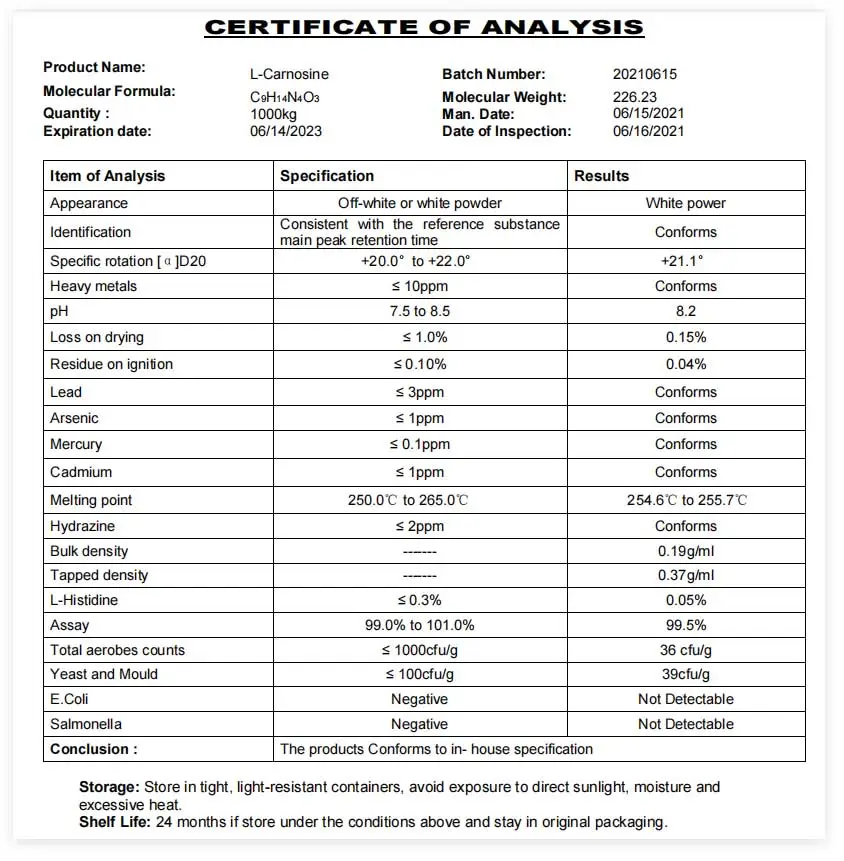
Analytical verification typically includes HPLC purity testing, moisture content analysis, heavy metal detection, and microbial limit testing. These parameters are essential for maintaining compliance in global nutraceutical supply chains.
In addition, COA (Certificate of Analysis) documentation is a standard requirement for international buyers sourcing antioxidant amino acid raw materials. This documentation ensures traceability and regulatory compliance across different market regions.
7. Applications of L-Carnosine Powder in Supplements and Cosmetics
The functional versatility of L-carnosine powder has enabled its widespread use across dietary supplements, functional foods, and cosmetic formulations. Its compatibility with multiple formulation systems makes it a valuable ingredient in antioxidant-based product development.
In supplement applications, it is commonly used in antioxidant blends, cellular health formulations, and anti-aging nutritional products. In these systems, bulk L-carnosine powder suppliers provide consistent material quality to ensure stable formulation performance and accurate dosing.
In cosmetic applications, cosmetic grade L-carnosine raw material is used in skin protection and anti-aging formulations due to its stability in aqueous systems and compatibility with emulsions.
From a sourcing perspective, manufacturers increasingly rely on functional amino acid ingredient suppliers capable of providing both technical documentation and scalable production capacity for global product development.
8. Global Market Trends and Supply Chain Outlook
The global market for antioxidant ingredients continues to expand, driven by increasing demand for functional nutrition and preventive health solutions. Within this trend, L-carnosine powder is gaining importance as a multifunctional amino acid ingredient in both supplement and cosmetic industries.
As global supply chains become more complex, manufacturers are prioritizing stable sourcing from qualified bulk L-carnosine powder suppliers capable of ensuring consistent quality and uninterrupted supply.
China remains a major production hub due to its integrated manufacturing infrastructure and advanced GMP systems. This positions L-carnosine powder manufacturers in China as key players in the global amino acid supply chain.
Future trends indicate increasing demand for higher regulatory transparency, improved batch traceability, and stronger quality documentation systems, particularly for antioxidant amino acid raw material suppliers serving international markets.
9. FAQ: How to Choose a Reliable L-Carnosine Powder Supplier
1. What should I look for in a reliable L-Carnosine powder supplier?
A reliable L-carnosine powder supplier should provide verifiable GMP certification, consistent batch-to-batch quality, and complete analytical documentation including COA and HPLC reports. For international buyers, supply chain transparency and long-term production stability are equally important as product purity.
Most professional GMP amino acid manufacturers also provide detailed technical specifications, ensuring that the material is suitable for supplement and cosmetic formulation systems.
2. What is the typical MOQ for bulk L-Carnosine powder?
In most industrial sourcing cases, the MOQ for bulk L-carnosine powder starts from 1 kg, especially for sampling, formulation testing, and pilot production.
Larger commercial orders often benefit from tiered pricing structures offered by bulk amino acid manufacturers, particularly when establishing long-term supply agreements.
3. How is the quality of L-Carnosine powder verified?
Quality is typically verified through a combination of analytical methods, including HPLC purity testing, moisture analysis, heavy metal detection, and microbial limit testing.
In addition, a reliable antioxidant raw material supplier will provide a COA (Certificate of Analysis) for every batch to ensure traceability and compliance with international supplement and cosmetic standards.
4. What is the difference between GMP and non-GMP L-Carnosine suppliers?
A GMP-certified L-carnosine powder manufacturer follows strict production protocols, including controlled environments, validated processes, and documented quality systems.
Non-GMP suppliers may not provide the same level of batch consistency, traceability, or regulatory documentation, which can create risks in regulated markets such as dietary supplements and cosmetics.
5. Can L-Carnosine powder be used in both supplements and cosmetics?
Yes. L-carnosine powder is widely used in both dietary supplements and cosmetic formulations due to its stability and compatibility with aqueous systems.
In supplements, it is often used in antioxidant blends, while in cosmetics, cosmetic grade L-carnosine raw material is used in skin care and anti-aging formulations.
6. Why is China a major source for bulk L-Carnosine powder?
China has developed a strong industrial base for amino acid production, supported by advanced GMP manufacturing systems and large-scale production capacity.
As a result, many global buyers prefer sourcing from bulk L-carnosine powder suppliers in China, due to competitive pricing, scalable production, and integrated supply chain capabilities.
7. How long is the shelf life of L-Carnosine powder?
Under proper storage conditions (cool, dry environment, low humidity), L-carnosine powder typically has a shelf life of up to 24 months.
Professional GMP amino acid manufacturers recommend sealed packaging and controlled storage conditions to maintain stability during transportation and long-term storage.
Conclusion: Strategic Value of Reliable L-Carnosine Powder Suppliers
Selecting a reliable L-carnosine powder supplier is a critical strategic decision that directly impacts formulation stability, regulatory compliance, and long-term supply chain performance.
As demand for antioxidant amino acids continues to grow, bulk L-carnosine powder will remain an essential raw material in nutraceutical and cosmetic industries. Manufacturers capable of combining GMP compliance, production scalability, and global logistics capability will hold a strong competitive advantage.
Within this framework, long-term cooperation with qualified GMP amino acid manufacturers ensures not only supply stability but also technical support for formulation development and regulatory alignment.
For technical specifications, COA documentation, or bulk supply inquiries, communication is typically handled through direct technical channels to ensure accurate formulation matching and supply coordination.
📩 Email: admin@chenlangbio.com

Send Inquiry
Related Industry Knowledge
- Pine Bark Extract for Skincare: Applications, Specifications, and Supplier Considerations
- Zeaxanthin Powder and Immune Support: A Powerful Combination
- Vitamin E Powder for Functional Foods—Why?
- How Does Indole-3-methanol Contribute to Hormone Balance and Immune Support?
- Why Is Evodiamine Powder a Reliable Choice for Bulk Buyers Worldwide?
- The Science Behind Pure Pomegranate Powder
- Guide to Sodium Methylesculetin Acetate in Dietary Supplements
- Red Wine Extract Powder: Weight Management and Wellness
- What does Garlic Extract Powder Allicin Do to Bacteria
- What Is Green Coffee Bean Extract Powder