
How Is Quaternium-73 Quality Tested? Identity, Purity and Batch Control
2026-09-01 14:48:03
For cosmetic manufacturers, testing Quaternium-73 quality involves more than confirming a single purity percentage. A meaningful quaternium-73 quality testing program should establish that the material has the correct chemical identity, complies with an approved quality specification, and remains sufficiently consistent from one production lot to another.
This distinction matters because commercial Quaternium-73 grades are commonly offered with HPLC purity specifications around 98% or higher. A result such as “98.5%” may look reassuring on a Certificate of Analysis, but it does not answer several questions that matter during supplier qualification. What analytical method generated the result? Is the number chromatographic area purity or a quantitative assay? How was identity established? What moisture limit applies? Can the sample batch be traced to production records, and will future commercial batches be controlled against the same specification?
For procurement and QA teams, a better principle is:
A Quaternium-73 purity result alone does not establish raw-material quality; identity, analytical method, specification limits, actual batch results and traceability should be reviewed together.
That approach turns quaternium-73 quality control from a certificate-checking exercise into a practical supplier qualification process.
What Should a Quaternium-73 Specification Include?
A quaternium-73 specification defines the acceptance criteria against which commercial batches are released. It should not be confused with the COA supplied for an individual shipment.
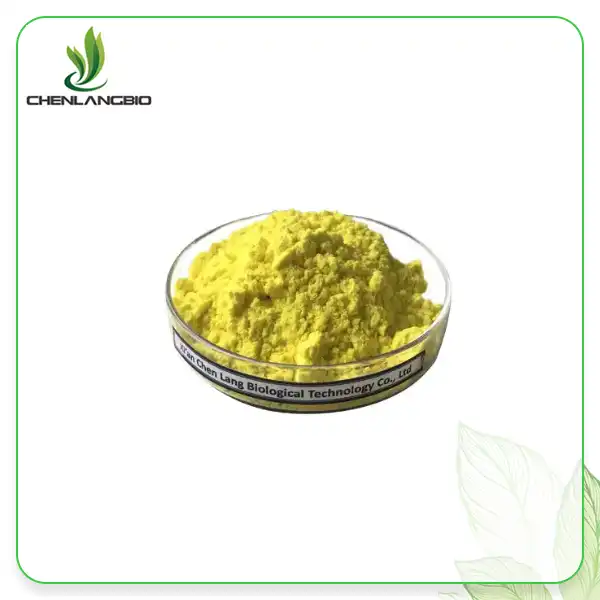
For example, commercial technical information for Quaternium-73 identifies CAS No. 15763-48-1 and describes the material as a yellowish-to-yellow crystalline powder. One publicly available commercial TDS specifies HPLC purity of not less than 98% and water of not more than 1%. These figures are useful reference points, but buyers should treat them as grade-specific specifications rather than universal standards applicable to every manufacturer.
A practical cosmetic grade quaternium-73 specification may therefore contain the following elements:
|
Test Item |
What Procurement or QA Should Review |
|
Product name |
Matches the material approved internally |
|
CAS No. |
15763-48-1 |
|
Appearance |
Defined color and physical form |
|
Identification |
Method and acceptance criterion |
|
Purity / assay |
Test method, limit and reporting basis |
|
Water / moisture |
Maximum limit and analytical method |
|
Additional parameters |
Relevant to the supplier's approved specification |
The specification establishes what is acceptable. The quaternium-73 COA, by contrast, should show whether a particular batch actually met those requirements. Buyers should obtain both.
Quaternium-73 Identity Testing: How Do You Confirm the Correct Material?
A quaternium-73 identity test addresses a basic but separate question from purity: is the material actually Quaternium-73?
Appearance cannot answer that question. A yellow crystalline powder may conform visually to the specification while still requiring analytical identification. Likewise, a container label stating CAS 15763-48-1 is traceability information rather than analytical proof of identity.
Depending on the manufacturer's validated analytical strategy, quaternium-73 identification methods may include chromatographic comparison with an appropriate reference material or other analytical techniques capable of supporting chemical identification. More extensive structural techniques can also be used during material characterization, method development or investigation when appropriate.
Procurement teams should avoid assuming that every possible analytical instrument must be used for routine batch release. NMR, mass spectrometry, infrared spectroscopy and chromatography provide different information, and a manufacturer may use different methods for initial structural characterization and routine QC release.
The useful purchasing question is therefore not, “Does the factory own an NMR?”
It is:
What validated or controlled method is used to confirm Quaternium-73 identity, and is that method applied consistently under the supplier's quality system?
A technically credible supplier should be able to explain the basis of the quaternium-73 raw material identification reported in its specification or supporting documentation.
Quaternium-73 Purity Testing by HPLC: What Does the Result Mean?
Quaternium-73 HPLC purity is one of the most commercially relevant quality parameters because HPLC can separate the principal chromatographic component from detectable components that behave differently under the selected analytical conditions.
Commercial Quaternium-73 documentation is available with a specification of ≥98% by HPLC, making HPLC an important point of discussion during supplier comparison.
However, “HPLC 98%” is incomplete analytical information on its own.
A chromatographic result depends on the method. The stationary phase, mobile phase, detector, wavelength where UV detection is used, sample preparation, integration parameters and calculation approach can influence what the chromatogram reveals and how the result is reported.
For a quaternium-73 purity test, QA teams should therefore determine whether the supplier has a defined method and whether the same analytical basis is maintained between production lots.
The chromatogram can also provide more information than the final number. A dominant principal peak accompanied by smaller peaks creates a chromatographic profile that can be monitored over time. Unexpected changes in that profile may deserve investigation even when the reported main-component percentage still passes specification.
At the same time, unidentified minor peaks should not automatically be assigned chemical identities. HPLC detection shows chromatographic responses under defined conditions; identifying an impurity normally requires additional analytical evidence.
This is why how to test Quaternium-73 purity is ultimately a method question, not simply a percentage question.
HPLC Purity vs Assay: Are They the Same?
The distinction between quaternium-73 purity vs assay is particularly important when comparing quotations from different suppliers.
An HPLC area-percentage result can be calculated by comparing the integrated area of the main chromatographic peak with the relevant total detected peak area. It provides useful information about chromatographic purity under that specific method.
A quantitative quaternium-73 assay, however, may determine the amount of the target compound using an appropriate reference standard, calibration procedure and defined calculation. Depending on the method, corrections for factors such as water content or reference-standard potency may also be relevant.
The two numbers can therefore answer different analytical questions.
For example, a COA stating:
Purity: 98.7% by HPLC
should not automatically be interpreted as:
98.7% quantitative content on an as-is or dried basis
unless the analytical method establishes that interpretation.
For procurement specialists, four follow-up questions are useful whenever suppliers quote “98% Quaternium-73”:
What method is used? Is the result HPLC area purity or quantitative assay? What acceptance criterion applies? Is the same controlled method used for routine production batches?
This level of detail makes comparisons between high purity quaternium-73 grades considerably more meaningful than comparing percentages copied from sales sheets.
Why Water or Moisture Control Matters for Quaternium-73
Water is another parameter appearing in commercial Quaternium-73 specifications. One available TDS specifies water at NMT 1.0%. Again, this should be understood as a specification for that commercial material, not a universal regulatory standard.
Quaternium-73 water content matters because moisture can affect the physical condition of a powder and the interpretation of weight-based analytical results. Unexpected moisture uptake may also accompany poor storage conditions, damaged packaging or prolonged exposure to a humid environment.
The analytical method matters here as well. Karl Fischer titration and loss-on-drying procedures do not necessarily measure exactly the same thing, so buyers should not assume that two moisture results obtained by different methods are directly interchangeable.
For long-term quaternium-73 quality control, consistency of method is often as important as the individual result.
Does Appearance Matter in Quaternium-73 Quality Control?
Appearance remains useful as an initial QC checkpoint. Commercial Quaternium-73 specifications commonly describe the material as a yellowish-to-yellow crystalline powder.
A receiving inspection can therefore identify obvious deviations such as unusual discoloration, severe caking, visible foreign material, moisture-related changes or compromised packaging.
However, quaternium-73 appearance is a screening parameter rather than proof of chemical identity or purity.
This distinction is useful for warehouse and purchasing teams: visual inspection can identify a reason to quarantine a shipment, but a normal-looking powder does not replace analytical release testing.
What Should Buyers Check on a Quaternium-73 COA?
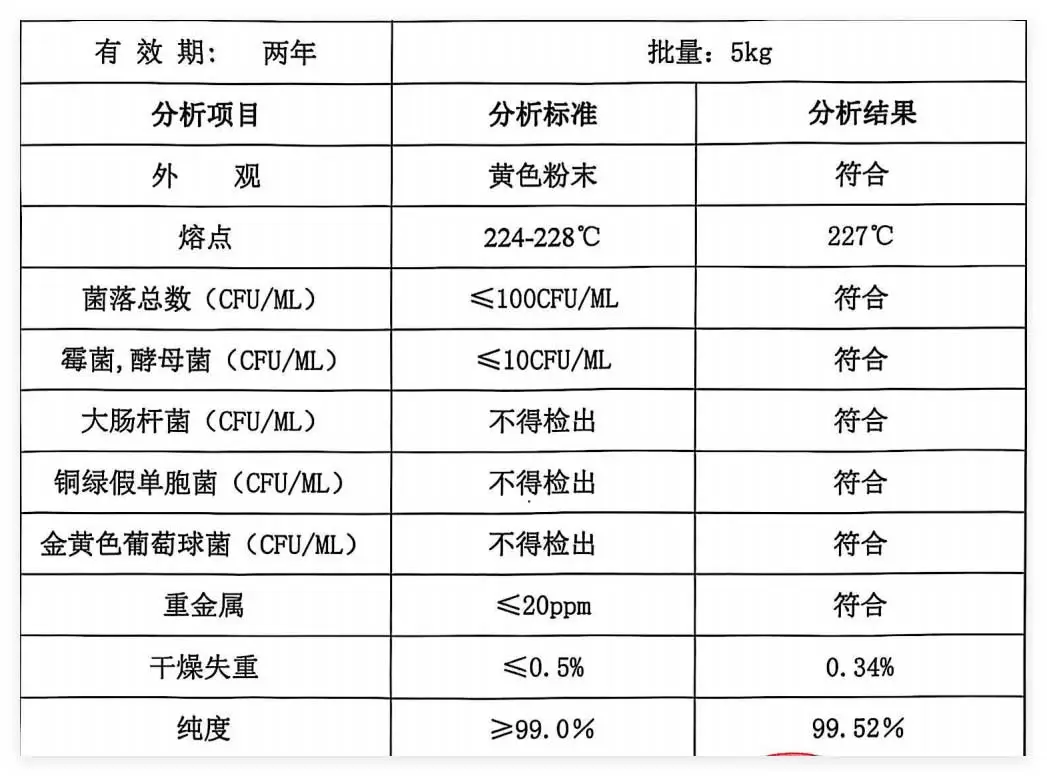
A quaternium-73 certificate of analysis should connect the material physically delivered to the specification used for batch release.
A useful COA review goes beyond checking whether the purity number exceeds 98%.
|
COA Field |
What the Buyer Should Ask |
|
Product name |
Does it match the approved raw material? |
|
CAS number |
Is the chemical identity consistent? |
|
Batch / lot number |
Can the shipment be traced? |
|
Test items |
Do they correspond to the approved specification? |
|
Specification limits |
Are acceptance criteria clearly stated? |
|
Actual results |
Are meaningful numerical values provided where appropriate? |
|
Test methods |
Is the analytical basis identifiable? |
|
Manufacturing / test date |
Does it correspond to the supplied batch? |
|
Retest / expiry information |
Is it suitable for inventory planning? |
|
QC authorization |
Has the batch been formally released? |
Actual numerical data can be particularly useful for parameters such as quaternium-73 HPLC purity and moisture because procurement or QA teams can trend results over several lots.
A result reported only as “Conforms” or “Pass” is not necessarily invalid. Some qualitative tests are appropriately reported that way. For numerical parameters, however, actual values often provide more information for supplier monitoring.
The COA should also correspond to the material received. A generic quaternium-73 test report from an unrelated production lot is supporting information, not a substitute for a batch-specific COA.
Quaternium-73 Batch Control: How Is Lot-to-Lot Consistency Evaluated?
The real test of a quality system begins after the first approved sample.
Quaternium-73 batch control should provide reasonable confidence that the commercial lot delivered months later remains comparable with the material originally evaluated by the customer's R&D and QA teams.
Finished-product testing is one component of that system, but not the only one. A robust manufacturing quality framework can include control of starting materials, defined process parameters, in-process monitoring where appropriate, finished-batch testing, documented QC release, batch numbering, retained samples, traceability and change management.
For buyers, quaternium-73 lot-to-lot consistency can be evaluated by comparing actual data from several representative batches.
Consider three hypothetical COAs:
|
Parameter |
Batch A |
Batch B |
Batch C |
Specification |
|
HPLC purity |
98.6% |
98.8% |
98.5% |
≥98.0% |
|
Water |
0.42% |
0.47% |
0.45% |
≤1.0% |
|
Appearance |
Conforms |
Conforms |
Conforms |
Yellowish-to-yellow powder |
All three batches pass. More importantly, the results show a relatively stable pattern.
By contrast, repeated movement toward a specification boundary can justify further discussion even if every lot technically passes. Trend analysis therefore adds information that a single pass/fail decision cannot provide.
Why One Passing Batch Is Not Enough for Supplier Qualification
A laboratory sample with 98%+ HPLC purity establishes information about that sample, not necessarily the supplier's long-term manufacturing consistency.
For important projects, QA teams may choose to review data from several consecutive or representative commercial lots during quaternium-73 supplier qualification. The appropriate depth depends on purchasing volume, risk classification, company procedures and intended application.
Comparing multiple lots can reveal whether HPLC purity, moisture and appearance remain reasonably stable over time.
The central procurement question is straightforward:
Will the commercial Quaternium-73 delivered six months from now remain comparable with the batch used to qualify the formulation today?
This is why quaternium-73 batch consistency should be part of supplier approval rather than considered only after a problem occurs.
Should Buyers Request Third-Party Testing for Quaternium-73?
Quaternium-73 third-party testing can be useful, but it should serve as independent verification rather than replace the manufacturer's own QC system.
Independent laboratory testing may be appropriate during initial supplier qualification, when a customer has a contractual testing requirement, when analytical results between buyer and supplier disagree, following an unexpected batch variation, or after a significant manufacturing or supplier change.
If third-party quaternium-73 purity verification is commissioned, method alignment deserves attention. Two laboratories using materially different chromatographic methods may produce results that are not directly comparable.
For that reason, an apparent analytical discrepancy should first trigger a review of sampling, sample preparation, analytical method, calculation basis and reference materials before either result is assumed to be wrong.
A supplier capable of investigating such discrepancies transparently is generally more useful to a technical buyer than one that simply repeats the COA value.
How Should a Quaternium-73 Sample Be Evaluated Before Bulk Purchasing?
A quaternium-73 sample should ideally represent the commercial material the supplier intends to provide.
When the sample arrives, QA can first match its lot number against the supplied COA and verify that the specification corresponds to the material under evaluation. Depending on the customer's qualification procedure, identity and purity may then be confirmed internally or through an independent laboratory.
R&D evaluation follows a different path.
Analytical approval does not establish formulation compatibility. A cosmetic grade quaternium-73 sample meeting a ≥98% HPLC specification still needs to be assessed in the intended cosmetic base.
For Quaternium-73, that can include dissolution or premixing behavior, color contribution, compatibility with other ingredients, pH conditions and physical stability. Commercial technical documentation indicates limited direct water solubility and recommends premixing in suitable solvents for some grades, making actual formulation testing particularly relevant.
The best sequence before a bulk Quaternium-73 order is therefore analytical qualification followed by formulation qualification, rather than assuming one can substitute for the other.
What Documents Should Accompany Cosmetic Grade Quaternium-73?
A technically useful document package should allow QA, R&D, regulatory and procurement teams to answer different questions about the same material.
The current quaternium-73 specification sheet establishes acceptance criteria, while the batch COA provides release results. The quaternium-73 TDS should describe relevant technical properties and formulation guidance, and the SDS addresses hazard communication, handling and related safety information.
Depending on customer requirements, additional quaternium-73 quality documents may include analytical method information, storage guidance, shelf-life or retest information and relevant regulatory declarations.
These documents have overlapping purposes but are not interchangeable. An SDS does not establish batch purity; a COA does not provide a complete regulatory assessment; and a TDS should not replace the approved quality specification.
Document revision control is also worth checking. When a specification or analytical method changes, customers need to understand whether the change affects the material they previously qualified.
How to Compare Quaternium-73 Suppliers Beyond a “98% Purity” Claim
Suppose two potential suppliers both offer material described as “Quaternium-73 98%.”
At first glance, the products appear equivalent. For a professional buyer, that percentage should be the beginning of the comparison rather than the end.
Ask whether both results are generated using comparable analytical approaches. Compare actual COA data rather than specification limits alone. Review the number of representative batches available, document completeness, lot traceability, sample-to-commercial-batch consistency and how changes or analytical deviations are handled.
Technical responsiveness also matters. If QA asks why an HPLC result changed from 99.1% to 98.2%, the quality of the supplier's investigation and supporting data can be more informative than a generic statement that both batches passed.
At CHEN LANG BIO TECH, we recommend that cosmetic manufacturers evaluate a quaternium-73 supplier on specification, batch data, documentation and formulation performance rather than relying on a purity claim alone. Representative samples and current technical documents can then be used to determine whether the material meets the customer's internal qualification requirements.
This is a more useful definition of a reliable quaternium-73 supplier than simply selecting the company advertising the highest number.
Quaternium-73 Sample, MOQ, Price and Bulk Quality Requirements
Commercial comparison should begin after the technical basis of the quotations is understood.
Before comparing quaternium-73 price per kg, buyers should establish whether suppliers are quoting the same specification, analytical basis, packaging configuration and documentation level. Two materials described as “98%” are not automatically equivalent if their analytical methods and quality-control systems differ.
MOQ also deserves attention because Quaternium-73 is generally used at low concentrations. At a formulation level of 0.003%, a 1,000 kg batch of finished cosmetic product requires only 30 g of Quaternium-73. This makes inventory turnover, pack size and shelf life relevant when negotiating a quaternium-73 MOQ.
Buyers preparing to buy quaternium-73 should therefore evaluate the quotation together with quality documentation, sample qualification, packaging, lead time and batch consistency. The lowest quaternium-73 price does not necessarily represent the lowest procurement risk or cost-in-use.
Red Flags When Reviewing a Quaternium-73 Supplier COA
Several issues deserve clarification during a quaternium-73 COA review.
A missing or inconsistent batch number makes traceability difficult. A CAS number that does not match the approved material requires investigation. Differences between the COA specification and the supplier's current specification sheet should also be resolved before approval.
For numerical tests, identical results appearing on every COA over many production batches may justify asking how the result is generated and reported. Similarly, a document that reports only “Pass” for every quantitative parameter provides less information for lot trending, although this reporting format alone does not prove that the material is unsuitable.
Other warning signs include a sample that cannot be linked to its COA, unclear analytical methods, uncontrolled document revisions or a supplier unable to explain how purity is calculated.
A good supplier-quality discussion should be able to resolve these questions with documentation rather than sales language.
FAQ: Quaternium-73 Quality Testing
How is Quaternium-73 purity tested?
Quaternium-73 purity testing is commonly associated with HPLC in commercial specifications. Buyers should review not only the reported percentage but also the method and calculation basis. A specification such as ≥98% by HPLC refers to the defined commercial grade and should not automatically be treated as a universal standard.
What is a typical Quaternium-73 purity specification?
Publicly available commercial technical information includes ≥98% HPLC purity for some Quaternium-73 grades. Individual suppliers may establish their own approved specifications, so buyers should obtain the current specification and representative COA for the exact material being purchased.
Is HPLC purity the same as assay?
Not necessarily. HPLC area purity can describe the relative chromatographic area associated with the principal component under defined analytical conditions. A quantitative assay may use a reference standard and calibration to determine target-compound content. Buyers should confirm which result appears on the COA.
How do you confirm Quaternium-73 identity?
A quaternium-73 identity test should use an appropriate controlled analytical method. Depending on the supplier's testing strategy, chromatographic comparison or other analytical techniques may be used. Appearance and CAS labeling alone do not analytically confirm identity.
What should a Quaternium-73 COA include?
A useful quaternium-73 COA should identify the product and batch, state relevant specifications, provide test results, identify methods where appropriate, and include sufficient manufacturing/testing and release information to connect the certificate to the supplied lot.
Should every Quaternium-73 batch be third-party tested?
Not necessarily. Independent testing can be useful for supplier qualification, customer-specific requirements, discrepancy investigation or risk-based verification. Routine third-party analysis of every lot is not a substitute for a supplier maintaining an effective internal QC and batch-release system.
How can buyers evaluate Quaternium-73 lot-to-lot consistency?
Compare actual numerical results from several representative lots using the same specification and analytical basis. Trends in HPLC purity, moisture and other relevant parameters can provide more information than reviewing a single passing batch.
Should I test a Quaternium-73 sample before placing a bulk order?
For a new supplier or formulation project, sample evaluation is advisable. Analytical review confirms whether the sample meets the required quality standard, while formulation testing determines whether it behaves acceptably in the intended finished product. Both evaluations provide useful information before commercial purchasing.
What Buyers Should Verify Before Approving a Quaternium-73 Batch
Effective quaternium-73 quality testing should establish more than whether a batch exceeds a headline purity value. Procurement and QA teams need confidence in chemical identity, specification limits, analytical methods, actual batch results, traceability and reasonable lot-to-lot consistency. R&D must then establish that the qualified material performs appropriately in the intended cosmetic formulation.
Cosmetic manufacturers and raw-material buyers evaluating cosmetic grade quaternium-73 can contact CHEN LANG BIO TECH for the current specification, representative batch COA, TDS, SDS and sample information for laboratory qualification. Email: admin@chenlangbio.com

Send Inquiry
Related Industry Knowledge
- How Ashwagandha Extract Supports Testosterone and Sports Nutrition Applications
- How to Verify a DHEA Powder COA Before Bulk Purchase?
- Can Kojic Acid Dipalmitate Cause Allergies?
- What is the Difference between Alpha-Ketoglutarate and Calcium Alpha-Ketoglutarate Monohydrate?
- Why Tart Cherry Extract Powder Is a Superfood
- Why Is Pure Fisetin Gaining Attention as a Powerful Flavonoid for Health and Wellness?
- Is Sodium Ascorbyl Phosphate Good for Acne
- What Is Lysozyme Powder
- Sepiwhite MSH Powder for Sale
- What does Tribulus Terrestris Extract Powder Do to the Body