
Ergothioneine vs Glutathione: Key Differences in Properties and Cosmetic & Supplement Use
2026-05-08 12:15:53
Why Comparing Ergothioneine Powder and Glutathione Matters for Formulators
In the rapidly evolving cosmetic and nutraceutical industries, selecting the right antioxidant raw material is a strategic decision that can influence formulation stability, product performance, and supply chain efficiency. Ergothioneine powder and glutathione are two widely used ingredients that serve different roles within formulations, and understanding their distinctions is essential for procurement and R&D teams aiming to create reliable products.
Sourcing high-quality ergothioneine powder from a reliable supplier ensures consistent batch-to-batch quality, which is particularly important for commercial-scale manufacturing of skincare and supplement products. In comparison, glutathione exhibits distinct stability and handling characteristics that can affect formulation compatibility and shelf life. Buyers and formulators must weigh these differences carefully when designing products, particularly when targeting long-term efficacy and consumer satisfaction.
In practice, many companies seek guidance from experienced China ergothioneine powder factories or established international suppliers to ensure both technical and operational reliability. Factors such as documentation quality, batch traceability, and technical support often prove as important as pricing during supplier selection. Evaluating these criteria early helps reduce production disruptions and supports predictable product outcomes.
By comparing ergothioneine powder and glutathione within a structured framework, formulators and procurement professionals can make more informed decisions, aligning ingredient selection with product goals, regulatory compliance, and long-term supply considerations. This approach fosters both technical confidence and operational efficiency, providing a foundation for successful formulation development.
Chemical Structure and Fundamental Properties
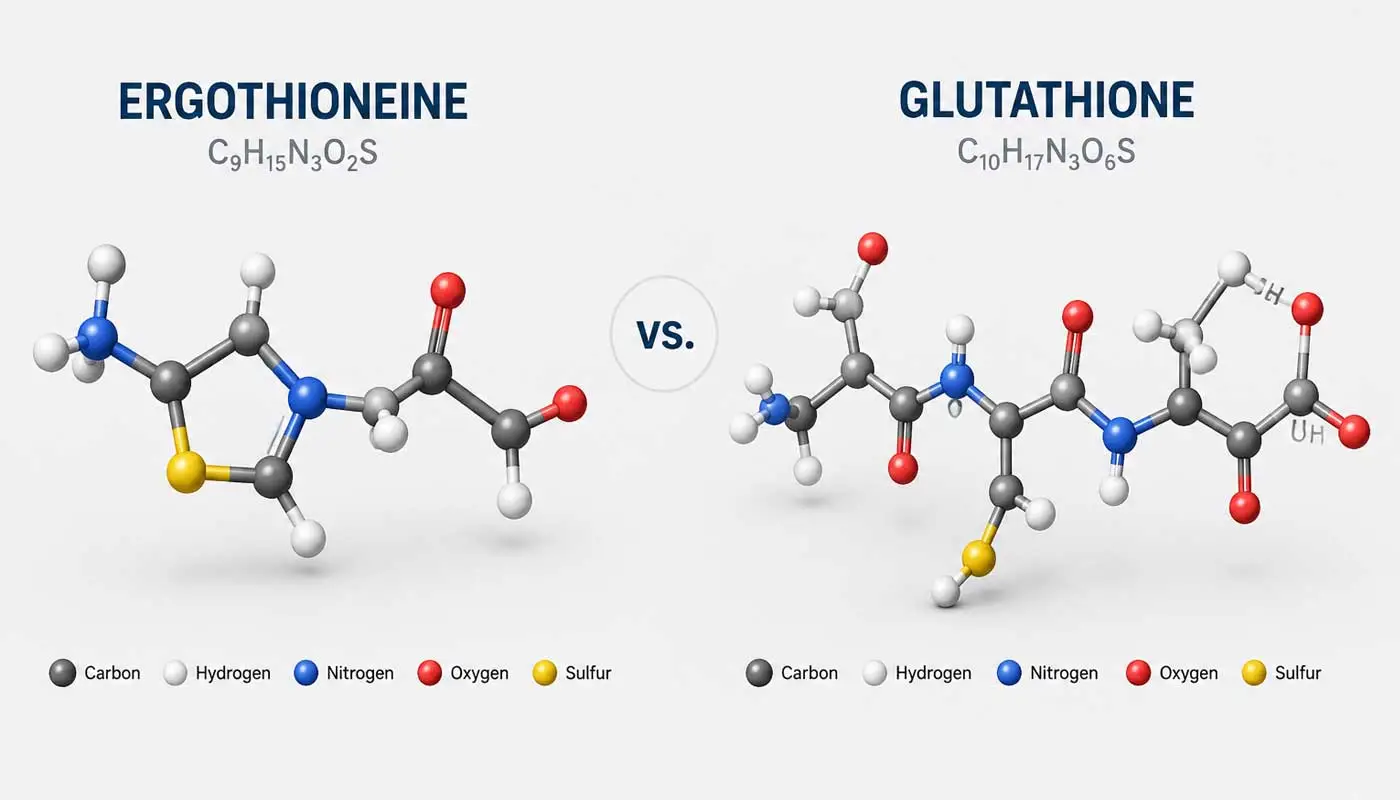
Ergothioneine powder is a naturally occurring amino acid derivative with unique structural features that contribute to its remarkable stability in various formulations. Its molecular configuration allows it to resist oxidation under conditions that might destabilize other antioxidants, which is a key consideration for both cosmetic and supplement applications. In contrast, glutathione, while a potent intracellular antioxidant, exhibits higher susceptibility to degradation when exposed to light, heat, or varying pH conditions.
The structural differences between ergothioneine and glutathione directly influence formulation design. For example, ergothioneine powder can be integrated into aqueous and oil-based systems with minimal effect on product stability, making it a preferred choice in complex emulsions or long-shelf-life products. Glutathione, however, may require additional stabilizers or specialized encapsulation techniques to maintain potency in similar formulations.
From a procurement perspective, understanding these fundamental chemical properties is critical. High-purity ergothioneine powder specification ensures predictable behavior during manufacturing, reducing variability in cosmetic and nutritional products. Technical teams often evaluate particle size, solubility, and moisture content to optimize integration, while sourcing departments assess suppliers based on their ability to maintain these parameters consistently across bulk orders.
Additionally, structural stability impacts handling and storage requirements. Bulk ergothioneine for skincare can generally be stored under standard warehouse conditions with minimal degradation, whereas glutathione may require temperature-controlled logistics and stricter handling protocols. These practical considerations affect not only formulation decisions but also supply chain planning and cost management.
Stability and Compatibility in Formulations
One of the most significant advantages of ergothioneine powder over glutathione is its stability within diverse formulation matrices. In cosmetic products, it maintains consistent performance across different pH levels, temperatures, and emulsification systems. This characteristic allows formulators to incorporate ergothioneine powder into serums, creams, lotions, and masks without significant modification to texture, viscosity, or sensory properties.
Glutathione, by comparison, may demonstrate reduced stability when exposed to light or heat, which can limit its application in some cosmetic or supplement formulations. Formulators often mitigate these challenges using encapsulation or antioxidant co-formulations, but such approaches can add complexity and cost to production processes.
Procurement teams sourcing bulk ergothioneine for skincare or supplements increasingly prioritize suppliers capable of providing technical support for integration. This includes guidance on solubility, storage conditions, and optimal incorporation levels. Reliable suppliers also provide detailed documentation, including ergothioneine COA, ensuring that each batch aligns with formulation expectations.
Compatibility is equally important in supplement applications. Ergothioneine powder in supplements blends efficiently with powders, capsules, and functional drink matrices due to its stable particle size and moisture profile. This reduces processing variability and supports uniform dosing in finished products. By comparison, glutathione may require additional formulation adjustments to achieve similar performance consistency.
Ultimately, stability and compatibility are crucial factors influencing long-term product success. Ingredients that maintain predictable behavior, like ergothioneine powder, reduce risk in both formulation development and large-scale production, providing procurement teams and formulators with confidence in the material’s performance.
Key Functional Differences
While both ergothioneine powder and glutathione are antioxidants, their functional profiles differ significantly, affecting how they are used in formulations. Ergothioneine powder is notable for its chemical resilience and compatibility across multiple matrices, which translates into predictable behavior in cosmetic and supplement products. Glutathione, although biologically active, is more sensitive to environmental conditions, limiting its direct application in certain product types.
Another key distinction lies in formulation efficiency. Ergothioneine powder integrates easily into emulsions, serums, creams, and powdered supplements without extensive adjustments. This efficiency reduces formulation time and minimizes the risk of batch-to-batch variability. Glutathione, due to its instability, often requires additional stabilizers, encapsulation, or protective processing steps to maintain potency, which can increase production complexity and cost.
From a procurement perspective, these differences influence supplier selection and purchasing strategy. Reliable bulk ergothioneine supplier offer consistent quality, documentation, and technical guidance, enabling both procurement and R&D teams to streamline integration into products. In contrast, sourcing glutathione may require more stringent handling and storage protocols, which can complicate logistics and affect overall operational efficiency.
Ultimately, the decision to use ergothioneine powder or glutathione depends on formulation objectives, stability requirements, and production considerations. For commercial-scale cosmetic and supplement applications, the predictable performance and broader compatibility of ergothioneine powder often make it the preferred choice for long-term product reliability.
Applications in Skincare Products
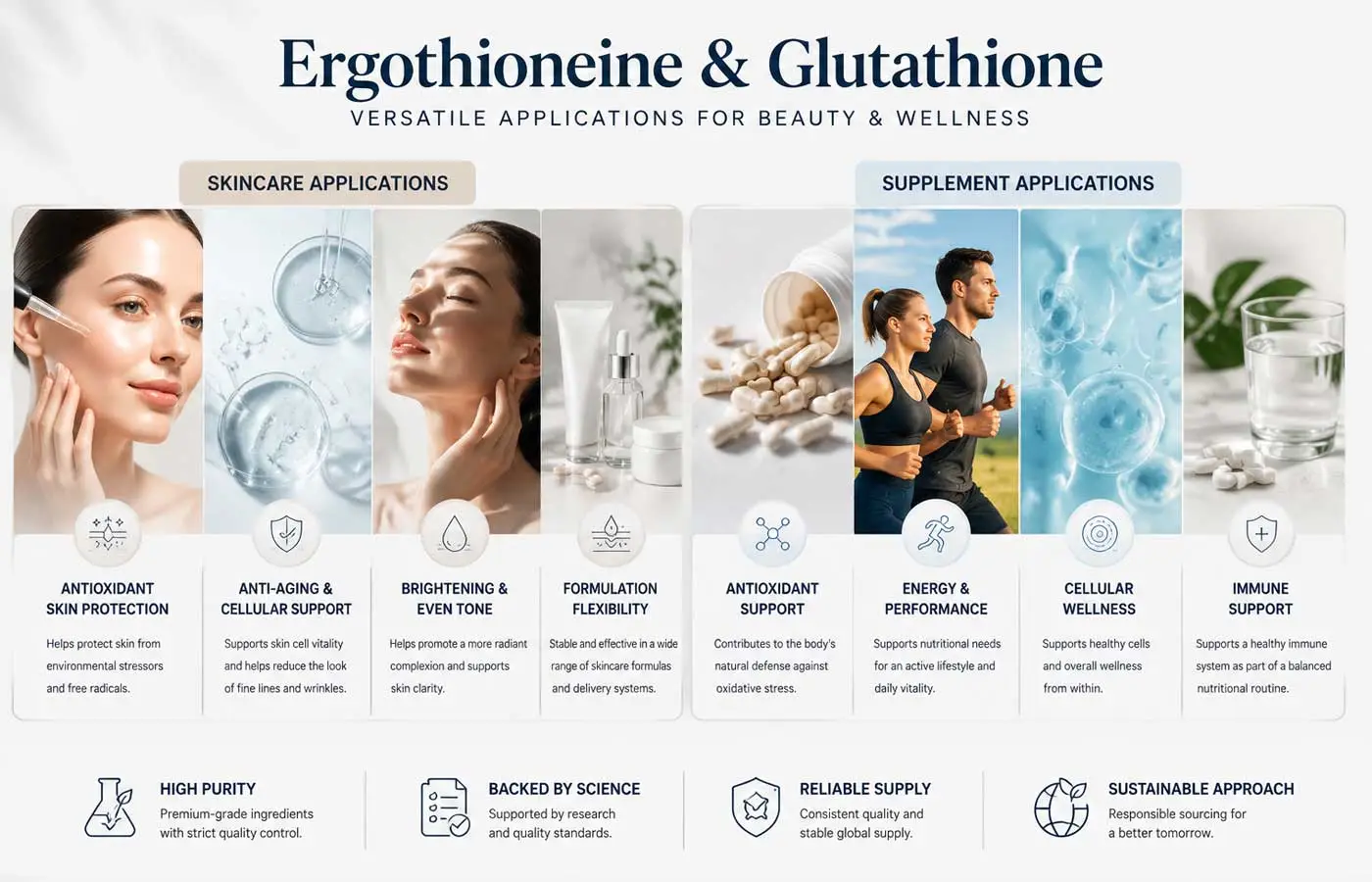
In cosmetic formulations, ergothioneine powder has become an increasingly popular choice for maintaining product stability and integrity. Its chemical resilience allows it to integrate seamlessly into serums, creams, lotions, and facial masks, providing formulators with a predictable ingredient that does not compromise texture or sensory properties.
Compared with glutathione, which can degrade under light, heat, or varying pH, ergothioneine powder retains its stability over longer storage periods. This feature is particularly valuable for high-end skincare products, where consistency across batches directly impacts consumer perception and brand trust. Procurement teams sourcing bulk ergothioneine for skincare often prioritize suppliers who can provide both high-purity material and detailed technical documentation, ensuring formulations perform consistently at scale.
Another practical advantage is formulation flexibility. Ergothioneine in skincare formulations is compatible with a range of delivery systems, from water-based emulsions to oil-in-water creams, allowing brands to develop diverse product lines without extensive reformulation. Technical support from suppliers regarding solubility and integration levels further streamlines the development process, reducing time-to-market and production risk.
For companies scaling production, consistent batch quality is crucial. Working with a reliable supplier ensures that ergothioneine powder maintains the same properties across multiple production cycles, enabling smooth replication of premium skincare products and minimizing formulation inconsistencies.
Applications in Nutritional Supplements
Beyond cosmetics, ergothioneine powder in supplements is valued for its stability, solubility, and ease of integration. In powdered drink formulations, capsule blends, or functional nutrition products, maintaining uniform distribution and consistent potency is critical for manufacturing efficiency and product reliability.
Glutathione, while effective biologically, often presents challenges in supplement formulations due to sensitivity to light and heat. By contrast, bulk ergothioneine suppliers offer high-purity materials that reduce variability in mixing and processing, making them an ideal choice for manufacturers seeking predictable commercial-scale outcomes.
Procurement teams sourcing bulk ergothioneine for supplements consider several operational factors, including minimum order quantities (MOQs), lead times, and documentation standards. Suppliers who provide detailed ergothioneine COA, MSDS, and batch traceability reports allow buyers to align sourcing strategies with production schedules, ensuring continuity in both domestic and international markets.
Additionally, technical guidance from suppliers supports formulation optimization. For instance, understanding optimal incorporation levels, storage conditions, and solubility behavior allows R&D teams to maintain consistent product quality across multiple batches, reducing rework and minimizing production delays.
Sourcing and Procurement Considerations
Selecting the right supplier is a critical component of successful cosmetic ingredient procurement. When evaluating potential China ergothioneine powder factory, procurement teams typically focus on production capability, quality certification, and operational transparency rather than solely on price.
Batch consistency is a key concern for companies sourcing bulk ergothioneine. Reliable suppliers maintain strict production control systems and provide updated ergothioneine COA documentation to confirm purity, particle size, and moisture content. This documentation helps procurement and R&D teams ensure that ingredients meet specification requirements and regulatory expectations.
MOQ, lead time, and shipping logistics are also important. A supplier capable of flexible ordering and transparent delivery timelines helps procurement teams manage inventory efficiently while reducing the risk of supply disruption. Additionally, established factories often provide technical support for integration into specific formulations, which is especially valuable for complex cosmetic or nutritional products.
Price transparency and clear communication are equally crucial. Understanding how ergothioneine powder pricing is structured—including factors such as purity level, production scale, and packaging options—enables procurement teams to make more informed decisions that balance cost with operational reliability.
By considering these sourcing factors, companies can establish long-term partnerships with suppliers that support both technical and commercial goals. A dependable relationship ensures predictable supply, reduces formulation risk, and facilitates smoother scaling of cosmetic and supplement production lines.
FAQ about Ergothioneine vs Glutathione
1. What are the key differences between ergothioneine powder and glutathione in cosmetic formulations?
It is highly stable under varying pH, light, and temperature conditions, making it suitable for serums, creams, lotions, and emulsions. Glutathione, while biologically active, is more sensitive to degradation and often requires encapsulation or stabilizers to maintain effectiveness in cosmetic products. The choice between the two depends on formulation stability and integration requirements.
2. How does ergothioneine powder compare to glutathione in supplement applications?
In supplements, ergothioneine powder offers consistent solubility, moisture control, and batch uniformity, which facilitates efficient blending in capsules, powders, and functional drinks. Glutathione requires stricter storage and handling to prevent degradation, making ergothioneine powder a preferred option for scalable, long-term supplement production.
3. What technical specifications should buyers consider when sourcing ergothioneine powder?
Key specifications include purity, particle size, solubility, and moisture content. Verified ergothioneine COA and GMP certification help ensure consistent batch-to-batch quality. Procurement teams should also assess supplier documentation and production reliability to guarantee stable ingredient performance in both cosmetic and supplement formulations.
4. Why is sourcing from a reliable China ergothioneine powder factory important?
A reliable factory ensures consistent bulk ergothioneine quality, transparent documentation, and predictable lead times. Working directly with an experienced manufacturer provides better visibility into production processes, quality assurance systems, and technical support, which reduces supply chain risks and ensures consistent integration into formulations.
5. How should procurement teams choose between ergothioneine powder and glutathione for their products?
Procurement and formulation teams should evaluate stability, compatibility, and operational efficiency. Ergothioneine powder is generally preferred for formulations requiring predictable stability and long-term storage, while glutathione may be used where biological activity is prioritized but requires additional stabilization. Supplier reliability, batch consistency, and technical support are critical factors in the selection process.
Conclusion
Choosing the right antioxidant for cosmetic or supplement formulations requires a clear understanding of both performance characteristics and operational considerations. Ergothioneine powder offers notable stability, broad formulation compatibility, and reliable batch consistency, whereas glutathione may require additional handling measures to maintain effectiveness.
For formulation teams and procurement professionals, evaluating ingredient properties alongside supplier reliability, documentation, and technical support is essential to ensure predictable product outcomes. Thoughtful assessment helps streamline both development and manufacturing processes, reducing variability and supporting long-term product quality.
For those interested in exploring sourcing options or technical documentation for bulk ergothioneine powder, our team is available to provide detailed information and guidance. You can reach us at admin@chenlangbio.com to discuss specifications, integration considerations, or supply planning. Engaging early in the sourcing process allows for informed decisions that align with both formulation needs and operational requirements.

Send Inquiry
Related Industry Knowledge
- KSM-66 vs Regular Ashwagandha Extract: How to Choose the Right Option for Supplements
- Vitamin E Powder for Functional Foods—Why?
- How Does Hydroxypropyl Tetrahydropyrantriol Work?
- What are the Potential Health Benefits of Spermidine Supplementation?
- Is Cetyl Tranexamate HCL Safe?
- Is Camellia Oleifera Seed Extract Sustainable
- What Worms Does Praziquantel Treat
- Is Ecdysterone And Turkesterone Superior To Hyaluronic Acid Powder?
- Why We Need to Use Hyaluronic Acid Powder Cosmetic Grade
- What is the difference between cinnamon powder and Pure Cinnamon Bark Extract