Retinol vs Hyaluronic Acid Powder: Which is Better for Anti-Aging Skincare?
2026-04-15 10:59:41
Introduction: Why Retinol and Hyaluronic Acid Powder Are Frequently Compared in Anti-Aging Formulation Development
In today’s global skincare market, product performance is increasingly defined by ingredient strategy. For brands, formulators, and contract manufacturers, selecting the right functional ingredients is no longer just a technical decision—it is a positioning decision that directly impacts product claims, user experience, and long-term brand value.
Among the most frequently discussed ingredients in anti-aging development are retinol and hyaluronic acid powder. While they serve fundamentally different roles in formulation science, they are often compared because they both appear in high-performance skincare lines targeting wrinkles, dehydration, and loss of skin resilience. This has led to growing search demand around Retinol vs Hyaluronic Acid Powder, particularly among international buyers evaluating ingredient systems for new product launches.
From a formulation perspective, retinol is typically positioned as an “active-driven” ingredient, while hyaluronic acid powder functions as both a performance enhancer and a structural component within the formulation. For procurement teams and product developers, the real question is not which ingredient is universally better, but which one aligns more effectively with the intended product function, regulatory environment, and target consumer profile.
At CHEN LANG BIO TECH, as a long-term hyaluronic acid powder supplier and manufacturer serving global cosmetic and nutraceutical clients, we often see that brands are not choosing between these two ingredients in isolation. Instead, they are evaluating how different ingredient systems contribute to overall formulation balance, scalability, and market competitiveness.
This article is designed to provide a structured, formulation-oriented comparison of retinol vs hyaluronic acid powder, helping brands, OEM/ODM manufacturers, and raw material buyers better understand how each ingredient performs—not just in theory, but in real-world product development scenarios.
What Is Retinol in Skincare and Why Is It Widely Used in Anti-Aging Products?
Retinol, a derivative of vitamin A, has long been recognized as a key ingredient in anti-aging skincare formulations. It is widely used across global markets due to its established role in supporting skin renewal processes and improving the appearance of uneven texture over time. For many brands, incorporating retinol into a product line signals a strong commitment to performance-driven skincare.
From a formulation standpoint, retinol is typically used in serums, night creams, and targeted treatment products. It is especially common in premium product lines positioned around visible skin renewal and long-term skin improvement. As a result, search demand for terms like Retinol serum for wrinkles and Retinol for anti-aging skincare remains consistently high.
However, working with retinol is not without its challenges. One of the key considerations for formulators is stability. Retinol is sensitive to light, oxygen, and temperature, which requires careful formulation design, protective packaging, and controlled production environments. These factors can increase both formulation complexity and manufacturing cost.
In addition, product developers must consider user tolerance. While retinol is widely used, it is also known for requiring careful dosage and formulation balance, especially in products designed for broader consumer groups. This is one reason why brands often incorporate complementary ingredients—particularly hydrating agents—to improve the overall product experience.
This is where hyaluronic acid powder often enters the conversation. While retinol is positioned as an active ingredient, hyaluronic acid powder for skin hydration plays a supportive but equally critical role. It helps create a more balanced formulation by improving moisture retention, enhancing skin feel, and supporting overall product usability.
For procurement teams and product managers, understanding this distinction is essential. Retinol may drive marketing claims, but the formulation system behind it—including components like cosmetic grade Hyaluronic Acid Powder—is what ultimately determines product performance, stability, and repeat purchase potential.
What Is Hyaluronic Acid Powder and Why Is It a Core Ingredient in Modern Skincare Formulations?
While retinol is often discussed as a “hero ingredient,” hyaluronic acid powder represents something equally important in modern formulation science: a foundational ingredient that supports both performance and formulation integrity.
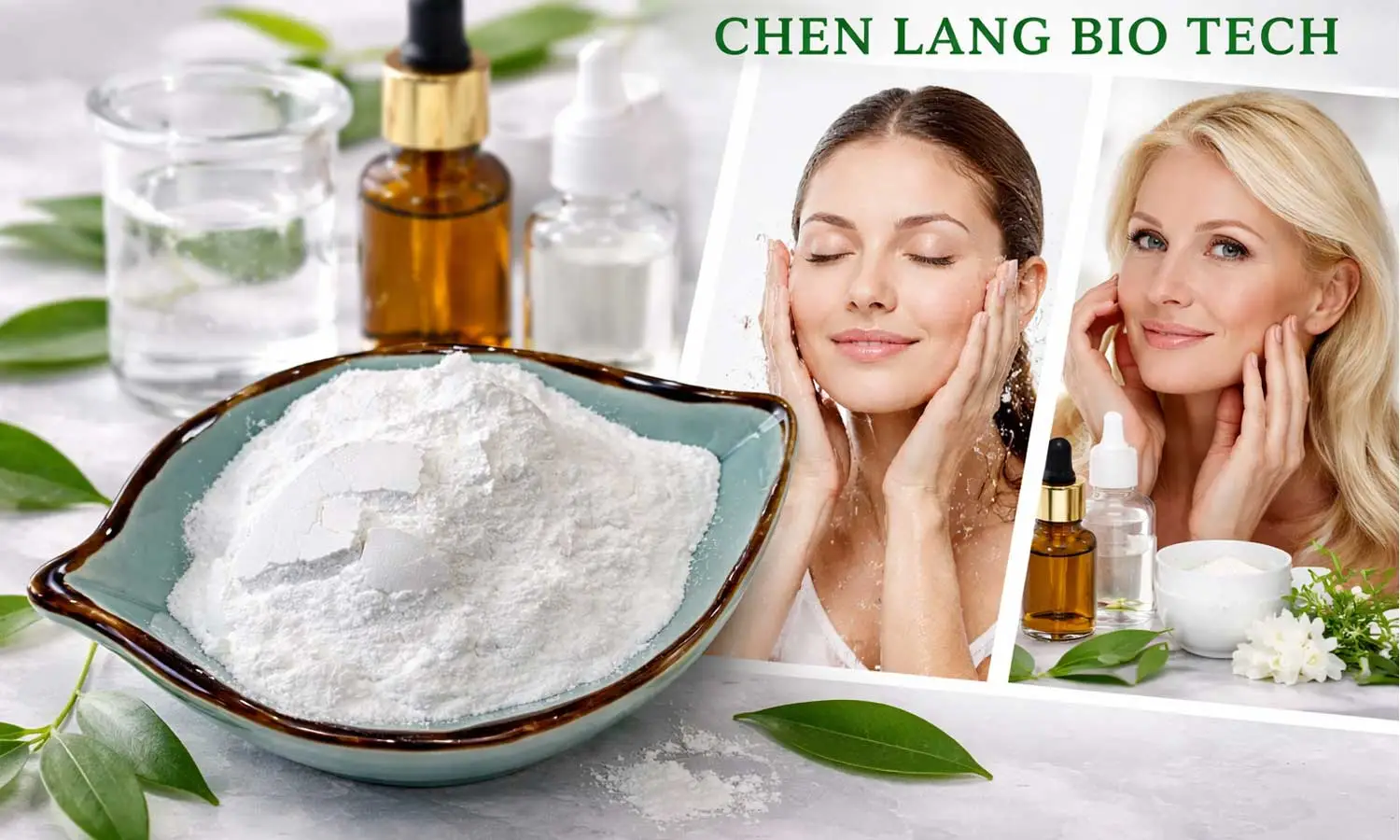
Hyaluronic acid itself is a naturally occurring polysaccharide known for its ability to bind and retain water. In cosmetic formulations, it is widely used to enhance hydration, improve texture, and support the overall sensory profile of a product. In its powder form, however, it offers significantly greater flexibility for manufacturers and formulators.
Unlike pre-dissolved solutions, hyaluronic acid powder allows precise control over concentration, viscosity, and final product structure. This makes it particularly valuable in large-scale production environments, where consistency and customization are critical. For this reason, demand for bulk Hyaluronic Acid Powder and custom Hyaluronic Acid Powder for skincare formulation continues to grow among international brands and contract manufacturers.
One of the key strengths of hyaluronic acid powder for anti-aging is its adaptability across different formulation types. Whether used in serums, creams, gels, or masks, it can be adjusted to achieve different performance profiles. For example:
Lower molecular weight grades are often selected for lightweight formulations requiring faster absorption characteristics
Higher molecular weight grades contribute to film-forming properties and enhanced surface hydration
Multi-weight combinations can be used to create layered hydration effects within a single product
From a sourcing perspective, this versatility is highly valuable. Brands are not just looking for a single ingredient—they are looking for a reliable hyaluronic acid powder manufacturer that can provide multiple specifications, consistent quality, and scalable supply.
At CHEN LANG BIO TECH, we supply hyaluronic acid powder across a wide molecular weight range, from approximately 2,000 Da to 2.2 million Da, covering diverse application needs in both cosmetic and nutraceutical sectors. Our portfolio includes cosmetic grade Hyaluronic Acid Powder, as well as sodium and potassium forms suitable for different formulation systems.
In contrast to retinol, which is often limited by formulation constraints, hyaluronic acid powder is defined by its compatibility. It integrates smoothly into a wide range of ingredient systems, making it a preferred choice for brands aiming to build stable, scalable, and globally compliant formulations.
For product developers and ingredient buyers, this distinction is critical. While retinol may define the “active positioning” of a product, Hyaluronic Acid Powder often defines how well that product performs in real-world use—how it feels, how it hydrates, and how consistently it can be produced at scale.
Retinol vs Hyaluronic Acid Powder: Key Differences in Mechanism, Formulation Role, and Product Positioning
When evaluating Retinol vs Hyaluronic Acid Powder, it is important to move beyond simplified comparisons and look at how each ingredient functions within a complete formulation system. These two ingredients are not direct substitutes; rather, they represent different layers of formulation strategy.
From a mechanistic standpoint, retinol is typically classified as an active ingredient associated with skin renewal processes. It is often used in targeted formulations where brands aim to position products around visible skin texture improvement over time. In contrast, hyaluronic acid powder is primarily valued for its ability to support hydration, improve formulation structure, and enhance overall product performance.
This distinction becomes even more relevant during product development. Retinol requires careful stabilization, controlled environments, and well-designed delivery systems. By comparison, Hyaluronic Acid Powder offers significantly greater formulation tolerance. It integrates smoothly into a wide range of systems, including emulsions, gels, and aqueous solutions, without introducing the same level of formulation risk.
Another key difference lies in how these ingredients contribute to product positioning. Retinol is often marketed as a high-impact active, typically associated with premium or specialized product lines. Hyaluronic Acid Powder, on the other hand, appears across a much broader spectrum—from entry-level hydration products to high-end anti-aging systems—because of its versatility and compatibility.
For procurement teams, this translates into different sourcing priorities. Retinol sourcing often focuses on stability and regulatory compliance, while hyaluronic acid powder supplier selection is more closely tied to consistency, molecular weight options, and supply scalability.
|
Aspect |
Retinol |
Hyaluronic Acid Powder |
|
Primary Role |
Active ingredient in anti-aging positioning |
Functional ingredient for hydration and formulation support |
|
Mechanism Focus |
Skin renewal-related processes |
Moisture retention and hydration balance |
|
Formulation Complexity |
High (sensitive to light, oxygen, temperature) |
Low to moderate (high compatibility) |
|
Stability Requirements |
Strict (requires controlled systems) |
Stable in powder form, easy to handle |
|
Application Range |
Mostly serums and targeted treatments |
Serums, creams, masks, gels, supplements |
|
Customization Flexibility |
Limited |
High (adjustable molecular weight and dosage) |
|
Supply Considerations |
Regulatory and stability-focused |
Scalability, consistency, specification diversity |
|
Consumer Experience |
Performance-driven, sometimes requires adaptation |
Immediate hydration, improved skin feel |
Which Ingredient Is Better for Different Product Types: Serum, Cream, Mask, or Multi-Active Formulations?
In real-world product development, ingredient selection is rarely abstract. It is closely tied to product format, target market, and expected user experience. This is where the distinction between Retinol vs Hyaluronic Acid Powder becomes particularly actionable.
For serum formulations, both ingredients are widely used—but for different purposes. Retinol-based serums are typically positioned as treatment-focused products, often used in evening routines. In contrast, serums built around hyaluronic acid powder for skin hydration are designed for daily use, offering lightweight texture, rapid absorption, and broad compatibility with other ingredients. For brands targeting a wider consumer base, hyaluronic-based serums often present fewer formulation constraints.
In cream formulations, the role of hyaluronic acid powder becomes even more prominent. Creams require a balance between texture, stability, and hydration performance. Here, hyaluronic acid functions not only as a moisturizing agent but also as a structural component that contributes to viscosity and sensory profile. This is why Hyaluronic Acid Powder for face cream is widely used across both mass-market and premium product lines.
Mask products—particularly sheet masks and wash-off masks—also rely heavily on hyaluronic acid systems. The ability of hyaluronic acid powder to create a moisture-retaining film makes it highly suitable for short-duration, high-impact hydration products. Retinol, by contrast, is rarely used as a primary component in such formats due to formulation sensitivity and usage constraints.
In gel-based formulations, especially those targeting younger consumers or oil-prone skin types, hyaluronic acid powder again offers clear advantages. Its ability to deliver hydration without heaviness aligns well with current market trends toward lightweight, fast-absorbing skincare.
Perhaps most importantly, modern product development increasingly moves toward multi-active systems. In these formulations, retinol and hyaluronic acid powder are not competing ingredients—they are complementary. Retinol contributes to the product’s active positioning, while hyaluronic acid supports hydration, improves application feel, and enhances overall formulation balance.
For sourcing teams, this reinforces the importance of working with a reliable hyaluronic acid powder manufacturer capable of supplying multiple grades and supporting different formulation directions.
Can Retinol and Hyaluronic Acid Powder Work Together in the Same Formula?
One of the most frequently asked questions in formulation development is whether retinol and hyaluronic acid powder can be used together. In practice, the answer is not only yes—but in many cases, it is strategically advantageous.
From a formulation design perspective, combining these two ingredients allows brands to address multiple consumer expectations within a single product. Retinol contributes to the product’s active profile, while Hyaluronic Acid Powder for anti-aging formulations helps maintain hydration balance and improve overall user experience.
In practical terms, this means that hyaluronic acid often plays a supporting role in retinol-based systems. It helps mitigate dryness, enhances spreadability, and contributes to a more comfortable skin feel after application. For brands aiming to create more accessible retinol products, this combination can significantly improve product acceptance across different skin types.
From a development standpoint, using Hyaluronic Acid Powder instead of pre-dissolved solutions also provides greater control. Formulators can adjust concentration, select specific molecular weights, and fine-tune the final product profile without compromising stability.
This is particularly relevant for OEM and private label manufacturers, where flexibility and scalability are critical. Working with a professional Hyaluronic Acid Powder supplier allows brands to develop formulations that are both technically robust and commercially viable.
At a market level, this combination reflects a broader trend: consumers are no longer looking for single-function products. They expect formulations that deliver both performance and comfort. The pairing of retinol and hyaluronic acid is a direct response to this demand.
For procurement teams and product developers, the takeaway is clear. The question is no longer Retinol vs Hyaluronic Acid Powder as a binary choice—but how to leverage each ingredient effectively within a well-structured formulation system.
How to Choose the Right Hyaluronic Acid Powder Supplier for Anti-Aging Product Development
When it comes to sourcing high-quality hyaluronic acid powder, selecting the right supplier is crucial to the success of your skincare formulations. Given the importance of consistent quality, supply reliability, and technical support, it’s essential to evaluate potential suppliers based on several key criteria.
1. Molecular Weight Range and Customization Options
Different molecular weights of hyaluronic acid powder provide different benefits to the skin. Lower molecular weights (typically under 100 kDa) penetrate deeper into the skin, making them ideal for long-term anti-aging effects and collagen synthesis. Higher molecular weights (over 1,000 kDa) work primarily on the skin's surface to provide instant hydration, reduce the appearance of fine lines, and create a smooth, plump texture. As a result, choosing a supplier that offers a wide molecular weight range is critical, as it allows formulators to choose the best version based on the desired product effect.
CHEN LANG BIO TECH, for instance, offers hyaluronic acid powder with molecular weights ranging from 2,000 Da to 2.2 million Da, making us an ideal partner for both high-end anti-aging treatments and entry-level hydration products. Additionally, we offer custom hyaluronic acid powder services, ensuring that your formulations are tailored to the specific needs of your product line.
2. Consistency and Purity
Another crucial factor when selecting a hyaluronic acid powder supplier is the purity and consistency of the product. Hyaluronic acid is a sensitive ingredient, and even slight impurities or inconsistencies can affect the performance and stability of your formulation. High-quality suppliers should offer consistent batches with low levels of contaminants, ensuring that your final product is both effective and safe for consumers.
At CHEN LANG BIO TECH, we pride ourselves on maintaining high standards of quality control. Our products undergo rigorous testing, and we are ISO 9001, ISO 22000, and HACCP certified, guaranteeing that the hyaluronic acid powder you receive is pure and reliable for commercial-scale production.
3. Regulatory Compliance and Certifications
For skincare manufacturers, regulatory compliance is non-negotiable. Ensure that your hyaluronic acid powder supplier complies with international standards, including GMP, FDA, and EU regulations. This is especially important for products aimed at global markets, where adherence to local regulations is a must.
CHEN LANG BIO TECH has earned GMP certification for our production facilities, ensuring that all our hyaluronic acid powders are manufactured under stringent conditions. Additionally, our Hyaluronic Acid Powder is compliant with US FDA standards and EU Cosmetics Regulation, making it suitable for use in both domestic and international markets.
4. Supply Reliability and Scalability
A reliable supplier is essential for ensuring that your product development process is smooth and that your product launches stay on schedule. Consider a supplier that can meet your order volume consistently, with the flexibility to adjust for scalability as your product line grows.
With multiple automated production lines and the ability to handle large orders, CHEN LANG BIO TECH ensures that you receive hyaluronic acid powder in the quantities you need, whether you're developing a new product in small batches or scaling up for mass production.
5. Technical Support and Customization
Choosing a supplier who provides comprehensive technical support is vital. Whether you’re developing new formulations or encountering challenges in your existing product lines, a supplier with strong R&D and technical support teams can offer valuable insights and assistance.
CHEN LANG BIO TECH offers more than just product supply—we partner with our clients to develop optimal formulations, troubleshoot issues, and guide them in product optimization. We also provide detailed technical data sheets and formulation guidelines for every batch of hyaluronic acid powder.
FAQ: Retinol vs Hyaluronic Acid Powder in Anti-Aging Skincare
Q1: Can retinol and hyaluronic acid powder be used together in the same skincare product?
Yes, retinol and hyaluronic acid powder can absolutely be used together in the same product. Retinol targets deep skin renewal and anti-aging effects, while hyaluronic acid powder provides hydration and moisture retention, which can help mitigate any potential dryness or irritation caused by retinol. When combined in a single formulation, they can complement each other, providing both long-term anti-aging benefits and immediate hydration.
Q2: Which ingredient is better for deeper skin penetration—Retinol or Hyaluronic Acid Powder?
Retinol is known for its ability to penetrate deep into the skin layers to promote cell turnover and enhance skin renewal. However, hyaluronic acid powder, particularly in its low molecular weight form, also penetrates deeper layers of the skin and provides long-lasting hydration. While both ingredients have different mechanisms, they can work together for a comprehensive anti-aging effect.
Q3: Is Hyaluronic Acid Powder better for sensitive skin compared to Retinol?
Yes, hyaluronic acid powder is generally gentler on sensitive skin compared to retinol. Retinol can sometimes cause irritation, especially for those with more sensitive skin types. Hyaluronic acid powder, being a natural moisturizer, works to hydrate and soothe the skin, making it ideal for those with sensitive or reactive skin. It is also often used to counteract the drying effects of retinol in sensitive formulations.
Q4: How do I choose between Retinol and Hyaluronic Acid Powder for my skincare products?
The choice between retinol and hyaluronic acid powder depends on your product goals. If your aim is skin renewal and the reduction of deep wrinkles, retinol is the ideal active ingredient. However, if your focus is on hydration, plumping, and improving skin elasticity, hyaluronic acid powder is the better choice. For best results, both ingredients can be combined to provide both active renewal and hydration in one product.
Q5: Can I use hyaluronic acid powder in a retinol serum?
Absolutely. Using hyaluronic acid powder in a retinol serum is a popular approach. The hyaluronic acid powder helps to soothe and hydrate the skin, balancing the drying effects that retinol can sometimes cause. The combination of both can give consumers the best of both worlds: instant hydration from the hyaluronic acid and long-term anti-aging effects from the retinol.
CHEN LANG BIO TECH: Your Reliable Supplier of Hyaluronic Acid Powder for Anti-Aging and Hydration Formulations
As one of the leading suppliers of hyaluronic acid powder, CHEN LANG BIO TECH has built a reputation for delivering high-quality, reliable, and customizable solutions for the skincare industry. We understand the unique needs of formulation teams, manufacturers, and product developers, and we are committed to providing the best raw materials to ensure the success of your products.
Why Choose CHEN LANG BIO TECH?
Wide Range of Molecular Weights: From low molecular weight for deep skin penetration to high molecular weight for surface hydration, our hyaluronic acid powder meets the demands of various skincare applications.
•Customization Services: We offer customized Hyaluronic Acid Powder to suit your specific product needs, whether it’s for anti-aging, hydration, or other skin benefits.
•Certified Quality: Our products meet global quality standards, including ISO 9001, ISO 22000, and HACCP certifications, ensuring the highest levels of purity and safety.
•Reliable Supply Chain: With our automated production lines and robust logistics network, we provide timely delivery, even for large-scale orders, to support your product launches and growth.
•Comprehensive Technical Support: Our dedicated support team offers formulation assistance, troubleshooting, and custom solutions to optimize your products.
At CHEN LANG BIO TECH, we are more than just a supplier; we are a partner in your formulation journey. Our goal is to provide the best hyaluronic acid powder that will elevate your product performance and help your brand stand out in the competitive skincare market. For more information or to discuss your specific needs, please contact us at admin@chenlangbio.com.

Send Inquiry
Related Industry Knowledge
- How Much Pomegranate Powder vs Extract for Heart Health
- Can Beta Ecdysterone be Used for Weight Loss?
- Health Benefits of Pelargonium Sidoides Extract
- Is Kopexil Better Than Minoxidil for Hair Loss?
- Where to Buy Authentic Pro-xylane Powder Online
- What are Praziquantel Tablets for
- What is the Best Ergothioneine Supplement
- How Much Mangiferin Is In A Mango
- What is Shilajit Extract Powder
- Are Tribulus Terrestris Extract Powder Good for You