Red Clover Extract vs Red Clover Powder: Processing, Isoflavones and Quality
November 19, 2026
Red clover extract vs red clover powder is an important distinction for supplement manufacturers because the two ingredients differ in processing, chemical composition, standardization, and formulation performance. Although both originate from Trifolium pratense L., they are not necessarily interchangeable in commercial products.
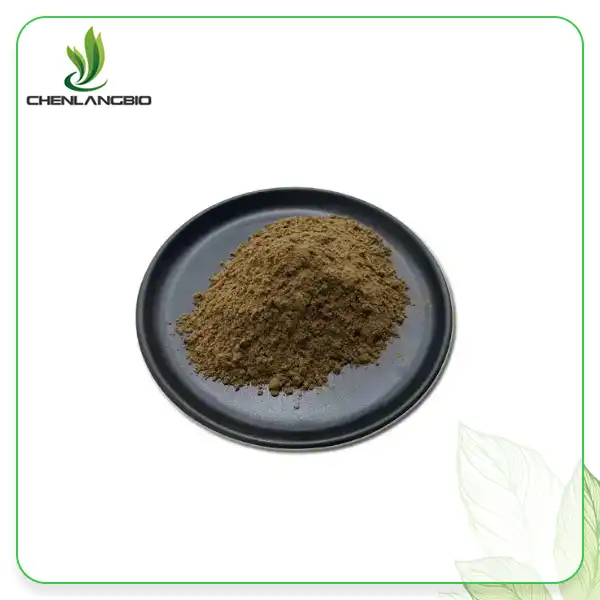
Red clover powder is generally produced by drying and milling botanical material, preserving much of its original plant matrix. Standardized red clover extract undergoes additional processing to achieve a defined concentration of isoflavones, making it suitable for formulations that require measurable and reproducible marker-compound content.
For ingredient buyers, the choice involves more than concentration. Botanical identity, analytical methods, powder characteristics, manufacturing consistency, and cost per unit of isoflavones all influence purchasing decisions.
This guide examines these differences from a manufacturing and quality perspective, helping supplement brands, contract manufacturers, and ingredient distributors select materials that meet their technical and commercial requirements.
Red Clover Extract vs Red Clover Powder: Key Differences
The fundamental difference between red clover extract vs powder lies in how the botanical material is processed and how its chemical composition is controlled.
Whole-herb powder retains the ground plant material, including naturally occurring fibers and other botanical constituents. Extract manufacturing selectively transfers soluble compounds into an extraction medium, followed by concentration and further processing.
As a result, the two ingredients can differ considerably in their chemical profiles and physical characteristics.
|
Comparison Factor |
Red Clover Powder |
Standardized Red Clover Extract |
|
Botanical source |
Trifolium pratense L. |
Trifolium pratense L. |
|
Manufacturing |
Drying, milling, and sieving |
Extraction, concentration, optional enrichment, and drying |
|
Plant matrix |
Largely retained |
Partially removed or altered |
|
Isoflavone content |
Naturally variable |
Controlled to a defined specification |
|
Standardization |
Not necessarily standardized |
Commonly standardized by total isoflavones |
|
Analytical requirements |
Botanical identity and applicable quality tests |
Botanical identity, assay, and applicable quality tests |
|
Formulation loading |
Depends on native isoflavone content |
Calculated using declared assay |
|
Physical characteristics |
Influenced by plant fiber and milling |
Influenced by extraction, drying, and carrier materials |
|
Purchasing considerations |
Plant origin, identity, particle size, and contaminants |
Assay method, consistency, quality specifications, and price |
A red clover powder vs extract comparison should therefore begin with the intended product specification.
For formulations emphasizing whole botanical ingredients, milled red clover may be appropriate. However, when manufacturers require a defined amount of total isoflavones within limited capsule or tablet space, standardized extract generally provides greater formulation flexibility.
Neither material should be considered inherently superior without evaluating its intended application.
Red Clover Powder Processing: Botanical Material, Drying and Milling
The production of whole herb red clover powder involves several operations that influence the finished ingredient's identity, composition, and handling properties.
Unlike standardized extracts, botanical powders typically retain the original plant matrix. Consequently, agricultural conditions and post-harvest processing have a direct influence on finished-product characteristics.
♦Botanical Identity and Plant Part Selection for Red Clover Powder
Red clover belongs to the Fabaceae family and is botanically identified as Trifolium pratense L.
However, botanical identity alone does not fully define a commercial ingredient. The plant part used must also be specified.
Different botanical materials may contain different proportions of isoflavones and other constituents. Therefore, an ingredient described simply as red clover powder may not be chemically equivalent to another material sourced from a different plant part.
For commercial procurement, buyers should confirm the botanical name, plant part, geographic origin where relevant, and identification procedure.
Appropriate identity testing may involve botanical examination, microscopy, chromatographic fingerprinting, or other suitable techniques.
♦Drying, Milling and Particle Size in Red Clover Herb Powder
Red clover powder processing generally begins with controlled drying to reduce moisture before milling.
Drying conditions can influence material color, chemical stability, and microbial quality. Excessive processing temperatures may also affect sensitive constituents, depending on the material and conditions.
Following drying, milling reduces the botanical material to the required particle size. Sieving may then be used to control oversized particles and improve consistency.
For supplement manufacturers, particle size influences powder handling, blending behavior, and potentially capsule-filling performance.
However, finer powder does not automatically provide better processing characteristics. Cohesiveness, electrostatic behavior, moisture, and particle shape can also affect flow.
Therefore, buyers should request particle-size information when it is relevant to their manufacturing process.
♦Natural Isoflavone Variation in Non-Standardized Red Clover Powder
The red clover powder isoflavones profile reflects the natural composition of the botanical material.
Isoflavone concentrations can vary with plant part, growing conditions, maturity, harvest timing, and post-harvest handling.
Because ordinary botanical powder is not necessarily adjusted to a defined isoflavone concentration, its chemical composition may vary between production lots.
This does not automatically make it unsuitable for supplement manufacturing. However, it means that manufacturers requiring a consistent marker-compound concentration may need additional analytical controls.
For buyers sourcing red clover powder vs extract, the distinction is particularly important when the finished product has a declared isoflavone specification.
Red Clover Extract Manufacturing Process and Isoflavone Standardization
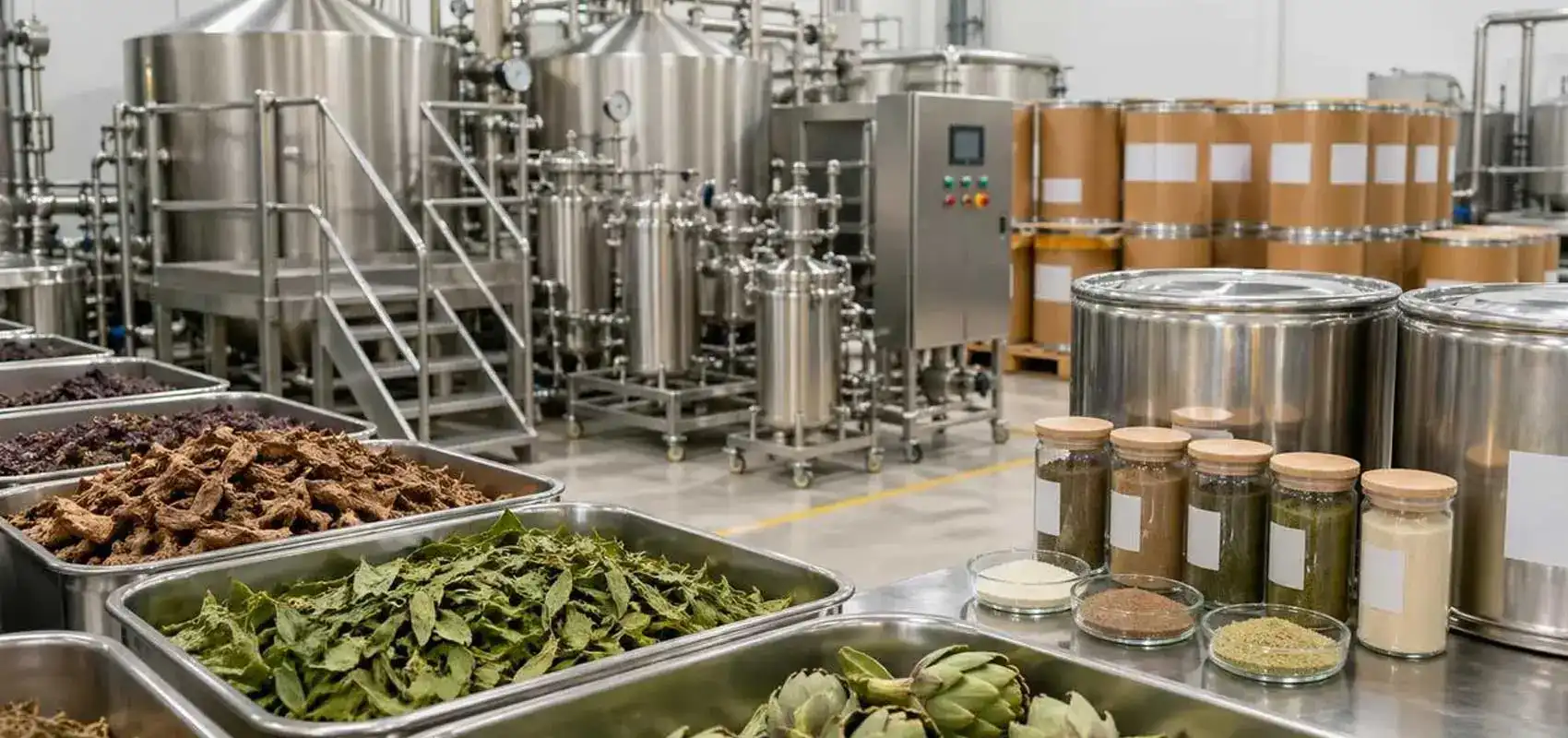
The red clover extract manufacturing process is designed to separate selected soluble constituents from botanical material and produce an ingredient with defined characteristics.
The specific process varies according to the target composition, extraction technology, and finished-product specification.
Solvent Extraction and Concentration of Red Clover Isoflavones
Extract production begins with authenticated botanical material prepared for extraction.
An appropriate solvent system is selected according to the chemical properties of the target compounds. Solvent composition, extraction temperature, contact time, and solid-to-liquid ratio can influence extraction efficiency and the composition of the resulting solution.
Isoflavones differ in polarity and chemical form, meaning extraction conditions may affect their relative recovery.
After extraction, the liquid phase is separated from the insoluble plant residue. Concentration removes part of the extraction medium and increases the concentration of dissolved constituents.
However, extraction alone does not guarantee a particular total isoflavone percentage. Additional processing or standardization may be necessary.
Purification, Drying and Standardization of Red Clover Extract Powder
Depending on the target grade, the concentrated extract may undergo further enrichment or purification.
Subsequent drying converts the processed extract into a powder suitable for storage, transportation, and commercial formulation.
Drying conditions, powder recovery, and the use of any permitted carriers can influence the finished ingredient's assay and physical properties.
Red clover extract standardization means establishing and controlling a defined chemical specification, commonly expressed as total isoflavones.
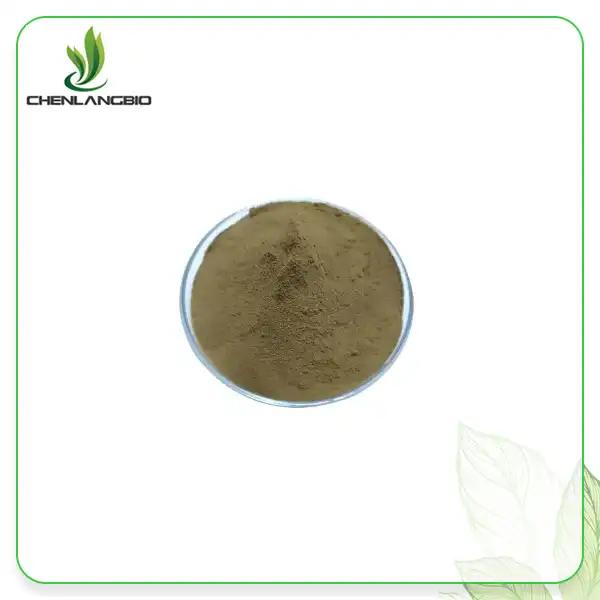
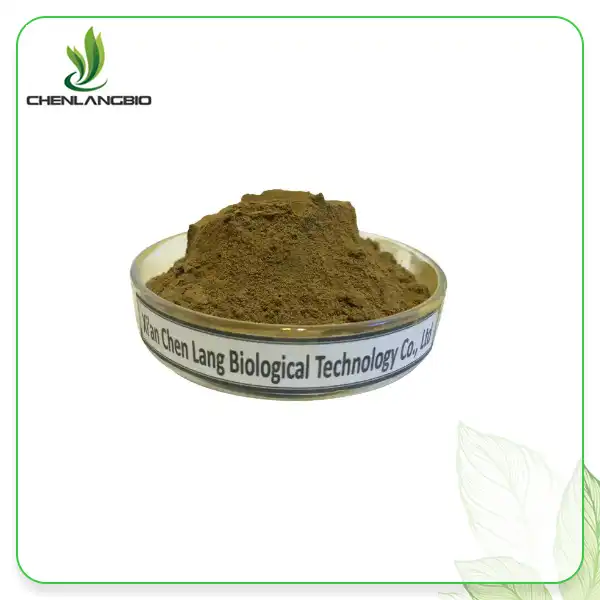
At CHEN LANG BIO TECH, our standardized red clover extract range includes 8%, 20%, and 40% total isoflavones determined by HPLC.
The declared concentration should be supported by an appropriate analytical method and batch-specific quality documentation.
Red Clover Extract Ratio vs Standardized Isoflavone Content
A common purchasing misunderstanding involves the difference between extraction ratio and standardized content.
An extract described as 10:1 generally refers to a stated relationship between botanical input and extract output, although the precise definition and calculation basis must be confirmed with the manufacturer.
It does not mean the finished extract contains 10% isoflavones or that every constituent has become ten times more concentrated.
The red clover extract ratio vs standardization distinction matters because extraction yield depends on the starting material, solvent system, processing conditions, and material losses.
For formulations requiring a defined isoflavone concentration, a validated assay specification is more directly useful than an extraction ratio alone.
Red Clover Extract Isoflavone Content vs Whole Herb Powder
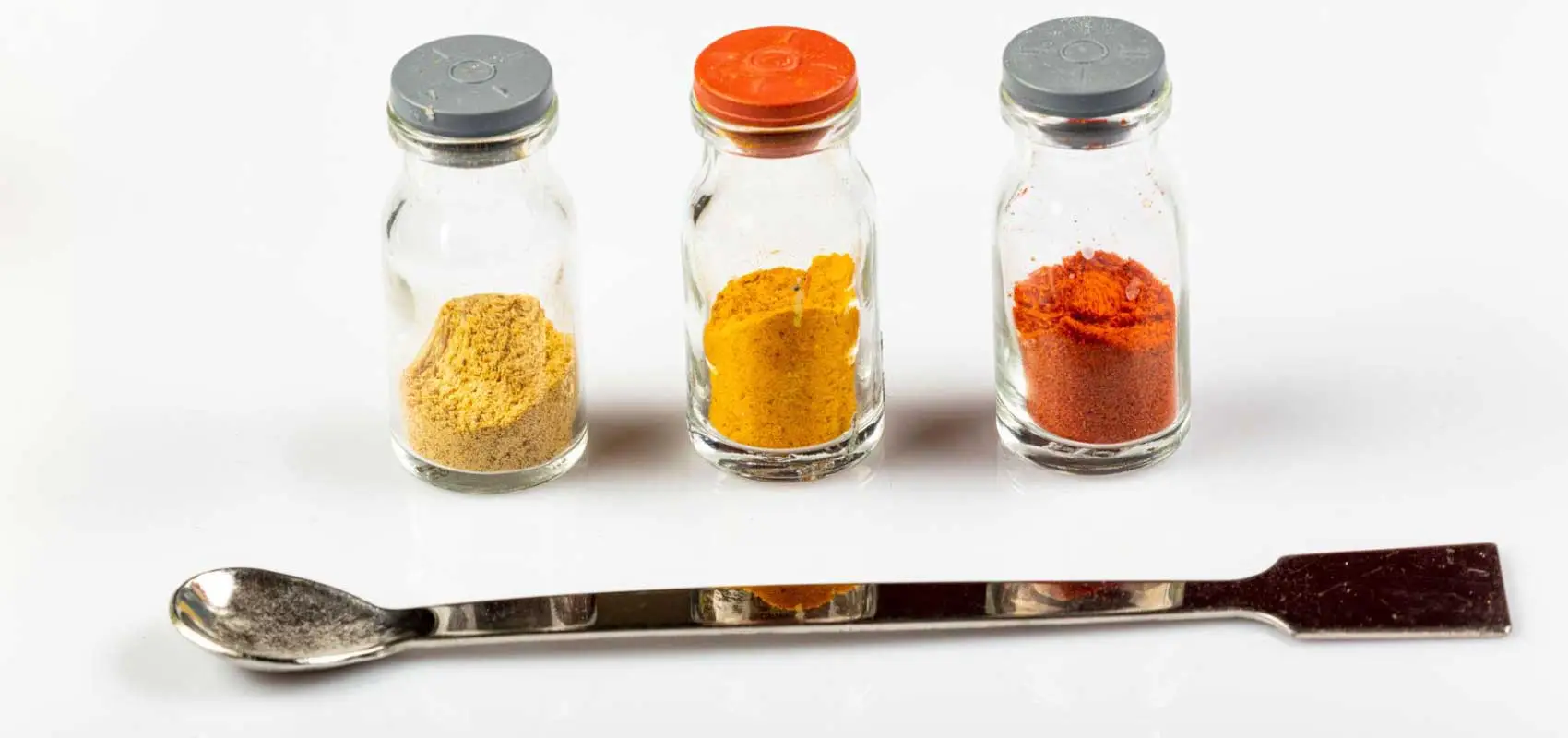
The most commercially significant difference between these materials is often their red clover extract isoflavone content.
Red clover contains several naturally occurring isoflavones, including biochanin A, formononetin, genistein, and daidzein.
However, the concentrations and relative proportions of these compounds depend on the botanical material and processing method.
Biochanin A, Formononetin, Genistein and Daidzein in Red Clover
Biochanin A and formononetin are O-methylated isoflavones associated with red clover. Genistein and daidzein are structurally related compounds that may occur in free or conjugated forms.
Their relative distribution contributes to the material's red clover isoflavone profile.
For standardized extract production, total isoflavone content is typically determined through an analytical procedure that quantifies specified compounds and applies a defined calculation method.
Importantly, the same total percentage does not necessarily indicate an identical distribution of individual isoflavones.
Buyers with established formulation requirements should therefore consider whether total content alone is sufficient or whether individual compound data are also needed.
Standardized Red Clover Extract 8%, 20% and 40% Isoflavones
Standardized extracts allow manufacturers to calculate theoretical ingredient loading from the declared assay.
|
Extract Specification |
Nominal Total Isoflavones per Gram |
|
8% total isoflavones |
80 mg |
|
20% total isoflavones |
200 mg |
|
40% total isoflavones |
400 mg |
For example, a formulation targeting 40 mg of total isoflavones would theoretically require 100 mg of red clover extract 40% isoflavones, assuming the assay definition matches the formulation requirement.
Actual formulation calculations should use the applicable material specification and verified assay.
By contrast, the amount of ordinary red clover powder required cannot be determined reliably without knowing its measured isoflavone content.
Why Higher Isoflavone Concentration Does Not Automatically Mean Better Quality
A higher assay may reduce the quantity of extract needed to achieve a target isoflavone amount.
Nevertheless, concentration is only one aspect of quality.
Botanical identity, individual isoflavone distribution, residual solvents, microbiological quality, elemental contaminants, and batch consistency remain important.
A lower-concentration extract that meets a manufacturer's complete specification may be more appropriate than a higher-concentration material that introduces unnecessary formulation or quality-control complications.
HPLC Testing and Quality Specifications for Red Clover Ingredients
Reliable ingredient selection depends on analytical methods that are appropriate for the material and its intended application.
For standardized extracts, red clover extract HPLC testing is particularly important because the declared isoflavone percentage is a central commercial specification.
HPLC Assay Methods for Standardized Red Clover Extract
High-performance liquid chromatography separates selected compounds and allows their quantification using appropriate reference standards.
However, different methods may measure different chemical forms or apply different calculation procedures.
For example, methods incorporating hydrolysis may report results differently from procedures measuring selected free and conjugated compounds directly.
Therefore, two extracts labeled 40% total isoflavones should not automatically be considered analytically equivalent.
Buyers should confirm the assay method, calculation basis, and reporting units before comparing suppliers.
Botanical Identity, Heavy Metals and Microbiological Quality
Both botanical powders and standardized extracts require appropriate red clover extract quality control or equivalent botanical powder testing.
Relevant parameters may include identity, moisture, elemental contaminants, microbiological quality, and process-related residues.
Extraction can alter the concentration of certain constituents and impurities. However, it does not automatically eliminate contaminants.
Similarly, whole-herb powder should not be assumed to be safer simply because it undergoes less processing.
Acceptance limits must reflect applicable regulations, intended use, and the buyer's established quality requirements.
Red Clover Extract COA and Batch Consistency
A red clover extract COA should connect the actual batch to its declared specification.
For commercial purchasing, buyers should distinguish between representative documentation and the results associated with the delivered lot.
The COA should identify relevant tests, acceptance criteria, actual results, and appropriate batch information.
Supporting red clover extract specifications may also define particle size, packaging, storage conditions, and other requirements not routinely reported on every COA.
When comparing suppliers, consistent analytical definitions are essential for meaningful batch-to-batch evaluation.
Red Clover Extract vs Powder in Supplement Formulation
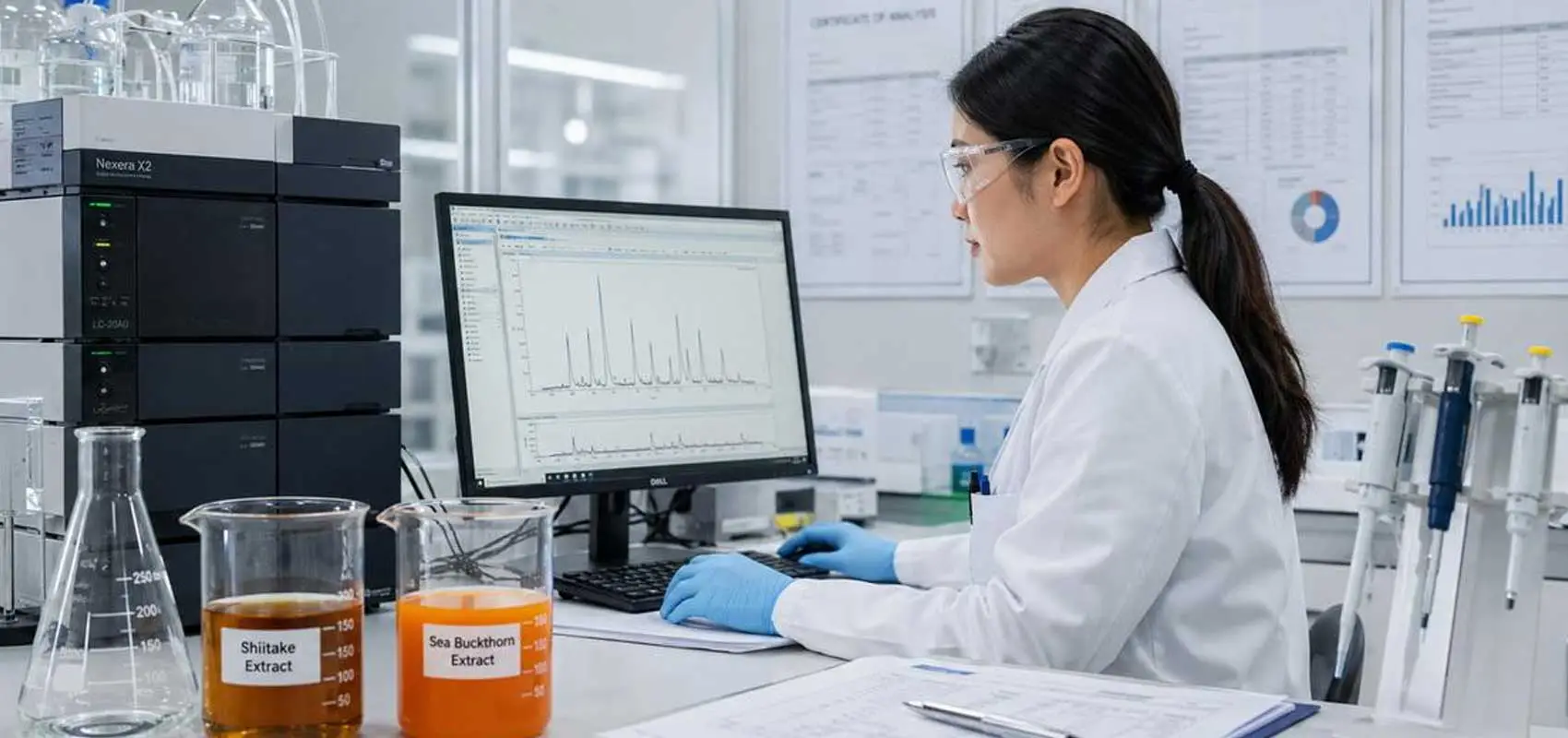
The selection of red clover extract for supplements should consider both chemical composition and manufacturing performance.
A material that meets its assay requirement may still require formulation adjustments because of its physical properties.
Capsule and Tablet Formulation with Red Clover Extract Powder
Standardized extract allows formulators to calculate the required ingredient quantity based on a declared total isoflavone concentration.
This can be particularly useful when capsule volume or tablet weight is limited.
For red clover extract capsule formulation, higher-assay material may reduce botanical ingredient loading and leave more space for excipients or additional ingredients.
However, formulation feasibility also depends on bulk density, flow, compressibility, and compatibility with other components.
The highest-assay grade is not automatically the easiest material to process.
Powder Flow, Bulk Density and Blending Compatibility
Particle size, particle shape, moisture, and surface characteristics influence powder behavior.
Extract powders may be relatively fine or cohesive, while whole-herb powders may contain fibrous particles that behave differently during mixing and filling.
Red clover extract powder bulk density is therefore relevant when estimating capsule capacity and evaluating volumetric filling operations.
Where uniform distribution is important, manufacturers should assess blending behavior and potential segregation rather than relying solely on ingredient assay.
When Whole Herb Red Clover Powder May Be Preferred
Whole-herb powder may be appropriate when the finished product is positioned around minimally processed botanical ingredients.
It may also be suitable when a standardized isoflavone concentration is not the primary formulation requirement.
Nevertheless, manufacturers should still verify botanical identity, quality specifications, and processing compatibility.
The preferred ingredient depends on the finished product's technical and commercial objectives.
Bulk Red Clover Extract Pricing and Cost per Gram of Isoflavones
Comparing red clover extract price per kg with the price of whole-herb powder can be misleading when the two materials contain different amounts of isoflavones.
For products formulated around a defined isoflavone target, the cost of the standardized constituent is often a more useful purchasing metric.
Red Clover Extract Price per Kilogram vs Isoflavone Cost
The theoretical cost per gram of total isoflavones can be calculated as follows:

Consider a hypothetical bulk red clover extract powder quotation of USD 80/kg for a 20% extract.
One kilogram nominally contains 200 grams of total isoflavones.
Therefore, the theoretical ingredient cost is USD 0.40 per gram of total isoflavones.
This calculation excludes manufacturing losses, analytical uncertainty, shipping, and other purchasing expenses.
For whole-herb powder, an equivalent comparison requires a measured isoflavone concentration using an appropriate analytical basis.
Without that information, a lower purchase price per kilogram does not establish a lower cost per unit of isoflavones.
Commercial Cost Factors Beyond Ingredient Price
Ingredient purchasing decisions should also account for testing requirements, formulation loading, packaging, transportation, and manufacturing efficiency.
For example, a lower-assay ingredient may require a larger quantity per production batch, affecting storage space, blending capacity, and finished dosage-form size.
Conversely, a higher-assay extract may carry a higher purchase price and require different handling or formulation adjustments.
When evaluating red clover extract bulk price, buyers should compare total manufacturing implications rather than relying on unit price alone.
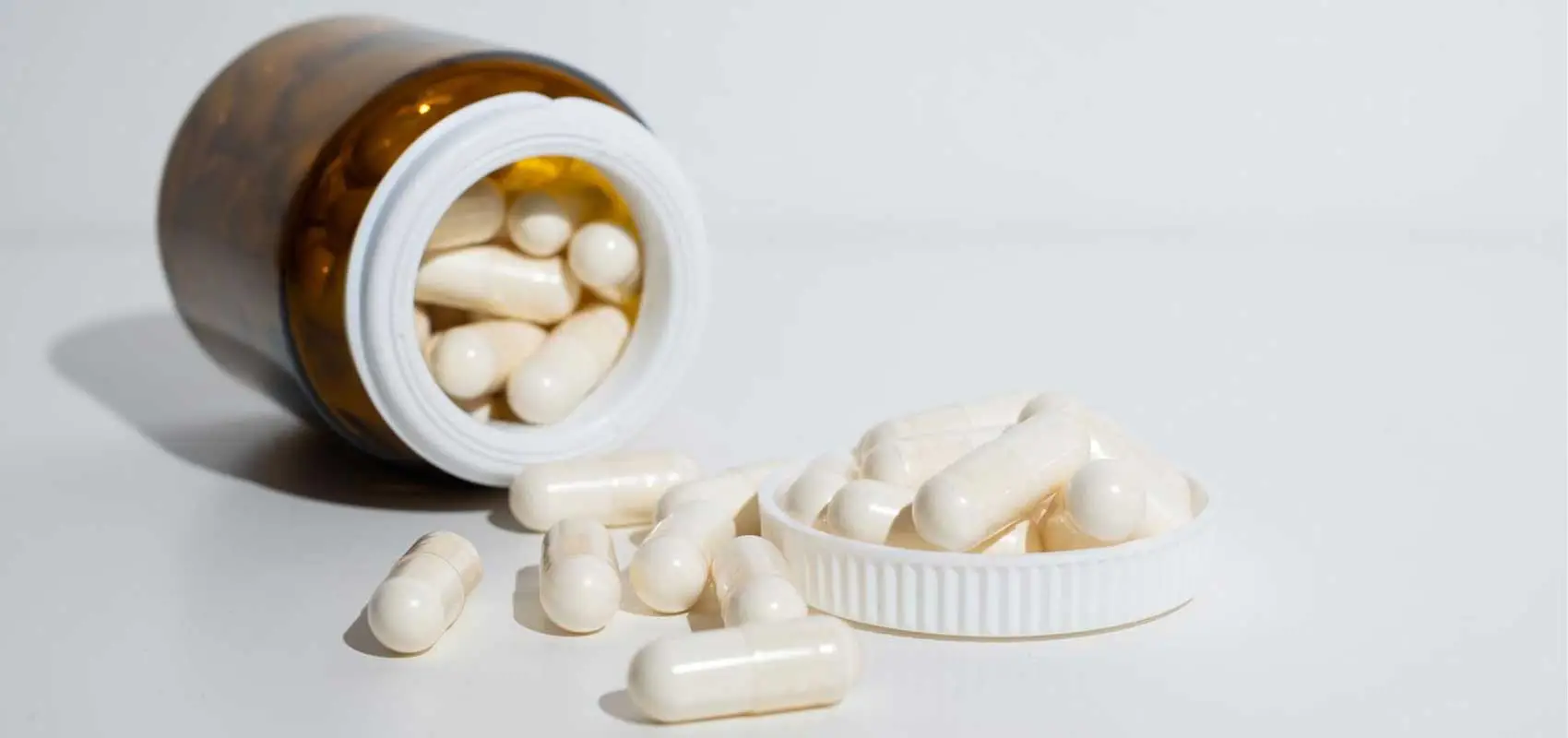
Choosing a Red Clover Extract Supplier for Commercial Manufacturing
Selecting a qualified red clover extract supplier requires alignment between the material specification, analytical documentation, and intended manufacturing application.
Red Clover Extract Specifications and Supplier Qualification
A reliable red clover extract manufacturer should be able to clarify the botanical source, available assay grades, analytical method, and relevant quality requirements.
Buyers should also review batch traceability, testing documentation, and the supplier's ability to maintain an agreed specification.
These considerations are particularly important when qualifying an ingredient for repeated commercial production.
Red Clover Extract Samples, MOQ and Bulk Supply Requirements
Before committing to a red clover extract wholesale purchase, manufacturers should consider sample evaluation.
A red clover extract sample can support preliminary assessment of assay, appearance, handling properties, and formulation compatibility.
For ongoing sourcing, buyers should confirm MOQ, packaging, lead time, shipping arrangements, and available documentation with the bulk red clover extract supplier.
Selecting the Right Material for Supplement Manufacturing
|
Manufacturing Requirement |
Material to Evaluate First |
|
Whole botanical ingredient positioning |
Red clover powder |
|
Defined total isoflavone concentration |
Standardized red clover extract |
|
Lower ingredient loading for a specified isoflavone target |
Higher-assay standardized extract |
|
Consistent marker-compound specification |
Extract with an agreed assay method |
|
Minimal botanical processing |
Dried and milled red clover powder |
These recommendations provide an initial selection framework. Final approval should follow actual specification review and material evaluation.
Red Clover Extract vs Red Clover Powder: Frequently Asked Questions
Is red clover extract stronger than red clover powder?
In terms of total isoflavone concentration, standardized extract is generally designed to provide a defined, potentially higher concentration than ordinary botanical powder. However, red clover extract vs powder potency cannot be established without comparable analytical results, and concentration should not be equated with clinical effectiveness.
Does red clover powder contain isoflavones?
Yes. Red clover naturally contains isoflavones, including biochanin A and formononetin. However, red clover powder isoflavone content varies according to botanical material and processing conditions. Non-standardized powder should not be assumed to contain a fixed percentage.
Is a 10:1 red clover extract the same as 10% isoflavones?
No. An extraction ratio describes a relationship between botanical input and extract output under a defined convention. It does not establish the finished material's isoflavone percentage. The assay must be determined separately.
Which red clover ingredient is better for capsules?
For red clover extract for capsule manufacturing, standardized extract may be advantageous when a defined isoflavone amount must fit within a limited capsule volume. Whole-herb powder may be suitable for different product concepts, subject to formulation testing.
What should buyers check before purchasing bulk red clover extract?
Buyers should confirm botanical identity, assay method, total isoflavone specification, contaminant testing, batch traceability, and relevant physical characteristics. Appropriate bulk red clover extract quality specifications should be agreed upon before commercial purchasing.
Request Standardized Red Clover Extract and Bulk Pricing
CHEN LANG BIO TECH supplies standardized red clover extract for supplement manufacturers, ingredient distributors, and international commercial buyers.
Our available specifications include:
|
Product |
Total Isoflavones |
Analytical Method |
|
Red Clover Extract |
8% |
HPLC |
|
Red Clover Extract |
20% |
HPLC |
|
Red Clover Extract |
40% |
HPLC |
For companies looking to buy standardized red clover extract, our team can assist with product specifications, available quality documentation, sample requests, and commercial quotations.
As an experienced botanical ingredient supplier, we recognize that consistent quality, transparent analytical information, and dependable supply arrangements are essential for long-term manufacturing partnerships.
Whether you are evaluating an ingredient for a new supplement formulation or reviewing an existing supply chain, we can help identify a suitable specification for your purchasing requirements.
Request Red Clover Extract Specifications, Samples and Bulk Pricing
Contact CHEN LANG BIO TECH at Email: admin@chenlangbio.com to discuss your application, required specification, and order quantity.
References and Technical Resources
1. United States Pharmacopeia (USP–NF). Powdered Red Clover Extract. Official monograph; consult the current applicable edition for analytical requirements.
2. United States Pharmacopeia (USP–NF). Red Clover Powder. Official monograph; consult the current applicable edition.
3. International Council for Harmonisation (ICH). Q2(R2): Validation of Analytical Procedures. Principles relevant to analytical method performance.
4. European Medicines Agency (EMA). Guideline on Quality of Herbal Medicinal Products/Traditional Herbal Medicinal Products. Quality principles for herbal materials and preparations, subject to product classification.
5. National Center for Biotechnology Information, PubChem. Chemical information for biochanin A, formononetin, genistein, and daidzein.
6. World Health Organization. Quality Control Methods for Herbal Materials. Guidance covering botanical identification and relevant quality-control procedures.

Send Inquiry

Related Industry Knowledge
- Oligopeptide-68 Powder: Benefits, Mechanism and Cosmetic Applications for Skin Brightening
- PQQ vs NAD in Dietary Supplements: What Ingredient Buyers Should Know
- Buy Methyloxetanecarbamido Thiazolyl Resorcinol in Bulk: CHEN LANG BIO TECH Verified China Manufacturer
- How to Verify a DHEA Powder COA Before Bulk Purchase?
- Hyaluronic Acid Powder for Joint Health: The Essential Ingredient for Your Supplement Formulations
- Top 6 Ways Grape Seed Extract Enhances Overall Wellness
- How Does Micronization Improve Progesterone Bioavailability?
- Rutecarpine Powder for Beginners: Benefits and Dosage
- Can You Mix Magnesium Ascorbyl Phosphate with Retinol
- Magnolol Powder for Acne