
Pine Bark Extract vs Pycnogenol: Choosing the Right Botanical Ingredient for Bulk Formulations
2026-05-30 15:56:49
Introduction
In the global nutraceutical and cosmetic markets, selecting the right botanical ingredient is critical for product performance, consistency, and market positioning. Pine bark extract, derived from the bark of Pinus pinaster, and Pycnogenol, a trademarked form of French maritime pine bark extract, are two of the most recognized options for manufacturers seeking high-quality, standardized botanical inputs. Understanding the distinctions between these ingredients is essential for supplement and skincare formulators, ingredient distributors, and procurement teams aiming to optimize formulations while maintaining cost-effectiveness.
Both ingredients are rich in procyanidins, polyphenols, and OPCs (oligomeric proanthocyanidins), making them valuable for antioxidant-focused nutraceutical formulations and cosmetic applications. However, the choice between Pycnogenol and generic maritime pine bark extract often comes down to considerations such as cost, branding, bulk supply, and flexibility in specifications. For companies sourcing bulk pine bark extract, understanding these differences allows for more strategic decisions regarding ingredient selection and product differentiation.
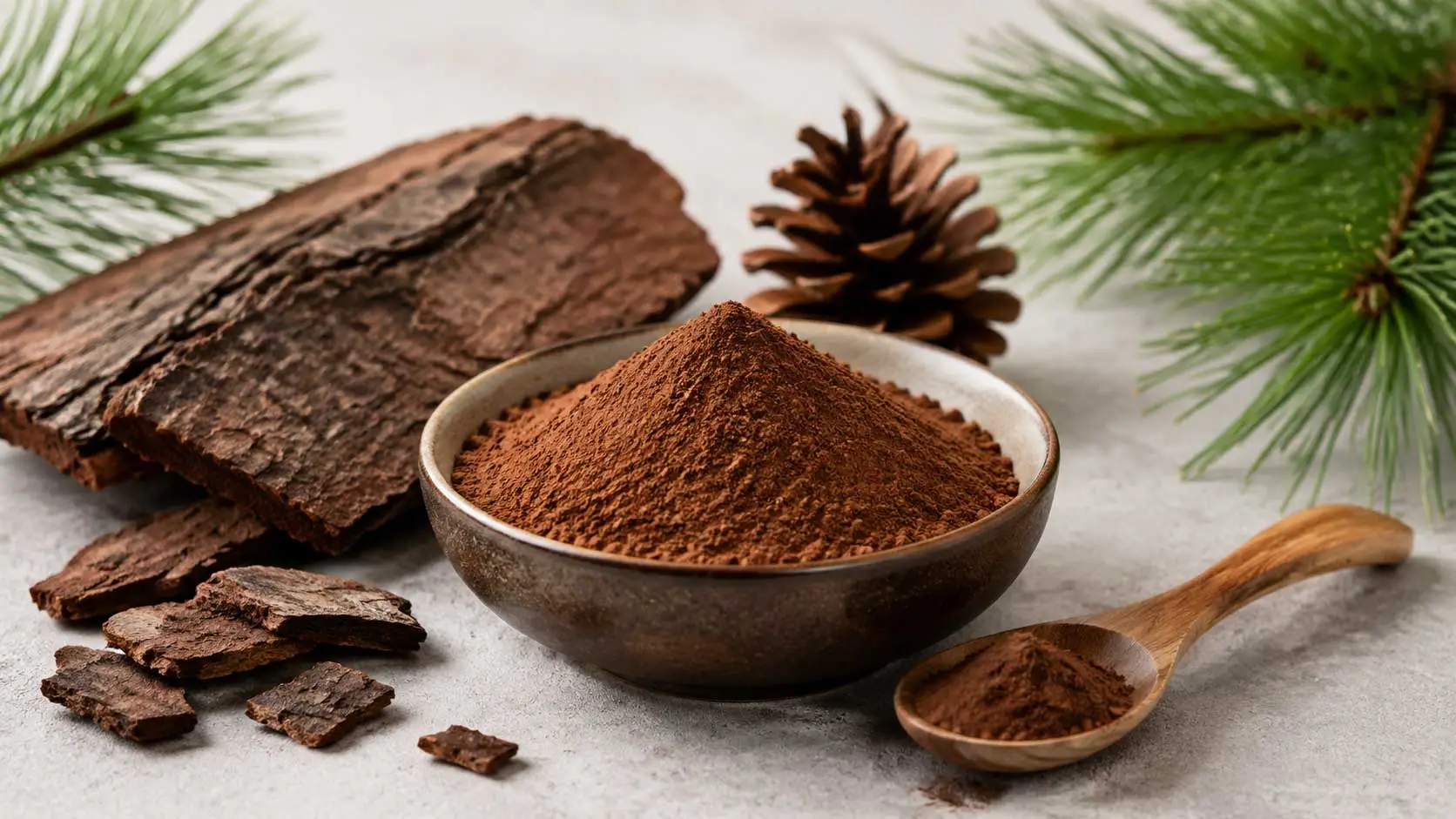
For international ingredient buyers and formulation teams, suppliers offering standardized pine bark extract with consistent active content, supporting documentation, and adaptable packaging options provide significant advantages. Reliable supply chains and consistent quality help ensure that supplement and cosmetic formulations meet both regulatory standards and consumer expectations in competitive international markets.
This article explores the key distinctions in the ongoing pine bark extract vs pycnogenol discussion, examining their sources, active compounds, standardization practices, applications, and supply considerations, helping manufacturers and procurement professionals make informed decisions for bulk ingredient sourcing.
Understanding the Difference Between Pine Bark Extract and Pycnogenol
Botanical Source and Brand Distinction
While both pine bark extract and Pycnogenol originate from the bark of the French maritime pine (Pinus pinaster), Pycnogenol is a branded, standardized extract produced under proprietary conditions with established quality protocols. In contrast, pine bark extract refers to the broader category of extracts from Pinus pinaster, which may vary in terms of procyanidin concentration, polyphenol content, and other botanical constituents. Manufacturers sourcing bulk maritime pine bark extract can typically access more flexible specification options compared with a trademarked product.
Standardization and Active Compounds
The commercial appeal of Pycnogenol lies in its standardized procyanidin content, ensuring consistent formulation results. Generic pinus pinaster extract can also be standardized to high procyanidin percentages (for example, 95% OPC), but suppliers may offer customized grades to meet specific formulation needs. Key compounds present in both types of extract include OPCs, polyphenols, and flavonoids, which are widely recognized as valuable botanical antioxidants for nutraceutical and cosmetic formulations.
Commercial Considerations for Bulk Formulations
From a supplier and procurement perspective, the choice between Pycnogenol and pine bark extract often hinges on cost efficiency, bulk availability, and specification flexibility. Generic maritime pine bark extract allows for bulk ordering with customizable active content and batch sizes, whereas trademarked Pycnogenol may have minimum order constraints and premium pricing. Companies seeking standardized pine bark extract for supplements or cosmetic ingredient applications often evaluate these factors alongside regulatory documentation and supply reliability.
Market Positioning and Branding
Pycnogenol’s trademarked status gives it a recognized brand value in marketing and product labeling, which can influence consumer perception. Meanwhile, bulk pine bark extract suppliers enable formulators to maintain botanical positioning and branding flexibility, allowing for private-label formulations and differentiated products across nutraceutical and cosmetic lines. This flexibility is particularly relevant for ingredient distributors and contract manufacturers developing multi-market product portfolios.
Market Positioning and Branding
Pycnogenol’s trademarked status gives it a recognized brand value in marketing and product labeling, which can influence consumer perception. Meanwhile, bulk pine bark extract suppliers enable formulators to maintain botanical positioning and branding flexibility, allowing for private-label formulations and differentiated products across nutraceutical and cosmetic lines. This flexibility is particularly relevant for ingredient distributors and contract manufacturers developing multi-market product portfolios.
Active Compounds and Standardization Profiles
One of the main reasons both pine bark extract and Pycnogenol remain highly valued in nutraceutical and cosmetic formulations is their naturally rich composition of polyphenolic compounds. For formulation specialists and procurement teams, understanding the active profile of these ingredients is essential when evaluating quality, consistency, and application suitability.
Among the most important compounds found in pine bark extract polyphenols are procyanidins, a group of flavonoids commonly associated with antioxidant-focused botanical formulations. These compounds are frequently standardized in commercial extracts to ensure batch-to-batch consistency and predictable formulation performance.
In international ingredient markets, standardized extracts are typically categorized by active content levels, with common specifications including pine bark extract powder 95% procyanidins and high-polyphenol grades designed for supplement and cosmetic applications. Standardization plays a critical role not only in formulation consistency, but also in supporting regulatory documentation and quality verification requirements.
For manufacturers developing capsules, tablets, powdered blends, or skincare products, consistency in active content is particularly important. Variations in polyphenol concentration may influence formulation stability, sensory characteristics, and ingredient compatibility within multi-component systems. This is one reason why procurement teams often prioritize working with experienced standardized extract suppliers capable of maintaining reliable quality standards across production batches.
Another key group of compounds present in OPC pine bark extract is oligomeric proanthocyanidins (OPCs). These naturally occurring plant compounds are widely incorporated into antioxidant-oriented formulations and are commonly referenced in both nutraceutical and cosmetic ingredient development.
From a sourcing perspective, buyers increasingly request supporting technical documentation alongside active content specifications. This may include:
·COA documentation
·Active content testing reports
·Heavy metal analysis
·Microbiological testing
·Solubility specifications
·Mesh size information
As a result, suppliers offering pine bark extract COA support and customized specification options are often preferred by international supplement and cosmetic manufacturers.
Another important distinction between trademarked and non-branded extracts lies in formulation flexibility. While Pycnogenol follows proprietary production and specification standards, standardized pine bark extract suppliers may provide customized active ratios or application-oriented grades based on customer requirements. This flexibility can be especially valuable for private label manufacturers and brands developing differentiated formulations for specific markets.
In modern nutraceutical and cosmetic industries, ingredient transparency and quality assurance have become increasingly important purchasing factors. Buyers are no longer focused solely on ingredient pricing; they are also evaluating supply stability, documentation support, traceability, and long-term sourcing reliability.
For this reason, companies sourcing pine bark extract supplier partnerships often prioritize suppliers capable of combining standardized production, technical support, and scalable bulk supply solutions for global formulation projects.
Formulation Applications in Nutraceutical and Cosmetic Products
The growing demand for multifunctional botanical ingredients has significantly expanded the commercial relevance of pine bark extract for supplements and cosmetic formulations. Today, both maritime pine bark extract and Pycnogenol are widely incorporated into product categories ranging from antioxidant capsules to premium skincare systems.
In nutraceutical formulations, pine bark extract is commonly used in products positioned around healthy aging, beauty-from-within concepts, antioxidant support, and wellness-oriented ingredient blends. Its compatibility with other functional ingredients makes it particularly attractive for formulators seeking flexible botanical systems.
Common ingredient pairings may include:
•Collagen
•Hyaluronic acid
•Coenzyme Q10
•Grape seed extract
•Resveratrol
•Vitamin C
This formulation versatility allows manufacturers to develop differentiated products while maintaining a recognizable botanical positioning.
Another reason botanical antioxidant ingredients continue gaining popularity is the shift toward plant-based wellness products across Western markets. Consumers increasingly favor naturally sourced ingredients with transparent supply chains and familiar botanical origins, especially within premium supplement and beauty categories.
In cosmetic applications, maritime pine bark extract cosmetic ingredient demand has also expanded rapidly. Polyphenol-rich botanical extracts are now widely used in:
•Facial serums
•Anti-aging creams
•Skin conditioning systems
•Botanical emulsions
•Beauty-focused skincare formulations
Rather than focusing on aggressive marketing claims, many cosmetic brands now emphasize ingredient sourcing, botanical identity, and formulation simplicity. This trend has increased demand for recognizable plant-derived ingredients capable of supporting clean-label and naturally positioned skincare concepts.
For product development teams, another important advantage is cross-category compatibility. The same botanical extract may be used in both ingestible supplements and topical cosmetic systems, helping brands create unified wellness product lines with stronger ingredient storytelling and branding consistency.
From a commercial sourcing perspective, procurement teams increasingly seek nutraceutical ingredient supplier partnerships capable of supporting:
•Customized active content
•Bulk ingredient supply
•Water-soluble grades
•Documentation support
•Flexible packaging solutions
•International export requirements
This is especially important for companies managing contract manufacturing projects or private-label production across multiple international markets.
For supplement manufacturers sourcing bulk pine bark extract for supplements, consistency and scalability remain critical purchasing factors. Reliable supply chains help support stable production schedules, formulation consistency, and long-term product planning.
Similarly, skincare brands working with cosmetic ingredient suppliers increasingly evaluate not only active content specifications, but also supplier responsiveness, technical communication, and formulation-oriented support capabilities.
As nutraceutical and cosmetic industries continue moving toward multifunctional botanical systems, pine bark extract remains one of the more commercially adaptable ingredients available for modern formulation development.
Cost, Branding, and Supply Chain Considerations
For supplement brands, contract manufacturers, and formulation companies, ingredient selection is rarely based on active compounds alone. Commercial considerations such as branding flexibility, sourcing scalability, cost structure, and long-term supply reliability often play an equally important role when evaluating pine bark extract vs Pycnogenol for bulk formulations.
One of the most noticeable differences between the two ingredients is market positioning. Pycnogenol is a trademarked branded ingredient with established consumer recognition in certain supplement markets. This branding may provide marketing advantages for finished products positioned around premium ingredient storytelling.
However, for many manufacturers, especially those developing private-label products or large-scale formulations, sourcing bulk pine bark extract supplier solutions may offer greater flexibility from both a formulation and commercial standpoint.
Generic maritime pine bark extract allows manufacturers to customize active content specifications, formulation ratios, and sourcing strategies based on target market requirements. This is particularly relevant for companies producing:
•Multi-ingredient antioxidant blends
•Beauty-from-within formulations
•Botanical wellness supplements
•Functional nutrition systems
•Cosmetic ingredient blends
From a procurement perspective, formulation flexibility often translates directly into operational efficiency. Brands working with pine bark extract manufacturers capable of supporting customized specifications may have greater control over ingredient costs, production planning, and product differentiation strategies.
Another important consideration is scalability. As supplement and cosmetic brands expand internationally, ingredient demand often increases rapidly across multiple product lines. Suppliers capable of supporting stable bulk ingredient sourcing become increasingly valuable for long-term manufacturing partnerships.
In global nutraceutical markets, procurement teams are also paying closer attention to:
•MOQ flexibility
•Batch consistency
•Export documentation
•Lead times
•Packaging options
•Supply chain stability
This shift reflects broader industry concerns around raw material availability and long-term sourcing reliability.
Compared with proprietary branded ingredients, pycnogenol alternative supplier solutions may also provide more flexibility for regional market positioning and pricing strategies. This is particularly relevant for distributors and private-label manufacturers seeking to develop differentiated product lines without relying entirely on trademark-based marketing.
For many brands, the decision is not necessarily about choosing one ingredient over another, but rather selecting the option that best aligns with formulation goals, branding direction, target pricing, and supply chain strategy.
As international ingredient sourcing becomes increasingly competitive, suppliers able to combine:
•standardized production
•scalable manufacturing
•technical documentation support
•responsive communication
•customized formulation options
are often better positioned to support long-term commercial partnerships.
For companies sourcing bulk maritime pine bark extract, reliable supply infrastructure and specification consistency are now viewed as essential business considerations rather than optional advantages.
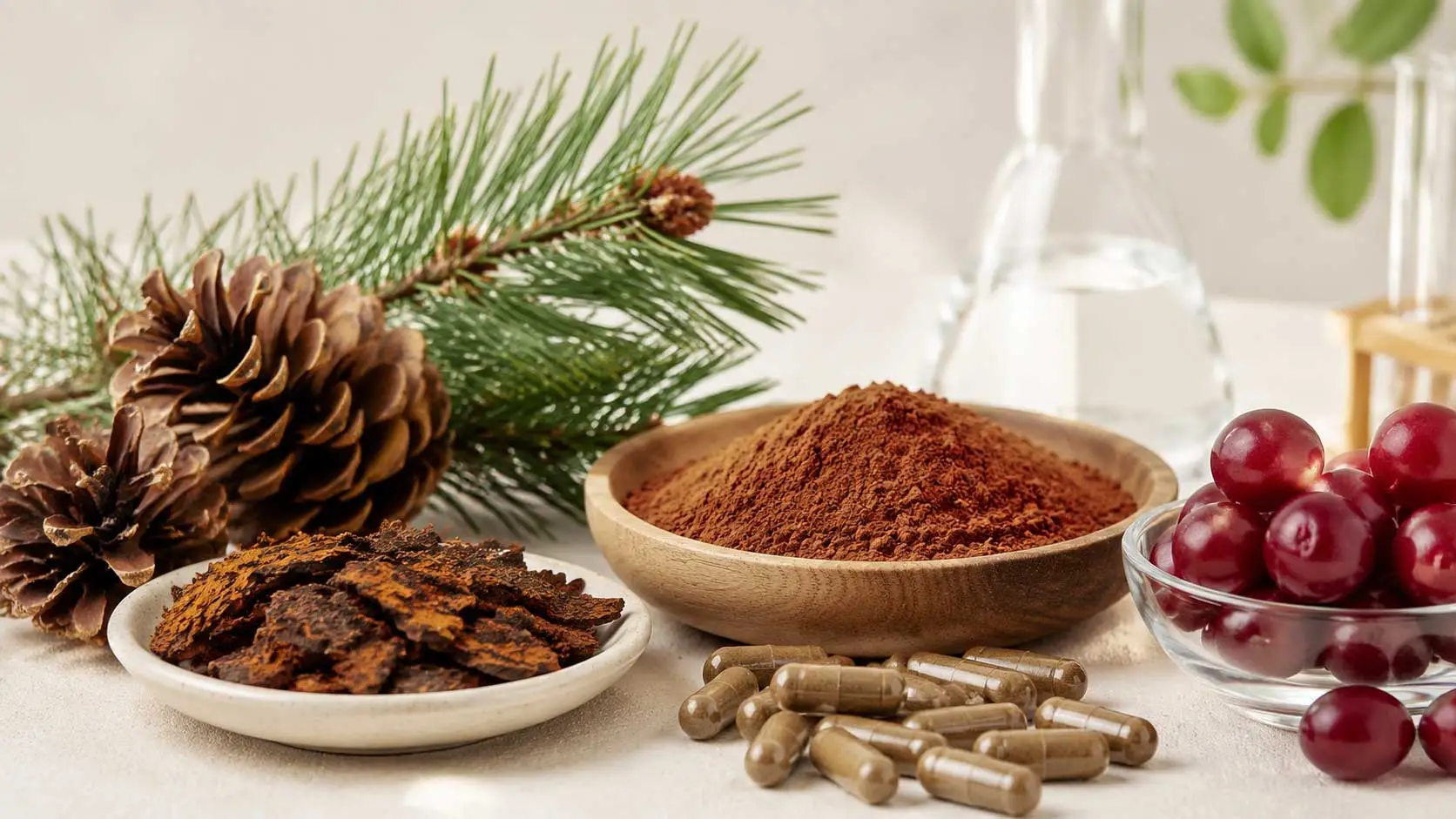
Which Ingredient Is Better for Your Formulation Goals?
When comparing pine bark extract and Pycnogenol, the most suitable choice often depends less on the ingredient itself and more on the formulation strategy behind the finished product.
For brands focused heavily on premium branding and trademark recognition, Pycnogenol may align well with marketing strategies centered around branded ingredient positioning. In certain consumer markets, trademark familiarity can support product differentiation and premium pricing structures.
At the same time, many supplement and cosmetic manufacturers prioritize formulation flexibility, sourcing scalability, and customized specifications when developing long-term product lines. In these situations, working with a reliable pine bark extract supplier may offer greater adaptability for product development and commercial expansion.
For example, companies formulating:
•antioxidant blends
•beauty supplements
•botanical skincare systems
•healthy aging products
•private-label wellness formulations
often require flexibility in active content, MOQ structure, packaging formats, and regional compliance documentation.
This is one reason why pycnogenol alternative for supplements searches have become increasingly common among procurement teams and ingredient distributors. Manufacturers are not only comparing active compounds, but also evaluating broader commercial factors such as:
•supply continuity
•formulation compatibility
•production scalability
•pricing flexibility
•export support
Another important consideration is target market positioning. Premium trademark-based ingredients may perform well in highly consumer-driven retail categories, while maritime pine bark extract for formulations may offer stronger advantages for companies focused on private-label manufacturing, customized formulations, or large-scale ingredient sourcing.
From a technical perspective, both ingredients can support antioxidant-oriented nutraceutical and cosmetic applications when sourced from experienced manufacturers capable of providing standardized production and reliable quality documentation.
Ultimately, selecting the right ingredient involves balancing:
•branding objectives
•formulation goals
•supply chain requirements
•commercial scalability
rather than focusing solely on ingredient recognition alone.
For manufacturers developing modern wellness and beauty products, ingredient sourcing has become increasingly strategic. Reliable suppliers capable of supporting standardized production, customized specifications, and long-term supply stability often play a critical role in successful formulation development.
Bulk Pine Bark Extract Supply and Custom Specifications
As demand for botanical ingredients continues to expand globally, procurement teams increasingly seek suppliers capable of supporting both standardized production and flexible formulation requirements.
For companies sourcing bulk maritime pine bark extract supplier solutions, consistency in active content, documentation, and supply reliability has become essential for maintaining stable manufacturing operations.
Depending on formulation goals, manufacturers may require:
customized procyanidin levels
water-soluble grades
different mesh sizes
formulation-oriented specifications
customized packaging solutions
This flexibility is particularly important for supplement brands, cosmetic manufacturers, and contract formulation companies serving multiple international markets.
In addition to active content consistency, buyers frequently request:
•specification sheets
•COA documentation
•heavy metal testing
•microbiological analysis
•export support documentation
Reliable pine bark extract manufacturers capable of supporting these requirements can help streamline procurement processes and reduce sourcing complexity for international customers.
For companies developing nutraceutical, cosmetic, or wellness-focused products, working with suppliers that understand both technical formulation requirements and commercial supply expectations can provide significant long-term advantages.
To request:
•technical specifications
•customized active contents
•bulk quotation support
•formulation-oriented recommendations
•COA documentation
buyers may contact the ingredient support team directly for additional information regarding available specifications and supply options.
FAQ about Pine Bark Extract vs Pycnogenol
What is the difference between pine bark extract and Pycnogenol?
Pycnogenol is a trademarked extract derived from French maritime pine bark, while pine bark extract refers to a broader category of standardized extracts sourced from Pinus pinaster. Both may contain procyanidins and polyphenols, but formulation flexibility and commercial positioning can differ.
Is pine bark extract used in nutraceutical formulations?
Yes. Maritime pine bark extract is widely used in antioxidant blends, beauty-from-within products, healthy aging supplements, and botanical wellness formulations.
What are the active compounds in pine bark extract?
Key compounds commonly found in pine bark extract include:
· procyanidins
· OPCs (oligomeric proanthocyanidins)
· polyphenols
· flavonoids
Can pine bark extract be used in cosmetic formulations?
Yes. Maritime pine bark extract cosmetic ingredient applications commonly include serums, anti-aging creams, botanical skincare systems, and skin-conditioning formulations.
What specifications are available for bulk pine bark extract?
Common specifications include:
•95% procyanidins
•high-polyphenol grades
•customized active ratios
•water-soluble specifications
Customized formulation-oriented grades may also be available depending on project requirements.
Conclusion
Both pine bark extract and Pycnogenol continue to play important roles in modern nutraceutical and cosmetic formulations. While they share a common botanical origin in Pinus pinaster, their commercial positioning, sourcing flexibility, and formulation applications may differ depending on the goals of the manufacturer or brand.
For companies prioritizing trademark recognition and branded ingredient positioning, Pycnogenol may align well with premium consumer-facing product strategies. At the same time, many manufacturers and procurement teams prefer working with standardized pine bark extract suppliers that can provide:
•flexible active content options
•scalable bulk supply
•customized specifications
•formulation-oriented support
•long-term sourcing stability
As demand for plant-based wellness and beauty ingredients continues to expand globally, maritime pine bark extract remains highly relevant across:
•antioxidant formulations
•beauty-from-within supplements
•skincare systems
•healthy aging products
•botanical wellness applications
For procurement professionals, the decision often comes down to balancing:
•branding requirements
•formulation flexibility
•pricing structure
•supply chain scalability
•technical documentation support
rather than simply comparing ingredient names alone.
Reliable sourcing partnerships are increasingly important in competitive supplement and cosmetic markets, particularly for brands requiring stable production schedules and consistent ingredient quality across international markets.
Manufacturers seeking bulk pine bark extract solutions should carefully evaluate supplier capabilities related to:
•standardized production
•active content consistency
•export support
•documentation readiness
•customized formulation requirements
As botanical ingredient markets continue evolving, formulation success depends not only on ingredient selection, but also on choosing supply partners capable of supporting long-term product development and commercial growth.
Request Technical Documents or Bulk Quotation
For:
•specification sheets
•COA requests
•customized active contents
•bulk pricing inquiries
•formulation-oriented specifications
•export documentation support
please contact:
Email: admin@chenlangbio.com
WhatsApp: +86-17782478823
To receive faster support, buyers may include:
•target specification
•intended application
•estimated order quantity
•destination market
Additional technical information and customized supply solutions are available upon request.

Send Inquiry
Related Industry Knowledge
- Dimethylmethoxy Chromanyl Palmitate vs Kojic Acid: Which Ingredient Is Better for Skin Brightening?
- How Pharmaceutical Grade DHEA Powder Is Manufactured and Quality Tested?
- Spermidine vs Urolithin A: Key Differences, Benefits and Supplement Applications
- 6 Proven Benefits of L-Carnosine for Athletes and Fitness Enthusiasts
- How Long Does It Take to See Results from Acetyl Hexapeptide-8?
- Where to Buy Bulk Dimethylmethoxy Chromanol
- What is Praziquantel Tablet Used For
- Is Magnesium Ascorbyl Phosphate Water Soluble
- What is Copper PCA
- What is Pure Pomegranate Extract Good for