
How to Use Piroctone Olamine in Shampoo: A Practical Formulation Guide
2026-09-14 12:15:11
Using Piroctone Olamine in shampoo is not simply a matter of weighing the powder and adding it to the main vessel. For formulators, the more important questions are how the ingredient is solubilized, when it enters the batch, how the surfactant system affects its behavior, what finished-product pH should be validated, and whether the active remains stable after cooling and storage.
This is why how to use Piroctone Olamine in shampoo should be approached as a formulation process rather than a single dosage instruction. A shampoo may look clear and homogeneous immediately after manufacture yet develop haze, crystals, or precipitation later if the solvent capacity, pH, surfactant architecture, or cooling conditions are not appropriate.
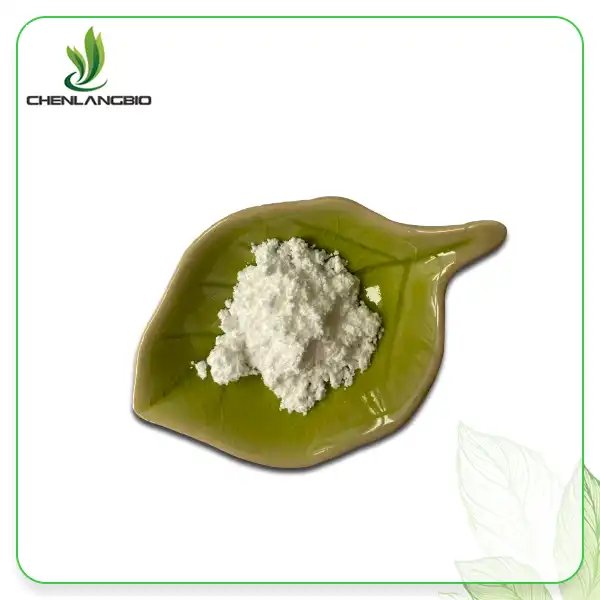
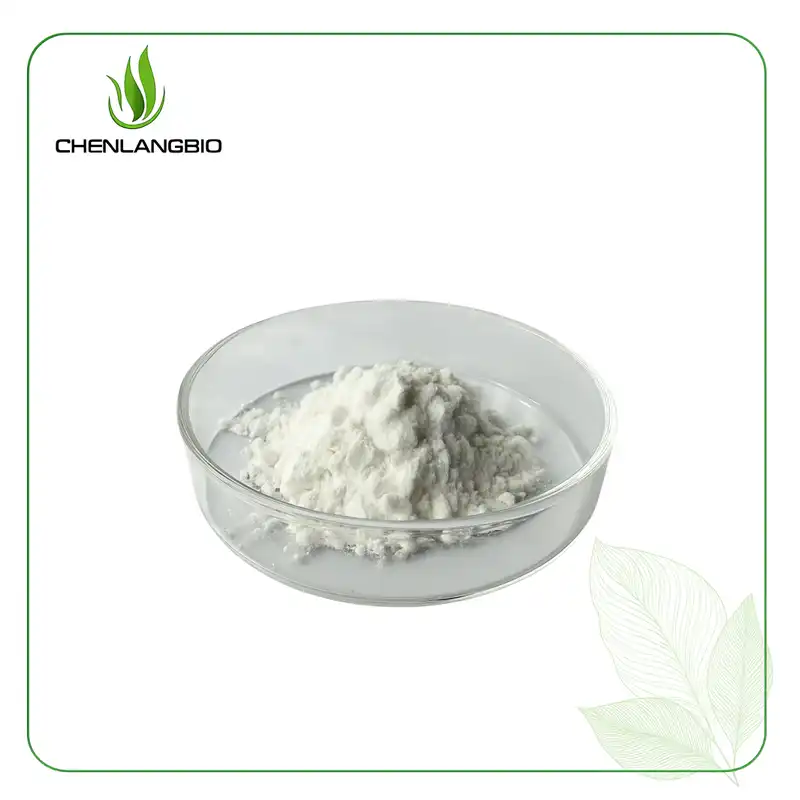
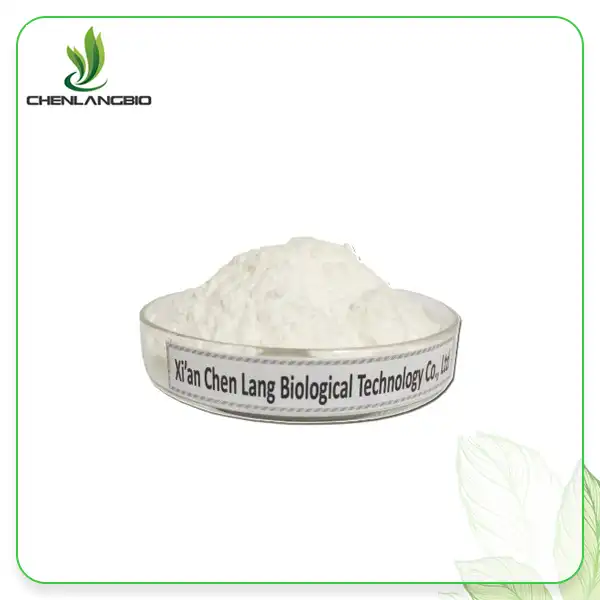
CHEN LANG BIO TECH supplies high-purity Piroctone Olamine Powder for cosmetic formulations. Based on our current specification, the material is a white to off-white crystalline powder with purity ≥99.0%. This guide focuses on the practical decisions that shampoo formulators, contract manufacturers, R&D teams, and ingredient buyers should make before moving from a laboratory trial to commercial production.
Piroctone Olamine in Shampoo: The Quick Formulation Answer
For a successful Piroctone Olamine shampoo formulation, first define the target concentration and regulatory requirements for the destination market. The ingredient should then be incorporated through a validated premix or solubilization system rather than assuming that direct addition to water will produce a stable solution.
Processing temperature, addition sequence, finished-product pH, surfactant compatibility, and cooling behavior should all be controlled. Our current technical guidance is to incorporate Piroctone Olamine before emulsification where an emulsification stage is used and to keep processing below 80°C. This is a process recommendation, not a universal decomposition threshold.
A practical development sequence looks like this:
|
Formulation Stage |
What the Formulator Should Confirm |
|
Target use level |
Product format and market requirements |
|
Premix |
Suitable solvent or surfactant medium |
|
Dissolution |
No residual undissolved material |
|
Main-batch addition |
Controlled mixing and sequence |
|
Processing |
Defined temperature window |
|
pH adjustment |
Finished shampoo, not only premix |
|
Cooling |
No haze, crystals, or precipitation |
|
Stability |
Formula remains acceptable during storage |
|
Scale-up |
Laboratory process can be reproduced in production |
This framework is more useful than treating Piroctone Olamine as a “drop-in” shampoo ingredient.
What Is Piroctone Olamine and Why Is It Used in Shampoo?
Piroctone Olamine is the monoethanolamine salt of piroctone. Its INCI name is Piroctone Olamine, and CAS No. 68890-66-4 is widely used for material identification. European regulatory sources also identify it under Annex V of the Cosmetics Regulation as a permitted preservative within defined concentration limits.
Commercial Piroctone Olamine Powder for cosmetics is commonly supplied as a high-purity crystalline material. Our current grade has a minimum purity specification of ≥99.0%.
For shampoo developers, however, raw-material purity is only one part of the formulation decision. The ingredient still has to be introduced into a complex system containing surfactants, water, polymers, electrolytes, fragrance, conditioning agents, preservatives, and sometimes other scalp-care ingredients.
Research has shown that shampoo architecture itself can influence Piroctone Olamine delivery. A 2023 study in the International Journal of Cosmetic Science reported that micellar stability, the association between Piroctone Olamine and micelles, and polymer coacervation could alter deposition onto the scalp.
That finding is important: formulating with Piroctone Olamine is not only about keeping the ingredient physically present in the bottle. The surrounding shampoo system also matters.
Piroctone Olamine Recommended Use Level: How Much Should You Add to Shampoo?
The appropriate Piroctone Olamine dosage in shampoo should be selected according to product type, formulation objectives, applicable regulations, and the manufacturer's safety assessment.
Our technical guidance for the ingredient is:
•Rinse-off products: up to 1.0%
•Other cosmetic products: up to 0.5%
These values also correspond to the current EU Annex V limits for Piroctone Olamine when it is used under the preservative entry: 1.0% in rinse-off products and 0.5% in other products. ECHA currently reflects the same values.
That does not mean the correct Piroctone Olamine concentration in shampoo is automatically 1%.
Three different concepts should be separated:
Supplier recommended use level describes technical guidance for the raw material.
Formulation optimum is the level that works in a particular shampoo system and achieves the intended product performance.
Regulatory maximum is the legal ceiling for a particular regulated use in a specific market.
Published shampoo studies illustrate why these should not be confused. One comparative study evaluated a shampoo containing 0.5% Piroctone Olamine together with 0.45% climbazole, while an earlier study evaluated 0.75% Piroctone Olamine together with 2% salicylic acid. These are study formulations, not universal dosage recommendations.
When determining how much Piroctone Olamine to use in shampoo, formulators should therefore start with the intended market and product architecture rather than copying a percentage from another formulation.
How to Dissolve Piroctone Olamine Before Adding It to Shampoo
The question of how to dissolve Piroctone Olamine deserves attention before the main manufacturing process begins.
Piroctone Olamine has limited solubility in plain water. Historical technical data cited in the literature report approximately 0.05% water solubility, compared with considerably higher values in 1,2-propylene glycol and ethanol. Solubility is also influenced by pH, and surfactants can significantly change its behavior in aqueous systems.
For this reason, a Piroctone Olamine premix may be more practical than simply sprinkling the powder into the water phase.
The premix may use a compatible glycol, solvent system, surfactant solution, or another validated formulation medium. The specific choice depends on the complete shampoo formula.
A good development trial should answer three questions:
1. Does the ingredient actually dissolve rather than simply disperse?
2. Does the premix remain stable before incorporation?
3. Does the finished shampoo remain clear and free from crystallization after cooling?
For a deeper discussion of Piroctone Olamine solubility in shampoo, our separate guide, Piroctone Olamine Solubility: How to Dissolve Piroctone Olamine Powder, covers solvent selection, pH effects, and troubleshooting in more detail.
How to Add Piroctone Olamine to Shampoo: A Practical Manufacturing Sequence
There is no single manufacturing procedure that suits every shampoo, but a disciplined sequence makes formulation development more reproducible.
►Step 1: Define the Target Concentration
Before considering how to use Piroctone Olamine Powder, establish the target active level, intended market, regulatory framework, and finished-product format.
This prevents formulators from designing the solvent system around a concentration that may later need to change.
►Step 2: Prepare the Premix
The Piroctone Olamine mixing method should begin with a compatible premix system validated in laboratory trials.
Add the powder gradually under controlled agitation and confirm that the system is genuinely homogeneous. Avoid assuming that high shear alone can compensate for inadequate solvent capacity.
►Step 3: Confirm Incorporation Before Main-Batch Addition
Observe the premix for undissolved particles, haze, sediment, or rapid recrystallization.
A visually clear premix is helpful, but the real test occurs after it enters the shampoo matrix.
►Step 4: Add the Premix to the Main Batch
When deciding when to add Piroctone Olamine to shampoo, consider the stage at which the surfactant environment, temperature, and mixing conditions are suitable.
Our current processing guidance is to add before emulsification where relevant. The exact sequence should still be validated against the customer's manufacturing process.
►Step 5: Complete the Shampoo and Adjust Final pH
The pH that matters most is the pH of the finished formulation.
After the other ingredients have been incorporated, measure and adjust the batch according to the validated formulation specification.
►Step 6: Recheck the Batch After Cooling
Cooling can expose formulation weaknesses that were not visible in the hot batch.
Inspect for:
•haze
•fine crystals
•sediment
•precipitation
•viscosity changes
•loss of clarity
This final check is a critical part of Piroctone Olamine shampoo manufacturing, particularly for clear products.
Piroctone Olamine Processing Temperature: When Should It Be Added?
Our current Piroctone Olamine processing temperature guidance is below 80°C.
It is important to interpret this correctly. “Below 80°C” is a supplier processing recommendation and should not be converted into a claim that Piroctone Olamine immediately degrades at 80°C.
Published literature indicates that the material can tolerate considerably higher temperatures before thermal decomposition becomes relevant, while practical cosmetic processing still benefits from more conservative conditions.
During scale-up, formulators should document not only peak temperature but also:
•how long the premix remains heated
•when it is introduced
•mixing intensity
•cooling rate
•pH at the addition stage
This produces a much more useful batch record than simply writing “add below 80°C.”
Piroctone Olamine pH in Shampoo: Why the Finished Formula Matters
The Piroctone Olamine pH in shampoo should not be confused with the pH specification listed on the raw-material COA.
Our current COA specifies pH 10.0–11.0 for a 1% preparation at 20°C. That is a raw-material quality-control measurement under defined test conditions.
It is not a recommendation that the finished shampoo should have a pH of 10–11.
Piroctone Olamine solubility changes with pH. Published technical literature reports better aqueous solubility closer to neutral and mildly alkaline conditions than in more acidic environments.
Nevertheless, formulators cannot optimize Piroctone Olamine shampoo pH on solubility alone. The pH must also be suitable for the entire hair and scalp formulation, its surfactants, preservation system, packaging, and other functional ingredients.
The practical approach is therefore to establish a finished-product target pH, test Piroctone Olamine behavior within that environment, and then monitor pH during stability testing.
Piroctone Olamine Surfactant Compatibility in Shampoo
Piroctone Olamine surfactant compatibility is one of the most important—and most overlooked—parts of formulation development.
A shampoo may contain anionic, amphoteric, nonionic, or mixed surfactant systems, and changing the surfactant architecture can alter both solubilization and active delivery.
The 2023 Johnson et al. study is particularly relevant here. The researchers found that weaker association between Piroctone Olamine and shampoo micelles was associated with more efficient scalp retention. They also demonstrated that polymer coacervation could affect deposition.
This means that maximizing solubilization is not necessarily the only goal.
When evaluating Piroctone Olamine with surfactants, formulators should consider:
•whether the active remains physically stable
•whether the surfactant system keeps the shampoo clear
•whether polymers change deposition behavior
•whether electrolytes alter the system
•whether fragrance or conditioners disturb clarity
•whether viscosity changes after active incorporation
A claim such as “compatible with all surfactants” would be too broad. Piroctone Olamine compatibility in shampoo should always be evaluated in the complete finished system.
A Practical Piroctone Olamine Shampoo Formulation Framework
Rather than presenting an unverified commercial formula, it is more useful to define a Piroctone Olamine formulation example as a decision framework.
|
Formulation Element |
Development Question |
|
Cleansing system |
Which surfactant architecture is being used? |
|
Piroctone Olamine level |
What concentration is technically and legally appropriate? |
|
Premix |
Which solvent or surfactant medium is validated? |
|
Addition stage |
When is the active most easily incorporated? |
|
Temperature |
What processing window is reproducible? |
|
Final pH |
Is the active stable in the finished shampoo? |
|
Viscosity |
Does active incorporation alter rheology? |
|
Fragrance |
Does it affect clarity or stability? |
|
Conditioning system |
Do polymers affect compatibility or deposition? |
|
Stability |
Does the formula remain acceptable over time? |
This framework is more valuable to a formulator than copying a generic Piroctone Olamine shampoo formula from the internet.
It also recognizes something cosmetic science has demonstrated repeatedly: the performance of an active depends on its delivery vehicle, not only on its concentration.
Common Piroctone Olamine Shampoo Formulation Problems and How to Troubleshoot Them
Several recurring issues can occur during Piroctone Olamine shampoo formulation development.
|
Problem |
Possible Cause |
What to Review |
|
Powder remains visible |
Inadequate premix |
Solvent system, mixing |
|
Shampoo becomes cloudy |
Formula incompatibility |
pH, surfactants, fragrance |
|
Crystals appear after cooling |
Insufficient solubilization |
Concentration, cooling profile |
|
Precipitate develops in storage |
Long-term instability |
pH drift, formulation matrix |
|
Viscosity changes |
Ingredient interaction |
Electrolytes, polymers, surfactants |
|
Different behavior at scale |
Process variation |
Mixing, heating, cooling |
When Piroctone Olamine is not dissolving, adding more heat should not be the automatic response.
First determine whether the limitation comes from solvent capacity, pH, active concentration, surfactant system, or mixing method.
Likewise, Piroctone Olamine crystallization in shampoo may indicate that the hot process temporarily dissolved more material than the cooled formula can maintain.
A successful troubleshooting program isolates one variable at a time rather than repeatedly reformulating the whole system.
Piroctone Olamine Shampoo Stability: What Should Be Tested Before Scale-Up?
A stable laboratory batch is only the beginning.
Piroctone Olamine shampoo stability should be evaluated in the finished formula under a stability protocol appropriate to the manufacturer's product and market.
Typical observations include:
•appearance
•color
•odor
•pH
•viscosity
•clarity
•crystallization
•sediment or precipitation
•temperature-cycle response
•packaging compatibility
The objective of Piroctone Olamine stability testing is not simply to confirm that the active is present on day one. The formulation must remain physically and chemically acceptable over the intended product life.
Specific storage temperatures and test durations should come from the manufacturer's validated stability program rather than from an arbitrary universal schedule.
From Lab Beaker to Production Tank: Scaling Up a Piroctone Olamine Shampoo
A 500 g laboratory batch and a 500 kg production batch may have the same ingredient percentages but behave very differently.
During Piroctone Olamine formulation scale up, the manufacturer should reconsider:
mixing efficiency, premix preparation, shear, heat transfer, active addition time, pH adjustment, cooling rate, and total batch homogeneity.
A laboratory beaker cools quickly; a large production vessel may remain warm much longer. A premix that disperses easily with a laboratory stirrer may require a different addition strategy in a commercial tank.
For this reason, Piroctone Olamine commercial production should ideally move through a pilot stage before full-scale manufacturing.
How Raw Material Quality Affects Piroctone Olamine Shampoo Formulation
Formulation performance starts with raw-material consistency.
When purchasing cosmetic grade Piroctone Olamine, buyers should review identity, appearance, purity, assay, relevant impurities, batch traceability, and the accompanying technical documents.
Our current Piroctone Olamine specification sets purity at ≥99.0%. One recent batch COA reported 99.8% purity and 99.9% assay.
A Piroctone Olamine COA should not be treated as paperwork collected after purchase. It is part of formulation control because unexplained raw-material variation can complicate process reproducibility.
For a detailed quality review, see our separate guide: How to Read a Piroctone Olamine COA: A Quality Guide for Ingredient Buyers.
Sample Evaluation Before Buying Piroctone Olamine for Shampoo Production
A Piroctone Olamine sample is most useful when it is tested in the buyer's real formulation rather than only inspected as a powder.
A practical qualification sequence is:
Sample → Incoming QC → Premix Trial → Shampoo Trial → Stability Evaluation → Pilot Batch → Commercial Approval
During Piroctone Olamine sample testing, compare the material with its COA, then evaluate solubility, finished pH, clarity, crystallization tendency, viscosity, and formulation stability.
Only after those tests are satisfactory does moving to bulk piroctone olamine powder become a sound purchasing decision.
Choosing a Piroctone Olamine Supplier for Shampoo Manufacturing
A Piroctone Olamine supplier should contribute more than a quotation and a generic COA.
For commercial shampoo projects, buyers should evaluate:
•consistent product specification
•traceable production batches
•COA/TDS/SDS support
•sample availability
•technical communication
•repeat commercial supply
•quality-management systems
•export documentation
The value of working with a Piroctone Olamine manufacturer becomes more apparent during scale-up, where formulation questions and batch consistency can affect production schedules.
CHEN LANG BIO TECH supplies high-purity Piroctone Olamine Powder together with technical and quality documentation for cosmetic ingredient customers. Our broader production and quality platform supports ingredient R&D, manufacturing, and international supply, while our Shandong manufacturing base covers approximately 218 mu, or about 145,000 m².
For buyers evaluating a Piroctone Olamine Powder supplier, manufacturing credentials are meaningful only when they translate into consistent material and responsive support.
From Sample to Bulk Order: Commercial Considerations for Piroctone Olamine Buyers
Once the material has been technically approved, commercial factors become relevant.
Piroctone Olamine price should be compared against the agreed specification, order quantity, packaging, required documents, and shipping terms rather than evaluated as an isolated number.
The appropriate Piroctone Olamine MOQ can also differ between an R&D trial and repeat production.
For customers planning bulk Piroctone Olamine purchases, batch consistency and lead-time planning become increasingly important.
In other words, the right time to buy Piroctone Olamine Powder is after the material has passed the required quality and formulation qualification—not simply after the lowest quotation arrives.
FAQ: Using Piroctone Olamine in Shampoo
How do you use Piroctone Olamine in shampoo?
How to use Piroctone Olamine in shampoo depends on the complete formulation. Define the target concentration, prepare a validated premix, incorporate it under controlled process conditions, adjust the finished pH, and confirm physical stability after cooling and during storage.
How much Piroctone Olamine should be used in shampoo?
Our rinse-off guidance is up to 1.0%. In the EU, 1.0% is also the Annex V maximum for rinse-off products when used under the preservative entry. The actual Piroctone Olamine dosage in shampoo may be lower depending on formulation and market requirements.
Should Piroctone Olamine be dissolved before adding it?
Because Piroctone Olamine has limited water solubility, a validated premix or solubilization strategy is generally more practical than assuming direct addition to water will work in every formula.
When should Piroctone Olamine be added during shampoo manufacturing?
Our current processing guidance is to incorporate it before emulsification where applicable and to process below 80°C. The precise when to add Piroctone Olamine decision should be validated in the manufacturer's own process.
What pH is suitable for Piroctone Olamine shampoo?
There is no single universal Piroctone Olamine pH in shampoo that applies to all formulations. Solubility changes with pH, but the finished pH must also be suitable for the overall shampoo system and intended use. The raw-material COA pH should not be mistaken for a finished-shampoo target.
Why does Piroctone Olamine crystallize in shampoo?
Piroctone Olamine crystallization can occur when the finished formula does not provide enough solubilization capacity after cooling or during storage. Concentration, solvent system, pH, surfactants, and cooling conditions should all be investigated.
Should I test a Piroctone Olamine sample before bulk purchasing?
Yes, particularly for a new formulation or supplier. Sample testing allows the buyer to confirm incoming quality and evaluate the ingredient in the actual shampoo matrix before committing to commercial quantities.
Conclusion: Build the Process Around the Finished Shampoo
Successful Piroctone Olamine shampoo formulation depends on a sequence of connected decisions rather than one universal dosage or mixing instruction. Target concentration, solubilization, processing temperature, finished pH, surfactant compatibility, cooling behavior, stability, and scale-up all need to be considered together.
Published research also shows that the shampoo vehicle can influence Piroctone Olamine delivery, which reinforces the importance of evaluating the active in the finished formulation rather than in isolation.
For cosmetic manufacturers developing shampoo or scalp-care products, CHEN LANG BIO TECH can provide Piroctone Olamine Powder, specifications, COA, TDS/SDS, samples, and commercial supply information.
For technical documentation or a quotation, contact admin@chenlangbio.com.
References
1. Johnson ES, Chang DW, Schwartz JR, et al. Enhanced piroctone olamine retention from shampoo for superior anti-dandruff efficacy. International Journal of Cosmetic Science. 2023;45(2):236–245.
2. European Commission. Regulation (EC) No 1223/2009 on cosmetic products, Annex V, entry 35 for Piroctone Olamine.
3. European Chemicals Agency. Cosmetics preservatives database: Piroctone Olamine, CAS 68890-66-4.
4. European Commission Scientific Committee. Opinion on Piroctone Olamine and its monoethanolamine salt. SCCNFP/0525/01.
5. Schmidt-Rose T, et al. Efficacy of a piroctone olamine/climbazole shampoo in comparison with a zinc pyrithione shampoo in subjects with moderate to severe dandruff. International Journal of Cosmetic Science. 2011.
6. Lodén M, et al. The antidandruff efficacy of a shampoo containing piroctone olamine and salicylic acid in comparison to that of a zinc pyrithione shampoo. International Journal of Cosmetic Science.
7. European Commission. CosIng glossary and common cosmetic ingredient nomenclature framework.
8. Technical literature summarized in academic work on Piroctone Olamine physicochemical properties, including water, ethanol, propylene glycol, pH, and surfactant-related solubility.
9. CHEN LANG BIO TECH. Current Piroctone Olamine product specification and batch Certificate of Analysis.

Send Inquiry
Related Industry Knowledge
- Dimethylmethoxy Chromanyl Palmitate Solubility: Formulation Guide for Cosmetic Chemists
- Is Acetyl Hexapeptide-8 Safe for Skin?
- In What Forms is Kopyrrol Available?
- Top Myths About Saccharomyces Ferment Lysate Debunked
- What are the Active Compounds in Camellia Oleifera Seed Extract
- What Brand of Green Tea Has the Best EGCG
- What Are the Do's and Don'ts of Bakuchiol
- Who Shouldn't Consume Curcumin or Turmeric
- Dimethylmethoxy Chromanyl Palmitate For Skin
- Is Natural Cranberry Extract Powder Good For You