
How to Choose a Reliable 3-O-Ethyl Ascorbic Acid Manufacturer
2026-10-23 14:59:04
Choosing a reliable 3-O-Ethyl Ascorbic Acid manufacturer requires more than comparing a 99% purity specification or requesting the lowest quotation. Cosmetic ingredient buyers need to establish who manufactures the material, how its identity and purity are verified, whether quality remains consistent between batches, and whether the supplier can support commercial production without interruptions.
3-O-Ethyl Ascorbic Acid is a vitamin C derivative used in antioxidant and skin-tone formulations. Its performance in finished cosmetics depends partly on raw material quality, making supplier qualification an important part of formulation development and purchasing.
A qualified manufacturing partner should be able to provide traceable product documentation, appropriate analytical evidence, and clear commercial terms. For skincare brands, contract manufacturers, and ingredient distributors, these factors reduce uncertainty when moving from laboratory evaluation to repeat commercial orders.
This guide explains how to assess manufacturing capabilities, product specifications, quality control, certifications, pricing, and supply reliability before purchasing cosmetic-grade 3-O-Ethyl Ascorbic Acid.
3-O-Ethyl Ascorbic Acid Manufacturer vs Supplier: Understanding the Supply Chain
The distinction between a manufacturer and a supplier matters because the company issuing a quotation may not be the organization responsible for producing or testing the ingredient.
Direct Manufacturing, Contract Manufacturing and Ingredient Distribution
A direct manufacturer operates the facility responsible for producing the material. A contract manufacturer produces it under an agreed arrangement, while a distributor purchases and resells ingredients manufactured elsewhere.
These business models can all support legitimate cosmetic ingredient sourcing. The critical difference is how manufacturing responsibility, quality oversight, and traceability are documented.
A competent 3-o-ethyl ascorbic acid supplier should understand the product's manufacturing origin and be able to explain who controls specifications, approves batches, and investigates quality complaints.
How to Verify a 3-O-Ethyl Ascorbic Acid Manufacturing Source
When evaluating an ethyl ascorbic acid manufacturing source, buyers should request the legal manufacturing entity, relevant production location, and an explanation of the relationship between the manufacturer and selling company.
A practical qualification review should also establish whether the supplier can provide batch-specific certificates, traceability records, and appropriate quality documentation.
The objective is not necessarily to obtain confidential manufacturing instructions. It is to establish a reliable chain of responsibility from production through final shipment.
Why Supply Chain Transparency Matters for Cosmetic Ingredient Buyers
Effective cosmetic ingredient supplier qualification becomes particularly important when a batch fails incoming inspection or a finished formulation develops unexpected instability.
Without clear manufacturing responsibility, investigations can become delayed or inconclusive.
Buyers should favor partners that maintain documented communication channels for complaints, specification changes, corrective actions, and repeat-order planning.
3-O-Ethyl Ascorbic Acid Manufacturing Capabilities and Production Experience
Evaluating 3-o-ethyl ascorbic acid manufacturing capabilities requires attention to process control, analytical resources, production infrastructure, and the manufacturer's ability to reproduce commercial batches.
Manufacturing Process Control for Cosmetic-Grade Ethyl Ascorbic Acid
The quality of a vitamin C derivative depends on the consistency of its manufacturing and purification processes.
For a prospective vitamin c derivative manufacturer, buyers should ask how raw materials are identified, how critical processing stages are controlled, and how impurities are monitored before product release.
The manufacturing route may influence the relevant impurity profile, residual solvent requirements, and analytical control strategy.
A manufacturer does not need to disclose proprietary reaction conditions to demonstrate quality management. However, it should be able to explain its approach to controlling process variability and evaluating deviations.
Buyers should also distinguish between a company's broader synthetic biology capabilities and the actual manufacturing process used for 3-O-Ethyl Ascorbic Acid.
Production Facilities, Equipment and Batch Traceability
A qualified cosmetic ingredient manufacturer should maintain equipment appropriate to its operations, documented cleaning procedures, material identification controls, and traceable batch records.
Facility assessments should consider the potential for cross-contamination, equipment maintenance, environmental conditions, and the handling of materials awaiting quality approval.
For commercial orders, traceability should connect incoming materials, manufacturing records, analytical results, packaging operations, and the final released batch.
These records are particularly valuable when a customer needs to investigate an unexpected impurity, appearance change, or specification deviation.
R&D Capabilities and Manufacturing Scale-Up
An effective manufacturing organization needs more than production equipment. Technical development and analytical support are important when addressing process variation or changing customer requirements.
Research and development capabilities may support process optimization, impurity identification, analytical method development, and commercial-scale troubleshooting.
However, these capabilities should be verified for the relevant product or manufacturing operation rather than inferred solely from a company's general product portfolio.
Evaluating Long-Term Manufacturing Capacity
A satisfactory laboratory sample does not establish that a supplier can meet recurring commercial requirements.
Buyers should discuss expected order volumes, production scheduling, inventory arrangements, and how the manufacturer manages capacity during periods of increased demand.
For long-term supply agreements, it is also useful to establish whether significant changes to the manufacturing site, process, or analytical methods will be communicated before future deliveries.
3-O-Ethyl Ascorbic Acid 99% Specifications: What Buyers Should Verify
A clearly defined product specification provides the foundation for meaningful supplier comparisons.
For cosmetic grade ethyl ascorbic acid, buyers should verify chemical identity, assay, relevant impurities, physical appearance, and the analytical methods used to determine compliance.
♦Chemical Identity, CAS Number and INCI Verification
3-O-Ethyl Ascorbic Acid is an ether derivative of L-ascorbic acid. Its identity should be distinguished from other vitamin C derivatives, including Ascorbyl Glucoside, Magnesium Ascorbyl Phosphate, and Ascorbyl Tetraisopalmitate.
|
Parameter |
Product information |
|
Product name |
3-O-Ethyl Ascorbic Acid |
|
INCI |
3-O-Ethyl Ascorbic Acid |
|
CAS number |
86404-04-8 |
|
Molecular formula |
C₈H₁₂O₆ |
|
Molecular weight |
204.18 g/mol |
|
Appearance |
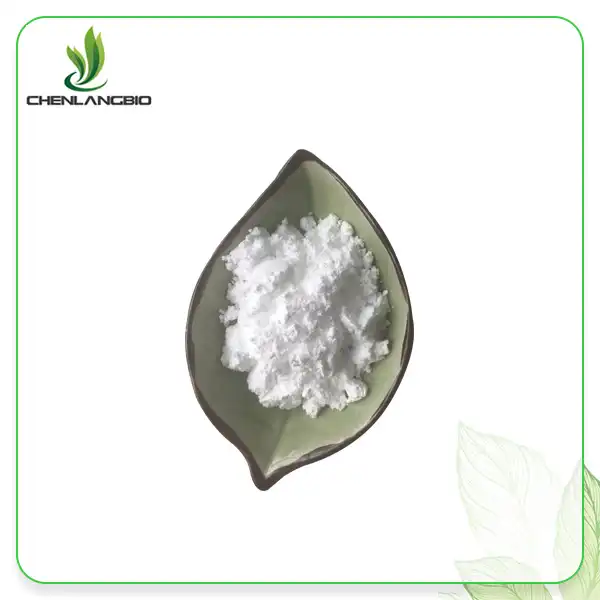
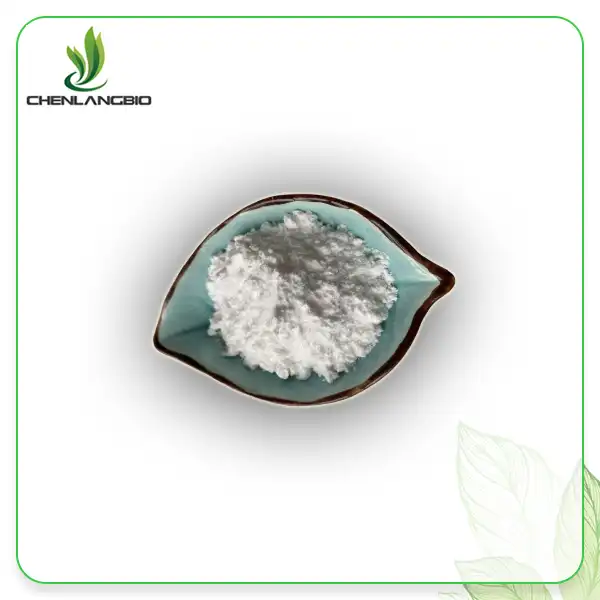
White to off-white crystalline powder |
|
CHEN LANG BIO TECH assay specification |
≥99% |
The CAS number and INCI designation should be consistent across the product specification, technical data sheet, and purchasing documentation.
♦Understanding 99% Purity and HPLC Assay Results
A 3-o-ethyl ascorbic acid 99% purity claim must be interpreted according to the analytical method and reporting basis.
HPLC area normalization expresses the relative detector response associated with chromatographic peaks. It does not automatically establish that the target compound represents 99% of the material by mass.
A quantitative assay may instead use a reference standard and calibration procedure to determine the amount of the target compound.
Buyers should confirm whether the reported result represents chromatographic area percentage, assay on an as-received basis, or assay calculated on a dried basis.
These distinctions matter when comparing quotations from manufacturers that use different testing approaches.
♦Impurity Profile, Residual Solvents and Moisture Control
A complete set of 3-o-ethyl ascorbic acid specifications should address relevant quality risks beyond the principal assay.
Depending on the manufacturing route and intended application, these may include related substances, residual solvents, moisture, and other appropriate impurity controls.
Residual solvent limits should reflect the solvents actually used or reasonably expected during manufacturing, together with applicable regulatory and customer requirements.
A supplier should not claim compliance with a universal impurity specification where no such requirement has been established.
♦Batch-to-Batch Consistency in Commercial Production
Ethyl ascorbic acid batch consistency is essential for manufacturers producing the same cosmetic formulation over extended periods.
Buyers should compare the results of several representative commercial batches, paying attention to assay, relevant impurities, appearance, and other critical quality attributes.
A single excellent sample result cannot demonstrate long-term process consistency.
Where practical, a purchasing specification should define acceptance criteria and procedures for handling results outside agreed limits.
3-O-Ethyl Ascorbic Acid COA and HPLC Testing: Evaluating Raw Material Quality
A certificate of analysis is one of the most important documents in cosmetic ingredient procurement. However, its value depends on the quality of the underlying testing and the traceability of the reported results.
♦What a Batch-Specific 3-O-Ethyl Ascorbic Acid COA Should Include
A reliable 3-o-ethyl ascorbic acid COA should identify the product, batch number, applicable specifications, analytical results, and the organization responsible for testing or release.
The document should distinguish between acceptance limits and actual batch results.
For example, stating only “Purity: ≥99%” does not establish the measured purity of the supplied batch.
A useful COA should also identify the relevant test methods, dates or other applicable batch information, and authorized quality approval.
Buyers should verify that the certificate corresponds to the material being shipped rather than a historical reference sample.
♦HPLC Assay, Reference Standards and Analytical Method Validation
Ethyl ascorbic acid HPLC assay results should be evaluated in the context of the method used to generate them.
An appropriate quantitative method should demonstrate adequate specificity, precision, accuracy, and performance across its intended analytical range.
The reference standard must be suitable for the method, and its assigned purity or potency should be accounted for in quantitative calculations.
Chromatographic peak area alone does not prove chemical identity or establish an accurate mass-based assay.
A chromatogram may support an analytical result, but it should not replace information about calibration, calculation, and method suitability.
When purchasing for repeated commercial production, buyers can request an appropriate method summary or validation information, subject to reasonable confidentiality restrictions.
♦Identity Testing and Orthogonal Analytical Methods
Reliable 3-o-ethyl ascorbic acid quality control should establish that the supplied material is the intended chemical substance.
HPLC retention time can support identification, but retention time alone is not always sufficiently specific.
Additional analytical techniques, such as infrared spectroscopy, nuclear magnetic resonance, or mass spectrometry, may be useful during material characterization or supplier qualification.
The appropriate testing strategy depends on analytical risk, method capability, and the degree of prior knowledge about the material.
Routine release testing need not duplicate every technique used during initial structural characterization.
♦Comparing Multiple COAs for Supplier Qualification
Buyers should evaluate several representative certificates when qualifying a new source.
|
Quality checkpoint |
What purchasing teams should verify |
|
Identity |
Appropriate identification method and matching product information |
|
Assay |
Quantitative basis, reference standard, and acceptance limit |
|
Related substances |
Relevant impurity controls and actual results |
|
Residual solvents |
Risk-based limits and suitable analytical methods |
|
Batch traceability |
Clear connection between COA and supplied material |
|
Consistency |
Comparable results across representative batches |
|
Quality approval |
Identifiable testing or release responsibility |
An effective ethyl ascorbic acid supplier qualification program should also establish how analytical discrepancies will be investigated.
If an incoming result differs from the supplier's COA, both parties should compare sampling procedures, methods, reference standards, and calculation bases before concluding that the material is defective.
ISO Certifications and Cosmetic Ingredient Manufacturer Audits
Certifications can provide useful evidence of a supplier's management systems, but they should be evaluated according to their actual scope.
A credible cosmetic raw material supplier audit examines how quality requirements are implemented, not simply how many certificates a company displays.
ISO 9001 and Quality Management Systems
An ISO 9001 cosmetic ingredient manufacturer should maintain documented processes for quality management, supplier control, corrective actions, and continual improvement.
For raw material buyers, the practical value of ISO 9001 lies in its framework for managing consistent operations and responding systematically to quality problems.
However, ISO 9001 certification does not independently verify the chemical purity of 3-O-Ethyl Ascorbic Acid.
Product quality must still be established through appropriate specifications and batch testing.
Understanding ISO 22000, BRC and Other Certification Scope
ISO 22000 addresses food safety management systems, while BRCGS certification schemes cover defined operational and product categories.
These credentials may demonstrate broader organizational management capabilities, particularly for companies supplying both food and cosmetic ingredients.
Nevertheless, they should not be represented as product-specific cosmetic certifications without supporting evidence.
When reviewing cosmetic ingredient supplier certification, buyers should confirm the certificate holder, covered facility, certification scope, issuing organization, and validity.
FDA Registration, Kosher and Halal Documentation
FDA registration and approval are different regulatory concepts. Registration does not establish that an individual cosmetic ingredient has been approved by the FDA.
Kosher and Halal certificates may be relevant to particular customers or destination markets, but their applicability depends on the certified products and facilities.
Buyers should request current documents rather than relying on general statements about certification availability.
Factory Audit Questions for International Cosmetic Buyers
A meaningful supplier audit should examine document control, employee responsibilities, equipment maintenance, material segregation, deviation management, and change control.
Ethyl ascorbic acid quality assurance should also include a documented approach to handling complaints and investigating nonconforming batches.
For international buyers, a supplier's willingness to discuss these procedures often provides more useful information than a generic quality statement.

Bulk 3-O-Ethyl Ascorbic Acid Packaging, Storage and International Shipping
Commercial packaging should protect ingredient quality while remaining practical for storage, sampling, and manufacturing operations.
Commercial Packaging for Bulk Ethyl Ascorbic Acid Powder
For bulk ethyl ascorbic acid powder, CHEN LANG BIO TECH offers the following packaging configurations:
•1–5 kg aluminum foil bags
•25 kg paper drums
The packaging arrangement should minimize unnecessary exposure to moisture and contamination during handling and transportation.
Buyers ordering bulk 3-o-ethyl ascorbic acid should confirm the inner packaging materials, container sealing, labeling, and shipment configuration before dispatch.
Storage Conditions and Product Shelf-Life Verification
Appropriate ethyl ascorbic acid packaging is only one part of maintaining raw material quality.
Storage requirements should be established from the current product documentation and available stability information.
Purchasing teams should verify the stated shelf life, recommended storage conditions, and any special precautions after opening.
The supplier should also explain how the material is protected during warehouse storage and shipment.
Export Documentation and International Logistics
For 3-o-ethyl ascorbic acid international shipping, document requirements vary according to destination, transport mode, and applicable customs rules.
Commercial shipments commonly require an invoice, packing list, and relevant transport documentation. Buyers may also request a batch-specific COA, SDS, and product specification.
Importers should confirm destination-market requirements before shipment rather than assuming that documentation accepted in one country will be sufficient elsewhere.
3-O-Ethyl Ascorbic Acid Price per kg, MOQ and Total Procurement Cost
The lowest quotation does not necessarily represent the lowest cost of a usable cosmetic ingredient.
Factors Affecting 3-O-Ethyl Ascorbic Acid Bulk Pricing
The 3-o-ethyl ascorbic acid price per kg may depend on order volume, product specifications, packaging, analytical requirements, and delivery arrangements.
Freight costs, payment terms, and the destination country can also influence the final quotation.
For meaningful comparisons, buyers should request prices against the same specification and commercial terms.
Comparing Supplier Quotations Beyond Price per Kilogram
When evaluating wholesale ethyl ascorbic acid, purchasing teams should consider the total cost of qualification, incoming inspection, storage, and production.
A material with inconsistent quality may create additional analytical expenses or formulation problems that outweigh a small initial price advantage.
Before deciding to buy 3-o-ethyl ascorbic acid, confirm whether quotations include the requested documentation, packaging, and delivery terms.
Samples, Minimum Order Quantity and Commercial Lead Time
A representative ethyl ascorbic acid sample allows formulation teams to evaluate the ingredient before committing to commercial quantities.
Buyers should confirm the applicable ethyl ascorbic acid MOQ, sample availability, lead time, and whether the proposed commercial material will meet the same agreed specification.
For efficient quotation preparation, include the required quantity, destination country, intended application, and documentation requirements in the initial inquiry.
CHEN LANG BIO TECH: Cosmetic Ingredient Manufacturing and Quality Capabilities
At CHEN LANG BIO TECH, we understand that cosmetic ingredient procurement involves more than delivering a material that meets a single assay requirement. Customers also need dependable documentation, technical communication, and consistent commercial supply.
►Ingredient R&D and Industrial Experience Since 2008
Established in 2008, CHEN LANG BIO TECH focuses on the research, development, manufacturing, and commercial supply of food additives and cosmetic ingredients.
Our business development includes synthetic biology and fermentation-based ingredient technologies, alongside a broader portfolio of functional raw materials.
Our food ingredient portfolio includes Natamycin, Gamma-Aminobutyric Acid (GABA), Nisin, Pullulan, and compound food preservative systems.
These activities reflect our broader ingredient industry experience. The actual production route and manufacturing responsibility for any specific material should be verified through its corresponding product documentation.
►Shaanxi Production Infrastructure and Quality Management
Our company has developed a modern production base in Shaanxi Province, covering approximately 218 mu, equivalent to 14.5 hectares.
Our quality management framework includes ISO 9001 and ISO 22000 certifications, together with other certifications and registrations relevant to the company's operations.
Certification documents and their applicable scope can be reviewed during supplier qualification.
For buyers seeking a 3-o-ethyl ascorbic acid supplier China, manufacturing transparency and clear quality documentation remain essential considerations.
►Cosmetic Active Ingredient Portfolio and Commercial Supply
As a cosmetic active ingredient manufacturer and supplier, our portfolio includes Hydroxypropyl Tetrahydropyrantriol, Sodium Polyglutamate, Ectoin, and Centella Asiatica Extract.
We also supply 99% 3-O-Ethyl Ascorbic Acid for cosmetic formulation applications.
Our broader bulk cosmetic ingredients business supports customers developing skincare formulations and sourcing functional raw materials for commercial production.
Customers can contact our team to discuss technical specifications, available documentation, sample requirements, and purchasing arrangements.
Frequently Asked Questions About 3-O-Ethyl Ascorbic Acid Manufacturers
How can buyers verify a 3-O-Ethyl Ascorbic Acid manufacturer?
Request information identifying the actual manufacturing entity and relevant production location. Review batch traceability, quality documentation, and the relationship between the manufacturer and selling company. Where justified, conduct a supplier audit or request additional manufacturing responsibility documentation.
What does 99% purity mean on an ethyl ascorbic acid COA?
The meaning depends on the analytical method and reporting basis. A 99% chromatographic area result is not necessarily equivalent to 99% assay by mass. Buyers should confirm whether the result comes from a validated quantitative method and how the percentage is calculated.
Which documents should a cosmetic ingredient supplier provide?
A typical qualification package includes a product specification, batch-specific COA, technical data sheet, and SDS. Additional documents may be necessary depending on the manufacturing process, destination market, customer requirements, and intended cosmetic application.
What affects bulk 3-O-Ethyl Ascorbic Acid pricing?
Commercial pricing depends on quantity, specification, packaging, documentation, freight, and delivery terms. Buyers should compare quotations on equivalent terms and consider the cost of incoming inspection and potential quality-related disruptions.
Can buyers request samples before placing a commercial order?
Yes. Sample evaluation is an important part of supplier qualification. Buyers should confirm that the sample represents the proposed commercial grade and request relevant analytical documentation. Successful sample testing should be followed by appropriate verification of commercial batches.
Conclusion: Selecting a Reliable 3-O-Ethyl Ascorbic Acid Manufacturing Partner
Choosing a dependable 3-o-ethyl ascorbic acid manufacturer requires verified manufacturing responsibility, clear specifications, reliable analytical testing, and consistent commercial supply.
For cosmetic brands and contract manufacturers, supplier qualification should connect technical quality with practical purchasing requirements.
CHEN LANG BIO TECH supplies cosmetic-grade 3-O-Ethyl Ascorbic Acid with an assay specification of ≥99%.
For current product specifications, COA, sample availability, or a quotation for your required quantity, contact admin@chenlangbio.com.
References
1. Iliopoulos, F., et al. (2019). 3-O-Ethyl-L-Ascorbic Acid: Characterisation and Investigation of Single Solvent Systems for Delivery to the Skin. International Journal of Pharmaceutics: X, 1, 100025. DOI: 10.1016/j.ijpx.2019.100025.
2. Iliopoulos, F., et al. (2020). Topical Delivery of 3-O-Ethyl-L-Ascorbic Acid from Complex Solvent Systems. Scientia Pharmaceutica, 88(2), 19. DOI: 10.3390/scipharm88020019.
3. International Organization for Standardization. ISO 9001:2015 — Quality Management Systems — Requirements.
4. International Organization for Standardization. ISO 22000:2018 — Food Safety Management Systems — Requirements for Any Organization in the Food Chain.
5. International Organization for Standardization. ISO 22716:2007 — Cosmetics — Good Manufacturing Practices (GMP) — Guidelines on Good Manufacturing Practices.
6. International Council for Harmonisation. ICH Q2(R2): Validation of Analytical Procedures. 2023. General analytical validation guidance; not a cosmetic ingredient certification standard.
7. International Council for Harmonisation. ICH Q3C(R9): Impurities — Guideline for Residual Solvents. 2024. Pharmaceutical guidance that may inform risk-based solvent assessment; not a universally mandatory cosmetic raw material specification.
8. U.S. Food and Drug Administration. FDA Authority Over Cosmetics: How Cosmetics Are Not Pre-Approved by FDA, but Are FDA-Regulated.

Send Inquiry
Related Industry Knowledge
- 5 Alpha Hydroxy Laxogenin vs Turkesterone Which Is Better for Muscle Growth?
- What to Avoid When Using Bakuchiol
- How Long Does It Take Bakuchiol to Work
- What is Honokiol Good For?
- What Are the Benefits of Tranexamic Acid
- Argireline Acetyl Hexapeptide 8 Anti-Wrinkle
- What is Phenylethyl Resorcinol in Skin Care
- Cheaper Skin Whitening Sepiwhite Powder
- How to Use Aloe Vera Gel Freeze-Dried Powder
- What Is Cordyceps Sinensis Powder Used For