
Understanding Ergothioneine COA: What Bulk Buyers Should Check Before Purchasing
2026-06-09 12:00:55
Understanding Ergothioneine COA: What Bulk Buyers Should Check Before Purchasing
In today's nutraceutical market, sourcing high-quality ingredients is no longer simply a matter of finding a supplier with the lowest price. For brands, contract manufacturers, and product developers, ingredient quality, regulatory compliance, and supply chain transparency have become equally important factors in the purchasing process.
When evaluating bulk ergothioneine powder, one document stands above all others in determining product quality and supplier credibility: the Certificate of Analysis (COA).
A COA provides much more than a list of laboratory results. It serves as a snapshot of a production batch, offering valuable insight into purity, identity, safety, and consistency. For experienced buyers, the COA is often the first document reviewed before requesting samples, quotations, or placing a commercial order.
As global demand for ergothioneine powder continues to grow across dietary supplements, healthy aging formulations, functional foods, and cosmetic applications, buyers are increasingly expected to conduct thorough supplier qualification procedures. Reviewing a COA correctly can help reduce sourcing risks, identify potential quality issues, and ensure that the ingredient meets both product specifications and regulatory expectations.
This guide explains how to evaluate an ergothioneine certificate of analysis, which specifications deserve the closest attention, and what procurement teams should look for when selecting a reliable ergothioneine supplier for long-term cooperation.
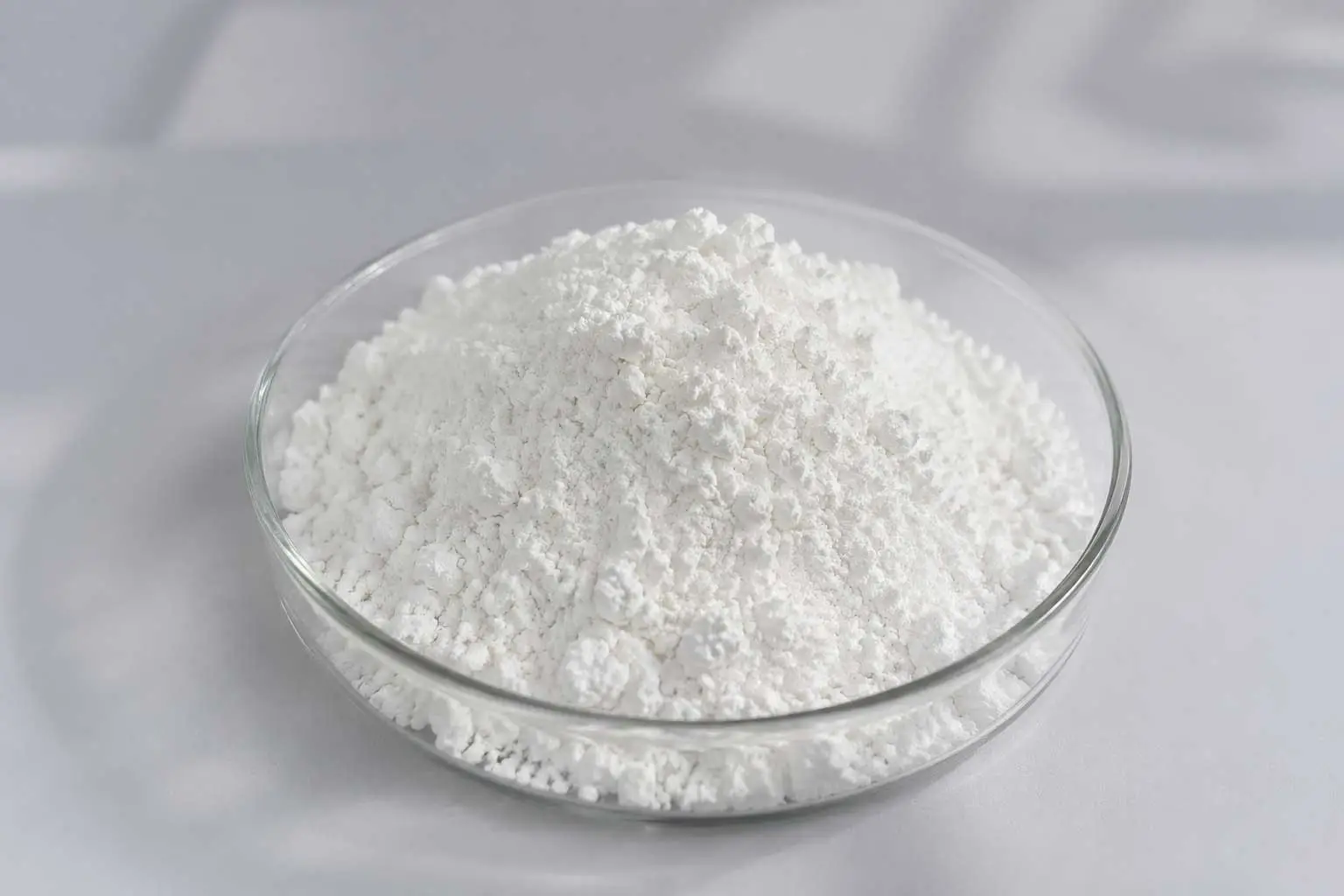
What Is an Ergothioneine Certificate of Analysis (COA)?
A Certificate of Analysis (COA) is an official quality document issued for a specific production batch. It confirms that the material has been tested according to predefined specifications and meets established quality standards before release.
For buyers sourcing ergothioneine raw material, the COA acts as a critical verification tool. It allows procurement teams, quality assurance personnel, and regulatory specialists to evaluate whether a batch complies with internal requirements before the ingredient enters production.
A typical ergothioneine COA contains information such as:
•Product name
•Batch number
•Manufacturing date
•Retest or expiration date
•Analytical test results
•Testing methods
•Product specifications
•Quality control approval
While most suppliers can provide a COA upon request, the quality and completeness of these documents can vary significantly.
Professional buyers understand that a COA should not be viewed as a simple formality. Instead, it should be treated as evidence supporting the overall reliability of the manufacturer and the consistency of its production process.
For example, a comprehensive ergothioneine powder COA should clearly identify the analytical methods used to verify purity and identity. It should also include critical safety parameters such as microbiological testing and heavy metal analysis.
An incomplete or poorly prepared COA may indicate weaknesses in quality management systems, insufficient testing procedures, or a lack of manufacturing transparency.
This is one reason why many global supplement brands place considerable emphasis on reviewing documentation before approving a new ergothioneine manufacturer.
Beyond regulatory compliance, the COA also plays an important role in protecting brand reputation. If an ingredient fails quality testing after arrival, the resulting delays, reformulation costs, and product launch disruptions can significantly outweigh any savings achieved through lower purchasing prices.
In highly competitive supplement categories, choosing a qualified ergothioneine powder supplier often begins with understanding the information contained within the COA.
Why Reviewing an Ergothioneine COA Is Critical for Bulk Buyers
For companies purchasing small quantities of ingredients for research purposes, documentation review may appear straightforward. However, for organizations sourcing bulk ergothioneine powder for commercial production, the stakes are considerably higher.
Every batch of raw material directly affects:
•Product performance
•Manufacturing consistency
•Regulatory compliance
•Customer satisfaction
•Brand reputation
A detailed review of the COA helps buyers identify potential issues before they become costly problems.
One of the most important considerations is consistency.
A supplier may offer attractive pricing, but if product purity fluctuates from batch to batch, manufacturers may encounter formulation challenges, quality deviations, or unexpected product failures. A properly documented ergothioneine certificate of analysis provides evidence that production standards remain stable over time.
Regulatory compliance is another key factor.
Global dietary supplement regulations continue to evolve, and brands are increasingly required to maintain detailed supplier qualification records. Quality documentation, including COAs, often forms part of supplier audit programs and regulatory inspections.
For this reason, experienced procurement teams rarely evaluate a supplier based solely on product pricing. Instead, they assess a combination of quality systems, manufacturing capabilities, analytical testing, and documentation standards.
Reviewing an ergothioneine COA also helps buyers assess the overall maturity of a supplier's quality management program.
Well-established manufacturers generally provide:
•Clearly defined specifications
•Validated testing methods
•Consistent batch records
•Traceable production documentation
These indicators often correlate with stronger long-term supply reliability.
Another important consideration is risk management.
When sourcing ergothioneine powder for dietary supplements, buyers are ultimately responsible for ensuring ingredient quality. Regulatory authorities and end consumers rarely distinguish between supplier errors and brand owner responsibilities.
Consequently, selecting a trusted ergothioneine supplier involves more than securing competitive pricing. It requires confidence that each batch will consistently meet the required specifications and safety standards.
The COA is often the first document that reveals whether that confidence is justified.
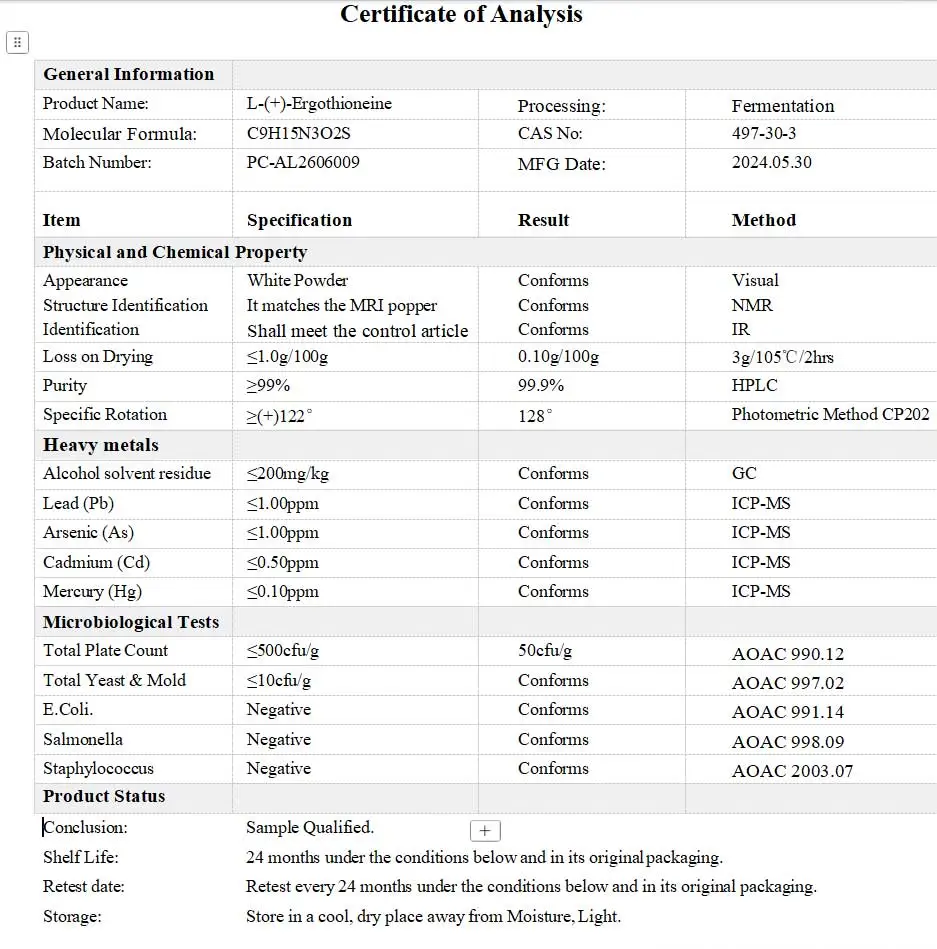
Key Specifications Buyers Should Verify on an Ergothioneine COA
Not all COAs are created equal.
While formats may differ among manufacturers, there are several core specifications that buyers should always evaluate when reviewing an ergothioneine powder COA.
Understanding these parameters helps procurement teams make informed sourcing decisions and identify potential quality concerns before committing to a supplier relationship.
Ergothioneine Assay (Purity)
Among all specifications listed on a COA, purity is typically the first parameter reviewed by experienced buyers.
The assay value indicates the concentration of active L-Ergothioneine present in the material and directly influences product formulation accuracy.
For premium-grade ergothioneine powder, purity levels are commonly expected to reach 98% or higher, with many manufacturers offering specifications of 99% or greater.
High assay values provide several advantages:
•Improved formulation consistency
•Reduced ingredient variability
•Simplified dosage calculations
•Enhanced product quality control
Buyers should also verify the analytical method used to determine purity.
High-Performance Liquid Chromatography (HPLC) is widely recognized as one of the most reliable techniques for measuring ergothioneine assay values. A reputable ergothioneine manufacturer should clearly identify the testing methodology on the COA.
When reviewing assay results, procurement teams should also consider historical consistency.
A single high-purity batch is less meaningful than a documented history of consistent production performance. Suppliers capable of maintaining stable assay results across multiple production lots generally demonstrate stronger manufacturing controls and process validation.
Identification Testing
Purity alone does not confirm product identity.
Identification testing verifies that the material being supplied is genuinely L-Ergothioneine and not another compound with similar characteristics.
This step is essential for ensuring authenticity and preventing potential quality issues within finished products.
Common identification methods may include:
•HPLC comparison against reference standards
•UV spectroscopy
•Infrared spectroscopy
•Advanced chromatographic techniques
The goal of identification testing is straightforward: confirming that the ingredient matches the intended specification.
For brands purchasing bulk ergothioneine powder, reliable identification testing provides additional confidence in the integrity of the supply chain and supports broader supplier qualification programs.
Many sophisticated buyers view identity testing as one of the most important indicators of a professional quality management system.
A manufacturer willing to invest in robust analytical verification typically demonstrates a stronger commitment to product consistency and long-term customer success.
Moisture Content
Moisture content is often overlooked during the supplier evaluation process, yet it can have a significant impact on ingredient stability, storage performance, and formulation consistency.
For buyers sourcing bulk ergothioneine powder, excessive moisture may increase the risk of degradation, reduced shelf life, clumping during storage, or variability during manufacturing.
A properly prepared ergothioneine certificate of analysis should clearly state the moisture specification and corresponding test result for each batch.
Most manufacturers determine moisture levels using validated analytical methods such as Loss on Drying (LOD) or Karl Fischer titration.
While acceptable specifications may vary depending on the manufacturing process and product grade, consistency is often more important than a single numerical value.
Experienced procurement teams typically review moisture results alongside storage recommendations and packaging specifications. This helps ensure that the ingredient will maintain its quality throughout transportation, warehousing, and finished product manufacturing.
When evaluating a new ergothioneine supplier, buyers should also consider whether moisture control is integrated into the company's quality management system. Stable moisture levels across multiple production lots often indicate a mature manufacturing process and effective environmental controls.
For supplement brands seeking long-term supply partners, this level of consistency can contribute significantly to production efficiency and finished product quality.
Heavy Metal Testing
Heavy metal analysis remains one of the most critical safety parameters on any ergothioneine powder COA. Regardless of ingredient purity, buyers must verify that the material complies with applicable safety standards for contaminants such as:
•Lead (Pb)
•Arsenic (As)
•Cadmium (Cd)
•Mercury (Hg)
As global regulatory expectations continue to evolve, testing for heavy metals has become an essential component of supplier qualification and risk management programs.
For companies developing dietary supplements, functional foods, or healthy aging formulations, contamination issues can lead to costly recalls, regulatory actions, and reputational damage.
This is why professional buyers rarely approve a new ergothioneine manufacturer without carefully reviewing heavy metal data. A high-quality ergothioneine raw material supplier should provide:
•Clearly defined heavy metal specifications
•Batch-specific test results
•Validated testing methods
•Traceable laboratory records
Procurement teams should also pay attention to whether testing is conducted internally, externally, or through accredited third-party laboratories.
Independent verification can provide an additional layer of confidence, particularly when sourcing large commercial volumes.
While low heavy metal results may appear routine, they often reflect the overall quality of the manufacturing environment, raw material controls, and purification processes.
In many cases, strong heavy metal performance is one of the clearest indicators of a reliable ergothioneine powder manufacturer.
Microbiological Specifications
Microbiological quality is another essential component of any comprehensive ergothioneine COA.
Although L-Ergothioneine is typically used at relatively low inclusion rates within finished formulations, microbiological compliance remains a critical requirement for both regulatory and commercial purposes.
A complete microbiological profile generally includes testing for:
•Total Plate Count (TPC)
•Yeast and Mold
•Escherichia coli
•Salmonella
•Staphylococcus aureus
These tests help confirm that the material is suitable for use in dietary supplements and other consumer products.
For brands purchasing bulk ergothioneine powder, microbiological specifications provide valuable insight into the manufacturer's hygiene controls, production environment, and overall quality culture.
Consistently low microbial counts often indicate:
•Controlled manufacturing conditions
•Effective cleaning procedures
•Proper personnel training
•Robust quality management systems
Buyers should be cautious when reviewing COAs that provide incomplete microbiological data or fail to specify testing methods.
In a competitive market, reliable ergothioneine suppliers understand that transparency builds trust. Comprehensive microbiological documentation not only supports regulatory compliance but also demonstrates a commitment to product safety.
As supplement brands increasingly face scrutiny from regulators and consumers alike, selecting suppliers with strong microbiological control programs has become a fundamental aspect of responsible sourcing.
Understanding Third-Party Testing and Quality Assurance
A COA provides valuable information, but experienced buyers know that quality assurance extends far beyond a single document.
One of the most effective ways to verify product quality is through independent third-party testing.
For organizations purchasing bulk ergothioneine powder, third-party verification serves as an additional safeguard against potential quality issues and strengthens confidence in supplier claims.
Reputable ergothioneine manufacturers often support their internal testing programs with external laboratory validation.
Independent testing may confirm:
•Product identity
•Purity
•Heavy metal compliance
•Microbiological safety
•Stability performance
This additional level of scrutiny can be particularly valuable when launching new products or entering highly regulated markets.
Beyond analytical testing, buyers should also evaluate the supplier's broader quality management framework.
Key indicators may include:
•ISO-certified systems
•GMP compliance
•Document control procedures
•Batch traceability
•Corrective action programs
•Supplier audit readiness
A well-developed quality assurance system helps ensure that every batch meets established specifications, regardless of production volume or market demand.
For procurement teams comparing multiple ergothioneine powder suppliers, quality systems often become the deciding factor once pricing and specifications are relatively similar.
Long-term sourcing success depends not only on the quality of today's shipment but also on the supplier's ability to maintain consistent standards for years to come.
Common Red Flags Found in Ergothioneine COAs
A professionally prepared COA can reveal a great deal about a supplier's capabilities.
Likewise, a poorly prepared COA may expose potential weaknesses that buyers should investigate further.
When evaluating a new ergothioneine supplier, there are several warning signs that deserve attention.
♦Missing Test Parameters
A COA that omits critical specifications such as purity, heavy metals, or microbiological testing may indicate insufficient quality controls. Comprehensive documentation should address both product performance and product safety.
♦Incomplete Analytical Methods
Test results have limited value without corresponding analytical methods.
Buyers should understand how each specification was measured and whether the methodology is appropriate for the ingredient.
♦Outdated Documentation
A COA should correspond to the specific production batch being supplied.
Documents containing outdated testing dates or expired specifications may raise questions regarding traceability and compliance.
♦Lack of Quality Approval Signatures
Most professional quality systems require review and approval before product release.
Missing signatures or incomplete authorization records may suggest weaknesses in document control procedures.
♦Results Consistently Near Specification Limits
While passing specifications is important, buyers should also evaluate overall process capability.
Repeated results that consistently approach specification limits may indicate less robust manufacturing controls.
Identifying these issues early can help procurement teams avoid unnecessary risks and select a more dependable ergothioneine manufacturer for long-term cooperation.
FAQ: What Bulk Buyers Frequently Ask About Ergothioneine COAs
How can buyers verify whether an ergothioneine supplier is a manufacturer or a trading company?
One of the simplest approaches is to request information about production facilities, manufacturing processes, quality certifications, and batch traceability systems.
A genuine ergothioneine manufacturer is typically able to provide detailed information regarding production capabilities, quality control procedures, and technical documentation.
Is a high purity result enough to qualify a supplier?
No.
While purity is important, buyers should evaluate the complete quality profile, including identity testing, microbiological compliance, heavy metal analysis, documentation standards, and supply chain reliability.
A high assay value alone does not guarantee long-term product consistency.
Why do some ergothioneine suppliers provide third-party testing reports?
Third-party testing provides independent verification of product quality.
For many supplement brands, external validation helps strengthen supplier qualification programs and reduce sourcing risks.
What additional documents should buyers request besides a COA?
In addition to a batch-specific ergothioneine certificate of analysis, buyers often request:
•Product Specification Sheet
•Technical Data Sheet (TDS)
•Safety Data Sheet (SDS/MSDS)
•Non-GMO Statement
•Allergen Statement
•Stability Data
•Manufacturing Certifications
Together, these documents provide a more complete picture of supplier reliability and product quality.
Choosing a Reliable Ergothioneine Manufacturer for Long-Term Supply
For experienced buyers, selecting an ergothioneine supplier involves much more than comparing prices.
The lowest quotation may appear attractive in the short term, but long-term sourcing success depends on consistency, transparency, technical support, and supply security.
When evaluating potential partners, procurement teams often prioritize several factors:
•Manufacturing expertise
•Product quality consistency
•Documentation standards
•Regulatory readiness
•Supply chain stability
•Responsiveness to customer requirements
As demand for ergothioneine powder continues to increase across the global nutraceutical industry, the ability to secure reliable supply has become increasingly important.
Manufacturers with established production capabilities, robust quality systems, and transparent documentation practices are generally better positioned to support long-term customer growth.
For brands developing innovative healthy aging, cognitive health, and antioxidant formulations, choosing the right ergothioneine manufacturer can contribute directly to product quality, regulatory compliance, and market success.
A thorough review of the COA is often the first step in that evaluation process—but it should never be the last.
Conclusion: A COA Reveals More Than Product Quality
A well-prepared ergothioneine COA does more than confirm laboratory results. It provides valuable insight into a supplier's manufacturing standards, quality systems, and commitment to consistency.
For companies sourcing bulk ergothioneine powder, understanding how to evaluate purity, identity, heavy metals, microbiological specifications, and supporting documentation can significantly reduce procurement risks and improve supplier selection decisions.
In an increasingly competitive market, successful brands recognize that choosing a reliable ergothioneine supplier is not simply about obtaining an ingredient—it is about establishing a long-term partnership built on quality, transparency, and trust.
Before approving your next supplier, request the complete documentation package, review the COA carefully, and ensure that every specification aligns with your product quality expectations and commercial goals. please contact our Email: admin@chenlangbio.com if you want more informaiton about ergothioneine powder.

Send Inquiry
Related Industry Knowledge
- Is L-Ergothioneine Safe for Consumption?
- What is Ergothioneine Powder Used for?
- How Does Ergothioneine Benefit Health?
- Is Ergothioneine A Longevity Vitamin
- Could Ergothioneine Cure Alzheimer's Disease
- What is Ergothioneine in Skin Care
- What Foods are High in Ergothioneine and Glutathione
- What is Ergothioneine Good for
- Does Ergothioneine Lower Blood Pressure
- What is the Best Ergothioneine Supplement